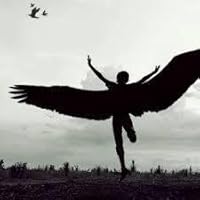
"“He does not recall where he came from nor why he came, but one morning he found himself in this city which he knows nothing about. He stood there looking around, wondering at façades of buildings and stores. Everything is clean. Clean walls, clean pavements; so clean that he could almost see his own image reflected upon the pavement.”
Throughout excitement and fascination at the full goes the journey of “M N” from start to end. The journey is filled with emotions, mysteries, symbols, colors, and tunes—all in a world of magical reality. Youssef Ezeddin Eassa’s The Façade is a most unique work of modern literature, a touching drama in surreal painting. A small matter starts to grow on and on until it fills the whole universe! A search for the very core of the truth hidden behind a thousand masks! A hero whose past has vanished into thin air, together with his name, identity, and place—nothing remains of his yesterdays, not even a shadow—as he hits the road into this strange city without knowing where he is going. You might find yourself in parts of this novel; however, when you finish reading The Façade, you will never be the same person again."
Youssef Ezeddin Eassa, Egyptian eminent writer and zoology professor, PH.D Sheffield, England & Berkeley Fulbrighter. He is a classic modernist who mastered all forms of writings; Novel, short story, play, poetry, radio drama and articles. His writings are a wrold of his own; he excells at combining imagination, dreams, and fact where symbols become his language. Although deep,mystic and philosophical, his style is yet captivating and fluffy. His works make readers think, meditate and see the world differently. Eassa breaks locality and place bounderies. He broke the traditional bounderies of the Arabic novel and gave it a magical touch especially after he wrote his novel, 'The Facade'; a masterpiece of modern art. Eassa lived in the city of Alexandria and continued to be a scientist and writer until his last days. Youssef Ezeddin Eassa was granted all the highest rewards of writing in his country amongst them are: The High National Award (received it twice), The distinguished Badge of Sciences and Arts of First degree (received it twice), The Republic Badge of Honour and the Knighthood Statue Award.