

What do you think?

The Orchard
Winner of the Australian Booksellers' Award, this novel blurs together memories and fiction as an octogenarian narrates the legend of the silver hands to a woman in her twenties, who in turn passes on the tale to a man who claims it as his own.
268 pages, Paperback
First published June 1, 1994
About the author
Drusilla Modjeska
26 books51 followersDrusilla Modjeska was born in England and lived in Papua New Guinea before arriving in Australia in 1971. She studied at the Australian National University and the University of New South Wales completing a PhD which was published as Exiles at Home: Australian Women Writers 1925-1945 (1981).
Modjeska's writing often explores the boundaries between fiction and non-fiction. The best known of her work are Poppy (1990), a fictionalised biography of her mother, and Stravinsky's Lunch (2001), a feminist reappraisal of the lives and work of Australian painters Stella Bowen and Grace Cossington Smith. She has also edited several volumes of stories, poems and essays, including the work of Lesbia Harford and a 'Focus on Papua New Guinea' issue for the literary magazine Meanjin.
In 2006 she was a Senior Research Fellow at the University of Sydney, "investigating the interplay of race, gender and the arts in post-colonial Papua New Guinea".
Modjeska's writing often explores the boundaries between fiction and non-fiction. The best known of her work are Poppy (1990), a fictionalised biography of her mother, and Stravinsky's Lunch (2001), a feminist reappraisal of the lives and work of Australian painters Stella Bowen and Grace Cossington Smith. She has also edited several volumes of stories, poems and essays, including the work of Lesbia Harford and a 'Focus on Papua New Guinea' issue for the literary magazine Meanjin.
In 2006 she was a Senior Research Fellow at the University of Sydney, "investigating the interplay of race, gender and the arts in post-colonial Papua New Guinea".
Ratings & Reviews
Friends & Following
Create a free account to discover what your friends think of this book!
Community Reviews
Displaying 1 - 30 of 58 reviews

September 1, 2013
This is very much a woman’s book, or, more properly, a work of feminism, complete with footnote references to classic feminist texts. But it’s not an academic book at all; it’s a quite readable story of a middle-aged woman reflecting on her life.

The book is anchored in Virginia Woolf’s philosophy of education for women. Woolf, denied the formal education her brothers received, proposed education for women precisely like that our Australian narrator received at a British girls’ school. It seems to have “worked” for some young women, the teachers’ pets, who loved their time there, but not worked for others (including our narrator) who were miserable.
Is that how it works for men? Is this what Woolf expected? These are the recurring themes of this book that climax when the narrator makes a trip back to the school years later. Along the way the writer reflects on her life and loves, family, art and gardening, while she fights an illness that threatens to result in loss of vision.
Because the narrator is Australian, and went to girls’ school in Britain, we have the usual collection of mutual put-downs that the Brits and Aussies engage in. The best one is this: “…being British [is] a bit like being a man. That awesome certainty that your view of the world is THE view of the world.”
There are many though-provoking gems in the book. In the chapter titled “The Adultery Factor” we read: “These days…everyone speaks too much and says too little.” And “…everyone wants something for nothing: love without risk, sex without hurt, safety without boredom.”
Here are two others: “She, the mistress, misread the man’s capacity to pay as an indication of his care for her…” And “To speak of luck, or of chance, is a response, sometimes envious, sometimes bewildered, made by those who see others take the opportunities they miss.”
There is a blurb on the book jacket from the Herald Sun of Australia: “As enriching a book as you’re likely to read.” I’ll second that.
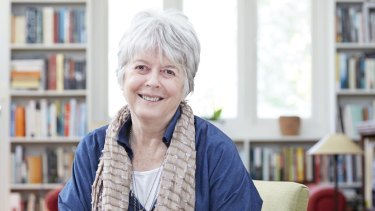
Below is a brief bio of the author from Wikipedia:
Drusilla Modjeska was born (1946) in London and was raised in Hampshire. She spent several years in Papua New Guinea (where she was briefly a student at the University of Papua New Guinea) before arriving in Australia in 1971. She studied for an undergraduate degree at the Australian National University before completing a PhD in history at the University of New South Wales which was published as Exiles at Home: Australian Women Writers 1925–1945 (1981).
Modjeska's writing often explores the boundaries between fiction and non-fiction. The best known of her work are Poppy (1990), a fictionalized biography of her mother, and Stravinsky's Lunch (2001), a feminist reappraisal of the lives and work of Australian painters Stella Bowen and Grace Cossington Smith. In 2006 Modjeska was a senior research fellow at the University of Sydney, "investigating the interplay of race, gender and the arts in post-colonial Papua New Guinea". She has also taught at the University of Technology, Sydney.
Photo of an almond orchard in Loxton on the Murray River; in the Riverland of South Australia from new.centuryorchards.com
The author from the Sydney Morning Herald
Edited 1/10/20 to correct typos and to add photos and bio.
The book is anchored in Virginia Woolf’s philosophy of education for women. Woolf, denied the formal education her brothers received, proposed education for women precisely like that our Australian narrator received at a British girls’ school. It seems to have “worked” for some young women, the teachers’ pets, who loved their time there, but not worked for others (including our narrator) who were miserable.
Is that how it works for men? Is this what Woolf expected? These are the recurring themes of this book that climax when the narrator makes a trip back to the school years later. Along the way the writer reflects on her life and loves, family, art and gardening, while she fights an illness that threatens to result in loss of vision.
Because the narrator is Australian, and went to girls’ school in Britain, we have the usual collection of mutual put-downs that the Brits and Aussies engage in. The best one is this: “…being British [is] a bit like being a man. That awesome certainty that your view of the world is THE view of the world.”
There are many though-provoking gems in the book. In the chapter titled “The Adultery Factor” we read: “These days…everyone speaks too much and says too little.” And “…everyone wants something for nothing: love without risk, sex without hurt, safety without boredom.”
Here are two others: “She, the mistress, misread the man’s capacity to pay as an indication of his care for her…” And “To speak of luck, or of chance, is a response, sometimes envious, sometimes bewildered, made by those who see others take the opportunities they miss.”
There is a blurb on the book jacket from the Herald Sun of Australia: “As enriching a book as you’re likely to read.” I’ll second that.
Below is a brief bio of the author from Wikipedia:
Drusilla Modjeska was born (1946) in London and was raised in Hampshire. She spent several years in Papua New Guinea (where she was briefly a student at the University of Papua New Guinea) before arriving in Australia in 1971. She studied for an undergraduate degree at the Australian National University before completing a PhD in history at the University of New South Wales which was published as Exiles at Home: Australian Women Writers 1925–1945 (1981).
Modjeska's writing often explores the boundaries between fiction and non-fiction. The best known of her work are Poppy (1990), a fictionalized biography of her mother, and Stravinsky's Lunch (2001), a feminist reappraisal of the lives and work of Australian painters Stella Bowen and Grace Cossington Smith. In 2006 Modjeska was a senior research fellow at the University of Sydney, "investigating the interplay of race, gender and the arts in post-colonial Papua New Guinea". She has also taught at the University of Technology, Sydney.
Photo of an almond orchard in Loxton on the Murray River; in the Riverland of South Australia from new.centuryorchards.com
The author from the Sydney Morning Herald
Edited 1/10/20 to correct typos and to add photos and bio.
November 26, 2022
What I like about books such as this is not only the story told but that I, the reader, is challenged with what the writer is trying to say be that via philosophical thoughts, analogy, metaphor and much more.
What I really really do like! is when an author brings to my attention people and places I have either not heard of or know little about. For example, at one point, the unnamed narrator is given a gift of the works of Canadian classical pianist Glen Gould. As I type these words, Gould has appeared in a streaming playlist I am listening to with a piece from his Goldberg Variations. Perfect timing, I mused to myself, I must explore Gould works later. I must also look to see the art of Stella Bowen, I must revisit the art of Ian Fairweather, art that I have seen and enjoyed, I must also one day read Virginia Woolf.
Which brings me to what I got out of this odd little read, and that is rather a lot. The unnamed narrator tells what may be an autobiographical tale told in 5 parts. Some combines what I presume is lifetime experience and then adds essays, history and myth into the tale told. This seemed a little ham fisted at times as opposed to being seamless, but did not stop the enjoyment of the journey. I can be truthfully honest and say that I had no idea what the old fairy tale of The Handless Maiden that was referred to occasionally through the telling and specifically at the end had to do with the main protagonists, but then analogy and metaphor have never been a particular for me.
Be that as it may, this read had its charms and challenges. In the chapter The Adultery Factor the factor of adultery from a women’s (feminist) point of view was thought-provoking. The chapter Sight and Solitude, an essay on just that, sight and solitude, was for someone as myopic as me so good I reread it immediately. For those of us that read a book about 297mm from our nose as the best distance to get anything clear, the unnamed narrator had a lot to say that I for sure related to. The Winterbourne was a chapter reminiscing for school days unrewarding. The Orchard was about the gardens that some love.
The solitude of the individual and their garden may just have been the pervading theme. Maybe? I am not sure, but then so what. If a read such as this provokes such thoughtfulness in me, I can hardly complain.
Recommended to those that like their solitude and their garden.
What I really really do like! is when an author brings to my attention people and places I have either not heard of or know little about. For example, at one point, the unnamed narrator is given a gift of the works of Canadian classical pianist Glen Gould. As I type these words, Gould has appeared in a streaming playlist I am listening to with a piece from his Goldberg Variations. Perfect timing, I mused to myself, I must explore Gould works later. I must also look to see the art of Stella Bowen, I must revisit the art of Ian Fairweather, art that I have seen and enjoyed, I must also one day read Virginia Woolf.
Which brings me to what I got out of this odd little read, and that is rather a lot. The unnamed narrator tells what may be an autobiographical tale told in 5 parts. Some combines what I presume is lifetime experience and then adds essays, history and myth into the tale told. This seemed a little ham fisted at times as opposed to being seamless, but did not stop the enjoyment of the journey. I can be truthfully honest and say that I had no idea what the old fairy tale of The Handless Maiden that was referred to occasionally through the telling and specifically at the end had to do with the main protagonists, but then analogy and metaphor have never been a particular for me.
Be that as it may, this read had its charms and challenges. In the chapter The Adultery Factor the factor of adultery from a women’s (feminist) point of view was thought-provoking. The chapter Sight and Solitude, an essay on just that, sight and solitude, was for someone as myopic as me so good I reread it immediately. For those of us that read a book about 297mm from our nose as the best distance to get anything clear, the unnamed narrator had a lot to say that I for sure related to. The Winterbourne was a chapter reminiscing for school days unrewarding. The Orchard was about the gardens that some love.
The solitude of the individual and their garden may just have been the pervading theme. Maybe? I am not sure, but then so what. If a read such as this provokes such thoughtfulness in me, I can hardly complain.
Recommended to those that like their solitude and their garden.

January 23, 2026
Though I admire Modjeska's style, I found this book very slow-moving and navel-gazing.
Clearly an intelligent writer, who passes reference to thinkers from the Renaissance to the present, as a reader, I kept waiting for things to happen. I guess that the pace of life has sped up, and our attention spans have shortened, since this was published in 1994.
Explaining the book to my daughter, I said that "more stuff happens in one Reddit post than has happened in this whole book".
The narrating character fears going blind, but doesn't enlighten us to her medical condition. The other characters are stuck in a loop of lying by omission, after the artist's model gives birth to his daughter, then hands the infant over to the artist's wife, who has no children of her own. They keep this secret way past the girl's adulthood, and the lies just keep festering. Just tell the woman, she's mostly worked it out anyway, why keep the lie going when you are all middle-aged or old?
A well researched and foot-noted book, my art history lecturer at uni just loved Drusilla; but I think she's just not my cup of tea.
Clearly an intelligent writer, who passes reference to thinkers from the Renaissance to the present, as a reader, I kept waiting for things to happen. I guess that the pace of life has sped up, and our attention spans have shortened, since this was published in 1994.
Explaining the book to my daughter, I said that "more stuff happens in one Reddit post than has happened in this whole book".
The narrating character fears going blind, but doesn't enlighten us to her medical condition. The other characters are stuck in a loop of lying by omission, after the artist's model gives birth to his daughter, then hands the infant over to the artist's wife, who has no children of her own. They keep this secret way past the girl's adulthood, and the lies just keep festering. Just tell the woman, she's mostly worked it out anyway, why keep the lie going when you are all middle-aged or old?
A well researched and foot-noted book, my art history lecturer at uni just loved Drusilla; but I think she's just not my cup of tea.
January 23, 2018
I've finally finished this book, thank goodness. It's put me in a massive reading slump. I can appreciate a lot of the messages it includes, but I really wasn't in the mood for this type of book right now. Having spent the past few days just reading this book I want to give it one star because of how little I enjoyed the experience, but I think if I hadn't been under so much time pressure to finish this book before I returned to school and read it in smaller chunks I would have enjoyed it far more. Plus I feel like this book will stick with me for a while just because of the themes and messages it conveys.

February 16, 2025
i picked this up on a whim in an opshop for two bucks, never having heard of the book or author before but seeing she was australian and having that be enough for me. i'm SO glad i did - it's not how i usually choose books, either. i loved this book. i loved the style, i loved the stories, i loved the women in them
October 15, 2025
stunning

October 3, 2019
What a strange book to cross our threshold …. First off, I don’t even know what it is: novel, memoir, art history lesson, collection of essays, tell-all book, all of the above? I found not knowing very distracting. What else was distracting was trying to figure why my father-in-law thought it would be good for us to read. Did he even read it? I can’t imagine he would have gotten very far even if he had tried. But he would like to see a book report from both of us. Guess what? 😊
All that being said, now that I’m going back over it, it seems there is much to recommend itself, as you will see below in quotes that caught my eye, and things you will not see in my list of new words (I’ll keep my ignorance to myself, thank you very much 😊 ). Also not to be ignored are all the endnotes. And thus I raise my rating to 3 from 2 or 2.5.
Quotes that caught my eye
When I imagine the world in which she lived as a girl all that time ago, I do so through the lens of history. But Ettie herself doesn’t see the past through a plate-glass window separating then from now. She sees the past more as a dream, and in that dream all of us are linked,… (4)
My friend Louise says it was Ettie who taught her that the past need not always be appeased; from her she learned to embrace it as a dream, allowing the narratives and rich images of memory into the clatter and uncertainty of the present. (7)
This was what Louise had travelled from Melbourne to hear – the story of his arrival – but when it came she didn’t take out her list of carefully prepared questions, absorbing instead the scroll of talk that moved backwards and forwards across the years of Ettie’s life with the richness of a complex palette…. (8)
For her the welcome of that verandah was a balm: as was this still, receptive girl for Ettie, willing where many are afraid, to receive the words that rose from the grief of the widow. (9)
For Louise, Ettie was the mentor who would show her the way, not into ambition or fortune but into the shape of her own life. (9)
Control is always temporary, Ettie says. Provisional, contingent. (10)
These days, she said, everyone wants something for nothing: love without risk, sex without hurt, safety without boredom.
… the temptation for all of us is to keep secret events in our lives that will affect those on whom we depend, for we fear their reaction, their retaliation, should we tell them the truth. Or else, just as bad, we blurt out our guilts as if we could off-load the burden onto those we’ve already injured. He said it’s no longer considered an art, a human achievement, to know when to speak, and when to remain silent. (26-27)
How can a woman (how can I?) write exactly as she wants about a love affair, her won or anyone else’s, when there are other people whose lives will be affected by what she says? How can she write about a love affair when the world of criticism and opinion favours a man’s facts, or his myths, over a woman’s romance, her fantasies, her gossip? When a man writes, or speaks, of love, it is to affirm his right to a narrative in which his sexual destiny and his right to tell the tale are in happy partnership. When a woman writes of love, it is a risky business, for her agency with the pen contradicts her prescribed destiny as a woman. Where one requires that she take the initiative and act, the other invites her to wait, and to receive. Every woman knows that when a man’s desires, his domestic needs, his romantic pride are at issue, her story is likely to be run off the rails. It’s not just her version against his; it’s the legitimacy of the story itself that’s at stake. If a woman writes of love, and in doing so speaks her mind, breaks the restraints, the constraints of definitions and names that are ever-present to her – wife of, mistress of – if she bursts out into anger, or a shadowy ambivalence, or into grief, it’s considered an unseemly act: embarrassing, slightly pitiful. Her critics, the critics, will accuse her, the woman who writes in this way, of confession. As if the ‘I’ on the page should have known better than to let slip a messy reminder of the body that holds the pen. As if there weren’t in any case gaps and fissures between that ‘I’, that body, that pen. As if confession was a transparent term. (31-32)
She told it, and we listened, through the lens of our own experience. (32)
Maybe the critics are right after all, and the act of telling can evoke confession in a woman; but where they, the critics, mean to imply that all she does is kneel in the dark and confess her sins, a list of failings she already knows, what she does in writing, in telling, is to search, sifting through he many versions and possibilities to find the shape and truth of her life, the story she doesn’t yet know, the image and narrative she struggles to bring, like herself into being. (32)
There was nothing of intrinsic value in being a wife rather than a mistress. That Stella Bowen comes out of this story better than Jean Rhys is because she learned from it the ntgature9i of the dance in which she was engaged and stepped outside her own complicity in an objectified role. So when she says we should learn to stand alone, she doesn’t just mean because men let us down, though often they do, but that to develop this capacity is an integral part of our quest to become fully ourselves. (53)
This is what Ettie means when she says that the fate of a woman won’t change until she can see herself as neither wife nor mistress. (54)
Parents rarely think they’ve done enough ad when their children meet the blows and wounds of life they can see only that they’ve failed. It was the thought of the children, she said, that kept her marriage the structure, the stricture, it became. It wasn’t until after Don left that she began to see there were gifts a parent could give a child other than the unquestioning security of convention and marriage. (73)
When one sees happiness between a man and a woman who have travelled beyond the state of being in love, and beyond the war zone, it is a blessing to be in their company. Paradoxically it is not so different, this blessing, from the happiness of those who have learned to live full lives without partners though not without connections and intimacies (by which I do not – necessarily – mean sex). Happiness is perhaps the wrong word. It is the quality of being fully oneself, not at rest so much as defining one’s own terms, not to impose them on others but as a basis of mutual connection – and not only with a spouse.... It requires the ability to see others as sovereign as oneself; it takes great presence of mind, … and great strength. (85)
Clara was not having an affair. At least not that I knew of, thought I knew it was possible, even likely, that the time would come when she would. If she were to, she’d probably tell him, it’s become a point of honour with her, that sort of honesty. But what was there to tell him in the meantime, when he was gripped by the fear of the cuckold? That she doubted that he was, after all, the man with whom she could have children? That she wanted a year in Europe, but when she contemplated leaving for so long, she was afraid of losing him? That she didn’t want to cut her ties even while she felt bound by them? These were the infidelities, the betrayals, that cramped her one by one; this the unhappiness that Tome felt but could not understand. (86)
‘I don’t know what the truth is,’ she says. ‘It’s not like there’s a statement. He wants something definite, and all I have are thoughts.’ (86)
What did she, this mistress, feel as she stood in her empty hallway and watched the man she had been sure she loved, turn into the traffic that was grinding its way towards the city? She felt a fool, to be so easily duped. She felt grief as the sharp possibility of the future evaporated into the loneliness she had thought to escape. She felt an unexpected shaft of compassion for a man caught in the mire of the present. She felt the fullness of the complexities that kept him from her. She felt love, and the gentle wash of memory. She felt hard and ungiving. All these feelings and sensations existed in her at once, not jumbled, not in sequence, but layered, like a scroll of possibilities that exist only in the configuration of the moment, though had she been asked to name them she would have said they passed too quickly for her grasp. (89)
The girl beside her is telling stories which the woman has to lean forwards to catch, for it’s cold in their city and the wind picks up their words and tosses them round, they entwine and tangle, the girl’s story and hers, until neither is sure what’s real and what’s not, what belongs to one, or the other. (97)
The truth isn’t an eraser we can use to eliminate responsibilities, conflicting needs, other loyalties. (97)
Even when my eyes filled with black swirls and orange flashes, I didn’t foresee that the guardian angel of visual certainty was about to desert me. Like falling in love, it was a sudden shock which changes how you see the past, a narrative of signs missed at the time but rewritten into the story you make of it once it has happened. (109)
It is only now when I recount this experience, that I can say people in dark phases of their lives should not be obliged to go to parties. The two realms do not connect and to be inadequately in the world acknowledged as normal moly emphasises the sense of exclusion, the outcast nature of the other. The chronology of the heart does not sit easily with the time-span of parties. (116)
In this culture to be alone is to be pitied, or feared – the crone, the spinster, the table set for one – when it may be quite the reverse: that the capacity to be alone, alone with ourselves, is as great, indeed possibly a greater marker of maturity, of intimate human success. (121)
But is the source of their wisdom, their power, to be attributed to their blindness, or to their solitude? To the solitude that blindness brings, or encourages? For it is in solitude, rather than in blindness itself that we are relieved of the constant flood of language that pours meaninglessly over everybody, everywhere, and opened to other, more mysterious images, realms, and sources of knowledge. (130-31)
The world of books, of pen and ink, or canvas and paint, is full and rich, and in focus; and through it (though I don’t suppose this applied to the Medicis) one is likely to learn early a taste for solitude, and a confrontation with the self, for it is a world that relieves one of the unthinking rush of life as well as of the indignities of team work and the compulsions of sport. The ophthalmic theory of culture! And it does have to be said that there are landscapes of Cézanne, say or Monnet, which offer quite accurate representations of uncorrected myopic vision. When Cézanne was offered spectacles, he is said to have replied ‘take those vulgar things away’; and Monet shuddered at the idea of corrective lenses which made him see with the conventional naturalism of Bouguereau. Quelle horreur. (131-32)
Even the first person pronoun, which once tumbled from my tongue, became lodged like a fish bone in my throat. (140)
“The correct attitude to painful events,” she said, “is not blame and denunciation, but grief and mourning.” This, she said, is something as a culture, as a nation, we do not understand. People think blame is easier than grief, she says. But grief is passed through and brings understanding. Blame remains. (154)
...and failure is not a word I’d use of myself, or ever have, though for many years my intellectual life was lived as if I were travelling on forged papers,… (176)
But that, I suppose, is the role of the headmistress: to patrol the split between body and mind that our culture avows; to deny the messy and difficult terrain of the body and its wild desires. Are we left believing, somewhere, secretly, that we need to tame ourselves in order to harness our capabilities of mind? (200)
I can suddenly see what you mean about being English being a bit like being a man. That awesome certainty that your view of the world is the view of the world. (203)
The taxi driver was blunt. They never what they seem, those women, he said. That headmistress, he said. I wouldn’t let her near my daughter. They say she has wild parties during the holidays. A sight for sore eyes if you’ll pardon the expression. I don’t suppose there’s anything in it, but you can’t help but wonder, those righter than right types.
Common gossip, and I repeat it only as gossip, for gossip it is , as well as to illustrate the universal truth that no one believes that such stern surfaces are as they seem. The more righteous a person appears, the more the regarding imagination dwells on the possibilities of a scurrilous under-life, and the greater is the desire to pull down the one who sets the standards none of us wish to live by. (204)
Or that she couldn’t control you, and resented your capacity to withdraw into yourselves. (215)
Clara will have to learn for herself the double vision of the exile, the ability to live at once with that which has been left behind and that which is here and now. (261)
The self that is found in exile, deepened by displacement, takes a long time to reach. (261)
But Ettie is not one to buck up. She knows that the rise and fall of emotion will pass and, in the quiet of the house where she has lived since she and Gerhard married after the war that had made refugees of them both, she gives it her due. (263-64)
Odd vocabulary
What are oriades? ‘… or along the top of the escarpment where laburnums meet banksias, and the moody oriades entwine in the maples, … (10)
Who is Memides? Blind Thamyris and blind Memides and Tiresia and Phineus, prophets old, goes a line from blink Milton. (130)
I wonder which ‘Carn’ she is talking about in the section on Winterborne…. For that matter, what’s ‘winterbourne’?
“… the footbridge with its rusting stairs and wind-trap of a roof,…” (179) What’s a ‘wind-trap’?
What are ‘pashes’ in this sentence: “We don’t let pashes go too far these days,”? (193) The Australian meaning is a passionate kiss, a romantic infatuation´, a crush, while the Scots meaning is a crushing blow or heavy snow fall. None of these would seem to fit.
I wonder which ‘Aiguille’ she is referring to here: “…they climbed the Grépon, the Matterhorn, the Aiguille.” (214) There seem to be several with that name.
‘…and when the bans began, Frances and I carried buckets of washing-up water that Leah kept for us after lunch.’ (219) What are ‘bans’ in this context?
‘…the rain … smashed its way through the trees, knocking the candles off the chestnuts….’ (222) What are those ‘candles’?
All that being said, now that I’m going back over it, it seems there is much to recommend itself, as you will see below in quotes that caught my eye, and things you will not see in my list of new words (I’ll keep my ignorance to myself, thank you very much 😊 ). Also not to be ignored are all the endnotes. And thus I raise my rating to 3 from 2 or 2.5.
Quotes that caught my eye
When I imagine the world in which she lived as a girl all that time ago, I do so through the lens of history. But Ettie herself doesn’t see the past through a plate-glass window separating then from now. She sees the past more as a dream, and in that dream all of us are linked,… (4)
My friend Louise says it was Ettie who taught her that the past need not always be appeased; from her she learned to embrace it as a dream, allowing the narratives and rich images of memory into the clatter and uncertainty of the present. (7)
This was what Louise had travelled from Melbourne to hear – the story of his arrival – but when it came she didn’t take out her list of carefully prepared questions, absorbing instead the scroll of talk that moved backwards and forwards across the years of Ettie’s life with the richness of a complex palette…. (8)
For her the welcome of that verandah was a balm: as was this still, receptive girl for Ettie, willing where many are afraid, to receive the words that rose from the grief of the widow. (9)
For Louise, Ettie was the mentor who would show her the way, not into ambition or fortune but into the shape of her own life. (9)
Control is always temporary, Ettie says. Provisional, contingent. (10)
These days, she said, everyone wants something for nothing: love without risk, sex without hurt, safety without boredom.
… the temptation for all of us is to keep secret events in our lives that will affect those on whom we depend, for we fear their reaction, their retaliation, should we tell them the truth. Or else, just as bad, we blurt out our guilts as if we could off-load the burden onto those we’ve already injured. He said it’s no longer considered an art, a human achievement, to know when to speak, and when to remain silent. (26-27)
How can a woman (how can I?) write exactly as she wants about a love affair, her won or anyone else’s, when there are other people whose lives will be affected by what she says? How can she write about a love affair when the world of criticism and opinion favours a man’s facts, or his myths, over a woman’s romance, her fantasies, her gossip? When a man writes, or speaks, of love, it is to affirm his right to a narrative in which his sexual destiny and his right to tell the tale are in happy partnership. When a woman writes of love, it is a risky business, for her agency with the pen contradicts her prescribed destiny as a woman. Where one requires that she take the initiative and act, the other invites her to wait, and to receive. Every woman knows that when a man’s desires, his domestic needs, his romantic pride are at issue, her story is likely to be run off the rails. It’s not just her version against his; it’s the legitimacy of the story itself that’s at stake. If a woman writes of love, and in doing so speaks her mind, breaks the restraints, the constraints of definitions and names that are ever-present to her – wife of, mistress of – if she bursts out into anger, or a shadowy ambivalence, or into grief, it’s considered an unseemly act: embarrassing, slightly pitiful. Her critics, the critics, will accuse her, the woman who writes in this way, of confession. As if the ‘I’ on the page should have known better than to let slip a messy reminder of the body that holds the pen. As if there weren’t in any case gaps and fissures between that ‘I’, that body, that pen. As if confession was a transparent term. (31-32)
She told it, and we listened, through the lens of our own experience. (32)
Maybe the critics are right after all, and the act of telling can evoke confession in a woman; but where they, the critics, mean to imply that all she does is kneel in the dark and confess her sins, a list of failings she already knows, what she does in writing, in telling, is to search, sifting through he many versions and possibilities to find the shape and truth of her life, the story she doesn’t yet know, the image and narrative she struggles to bring, like herself into being. (32)
There was nothing of intrinsic value in being a wife rather than a mistress. That Stella Bowen comes out of this story better than Jean Rhys is because she learned from it the ntgature9i of the dance in which she was engaged and stepped outside her own complicity in an objectified role. So when she says we should learn to stand alone, she doesn’t just mean because men let us down, though often they do, but that to develop this capacity is an integral part of our quest to become fully ourselves. (53)
This is what Ettie means when she says that the fate of a woman won’t change until she can see herself as neither wife nor mistress. (54)
Parents rarely think they’ve done enough ad when their children meet the blows and wounds of life they can see only that they’ve failed. It was the thought of the children, she said, that kept her marriage the structure, the stricture, it became. It wasn’t until after Don left that she began to see there were gifts a parent could give a child other than the unquestioning security of convention and marriage. (73)
When one sees happiness between a man and a woman who have travelled beyond the state of being in love, and beyond the war zone, it is a blessing to be in their company. Paradoxically it is not so different, this blessing, from the happiness of those who have learned to live full lives without partners though not without connections and intimacies (by which I do not – necessarily – mean sex). Happiness is perhaps the wrong word. It is the quality of being fully oneself, not at rest so much as defining one’s own terms, not to impose them on others but as a basis of mutual connection – and not only with a spouse.... It requires the ability to see others as sovereign as oneself; it takes great presence of mind, … and great strength. (85)
Clara was not having an affair. At least not that I knew of, thought I knew it was possible, even likely, that the time would come when she would. If she were to, she’d probably tell him, it’s become a point of honour with her, that sort of honesty. But what was there to tell him in the meantime, when he was gripped by the fear of the cuckold? That she doubted that he was, after all, the man with whom she could have children? That she wanted a year in Europe, but when she contemplated leaving for so long, she was afraid of losing him? That she didn’t want to cut her ties even while she felt bound by them? These were the infidelities, the betrayals, that cramped her one by one; this the unhappiness that Tome felt but could not understand. (86)
‘I don’t know what the truth is,’ she says. ‘It’s not like there’s a statement. He wants something definite, and all I have are thoughts.’ (86)
What did she, this mistress, feel as she stood in her empty hallway and watched the man she had been sure she loved, turn into the traffic that was grinding its way towards the city? She felt a fool, to be so easily duped. She felt grief as the sharp possibility of the future evaporated into the loneliness she had thought to escape. She felt an unexpected shaft of compassion for a man caught in the mire of the present. She felt the fullness of the complexities that kept him from her. She felt love, and the gentle wash of memory. She felt hard and ungiving. All these feelings and sensations existed in her at once, not jumbled, not in sequence, but layered, like a scroll of possibilities that exist only in the configuration of the moment, though had she been asked to name them she would have said they passed too quickly for her grasp. (89)
The girl beside her is telling stories which the woman has to lean forwards to catch, for it’s cold in their city and the wind picks up their words and tosses them round, they entwine and tangle, the girl’s story and hers, until neither is sure what’s real and what’s not, what belongs to one, or the other. (97)
The truth isn’t an eraser we can use to eliminate responsibilities, conflicting needs, other loyalties. (97)
Even when my eyes filled with black swirls and orange flashes, I didn’t foresee that the guardian angel of visual certainty was about to desert me. Like falling in love, it was a sudden shock which changes how you see the past, a narrative of signs missed at the time but rewritten into the story you make of it once it has happened. (109)
It is only now when I recount this experience, that I can say people in dark phases of their lives should not be obliged to go to parties. The two realms do not connect and to be inadequately in the world acknowledged as normal moly emphasises the sense of exclusion, the outcast nature of the other. The chronology of the heart does not sit easily with the time-span of parties. (116)
In this culture to be alone is to be pitied, or feared – the crone, the spinster, the table set for one – when it may be quite the reverse: that the capacity to be alone, alone with ourselves, is as great, indeed possibly a greater marker of maturity, of intimate human success. (121)
But is the source of their wisdom, their power, to be attributed to their blindness, or to their solitude? To the solitude that blindness brings, or encourages? For it is in solitude, rather than in blindness itself that we are relieved of the constant flood of language that pours meaninglessly over everybody, everywhere, and opened to other, more mysterious images, realms, and sources of knowledge. (130-31)
The world of books, of pen and ink, or canvas and paint, is full and rich, and in focus; and through it (though I don’t suppose this applied to the Medicis) one is likely to learn early a taste for solitude, and a confrontation with the self, for it is a world that relieves one of the unthinking rush of life as well as of the indignities of team work and the compulsions of sport. The ophthalmic theory of culture! And it does have to be said that there are landscapes of Cézanne, say or Monnet, which offer quite accurate representations of uncorrected myopic vision. When Cézanne was offered spectacles, he is said to have replied ‘take those vulgar things away’; and Monet shuddered at the idea of corrective lenses which made him see with the conventional naturalism of Bouguereau. Quelle horreur. (131-32)
Even the first person pronoun, which once tumbled from my tongue, became lodged like a fish bone in my throat. (140)
“The correct attitude to painful events,” she said, “is not blame and denunciation, but grief and mourning.” This, she said, is something as a culture, as a nation, we do not understand. People think blame is easier than grief, she says. But grief is passed through and brings understanding. Blame remains. (154)
...and failure is not a word I’d use of myself, or ever have, though for many years my intellectual life was lived as if I were travelling on forged papers,… (176)
But that, I suppose, is the role of the headmistress: to patrol the split between body and mind that our culture avows; to deny the messy and difficult terrain of the body and its wild desires. Are we left believing, somewhere, secretly, that we need to tame ourselves in order to harness our capabilities of mind? (200)
I can suddenly see what you mean about being English being a bit like being a man. That awesome certainty that your view of the world is the view of the world. (203)
The taxi driver was blunt. They never what they seem, those women, he said. That headmistress, he said. I wouldn’t let her near my daughter. They say she has wild parties during the holidays. A sight for sore eyes if you’ll pardon the expression. I don’t suppose there’s anything in it, but you can’t help but wonder, those righter than right types.
Common gossip, and I repeat it only as gossip, for gossip it is , as well as to illustrate the universal truth that no one believes that such stern surfaces are as they seem. The more righteous a person appears, the more the regarding imagination dwells on the possibilities of a scurrilous under-life, and the greater is the desire to pull down the one who sets the standards none of us wish to live by. (204)
Or that she couldn’t control you, and resented your capacity to withdraw into yourselves. (215)
Clara will have to learn for herself the double vision of the exile, the ability to live at once with that which has been left behind and that which is here and now. (261)
The self that is found in exile, deepened by displacement, takes a long time to reach. (261)
But Ettie is not one to buck up. She knows that the rise and fall of emotion will pass and, in the quiet of the house where she has lived since she and Gerhard married after the war that had made refugees of them both, she gives it her due. (263-64)
Odd vocabulary
What are oriades? ‘… or along the top of the escarpment where laburnums meet banksias, and the moody oriades entwine in the maples, … (10)
Who is Memides? Blind Thamyris and blind Memides and Tiresia and Phineus, prophets old, goes a line from blink Milton. (130)
I wonder which ‘Carn’ she is talking about in the section on Winterborne…. For that matter, what’s ‘winterbourne’?
“… the footbridge with its rusting stairs and wind-trap of a roof,…” (179) What’s a ‘wind-trap’?
What are ‘pashes’ in this sentence: “We don’t let pashes go too far these days,”? (193) The Australian meaning is a passionate kiss, a romantic infatuation´, a crush, while the Scots meaning is a crushing blow or heavy snow fall. None of these would seem to fit.
I wonder which ‘Aiguille’ she is referring to here: “…they climbed the Grépon, the Matterhorn, the Aiguille.” (214) There seem to be several with that name.
‘…and when the bans began, Frances and I carried buckets of washing-up water that Leah kept for us after lunch.’ (219) What are ‘bans’ in this context?
‘…the rain … smashed its way through the trees, knocking the candles off the chestnuts….’ (222) What are those ‘candles’?

June 1, 2021
To read The Orchard is to trace meaning-making. In five novellas that mix fiction and nonfiction so succinctly you’ll forget there’s ever been a divide, Drusilla Modjeska considers what it is for women to want and pursue empowerment through acts of independence and female inter-dependence. Particularly interesting is the inclusion of blindness which is not so much a metaphor for the common ‘and now I see’ as it is for the notion of trust. Modjeska is very relatable in her characterisation and highly transcendent in her execution. This is a thinkers book for any gender.
October 3, 2022
"Art is created in the tension between that contingency, a necessary instability, and the order, the meaning, the pattern, that graces it. As is a garden. Or a well-lived life."
This book is filled with things that I love: feminist theory, the role of art, the best literature of the canon, and a strong undercurrent of nature's unending relevance to our lives. Modjeska weaves these things together in a beautifully expressed contemplation of existence.
This book is filled with things that I love: feminist theory, the role of art, the best literature of the canon, and a strong undercurrent of nature's unending relevance to our lives. Modjeska weaves these things together in a beautifully expressed contemplation of existence.

February 12, 2016
I enjoyed it more than expected, especially the two short chapters book-ending the three main stories, as well as the first and third part. I really loved the way Modjeska used the fairytale, incorporating it as an allegory for all the other stories, also framing the feminist essays.
(note for e2. she didn't let the fairytale limit her story, only used it as a framing device)
(note for e2. she didn't let the fairytale limit her story, only used it as a framing device)
April 12, 2015
Love the way it explores truth and identity and ideas about turning inwards and embracing solitude. I suspect this is a work that will hold great appeal for women. Loved the use of art history to explore female identity. Intelligent read that provokes introspection.

April 15, 2015
Modjeska's writing on solitude as a means of internal transformation resonates with me at this time in my life. I think this is a book I needed to read.

October 12, 2021
Art and music and folk tales. Erudite, intelligent women. Limpid reflections. A lost world.
April 24, 2022
I think about this book all the time
January 29, 2024
Oh boy. Buckle up, I'm about to write an essay.
I ADORE this book, so much! It's everything I wanted it to be and came to me at a very important time in my life. I wish I had the dates of when I started and finished it, but I didn't write it down :(
Firstly, I love the formatting of this book. The part essay, part poetry, part storytelling was so well done and wonderful to read. Unlike any book I've read before. I love the dynamic of the women in this book, each from different walks of life and each approaching life with different attitudes. The house in the mountains was such a lovely backdrop for these tales.
There is not a single page in this book that I have not underlined or annotated on, there are pages dogeared with particularly wonderful passages and whole chapters ingrained in my mind. My absolute favourite section of this book was The Adultery Factor, and woah! packed a punch. The way every part of that section came together seamlessly was wonderful. Although slightly hard to get into, Sight and Solitude had some WONDERFUL quotes and passages about art, which I adored considering I am an artist!
In terms of criticism (because how can one consume media without any criticism?); because of my love for the Adultery Factor section, Sight and Solitude was a big adjustment. Due to personal factors, parts of The Adultery Factor left me speechless and staring out windows in contemplation, which was incredibly important, but in comparison, Sight and Solitude fell a little bit flat on me. I ended up putting the book down for a long time after the first chunk of the book, and it took me what is probably an embarrassingly long time to finish it. Additionally, despite my love for The Adultry Factory, it is extremely heteronormative. To be quite honest this doesn't bother me too much because the book focuses explicitly on 4 (assumably) cis-women and their life experiences, so it's to be expected that the book could narrow in terms of inclusivity in that regard. The third (or fourth if you include the introduction) section of this book 'The Winterbourne' almost entirely escapes my memory, but the other two sections make up for it.
With criticism done, this book has shifted some of the ways I view feminity and the domestic space. I'm an artist and this book has been a huge inspiration for me, despite being queer non-binary and the heteronormativity mentioned above.
Some quotes/passages/things I adore from this book:
The. Veranda:
- "...it was as if... past and future stood outside each other.... I saw myself as a young woman..." (shortened from page 20)
- Modjeska addresses the nature of this book: "I would call them essays... horizontally meandering" (pg20)
The Adultery Factor:
- "The fate of a young woman... won't change until she sees herself and neither wife nor mistress..." (pg28)
- the ENTIRE passage titled 'Confession' on page 31: "As if the 'I' on the page should have known better than to let slip a messy reminder of the body that holds the pen"
- "Women can live on a pivot like that for years, but once they begin to question the names they've been given, it's usually only a matter of time before they know on which side they will come down: woman or wife" (pg96)
- my ALL TIME FAVOURITE BOOK QUOTE: "[...] over the years the woman, his wife, have begun to think of her name, her maiden name, which is really only the name of her father. She thinks also of her mother's maiden name and that too is the name of a father. She thinks of all the women in her family stretching back and back and she realises she doesn't know their names [...] Wherever she goes she takes with her these queues of lost women, well not really queues as they're never in straight lines, milling around is how she thinks of them; and every now and again one breaks free, swinging out [...] Behind all these women, or alongside and beneath, inside and beyond them, is an unnamable sense of self." (page 95) (I may get a tattoo inspired by this... I love it sososososoooo much)
Sight and Solitude:
- " [...] in the interior we see the fullness of a feminine space" (pg 137) (a huge inspiration to my art-making practice!)
- " [...] though I turn from you in bed, and do not invite you into the room where my desk is, I still want you to watch me [...] I still want you to desire me [...] how well she does! watch me spin. watch me dance." (pg 146) (to be a woman is to perform) (also reminds me of the Margaret Atwood poem about 'you are your own voyeur)
The Winterbourne:
- "Did I not think of my father and the results he would expect? And how would I be of any help to my mother if this was my attitude?"
an absolute 5/5, I really recommend this book!!! Drusilla Modjeska your brain is so wonderufl
I ADORE this book, so much! It's everything I wanted it to be and came to me at a very important time in my life. I wish I had the dates of when I started and finished it, but I didn't write it down :(
Firstly, I love the formatting of this book. The part essay, part poetry, part storytelling was so well done and wonderful to read. Unlike any book I've read before. I love the dynamic of the women in this book, each from different walks of life and each approaching life with different attitudes. The house in the mountains was such a lovely backdrop for these tales.
There is not a single page in this book that I have not underlined or annotated on, there are pages dogeared with particularly wonderful passages and whole chapters ingrained in my mind. My absolute favourite section of this book was The Adultery Factor, and woah! packed a punch. The way every part of that section came together seamlessly was wonderful. Although slightly hard to get into, Sight and Solitude had some WONDERFUL quotes and passages about art, which I adored considering I am an artist!
In terms of criticism (because how can one consume media without any criticism?); because of my love for the Adultery Factor section, Sight and Solitude was a big adjustment. Due to personal factors, parts of The Adultery Factor left me speechless and staring out windows in contemplation, which was incredibly important, but in comparison, Sight and Solitude fell a little bit flat on me. I ended up putting the book down for a long time after the first chunk of the book, and it took me what is probably an embarrassingly long time to finish it. Additionally, despite my love for The Adultry Factory, it is extremely heteronormative. To be quite honest this doesn't bother me too much because the book focuses explicitly on 4 (assumably) cis-women and their life experiences, so it's to be expected that the book could narrow in terms of inclusivity in that regard. The third (or fourth if you include the introduction) section of this book 'The Winterbourne' almost entirely escapes my memory, but the other two sections make up for it.
With criticism done, this book has shifted some of the ways I view feminity and the domestic space. I'm an artist and this book has been a huge inspiration for me, despite being queer non-binary and the heteronormativity mentioned above.
Some quotes/passages/things I adore from this book:
The. Veranda:
- "...it was as if... past and future stood outside each other.... I saw myself as a young woman..." (shortened from page 20)
- Modjeska addresses the nature of this book: "I would call them essays... horizontally meandering" (pg20)
The Adultery Factor:
- "The fate of a young woman... won't change until she sees herself and neither wife nor mistress..." (pg28)
- the ENTIRE passage titled 'Confession' on page 31: "As if the 'I' on the page should have known better than to let slip a messy reminder of the body that holds the pen"
- "Women can live on a pivot like that for years, but once they begin to question the names they've been given, it's usually only a matter of time before they know on which side they will come down: woman or wife" (pg96)
- my ALL TIME FAVOURITE BOOK QUOTE: "[...] over the years the woman, his wife, have begun to think of her name, her maiden name, which is really only the name of her father. She thinks also of her mother's maiden name and that too is the name of a father. She thinks of all the women in her family stretching back and back and she realises she doesn't know their names [...] Wherever she goes she takes with her these queues of lost women, well not really queues as they're never in straight lines, milling around is how she thinks of them; and every now and again one breaks free, swinging out [...] Behind all these women, or alongside and beneath, inside and beyond them, is an unnamable sense of self." (page 95) (I may get a tattoo inspired by this... I love it sososososoooo much)
Sight and Solitude:
- " [...] in the interior we see the fullness of a feminine space" (pg 137) (a huge inspiration to my art-making practice!)
- " [...] though I turn from you in bed, and do not invite you into the room where my desk is, I still want you to watch me [...] I still want you to desire me [...] how well she does! watch me spin. watch me dance." (pg 146) (to be a woman is to perform) (also reminds me of the Margaret Atwood poem about 'you are your own voyeur)
The Winterbourne:
- "Did I not think of my father and the results he would expect? And how would I be of any help to my mother if this was my attitude?"
an absolute 5/5, I really recommend this book!!! Drusilla Modjeska your brain is so wonderufl
September 8, 2026
Very inviting and entertaining essays on the subject of intellectual and independent women who shape their own lives. The book, delivered in three parts, follows the story of four women who are friends, and explore their experiences with adultery, parenthood, academics, art, sovereignty, and the tension of living a life that is true to oneself, its rewards, and the paradigms and conventions that surround us and shape us. I enjoyed the aspect of Jungian intervention through the story of the Silver Hands, as recounted by dr Clarissa Pinkola-Estes in Women Who Run With the Wolves, coincidentally, a book I’m also reading. This story, that is encapsulated within the stories of this book, presents an archetypal view at the story of a woman who chooses her independence over the bargains that trade her as a commodity, and deliver a helpful moral to every woman to centre herself in her life.

January 22, 2017
2.5 stars? 2.75?
Idk, maybe I just can't appreciate classical literature but my god I really had to force myself to finish this one. The message of feminism came through loud and clear and for that I appreciated it, but the writing was very long winded. This was probably intentional but the narrative structure and POVs were all over the place and I really just could not keep up with which story was which and to be honest grew rather disinterested.
Great. Can't wait to disect this one in class.
Idk, maybe I just can't appreciate classical literature but my god I really had to force myself to finish this one. The message of feminism came through loud and clear and for that I appreciated it, but the writing was very long winded. This was probably intentional but the narrative structure and POVs were all over the place and I really just could not keep up with which story was which and to be honest grew rather disinterested.
Great. Can't wait to disect this one in class.

July 21, 2020
Some aspects of this collection/set of interwoven stories and essays are a bit dated, but many other parts of it really hold up. Very thoughtful, and thought-provoking. There was something kind of magical about it!

November 24, 2017
Beautifully written, thought provoking, and there were so many passages that made me stop and think.

February 24, 2018
pretty good pretty good

December 4, 2019
Modjeska's writing style evokes feelings and memories that strongly resonate with any woman's personal growth journey from girlhood to womanhood.
February 26, 2020
Literary feminism, dated in some contexts but still a good read for those who are a fan of the genre.
February 3, 2021
A poignant reflection on the difficulty of realising one's self in a patriarchal world.
July 5, 2021
I found this a difficult book to get into, but really enjoyed the part about Carn. Wonderful descriptions.
November 6, 2021
Beautifully written, the author weaves in and out of story and commentary on the lives of a family of women across their generations.
April 28, 2024
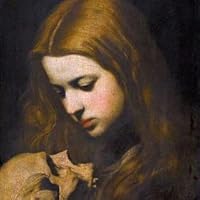
The girl with the silver hands lives in my mind rent free. Don’t know how Modjeska isn’t considered an Australian classic. I wish I could read this for the first time again.

November 30, 2025
Beautiful prose.
September 16, 2019
I was fascinated by this book. It is unusual, filled with beautiful imagery and a very painterly theme. Hard to keep track of the characters, in fact I found it less character driven, and more philosophical. The sections are quite distinct though linked by a large cast of characters and an intellectual and emotional through-line. The section near the end titled The Winterbourne is the best and most evocative writing I have seen about boarding school. It took me back to my own boarding school days in the most vivid and detailed manner - quite extraordinary. I am drawn to read more of Modjeska's work.

October 4, 2016
Very worthy. I feel very lucky that feminist issues don't apply to me personally. I have a satisfying career and an equal relationship with my husband who does more than half of the domestic duties and certainly doesn't have affairs. It is very well written though and I particularly enjoyed the description of the English boarding school.

December 6, 2012
Lifted from a journal entry at the time I read this:
I picked up Drusilla Modjeska's The Orchard. I definitely didn't have the emotional maturity for this book when it was assigned to me. I found it interesting in places, but I remember being bored by 'The Adultery Factor' (part one). Now that part makes sense to me, but also the artifice of the whole book is clearer. I don't think I realised, when I read it, that it was fiction. That 'I' was not necessarily Modjeska. That her praise of Stella Bowen over Jean Rys wasn't the True Feminist Way To View That Particular Affair but simply a way. That her criticism of the 'mistress' in that narrative conflicted with her sympathetic portrait of the mistress in the running fiction of the adulterous friends-of-friends. That the reason Alec's commentary on men and aging falls funny and yet confirms the worldview of the essays is that Alec is just as fictional as the rest of them.
One thing I do remember is feeling drawn to the ideas presented in 'Sight and Solitude'. For one thing, that was my first meeting with the idea of the (male) gaze, of social performance and many other things besides. I remember being alarmed by the idea, not of blindness but of aloneness (which did not come with blindness; the narrator's account of her life near-blind is full of other people, and a private isolation I now recognise as depression). And yet attracted to it, to the idea that solitude leads to self-knowledge, to strength and renewal for sustained relationships. That in solitude a woman might know herself as 'neither wife nor mistress'.
I was very lonely when I first read this book. I was surrounded by other people. Neither time away nor a sense of strong, authentic relationships was readily available to me. I had, at that time, three good and true friendships and one dying one. Of the good friendships, two were in their infancy and one was fraught with teenaged romantic angst.
It's not surprising that Modjeska's praise of solitude drew me so strongly. Here, I think, is the root of my belief that what I need - although not necessarily what I will enjoy - is to learn to live alone.
When I first read this book I was afraid that I had found my one true soulmate, my other half. (I hadn't, of course, but I had found the first of the truly kindred spirits I've met since leaving school.) Modjeska promised something else, an alternative to the terrifying sense of belonging which threatened to bind me to someone too early. It was everything I thought I wanted, that other-half-ness (of course; we had more than half imagined it together), but it terrified me, and Modjeska... Modjeska's praise of solitude offered an alternative.
It still draws me, but now I can see the fabrication of it; how the narrator's solitude is filled with people.
This time, I empathise with the men she describes, the men who look around themselves and find women demanding something, something the men never meant to give. That's more or less my experience of relationships - not of not getting what I needed, but of (mostly) men who need things and for some reason think I can give said things to them.
I picked up Drusilla Modjeska's The Orchard. I definitely didn't have the emotional maturity for this book when it was assigned to me. I found it interesting in places, but I remember being bored by 'The Adultery Factor' (part one). Now that part makes sense to me, but also the artifice of the whole book is clearer. I don't think I realised, when I read it, that it was fiction. That 'I' was not necessarily Modjeska. That her praise of Stella Bowen over Jean Rys wasn't the True Feminist Way To View That Particular Affair but simply a way. That her criticism of the 'mistress' in that narrative conflicted with her sympathetic portrait of the mistress in the running fiction of the adulterous friends-of-friends. That the reason Alec's commentary on men and aging falls funny and yet confirms the worldview of the essays is that Alec is just as fictional as the rest of them.
One thing I do remember is feeling drawn to the ideas presented in 'Sight and Solitude'. For one thing, that was my first meeting with the idea of the (male) gaze, of social performance and many other things besides. I remember being alarmed by the idea, not of blindness but of aloneness (which did not come with blindness; the narrator's account of her life near-blind is full of other people, and a private isolation I now recognise as depression). And yet attracted to it, to the idea that solitude leads to self-knowledge, to strength and renewal for sustained relationships. That in solitude a woman might know herself as 'neither wife nor mistress'.
I was very lonely when I first read this book. I was surrounded by other people. Neither time away nor a sense of strong, authentic relationships was readily available to me. I had, at that time, three good and true friendships and one dying one. Of the good friendships, two were in their infancy and one was fraught with teenaged romantic angst.
It's not surprising that Modjeska's praise of solitude drew me so strongly. Here, I think, is the root of my belief that what I need - although not necessarily what I will enjoy - is to learn to live alone.
When I first read this book I was afraid that I had found my one true soulmate, my other half. (I hadn't, of course, but I had found the first of the truly kindred spirits I've met since leaving school.) Modjeska promised something else, an alternative to the terrifying sense of belonging which threatened to bind me to someone too early. It was everything I thought I wanted, that other-half-ness (of course; we had more than half imagined it together), but it terrified me, and Modjeska... Modjeska's praise of solitude offered an alternative.
It still draws me, but now I can see the fabrication of it; how the narrator's solitude is filled with people.
This time, I empathise with the men she describes, the men who look around themselves and find women demanding something, something the men never meant to give. That's more or less my experience of relationships - not of not getting what I needed, but of (mostly) men who need things and for some reason think I can give said things to them.
Displaying 1 - 30 of 58 reviews