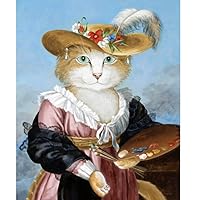
To discuss the supernatural in China is "to talk of foxes and speak of ghosts." Ming and Qing China were well populated with foxes, shape-changing creatures who transgressed the boundaries of species, gender, and the metaphysical realm. In human form, foxes were both immoral succubi and good wives/good mothers, both tricksters and Confucian paragons. They were the most alien yet the most common of the strange creatures a human might encounter.
Rania Huntington investigates a conception of one kind of alien and attempts to establish the boundaries of the human. As the most ambiguous alien in the late imperial Chinese imagination, the fox reveals which boundaries around the human and the ordinary were most frequently violated and, therefore, most jealously guarded.
Each section of this book traces a particular boundary violated by the fox and examines how maneuvers across that boundary change over the narrative boundaries of genre and texts; domesticity and the outside world; chaos and order; the human and the non-human; class; gender; sexual relations; and the progression from animal to monster to transcendent. As "middle creatures," foxes were morally ambivalent, endowed with superhuman but not quite divine powers; like humans, they occupied a middle space between the infernal and the celestial.
This was another book I borrowed from SOAS but I have to get my own copy. It's only £30 and it's just totally amazing. Without a doubt this is the best book focusing on Chinese fox spirits I've ever read. It's so nice to see the subject given a full scholarly view. The book focuses on treatment of the foxes in the Qing dynasty but gives an account of them from the earliest recorded statements and how their abilities and reputations change over time. The book is very strong on tradition and literature but a little bit more weak on the religious side. That said it is still brilliant and I definitely recommend it.
It talks about different books and stories about foxes, everything from pornography to classic works, it includes male and female foxes and looks at the different ways the two are represented. It also addresses the fact that foxes can change their gender, sometimes at will, at so they outstep the boundaries of "men and women". Foxes stand on the borderline between the strange and the commonplace (93). It includes translations of shorter stories and interesting social analysis of the stories. It looks at foxes haunting places and how this transforms into worship of the fox as well as how prevelant the cult of the fox was in late Imperial China. It looks at the relationship between foxes and spirit mediums, how mediums would exorcise foxes and how they would posess women. As well as how they disguise themselves as women and seduce men leading to their death, but how not all female foxes are portayed as having this dangerous nature. He even looks at foxes and homosexuality. There was an amazing story (Feng Sanniang" 封三娘) that could have been Victorian about a young fox who befriends a young girl and the two become "very close" friends and eventually the fox leads the young girl to get married but still wants to retain a relationship with her. But the girl feels badly she doesn't have a husband so tries to get the fox drunk so her husband can sleep with her, but the fox manages to escape and not get raped and ends up leaving the girl. It sounded like a lovely sad story. There was also the story Lianxiang which was a story about a fox and a ghost in love with the same scholar.
It was a lovely book addressing both the supernatural and social and cultural gender roles. I think I will try and be very good and not spend any money for the coming week so I can treat myself to a copy at the end of the week.
This was a pretty interesting book on the subject of foxes in Chinese folklore over the dynasties, starting with the Tang. It covers a wide range of topics, mostly dealing with the role these foxes had in relation to humans, especially considering the categories of transcendents (xian) and monsters (yao). Via their stories you get not only some insights into the concepts of nature, karma, justice and vengeance, refinement and morals, but also gender categories (especially the role of women and the link foxes have to them), sex and rules of the times (even going so far to have foxes in western dresses). The stories about sex cover heterosexual and homosexual stories, albeit the first clearly in the majority and among homosexual stories there are only 1 or 2 regarding lesbianism. There are even a few stories with sex-change and their low number is interesting; after all foxes are shapeshifters here so you might assume this to be more common. Among the other stories you have morally right and questionable means of gaining wealth, marriages, castration and other sorts of vengeance, worship, haunting etc. etc. And the book is not shy to tell you the nastier and grittier details, like in one story the author explicitly states that if a woman does not want to be pursued by a man he can stull force her since the power is with the man, in other stories daughters seem to be on the same level as property. Interestingly vixens seem to be able to choose their mates freely and can openly punish men (human or otherwise) who try to force them, except heavenly or karmic intervention dictates otherwise. There is even information on the development of fox stories over time, e.g. vixen stories evolved much more than stories of male foxes, with the role of the first changing more dramatically. Now the structure of the book is good, the reading flow smoth and it's all in all very easy to read. Although the names could be a problem if you are not familiar with them.
However, for the many positives this book has, it does have some negative points: 1) The author states that the red fox has the largest natural range of any large terrestrial mammal, save humans. However not only do I wonder how this book defines "large," but how she defines "natural range." If humans are considered natural here, why aren't their domestic mammals considered to have a natural range also? Many of them are much bigger than red foxes and have a wider geographic range. 2) I would say you can skip the first chapter entirely (seriously I barely remember anything of it). The second is the one starting with the juicy stuff and the stories. 3) When you get down to it, most stories are not actually about the foxes themselves, but rather about the humans, as this is basically their function. Trust me if most would be really about the foxes they would often act pretty differently. You get some info on foxes themselves though. 4) The old problem I often encounter reared its ugly head again: referring to these shapeshifting foxes as spirits. The author doesn't do it often, usually just calling them foxes, but she does it and even refers to swallow and gibbon spirits, despite these beings clearly getting killed. The stories of foxes often show them as seeking immortality, having to eat, learning their powers and undergoing death and rebirth. Sure some have the power to possess people but in fiction most telepaths can do that as well. So I really wonder what definition of spirit she uses. 5) I would disagree that in the European context, even if just western and central, animals cannot gain human shape. It is not common but saying it never happened seems wrong to me. 6) It occured to me that it barely, if ever, dealt with the topic of foxes taking other shapes than human. I didn't hear of alot of them in other documents, as they focused on Japan and not China, but they did mention at least one case where a fox had allegedly taken the shape or created the illusion of a train.
Now these points seem much but they only dragged the book down a little. It is still a rcommendable three star book on the topic of foxes in Chinese folklore, religion and literature.
PS. Considered how much I read about foxes and their roles here I really wonder why I can think of only three Chinese movies that feature them. Are they not cool enough? Also I wish I could read a few of the original stories mentioned here.
This book was incredibly useful! It includes original stories about the fox with in China as well as discussion on the cultural meaning behind them. Great for someone who's looking to learn more about the fox myths with in China, and who might want to create their own narrative with the same elements.
Great monograph on a very interesting subject. Even though it is an academic book, the writing is clear and entertaining enough that a popular audience could enjoy reading it. Valuable both in analysis of legends around fox spirits and in supplying vast numbers of examples, which are both useful for the arguments presented and interesting in of themselves.
To discuss the supernatural in China is "to talk of foxes and speak of ghosts." Ming and Qing China were well populated with foxes, shape-changing creatures who transgressed the boundaries of species, gender, and the metaphysical realm. In human form, foxes were both immoral succubi and good wives/good mothers, both tricksters and Confucian paragons. They were the most alien yet the most common of the strange creatures a human might encounter.