

What do you think?

The Bolter: Edwardian Heartbreak and High Society Scandal in Kenya
On Friday 25th May, 1934, a forty-one-year-old woman walked into the lobby of Claridge's Hotel to meet the nineteen-year-old son whose face she did not know. Fifteen years earlier, as the First World War ended, Idina Sackville shocked high society by leaving her son and his multimillionaire father to run off to Africa with a near penniless man.
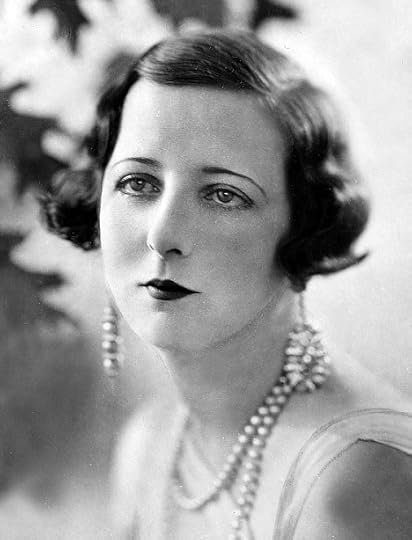
An inspiration for Nancy Mitford's character The Bolter, painted by William Orpen, and photographed by Cecil Beaton, Sackville went on to divorce a total of five times, yet died with a picture of her first love by her bed. Her struggle to reinvent her life with each new marriage left one husband murdered and branded her the 'high priestess' of White Mischief's bed-hopping Happy Valley in Kenya. Sackville's life was so scandalous that it was kept a secret from her great-granddaughter Frances Osborne. Now, Osborne tells the moving tale of betrayal and heartbreak behind Sackville's road to scandal and return, painting a dazzling portrait of high society in the early twentieth century.
An inspiration for Nancy Mitford's character The Bolter, painted by William Orpen, and photographed by Cecil Beaton, Sackville went on to divorce a total of five times, yet died with a picture of her first love by her bed. Her struggle to reinvent her life with each new marriage left one husband murdered and branded her the 'high priestess' of White Mischief's bed-hopping Happy Valley in Kenya. Sackville's life was so scandalous that it was kept a secret from her great-granddaughter Frances Osborne. Now, Osborne tells the moving tale of betrayal and heartbreak behind Sackville's road to scandal and return, painting a dazzling portrait of high society in the early twentieth century.
310 pages, Paperback
First published January 1, 2008
About the author
Frances Osborne
14 books26 followersFrances Osborne was born in London and studied philosophy and modern languages at Oxford University. She is the author of two biographies; Lilla's Feast and The Bolter: Idina Sackville. Her first historical novel, Park Lane, will be published Summer 2012. Her articles have appeared in The Daily Telegraph, The Times, The Independent, the Daily Mail, and Vogue. She lives in London with her husband, George Osborne, and their two children.
Ratings & Reviews
Friends & Following
Create a free account to discover what your friends think of this book!
Community Reviews
Displaying 1 - 30 of 625 reviews

March 19, 2020
Subtitled -'Edwardian Heartbreak and High Society Scandal in Kenya', this biography (written by her descendant) of Idina Sackville who's salacious (upper-class) lifestyle in the UK and Kenya scandalised the UK / her peers throughout her life. She shocked high society by leaving her multimillionaire family to run off to Africa with a near penniless man. This book / memoir promised very much more that it could deliver. 5 out of 12, Three Stars.
Lady Idina Sackville
2009 read
Lady Idina Sackville
2009 read

July 14, 2009
This is another case of a memoir being different from its portrayal in a review. I expected a book about a high society woman in the early-to-mid part of the 20th century who desperately sought pleasure, no matter the number of husbands or children she left behind. And while she married and divorced five times and had a few kids thrown in, she seemed more the boltee than the bolter. She almost always was the one left behind, or she was forced to leave due to her husband's behavior. Despite the drunken and drug-fueled orgies and constant spouse swapping, it is pretty clear she just wanted long term love and stability. It's sad she never really got that. Granted, if you have an open marriage and your life is one constant party and you even use your best friend as sexual bait to keep your husband around the homestead more, that's probably not gone to pan out too well for you in the end.
I think all the things and people in the life of "The Bolter" were almost as interesting, if not more so, than the woman herself. Several years ago, a person referred to a town I lived in at the time as "Happy Valley." Never knew the reference until this book; now I need clarification on that comment! But between these grand estates built in Kenya, the friends who injected morphine in plain sight, the psycho best friend, people getting shot, multiple suicides, the interesting and cruel husbands... Lady Idina was not the most fascinating part of the book.
A couple of things struck me about this book on a bigger scale, too. The first was that she hung out with this whole gaggle of people who didn't need to work for a living and shipped their kids off to boarding school. I know plenty of people who don't need to work, but it seems now people in such a situation usually find some kind of vocation or time consuming hobby (other than drugs or sex). Also, the author (great-granddaughter of The Bolter) pieced together much of her story using letters and diaries. It made me really sad that people don't do this so much anymore. Through these letters between family members and others, you really get a taste of who this woman was. Even "gossipy" letters between family members; stuff that done on IM or via text or cell phone now. In this information age, is the information doomed to die a quicker death?
Anyway, somewhat of a tangent. Good book. I hope some of my Good Reads friends pick it up so I can hear what they think.
I think all the things and people in the life of "The Bolter" were almost as interesting, if not more so, than the woman herself. Several years ago, a person referred to a town I lived in at the time as "Happy Valley." Never knew the reference until this book; now I need clarification on that comment! But between these grand estates built in Kenya, the friends who injected morphine in plain sight, the psycho best friend, people getting shot, multiple suicides, the interesting and cruel husbands... Lady Idina was not the most fascinating part of the book.
A couple of things struck me about this book on a bigger scale, too. The first was that she hung out with this whole gaggle of people who didn't need to work for a living and shipped their kids off to boarding school. I know plenty of people who don't need to work, but it seems now people in such a situation usually find some kind of vocation or time consuming hobby (other than drugs or sex). Also, the author (great-granddaughter of The Bolter) pieced together much of her story using letters and diaries. It made me really sad that people don't do this so much anymore. Through these letters between family members and others, you really get a taste of who this woman was. Even "gossipy" letters between family members; stuff that done on IM or via text or cell phone now. In this information age, is the information doomed to die a quicker death?
Anyway, somewhat of a tangent. Good book. I hope some of my Good Reads friends pick it up so I can hear what they think.
November 7, 2024
3 stars
This book is this wild and fascinating dive into the life of Idina Sackville, a woman who basically lived on her own terms in a time when society really wasn’t into that, and I loved that aspect.The book unpacks her drama-filled relationships, her rebellious choices, and her adventures that took her from posh Edwardian England to scandalous parties in colonial Kenya.
It’s part biography, part gossip, and totally gripping, especially if you’re into stories about breaking rules and redefining what’s acceptable just like taylor's song. The song “The Bolter” was inspired by this exact vibe, all about defiance and heartbreak rolled into one.
This song tells the story of a woman who breaks free from the roles imposed by society—choosing freedom yet carrying a profound sadness within. I understood this theme more clearly after reading the book, as it vividly portrays this struggle and emotional depth.
(BUT AS SHE WAS LEAVING,IT FELT LIKE BREATHING)
This book is this wild and fascinating dive into the life of Idina Sackville, a woman who basically lived on her own terms in a time when society really wasn’t into that, and I loved that aspect.The book unpacks her drama-filled relationships, her rebellious choices, and her adventures that took her from posh Edwardian England to scandalous parties in colonial Kenya.
It’s part biography, part gossip, and totally gripping, especially if you’re into stories about breaking rules and redefining what’s acceptable just like taylor's song. The song “The Bolter” was inspired by this exact vibe, all about defiance and heartbreak rolled into one.
This song tells the story of a woman who breaks free from the roles imposed by society—choosing freedom yet carrying a profound sadness within. I understood this theme more clearly after reading the book, as it vividly portrays this struggle and emotional depth.
(BUT AS SHE WAS LEAVING,IT FELT LIKE BREATHING)

May 3, 2012
I started this yesterday, and once I picked it up I couldn't put it down. Weirdly enough, Osborne's writing wasn't what kept me glued, since IMO it wasn't a very strong and some of the chapters were boring and unfocused. That being said, the story of her great-grandmother Idina's life was like passing a wreck on the side of the road -- you know you shouldn't gawp, but you can't look away from the damage.
For all her wealth and priviledge, Idina lived what to me was an empty, wasted life. She devoted her time and energies toward the pursuit and fulfilment of pleasure. Osborne makes the claim that her great-grandmother was only looking for permanent love, but after 5 failed marriages (and lovers without number), Idina herself was obviously searching for the wrong things in a man. Her own value system, and the time and place in which she lived also worked against her. With her power, money and influence, she might have become a force for positive change in the colonial settlements in Kenya. Instead, her tawdry lifestyle and the broken homelife of the children she left behind are her legacy.
This is a fascinating look into the lives and decadent lifestyle of that aimless, rich and titled generation between the wars, and one I look forward to exploring further in White Mischief, which I'm going to read next.
For all her wealth and priviledge, Idina lived what to me was an empty, wasted life. She devoted her time and energies toward the pursuit and fulfilment of pleasure. Osborne makes the claim that her great-grandmother was only looking for permanent love, but after 5 failed marriages (and lovers without number), Idina herself was obviously searching for the wrong things in a man. Her own value system, and the time and place in which she lived also worked against her. With her power, money and influence, she might have become a force for positive change in the colonial settlements in Kenya. Instead, her tawdry lifestyle and the broken homelife of the children she left behind are her legacy.
This is a fascinating look into the lives and decadent lifestyle of that aimless, rich and titled generation between the wars, and one I look forward to exploring further in White Mischief, which I'm going to read next.

July 8, 2019
The author of this book discovered, purely by chance, that she was related to Idina Sackville, a woman who spent much of her life involved in, and causing, scandal. Thankfully, she decided to try to discover more about her and this is the result, a sympathetic but honest appraisal of her life from Edwardian London to Happy Valley in Kenya. Idina was herself the child of divorced parents, who had an unconventional mother and found herself frowned upon as a suitable bride when she became a debutante. However, glamorous and outgoing, she made an impressive match when she married the incredibly rich and handsome Euan Wallace. Their early married life was interrupted by the First World War and, as children came and they were separated by events and change, it affected them. Idina was unwilling to put up with Euan's affairs and the marriage could not be saved.
In hindsight, it is easy to see where, and how, things go wrong. This divorce was shocking at a time when marriages between members of the aristocracy had different boundaries. Affairs were commonplace, but divorce was not. When Idina walked away from her marriage she had to leave behind her two sons. What follows are the stories of four more marriages. Charles Gordon, Josslyn Hay (infamously murdered in Kenya), Donald Haldeman and Vincent Soltan. Gossip surrounded Idina, with rumours of scandalous behaviour at the beautiful homes she created in Kenya. Much of what happened seems shocking, even today, with you feeling pity - not only for Idina herself, who seemed to need somebody to cling to in order to prove her attraction - but also for her children. This is a moving, and often tragic, account of a life - however, it was certainly a life lived to the full. Lastly, I read the kindle version of this book and it contained no illustrations.
In hindsight, it is easy to see where, and how, things go wrong. This divorce was shocking at a time when marriages between members of the aristocracy had different boundaries. Affairs were commonplace, but divorce was not. When Idina walked away from her marriage she had to leave behind her two sons. What follows are the stories of four more marriages. Charles Gordon, Josslyn Hay (infamously murdered in Kenya), Donald Haldeman and Vincent Soltan. Gossip surrounded Idina, with rumours of scandalous behaviour at the beautiful homes she created in Kenya. Much of what happened seems shocking, even today, with you feeling pity - not only for Idina herself, who seemed to need somebody to cling to in order to prove her attraction - but also for her children. This is a moving, and often tragic, account of a life - however, it was certainly a life lived to the full. Lastly, I read the kindle version of this book and it contained no illustrations.

January 22, 2010
How can a biography of such a flamboyant figure be as colourless as this book? I was eager to read about the notorious "Bolter" who was fictionalized in Nancy Mitford's novels, but this biography somehow emerged as nothing more than a laundry list of marriages, affairs and transgressions.
The author was not lacking in sympathy for her subject, but the vibrant society and carefree (or were they careless?) adventures of the Edwardian jet-set never really came to life for me. I kind of trudged through the book with the expectation that I would be drawn into it by the decadent lifestyle of Idina Sackville and her friends, but the stories never succeded in captivating me. Something was missing and the characters never really came to life.
The author was not lacking in sympathy for her subject, but the vibrant society and carefree (or were they careless?) adventures of the Edwardian jet-set never really came to life for me. I kind of trudged through the book with the expectation that I would be drawn into it by the decadent lifestyle of Idina Sackville and her friends, but the stories never succeded in captivating me. Something was missing and the characters never really came to life.

April 18, 2017
For whatever reason I apparently put this book down for almost 4 years, having only 60 pages to go. I may have to re-read some it as I don't really recall how much I liked it/her. I do like the fact that the book was written by her great-granddaughter. And how she brings in, at the end, that she and her cousins did not even kn0w they had cousins but had pretended that they did.
Hope to update this review after reviewing the earlier portions of the book. I ought to go look on my shelves for other books where I am this close to the end.
At the end, Frances goes to see Clouds (the last home in Kenya) and I was reminded of my family's visit to Homewood (one of the places my mother had lived with her cousins) and hoped that it was in better shape. It was. Homewood had burned down when I saw it and was not yet re-built. Clouds had been taken over by a Kenyan family, a brother and his family would live in one room and a sister and her family would live in another room, etc. But much of the house was used for storage and the garden still looked good because Idina (The Bolter) had put in irrigation systems and a pond.
So this rating is currently 3 1/2 stars, but is mainly based on the last 60 pages, which were excellent.
Hope to update this review after reviewing the earlier portions of the book. I ought to go look on my shelves for other books where I am this close to the end.
At the end, Frances goes to see Clouds (the last home in Kenya) and I was reminded of my family's visit to Homewood (one of the places my mother had lived with her cousins) and hoped that it was in better shape. It was. Homewood had burned down when I saw it and was not yet re-built. Clouds had been taken over by a Kenyan family, a brother and his family would live in one room and a sister and her family would live in another room, etc. But much of the house was used for storage and the garden still looked good because Idina (The Bolter) had put in irrigation systems and a pond.
So this rating is currently 3 1/2 stars, but is mainly based on the last 60 pages, which were excellent.

September 10, 2009
If you enjoy reading about post-WWI Europe and the "lost" generation, YOU MUST READ THIS BOOK. If you are looking for an example of a psychologically astute biography, YOU MUST READ THIS BOOK. Even if you have only just "seen the movie"--"White Heat" or "Out of Africa"--YOU MUST READ THIS BOOK. I can't think of any member of the goodreads intelligentsia who would not ENJOY THIS BOOK.

November 30, 2009
Biography of Idina Sackville, the woman who personified the wild Twenties and who gave rise to so many fictional scandalous women (Osborne is Idina's great-granddaughter)

December 6, 2017
For a historical biography, this was a strong 4.5 stars. Lady Idina Sackville was part of the rich and glamorous fast-set of Edwardian London. She famously left her first husband and two young children to run off to Africa with another man. She went on to marry and divorce a total of five times, and was labelled by one of her husbands (I forget which) as a nymphomaniac. Her sexual appetite was so insatiable she held wild partner swapping parties with her inner-circle and was said to have had lovers without number. These are the sensationalist stories that hit the press and fuelled her infamous reputation.
The author is the great-granddaughter of Idina, who faithfully traced the family history through letters, diaries and photographs of Idina’s life. What we learn is that yes Idina flaunted conventions of the time, but she was also very strong, independent and hard working. She managed to build and run successful dairy farms in Africa. She built beautiful homes, gardens and herds of cattle, barefooted by day, dressed to the nines at night. She also appeared to be a very loyal and faithful friend.
I was however horrified at the treatment of children during this period. It seemed to be standard practice for parents of this affluent group to see their children occasionally, almost as a courtesy call for a couple of hours on a weekend, in between jaunts to Paris or Claridges or some house-party. It made me so sad to think of all those little 6 and 7 year olds left at boarding schools, only to see their parents in the holidays and even then, only for show, while the Governess or Nannies did the day to day parenting.
There were lots of references in this biography of other novels that were inspired from the group of white settlers in Kenya, termed Happy Valley. I must watch Out of Africa again, I hadn’t realised that was also based on a true story, and that Tania - the heroine of that story - (whom I can only picture as Meryl Streep) apparently hated Idina and avoided any event where they might cross paths. There is also reference to the last Vicereine of India - Edwina Mountbatten. Having just watched a movie about that event in time (yes, I can only picture Gillian Anderson) I was shocked to discover that Edwina was also a bed-hopper and had lovers all over the place. This was not the story that was portrayed in The Viceroys House! Nancy Mitford is also referenced a few times, so lots of follow up reading coming up.
The author is the great-granddaughter of Idina, who faithfully traced the family history through letters, diaries and photographs of Idina’s life. What we learn is that yes Idina flaunted conventions of the time, but she was also very strong, independent and hard working. She managed to build and run successful dairy farms in Africa. She built beautiful homes, gardens and herds of cattle, barefooted by day, dressed to the nines at night. She also appeared to be a very loyal and faithful friend.
I was however horrified at the treatment of children during this period. It seemed to be standard practice for parents of this affluent group to see their children occasionally, almost as a courtesy call for a couple of hours on a weekend, in between jaunts to Paris or Claridges or some house-party. It made me so sad to think of all those little 6 and 7 year olds left at boarding schools, only to see their parents in the holidays and even then, only for show, while the Governess or Nannies did the day to day parenting.
There were lots of references in this biography of other novels that were inspired from the group of white settlers in Kenya, termed Happy Valley. I must watch Out of Africa again, I hadn’t realised that was also based on a true story, and that Tania - the heroine of that story - (whom I can only picture as Meryl Streep) apparently hated Idina and avoided any event where they might cross paths. There is also reference to the last Vicereine of India - Edwina Mountbatten. Having just watched a movie about that event in time (yes, I can only picture Gillian Anderson) I was shocked to discover that Edwina was also a bed-hopper and had lovers all over the place. This was not the story that was portrayed in The Viceroys House! Nancy Mitford is also referenced a few times, so lots of follow up reading coming up.

May 11, 2017
Idina Sackville had a scandalous reputation in Great Britain and Kenya after being married and divorced five times starting in 1913. Her life caught the attention of her great-granddaughter, Frances Osborne, whose research led to this biography. Glamorous Idina's first husband was the rich, handsome cavalry officer Euan Wallace. The Great War and Wallace's philandering led to the demise of her first marriage, and she left her two young sons with Wallace as part of the divorce settlement.
Idina's second husband took her to Kenya where she became part of the Happy Valley set in the Highlands. A British lottery had been set up in Kenya where settlers could obtain free or inexpensive land for farming. This land was attractive to unemployed soldiers coming back from the Great War, and the later sons of aristocrats (since the first son had inherited the family estate). Idina loved Kenya, and worked hard with her husband and native laborers building a home and establishing a cattle farm. The parties in Happy Valley were notorious--long weekends filled with alcohol, drugs, and partner swapping.
As the book progresses, it seemed to be the same type of situation with each of her five husbands. Free-spirited Idina was looking for love and sexual adventure with countless lovers, but was abandoned again and again. Gossips were busy when one of Idina's former husbands, the Earl of Erroll, was murdered with a jealous husband among the suspects. Idina died of cancer in 1955. It is thought that Nancy Mitford's "The Persuit of Love", and Michael Arlen's "The Green Hat" were inspired by her life.
Although Idina's life was well researched, I found myself tiring of reading about the endless parties and affairs by the middle of the book. I've read books by other Kenyan settlers such as Beryl Markham and Karen Blixen who had much more accomplished lives, and give more information about the contributions of the native people and the changes in Kenya during that era.
Idina's second husband took her to Kenya where she became part of the Happy Valley set in the Highlands. A British lottery had been set up in Kenya where settlers could obtain free or inexpensive land for farming. This land was attractive to unemployed soldiers coming back from the Great War, and the later sons of aristocrats (since the first son had inherited the family estate). Idina loved Kenya, and worked hard with her husband and native laborers building a home and establishing a cattle farm. The parties in Happy Valley were notorious--long weekends filled with alcohol, drugs, and partner swapping.
As the book progresses, it seemed to be the same type of situation with each of her five husbands. Free-spirited Idina was looking for love and sexual adventure with countless lovers, but was abandoned again and again. Gossips were busy when one of Idina's former husbands, the Earl of Erroll, was murdered with a jealous husband among the suspects. Idina died of cancer in 1955. It is thought that Nancy Mitford's "The Persuit of Love", and Michael Arlen's "The Green Hat" were inspired by her life.
Although Idina's life was well researched, I found myself tiring of reading about the endless parties and affairs by the middle of the book. I've read books by other Kenyan settlers such as Beryl Markham and Karen Blixen who had much more accomplished lives, and give more information about the contributions of the native people and the changes in Kenya during that era.

March 20, 2012
My interest in the white colony that sprang up in the Kenyan highlands between the wars was first triggered by reading Out of Africa by Isak Dinesen, and grew stronger after I discovered, many years later, the photography of a later resident of the locale, Peter Beard. However, it wasn't till I read about the hijinks in Happy Valley as recounted in Felipe Fernández-Armesto's Millennium that I grew truly fascinated with the place. It was a purely literary fascination, but none the weaker for that.
Since then I've read James Fox's White Mischief and quite a few other things about the place, all of which contained glancing references to the wicked Idina. Her exploits were only hinted at in these accounts, suggesting they were too outrageous to recount in full – which, of course, only served to inflame my curiosity. So as you may imagine, I snapped The Bolter up as soon as I saw it.
Well, it kept me reading. But though I did stay up until the wee hours yesterday finishing it, the reading was sometimes an effort. Considering the story it has to tell, this is a book which shouldn't be boring, yet parts of it are. The first part, which deals with Idina's early life and her marriage to Euan Wallace, her first husband, is a farrago of parties and adulteries among the British aristocracy and plutocracy of the Edwardian era – booze and bed-hopping against a background of balls, race-meetings, country-house parties and neglected, almost forgotten children who were shunted about from one stately home to another and brought up by governesses while their parents cavorted in London and the fashionable capitals of Europe. The second part of the book, which covers the Happy Valley portion of Idina's life, is much better.
The book is also frequently marred by sentiment, hackneyed pop psychology, cliché turns of phrase and a few absolute howlers. Frances Osborne is not a good writer by any stretch of the imagination. However, the subject matter conquers the author's inadequacies, and some of the latter half of the book is genuinely affecting.
The author's personal relationship to Idina, who was purportedly the model for the Bolter in Nancy Mitford's The Pursuit of Love, is both a strength and a weakness of this book; on the one hand, it has given the author access to much material that is unavailable to others, and created an emotional connexion that adds intimacy and immediacy to her portrait of her great-grandmother; yet it also places the book in a funny generic location, halfway between history and memoir. The balance between the two is repeatedly upset in the final chapters, not always with the most convincing of results.
As for my prurient curiosity regarding Idina's exploits, it was partly satisfied, though I have a feeling that the full story of the goings-on in Happy Valley will never now emerge.
REQUEST: I would like very much to receive recommendations from other members concerning books about the Happy Valley community and, more generally, colonial life in British East Africa. Please let me know, by way of a comment on this review or a private message, if you have any.
Since then I've read James Fox's White Mischief and quite a few other things about the place, all of which contained glancing references to the wicked Idina. Her exploits were only hinted at in these accounts, suggesting they were too outrageous to recount in full – which, of course, only served to inflame my curiosity. So as you may imagine, I snapped The Bolter up as soon as I saw it.
Well, it kept me reading. But though I did stay up until the wee hours yesterday finishing it, the reading was sometimes an effort. Considering the story it has to tell, this is a book which shouldn't be boring, yet parts of it are. The first part, which deals with Idina's early life and her marriage to Euan Wallace, her first husband, is a farrago of parties and adulteries among the British aristocracy and plutocracy of the Edwardian era – booze and bed-hopping against a background of balls, race-meetings, country-house parties and neglected, almost forgotten children who were shunted about from one stately home to another and brought up by governesses while their parents cavorted in London and the fashionable capitals of Europe. The second part of the book, which covers the Happy Valley portion of Idina's life, is much better.
The book is also frequently marred by sentiment, hackneyed pop psychology, cliché turns of phrase and a few absolute howlers. Frances Osborne is not a good writer by any stretch of the imagination. However, the subject matter conquers the author's inadequacies, and some of the latter half of the book is genuinely affecting.
The author's personal relationship to Idina, who was purportedly the model for the Bolter in Nancy Mitford's The Pursuit of Love, is both a strength and a weakness of this book; on the one hand, it has given the author access to much material that is unavailable to others, and created an emotional connexion that adds intimacy and immediacy to her portrait of her great-grandmother; yet it also places the book in a funny generic location, halfway between history and memoir. The balance between the two is repeatedly upset in the final chapters, not always with the most convincing of results.
As for my prurient curiosity regarding Idina's exploits, it was partly satisfied, though I have a feeling that the full story of the goings-on in Happy Valley will never now emerge.
REQUEST: I would like very much to receive recommendations from other members concerning books about the Happy Valley community and, more generally, colonial life in British East Africa. Please let me know, by way of a comment on this review or a private message, if you have any.

November 13, 2016
I really enjoyed this, which surprised me as dissing and scandal was never really my cuppa. However, it was just right for an exhausted weekend read and I devoured it in about 48 hrs. I had heard the term "bolter" before but wasn't aware it applied to women--here I was, thinking it was used for love-em-and-leave-em men, the kind that "bolt" out the door the next morning before the girl is fully awake.
It was interesting and put a lot of things in place for me, as I am a fan of 1920s-30s novels. Suddenly all that "honeymoon and murder on the Nile/in Paris/in the colonies" "the colonel's lady who's no lady" etc. made a lot more sense; all the sultry looks in Shepheard's bar and roistering in Raffles Hotel! I was intrigued by the fact that Idina specially purchased a green onyx bathtub with gold taps, and a Hispano Suiza to drive around Africa in. Shades of Phryne Fisher! Was Greenwood inspired by Lady Idina? It wouldn't surprise me, as much of her adventuress' lifestyle seems to fit--apart from the constant marriage and divorce (and children). The drugs, sex, and rock and roll of the 60s was just a continuation of the drugs, sex and hot jazz of the 20s and 30s, apparently. To find out how this happened, the parents needed look no further than--well not the grandparents, but perhaps the black-sheep cousins of that generation!
Osborne does suffer from "bookend syndrome"--the first couple of chapters are a sort of apologia presenting her "right" to write the book in the first place, and the last chapter tries to bring it all together into a nice, neat package without really attaining that end. I wondered why she felt she had to explain all that, since it also caused her to skip back and forth a bit in time over the first few chapters in a rather dizzying way. She also needed a better editor/proofreader, as her writing often lets her down. She speaks of "the travels Dorry had done, and the travels both she and Idina longed to do". Oh dear. I thought (ESL teacher that I am) only non-native speakers of English used the (erroneous) construction "do a travel." Travel is a verb, dear, and it wouldn't have been all that hard to rewrite that sentence so that it made sense. Later we are told, "Both she and Idina had both first arrived in Kenya..." Two people, so two boths? Dear oh dear, whatever happened to proofreaders?
Another problem when describing the "romantic" aspects of Africa is the author's own descriptive style. Listen to this: "Oxen with their sleepy lamplike eyes and wingmirror horns loomed around the corners as silent motorcars." "As" motorcars, dear? Surely not, unless people were riding them. "Like" motorcars, possibly--but has Osborne ever actually seen an ox in real life? I don't know many with "lamplike eyes" which somehow implies they emit light?
But hey, I was unwell and exhausted and it was good escapist stuff. I recommend it as a beach/pool read in summer, with one of those lethal 1920s cocktails at your elbow. (May I suggest a Love Potion No 9, aka "Daddy I Don't Want to Drink This"?)
It was interesting and put a lot of things in place for me, as I am a fan of 1920s-30s novels. Suddenly all that "honeymoon and murder on the Nile/in Paris/in the colonies" "the colonel's lady who's no lady" etc. made a lot more sense; all the sultry looks in Shepheard's bar and roistering in Raffles Hotel! I was intrigued by the fact that Idina specially purchased a green onyx bathtub with gold taps, and a Hispano Suiza to drive around Africa in. Shades of Phryne Fisher! Was Greenwood inspired by Lady Idina? It wouldn't surprise me, as much of her adventuress' lifestyle seems to fit--apart from the constant marriage and divorce (and children). The drugs, sex, and rock and roll of the 60s was just a continuation of the drugs, sex and hot jazz of the 20s and 30s, apparently. To find out how this happened, the parents needed look no further than--well not the grandparents, but perhaps the black-sheep cousins of that generation!
Osborne does suffer from "bookend syndrome"--the first couple of chapters are a sort of apologia presenting her "right" to write the book in the first place, and the last chapter tries to bring it all together into a nice, neat package without really attaining that end. I wondered why she felt she had to explain all that, since it also caused her to skip back and forth a bit in time over the first few chapters in a rather dizzying way. She also needed a better editor/proofreader, as her writing often lets her down. She speaks of "the travels Dorry had done, and the travels both she and Idina longed to do". Oh dear. I thought (ESL teacher that I am) only non-native speakers of English used the (erroneous) construction "do a travel." Travel is a verb, dear, and it wouldn't have been all that hard to rewrite that sentence so that it made sense. Later we are told, "Both she and Idina had both first arrived in Kenya..." Two people, so two boths? Dear oh dear, whatever happened to proofreaders?
Another problem when describing the "romantic" aspects of Africa is the author's own descriptive style. Listen to this: "Oxen with their sleepy lamplike eyes and wingmirror horns loomed around the corners as silent motorcars." "As" motorcars, dear? Surely not, unless people were riding them. "Like" motorcars, possibly--but has Osborne ever actually seen an ox in real life? I don't know many with "lamplike eyes" which somehow implies they emit light?
But hey, I was unwell and exhausted and it was good escapist stuff. I recommend it as a beach/pool read in summer, with one of those lethal 1920s cocktails at your elbow. (May I suggest a Love Potion No 9, aka "Daddy I Don't Want to Drink This"?)

July 24, 2009
Frances Osborne is fairly young when her mother tells her that Idina Sackville, Osborne's great-grandmother, is not someone to be admired. The infamous Idina didn't follow conventional rules, and Idina's mother before that was a bit of a scuttle-butter. Idina's crime: Divorcing her husband, leaving behind two young sons, and splitting to Kenya with another man. "The Bolter" is Idina's story -- five husbands, hundreds of lovers, wicked parties, drinks, drugs, notorious friends and scandal that goes from London to Kenya and back -- as traced by Osborne.
Idina's father left her mother, but there was enough money to keep the young girl who was not conventionally attractive dressed in clothes that seemed to be made to fit her body. And when she went places, newspapers wrote about it, and people gossiped about it. She was the template of a reality television star as chronicled by Gawker. Idina fell madly in love with husband numero uno: a hot and wealthy highly sought gent, Euan Wallace.
Rule No. 1: Men are allowed to philander all over the place. Common courtesy is to sleep with married women, so that if said woman gets pregnant, it is without the drama of a single woman getting pregnant.
Euan, with an eye that wandered more than Meriwhether Lewis, fell into shady relations with a crowd of the young, single women Idina's little sister partied with. Particularly a woman named Barbie, whom he would eventually marry. When Idina was laid up with an illness, and Euan was on leave from the war, there were plenty of opportunities for him to leave Idina's bedside for tennis matches and parties with the girls.
As the war ended, Idina struck a controversial stance: Get or get got. She would have to leave Euan before he left her. And this meant, per their written agreement, that she left behind her sons. For this she earned a place in literary history. Idina is said to be the template for the bolter in Nancy Mitford's "The Pursuit of Love," and the character Iris Storm, in "The Green Hat" is based upon her.
Idina marries four more times in a biography that is sometimes fascinating, sometimes like reading a time line. (Common misconception about English majors: We all enjoy reading history). Sometimes the names and alliances are hard to follow, and it is frequently repetitious. I'd like a dime for every time it is noted that so-and-so stayed up late listening to the gramophone and dancing. And society rules are repeated: Divorce bad. Affairs with married women, okay. Twice divorced, terrible. Deserted by husband, bad. Shoot someone, moderately bad.
But stories about sassy women in the early 1900s are, by nature, a fun read. Dare I say even a beach read for women who don't like lipstick fonts? I'm not convinced that Osborne finished writing this book believing her mother, that Idina was not to be admired, but they can sort that out over the holidays.
Idina's father left her mother, but there was enough money to keep the young girl who was not conventionally attractive dressed in clothes that seemed to be made to fit her body. And when she went places, newspapers wrote about it, and people gossiped about it. She was the template of a reality television star as chronicled by Gawker. Idina fell madly in love with husband numero uno: a hot and wealthy highly sought gent, Euan Wallace.
Rule No. 1: Men are allowed to philander all over the place. Common courtesy is to sleep with married women, so that if said woman gets pregnant, it is without the drama of a single woman getting pregnant.
Euan, with an eye that wandered more than Meriwhether Lewis, fell into shady relations with a crowd of the young, single women Idina's little sister partied with. Particularly a woman named Barbie, whom he would eventually marry. When Idina was laid up with an illness, and Euan was on leave from the war, there were plenty of opportunities for him to leave Idina's bedside for tennis matches and parties with the girls.
As the war ended, Idina struck a controversial stance: Get or get got. She would have to leave Euan before he left her. And this meant, per their written agreement, that she left behind her sons. For this she earned a place in literary history. Idina is said to be the template for the bolter in Nancy Mitford's "The Pursuit of Love," and the character Iris Storm, in "The Green Hat" is based upon her.
Idina marries four more times in a biography that is sometimes fascinating, sometimes like reading a time line. (Common misconception about English majors: We all enjoy reading history). Sometimes the names and alliances are hard to follow, and it is frequently repetitious. I'd like a dime for every time it is noted that so-and-so stayed up late listening to the gramophone and dancing. And society rules are repeated: Divorce bad. Affairs with married women, okay. Twice divorced, terrible. Deserted by husband, bad. Shoot someone, moderately bad.
But stories about sassy women in the early 1900s are, by nature, a fun read. Dare I say even a beach read for women who don't like lipstick fonts? I'm not convinced that Osborne finished writing this book believing her mother, that Idina was not to be admired, but they can sort that out over the holidays.

December 10, 2009
This is a fascinating biography of Idina Sackville, a British aristocrat who was at the center of the 'jet-set" of the 1930's in Kenya. She married 5 times and had 3 children, all of whom she abandoned to be cared for by others so that she could party hearty. She had an incredible plantation in Kenya where she entertained guests at her lavish weekend or week-long parties, which started in her bathroom. She had cocktails served while she bathed in a luxurious marble tub, all the while chatting with her guests. At the end of the night she distributed keys to the guest rooms based on games they had played to decide who would sleep with whom. These people were later called the "Happy Valley Set" and were the subject of many works of fiction. As might be expected, their lives were full of divorces, murders, suicides, and drugs and drinking accidents. It was common to have silver syringes for injecting morphine at the time. They made the 1960's sexual revolution look Puritanical.
As decadent as it sounds, she is still an interesting character. She went on safaris, and produced ice cubes to chill the drinks at the end of the day. She planted alongside her workers in bare feet and never wore a sun hat to protect her English complexion. She bred and raised a very successful breed of holstein cows on her plantation. Unlike many of the white colonist at the time, she was actually good to her servants and was not a snob. Despite her ability to attract every man in the room, she wasn't really pretty, and this was before the days of plastic surgery, so she was stuck with her own natural assets (or lack thereof).
As decadent as it sounds, she is still an interesting character. She went on safaris, and produced ice cubes to chill the drinks at the end of the day. She planted alongside her workers in bare feet and never wore a sun hat to protect her English complexion. She bred and raised a very successful breed of holstein cows on her plantation. Unlike many of the white colonist at the time, she was actually good to her servants and was not a snob. Despite her ability to attract every man in the room, she wasn't really pretty, and this was before the days of plastic surgery, so she was stuck with her own natural assets (or lack thereof).

October 31, 2011
Interesting story of a woman who was obviously ahead of the time she lived in. A woman - who rightly or wrongly - acted according to her own free will and refused to be constrained by the mores of the time. Notorious or notable - or both.
Update: I have just finished this book for the second time. I am still held in the grip of this fascinating woman's personality and character. Even the second time round I am still feeling some empathy with Idina, despite the heartbreaking choices that she made in her married life, and despite some of the choices she made thereafter.
Book 1 deals with Idina's early life, her childhood and her first marriage and its subsequent breakdown. The Second Book deals with Idina's life in Kenya and her next set of marriages - making it five in total - and five divorces (we don't count her many, many lovers).
The 1920s and 1940s were a somewhat liberating time for women - many deciding to break free from the constricting structure of Edwardian life in England, and following their own path - sometimes towards happiness, sometimes towards self destruction.
The author Frances Osborne is the great-granddaughter of Idina - a woman not mentioned in family circles and one who was not regarded as a role-model. The author takes us through her own journey of discovery and presents for us a woman with all her foibles, a woman of strength and frailty, a woman not of her times, a woman who draws us back into her web and keeps us within her grip as her life unfolds before us.
Read this in conjunction with Paul Spicer's "The Temptress" and James Fox's "White Mischief".
Update: I have just finished this book for the second time. I am still held in the grip of this fascinating woman's personality and character. Even the second time round I am still feeling some empathy with Idina, despite the heartbreaking choices that she made in her married life, and despite some of the choices she made thereafter.
Book 1 deals with Idina's early life, her childhood and her first marriage and its subsequent breakdown. The Second Book deals with Idina's life in Kenya and her next set of marriages - making it five in total - and five divorces (we don't count her many, many lovers).
The 1920s and 1940s were a somewhat liberating time for women - many deciding to break free from the constricting structure of Edwardian life in England, and following their own path - sometimes towards happiness, sometimes towards self destruction.
The author Frances Osborne is the great-granddaughter of Idina - a woman not mentioned in family circles and one who was not regarded as a role-model. The author takes us through her own journey of discovery and presents for us a woman with all her foibles, a woman of strength and frailty, a woman not of her times, a woman who draws us back into her web and keeps us within her grip as her life unfolds before us.
Read this in conjunction with Paul Spicer's "The Temptress" and James Fox's "White Mischief".

March 9, 2014
I thoroughly enjoyed Nancy Mitford's witty novels of the English upper classes and couldn't resist this biography of the original of The Bolter.
This isn't a witty or humourous book but it does give quite startling insights into the promiscuous behaviors of the wealthy sets in which Idina moved in London and then Kenya. Yes, it does read at times like a book of lists, and I didn't really try to keep track of all the liaisons. But the accumulations of infidelities all round built up a picture of men and women pursuing pleasure in a rather desperate way and often with ruthless unconcern for existing marriages or closeness.
The much married and divorced Edina is no worse than dozens of others in the world she inhabited and it is ironical that her notoriety arose more from her repeated commitment to marriage (followed by divorce) than from her wild behavior.
if she had accepted her first husband's betrayals and not left the marriage, or if she had merely kept lovers and not married them, she would perhaps not have been such a scandalous figure.
But I'm glad she wasn't my mother!
This isn't a witty or humourous book but it does give quite startling insights into the promiscuous behaviors of the wealthy sets in which Idina moved in London and then Kenya. Yes, it does read at times like a book of lists, and I didn't really try to keep track of all the liaisons. But the accumulations of infidelities all round built up a picture of men and women pursuing pleasure in a rather desperate way and often with ruthless unconcern for existing marriages or closeness.
The much married and divorced Edina is no worse than dozens of others in the world she inhabited and it is ironical that her notoriety arose more from her repeated commitment to marriage (followed by divorce) than from her wild behavior.
if she had accepted her first husband's betrayals and not left the marriage, or if she had merely kept lovers and not married them, she would perhaps not have been such a scandalous figure.
But I'm glad she wasn't my mother!

August 8, 2009
This was disappointing, especially considering that a biography of a smart woman who makes bad choices in men is my very favorite kind of book.
Mostly it ended up reading a little too much like a laundry list of affairs and scandal, but without much insight into why. The author, her great-granddaughter attempts to make a case that she was just "looking for love" and I buy it, more because of my gut feelings and experience with this genre. But there's not really any proof laid out. She may have been mentally ill, just a good-time Charlena, who knows?
Possibly there just aren't enough people around who really KNEW Idina Sackville to be able to add insight, but I was hoping for more depth and information about someone I knew little about.
(Read the biog of Martha Gellhorn or Alice Roosevelt if you want a better told, similar book.)
Mostly it ended up reading a little too much like a laundry list of affairs and scandal, but without much insight into why. The author, her great-granddaughter attempts to make a case that she was just "looking for love" and I buy it, more because of my gut feelings and experience with this genre. But there's not really any proof laid out. She may have been mentally ill, just a good-time Charlena, who knows?
Possibly there just aren't enough people around who really KNEW Idina Sackville to be able to add insight, but I was hoping for more depth and information about someone I knew little about.
(Read the biog of Martha Gellhorn or Alice Roosevelt if you want a better told, similar book.)

April 24, 2011
Especially recommended for those interested in the 'White Mischief-Happy Valley' set of scandals in Kenya in the 1930's and 40's. I had always pictured Idina Sackville Wallace (and her other four last names) as a femme fatale and a bit of a sociopath. A much more sympathetic and well-rounded portrait emerges here from her great-granddaughter, who had access to many family letters and interviews with those who knew Idina and her children. Rather than "The Bolter" who discarded men at her pleasure, she seems to be someone who was not willing to simply lead a life of hedonistic pleasure (which was what her first husband clearly wanted). Her story is interesting, at times profound, and ultimately sad and moving.

December 10, 2008
Loved it! This is a great book, and fascinating biography of a very interesting and public woman.
She is used as the basis of the Bolter character in Nancy Mitford books, and the biography is written by her grandaughter, who was not allowed to talk about her at home when growing up due to her shameful notoriety.
The bolter was famous in British society for leaving her husbands, and getting through them at an alarming rate. This is a touching and sweet insight into a very interesting and I think often misconcieved woman and public figure.
She is used as the basis of the Bolter character in Nancy Mitford books, and the biography is written by her grandaughter, who was not allowed to talk about her at home when growing up due to her shameful notoriety.
The bolter was famous in British society for leaving her husbands, and getting through them at an alarming rate. This is a touching and sweet insight into a very interesting and I think often misconcieved woman and public figure.

August 12, 2009
I got over a hundred pages into this book, but decided it just wasn't worth my time. Generally, I enjoy books about the Edwardian era, but, after reading so far in this book I realized not one person being written about was the least bit interesting except in the aspect that not one of them had any morals or any redeeming qualities whatsoever. I read the biography of the Mitford sisters who were from the same wealthy, non-working upper class Brits. They were fairly amoral, but were extremely interesting women. This book just bored me.

September 6, 2010
Wow, Edwardian society was louche. It was OK to have affairs as long as all parties were married -- lovers would be eventually returned to their spouses, marriages in tact, and any inadvertent pregnancies could be papered over.
Gives another perspective on Bertie Wooster and his milieu. Wooster, as it happens, was the name of Idina Sackville's first husband's valet, and the probably source of Wodehouse's character's name.
Vita Sackville-West, the Moseleys, Denis Finch-Hatton, Baron Blixen, Bror, and many other Happy Valley characters make appearances.
Gives another perspective on Bertie Wooster and his milieu. Wooster, as it happens, was the name of Idina Sackville's first husband's valet, and the probably source of Wodehouse's character's name.
Vita Sackville-West, the Moseleys, Denis Finch-Hatton, Baron Blixen, Bror, and many other Happy Valley characters make appearances.

August 15, 2015
Fantastic. I loved this book. Bio of Idina Sackville, or aka The Bolter known in Nancy Mitford's books. If you're reading Circling the Sun, you'll run across a scene with Idina and her salacious behavior. This book, written by Idina's great grand daughter, brings the actual woman to life and what a life it was. Fabulously interesting, heartbreaking and jaw dropping. Entrancing read. One of those books I couldn't wait to get back to.

December 2, 2012
I spent 2 years in Kenya during the 1980s and knew nothing about Happy Valley or Lady Idina. Even so, among a number of the expats I met, there lingered an air of impermanence. This was manifested, for example, in a casual attitude to loaning cars, partners or furniture items, as though they were interchangeable. I was curious: was this due to living outside the social rules of their original cultures? Did living in Kenya, with its British-inherited red-tape, its creakingly slow bureaucracy, unreliable transportation, interminable rainy seasons in the Highlands, drive them all crazy?
After reading a number of books set in the early 20th century Kenya, including THE BOLTER, it became clear that the British Edwardian upbringing of the upper classes and aristocracy was largely responsible for Kenyan Happy Valley behavior. Among the upper class in England, extra-marital partners were common, even expected. A lovely hypocritical moment, and so very British, is the old joke: "Are you married or do you live in Kenya?"
In England, it was accepted for upper class parents and children to have little contact. The children's upbringing rested with the nannies. Thus it isn't surprising that most of Idina's husbands energetically pursue other women and only maintain a peripheral interest in the children. In fact, most of the characters portrayed in THE BOLTER seem to be absorbed by, mainly, partnering and farming/acquiring money.
Frances Osborne attempts to present Lady Idina as the victim of a sad childhood and chauvinistic attitudes, which, apparently led to her unbridled behavior. However, at least the author has the grace to admit that said Lady Idina was merely a more exaggerated version of her contemporaries, her only differentiating quality being that she was more frank. Towards the end of the book, it appears that Lady Idina became intimidated by the younger generation of Happy Valley-ites who outdid her own capers. At this point, Osborne tries to show that Lady Idina's feather-blowing-across-a-sheet-to-choose-a-partner antics are more gracious than the nouveau poking-the-body-part-through-the-hole-in-the-sheet-to-choose-a-partner antics of the new crowd. Even Idina's last-ditch attempt to connect with the children she abandoned is about the unhappiness of her own life. The lives of these characters are highlighted because the social circle is much smaller and behavioral repercussions are felt by everyone.
Despite Osborne's best efforts, Idina and the other characters, present as perpetual adolescents.
In the end, THE BOLTER is a tale about the vapidity, self-absorption and insecurity of a generation that openly behaved badly in Kenya as opposed to doing the same thing, but covertly, in England.
After reading a number of books set in the early 20th century Kenya, including THE BOLTER, it became clear that the British Edwardian upbringing of the upper classes and aristocracy was largely responsible for Kenyan Happy Valley behavior. Among the upper class in England, extra-marital partners were common, even expected. A lovely hypocritical moment, and so very British, is the old joke: "Are you married or do you live in Kenya?"
In England, it was accepted for upper class parents and children to have little contact. The children's upbringing rested with the nannies. Thus it isn't surprising that most of Idina's husbands energetically pursue other women and only maintain a peripheral interest in the children. In fact, most of the characters portrayed in THE BOLTER seem to be absorbed by, mainly, partnering and farming/acquiring money.
Frances Osborne attempts to present Lady Idina as the victim of a sad childhood and chauvinistic attitudes, which, apparently led to her unbridled behavior. However, at least the author has the grace to admit that said Lady Idina was merely a more exaggerated version of her contemporaries, her only differentiating quality being that she was more frank. Towards the end of the book, it appears that Lady Idina became intimidated by the younger generation of Happy Valley-ites who outdid her own capers. At this point, Osborne tries to show that Lady Idina's feather-blowing-across-a-sheet-to-choose-a-partner antics are more gracious than the nouveau poking-the-body-part-through-the-hole-in-the-sheet-to-choose-a-partner antics of the new crowd. Even Idina's last-ditch attempt to connect with the children she abandoned is about the unhappiness of her own life. The lives of these characters are highlighted because the social circle is much smaller and behavioral repercussions are felt by everyone.
Despite Osborne's best efforts, Idina and the other characters, present as perpetual adolescents.
In the end, THE BOLTER is a tale about the vapidity, self-absorption and insecurity of a generation that openly behaved badly in Kenya as opposed to doing the same thing, but covertly, in England.

February 18, 2010
Lady Idina Sackville Wallace Gordon Hay Haldeman Soltau -- married and divorced 5 times between 1913-1946. She was a free spirit who was one of the ringleaders of the notorious Happy Valley set. Written by Idina's great-granddaughter, this book was an interesting glimpse into the life and loves of Lady Idina. In some ways, her life was very glamorous with lots of adventures and misadventures in Kenya. She made world headlines with her marriages and divorces. But behind all of that there seemed to be a rather sad, lonely and lost woman who just couldn't seem to find "the one" with whom she could grow old.
Probably the saddest and most tragic aspect of her life was the fact that she left her 2 young sons (ages 2 and 4) and did not see them or have any contact with them again until they were adults (and then only briefly as they were both killed in WWII). The boys were the sons of her first husband or raised them with his second wife as their "new mother". She then had a daughter with her 3rd husband, but ended up sending her to England to live with her brother and his family, and then her sister who raised her as her own daughter from the time the daughter was 12 until she married at age 20. Because of WWII and the impossibility of travel between Europe and Kenya, it meant Idina did not see her daughter for almost 10 years. Because of her notorious past (and 5 divorces) and the presence of the Queen and the two princesses (Elizabeth and Margaret) at her daughter's wedding, Idina was not included in the guest list as her presence was deemed inappropriate.
Idina suffered setback after setback (2 of her former husbands died within 2 weeks of each other and her 2 sons died within a year of each other, as well as each of her marriages falling apart after only a few years each). She seemed to take it all in stride and pick herself up and start again each time, until the deaths of her sons.
In addition to learning more about Lady Idina, it was a fascinating picture of life in England and colonial Africa during the WWI-WWII period. Idina's circle included many interesting people who drop in and out of the story (e.g. Sir Oswald Mosley, Evelyn Waugh, Nancy Mitford, etc.). If you are interested in social history during this period, then I recommend this book. I loved that it was written by the great-granddaughter. It made the whole story feel more personal. She had access to a wealth of letters and diaries to use as her sources and did an excellent job researching the people and places of Idina's life.
Probably the saddest and most tragic aspect of her life was the fact that she left her 2 young sons (ages 2 and 4) and did not see them or have any contact with them again until they were adults (and then only briefly as they were both killed in WWII). The boys were the sons of her first husband or raised them with his second wife as their "new mother". She then had a daughter with her 3rd husband, but ended up sending her to England to live with her brother and his family, and then her sister who raised her as her own daughter from the time the daughter was 12 until she married at age 20. Because of WWII and the impossibility of travel between Europe and Kenya, it meant Idina did not see her daughter for almost 10 years. Because of her notorious past (and 5 divorces) and the presence of the Queen and the two princesses (Elizabeth and Margaret) at her daughter's wedding, Idina was not included in the guest list as her presence was deemed inappropriate.
Idina suffered setback after setback (2 of her former husbands died within 2 weeks of each other and her 2 sons died within a year of each other, as well as each of her marriages falling apart after only a few years each). She seemed to take it all in stride and pick herself up and start again each time, until the deaths of her sons.
In addition to learning more about Lady Idina, it was a fascinating picture of life in England and colonial Africa during the WWI-WWII period. Idina's circle included many interesting people who drop in and out of the story (e.g. Sir Oswald Mosley, Evelyn Waugh, Nancy Mitford, etc.). If you are interested in social history during this period, then I recommend this book. I loved that it was written by the great-granddaughter. It made the whole story feel more personal. She had access to a wealth of letters and diaries to use as her sources and did an excellent job researching the people and places of Idina's life.

July 17, 2009
This was one of those delicious biographies about one of those women that burn too bright for this world. The author is a descendent of hers (great grand-daughter).
The Edwardians were an odd bunch. What I learned:
Open marriages are ok, as long as you always (eventually) came home to your spouse.
One divorce is ok, but have any more than that and one's breeding might come into question.
What was immensely interesting to me was that Idina (the subject of the book) ran in the same circles as Karen Blixen and Denys Finch Hatton, of "Out of Africa" fame. Incidentally, it's one of my favorite films and brings me to sobs every time I watch it. It was interesting to read about them as real people instead of characters in a movie.
In fact, they were all real people, the "main characters" of this book, most of whom died in extremely unpleasant ways. It's sad. These people witnessed an amazing and equally horrifying era of world history straddling two world wars and acquaintances with now-heralded writers, artists, world leaders....Despite the hardships, I envy them a little. These were the original free-lovers, free-spirits of the world. And all they wanted was somebody to love and to be loved back.
I hope Idina's great great grandchildren will know more about her and grow to love her despite her reputation as the "bolter." A lot of her "bolting" was forced on her by the social mores of the time. Maybe she suffered because she loved too much.
The Edwardians were an odd bunch. What I learned:
Open marriages are ok, as long as you always (eventually) came home to your spouse.
One divorce is ok, but have any more than that and one's breeding might come into question.
What was immensely interesting to me was that Idina (the subject of the book) ran in the same circles as Karen Blixen and Denys Finch Hatton, of "Out of Africa" fame. Incidentally, it's one of my favorite films and brings me to sobs every time I watch it. It was interesting to read about them as real people instead of characters in a movie.
In fact, they were all real people, the "main characters" of this book, most of whom died in extremely unpleasant ways. It's sad. These people witnessed an amazing and equally horrifying era of world history straddling two world wars and acquaintances with now-heralded writers, artists, world leaders....Despite the hardships, I envy them a little. These were the original free-lovers, free-spirits of the world. And all they wanted was somebody to love and to be loved back.
I hope Idina's great great grandchildren will know more about her and grow to love her despite her reputation as the "bolter." A lot of her "bolting" was forced on her by the social mores of the time. Maybe she suffered because she loved too much.

May 18, 2013
Fascinating account of the author's great grandmother, the notorious "bolter" and queen of Africa's Happy Valley set in the 1920's. Idina and her friends were beautiful, fabulously wealthy, and in search of excitement and adventure. Living in Edwardian England with its strict societal codes was not their style. In the wilds of Kenya, there was the thrill of the danger of the land and opportunities to live the kind of hedonistic lifestyle they craved. They were pleasure seekers who constantly partied and routinely swapped spouses and lovers. A typical Happy Valley party included dancing all night to the gramophone, drinking and drugging, and playing sex games.
As you would expect from this type of lifestyle, tragedy and heartache was inescapable. Marriages crumbled, children were left to be raised by others, and jealous passions pushed some to the brink of suicide and even murder.
A very engaging book about a glamorized group of socialites, but I was left never truly understanding their choices, nor did I feel much sympathy for their pain and woes.
As you would expect from this type of lifestyle, tragedy and heartache was inescapable. Marriages crumbled, children were left to be raised by others, and jealous passions pushed some to the brink of suicide and even murder.
A very engaging book about a glamorized group of socialites, but I was left never truly understanding their choices, nor did I feel much sympathy for their pain and woes.

August 7, 2010
Written by Sackville's granddaughter, The Bolter is a recounting of Idina's life as a notorious flapper gal, member of the Happy Valley set, and generally lost soul. In the past, I've enjoyed reading about other well-known characters from colonial Kenya, but many of those people, such as Beyrl Markham, have interesting careers or compelling ambitions. Sackville is a pretty sad story. Her relationships with her five husbands and three children are disorganized and she seems to flit from person to person without much introspection and deliberation about what could truly make her happy.
The book is well written and a very interesting snapshot of the era. One random thing I learned: I had no idea that cocaine was so prevalent during this period.
I'd recommend this book if you are interested in the region or the Bright Young Things time period.
The book is well written and a very interesting snapshot of the era. One random thing I learned: I had no idea that cocaine was so prevalent during this period.
I'd recommend this book if you are interested in the region or the Bright Young Things time period.

January 16, 2018
I listened to the audiobook version of this book, superbly read by Rosamund Pike. Osborne writes well, but the book seemed an attempt to make Idina a sympathetic character, but I simply could not warm to her in any way at all nor agree with her decisions (which largely seem a catalogue of bad judgements). The subject matter I found tedious and/or disagreeable: the endless stream of vacuous parties, the constant new lovers, the abandoning of spouses and children. I've never liked the "Happy Valley" set, and this book confirmed how utterly selfish, self-absorbed, superficial, and pleasure-seeking these people were. I found almost all of them immoral, disrespectful of each other (and of their marriage vows), and simply, dislikeable. The pursuit of happiness, no matter the cost, is abhorrent to me.

July 22, 2013
In Lauren Willig's Acknowledgements at the back of The Ashford Affair, she mentioned that her novel had been inspired by reading The Bolter by Frances Osborne. it sounded so fascinating I ordered it straightaway and it was just as interesting as I had expected. The Bolter is the non-fiction account of the life of Idina Sackville, the author's great-grandmother, who had inspired the key character in Nancy Mitford's Love in a Cold Climate. She married and divorced numerous times, and was part of a very fast set in 1930s Kenya that led to scandal and murder, as explored in James Fox's well-known book White Mischief (which I have also ordered.) Although The Bolter is non-fiction, it reads as compulsively as any novel - I loved it.
Displaying 1 - 30 of 625 reviews