

What do you think?

Janet Frame Autobiography #1-3
An Angel at My Table
The autobiography of one of New Zealand's best loved writers, with an new introduction by Jane Campion.
460 pages, Paperback
First published January 1, 1982
About the author
Janet Frame
77 books506 followersThe fate befalling the young woman who wanted "to be a poet" has been well documented. Desperately unhappy because of family tragedies and finding herself trapped in the wrong vocation (as a schoolteacher) her only escape appeared to be in submission to society's judgement of her as abnormal. She spent four and a half years out of eight years, incarcerated in mental hospitals. The story of her almost miraculous survival of the horrors and brutalising treatment in unenlightened institutions has become well known. She continued to write throughout her troubled years, and her first book (The Lagoon and Other Stories) won a prestigious literary prize, thus convincing her doctors not to carry out a planned lobotomy.
She returned to society, but not the one which had labelled her a misfit. She sought the support and company of fellow writers and set out single-mindedly and courageously to achieve her goal of being a writer. She wrote her first novel (Owls Do Cry) while staying with her mentor Frank Sargeson, and then left New Zealand, not to return for seven years.
She returned to society, but not the one which had labelled her a misfit. She sought the support and company of fellow writers and set out single-mindedly and courageously to achieve her goal of being a writer. She wrote her first novel (Owls Do Cry) while staying with her mentor Frank Sargeson, and then left New Zealand, not to return for seven years.
Ratings & Reviews
Friends & Following
Create a free account to discover what your friends think of this book!
Community Reviews
Displaying 1 - 30 of 217 reviews
March 8, 2014
I inhabited a territory of loneliness which I think resembles that place where the dying spend their time before death, and from where those who do return living to the world bring inevitably a unique point of view that is a nightmare, a treasure, and a lifelong possession; at times I think it must be the best view in the world, ranging even farther than the view from the mountains of love, equal in its rapture and chilling exposure, there in the neighborhood of the ancient gods and goddesses.I've mentioned Janet Frame's most (in)famous turning point in a previous review of her work, whereupon her winning of an important literary prize convinced the doctors that it would not, in fact, do to give her a lobotomy. It will be gotten out of the way here so I need not have to speak of it again, for it is hardly the most worthwhile of tidbits to take away from this woman's life, who in nomenclature is academically Frame and personally Janet as I, after finishing this autobiography, cannot conceive of calling her by any other name but her own. Nothing else evokes the brilliance.
...on 28 August 1924 I was born, named Janet Paterson Frame, with ready-made parents and a sister and a brother who had already begun their store of experience, inaccessible to me except through their language and the record, always slightly different, of our mother and our father, and as each member of the family was born, each, in a sense with memories on loan, began to supply the individual furnishings of each Was-Land, each Is-Land, and the hopes and dreams of the Future.She read Proust before writing this, but that was long after her childhood, burgeoning adulthood, asylumhood, long after she began living through the poets and prosecrafts as a plant stretches and strains through infrastructured sun. Her mother would have published had the family not been in poverty, her father found solace in the basics of folk song and mystery, and her siblings made do through the seas of epilepsy and death, as did she before the world intruded upon her teaching in an effort to 'standardize'. It was not the profession but the professionals that got to her, a common story with uncommon means of slapdash diagnosis and excavation via publishing, all in her effort to claim a room for her own.
Language that had betrayed, changed, influenced, could still befriend the isolated, could help when human beings had withdrawn their help.No extrovert was she, no conqueror of career or cannibalistic society, and yet, somehow, here she is. Worms, misogyny, violent seasickness, even more sickening realization of her own indoctrinated racism and classism, onto the tidier peaks and pitfalls of love, people, and financial support, all of it refracted within her voice that sees the inherent unreliability of any writing as its utmost strength. With a life such as hers, I don't doubt it.
Sitting there among the labelled, bottled brains I ventured to hope for the quality of strength and vigilance in psychiatrists, their continued examination and testing of their humanity without which they might become political operators infected with the endemic virus of psychiatry, politics, and some other professions — believe in the self as God.Like most of humanity, those beliefs she had that are so often circumscribed by others as "political tendencies" were born from her own experiences at the hands of the system. Like less than most, she went further in her analysis of perception, turning the misjudgment of others the other way round and dissecting her own assumptions founded on hearsay and public opinion. Whether 'twas for her fiction or her effort to be (if even there is or ever was a distinction between the two) is impossible to say, but it made for a tone far more powerful, far more encompassing of the madness of truth, a madness ranging over a vaster plain of the ugly and the fair than even most writers will not willingly attest to, for better or for worse.
This confusing experience...strengthened my resolution never to forget that a writer must stand on the rock of her self and her judgment or be swept away by the tide or sink in the quaking earth: there must be an inviolate place where the choices and decisions, however imperfect, are the writer's own, where the decision must be as individual and solitary as birth or death. What was the use of my having survived as a person if I could not maintain my own judgment?New Zealand, woman, past occupant of a mental institution. With every label, the list grows smaller, yet there is some fortune in her having been one of the colonizers rather than the colonized. I will pay my due to the latter in due time, but for now, I am content with having found Janet; she is a force who is not to be missed.
Not an unusual scene but, as in my visit to the pine forests of the interior, it touched the antenna reaching from childhood, just as childhood contains its own antennae originating in conception and the life of the dead and the newly begun; and feeling the sensation at the nerve ending and its origin in the past among the pine trees and sky and water and light, I made this scene a replacement, a telescoping with the trained economy of memory, so that from then and in the future the memory of this scene contains the collective feeling of those past, and now when I listen to pine trees by water, in light and blue, I feel the link, the fullness of being and loving and losing and wondering, the spinning ‘Why was the world?’ that haunted me in childhood, the shiver of yesterday, yet I remember the pine trees of Ibiza.
May 17, 2020
A friend dropped this off for me at work several months ago. Before Christmas. Not several months... several lifetimes ago. I riffled through the pages, knowing it would be a cold day in hell before I'd have time to read a 600-page autobiography of an esoteric Antipodean author I'd kind of sort of heard of. You know. That vague sense that I should know who she is, should probably have gone through a Janet Frame phase in college. Did my friend think I'd be interested because I was a writer? Because I'd lived in New Zealand? How do I get out of this gracefully? How long do I hang on to this tome before she thinks I've forgotten it's hers and we both get awkward with each other...?
WELL THANK GOD FOR THE PANDEMIC.
I'd been running low on things to read, you see. And here this was, promising weeks of half an hour here, another there. Eventually I'd work my way through this and could feel some sense of accomplishment. Once I finally saw my friend again, I could return it without having to white lie my way through an explanation.
I LOVE YOU, JANET FRAME.
Oh, this was glorious. Raw, vulnerable, sweet, tender. The simple facts of a sad and wonderful life presented in the most humble and matter-of-fact manner that was both heartbreaking and so very endearing. Janet Frame, born just years before the Great Depression in rural New Zealand, was raised in a family that barely held poverty at bay; a working class Dad and a worked-to-bone Mum who wrote poetry in the spare seconds of her day. There were times of great joy and times of unimaginable grief. Janet, an unattractive kid with a bristle of red hair and a mouth full of rotten teeth, preternaturally smart and shy, made it through college and was in training to become a teacher when she attempted suicide. She was sent to a mental hospital, diagnosed as schizophrenic, and received - in eight years of incarceration - over 200 electroshock treatments.
An Angel at My Table, originally published as three separate volumes, travels through Janet's childhood, young adulthood, and blossoming as a writer. It is surprisingly short on detail of her time at mental institutions in New Zealand, but this era informs many of her novels and it is within fiction that Frame finds a way to release the horrors she endured. Instead her autobiography, after her release, focuses on her emergence as a writer, her years after she leaves her family home in New Zealand's Otago region to her schooling in Dunedin, her formation as a writer in Auckland, and the crucial time abroad in Spain and London. After she becomes more established as a writer, she has the emotional and financial resources to revisit her diagnosis and learns she was never schizophrenic. This causes a crisis of identity and she returns to full-time psychiatric care to learn how to take care of herself and be at one with the world.
Frame's slightly befuddled, childlike writing style belies the intense self-awareness of a writer and a woman coming into her own in an era when women were just beginning to assert their voices and their power. Despite her lifelong passivity, Frame develops a strong enough sense of self to make her way alone, wrestling with loneliness, sexual frustration, ridiculous men, and cultural mores that don't fit with her carefully constructed but socially perplexing identity.
I wrapped my arms around this book and cried when it ended. It will remain one of the defining points of my pandemic experience, that strange and beautiful time I read Janet Frame's autobiography and felt closer to myself, and the world, as a result.
WELL THANK GOD FOR THE PANDEMIC.
I'd been running low on things to read, you see. And here this was, promising weeks of half an hour here, another there. Eventually I'd work my way through this and could feel some sense of accomplishment. Once I finally saw my friend again, I could return it without having to white lie my way through an explanation.
I LOVE YOU, JANET FRAME.
Oh, this was glorious. Raw, vulnerable, sweet, tender. The simple facts of a sad and wonderful life presented in the most humble and matter-of-fact manner that was both heartbreaking and so very endearing. Janet Frame, born just years before the Great Depression in rural New Zealand, was raised in a family that barely held poverty at bay; a working class Dad and a worked-to-bone Mum who wrote poetry in the spare seconds of her day. There were times of great joy and times of unimaginable grief. Janet, an unattractive kid with a bristle of red hair and a mouth full of rotten teeth, preternaturally smart and shy, made it through college and was in training to become a teacher when she attempted suicide. She was sent to a mental hospital, diagnosed as schizophrenic, and received - in eight years of incarceration - over 200 electroshock treatments.
An Angel at My Table, originally published as three separate volumes, travels through Janet's childhood, young adulthood, and blossoming as a writer. It is surprisingly short on detail of her time at mental institutions in New Zealand, but this era informs many of her novels and it is within fiction that Frame finds a way to release the horrors she endured. Instead her autobiography, after her release, focuses on her emergence as a writer, her years after she leaves her family home in New Zealand's Otago region to her schooling in Dunedin, her formation as a writer in Auckland, and the crucial time abroad in Spain and London. After she becomes more established as a writer, she has the emotional and financial resources to revisit her diagnosis and learns she was never schizophrenic. This causes a crisis of identity and she returns to full-time psychiatric care to learn how to take care of herself and be at one with the world.
Frame's slightly befuddled, childlike writing style belies the intense self-awareness of a writer and a woman coming into her own in an era when women were just beginning to assert their voices and their power. Despite her lifelong passivity, Frame develops a strong enough sense of self to make her way alone, wrestling with loneliness, sexual frustration, ridiculous men, and cultural mores that don't fit with her carefully constructed but socially perplexing identity.
I wrapped my arms around this book and cried when it ended. It will remain one of the defining points of my pandemic experience, that strange and beautiful time I read Janet Frame's autobiography and felt closer to myself, and the world, as a result.

May 23, 2014
She was ugly. She tried to kill herself. Several times she mentioned her rotting teeth, implying the inferiority complex she much have developed because of it, her wild shock of curly hair which almost always elicited the suggestion from others to have it straightened, her lack of fashionable clothes. At one dance party she attended no one had asked her to dance so she went home early, by herself, then pretended the next day that she had a blast the night previous.
Her family was poor and she had suffered the deaths of two of her siblings. Mistakenly diagnosed as schizophrenic, at that time when very little was known about mental illnesses (she was born in 1924 in Dunedin, New Zealand), she spent some eight years in and out of mental institutions. Earlier she had left her hometown for the city to study and become a teacher but this didn't pan out. And so there she was, this poor miserable young woman: physically unattractive, with rotting teeth (later extracted so now with dentures), most likely with halitosis, a failure in her intended career, carrying the stigma of being a madwoman, a virgin and probably single for life.
Yet she had made me adore her.
This is the second of her three-volume autobiography. I haven't read the first and the third, but this one was enough for me to see the inner beauty of this writer who, as she draws you into her pain, longings and dreams could make you whisper through the pages, as if she could hear you, no, no, no, you are not ugly. You are special, truly beautiful, and you weave your words like fragrant garlands from heavenly gardens though you may have written them under the most abject conditions while you worked as a housemaid, waitress and hotel chambermaid. I imagine you blushing now, Janet Frame. Jean! But didn't you yourself write it here, after reading one of Tolstoy"s masterpieces--
"There is a freedom born from the acknowledgement of greatness in literature, as if one gave away what one desired to keep, and in giving, there is a new space cleared for growth, an onrush of a new season beneath a secret sun. Acknowledging any great work of art is like being in love; one walks on air; any decline, destruction, death are within, not in the beloved; it is a falling in love with immortality, a freedom, a flight in paradise."?
Her family was poor and she had suffered the deaths of two of her siblings. Mistakenly diagnosed as schizophrenic, at that time when very little was known about mental illnesses (she was born in 1924 in Dunedin, New Zealand), she spent some eight years in and out of mental institutions. Earlier she had left her hometown for the city to study and become a teacher but this didn't pan out. And so there she was, this poor miserable young woman: physically unattractive, with rotting teeth (later extracted so now with dentures), most likely with halitosis, a failure in her intended career, carrying the stigma of being a madwoman, a virgin and probably single for life.
Yet she had made me adore her.
This is the second of her three-volume autobiography. I haven't read the first and the third, but this one was enough for me to see the inner beauty of this writer who, as she draws you into her pain, longings and dreams could make you whisper through the pages, as if she could hear you, no, no, no, you are not ugly. You are special, truly beautiful, and you weave your words like fragrant garlands from heavenly gardens though you may have written them under the most abject conditions while you worked as a housemaid, waitress and hotel chambermaid. I imagine you blushing now, Janet Frame. Jean! But didn't you yourself write it here, after reading one of Tolstoy"s masterpieces--
"There is a freedom born from the acknowledgement of greatness in literature, as if one gave away what one desired to keep, and in giving, there is a new space cleared for growth, an onrush of a new season beneath a secret sun. Acknowledging any great work of art is like being in love; one walks on air; any decline, destruction, death are within, not in the beloved; it is a falling in love with immortality, a freedom, a flight in paradise."?

March 7, 2022
This was pleasantly unusual...I enjoyed this book so much after being so disappointed in the first-of-her three memoirs (this is the second of the three). I was puzzled after reading the first memoir, ‘To the Is-Land’, as to why Michael Holroyd from the Sunday Times would write that this three-memoir series was ‘one of the greatest autobiographies written this century’....and he weas writing about the 20th century. High praise indeed and I thought inflated and off-the-mark. Well, now I am not so sure....this was a mighty fine memoir indeed! 🙂 🙃
Janet Frame as far as I know in her first memoir made no mention of her upcoming stay in mental institutions for a significant part of her third decade in life (from 21 years old to about 29 years old). That in itself would not have elevated that memoir to my mind any higher than the two stars I gave it. But I was not impressed with Janet Frame at the end of the first memoir. At the end of the second memoir I felt quite sorry for Janet Frame, but was heartened that things were looking up. What a hardscrabble life growing up as a kid and teen, and early adulthood. That is when she apparently had a real problem with shyness...I’m not sure what one would call it (I’m sure I will be enlightened by reviews), but she ended up with a diagnosis of schizophrenia although no psychiatrist ever thoroughly examined her.
She really does not dwell to any great extent on her incarcerations in different mental institutions, but what she does divulge sounds truly awful.
She was really embarrassed by her teeth as a teenager and young adult. She has all her teeth pulled when she was still in her early 20s....by then they were supposedly all rotten and decayed and she was constantly hiding her teeth. The things we take for granted nowadays.
I wrote down some passages while reading . This was near the end of the book, and I thought it was just “clever”...she was in conversation with her Aunt Polly...
• ‘He’s someone. you know,’ Aunt Polly used to say. I never hear her say of a person. ‘He’s no one’, but she did imply that not everybody was somebody.
Got that? 😉
I do look forward to reading the third and final memoir...I go in with some trepidation because I don’t know how it can be as good as this one!
Reviews
• I couldn’t find any. All the reviews were on Jane Campion’s movie, ‘An Angel at My Table’ which got rave reviews (e.g., https://www.rogerebert.com/reviews/an... ).
Janet Frame as far as I know in her first memoir made no mention of her upcoming stay in mental institutions for a significant part of her third decade in life (from 21 years old to about 29 years old). That in itself would not have elevated that memoir to my mind any higher than the two stars I gave it. But I was not impressed with Janet Frame at the end of the first memoir. At the end of the second memoir I felt quite sorry for Janet Frame, but was heartened that things were looking up. What a hardscrabble life growing up as a kid and teen, and early adulthood. That is when she apparently had a real problem with shyness...I’m not sure what one would call it (I’m sure I will be enlightened by reviews), but she ended up with a diagnosis of schizophrenia although no psychiatrist ever thoroughly examined her.
She really does not dwell to any great extent on her incarcerations in different mental institutions, but what she does divulge sounds truly awful.
She was really embarrassed by her teeth as a teenager and young adult. She has all her teeth pulled when she was still in her early 20s....by then they were supposedly all rotten and decayed and she was constantly hiding her teeth. The things we take for granted nowadays.
I wrote down some passages while reading . This was near the end of the book, and I thought it was just “clever”...she was in conversation with her Aunt Polly...
• ‘He’s someone. you know,’ Aunt Polly used to say. I never hear her say of a person. ‘He’s no one’, but she did imply that not everybody was somebody.
Got that? 😉
I do look forward to reading the third and final memoir...I go in with some trepidation because I don’t know how it can be as good as this one!
Reviews
• I couldn’t find any. All the reviews were on Jane Campion’s movie, ‘An Angel at My Table’ which got rave reviews (e.g., https://www.rogerebert.com/reviews/an... ).

April 3, 2022
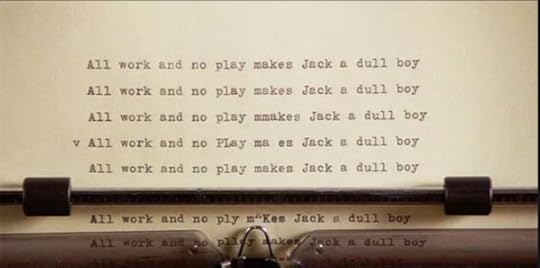
I wonder if Stephen King read this book – see if this reminds you of a famous chilling scene. A well-known writer has given Janet a little shed to do her writing in :
I was amazed and grateful at his acceptance of me as a writer doing daily work, particularly as I had not yet begun to write the novel I planned, and on some mornings I was so anxious to appear to be working that I typed The quick brown fox jumps over the lazy dog and Now is the time for all good men to come to the aid of the party.
*
Autobiographies are claustrophobic books, you only get this one single perspective, that of the author about herself, and maybe you aren’t getting the full picture. There were several nagging things that Janet Frame was not telling me about how she ended up spending eight years in a New Zealand mental hospital and how she came very close to getting a lobotomy. It seems at certain moments of maximum stress she would like Hamlet pretend to be mad but she doesn’t describe exactly how. Once labelled as a schizophrenic it seems nobody, no doctor or nurse, ever noticed that she wasn’t actually schizophrenic, for eight long years! That is some remarkably indifferent lazy nasty medical staff. If you think of other autobiographies of psychologically damaged people, like Girl Interrupted by Susanna Kaysen or God Head by Scott Zwiren, you’ll see a similar thing : the patient always think the doctors and staff are either uncaring or actually hostile to them. The movie One Flew Over the Cuckoo’s Nest is the same.
Psychiatric staff get this truly bad rap from all these books and films. The patients never think that the staff want to help them. They are always seen as malevolent. Surely they can’t all have been this bad?
I’ve ordered the biography of Janet Frame called Wresting with the Angel by Michael King in the hope that this will throw some light on the strange sad history of her terrible misdiagnosis.
Meanwhile – this is a very poignant book which I rattled through in two days. It reveals in gruesome detail the chasms of ignorance a workingclass person has to cope with as they try to find their way up the educational ladder.
This isn't the cheeriest book, but it's strange and hypnotic and unique.
I was amazed and grateful at his acceptance of me as a writer doing daily work, particularly as I had not yet begun to write the novel I planned, and on some mornings I was so anxious to appear to be working that I typed The quick brown fox jumps over the lazy dog and Now is the time for all good men to come to the aid of the party.
*
Autobiographies are claustrophobic books, you only get this one single perspective, that of the author about herself, and maybe you aren’t getting the full picture. There were several nagging things that Janet Frame was not telling me about how she ended up spending eight years in a New Zealand mental hospital and how she came very close to getting a lobotomy. It seems at certain moments of maximum stress she would like Hamlet pretend to be mad but she doesn’t describe exactly how. Once labelled as a schizophrenic it seems nobody, no doctor or nurse, ever noticed that she wasn’t actually schizophrenic, for eight long years! That is some remarkably indifferent lazy nasty medical staff. If you think of other autobiographies of psychologically damaged people, like Girl Interrupted by Susanna Kaysen or God Head by Scott Zwiren, you’ll see a similar thing : the patient always think the doctors and staff are either uncaring or actually hostile to them. The movie One Flew Over the Cuckoo’s Nest is the same.
Psychiatric staff get this truly bad rap from all these books and films. The patients never think that the staff want to help them. They are always seen as malevolent. Surely they can’t all have been this bad?
I’ve ordered the biography of Janet Frame called Wresting with the Angel by Michael King in the hope that this will throw some light on the strange sad history of her terrible misdiagnosis.
Meanwhile – this is a very poignant book which I rattled through in two days. It reveals in gruesome detail the chasms of ignorance a workingclass person has to cope with as they try to find their way up the educational ladder.
This isn't the cheeriest book, but it's strange and hypnotic and unique.

January 29, 2018
Perchè ho amato questo libro
▄ …perché è stata un’emozione dalla prima all’ultima parola…
▄ …perché mi ha ricordato l’importanza di cambiare prospettiva nel guardare il mondo: ” Il ricordo che ho di me comprende, in quel periodo, me stessa che guarda fuori e me stessa che guarda dentro di me da fuori, cercando di vedermi come mi vedevano gli altri, ma poiché io ero il mio corpo e le sue funzioni.”…
▄ …perché mi ha fatto conoscere la nuova Zelanda con il suo afoso Nord e il suo freddo sud…
▄ …perché così dovrebbero essere le autobiografie: sincere ed abili nell’estrarre i ricordi. ” ricordi resuscitati, rivestiti di meditazione e mutamento, intatti nella loro essenza. (Una biografia veritiera cerca di riferire l’essenza. Il rinnovamento e il mutamento fanno parte del materiale narrativo.)”…
▄ ...perché mi ha ricordato che la passione genera passione e le mie tasche allora non sono così vuote se ho qualcosa dentro di così prezioso da poter lasciare alle mie figlie: ” Ma quando nostra madre parlava del presente, illuminando con il suo sentimento di stupita contemplazione il mondo ordinario che conoscevamo, ascoltavamo incantati, avvertendone il mistero e la magia. Le bastava dire di qualsiasi comunissimo oggetto: «Guardate, bambini, una pietra», per attribuire a quella pietra una qualità meravigliosa, come se si trattasse di un oggetto sacro. Era capace di caricare ogni insetto, ogni filo d’erba, ogni fiore, i pericoli e la maestosità del tempo e delle stagioni di un’importanza memorabile, unita a una sorta di umiltà e incertezza, che ci induceva a meditare e a cercare di arrivare al cuore delle cose. Nostra madre, che amava la poesia e la lettura, che amava scrivere e recitare, ci comunicava le stesse emozioni nei confronti del mondo della parola, scritta e parlata.”…
▄ …perché crescere, vivere, misurarsi con il mondo è una continua scoperta che affonda le radici nelle parole. Le parole segnano dei percorsi: ”Ricordo di avere imparato a sillabare e usare queste tre parole: decidere, destinazione e osservazione, ognuna delle quali era strettamente collegata ad avventura. Ero ammaliata dal loro significato e dal fatto che tutte e tre sembravano far parte della struttura di ogni racconto: tutti decidevano, tutti avevano una destinazione, osservavano per decidere e definire la destinazione, e sapevano come affrontare le avventure nelle quali si imbattevano strada facendo.”…
▄ …perché questo è il racconto di una vita- manifesto dell’Amore per la Letteratura…
▄ …perché non nasconde le debolezze e le paure…
▄ …perché ci sono immagini bellissime come quella della geometria del Tempo: ”Quell’anno, da filo o sentiero orizzontale che si poteva seguire o percorrere, il tempo si fece all’improvviso verticale, da salire come una scala fino al cielo, con scalini o episodi che si succedevano rapidamente l’uno all’altro.”…
▄ …perché ha sofferto: è caduta e si è rialzato più volte…
▄ …perché non ha rinunciato al suo sogno di scrivere; ” Piangevo tutto ciò che avevo perduto: la mia carriera di insegnante, il mio passato, la mia casa, dove sapevo non sarei mai potuta restare per più di poche settimane, le mie sorelle, i miei amici, i miei denti, cioè me stessa come persona. Non mi era rimasto che il desiderio di essere una scrittrice, di esplorare pensieri e immagini che venivano disapprovati perché ritenuti bizzarri, e la mia ambizione, considerata sospetta, forse una forma di allucinazione. “…
▄ …perché è rimasta incastrata a lunga nelle opinioni degli altri, nelle decisioni che altri avevano preso al posto suo ma è riuscita a liberarsene: ”il desiderio di essere me stessa e di non seguire le personalità che dominavano intorno a me avevo preso l’abitudine di concentrare la mia attenzione su luoghi che gli altri non guardavano, di distogliere di proposito lo sguardo dal panorama principale, e riconoscevo nella signorina Farnie una persona capace di guardare altrove o, pur guardando il panorama principale, di scorgerne un aspetto inconsueto.”…
▄ …perché riconosce il fatto che non si può scrivere un’autobiografia lineare: la memoria ha sbalzi dovuti agli inevitabili imprevisti e allora se prima i ricordi si accatastano come sacchi su sacchi al mulino, poi “vorticano spinti da una forza sottostante, con ricordi diversi che salgono alla superficie in momenti diversi e negano così l’esistenza di un’autobiografia “pura” confermando, per ogni momento, una storia separata che si accumula in un milione di storie, tutte diverse e con alcuni ricordi che rimangono per sempre sotto la superficie.”…
▄ …perché crescendo non si può fare a meno di osservare i genitori con occhi diversi e J.F. è capace di riassumere tutto questo in un’unica frase: “Vedevo la trama della loro vita passata emergere lentamente, come un copione scritto con l’inchiostro simpatico che ora si rivelava al fuoco acceso semplicemente dalla mia crescita.”…
▄ …perché raccontare una vita condividendo momenti epici (magari fantasiosi) è la via più facile nell’autobiografia di un (una) artista che vuole dare un’immagine di se edificante. E’ come se dicesse: «Se devo darmi in pasto voglio offrirmi dal mio lato migliore!». In questa autobiografia, invece si sente il (duro ed ostinato) lavoro su se stessa col favore della distanza temporale e della maturità…
▄ …perché ho ritrovato la mia adolescenza nelle stesse questioni che lei si poneva e che sono territorio comune di quell’età così incerta e fragile: ”Che cosa potevo fare, al mondo, per guadagnarmi da vivere restando me stessa, la persona che sapevo di essere? C’era la possibilità di portare una maschera sul viso; lo facevano tutti, era la moda degli esseri umani; ma non maschere fissate sul viso al punto da impedirti di respirare e alla fine di soffocarti.”…
▄ …perché lo strazio dei suoi ricoveri è frutto di grida inascoltate che la rendono un burattino della sua stessa storia personale: ” Nessuno pensò di chiedermi perché avessi gridato contro mia madre, nessuno mi chiese quali fossero i miei progetti per il futuro. Diventai immediatamente una terza persona, o piuttosto priva di persona, come nella nota ufficiale sulla visita di mia madre (riferitami molti anni dopo): «Si rifiuta di lasciare l’ospedale».” …
▄ …perché l’esperienza del manicomio, la tortura degli innumerevoli elettroshock (pare più di duecento), il pericolo sfiorato di essere lobotomizzata mi hanno costantemente ricordato Alda Merini e, nonostante le (importanti) differenze, affiora questo contatto con la dimensione della follia e il rifugio nella Poesia: ” Prendevo sul serio la mia nuova condizione. Se il mondo dei pazzi era il mondo al quale ormai appartenevo ufficialmente (malattia incurabile, senza speranza), me ne sarei servita per sopravvivere, vi avrei primeggiato. Sentivo che questo non mi avrebbe impedito di essere una poetessa”
▄ …perché ci ricorda che tra le tante etichette che il consorzio umano usa appiccicare c’è quella della Pazzia che pare sia dotata di un potente mastice: ” Ero caduta non so come in un crepaccio del tempo; e molti di questi sentimenti derivavano dal fatto di non essere “in contatto” con nessuno, e di non avere nessuno con cui poter veramente parlare. Ero la solita Janet sorridente, sorridente, che metteva in mostra la nuova dentiera ingombrante, e che parlava di questo o quell’argomento quotidiano. Scrivevo le mie poesie, senza mostrarle a nessuno. Un membro della mia famiglia aveva trovato e letto un racconto che avevo scritto esprimendo la ferma opinione che non sarei mai stata una scrittrice. Qualche volta, quando cominciavo a dire quello che provavo realmente, servendomi di una similitudine o di una metafora, di un’immagine, scorgevo l’imbarazzo negli occhi dei miei interlocutori: ecco la pazza che parlava.”
▄ …perché dopo “Gridano i gufi” ora voglio leggere tutto ciò che è stato tradotto a partire da “Dentro il muro” dove si parla esplicitamente della drammatica esperienza psichiatrica…
▄ …perché questa lettura intesse tantissimi fili letterari (non potrebbe essere altrimenti perché la Letteratura stessa è stata la trama della sua vita!!). Come Pollicino raccolgo briciole ma a differenza sua io le conserverò gelosamente. Nomi di scrittrici e scrittori, titoli di opere che non posso ignorare, da leggere e/o rileggere: Olive Emilie Albertina Schreiner, William Shakespeare ed in particolare “Misura per misura , La ballata del vecchio marinaio, Kubla Khan di Coleridge, Keats, Elliot, Whitman, Yeats…
▄ …perché, anche se non scrivo, questo libro contiene e delle affermazioni bellissime e profonde sull’esperienza della scrittura e che, giocoforza, diventano preziose anche per chi ha la passione del leggere: ” “Mettere giù tutto così come accade” non è narrativa: deve esserci il viaggio, fatto da soli, il cambiamento della luce concentrata sul materiale, la disponibilità dello stesso autore a vivere in quella luce, in quella città di riflessi governata da leggi, materiali e moneta diversi. Scrivere un romanzo non è soltanto andare a fare acquisti oltre frontiera in una terra irreale: sono ore e anni passati nelle fabbriche, nelle strade, nelle cattedrali dell’immaginazione per apprendere il funzionamento speciale della Città degli Specchi…”
▄ …perché ho letto anche questo: ” Conservammo La morte di Ivan Il’ic come ultima lettura. Frank si scandalizzò quando seppe che non lo avevo mai letto.
“Il grande classico”, lo chiamava.
Mi portai il libretto blu con il segnalibro di seta al capanno per leggerlo, e la sera dopo parlammo di Ivan Il’ic e della morte.
Dal riconoscimento della grandezza letteraria nasce una particolare libertà, come se si cedesse qualcosa che si desiderava tenere e, cedendolo, si liberasse un nuovo spazio per la crescita, l’esplodere di una nuova stagione sotto un sole segreto. Riconoscere una grande opera d’arte è come essere innamorati; non si cammina, si vola; ogni decadenza, morte, distruzione è dentro di noi, non nell’amato; è come innamorarsi dell’immortalità, una liberazione, un volo in paradiso.”…
▄ …perché quando J.F. descrive così la sua prima lettura di Faulkner: ” Ruotando ruotando, turbinando, dove mi trovo? Potrei descrivere così ciò che provai nel leggere la prima pagina di William Faulkner. Andai avanti, lessi fino in fondo e quando ebbi finito il libro turbinavo ancora in un gorgo di parole ed emozioni che mi colpivano come una musica potente il cui significato viene raramente messo in discussione. Dovevo scrivere una recensione – come avrei potuto recensire un romanziere che offuscava di sensazioni la mia visione? Ripresi in mano il libro, rileggendolo più e più volte, emergendo lentamente nella limpida cascata di luce nella quale i personaggi, la scena, il significato apparivano nitidamente delineati, solidi, veri, buoni. Era questo il mondo di William Faulkner, e ora che lo avevo trovato non lo avrei mai più perduto.”
▄ …perché J. F. lascia la Nuova Zelanda per sette anni e l’esperienza tra l’Inghilterra e la Spagna non è uno sterile viaggiare ma un percorso di crescita come Donna e come Scrittrice. Abbandona gli abiti del pregiudizio e vive il confronto con le altre culture come arricchimento (” Ed eccomi qui, in viaggio oltremare per “ampliare la mia esperienza” e subire il cambiamento imposto a ogni nuovo viaggiatore attraverso l’esame non del luogo di arrivo ma di quello di partenza.”)…
▄ …perché scrive: ” Il ricordo diventa scena solo fino a quando il passato non è neppure ieri, è una serie di immagini trattenute che vengono rilasciate a casaccio.”…
▄ …perché in Spagna mentre scrive, guarda dalla finestra e vede la città riflessa nel mare. La città vera da allora diventa per lei quel riflesso che chiamerà la Città degli Specchi: è l’immaginazione che deve abitare ogni artista, non solo come rifugio ma come detentore della propria forza creativa….
Chiedo scusa.
Troppe parole, troppe citazioni non rendono leggibile un commento ma non ho potuto farne a meno…
▄ …perché è stata un’emozione dalla prima all’ultima parola…
▄ …perché mi ha ricordato l’importanza di cambiare prospettiva nel guardare il mondo: ” Il ricordo che ho di me comprende, in quel periodo, me stessa che guarda fuori e me stessa che guarda dentro di me da fuori, cercando di vedermi come mi vedevano gli altri, ma poiché io ero il mio corpo e le sue funzioni.”…
▄ …perché mi ha fatto conoscere la nuova Zelanda con il suo afoso Nord e il suo freddo sud…
▄ …perché così dovrebbero essere le autobiografie: sincere ed abili nell’estrarre i ricordi. ” ricordi resuscitati, rivestiti di meditazione e mutamento, intatti nella loro essenza. (Una biografia veritiera cerca di riferire l’essenza. Il rinnovamento e il mutamento fanno parte del materiale narrativo.)”…
▄ ...perché mi ha ricordato che la passione genera passione e le mie tasche allora non sono così vuote se ho qualcosa dentro di così prezioso da poter lasciare alle mie figlie: ” Ma quando nostra madre parlava del presente, illuminando con il suo sentimento di stupita contemplazione il mondo ordinario che conoscevamo, ascoltavamo incantati, avvertendone il mistero e la magia. Le bastava dire di qualsiasi comunissimo oggetto: «Guardate, bambini, una pietra», per attribuire a quella pietra una qualità meravigliosa, come se si trattasse di un oggetto sacro. Era capace di caricare ogni insetto, ogni filo d’erba, ogni fiore, i pericoli e la maestosità del tempo e delle stagioni di un’importanza memorabile, unita a una sorta di umiltà e incertezza, che ci induceva a meditare e a cercare di arrivare al cuore delle cose. Nostra madre, che amava la poesia e la lettura, che amava scrivere e recitare, ci comunicava le stesse emozioni nei confronti del mondo della parola, scritta e parlata.”…
▄ …perché crescere, vivere, misurarsi con il mondo è una continua scoperta che affonda le radici nelle parole. Le parole segnano dei percorsi: ”Ricordo di avere imparato a sillabare e usare queste tre parole: decidere, destinazione e osservazione, ognuna delle quali era strettamente collegata ad avventura. Ero ammaliata dal loro significato e dal fatto che tutte e tre sembravano far parte della struttura di ogni racconto: tutti decidevano, tutti avevano una destinazione, osservavano per decidere e definire la destinazione, e sapevano come affrontare le avventure nelle quali si imbattevano strada facendo.”…
▄ …perché questo è il racconto di una vita- manifesto dell’Amore per la Letteratura…
▄ …perché non nasconde le debolezze e le paure…
▄ …perché ci sono immagini bellissime come quella della geometria del Tempo: ”Quell’anno, da filo o sentiero orizzontale che si poteva seguire o percorrere, il tempo si fece all’improvviso verticale, da salire come una scala fino al cielo, con scalini o episodi che si succedevano rapidamente l’uno all’altro.”…
▄ …perché ha sofferto: è caduta e si è rialzato più volte…
▄ …perché non ha rinunciato al suo sogno di scrivere; ” Piangevo tutto ciò che avevo perduto: la mia carriera di insegnante, il mio passato, la mia casa, dove sapevo non sarei mai potuta restare per più di poche settimane, le mie sorelle, i miei amici, i miei denti, cioè me stessa come persona. Non mi era rimasto che il desiderio di essere una scrittrice, di esplorare pensieri e immagini che venivano disapprovati perché ritenuti bizzarri, e la mia ambizione, considerata sospetta, forse una forma di allucinazione. “…
▄ …perché è rimasta incastrata a lunga nelle opinioni degli altri, nelle decisioni che altri avevano preso al posto suo ma è riuscita a liberarsene: ”il desiderio di essere me stessa e di non seguire le personalità che dominavano intorno a me avevo preso l’abitudine di concentrare la mia attenzione su luoghi che gli altri non guardavano, di distogliere di proposito lo sguardo dal panorama principale, e riconoscevo nella signorina Farnie una persona capace di guardare altrove o, pur guardando il panorama principale, di scorgerne un aspetto inconsueto.”…
▄ …perché riconosce il fatto che non si può scrivere un’autobiografia lineare: la memoria ha sbalzi dovuti agli inevitabili imprevisti e allora se prima i ricordi si accatastano come sacchi su sacchi al mulino, poi “vorticano spinti da una forza sottostante, con ricordi diversi che salgono alla superficie in momenti diversi e negano così l’esistenza di un’autobiografia “pura” confermando, per ogni momento, una storia separata che si accumula in un milione di storie, tutte diverse e con alcuni ricordi che rimangono per sempre sotto la superficie.”…
▄ …perché crescendo non si può fare a meno di osservare i genitori con occhi diversi e J.F. è capace di riassumere tutto questo in un’unica frase: “Vedevo la trama della loro vita passata emergere lentamente, come un copione scritto con l’inchiostro simpatico che ora si rivelava al fuoco acceso semplicemente dalla mia crescita.”…
▄ …perché raccontare una vita condividendo momenti epici (magari fantasiosi) è la via più facile nell’autobiografia di un (una) artista che vuole dare un’immagine di se edificante. E’ come se dicesse: «Se devo darmi in pasto voglio offrirmi dal mio lato migliore!». In questa autobiografia, invece si sente il (duro ed ostinato) lavoro su se stessa col favore della distanza temporale e della maturità…
▄ …perché ho ritrovato la mia adolescenza nelle stesse questioni che lei si poneva e che sono territorio comune di quell’età così incerta e fragile: ”Che cosa potevo fare, al mondo, per guadagnarmi da vivere restando me stessa, la persona che sapevo di essere? C’era la possibilità di portare una maschera sul viso; lo facevano tutti, era la moda degli esseri umani; ma non maschere fissate sul viso al punto da impedirti di respirare e alla fine di soffocarti.”…
▄ …perché lo strazio dei suoi ricoveri è frutto di grida inascoltate che la rendono un burattino della sua stessa storia personale: ” Nessuno pensò di chiedermi perché avessi gridato contro mia madre, nessuno mi chiese quali fossero i miei progetti per il futuro. Diventai immediatamente una terza persona, o piuttosto priva di persona, come nella nota ufficiale sulla visita di mia madre (riferitami molti anni dopo): «Si rifiuta di lasciare l’ospedale».” …
▄ …perché l’esperienza del manicomio, la tortura degli innumerevoli elettroshock (pare più di duecento), il pericolo sfiorato di essere lobotomizzata mi hanno costantemente ricordato Alda Merini e, nonostante le (importanti) differenze, affiora questo contatto con la dimensione della follia e il rifugio nella Poesia: ” Prendevo sul serio la mia nuova condizione. Se il mondo dei pazzi era il mondo al quale ormai appartenevo ufficialmente (malattia incurabile, senza speranza), me ne sarei servita per sopravvivere, vi avrei primeggiato. Sentivo che questo non mi avrebbe impedito di essere una poetessa”
▄ …perché ci ricorda che tra le tante etichette che il consorzio umano usa appiccicare c’è quella della Pazzia che pare sia dotata di un potente mastice: ” Ero caduta non so come in un crepaccio del tempo; e molti di questi sentimenti derivavano dal fatto di non essere “in contatto” con nessuno, e di non avere nessuno con cui poter veramente parlare. Ero la solita Janet sorridente, sorridente, che metteva in mostra la nuova dentiera ingombrante, e che parlava di questo o quell’argomento quotidiano. Scrivevo le mie poesie, senza mostrarle a nessuno. Un membro della mia famiglia aveva trovato e letto un racconto che avevo scritto esprimendo la ferma opinione che non sarei mai stata una scrittrice. Qualche volta, quando cominciavo a dire quello che provavo realmente, servendomi di una similitudine o di una metafora, di un’immagine, scorgevo l’imbarazzo negli occhi dei miei interlocutori: ecco la pazza che parlava.”
▄ …perché dopo “Gridano i gufi” ora voglio leggere tutto ciò che è stato tradotto a partire da “Dentro il muro” dove si parla esplicitamente della drammatica esperienza psichiatrica…
▄ …perché questa lettura intesse tantissimi fili letterari (non potrebbe essere altrimenti perché la Letteratura stessa è stata la trama della sua vita!!). Come Pollicino raccolgo briciole ma a differenza sua io le conserverò gelosamente. Nomi di scrittrici e scrittori, titoli di opere che non posso ignorare, da leggere e/o rileggere: Olive Emilie Albertina Schreiner, William Shakespeare ed in particolare “Misura per misura , La ballata del vecchio marinaio, Kubla Khan di Coleridge, Keats, Elliot, Whitman, Yeats…
▄ …perché, anche se non scrivo, questo libro contiene e delle affermazioni bellissime e profonde sull’esperienza della scrittura e che, giocoforza, diventano preziose anche per chi ha la passione del leggere: ” “Mettere giù tutto così come accade” non è narrativa: deve esserci il viaggio, fatto da soli, il cambiamento della luce concentrata sul materiale, la disponibilità dello stesso autore a vivere in quella luce, in quella città di riflessi governata da leggi, materiali e moneta diversi. Scrivere un romanzo non è soltanto andare a fare acquisti oltre frontiera in una terra irreale: sono ore e anni passati nelle fabbriche, nelle strade, nelle cattedrali dell’immaginazione per apprendere il funzionamento speciale della Città degli Specchi…”
▄ …perché ho letto anche questo: ” Conservammo La morte di Ivan Il’ic come ultima lettura. Frank si scandalizzò quando seppe che non lo avevo mai letto.
“Il grande classico”, lo chiamava.
Mi portai il libretto blu con il segnalibro di seta al capanno per leggerlo, e la sera dopo parlammo di Ivan Il’ic e della morte.
Dal riconoscimento della grandezza letteraria nasce una particolare libertà, come se si cedesse qualcosa che si desiderava tenere e, cedendolo, si liberasse un nuovo spazio per la crescita, l’esplodere di una nuova stagione sotto un sole segreto. Riconoscere una grande opera d’arte è come essere innamorati; non si cammina, si vola; ogni decadenza, morte, distruzione è dentro di noi, non nell’amato; è come innamorarsi dell’immortalità, una liberazione, un volo in paradiso.”…
▄ …perché quando J.F. descrive così la sua prima lettura di Faulkner: ” Ruotando ruotando, turbinando, dove mi trovo? Potrei descrivere così ciò che provai nel leggere la prima pagina di William Faulkner. Andai avanti, lessi fino in fondo e quando ebbi finito il libro turbinavo ancora in un gorgo di parole ed emozioni che mi colpivano come una musica potente il cui significato viene raramente messo in discussione. Dovevo scrivere una recensione – come avrei potuto recensire un romanziere che offuscava di sensazioni la mia visione? Ripresi in mano il libro, rileggendolo più e più volte, emergendo lentamente nella limpida cascata di luce nella quale i personaggi, la scena, il significato apparivano nitidamente delineati, solidi, veri, buoni. Era questo il mondo di William Faulkner, e ora che lo avevo trovato non lo avrei mai più perduto.”
▄ …perché J. F. lascia la Nuova Zelanda per sette anni e l’esperienza tra l’Inghilterra e la Spagna non è uno sterile viaggiare ma un percorso di crescita come Donna e come Scrittrice. Abbandona gli abiti del pregiudizio e vive il confronto con le altre culture come arricchimento (” Ed eccomi qui, in viaggio oltremare per “ampliare la mia esperienza” e subire il cambiamento imposto a ogni nuovo viaggiatore attraverso l’esame non del luogo di arrivo ma di quello di partenza.”)…
▄ …perché scrive: ” Il ricordo diventa scena solo fino a quando il passato non è neppure ieri, è una serie di immagini trattenute che vengono rilasciate a casaccio.”…
▄ …perché in Spagna mentre scrive, guarda dalla finestra e vede la città riflessa nel mare. La città vera da allora diventa per lei quel riflesso che chiamerà la Città degli Specchi: è l’immaginazione che deve abitare ogni artista, non solo come rifugio ma come detentore della propria forza creativa….
Chiedo scusa.
Troppe parole, troppe citazioni non rendono leggibile un commento ma non ho potuto farne a meno…

May 6, 2025
Writers, especially those from a troubled background, often have a tendency to speak extravagantly about how writing ‘saved their lives’, but in the case of Janet Frame there are grounds for considering the claim literally true. Trapped in a mental asylum for years after a spurious diagnosis of schizophrenia, subjected to repeated bouts of electroshock treatment, Frame was scheduled to be lobotomised, when, just days before the operation, a book of stories she had sent to a small publisher won a major literary award. She was pulled out of the system and went on to become lauded as perhaps – in Eleanor Catton's words – ‘the greatest New Zealand writer’.
These three volumes of autobiography are often considered her masterpiece, and I can see why. She tells her own story with such a perfect judgment of tone – light, dry, unpretentious, with occasional bursts of poetry that are the more striking for the simplicity that surrounds them.
Frame grew up in the 1920s and '30s in a family right on the poverty line in the South Island of New Zealand, where her biggest pleasures came from the natural world around her – a landscape of ‘wild spaces, Southland skies with their shimmerings of Antarctic ice, paddocks of cattle and sheep, dark swamps, brown rivers’.
The bare facts of her childhood (including two shocking family deaths) might sound tragic, but they don't come across that way in the book, where she relates them without a trace of self-pity or melodrama and with great compressed wit and understanding. Still, it's no wonder she felt the mental health problems that first led her into the One Flew Over the Cuckoo’s Nest-style institutions which dominate the second volume of the book.
Awful as those experiences were, she doesn’t discount the fact that they gave her a special perspective on things:
She takes a similarly nuanced and complex view of almost everything that happens to her; another good example is the description of her emotions after falling and occasioning the miscarriage of a pregnancy she only half-wanted:
Sheltered in many ways, sometimes naïve, a virgin until her mid-thirties (her attempts to learn about men and sex are a fascinating and often very funny subplot here), she has as her main companions, always, the works of literature that mean so much to her, especially the poets. This is, among other things, one of the best and most inspiring ‘growth of the writer’ books ever written; which also makes it just one of the great autobiographies, because writing is at the heart of it. ‘It is little wonder that I value writing as a way of life,’ Frame says, ‘when it actually saved my life.’ And she means it.
These three volumes of autobiography are often considered her masterpiece, and I can see why. She tells her own story with such a perfect judgment of tone – light, dry, unpretentious, with occasional bursts of poetry that are the more striking for the simplicity that surrounds them.
Frame grew up in the 1920s and '30s in a family right on the poverty line in the South Island of New Zealand, where her biggest pleasures came from the natural world around her – a landscape of ‘wild spaces, Southland skies with their shimmerings of Antarctic ice, paddocks of cattle and sheep, dark swamps, brown rivers’.
The bare facts of her childhood (including two shocking family deaths) might sound tragic, but they don't come across that way in the book, where she relates them without a trace of self-pity or melodrama and with great compressed wit and understanding. Still, it's no wonder she felt the mental health problems that first led her into the One Flew Over the Cuckoo’s Nest-style institutions which dominate the second volume of the book.
Awful as those experiences were, she doesn’t discount the fact that they gave her a special perspective on things:
I inhabited a territory of loneliness which I think resembles that place where the dying spend their time before death, and from where those who do return living to the world bring inevitably a unique point of view that is a nightmare, a treasure, and a lifelong possession; at times I think it must be the best view in the world, ranging even farther than the view from the mountains of love, equal in its rapture and chilling exposure, there in the neighbourhood of the ancient gods and goddesses.
She takes a similarly nuanced and complex view of almost everything that happens to her; another good example is the description of her emotions after falling and occasioning the miscarriage of a pregnancy she only half-wanted:
I knew a feeling that was stronger than regret but not as intense as bereavement, a no-woman's land of feeling where a marvellous sense of freedom sprang up beside hate for myself, longing for Bernard and what he had given me and never knew, sadness for a lost path, vanishings…
Sheltered in many ways, sometimes naïve, a virgin until her mid-thirties (her attempts to learn about men and sex are a fascinating and often very funny subplot here), she has as her main companions, always, the works of literature that mean so much to her, especially the poets. This is, among other things, one of the best and most inspiring ‘growth of the writer’ books ever written; which also makes it just one of the great autobiographies, because writing is at the heart of it. ‘It is little wonder that I value writing as a way of life,’ Frame says, ‘when it actually saved my life.’ And she means it.

November 9, 2012
So.
Is it blasphemy to say that I prefer her nonfiction to her fiction?
Her fiction was dense, poetic, experimental—all of which I fully appreciate.
Her autobiography is just her truth, which I absolutely love. This resonated so much with me. It's one of those books that says exactly what I would want to say to the world if I'd had the presence of mind to say it first.
She was diagnosed with schizophrenia but wasn't schizophrenic. She was autistic if ever a woman was.
So…
If you'd like to hear a literary genius describe what that's like, what it's really like, I recommend this series.
I also love (and recommend) the film of the same name.
Is it blasphemy to say that I prefer her nonfiction to her fiction?
Her fiction was dense, poetic, experimental—all of which I fully appreciate.
Her autobiography is just her truth, which I absolutely love. This resonated so much with me. It's one of those books that says exactly what I would want to say to the world if I'd had the presence of mind to say it first.
She was diagnosed with schizophrenia but wasn't schizophrenic. She was autistic if ever a woman was.
So…
If you'd like to hear a literary genius describe what that's like, what it's really like, I recommend this series.
I also love (and recommend) the film of the same name.

August 31, 2017
This was (for me at least) the perfect Autobiography. Will be rereading soon, and the following up with Michael King's biography, Wrestling with the Angel: A Life of Janet Frame

June 25, 2013
Temporary masks, I knew, had their place; everyone was wearing them, they were the human rage; but not masks cemented in place until the wearer could not breathe and was eventually suffocated.
She looked how everyone saw her. Sometime after reading Janet Frame's first autobiography To the Is-Land late 2012 I watched some of the 1990s film adaptation by Jane Campion. I stopped watching it into the part from An Angel at my Table. Janet, Jean to her family, looked like everyone saw her. I couldn't hear the inside of her head. The inside humming couldn't be hummed by me as she looks like she doesn't want you to notice her, just in case she isn't looking how she is supposed to look. If there is anything I missed the most about Frame it was that she talked to her reader as if they were an invisible friend. I hoped she wouldn't look at me here because I have had the horrible feeling that none of it would have happened to her if she had been pretty. She looked like Janet Frame with the shock of red hair, a love me smile, forgive me fading smile. The music bothered me. It felt quaint and it narrated outside of the body. New Zealand, sheep and sweaters. It wasn't like when you have a good song that lasts long enough inside of your head. The good "This could be the soundtrack to my life" head music feeling. You don't wear a forgive smile if you feel like this, while it lasts. It was cutesy and this is a movie about the past. The outside kind of ugly little girl, missing the inside oozing center of hope because you hug yourself when you hate your ugly self. The Janet that pretends she doesn't need to eat much because she likes the idea of herself as not a bother and then later sneaks chocolate into her room all the days because she can't admit that she actually has a pretty big appetite. The Janet that would look greedy thinking longingly of the chocolate bars later in her room. She's in the world that feels hungry and wants Janet to be the quiet girl who doesn't need anything more to eat. When she fills in the end of her teaching college autobiography paper about her suicide attempt. She hated school and teaching eats her half alive. It isn't wrong when she is the Janet that looks as if she doesn't know what is going to happen to her when she boasts to the inquisitive professor that the aspirin went down easily with water. I know from elsewhere (not from the book or the film) that the first three weeks turn into eight years of mental hospitals. She wanted to impress the doctors. She must have looked like something that didn't fit and they had some place to send people who didn't fit. I know she must have looked like someone you'd want to shake to not be so pathetic and please shut your mouth. Don't tell these doctors anything that would make them think you belong in the looney bin. Frame writes about her long and open letters to the doctor about her (apparently) schizophrenic symptoms of masturbation. I hear the outside voice in the book that knows she stopped writing to him when he gets married because she felt left out and must now know it was a sickening trap all along. If you saw her she'd just look silly. Would he look lofty, safe with a degree? Not to me, not in any world.
There's a moment between hospital stays when the film Janet looks exactly like Janet must have looked when she tells her sister she is going to be a writer. There's a hopeful look pinned to her chest. It is a badge and it is a secret wish. Janet Frame sounds like this a lot in An Angel at my Table. Writing saved her life. If she had not won a literary prize a new doctor from Scotland would not have thought to save her from the scheduled lobotomy. Stories were her life, a place to fit. She looks like a pompous idiot, like a little girl who dreams of rainbows and princes in the uninteresting Barbie doll variety. She probably talked about writing more than she actually did any writing most days (some days she types a meaningless sentence over and over to appear as if she is writing). She looks like the person who it is everything to and where did it take her I know more from her other books. It was beautiful, there, and I saw her.
I don't like the film Janet Frame because she is someone I would have pity for in the outside world. I like her, yet I want her to get a backbone because I'm drowning some days too. I would have to give her the dignity on my own if I saw her in the hospital to have her teeth removed. I know that Janet is terrified of the dentist. If I see her I don't forget that her teeth hurt because I can see them if she ever smiles. I can see them if she is afraid to smile. I feel the reason for the smile, bad teeth be damned, in her words.
There's a Janet Frame in her words that I missed desperately when watching her. The inner voice that stepped outside when she is ridiculous and face covered with chocolate. I'd love her anyway but this way she gets to love herself. That's better and worth more than coming from me because it is so hard to make that all of the time. The slight humorous twist to the smile that could be rueful when she is also conscious of how she must look to everyone else. I want that Janet Frame. Because you can't get that part of another person any other way. An Angel at my Table didn't have that Janet Frame. I was a jerk and was mad at the film for what the book didn't have. Frame sells her self esteem up the purple river of flowers. She acknowledges the loss of an "I" from her time in the asylums. Whenever she holds onto a rejection for her writing, or a successful publication of a poem... What I felt was the loss of her self-esteem. This writer guy says this, don't write this, read this. The other waitresses say wear this makeup, this dress. It is so painful to read this. I see the Janet Frame that her family doesn't know what to do with. They look like this is a crazy person. She writes about the relief when she pretends that it was a child's vacation. I know what she is doing and I miss so much when she gave herself something else in her fiction Faces in the Water and Owls Do Cry. I really miss it.
There's a third part of the autobiography "The Envoy from the Mirror City". I have a bad feeling it is called this like when she sends a poem about mirrors and fractured images in response to a hospital doctor have they refuse financial assistance when she is released. The imagery chosen for its associations with schizophrenics. I'm afraid to read it if she is who they see her as and not as herself. In the end of part two she is following behind others, still afraid of her own voice. It kills me. When she writes about how other writers don't have to prove that their fiction isn't autobiographical with the absence of lobotomy scars I wanted to tell her that that wasn't the worst that they did to her. It is when she says in the beginning of the book that she admires the little worlds the other patients built for themselves in the rules. It is that she is afraid of ever getting out of them with anyone, not that people look at her like she is crazy. It isn't that she doesn't open her mouth for herself it is that she doesn't miss that she doesn't. I have a feeling that the fictional heroine of Faces in the Water who stands up to the nurses is where Frame got to be brave. If you are so afraid of what other people look like when they are looking at you that you cannot make an expression. That's what Janet Frame looks like in An Angel at My Table. I don't like that look at all. It breaks my heart. What I loved about her so much in Faces in the Water is that she gave to other people by wanting to see something good when she looked at them, not the worst. It felt like she was giving that to herself too by doing that. That's why so much of this book is about being a writer. The identity part of being a writer was too damned important. I didn't like that about this book at all. Because being a writer was what she thought would make her look good to someone else. I still haven't finished watching the film. I want to have an intimate inner voice talking to me. I don't want to feel lonely watching someone else being lonely and it is up to me to be good and just know that there's something real and better to it. I have to, though. I'm not good enough today.
She looked how everyone saw her. Sometime after reading Janet Frame's first autobiography To the Is-Land late 2012 I watched some of the 1990s film adaptation by Jane Campion. I stopped watching it into the part from An Angel at my Table. Janet, Jean to her family, looked like everyone saw her. I couldn't hear the inside of her head. The inside humming couldn't be hummed by me as she looks like she doesn't want you to notice her, just in case she isn't looking how she is supposed to look. If there is anything I missed the most about Frame it was that she talked to her reader as if they were an invisible friend. I hoped she wouldn't look at me here because I have had the horrible feeling that none of it would have happened to her if she had been pretty. She looked like Janet Frame with the shock of red hair, a love me smile, forgive me fading smile. The music bothered me. It felt quaint and it narrated outside of the body. New Zealand, sheep and sweaters. It wasn't like when you have a good song that lasts long enough inside of your head. The good "This could be the soundtrack to my life" head music feeling. You don't wear a forgive smile if you feel like this, while it lasts. It was cutesy and this is a movie about the past. The outside kind of ugly little girl, missing the inside oozing center of hope because you hug yourself when you hate your ugly self. The Janet that pretends she doesn't need to eat much because she likes the idea of herself as not a bother and then later sneaks chocolate into her room all the days because she can't admit that she actually has a pretty big appetite. The Janet that would look greedy thinking longingly of the chocolate bars later in her room. She's in the world that feels hungry and wants Janet to be the quiet girl who doesn't need anything more to eat. When she fills in the end of her teaching college autobiography paper about her suicide attempt. She hated school and teaching eats her half alive. It isn't wrong when she is the Janet that looks as if she doesn't know what is going to happen to her when she boasts to the inquisitive professor that the aspirin went down easily with water. I know from elsewhere (not from the book or the film) that the first three weeks turn into eight years of mental hospitals. She wanted to impress the doctors. She must have looked like something that didn't fit and they had some place to send people who didn't fit. I know she must have looked like someone you'd want to shake to not be so pathetic and please shut your mouth. Don't tell these doctors anything that would make them think you belong in the looney bin. Frame writes about her long and open letters to the doctor about her (apparently) schizophrenic symptoms of masturbation. I hear the outside voice in the book that knows she stopped writing to him when he gets married because she felt left out and must now know it was a sickening trap all along. If you saw her she'd just look silly. Would he look lofty, safe with a degree? Not to me, not in any world.
There's a moment between hospital stays when the film Janet looks exactly like Janet must have looked when she tells her sister she is going to be a writer. There's a hopeful look pinned to her chest. It is a badge and it is a secret wish. Janet Frame sounds like this a lot in An Angel at my Table. Writing saved her life. If she had not won a literary prize a new doctor from Scotland would not have thought to save her from the scheduled lobotomy. Stories were her life, a place to fit. She looks like a pompous idiot, like a little girl who dreams of rainbows and princes in the uninteresting Barbie doll variety. She probably talked about writing more than she actually did any writing most days (some days she types a meaningless sentence over and over to appear as if she is writing). She looks like the person who it is everything to and where did it take her I know more from her other books. It was beautiful, there, and I saw her.
I don't like the film Janet Frame because she is someone I would have pity for in the outside world. I like her, yet I want her to get a backbone because I'm drowning some days too. I would have to give her the dignity on my own if I saw her in the hospital to have her teeth removed. I know that Janet is terrified of the dentist. If I see her I don't forget that her teeth hurt because I can see them if she ever smiles. I can see them if she is afraid to smile. I feel the reason for the smile, bad teeth be damned, in her words.
There's a Janet Frame in her words that I missed desperately when watching her. The inner voice that stepped outside when she is ridiculous and face covered with chocolate. I'd love her anyway but this way she gets to love herself. That's better and worth more than coming from me because it is so hard to make that all of the time. The slight humorous twist to the smile that could be rueful when she is also conscious of how she must look to everyone else. I want that Janet Frame. Because you can't get that part of another person any other way. An Angel at my Table didn't have that Janet Frame. I was a jerk and was mad at the film for what the book didn't have. Frame sells her self esteem up the purple river of flowers. She acknowledges the loss of an "I" from her time in the asylums. Whenever she holds onto a rejection for her writing, or a successful publication of a poem... What I felt was the loss of her self-esteem. This writer guy says this, don't write this, read this. The other waitresses say wear this makeup, this dress. It is so painful to read this. I see the Janet Frame that her family doesn't know what to do with. They look like this is a crazy person. She writes about the relief when she pretends that it was a child's vacation. I know what she is doing and I miss so much when she gave herself something else in her fiction Faces in the Water and Owls Do Cry. I really miss it.
I experienced a feeling of nowhereness and nothingness as if I had never existed, or, if I had, I was now erased from the earth. I had somehow fallen into a crevice in time; and many of these feelings were a result of my being 'in touch' with no one, and of having no one to talk to from within. I was my usual smiling self, smiling, flashing my bulky new false teeth, and talking about this and that and daily matters. I wrote my poems, showing them to no one. A member of my family had found and read a story I wrote and voiced the strong opinion that I would never be a writer. Sometimes when I began to say what I really felt, using a simile or metaphor, an image, I saw the embarrassment in my listener's eyes - here was the mad person speaking.
There's a third part of the autobiography "The Envoy from the Mirror City". I have a bad feeling it is called this like when she sends a poem about mirrors and fractured images in response to a hospital doctor have they refuse financial assistance when she is released. The imagery chosen for its associations with schizophrenics. I'm afraid to read it if she is who they see her as and not as herself. In the end of part two she is following behind others, still afraid of her own voice. It kills me. When she writes about how other writers don't have to prove that their fiction isn't autobiographical with the absence of lobotomy scars I wanted to tell her that that wasn't the worst that they did to her. It is when she says in the beginning of the book that she admires the little worlds the other patients built for themselves in the rules. It is that she is afraid of ever getting out of them with anyone, not that people look at her like she is crazy. It isn't that she doesn't open her mouth for herself it is that she doesn't miss that she doesn't. I have a feeling that the fictional heroine of Faces in the Water who stands up to the nurses is where Frame got to be brave. If you are so afraid of what other people look like when they are looking at you that you cannot make an expression. That's what Janet Frame looks like in An Angel at My Table. I don't like that look at all. It breaks my heart. What I loved about her so much in Faces in the Water is that she gave to other people by wanting to see something good when she looked at them, not the worst. It felt like she was giving that to herself too by doing that. That's why so much of this book is about being a writer. The identity part of being a writer was too damned important. I didn't like that about this book at all. Because being a writer was what she thought would make her look good to someone else. I still haven't finished watching the film. I want to have an intimate inner voice talking to me. I don't want to feel lonely watching someone else being lonely and it is up to me to be good and just know that there's something real and better to it. I have to, though. I'm not good enough today.

November 29, 2015
I read this as part of my self-declared New Zealand November in 2015, and with great interest because this volume includes the time period where Janet Frame spends large portions of time in several mental institutions. She later turned this into a "novel," Faces in the Water, and this volume of her autobiography helped me understand how much of that book came from her actual experience.
Another story that demonstrates this pre-feminism era is when the warden of the College sent for Janet to ask her to get her younger sister in line.
There is a lot in here about poets who were a heavy influence on her writing life, both in modeling writing but also in claiming a New Zealand identity in the writing, using the landscape, the unique experience, to create.
But more than anything, all of her life is lived between periods in mental institutions.
"Writing an autobiography, usually thought of as a looking back, can just as well be a looking across or through, with the passing of time giving an X-ray quality to the eye. Also, time past is not time gone, it is time accumulated, with the host resembling the character in the fairytale who was joined along the route by more and more characters, none of whom could be separated from one another or from the host, with some stuck so fast that their presence caused physical pain."One element of this story that was horrific to me was that of female hygiene, something that continues from the previous volume. In her teenage years, she was forced to use cloth, which would leak and bulge and smell. In her college and early adult years, she would take walks and dispose of her sanitary napkins in cemeteries, along slummy roads, or in the woods. And so did other girls. Why their mothers and other older women in their lives didn't normalize this for them is a huge mystery to me - so much monthly shame in an experience half the population would have been having! She also lived in incredible poverty during college and early teaching years, almost as if she didn't know it wasn't acceptable.
Another story that demonstrates this pre-feminism era is when the warden of the College sent for Janet to ask her to get her younger sister in line.
"Isabel, she said, was making a guy of herself both by her behavior and by the clothes she wore, in particular a skirt printed with a giraffe."It turns out that "making a guy" of oneself includes standing out, both in speech and dress. And adding that applique giraffe to her skirt had put Isabel past the boundary of appropriate feminine behavior. Ha.
There is a lot in here about poets who were a heavy influence on her writing life, both in modeling writing but also in claiming a New Zealand identity in the writing, using the landscape, the unique experience, to create.
But more than anything, all of her life is lived between periods in mental institutions.
"The six weeks I spent at Seacliff hospital in a world I'd never known among people whose existences I never thought possible, became for me a concentrated course in the horrors of insanity and the dwelling-place of those judged insane, separating me for ever from the former acceptable realities and assurances of everyday life."At one point she explains that Faces in the Water is entirely based on her actual experiences, but that she downplayed some of it to make it seem more realistic. Phew. At one point she is diagnosed with schizophrenia, which is almost a comfort to her - she has a name for it, she is in a group with other people, often creative, although she has to declare it along with job applications and every time she receives health care. Only the acclaimed publication of a book of her stories (The Lagoon: A Collection of Short Stories) saves her from a scheduled leucotomy (aka lobotomy). Mental note, boys and girls: evidence of creative output can save you from having a piece of your brain destroyed!
"It was now my writing that at last came to my rescue. It is little wonder that I value writing as a way of life when it actually saved my life."When Janet's sister dies, another sister to die while swimming because of a bad heart, she stays away from the funeral.
"I was in hiding. I was grieving. I didn't want anyone to 'see,' for since I had been in hospital, I had found that people didn't only 'see,' they searched carefully."In fact any time there was a setback, problem, death, Janet is sheltered and protected in deference to (or fear of) her mental illness.

July 16, 2021
Eine außergewöhnliche Biographie, passend zu einem außergewöhnlichen Leben. Sprache spielt eine sehr große Rolle schon für das Kind Janet Frame, Wörter sind von den Dingen nicht getrennt. Durch sie verbindet Janet Frame sich mit der Welt, schreibt schon als kleines Kind Gedichte und später eben diese so ungewöhnliche Biografie. Ein Leben, das bewegt, eine Sprache, die berührt.

February 15, 2020
Her life is controlled. She is told, without any evidence that she suffers from Schizophrenia, and is incarcerated in a mental institution. There, without being tested or barely interviewed, based on the length of stay, she is subjected to numerous electroshock treatments erasing parts of her recent memory. But still there she writes. She must write. Something inside her compels her. Just before she is to undergo a surgery that will leave her tamed and just a slightened image existing to comply and make it easier for the hospital to keep her corralled, her first book is published and the surgery is cancelled.
She has always been unconventional, fighting for her right to be unconventional which was interpreted as a form of insanity in New Zealand at this time. This was the battle, to fit in or to discover and be her self. She saw herself as Schizophrenic but suffering from an in illness that made her more romantic as a writer. A struggling writer. A struggling young transparent woman who lived under the constant threat that to be herself meant the possibility of again being incarcerated in a mental institution where she would have no control of what was done to her.
This is a battle between the demands of societies conventions and in this young soul the exquisite need to find and be her self. However, it is taken further. Ultimately, she is aware of this other existence. An existence referred to as a, Mirror Existence. This is where the objects and subjects of ordinary life existing on the surface of a body of water is molded into the molten forms of fiction. A land where one lives within the unconfined parameters of imagination and the meanings lying below the surface images.
In order to reside in the ordinary world she must give up much to also live in the world of writing, the world of imagination. She does but never in this autobiography, which allows me to be with her, does she lapse into the sentimental. At my age now it was a wonder to be part of a consciousness so young and searching, seeded to flower. This is accomplished by her open honest voice, the lyrical prose seeming to rise from this consciousness without intent. There is a purity of spirit through the gains and the tribulations.
I recommend this book for anyone who enjoys reading about the battle to live an ordinary life or take the risks of living that Mirror Life of the imagination; to fit in or strive throughout ones life to battle in seeking the self that lies within you.
She has always been unconventional, fighting for her right to be unconventional which was interpreted as a form of insanity in New Zealand at this time. This was the battle, to fit in or to discover and be her self. She saw herself as Schizophrenic but suffering from an in illness that made her more romantic as a writer. A struggling writer. A struggling young transparent woman who lived under the constant threat that to be herself meant the possibility of again being incarcerated in a mental institution where she would have no control of what was done to her.
This is a battle between the demands of societies conventions and in this young soul the exquisite need to find and be her self. However, it is taken further. Ultimately, she is aware of this other existence. An existence referred to as a, Mirror Existence. This is where the objects and subjects of ordinary life existing on the surface of a body of water is molded into the molten forms of fiction. A land where one lives within the unconfined parameters of imagination and the meanings lying below the surface images.
In order to reside in the ordinary world she must give up much to also live in the world of writing, the world of imagination. She does but never in this autobiography, which allows me to be with her, does she lapse into the sentimental. At my age now it was a wonder to be part of a consciousness so young and searching, seeded to flower. This is accomplished by her open honest voice, the lyrical prose seeming to rise from this consciousness without intent. There is a purity of spirit through the gains and the tribulations.
I recommend this book for anyone who enjoys reading about the battle to live an ordinary life or take the risks of living that Mirror Life of the imagination; to fit in or strive throughout ones life to battle in seeking the self that lies within you.

March 4, 2020
Splurp
This is the edition I read, but owing to the length I reviewed the volumes as they were first published, separately:
1. To the Is-Land
2. An Angel at my Table
3. The Envoy from Mirror City
But ‘splurp’? Yes, as in
Honest to god, I’ve rarely seen so many garbled and missing characters; I’m assuming because the book was scanned from an earlier edition, but that’s no excuse.
So publishers, here's a challenge! Get a proof-reader or I’ll have the dogs ‘sooled’ on to you! [p. 38] (maybe even ‘sooked’, that'll show you!)
####
Later I watched Jane Campion’s movie of the same name. It’s visually stunning but more like a series of vignettes than a coherent story. Campion hardly used any voice-over monologues as segues, so the emotionally-wrought scenes have little context unless you’ve read the book. I think she must have conceived this as a homage to the book, rather than a work that could stand on its own.
This is the edition I read, but owing to the length I reviewed the volumes as they were first published, separately:
1. To the Is-Land
2. An Angel at my Table
3. The Envoy from Mirror City
But ‘splurp’? Yes, as in
“that dark sweet liquid with the splurp taste, known as Gregg’s Coffee and Chicory” [p. 252]Really? Janet Frame wrote that? Not (I’m guessing here), syrupy?
Honest to god, I’ve rarely seen so many garbled and missing characters; I’m assuming because the book was scanned from an earlier edition, but that’s no excuse.
So publishers, here's a challenge! Get a proof-reader or I’ll have the dogs ‘sooled’ on to you! [p. 38] (maybe even ‘sooked’, that'll show you!)
####
Later I watched Jane Campion’s movie of the same name. It’s visually stunning but more like a series of vignettes than a coherent story. Campion hardly used any voice-over monologues as segues, so the emotionally-wrought scenes have little context unless you’ve read the book. I think she must have conceived this as a homage to the book, rather than a work that could stand on its own.
July 29, 2020
En son okuduğum ve beni dağıtan parçalara bölen bu eseri ne kadar anlatabilirim bilemeyeceğim sanki ne söylesem eksik kalacak.Öylesine etkilendim ki bütün günümü bütün düşüncelerimi günümü gecemi elimden aldı benimle birlikte heryerde Janet Frame ve yaşadıkları.Tahmin edeceğiniz gibi yüreğimde Yeni Zelanda yolculuğu başlamış bulunuyor ilerdeki hedeflerimden biri olacak sanırım.
https://serserikuslar.blogspot.com/20...
https://serserikuslar.blogspot.com/20...

May 7, 2026
Yazarların otobiyografilerini okumayı çok seviyorum. Her şeyden önce kendi sözcükleriyle hayatlarını, dünyalarını paylaşmaları ve bunları okuma şansına erişebilmek şahane bence. Bunun yanında, duyarlılığı yüksek, iç dünyası zengin birinden nefis büyüme, olgunlaşma hikayeleri okuyorsunuz bu otobiyografileri okurken. Üstelik yazmaya, okumaya ve kitaplara adanmış hayatlar bunlar; dolayısıyla benzer tutkuları paylaştığınız insanların serüvenleri bu hikayeler. Tüm bunlara ilaveten, dönemin önemli olayları, doğup büyüdükleri kültürlerin, ülkelerin, toplumların hikayeleri de yansıyor bu anlatılara genelde ve bunları da yine bir yazarın derin görüşünden, onun nefis anlatımından dinliyorsunuz. Daha ne olsun!
Jane Frame’in otobiyografisi de tüm bu bahsettiklerimi ve hatta daha fazlasını barındırıyor. Yeni Zelanda’da işçi sınıfı bir ailenin beş çocuğundan biri olarak dünyaya gelip ülkenin en önemli yazarlarından biri olmasının hikayesini son derece şeffaf, dürüst ve adilane bir şekilde anlatıyor Frame. Bunu özellikle vurgulamak istedim çünkü bu otobiyografide her şeyden önce kendisine bakışını çok sevdim Frame’in. Kendini başarılarıyla ve kusurlarıyla kabullenmiş; ne yargılamış ne aklama çabasına girmiş, ne şefkatle pamuklara sarmalamış ne acımasızca yermiş.
Nevi şahsına münhasır bir karakteri olan yazarın hayat hikayesi de sıra dışı. Yoksulluk içinde geçen çocukluk yıllarını anlatarak başlamış Frame, hiç ajitasyona başvurmadan. Okul forması almanın bile zor olduğu bir ortamda kitaplara olan sevgisi ve şiir tutkusuyla, ailesi ve kardeşleriyle bağıyla yazarken kendisi de o günlere dönmüş adeta. Bunu çok güzel hissettiriyor okura çünkü sanki Frame anlattıkça, çocukluğundan yetişkinliğe geçtikçe anlatımı da olgunlaşıyor, üslubu derinleşiyor. İç dünyası oldukça zengin biri yazar ancak hayatı boyunca çok yalnızlık çekmesine rağmen insanlara yaklaşmak konusunda hep çok zorlanmış ve bu ikilem hayatı boyunca hırpalamış onu. Sonunda yanlış teşhis sonucu yıllarca akıl hastanesinde kalmış, bu süre boyunca da yazmaktan hiç vazgeçmemiş ve yazdığı bir kitap sayesinde ömür boyu tecritten kurtulmuş, tüm bunları da olanca şeffaflığıyla paylaşmış (ki bu yıllarını da “Sudaki Yüzler” romanında görmek mümkün, bence bu türde yazılmış en iyi kurgu metinlerden birisi). Sonrasında yurt dışına çıkışını, Avrupa’da geçirdiği yıllarını ve ilişkilerini anlatmış, ki bu kısımlarda gözünüzün önünde günbegün büyüyüp, zorluklarla geçen yetişkinlikten sonra artık bir yazar olarak karşınıza çıkışına ayrıca duygulanıyorsunuz okurken. Sanki o da hayatının bir muhasebesini yapıyor sonunda ve bir yere ‘köklenmek’ istiyor artık. Daha fazla anlatmayacağım ama sonunu da müthiş bağladığını belirtmek istiyorum.
Kısacası çok sevdim. Frame gibi bir insanı tanımak, böyle bir yazar olma serüvenine ilk elden tanıklık etmek, böyle bir hayat hikayesini okumak, üstüne pek bilmediğim Yeni Zelanda’ya bu hikaye vasıtasıyla gitmek muhteşem bir yolculuktu benim için. Hararetle öneririm.
Jane Frame’in otobiyografisi de tüm bu bahsettiklerimi ve hatta daha fazlasını barındırıyor. Yeni Zelanda’da işçi sınıfı bir ailenin beş çocuğundan biri olarak dünyaya gelip ülkenin en önemli yazarlarından biri olmasının hikayesini son derece şeffaf, dürüst ve adilane bir şekilde anlatıyor Frame. Bunu özellikle vurgulamak istedim çünkü bu otobiyografide her şeyden önce kendisine bakışını çok sevdim Frame’in. Kendini başarılarıyla ve kusurlarıyla kabullenmiş; ne yargılamış ne aklama çabasına girmiş, ne şefkatle pamuklara sarmalamış ne acımasızca yermiş.
Nevi şahsına münhasır bir karakteri olan yazarın hayat hikayesi de sıra dışı. Yoksulluk içinde geçen çocukluk yıllarını anlatarak başlamış Frame, hiç ajitasyona başvurmadan. Okul forması almanın bile zor olduğu bir ortamda kitaplara olan sevgisi ve şiir tutkusuyla, ailesi ve kardeşleriyle bağıyla yazarken kendisi de o günlere dönmüş adeta. Bunu çok güzel hissettiriyor okura çünkü sanki Frame anlattıkça, çocukluğundan yetişkinliğe geçtikçe anlatımı da olgunlaşıyor, üslubu derinleşiyor. İç dünyası oldukça zengin biri yazar ancak hayatı boyunca çok yalnızlık çekmesine rağmen insanlara yaklaşmak konusunda hep çok zorlanmış ve bu ikilem hayatı boyunca hırpalamış onu. Sonunda yanlış teşhis sonucu yıllarca akıl hastanesinde kalmış, bu süre boyunca da yazmaktan hiç vazgeçmemiş ve yazdığı bir kitap sayesinde ömür boyu tecritten kurtulmuş, tüm bunları da olanca şeffaflığıyla paylaşmış (ki bu yıllarını da “Sudaki Yüzler” romanında görmek mümkün, bence bu türde yazılmış en iyi kurgu metinlerden birisi). Sonrasında yurt dışına çıkışını, Avrupa’da geçirdiği yıllarını ve ilişkilerini anlatmış, ki bu kısımlarda gözünüzün önünde günbegün büyüyüp, zorluklarla geçen yetişkinlikten sonra artık bir yazar olarak karşınıza çıkışına ayrıca duygulanıyorsunuz okurken. Sanki o da hayatının bir muhasebesini yapıyor sonunda ve bir yere ‘köklenmek’ istiyor artık. Daha fazla anlatmayacağım ama sonunu da müthiş bağladığını belirtmek istiyorum.
Kısacası çok sevdim. Frame gibi bir insanı tanımak, böyle bir yazar olma serüvenine ilk elden tanıklık etmek, böyle bir hayat hikayesini okumak, üstüne pek bilmediğim Yeni Zelanda’ya bu hikaye vasıtasıyla gitmek muhteşem bir yolculuktu benim için. Hararetle öneririm.

August 7, 2017
Libro diviso in tre parti, originariamente tre volumi poi riuniti in un unico grande libro.
Da lettore si inizia con l'innocenza di un bambino e si cresce accompagnati dall'autrice in un mondo sconosciuto, quasi fiabesco.
Le tre parti del libro sono molto diverse fra loro, l'infanzia, la maturità e la rinascita al mondo di una donna che stupisce per il suo approccio alla vita.
Un'infazia serena, seppur vissuta nell'estrema povertà, una curiosità vivace e una voglia di apprendere, di soffermarsi maniacalmente su parole nuove e sconosciute la accompagnano nei primi anni della sua formazione. Tutto questo contribuisce a creare intorno a lei un'aura di stranezza, l'aspetto poi non aiuta l'integrazione fra i suoi coetanei, capelli incolti e crespi, abbigliamento in pessimo stato e denti marci, segni distintivi che non l'abbandoneranno mai.
Arrivano poi lutti a dir poco profetici e una errata diagnosi medica che ne marchieranno il corso dell'esistenza condannandola ad essere una schizofrenica immaginaria, sana di mente ma costretta a vivere circondata dai pazzi per otto anni della sua vita subendo circa duecento trattamenti di elettro-shock.
Stupisce il suo narrare con disarmante pacatezza, senza mai dimostrare rabbia o rancore verso chi le ha rovinato la vita, il suo accettare tutto come parte integrante di sè, la povertà, l'emarginazione, la malattia.
Una malattia diagnosticata con leggerezza, dove schizofrenica è una ragazza timida e intelligente con una schiettezza al di sopra della norma, una novità che fa gridare allo strano, al pazzo.
E lei, remissiva e fatalista accetta tutto, accetta la diagnosi, accetta i vari ricoveri volontari che la costringono ad una vita sottomessa e mai indipendente, che la privano della libertà di scegliere un lavoro, un luogo da chiamare casa. Il condizionamento è tale che, trovandosi senza altra scelta, più di una volta sceglie il ricovero volontario come semplice via di fuga, come unico modo per trovare un posto tranquillo dove stare.
La svolta arriva grazie a Frank Sargeson, uno scrittore, un uomo che lei definisce un apprendista di fantasmi in un mondo di distanze le offre rifugio in un piccolo chalet all'interno della sua proprietà. Insieme condividono un bellissimo anno bohemien con tempo a sufficienza per esprimere se stessa, vivere e scrivere in assoluta libertà. Mesi preziosi che le consentono di incontrare altri artisti, rafforzarsi emotivamente e trovare la forza e il coraggio per spiccare il volo e abbandonare la Nuova Zelanda per la Spagna e infine per l'Inghiltarra.
Da donna asessuata, come lei stessa si definisce, la Spagna le rivelerà che anche questo suo giudizio era errato, scoprirà così di poter stringere legami affettivi con gli uomini, scoprirà cosa vuol dire essere viva e libera di scegliere e sbagliare.
L'inghilterra invece le donerà finalmente la libertà mentale, dopo l'ultimo ricovero volontario il fardello della schizofrenia le verrà definitivamente tolto lasciandola spoglia, nuda e indifesa di fronte al suo unico difetto, se difetto si può definire, la sua estrema timidezza.
Non è come Van Gogh o Mozart, niente genio e follia ma soltanto una comune donna con un particolare talento per la scrittura che sceglie e accetta una vita solitaria e emarginata al limite dell'asocialità in un periodo in cui la normalità è trovare marito e mettere al mondo figli.
Qusta biografia, nata su consiglio del medico che la seguiva più come tentativo di sfogo che come vera opera letteraia, come mezzo per raccontare a qualcuno la sua storia, un qualcuno che non l'abbandoni a metà percorso, come molti suoi medici hanno fatto, si rivela poi un libro bellissimo, di struggente sensibilità e commovente realtà storica, ricco di citazioni letterarie, di autori, libri e persone che hanno accompagnato il corso della sua vita.
L'unico motivo per continuare questa autobiografia è che, per quanto abbia usato, inventato, mescolato, rimodellato, cambiato, aggiunto, sottratto da tutte le mie esperienze, non ho mai scritto direttamente della mia vita e dei miei sentimenti. Senza dubbio mi sono mescolata ad altri personaggi che sono a loro volta il prodotto del noto e dell'ignoto, del reale e dell'immaginario; ho creato "esseri", ma non ho mai scritto del mio essere.
Da lettore si inizia con l'innocenza di un bambino e si cresce accompagnati dall'autrice in un mondo sconosciuto, quasi fiabesco.
Le tre parti del libro sono molto diverse fra loro, l'infanzia, la maturità e la rinascita al mondo di una donna che stupisce per il suo approccio alla vita.
Un'infazia serena, seppur vissuta nell'estrema povertà, una curiosità vivace e una voglia di apprendere, di soffermarsi maniacalmente su parole nuove e sconosciute la accompagnano nei primi anni della sua formazione. Tutto questo contribuisce a creare intorno a lei un'aura di stranezza, l'aspetto poi non aiuta l'integrazione fra i suoi coetanei, capelli incolti e crespi, abbigliamento in pessimo stato e denti marci, segni distintivi che non l'abbandoneranno mai.
Arrivano poi lutti a dir poco profetici e una errata diagnosi medica che ne marchieranno il corso dell'esistenza condannandola ad essere una schizofrenica immaginaria, sana di mente ma costretta a vivere circondata dai pazzi per otto anni della sua vita subendo circa duecento trattamenti di elettro-shock.
Stupisce il suo narrare con disarmante pacatezza, senza mai dimostrare rabbia o rancore verso chi le ha rovinato la vita, il suo accettare tutto come parte integrante di sè, la povertà, l'emarginazione, la malattia.
Una malattia diagnosticata con leggerezza, dove schizofrenica è una ragazza timida e intelligente con una schiettezza al di sopra della norma, una novità che fa gridare allo strano, al pazzo.
E lei, remissiva e fatalista accetta tutto, accetta la diagnosi, accetta i vari ricoveri volontari che la costringono ad una vita sottomessa e mai indipendente, che la privano della libertà di scegliere un lavoro, un luogo da chiamare casa. Il condizionamento è tale che, trovandosi senza altra scelta, più di una volta sceglie il ricovero volontario come semplice via di fuga, come unico modo per trovare un posto tranquillo dove stare.
La svolta arriva grazie a Frank Sargeson, uno scrittore, un uomo che lei definisce un apprendista di fantasmi in un mondo di distanze le offre rifugio in un piccolo chalet all'interno della sua proprietà. Insieme condividono un bellissimo anno bohemien con tempo a sufficienza per esprimere se stessa, vivere e scrivere in assoluta libertà. Mesi preziosi che le consentono di incontrare altri artisti, rafforzarsi emotivamente e trovare la forza e il coraggio per spiccare il volo e abbandonare la Nuova Zelanda per la Spagna e infine per l'Inghiltarra.
Da donna asessuata, come lei stessa si definisce, la Spagna le rivelerà che anche questo suo giudizio era errato, scoprirà così di poter stringere legami affettivi con gli uomini, scoprirà cosa vuol dire essere viva e libera di scegliere e sbagliare.
L'inghilterra invece le donerà finalmente la libertà mentale, dopo l'ultimo ricovero volontario il fardello della schizofrenia le verrà definitivamente tolto lasciandola spoglia, nuda e indifesa di fronte al suo unico difetto, se difetto si può definire, la sua estrema timidezza.
Non è come Van Gogh o Mozart, niente genio e follia ma soltanto una comune donna con un particolare talento per la scrittura che sceglie e accetta una vita solitaria e emarginata al limite dell'asocialità in un periodo in cui la normalità è trovare marito e mettere al mondo figli.
Qusta biografia, nata su consiglio del medico che la seguiva più come tentativo di sfogo che come vera opera letteraia, come mezzo per raccontare a qualcuno la sua storia, un qualcuno che non l'abbandoni a metà percorso, come molti suoi medici hanno fatto, si rivela poi un libro bellissimo, di struggente sensibilità e commovente realtà storica, ricco di citazioni letterarie, di autori, libri e persone che hanno accompagnato il corso della sua vita.
L'unico motivo per continuare questa autobiografia è che, per quanto abbia usato, inventato, mescolato, rimodellato, cambiato, aggiunto, sottratto da tutte le mie esperienze, non ho mai scritto direttamente della mia vita e dei miei sentimenti. Senza dubbio mi sono mescolata ad altri personaggi che sono a loro volta il prodotto del noto e dell'ignoto, del reale e dell'immaginario; ho creato "esseri", ma non ho mai scritto del mio essere.

January 5, 2019
Equal reading event of 2018 for me, along with a Gerald Murnane bender early in the year, though I’d be hard-pressed to say why. For one thing my wife joined in the reading, at first following and later eclipsing me while I took a short detour through a library book that was soon due. She loved it, though partly because, as she kept saying, Frame reminded her of me. And it’s true Frame seemed familiar, but more like a sister than an alternate self. I left her (Frame) just as she arrived in London, had her first date (aged early thirties) with someone she met on a bus, and spent a night at a writers’ commune, whose inhabitants were impressed she had a book out, even if (as she assured them) it was only published in New Zealand. I think I had to read that far, just to make sure she’d be all right. And when I picked it up again it was pleasure, sweet relief. She makes it to Ibiza, has a lover, keeps on publishing. Her newfound independence is tangible; it grows and grows. And strange to say, I envied her, after all she’d been through. I envied her self-reliance; her self-centredness; her certainty of what she should, could and must do. It’s a hard thing, I guess, to describe the writing life. Hard to make clear what’s at stake. But Frame excels at it. And somewhere half or two-thirds of the way through this epic I realised: it’s about stubbornness, sheer force of will. If eight years in mental hospitals and 200 ECT treatments was the only way to break free from the expectations of family and society, so be it. And the remarkable thing: there is no bitterness. Or maybe a little, in her criticism of her New Zealand mental-health “care” (though not more than a handful of times in those eight years did a doctor talk directly to her, once the spurious label “schizophrenic” was affixed it spoke for itself), but overall her gratitude to the good and kind doctors in her life wins out. Seven of her novels were dedicated to a psychiatrist in England who encouraged her to write, who obtained for her a National Insurance stipend so that she could do so in peace, and her voluntary hospitalisation in London was the opposite of her New Zealand experience – a reversal, a chance to set the record straight. I understand upon her eventual return to New Zealand Frame battled to keep her own story (ie, as it appeared in the press) from overwhelming her fiction. The fact is, that story is one of the all-time great artist’s stories: of overcoming odds, of coming from out of nowhere, of doing exactly what deep down she knew she must do. But no-one could tell it like she does. It seems so effortless; it must have been anything but. “One of the wonders of the world,” Patrick White called it. I can see what he means.

June 4, 2017
Wonderful book by an exceptional New Zealand writer

August 2, 2019
No tengo palabras, una maravilla de libro. Lo amé. La escritura de Janet Frame es fluida, se nota que escribe muy bien y es muy equilibrada, poética sin ir al extremo de caer en excesos de floritura ni descripción ni ser acética y distante.
La historia de su vida es hermosa, tremenda, triste, y ella la cuenta sin caer en el melodrama extremo. Lo que esta mujer vivió y superó la convierte en un ejemplo de superación y tenacidad para lograr cumplir sus sueños de convertirse en escritora.
Una historia que inspira, que fluye con buen ritmo y que emociona.
Para mí, casi una guía espiritual personal que solo lamento no haberla leído antes.
La historia de su vida es hermosa, tremenda, triste, y ella la cuenta sin caer en el melodrama extremo. Lo que esta mujer vivió y superó la convierte en un ejemplo de superación y tenacidad para lograr cumplir sus sueños de convertirse en escritora.
Una historia que inspira, que fluye con buen ritmo y que emociona.
Para mí, casi una guía espiritual personal que solo lamento no haberla leído antes.



January 15, 2012
I confess that I came to this book only after seeing Jane Campion's brilliant film adaptation of Janet Frame's autobiographies. And, despite telling essentially the same story, the book and the film feel like wildly different things. That's the nature of an adaptation, of course; and I'm not suggesting that Campion is somehow less faithful to her source material than other directors might be. It's just that Campion's film is perhaps more masterful, more finely crafted. Which does not take anything at all away from Frame. She's up to other things here. Great things. She is taking shadows and echoes and demons and turning them into something else, something bright and nourishing and warm. This book isn't a page-turner. It isn't for everyone. But, if you're a writer, it's well worth your while. And then some.
August 16, 2024
“… ben, şimdi hayatın yüzeyini pürüzsüzleştirmek, bir nevi görünmez olmak, kabul görmeyecek ya da öfke çekecek her şeyi içimde saklamak için elimden geleni yapıyordum.”
Hissetirdiklerini/düşündürdüklerini ifade etmesi çok zor bir kitap. Janet Frame sanki bu üç bölümden oluşan otobiyografisini yazmak için yaşamış. Üstelik yazılmış gibi bile değil kendini ifade edişi çok şeffaf. Tanıklığın böylesi çok etkileyici.
“Hayatlarımız kırılgandı, utancın ve pişmanlığın acılarıyla, iletişimde yanlış anlaşılmalarla doluydu ve kitapların, müziğin, sanatın ve diğer insanların ortaya attığı fikir sağlığına karşı hissedilen güçlü büyük harflerle yazılan Aşk, Hayat, Zaman, Yaş, Hayal Gücü soyutlamalarının arasında sığınacak bir yer bulma zamanıydı.”
Hissetirdiklerini/düşündürdüklerini ifade etmesi çok zor bir kitap. Janet Frame sanki bu üç bölümden oluşan otobiyografisini yazmak için yaşamış. Üstelik yazılmış gibi bile değil kendini ifade edişi çok şeffaf. Tanıklığın böylesi çok etkileyici.
“Hayatlarımız kırılgandı, utancın ve pişmanlığın acılarıyla, iletişimde yanlış anlaşılmalarla doluydu ve kitapların, müziğin, sanatın ve diğer insanların ortaya attığı fikir sağlığına karşı hissedilen güçlü büyük harflerle yazılan Aşk, Hayat, Zaman, Yaş, Hayal Gücü soyutlamalarının arasında sığınacak bir yer bulma zamanıydı.”
Read
August 9, 2011Extra-ordinary life and writing style. She goes from a very realistic and straight on language to the most poetic descibtions of ordinary thing that I have ever read. Some strophes needs to be read twice or trice to even comprehend and absorb. A book to read for all :-) !
November 4, 2024
I really really loved this book. I finished it a few weeks ago but haven’t updated my progress as I’ve been in a slump again with reading and so not so active on this here app.
Janet Frame is a marvel. It was the centenary of her birth this year and so feels timely to have finished it recently and it’s been comforting to see the reverence she continues to be held in by such a range of demographics.
For anyone who felt too anxious or sensitive in childhood and who didn’t understand the rules of social life, to anyone who has a complicated relationship to European/pākehā New Zealand and wants to witness someone grapple with that identity and land in a place that asserts belonging but not ownership, to anyone who loves the act of reading and writing, this is your book 🫶🏻
Idk, it’s such a celebration of being strange, independent, supported by a community even if it’s at times within the bounds of white politeness politics and other times, a boundless bohemian and queer community of artists and societal rejects lol.
I imagine this book will be a bit of a touchstone for me, returning to is as the different trials of life call for it. I’m so glad writing saved Frame’s life! Our social security/benefits and safety nets are not designed to support people such as her who couldn’t keep up with modern expectations of working but who had so much value to offer to her communities / NZ at large .
No doubt many brilliant people have suffered a similar fate. An affirming reminder to support local artists/creatives/writers. They are recording our history, they’re doing it well, and we rlly need it xx
Janet Frame is a marvel. It was the centenary of her birth this year and so feels timely to have finished it recently and it’s been comforting to see the reverence she continues to be held in by such a range of demographics.
For anyone who felt too anxious or sensitive in childhood and who didn’t understand the rules of social life, to anyone who has a complicated relationship to European/pākehā New Zealand and wants to witness someone grapple with that identity and land in a place that asserts belonging but not ownership, to anyone who loves the act of reading and writing, this is your book 🫶🏻
Idk, it’s such a celebration of being strange, independent, supported by a community even if it’s at times within the bounds of white politeness politics and other times, a boundless bohemian and queer community of artists and societal rejects lol.
I imagine this book will be a bit of a touchstone for me, returning to is as the different trials of life call for it. I’m so glad writing saved Frame’s life! Our social security/benefits and safety nets are not designed to support people such as her who couldn’t keep up with modern expectations of working but who had so much value to offer to her communities / NZ at large .
No doubt many brilliant people have suffered a similar fate. An affirming reminder to support local artists/creatives/writers. They are recording our history, they’re doing it well, and we rlly need it xx

September 29, 2007
This is the second volume in a trilogy of autobiographies by New Zealand writer Janet Frame, covering about ten years in the 1940s between the time she leaves school and sets off for London. Her description of surviving eight years spent in mental institutions as a result of being mistakenly diagnosed with schizophrenia, is horrifying, but also compelling. I love Janet Frame's novels; her writing is beautiful, complex, and she just seems to turn language inside out. From that point of view alone it is fascinating to read the autobiography to learn more about the experiences that formed such a unique perspective, but even if you are not familiar with her other work, the story of her life alone is a fascinating one.

December 7, 2022
Janet Frame, uma das mais célebres escritoras neozelandesas, sobreviveu oito anos no inferno, só escapando, literalmente, graças à literatura.
Tive conhecimento desta escritora devido ao cinema, a também neozelandesa e realizadora, Jane Campion, realizou o filme homónimo à autobiografia da autora supracitada: "An Angel At My Table".
Janet Frame foi erradamente diagnosticada, os médicos decidiram que ela seria esquizofrénica, e condenaram-na a passar oito anos no manicómio, de onde só sairia se submetida a uma lobotomia, a publicação do seu primeiro livro, salvou-a.
An Angel At My Table conta-nos a vida preenchidíssima da escritora, uma autobiografia, que se lê como um romance.
Tive conhecimento desta escritora devido ao cinema, a também neozelandesa e realizadora, Jane Campion, realizou o filme homónimo à autobiografia da autora supracitada: "An Angel At My Table".
Janet Frame foi erradamente diagnosticada, os médicos decidiram que ela seria esquizofrénica, e condenaram-na a passar oito anos no manicómio, de onde só sairia se submetida a uma lobotomia, a publicação do seu primeiro livro, salvou-a.
An Angel At My Table conta-nos a vida preenchidíssima da escritora, uma autobiografia, que se lê como um romance.
This entire review has been hidden because of spoilers.

August 22, 2022
Me ha gustado porque la vida de la escritora es absolutamente increíble. Sin embargo, los relatos sobre la niñez me cansan mucho, y trufarlos de poemas y otros recuerdos literarios que te evoca está etapa, es lindo pero mucho más cansino. El volumen dedicado a los años de adultez y de vida en el extranjero son los que más me han gustado aunque sean los menos aclamados por la crítica.He disfrutado sobremanera con Londres, Ibiza y Andorra, mientras que la Nueva Zelanda natal me ha parecido un truñete.
Read
August 11, 2011A wonderful autobiography.....sad, funny and unforgettable....a brilliant author of the utmost sensitivity.....
Displaying 1 - 30 of 217 reviews