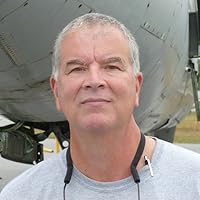
Richard L. Newhafer was an American novelist, teleplay writer and television director whose experience as a highly decorated veteran of World War II and the Korean War played a key role in his books and in his contribution to ABC's 1960s series Combat! and Twelve O'Clock High.
A native of Chicago, Richard Newhafer was a student at Loyola Academy, the University of Notre Dame, and DePaul University. In his early twenties at the start of World War II, he became a Naval Aviator, took part in extensive military operations and was credited with downing three Japanese planes and participated in sinking the battleship "Ise". During the Korean War, he again served in the navy and, in 1954-55, he was public affairs officer of the Blue Angels, the Navy's prestigious flight demonstration team. When television producer Samuel Gallu requested a technical advisor for The Blue Angels, his 1960 syndicated series portraying the team's fictional exploits, The Pentagon assigned Richard Newhafer.
Having earned over thirty medals, decorations and citations, Newhafer resigned from the Navy (he reached the rank of Commander) and remained in Hollywood, becoming a writer of war novels and teleplays and subsequently directing a number of episodes for the 1964-67 World War II series Twelve O'Clock High. Among his books were The Last Tallyho (1964, G. P. Putnam's Sons), No More Bugles in the Sky (1966, New American Library), The Violators (1967, New American Library), The Golden Jungle (1968), On the Wings of the Storm (1969, William Morrow and Company) and Seven Days to Glory (1973).
He also authored stories which were published in men's action magazines such as "Flying" and "Air Navy" and, in his final years, expanded into the detective genre, writing episodes for the early seasons of Cannon, a 1971-76 series which, following Twelve O'Clock High, continued his association with Quinn Martin Productions.
Newhafer died unexpectedly on October 12, 1974 while visiting actor Rod Taylor in Los Angeles. He was fifty-three at the time of his death.
This book has given me goosebumps all the way through. These situations really happened. These personal and war-level victories and losses really happened. I know this book is fiction but the overall message is not. The thoughts, the emotions, the fears, the illusions, the first times, the crushes, the heartbreaks, the plans for the future… All of that happened. While each person was fighting against himself, it was added that he also had to fight against an enemy that was not far from him. They were the same deep down. And without forgetting that bond so special, so deep, so honest that was created between people who just a few months did not know of the existence of the other before. That they had to blindly believe in each other in the darkest and most decisive moments of their lives. That friendship, that camaraderie is very difficult to explain, only those who have been through it understand it. Only an equal is capable of fully understand what you have been through.
It's not the story in the book, it's the real story that gives me goosebumps.
There aren't many good fiction books about naval aviation in World War II, and the thing about author Richard Newhafer is that he was one of the guys who were there. This book really speaks with authority and conveys a lot of the wartime spirit and atmosphere. The dogfight scenes are well-written, without the usual Red-Baron-Dawn-Patrol cliches of Hollywood. And the peculiar thing is that the relationship between Dick Marriner and his wife Julie is touchingly innocent, despite the fact that it was probably considered "racy" at the time.
Navy fighters from carriers (Marshalls, Midway...). Marvelous knowledge of fighter techniques, brilliant battle scenes. No literary ability in the narratives.