This book keeping the information needs of reder in mind. The topics covered by this book are wide ranging with a lot of details packed in. This book is money worth in this price range. Everybody can read this book at any point of time. It is useful for all the age range.
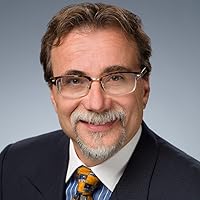
Robert J. Sternberg's spectacular research career in psychology had a rather inauspicious beginning. In elementary school he performed poorly on IQ tests, and his teachers' actions conveyed their low expectations for his future progress. Everything changed when his fourth grade teacher, Mrs. Alexa, saw that he had potential and challenged him to do better. With her encouragement, he became a high-achieving student, eventually graduating summa cum laude and Phi Beta Kappa from Yale University. In a gesture of gratitude, Dr. Sternberg dedicated his book, Successful Intelligence to Mrs. Alexa.
Dr. Sternberg's personal experiences with intelligence testing in elementary school lead him to create his own intelligence test for a 7 th grade science project. He happened to find the Stanford-Binet scales in the local library, and with unintentional impertinence, began administering the test to his classmates; his own test, the Sternberg Test of Mental Abilities (STOMA) appeared shortly thereafter. In subsequent years he distinguished himself in many domains of psychology, having published influential theories relating to intelligence, creativity, wisdom, thinking styles, love and hate.
Dr. Sternberg's Triarchic Theory of (Successful) Intelligence contends that intelligent behavior arises from a balance between analytical, creative and practical abilities, and that these abilities function collectively to allow individuals to achieve success within particular sociocultural contexts. Analytical abilities enable the individual to evaluate, analyze, compare and contrast information. Creative abilities generate invention, discovery, and other creative endeavors. Practical abilities tie everything together by allowing individuals to apply what they have learned in the appropriate setting. To be successful in life the individual must make the best use of his or her analytical, creative and practical strengths, while at the same time compensating for weaknesses in any of these areas. This might involve working on improving weak areas to become better adapted to the needs of a particular environment, or choosing to work in an environment that values the individual's particular strengths. For example, a person with highly developed analytical and practical abilities, but with less well-developed creative abilities, might choose to work in a field that values technical expertise but does not require a great deal of imaginative thinking. Conversely, if the chosen career does value creative abilities, the individual can use his or her analytical strengths to come up with strategies for improving this weakness. Thus, a central feature of the triarchic theory of successful intelligence is adaptability-both within the individual and within the individual's sociocultural context.
I teach Intellectual Assessment Theory to graduate students. And, for years, I have liked what I have read about Sternberg's theory of Successful Intelligence. But I have never been able to put my hands on a chapter that nicely describes the construct and its components. So, I decided to go and read one of the original works he wrote describing Successful Intelligence. Lo and behold! Exactly what I wanted!
Successful Intelligence involves three components: Analytical Intelligence (school ability), Creative Intelligence (thinking outside of the box), and Practical Intelligence (street smarts/application). Sternberg makes the argument that truly successful people need to have all three components. We reward analytical intelligence in schools, but that does not help a) obtain jobs (usually more practical intelligence), b) solve problems at our jobs (usually more creative intelligence), or c) get promoted (both creative and practical). He argues that a good balance of all three intelligences is important in day-to-day life. Further, he provides data to suggest that developing all three types of intelligence help students succeed better in college courses.
I really like this theory. And the data seem compelling. So much so that, over the past three to five years, I have adjusted my evaluations in my courses to include assessments (i.e., test items) that incorporate all three components: analytical, practical, and creative. I am working under the assumption that this is better for student development (i have not seen any decline, but really have no hard data to support an increase, either).
The book is written for the general public, so there are not many jargonistic words used. And, when Sternberg does use some jargon, he explains what he means very well. The book itself is more of an explanatory book; if you are looking for self-help on how to increase different abilities, there is scant little advice available. Which was good for my purposes, but may not match other people's desires.
Successful intelligence = analytic + creative + practical intelligence. Sternberg argues that successful intelligence is the metric we should be using instead of the narrowly defined analytic intelligence that most IQ tests capture. Most of the book consists of Sternberg critiquing traditional conceptualizations of intelligence, followed by his explanations and defenses of creative and practical intelligence.
In the final chapter (ch. 8), Sternberg outlines the characteristics of successful intelligence. 1. Successfully intelligent people motivate themselves. 2. They learnt to control their impulses. 3. They know when to persevere. 4. They know how to make the most of their abilities. 5. They translate thought into action. 6. They have a product orientation (they know how to produce, not just consume info). 7. They complete tasks and follow through. 8. They are initiators, they don't wait to be told what to do. 9. They are not afraid to risk failure. 10. They don't procrastinate. 11. They accept fair blame. 12. They reject self-pity. 13. They are independent. 14. They seek to surmount personal difficulties. 15. They focus and concentrate to achieve their goals. 16. They spread themselves neither too thin nor too thick. 17. They have the ability to delay gratification. 18. They have the ability to see the forest and the trees. They can distinguish the important from the inconsequential. 19. They have reasonable levels of self confidence and a belief in their ability to accomplish their goals. 20. Successfully intelligent people balance analytical, creative, and practical thinking.
This entire review has been hidden because of spoilers.
More information on how school performance and life performance are two completely different things. Sternberg takes IQ and other standardized tests to task by pointing out that the kinds of intelligence tested are static, decontextualized versions of the real thing. A person with the intelligence to become successful may not score particularly high on tests but has the analytical intelligence (represented but poorly on IQ tests), creative intelligence and practical intelligence. A truly intelligent person not only finds the right answers but poses the right questions to answer, the right questions being those most useful to him/herself and others in society. Sternberg describes each of the three types of intelligence and culminates the book with other aspects of successfully intelligent people, namely aspects of their character such as adaptability and willingness to take risks. Much of Sternberg's work sounds similar to other books I've read, but that may be because other authors were using part of Sternberg's work. Worth a read, especially for anyone looking for vindication for being labeled "stupid" due to low test scores.
My LinkedIn feed is full of articles about emotional intelligence and the habits of effective business leaders. But what is successful intelligence, and can it be nurtured? In his book Successful Intelligence, Robert J. Sternberg, Ph.D., writes that we can nurture the ideal mix of analytical, creative, and practical intelligence that determines success in life — if we stop emphasizing a style of teaching and testing that leaves students ill-equipped for life in the real world.
Schools, colleges, and universities tend to reward analytical intelligence, which can be measured — to a degree — through IQ tests, SATs, and other scholastic entrance exams. Many children who are praised for their analytical intelligence, which they demonstrate by earning As via memorization and multiple-choice tests, are unprepared for the world of work, which demands the ability not only to solve problems that don’t have clear-cut answers but also, at times, to determine what specific problem needs to be solved. The focus on analytical intelligence also hurts children whose strengths are creative or practical and cannot be measured by IQ tests. A case of nerves or a bad day might hurt other students’ performances, as can a cultural, ethnic, or socioeconomic background that is anything other than American, white, and middle class or above. Once labelled as less than intelligent, a child often begins to conform to the lowered expectations she receives from her teachers. Sternberg dedicates his book to the fourth grade teacher who “turned his life around” by expecting him to perform well in her class, despite his low score on an IQ test. The author went on to become a Phi Beta Kappa graduate of Yale and earned his Ph.D. from Stanford. He currently is professor of Human Development at Cornell University.
Anyone who lost interest in history as a child due to the teacher’s emphasis on memorizing dates and names of battles can understand how rote learning rather than critical thinking hurts students. Sternberg writes that an aversion to risk is a reason why admissions directors rely on tests that measure only analytical thinking. Because the process is weighed more heavily than the performance it is supposed to measure, students whose work demonstrates academic competence or excellence, despite low IQ, SAT, or GRE scores, are viewed as outliers. The testers don’t question the validity of the tests. Sternberg, however, states that “teachers and parents should encourage children to question assumptions. That way, they will also encourage them to think creatively and express their own ideas about the way things are or should be. . . . It is probably safe to assume that all creative thinking begins with one question: ‘Why?’ ” [The current COVID pandemic has led colleges and universities to waive their SAT requirements for current applicants. It will be interesting to see if admissions testing for higher education becomes less important in the coming years.]
Successful Intelligence was published in 1996, and Sternberg’s use of the term “mentally retarded” in the book feels jarring in 2021. According to the Special Olympics website, “The R-word is a form of hate speech that stands for ‘retard,’ ‘retarded,’ or other offensive words ending in ‘-tard.’ While ‘mental retardation’ was originally introduced as a medical term in 1961 for people with intellectual disabilities, in the decades since, the R-word has become an insult used all too commonly in everyday language. Those who use the R-word often do so with little regard for the pain it causes people with intellectual disabilities—and the exclusion it perpetuates in our society.”
Sternberg discusses the obstacles that creative people face and advises them to “find the environment that rewards what you have to offer, and then make the most of your creativity and of yourself in that environment.” He explains that practical intelligence helps people navigate politics at work, often allowing some employees to ascend the corporate ladder while better performers remain below. Individuals with successful intelligence possess a combination of analytical, creative, and practical intelligence and know when to apply each type to their situation. They understand their strengths and make the best of them, which allows them to make up for their weaknesses, of which they are also aware.
This book was a finding and it was so well recommended that I think it kinda ruined it for me. The first half of the way is full of outdated view on intelligence and with unrelated correlations. But the second half is really good and I kinda byuly rapport with the writer. Probably, since he only uses references without naming the study or giving too much context about the researches, I was left wondering if they were true at all. But it's a worth read and you tacitly know it's almost all true. But I still have to look up at his references.
Informatief populariserend academisch boek met vernieuwende theorie over intelligentie.
Informeel kwartet van denkers Sternberg, onderdeel van het informele kwartet van denkers over intelligentie, creativiteit en wijsheid: Howard Gardner (multiple intelligences), Mihaly Csikszentmihalyi (flow), Daniel Goleman (emotional intelligence) en Robert Sternberg dus. Waarom informeel? Omdat het kwartet niet als entiteit echt bestaat, maar deze academici elkaar citeren en aan "positive psychology" doen (waar Csikszentmihalyi samen met Seligman zo'n beetje de grondlegger van is) dat wil zeggen de psychologie van positieve ervaringen, eigenschappen en instituties, als tegenhanger tegen de psychologie van psychische problemen. Sternberg dus, een interessante acadeem in intelligentie, liefde en wijsheid. Vooral dat laatste onderzoek spreekt me aan, maar zijn literatuur daarover is niet zo toegankelijk. Dat geldt wel voor zijn theorie over intelligentie, die hij uiteenzet in dit boek.
Wat is intelligentie? Hierop heeft voor mij Gardner het beste antwoord. Wat Sternberg daaraan toevoegt is de toepassing van intelligentie om dingen in je leven of in dat van anderen voor elkaar te krijgen. Sternberg onderscheidt daartoe drie intelligentie-dimensies: analytische, creatieve en praktische intelligentie. Klassieke IQ-tests meten enkel de analytische dimensie, en die zelfs onvolledig (alleen dat deel dat het meest relevant is voor schoolprestaties). Ook het nature-nurture-probleem valt niet te meten: welke deel is aangeboren, welk deel aangeleerd? En, hartstikke relevant in onze woelige tijden, verschil in IQ tussen ethnische bevolkingsgroepen is voornamelijk of geheel toe te schrijven aan omgevingsfactoren! Sternberg besteedt nogal veel aandacht aan de IQ-test om aan te tonen dat hij maar beperkt bruikbaar is: 'Of iemand wel of niet succesvol is volgens de samenleving, wordt slechts in minder dan 10% van de gevallen bepaald door op IQ gebaseerde maatstaven.' Hij licht toe de definitie van intelligentie cultureel bepaald is. Naast deze sociale context beïnvloeden de mentale context (intentie bij een activiteit of taak) en fysieke context (locatie, omstandigheden van de omgeving) de uitkomst van een IQ-test.
Driedelige theorie van succesvolle intelligentie In de theorie van Sternberg bestaat succesvolle intelligentie uit (1) analytische intelligentie: begrijpen en reproduceren, 'bewust richting geven aan een denkproces om een doordachte oplossing te vinden voor een probleem'; (2) creatieve intelligentie: iets nieuws of een nieuw idee kunnen produceren, 'het vermogen om verder te gaan dan het vaststaand gegeven teneinde nieuwe en interessante ideeën voort te brengen', impliceert synthetisch denken (verbanden zien die anderen niet zien); (3) praktische intelligente: gezond verstand, streetsmart, 'in staat om met (...) strategieën te komen om alledaagse problemen op te lossen', impliciete kennis is essentieel (=actiegerichte kennis, wordt verkregen zonder directe hulp van anderen, stelt iemand in staat doelen te bereiken die hij belangrijk vindt: hoe / dingen doen, betrekking op een doel van waarde, weinig hulp van anderen bij het vergaren). Mensen die eenzijdig analytisch zijn ontwikkeld, zijn vaak minder succesvol in het leven (oa geluk). Mensen die een iets minder hoog IQ hebben moeten dat compenseren met andere eigenschappen en worden op die manier vaak gelukkiger. De mensen die het meest succesvol intelligent zijn, benutten hun sterke punten, compenseren hun zwakke punten, en halen het beste uit hun capaciteiten. Als gevolg hiervan zijn deze mensen flexibel en passen zij zich gemakkelijk aan hun rol aan: ze analyseren welke aanpassing nodig is, creëren deze aanpassingen en passen die ook toe. Succesvol intelligente mensen zijn actief op zoek naar voorbeeldfiguren. Ze zetten situaties naar hun hand. Zijn op zoek maar de impliciete kennis in een omgeving.
Eigenschappen Sternberg sluit zijn boek af met de beschrijving van eigenschappen die succesvol intelligente mensen gemeen hebben: - motiveren zichzelf - leren zich te beheersen - weten wanneer zij moeten doorzetten (succes pas na lange weg met frustraties en mislukkingen) - benutten hun capaciteiten zo goed mogelijk - zetten gedachten om in daden - zijn productgericht (itt tot de procedure om er te komen) - gaan door tot het werk af is en komen beloften na - nemen initiatief - niet bang voor nemen risico's - stellen niet uit - accepteren het als ze terecht ergens de schuld van krijgen - wijzen zelfmedelijden af - zijn zelfstandig - proberen persoonlijke problemen te overwinnen - zijn doelgericht - nemen niet te veel en niet te weinig hooi op hun vork - hebben het vermogen om beloning uit te stellen - kunnen bomen en het bos zien - hebben een redelijk zelfvertrouwen en zelfverzekerdheid - behouden evenwicht tussen analytisch, creatief en praktisch denken
Admittedly, there is something somewhat tautological in the way that the author views successful intelligence, though this does not negate the insights the author has about the importance of creativity and practicality when it comes to intelligence. Successful intelligence is intelligence that succeeds. Practical intelligence is intelligence that succeeds, that is seen as practical by others, that does not only demonstrate sterile knowledge but an awareness of what needs to be done in the world. Creative intelligence, in the author's estimation, is intelligence that is directed to solving problems, often in novel or at least unusual ways. We understand what is novel or unusual, of course, by understanding that which has been done before and that which is done in a statistical sense by a given population. Obviously there are repercussions and consequences, as what is usual for me in my own habits may be unusual for the particular societies I have found myself in, but usual for some other population that I have not yet found. Successful intelligence is therefore context dependent, and harder to test or encourage than the sort of sterile rote memorization and response sort of intelligence that can and is tested quite often.
This particular book of more than 250 pages is divided into eight chapters in four parts. Throughout the book the author speaks from his own personal experience and that of his children as well in school and in life. After a preface the author begins the book with the question of what counts in life, IQ, intelligence, or successful intelligence (I), with the question of how we can move beyond the intelligence quotient (1). The author then affirms that IQ doesn't count even though that is what people count (II) by talking about what IQ tells us (2) and doesn't tell us (3). After that the author affirms that successful intelligence is what counts (III), and discusses three keys to successful intelligence (4), namely finding good solutions through analytical intelligence (5), finding good problems with creative intelligence (6), and making solutions work with practical intelligence (7). After this the author looks at how someone may activate successful intelligence (IV) and avoid the tendencies of self-sabotage (8), even if it does not appear as if the outside world generally favors creativity when push comes to shove. Finally, the author concludes this particular volume with acknowledgments, notes, a bibliography, and an index.
Although the author's definitions are a little bit defective concerning that which is practical or successful, there are definitely some worthwhile insights that one can gain from this book. For one, the lack of competition in measurement of intelligence has meant that intelligence tests are stagnant and not nearly as statistically relevant as their frequent use would support. For another, the creative solving of problems is something that comes relatively easily to small children but is something that is actively suppressed in older children and adults because it is genuinely unpopular and sometimes even dangerous in societies that have always valued a high degree of conformity. That which is creative is often not initially appreciated and so it is important for a creative person to be somewhat thick-skinned when it comes to the carping criticism of one's peers while also focused on the eventual success that comes with having successfully solved a problem that many people may not even have recognized the existence of. Success may come only in time, and if one is to be successful, one may have to endure much before being vindicated through eventual success. Hopefully this book can provide some encouragement for genuinely creative people, as we do tend to need some encouraging.
A very interesting look at intelligence. What makes people successful. The book was very interesting at first and faltered toward the end but really made me think which is what I look for in a good book. I've started to analyze people I work with more in the last month on some of these criteria and find it interesting.
I have a new class coming this spring that I'm the TA for. I'm going to try to predict how successful each person will be in the class after meeting them by these guidelines and see who comes out the other side. It's a lab class by the way.
Continuing the debate over the relevance and predictive validity of intelligence tests, Sternberg may go too far in bashing IQ in favor of his proposed triarchic theory of intelligence: analytical, creative, and practical. At times the book appeared too defensive of Sternberg's theory, and evidence against IQ tests appear too convenient. However, the book provides an excellent overview of Sternberg's theory. I would recommend it to anyone interested in competency, skill, ability or, of course, intelligence.
A look at what "intelligence" is. He claims intelligence has three parts (analytical, creative, practical), and as a culture we overemphasize a small fraction of the analytical to our detriment. In particular, he got low test scores and has turned out quite successful, and describes many similar cases.
Really interesting, and well researched. But the research wasn't the interesting part. Sternberg's own interpretation and analysis, combined with compelling and personal stories is the most interesting.
Interesting but incredibly repetitive. If I were to read it again, I'd probably skip the debunking of intelligence tests. By chapter 3 I was losing interest in the repetitive writing, but the last few chapters are extremely interesting. Worth a look.
68. Successful Intelligence, by Ed. Research into Analytical, Creative, and Practical Intelligence. More interesting insights into how just being smart isn’t enough in today’s challenging, increasingly flat, technologically savvy world.
This book, written in the 1990s, contains many ideas that have been expounded on in the years since. I'm now suspicious of IQ tests and realize the validity of the SAT/ACT tests lies in telling colleges/universities what you have learned academically so far.
I picked this one up after reading the "Outliers" (which I loved) and was sorely disappointed. It is not nearly as readable... lots of technical mumbo jumbo that didn't hold my interest.