Katherine Willis Pershey has never slept with the mailman or kissed an ex-boyfriend. Good thing, since she’s married. But simply not committing adultery does not give you the keys to “happily ever after,” as Pershey has come to find out in her own marriage and in her work as a pastor. What is this sacred covenant that binds one person to another, and what elements of faith and fidelity sustain it? In Very Field Notes on Love and Fidelity , Pershey opens the book on all things marital. With equal parts humor and intelligence, Pershey speaks frankly about the challenges and consolations of modern marriage. As she shares her own tales of bliss and blunder, temptation and deliverance, Pershey invites readers to commit once again to the joyful and difficult work of cherishing another person. For better or worse. For life. Free downloadable study guide available .
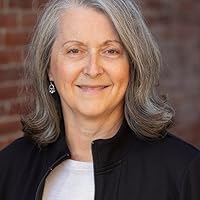
Katherine Willis Pershey is a pastor in Wisconsin and has previously served churches in Illinois and California. She has a Doctor of Ministry Degree from the Eugene Peterson Center for Christian Imagination at Western Theological Seminary. She is the author of Any Day a Beautiful Change: A Story of Faith and Family and Very Married: Field Notes on Love and Fidelity. Katherine and her husband, Ben, have been married since 2002 and are raising two teenage children.
Any book that can pull together quotes from the Gospels, Brene Brown, and Mindy Kaling while making beautiful points about the joy and insanity of marriage and life together is well worth the time to read.
I'd recommend this book to anyone who wants to take an honest, yet grace-filled look at marriage. Read it. Then read it again. It's that good!
Written in an engaging and relatable first person format, Willis Pershey is once again at her best with this book that delves into the ups and downs of marriage. While offering her perspective, she is never judgmental or restricting. Rather, this book offers a distinctly Christian vision for marriage that is both realistic and joyful. Weaving her masterful prose (that was already established in her first book, Any Day a Beautiful Change) with pastoral wisdom, Willis Pershey has given us a gift of a book that will bless married couples for years to come. ** I received a free copy to review.
Based on the premise that it is better to be married than not and that marriage is one of the greatest blessings a couple has, Pershey shares some of her personal story and the way life’s hard knocks has refined and ultimately strengthened her marriage. A few chapters were very insightful, particularly the ones on conflict and intimacy, but overall the book wasn’t as amazing as I expected due to some fundamental worldview differences in my perspective from the author’s. Overall it is very well written and something a newlywed would definitely appreciate, as a lot of it is very reflective on the early years of a marriage.
I received an early copy of this in exchange for an honest review! I will honestly tell you that my sister is an exceedingly good writer : ) It's out everywhere now, too, so you can go get your hands on a copy as well.
This book tackles the bits of marriage that many don't speak about in memoir: how simultaneously rewarding and challenging it is to stay very married, just like Audrey Hepburn dreamed of. A dangerous crush, the stresses of parenting well, the little snits over peanut butter—she writes honestly and openly about all these and more. Her book is framed with Christian marriage in mind, but much of her writing about the meaning and challenges of marriage will resonate with anyone.
Honest, Candid, Real. These are only some of the adjectives that I would use to describe Katherine Willis Pershey's book. In her poetic prose, she guides us vulnerably through the intricacies of life together, the challenges and opportunities that come from living in and through an institution such as marriage.
Unlike many religious leaders, she wades through the waters in humility, honesty, and openness. She does not claim perfection instead she invites us to think deeply about what marriage means and about the ways that living life with another is at the core of what it means to live willingly yoked with another human being.
Katherine Willis Pershey does not shy away from the difficult topics connected to married life. From pre-marital sexuality, infidelity, and submission to same-sex marriage, divorce, and death, Pershey guides us with humor, humility, and understanding. Like a faithful pastor, she shines a light behind the closed doors of covenant life. Along the way she gives us hope that in the midst of the many challenges that marriage faces today “[t]here’s no shame in needing covenant to live.”(210)
As pastor, husband, and fellow sojourner I say: take up and read! In Very Married we are gifted with an invitation to a new-old way of living life together.
(Although I have purchased a book this review is based on the reading of an advanced copy provided to me by the publisher)
As a pastor, I oftenly look for books to read to strengthen my understanding of marriage both for my own relationship and in guiding others. I enjoyed Very Married by Katherine Willis Pershey. Pershey writes in a very open and honest manner about her insights, experiences and understanding of marriage. While some books on marriage focus most on one factor or another i.e. communication, conflict resolution etc; Pershey incorporates and intersperses many different aspects of marriage into this work. What I liked most was the focus on “fidelity” and being faithful and loyal to the person you married. Pershey does well in addressing tough issues in relationships from a biblical context that are easily misunderstood by many. An example is the tough issue of sex outside and coming to a more full understanding of why this boundary is important in marriage while not shaming but showing grace…
One of the reasons we believe in our culture that sex should always and only be the result of great passion is that so many people today have learned how to have sex outside of marriage, and this is a very different experience than having sex inside it. Outside of marriage, sex is accompanied by a desire to impress or entice someone. It is something like the thrill of the hunt. When you are seeking to draw in someone you don’t know, it injects risk, uncertainty, and pressure to the lovemaking that quickens the heartbeat and stirs the emotions. The contrast between unmarried and married sex is significant. The covenant of marriage— the vows to love now and forever—changes everything. It just does. (Kindle Location 485) Pershey also does in addressing the tension that we all feel between valuing marriage as forever and our pursuit of individualism rooted within the American dream. While also showing the difference and contrast between a contract and covenant marriage.
We value marriage— Till death do we part. We value individualism —I’m just not happy anymore. And we just sort of look away when the value we place on marriage contradicts the value we place on personal satisfaction. A few southern states have established laws in which couples can opt for a “covenant” marriage; these distinct licenses require premarital counseling and limit how quickly and easily a couple can divorce. Cherlin notes how very few couples choose to accept the restrictions of covenant marriage.
What Americans want, in other words, is for everyone else to have a covenant marriage.” (Kindle Location 634)
A covenant is an agreement not unlike a contract, save for one minor detail: it’s completely unlike a contract. Contracts are conditional, limited, and generally entered into for reasons of self-interest. They are legal documents that can be used against you if you violate their terms. Covenants aren’t legal, but they are sacred.A contract is to covenant as ink is to blood. (Kindle Location 902)
I think for many “Christians” it can become much easier to love our neighbor as Christ does than to love our spouse as Christ does. When we are in close relational proximity to another person sharing life together it becomes messy and challenging all at the same time. We see sides of ourselves we didn’t really know existed. For many rather than seeing this as an opportunity for God to reveal areas of our lives that need changes, we distance ourselves from it and view that the other person draws out the worst in us rather than the best. It is easy to associate the dynamics of other relationships and how they function to our view of how marriage should function. As Pershey states:
But a spouse is the neighbor of nearest proximity, the neighbor who demands the most of you, the neighbor with whom you share a heck of a lot more than a property line. I wanted my husband to treat me like a cherished friend, but what I needed was to treat my husband like a beloved neighbor.
(Kindle Location 1248)
Pershey also does well in explaining one of the most confusing and often misunderstood and misinterpreted passage about marriage in the Bible in Ephesians 5:22 (Wives submit yourselves to your own husbands as onto the Lord). It this verse is viewed by itself it can be quite easy to not fully grasp the intent behind what is being said here. We think its about power or a loss of power or more so about who is in charge or “in control”. As Pershey states:
It is not a matter of who’s in charge, or who has the power. It is a metaphor: for mutuality, for love, for devotion. (Kindle Location 1851)
But here’s the thing: practicing kindness and mutuality isn’t easy at all. It’s work . It’s hard work. It’s listening when you don’t feel like listening. It’s compromising when you’d really rather have your way. It’s relentlessly considering the well-being and desires of someone other than yourself and resisting the inherent impulse we human beings have toward selfishness.(Kindle Location 1865)
Grab a copy of this book and learn more about taking your understanding of marriage to a new level in many different areas!
NOTE: I received an advance copy of this book from the publisher in exchange for a fair and unbiased review. The opinions expressed here are not my own.
This might be one of the best books I’ve read this year. Written with a biblical/Jesus-y, even evangelical sensibility, the author is a pastor who is liberal and young enough to totally jive with me (Mark Driscoll, no thanks, Sarah Bessey, yes please, etc). She loves marriage and talks very frankly about the ups and downs with a desire to help make this institution/relationship persist. I love it partly because she embeds her commitment to marriage in her commitment to “religion”—we humans need the ligaments of covenant in our lives. Easy to read, great for discussion.
"The hallmark of a healthy relationship is kindness. Practicing kindness isn't easy at all. It's work. It's hard work. It's listening when you don't feel like listening. It's compromising when you'd really rather have your way. It's relentlessly considering the well-being and desires of someone other than yourself and resisting the inherent impulse we human beings have toward selfishness."
There are those who say that marriage is an archaic institution. While it is true that people are delaying marriage and divorce is commonplace, at least for a goodly number of people marriage remains an important, even sacred, institution. In many ways the push to legalize same-gender marriage bears witness to this embrace of marriage as a social, even human, good.
There are numerous books on the market that speak of marriage. I've written my own, a bible study guide titled Marriage in Interesting Times: A Participatory Study Guide. Katherine Willis Pershey, a friend and clergy colleague, has authored her own take on marriage. It's titled "Very Married." It's part memoir and part pastoral reflection on the importance of marriage. Like me, Katherine affirms marriage equality, and even as she reflects on marriage from the perspective of her own marriage, the implications found in the book apply equally to cross-gender and same-gender marriages.
Katherine begins her book by admitting to things. First, she's not a marriage expert. She's a pastor, not a therapist. She writes from experience both as a pastor and as one who is married. However, she does claim to be a "marriage geek." She writes that "marriage is the fundamental fact of my life; as surely as I live and move and have my being in god, so too do I live and move and have my being within the bonds of marriage" (p. 18). While she recognizes that many analyses of marriage are bleak, she remains committed to marriage. Not only is she committed to marriage, but to fidelity in marriage. She recognizes that sometimes marriages will experience brokenness and even will end in divorce, but she remains hopeful about the future of this institution.
As noted earlier this is written in the form of a memoir. The subtitle speaks of field notes, and that is the form that the book takes. She offers her take on marriage from the field, taking up such issues as the desire for a spouse, the need for vows and the bonds of marriage. She speaks of being attracted to another, but stepping back. She speaks as well of the possibility of divorce as she's witnessed it. There is a chapter on sex before marriage and a chapter in which she confesses the privilege of being white and middle class, while noting that society doesn't always offer an even playing field, taking note of the struggles faced by many African American couples and those seeking to be married.
A central character in this story is Katherine's husband, Benjamin. He has given permission to share rather intimate details of married life, including their struggles over time. This isn't a fairy-tale story. Katherine and Benjamin love each other deeply and are committed to each other, but they, like many of us, have ups and downs. This is especially true of their earliest years of marriage.
Katherine writes from an interesting social location and theological vantage point. She is a feminist, inclined toward liberal theology, and yet she affirms the value of what some would call more traditional values of marriage and family. I think, however, that it's this embrace of the good of both progressive and traditional visions that makes for a most helpful book.
I should note that Katherine is relatively young. She's been married for well over a decade, but she's still in her thirties. We are of a different generation, so her story might be different from mine (mine is probably closer to her parents). Nonetheless, I found the book to be a powerful witness to the importance of marriage to our society, but perhaps even more importantly in an a rather sex-saturated culture, the importance of fidelity in marriage. Perhaps more importantly, she acknowledges the importance of her faith to her marriage. She writes near the end of the book: "We love because God first loved us. We will continue to fall short of our intentions to be paragons of patience and kindness and mutuality. But we will also continue to do whatever it takes to remain joyfully, faithfully, and very married" (pp. 205-206).
With this as her witness, she offers us a book that will bless many a couple, both those entering marriage and those already married. Marriage, as she reminds us, isn't easy, but it can be a blessing!
PopSugar '16 #13--Self improvement book (stretching for this one...)
***based on an ARC; final printing may be slightly different.
I'm very much enjoying this book right now. When the book was given to me, I thought it was a marriage advice book, which is sort of what I was looking for. My marriage is good, nearly 16 years strong, and has weathered some rough waters, but as we enter new phases in parenting, I thought it would be good to sort of do a check-in. What ways could we connect with each other better? How could we better meet each other's needs? How can we encourage growth?
Anyway, this book is more of a memoir than a book of advice or DIY counseling. Which turns out, is exactly what I wanted. The author writes about the rough first years of her marriage, the birth of her children, her job as a pastor and writer and the ways she and her husband have learned to navigate and connect to each other through these stages. Pershey writes with wit and wisdom and with the acknowledgment that she's still figuring things out. I am finding the book to be encouraging and reassuring.
The only thing that has really bothered me so far is that there is a very short reference to lament, which Pershey defines parenthetically as "the spiritual art of complaining." OUCH. In recent years there has been a lot of writing (some by my husband) about how Christians need to reclaim the spiritual art of lamentation, which is not complaining at all, but rather "a passionate expression of grief of sorrow." It's a movement that I think Pershey would embrace. Yes, I've heard people use the word lament to mean complain, and I understand Pershey is being funny, but in a spiritual sense (which is the sense Pershey was referring to), lament is so much greater and deeper and is, in fact, not complaining at all. I'm sort of stalled out on reading the book because I found that one little offhand phrase so off-putting. (Admittedly, non-fiction of any kind is not really my genre, so it doesn't take much to make me stall.)
I found it hard to explain to my coworkers why I was reading this book when I'm not married, but that's just why reading is so lovely. It brings me into the realms of experience so different from my own. This book is a memoir and well written. Under the broad topic of marriage, Pershey addresses many different topics that have to do with marriage, but I loved that fidelity ties the book together. Pershey is candid about so much of her own marriage, including the conflicts and her brush with temptation. I found this heartening.
I loved the chapter about the socioeconomic influences on marriage, including the decline of marriage in black communities. I just finished reading the book "We Are Charleston" and had noticed that many of the individuals in this book were divorced at some point in their adult lives. Pershey reflects on her reading on this topic and her interaction with a black woman and friend who is divorced and has some interesting insights into, for example, the latent effects of slavery on black family life and marriage.
I also liked the chapter about the controversial "wives submit to your husbands passage" in Ephesians. I love that Pershey doesn't reject the text outright, but treats it seriously. This, too, is God's word for us and it deserves to be taken seriously. I am an egalitarian, but, in the end, Christians married or single are called to sacrifice our own desires for the good of others: submission.
By the end of this book, I find I have more respect for married couples because of the sheer work it takes to remain very married. Marriage is not something to be entered into wantonly, and I hope that if I do marry, I can use Pershey's insights to be not just married but very married.
This is the best book on marriage I have ever read, and I have read quite a few in my twenty years of married life. I want to give Very Married to newly engaged couples, and I feel sure that even those with decades of fidelity behind them would be encouraged and refreshed by the honest wisdom of this friendly and engaging book. By sharing (but never oversharing) the story of her own marriage and the stories of other marriages she has witnessed in her work as a clergywoman, Pershey accomplishes something incredible: she convinces us that though the work of marriage is almost always harder than we think it can possibly be, it is also more worthwhile and more rewarding than we ever realized.
Those of us who have spent any time in Christian churches in recent years will no doubt be aware that beliefs about marriage and interpretations of relevant Bible passages can vary enormously. The greatest achievement of this book is that it will be relevant, useful, and appealing to readers on all sides of those debates. It does this not by avoiding those areas of disagreement - Pershey is clear about her views and eager to explain her reasoning - but by consistently reminding us of how much all Christians can agree upon when it comes to the beauty and significance of marriage. My favorite thing about Very Married is that it treats the Bible with the utmost seriousness, and yet it never forgets the particular challenges of married life in our culture and our time. I am so grateful to have read this book and to be able to share it with others.
Note: I received an e-galley of this book in exchange for an honest review.
Katherine Willis Pershey describes herself as an "apologist for marriage" writes about marriage and fidelity from many angles: difficult times, the goodness of family life, the loveliness and the challenges of marital intimacy, the temptation of infidelity, the good and the bad of divorce, life with in-laws, learning to live together well, and what marriage looks like as a lifelong commitment. She writes in detail about her own marriage of more than fourteen years. She weaves in scripture as a means of explicating marriage and discusses marriage as one of the symbols that describes a Christian's relationship with God. Willis Pershey attests to holding some evangelical proclivities within a progressive Christian denomination, and those tendencies are on view in her writing, although she does maintain a progressive Christian view that marriage is not "one man, one woman" and argues for a sacramental take on divorce that does not lessen the import of marriage. All in all, a good read.
Unfortunately this isn’t a high standard, but this is the best book I’ve read on marriage in a while. It’s also the only I’ve found by an author that’s closer to mainline but still has obvious evangelical influences. I was looking for a book that approached marriage with a progressive lens while being aware of much of the evangelical baggage brought into marriage and this book fit the bill. It’s vulnerable, light-hearted but real, and offers some good takeaways. That said, if you’re looking for a how-to book on marriage or a theological perspective, this isn’t it. But if you want something more than (or in opposition to) wives “submit to your husbands,” “sex is a gift don’t taint it,” “children are a blessing from the Lord,” and “you’re engaged? Have you read Timothy Keller’s The Meaning of Marriage??” then this is it.
I'm sure you can already tell by reading the title, but this book is a beautiful affirmation of marriage. Not just the author's marriage, but marriage as a concept, as an institution, as a way of life. One of my favorite quotes is something she repeats in various forms throughout the book: "There's no shame in needing a covenant to live." The first time she mentions this concept of the importance of the covenant-ness of marriage is when she's recounting a "what if" conversation she and her husband had. They had gotten married in fairly short order after meeting, but what if they had waited? Their first few years, and even first few weeks, of marriage had been so challenging. If they had given themselves time to really think about it, would they perhaps have broken up before getting married? Her husband didn't even want to talk about that possibility, but for Katherine, it was an opportunity to celebrate the fact that covenant of their marriage had held them together through those horrible times early on. She says, "Marriage was the only way for us to be us." She posits that that's one of the differences between living together and marriage. With marriage there's a covenant that makes it just a little bit harder to get out of the relationship, that maybe makes you give it just one more try to avoid the difficulties of divorce. Obviously, marriage doesn't make it impossible to break up, people get divorced all the time. But the covenant of marriage puts one more protection around your relationship.
A number of chapters in this book made me fairly uncomfortable. At first, I thought it was because the author was touting some views that I don't necessarily agree with. In general, I tend to be wary of what I call trendy Christians--people (often, but not always, bloggers) who are popular these days, who challenge conservative Christian views (but do so in love). People like Glennon Doyle Melton, Jen Hatmaker, Sarah Bessey, and apparently Katherine Willis Pershey although I'd never heard of her before picking up this book. When I say I'm wary of them, that does NOT mean that I think they're the devil, or even that I necessarily think anything they say is wrong or doctrinally unsound. I just mean, I try to be extra careful to read their work with a discerning heart. I know myself, and I know how easily I'm lead astray by pretty talkers (again, NOT saying that's all these women are is pretty talkers), and more so when someone is popular and when they're feminist and when they're all about loving people. Because I'm all those things. Well, maybe not popular, haha, but I'm a feminist and I'm all about loving people. As is God, I firmly believe. But that's not all God is. God is also holy. And I just want to make sure that I'm not throwing holiness to the wayside in my quest for social justice and love for everyone.
Okay, that was super long-winded and where was I even going with that? Oh yeah, so I thought maybe the book was making me uncomfortable because the author had some beliefs about marriage that I didn't think I agreed with. But then I realized what was actually happening was she was asking questions about marriage that I've asked myself, but never really out loud. THAT'S what was making me uncomfortable. I mean, there were a few of her defined and stated views that I don't know if I agree with, but overall she was just asking, "Yeah, but what about this?"--specifically in the sections about premarital sex and about divorce. She basically said, "Yes, I know, this is what the Bible says about this, and I 100% support it. I believe it is the best way to live. But what about these people I know who are this situation, or who have experienced xyz? How do I minister to them, and how do they fit into the plan God outlines in his Word?" The kind of questions that I ask myself on a regular basis about all sorts of doctrinal issues. And in this book, she doesn't exactly end up answering her own questions. She kind of leaves them hanging there. And I think I'm okay that. I will continue questioning and searching and looking for God's heart.
On that note, here are few other quotes that really connected with me:
(from a chapter about the pain and anguish of infidelity [based on others' experiences, not her own, lest I malign her or her husband's character]) "We love because God first loved us. We takes risks because in forming us out of the dust of the earth and breathing life and spirit into our nostrils, God risked everything. We take risks because God risked everything to send Christ, our Holy Fool, whose foolishness is ever wiser than human wisdom. We take risks--to love and to marry--and hope that we will not be made fools of by the ones to whom we have entrusted ourselves. And, just as surely as we take risks, we ARE risks. The one who has entrusted himself to me is hoping I will not make a fool of him either."
(from a chapter about how she gave up drinking for a number of years as her husband was recovering from alcoholism) "So often this is what marriage is: a dance of reciprocal sacrifice and mutual compromise."
(from a chapter about the privilege that the author [and myself, truth be told] lives with that allows her marriage to have a better chance of succeeding, i.e. she is a white, educated, cis-gender heterosexual who was raised by parents who are still married) "If we want to wax poetic about the virtues and benefits of marriage, we must also advocate for policies and programs that empower people to access those virtues and benefits for themselves. Marriages will be stronger when justice rolls down like waters, and righteousness like an ever-flowing stream."
"Very Married" is the kind of intimate memoir that may have a reader squirming at times -- but this is why it will be helpful to many. Pershey describes her intimate marital experiences, which are common to many marriages, especially when one or both partners have been raised in the church. There are scriptural considerations woven into the text, so chapters could be good springboards for discussion, especially with newlywed couples. It is a beautifully written book (marred only by a certain coyness, often in parenthetical comments).
Disclosure: I received a copy of this book in exchange for an honest review.
For a pastor counseling the soon-to-be-married, the newly-married, the long-time-troubled, and the very-married, this book is a breath of fresh air and a wealth of ideas and theological insights. For a wife (and mother of small children), it's a relief to read something so beautifully and poignantly written on the side of fidelity. I'm inspired and renewed and immediately want to read it again. Thank you!
How many adjectives am I allowed to use to wholeheartedly endorse this marvelous book? Witty, engaging, honest, thoughtful, funny, wise, nuanced, gracious. I could go on. I will read this book more than once. I will give it to many friends. And I will be forever grateful to Katherine Willis Pershey for her honest and hopeful reflection on the complex, conflicted, and glorious institution of marriage.
Easily 4.5. One of the best books on marriage I've read; Pershey's considers marriage through the narrative frame of her own life experiences. Interesting, insightful, inclusive, and honest, Pershey shows the ways marriage is both beautiful and difficult.
So REAL!!!! SO much better than the many Christian dating books I've read (although maybe that's not fair since it's a book about marriage, not dating).
I really appreciated how honest and vulnerable Pershey chose to be. She didn't have to. Most authors wouldn't dare go this far, wouldn't dare divulge that much detail about something as personal as their marriage. But I'm so glad Pershey did.
I also really appreciated how she puts conservative and progressive voices together in genuine conversation with each other. As she mentions in the preface, she says things that don't fit neatly into either categories. I like her candor. I like that she shares her honest opinions with us, that she wrestles with questions out loud, and allows us to see her in the process. I like that she will simply admit "I don't know" when she doesn't know. And that when her personal convictions have the potential to offend friends who disagree, she admits that she is drawn to certain beliefs, yet does not feel that she has the right to judge others. I appreciate how much she intentionally resists cliches and easy answers, and instead is willing to hold things in tension.
I feel a sigh of relief after sitting down with this volume and unexpectedly finishing it a few hours later. I feel relieved knowing that someone else has also struggled with the same questions. I feel relieved knowing that I don't need to know or have all the right answers, or have lived the "right" way or else I'll be condemned to hell or a second-class life.
Instead, I feel blessed that someone chose to share stories about their real life marriage with the world. With me. May you be blessed by these stories too.
I am not a fan of marriage books on a mission to explain God's plan for marriage based on gender roles created by humans. Nor do I appreciate books that look at every marital issue through the distorted lens of these culturally created roles. Thankfully, this is not one of those books. Katherine goes into the cracks and crevices that most writers would not consider exploring. She looks at fidelity—its beauty and the threats to it—in the most honest of ways. She is a truth teller who is gifted in helping us look at our own situations with fresh eyes. I gave this five stars because the writing is impeccable and oozes authenticity. My one caveat is that while this book as as nonjudgemental as they come, this is a Christian book, and at the end of the day, Katherine's writing is aimed at reconciling marital reality with Biblical truth. If you are not on a Christian path, you may want to read this book with a "take what you like and leave the rest" approach. The payoff is there in the stories Katherine weaves.
I heard Tsh Oxenreider interview Katherine Pershey about this book on her podcast and was intrigued by its premise. Rather than being a theological deep dive or "how to" manual, it is a marriage memoir from a person of faith. I was also excited to read it based on the profuse praise from Eugene Peterson who wrote the forward. Unfortunately, this book really did not work for me and I probably could have put it down partway through. Though I found Pershey really pleasant in her interview, her constant dry asides and witticisms in the book drove me nuts. I respect her introspection and thoughtfulness about her own marriage and her willingness to share not only the highs but the lows, discouragements, and temptations-- but I simply did not connect with the book or her as a writer (not to mention, yes, having some notable theological disagreements with her). Ironically, the only quote that made it into my quote journal was from Peterson's forward (which leads me to wish HE would write a book on marriage).
Right now, I'm really into reading books about love, relationships, sex, and marriage. I really enjoyed this book because it was more about insight than instruction. I really appreciated the author's point of view because she is a Christian, like me, but she has some ideas that are more progressive than the predominantly conservative Evangelical circles I tend to run in. Lots to think about. I feel like I learned a lot from this, and I trusted Katherine because it seemed clear that she thinks of her marriage as a sacred covenant, a thing that is immeasurably valuable and worth protecting. She loves her husband while also insisting that marriage is about more than just the feeling of love.
The bits about fidelity were especially interesting because people are quick to condemn a wandering eye and slow to commend someone who has gotten a bit too close to infidelity without giving in.
Pershey and I certainly don't agree theologically, yet, I appreciated reading this book. First, it's nice to read someone's honest stories about life and marriage. It's not going to be all sunshine and roses, but is the person you're married to the one you most want to work with through life? (Yes.) I also appreciated how much research Pershey did for this book: sociological and theological, from people she both agreed and disagreed with. It's refreshing to read someone acknowledge the other side, and even find value in the other side's way of thinking.
Very Married by Katherine Willis Pershey is a playful collection of stories that talk about the challenges of love and fidelity in a marriage between two human beings. Some of the stories were tremendously meaningful, artfully woven insights into marriage while others seemed to miss (miss me at least). Pershey shares a perspective that is real and relatable, honest and hopeful. If you are devoted to the institution of marriage, if you find it beautiful and difficult at the same time, then there is something in this book for you.
WE loved this book so much we asked Katherine Pershey to hold a seminar in Nov. of 2017 (and we just don't do that). She is warm, chatty, honest, vulnerable and fearless about unpacking the troubles we face being married -- especially as Christians, and as Christians who care about something. Healthy marriages tend to keep the necessity of building the marriage on the relational table. Reading a book like this helps. -- Rod
This is the best book on marriage I’ve ever read. Beautiful, honest, and true, Pershey writes from the experience of her own marriage as well as her experience as a pastor to remind readers of the challenges, joys, and grace that marriage brings. Every married or soon-to-be married person will be blessed by this frank and thoughtful book.
So appreciate Pershey's writing and her perspective on marriage. While we may not interpret Scripture exactly the same way, we do agree that marriage is worth the work. See more on my site: http://www.dorothygreco.com/6-books-y...