A major book on the subject of heaven, this expanded edition examines the hunger for heaven that is so strong in all of us. Fascinating and upbeat, Heaven, the Heart's Deepest Longing thoroughly explores the psychological and theological dimensions of this search for total joy and for the ultimate reality that grounds it.
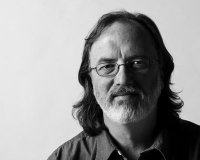
Peter Kreeft is an American philosopher and prolific author of over eighty books on Christian theology, philosophy, and apologetics. A convert from Protestantism to Catholicism, his journey was shaped by his study of Church history, Gothic architecture, and Thomistic thought. He earned his BA from Calvin College, an MA and PhD from Fordham University, and pursued further studies at Yale. Since 1965, he has taught philosophy at Boston College and also at The King’s College. Kreeft is known for formulating “Twenty Arguments for the Existence of God” with Ronald K. Tacelli, featured in their Handbook of Christian Apologetics. A strong advocate for unity among Christians, he emphasizes shared belief in Christ over denominational differences.
I just started this book, and I think I'm really going to like it. I am very impressed with the author's intelligence and knowledge. He is definitely very well read!
In chapter one he discusses a thought experiment proposed by St. Augustine: "Imagine God appeared to you and said, 'I'll make a deal with you if you wish. I'll give you anything and everything you ask: pleasure, power, honor, wealth, freedom, even peace of mind and a good conscience. Nothing will be a sin; nothing will be forbidden; and nothing will be impossible for you. You will never be bored and you will never die. Only . . . you shall never see my face.'"
The author continues: "Did you notice that unspeakable chill in your deepest heart at those last words? Did your surface desire leap after the first part of God's deal and your deepest desire freeze in standstill shock at 'you shall never see my face'? Your surface mind, which is in touch with your surface desires, may not admit it, but your deepest mind, which knows your deepest desires, knows it: you want God more than everything else in the world. Your heart too is restless until it rests in him."
"If earth is part of heaven, does that mean all earthly things are parts of heaven? Is there dirt in heaven? Cats? Do they eat cat food? Is there sex in heaven? How about beer? How much earth is in heaven? Well, remember that everything real and valuable on earth came from heaven to begin with. A cat is not merely evolved molecules in motion; it is a divine idea, a work of art, and a sign. It is a natural sign: it has something of what it signifies, and what it signifies is heavenly; so there is something of heaven in the cat. And heaven does not die. God does not throw his artwork into the wastebasket; God doesn't make junk. All his work has eternal value." (p. 120)
"'Thy will be done' is the infallible road to total joy. It is testable and provable in daily and hourly experience. Time after time, active willing God's will, 'Yes' to God, leads out of meaninglessness, passivity, depression, or sorrow into joy. And time after time the pursuit of joy as if it were mine leads to disappointment, emptiness, and restless boredom. Life teaches us by millions of repetitions, yet we need millions more. Every time we truly say, 'Thy will be done', we find joy and peace; every time we die, we rise. The saint finds heavenly ecstasy in picking up a pin for God. No lesson is more ubiquitously taught. Yet none is more doubted by unbelievers or disobeyed by believers. We are quite insane." (p. 158, emphasis in original)
Peter Kreeft. My teacher of philosophy at BC, he's a Calvinist turned Catholic who's an expert on CS Lewis and Tolkien and Socrates. I took every class he taught, for 6 years. So yeah, I know his arguments and his books. I haven't read his book about the philosophy of Tolkien, but I took his Lord of the Rings class. It was pretty cool.
Kreeft dares us to "ask our heart what it wants". This work on the longing of our hearts for our true home will deepen your faith and help you to understand why we are not yet happy. Highly recommended.
This is not a book about heaven and what we might find there. Instead, it is a book about the desire built into all people for something better than this world. That desire is itself a "proof" of the existence of God and of heaven. At bottom, it is a desire for God himself. In seeking heaven, we find God, whose presence is the ultimate heaven.
Kreeft makes good insights about the longing for heaven that is particular to all men. I found parts of the book really abstract and difficult to understand. He, at times, seemed to get lost in the grandeur of the reality of heaven. This came across in some of his explanations. I particularly liked the introduction where Kreeft discusses the history of heaven's desire going back to ancient times to its current state of being altogether ignored. Kreeft is a tremendous thinker and author, and I have yet to read anything by him that is lacking in profundity and clarity. Nor have I found any banality or platitudinous writing that is, unfortunately, so common amongst popular evangelical authors. This is a book that I am not only re-reading now, but will read again in the future. Such is common with books by Kreeft.
This was the first Kreeft book I read, and it made me search out everything else of his that I could find. If, like me, your initial reaction is "How can anyone write about heaven without having been there?", read the book anyway. Kreeft is a trustworthy guide.
I've enjoyed most of the books by Kreeft that I've read, but this one is a bit of a puzzle. Compared to Everything you wanted to know about Heaven which I read again for the third time earlier this year, and which is full of clarity and clear thinking, this one seems to be full of language with lots of use of phrase reversals that doesn't say a good deal. Even the sections that aren't littered with philosophical terms seem to get caught up in language for the sake of language. Kreeft is a hugely prolific author, and for me this is one of his books where he just writes and writes. There are three long appendices, the last of which is a curious story, a kind of allegory I guess, which is full of references to other works. The swirling poetic style that Kreeft employs in other sections of the book is full on here. On the other hand, there are number of gems, moments when Kreeft reins in his writing and speaks clearly. Some of the best stuff in the book is from C S Lewis, or George MacDonald, or G K Chesterton and others (such as Capon, in a longish quote towards the end of the book), but Kreeft makes good use of their thinking and writing as a springboard for what he's saying.
An interesting take on the desire for a perfect world, but more based on poetry & good prose. Alot of nice analogies for sure but would not recommend for the more analytically minded. It does not go into alot of the objections & problems surrounding the concept of heaven. This is a book surrounding catholic theology so expect that. All around very emotive prose used which certainly makes good word porn.
Kreeft keenly and adroitly shares his wisdom and that of those who have gone before to open our minds to the objective truth that life is worth living, not for temporal, but for eternal value. Earthly life has a pause, a comma, and a heavenly exclamation point.