

What do you think?

The Woman Who Had Two Navels and Tales of the Tropical Gothic
Celebrating the centennial of his birth, the first-ever U.S. publication of Philippine writer Nick Joaquin s seminal works, with a foreword by PEN/Open Book Award winner Gina Apostol
Nick Joaquin is widely considered one of the greatest Filipino writers, but he has remained little-known outside his home country despite writing in English. With the post-colonial sensibilities of Junot Diaz, Teju Cole, and Jhumpa Lahiri and an ironic perspective of colonial history resonant with Gabriel Garcia Marquez and Mario Vargas Llosa, Joaquin is a long-neglected writer ready to join the ranks of the world classics. His work meditates on the questions and challenges of the Filipino individual s new freedom after a long history of colonialism, exploring folklore, centuries-old Catholic rites, the Spanish colonial past, magical realism, and baroque splendor and excess. This collection features his best-known story, The Woman Who Had Two Navels, centered on Philippine emigrants living in Hong Kong and later expanded into a novel, the much-anthologized stories May Day Eve and The Summer Solstice and a canonic play, A Portrait of the Artist as a Filipino. As Penguin Classics previously launched his countryman Jose Rizal to a wide audience, now Joaquin will find new readers with the first American collection of his work.
Nick Joaquin is widely considered one of the greatest Filipino writers, but he has remained little-known outside his home country despite writing in English. With the post-colonial sensibilities of Junot Diaz, Teju Cole, and Jhumpa Lahiri and an ironic perspective of colonial history resonant with Gabriel Garcia Marquez and Mario Vargas Llosa, Joaquin is a long-neglected writer ready to join the ranks of the world classics. His work meditates on the questions and challenges of the Filipino individual s new freedom after a long history of colonialism, exploring folklore, centuries-old Catholic rites, the Spanish colonial past, magical realism, and baroque splendor and excess. This collection features his best-known story, The Woman Who Had Two Navels, centered on Philippine emigrants living in Hong Kong and later expanded into a novel, the much-anthologized stories May Day Eve and The Summer Solstice and a canonic play, A Portrait of the Artist as a Filipino. As Penguin Classics previously launched his countryman Jose Rizal to a wide audience, now Joaquin will find new readers with the first American collection of his work.
476 pages, Kindle Edition
First published April 18, 2017
About the author
Nick Joaquín
93 books471 followersNicomedes Márquez Joaquín (1917–2004) was a Filipino writer and journalist best known for his short stories and novels in the English language. He also wrote using the pen name Quijano de Manila. In 1976, Joaquin was conferred the rank and title of National Artist of the Philippines for Literature. He has been considered one of the most important Filipino writers, along with José Rizal and Claro M. Recto. Unlike Rizal and Recto, whose works were written in Spanish, Joaquin's major works were written in English despite being a native Spanish speaker.
Before becoming one of the leading practitioners of Philippine literature in English, he was a seminarian in Hong Kong – who later realized that he could better serve God and humanity by being a writer. This is reflected in the content and style of his works, as he emphasizes the need to restore national consciousness through important elements of Catholic Spanish Heritage.
In his self-confessed mission as a writer, he is a sort of "cultural apostle" whose purpose is to revive interest in Philippine national life through literature – and provide the necessary drive and inspiration for a fuller comprehension of their cultural background. His awareness of the significance of the past to the present is part of a concerted effort to preserve the spiritual tradition and the orthodox faith of the Catholic past – which he perceives as the only solution to our modern ills.
Before becoming one of the leading practitioners of Philippine literature in English, he was a seminarian in Hong Kong – who later realized that he could better serve God and humanity by being a writer. This is reflected in the content and style of his works, as he emphasizes the need to restore national consciousness through important elements of Catholic Spanish Heritage.
In his self-confessed mission as a writer, he is a sort of "cultural apostle" whose purpose is to revive interest in Philippine national life through literature – and provide the necessary drive and inspiration for a fuller comprehension of their cultural background. His awareness of the significance of the past to the present is part of a concerted effort to preserve the spiritual tradition and the orthodox faith of the Catholic past – which he perceives as the only solution to our modern ills.
Ratings & Reviews
Friends & Following
Create a free account to discover what your friends think of this book!
Community Reviews
Displaying 1 - 30 of 89 reviews

April 6, 2020
Nick Joaquin has been a name I've been reading about since I was a kid. Mentioned in my scholastic textbooks as a National Artist whose literary work has been a great source of pride for the Philippines, has curiously never aroused my interest. I should probably attribute this to the double-edged influence of globalization but I can't help but think I just somehow lack taste. Now you can't blame me if I have developed an appetite, after all the organic locally-grown produce has always been the superior kind.
Writing his work in the english language, and to some degree burdened with the underlying theme of national identity for a country who has since time immemorial been a colony, Joaquin's fiction is the fleshing out of the post-war existential crisis of a nation. But being a former acolyte of the Catholic church, his work is also deeply influenced by his faith and the mystical pre-colonial paganism of his ancestors.
In the titular story, the Woman Who Had Two Navels, Joaquin deploys a deft hand in exhibiting the cultural struggle ongoing in post-war Philippines. The two navels symbolic of the two colonial mothers we have had in Spain and the United States. Our cultural identity shifting between the conservative Catholicism of the former to the liberal society of the latter. The closing play, A Portrait of the Artist as a Filipino, also uses this theme taking on a nostalgic viewpoint mourning the loss of the religious for the libertine.
One fascinating aspect of Joaquin's writing is that a lot of his work is actually feminist. He says this should be second-nature to local works attributing to the pre-colonial societies of the Philippines where a "Babaylan" or a priestess is actually the highest ranking member of the social group. In this collection the story The Summer Solstice highlights this by narrating a native mystical festival of women where essentially a devout Catholic wife reduces her strict patriarchal husband to a dog and makes him lick her feet in adoration. This is just musing on my part, but I have always observed that for colonial Catholicism in the Philippines the Virgin Mary was a more popular figure than Jesus Christ. It is a viable theory that Catholicism was only able to sweep the country because it was able to use Mary as a substitute for a people used to worshiping the female form.
On a related note, the Order of Melkizedek is probably the most intruiging story in the collection. Basically an exploration of how Catholicism merged with pre-colonial beliefs to create our unique identity as a people, this story is exemplified by a mysterious cult ironically using Catholicism to covertly integrate pagan practices and beliefs back into the nation. The role reversals is masterfully done and can be described as nothing but delicious to a native reader.
Attempting to capture a national identity is an impossible task. There are an infinite number of influences defining a people, and the passage of time is forever changing who we think we are. But this collection by Nick Joaquin wonderfully depicts special moments in the plight of the Filipino, moments that define this culture we have where the gothic mystics coexist with the spiritual divine, where Spanish and American influences are in perfect harmony, and where seven thousand one hundred and seven islands come together as one.
To say that I enjoyed this collection is an understatement. I was practically gripped by it at the same time enveloped by the sense that I didn't want to rush the experience by reading it all in one sitting. So I read about one story per day for a few days in succession. I wanted to savour the unique feeling of each story as it ended and reflect on what it wanted to say. I actually read this while my country is in lockdown because of the notorious pandemic sweeping the globe. To be honest, magnified by the isolation, the sense that I touched upon the most while reading was guilt. Guilt because it took me over 400 books to read this. Guilt because I hardly pay attention to Filipino literature. Guilt because I did not care to read what I was supposed to have pride in. But that is all in the past, I have read, now I am enlightened.
May I never lose sight of who I am, of what came before me, and the written work that tells me I should not forget.
Writing his work in the english language, and to some degree burdened with the underlying theme of national identity for a country who has since time immemorial been a colony, Joaquin's fiction is the fleshing out of the post-war existential crisis of a nation. But being a former acolyte of the Catholic church, his work is also deeply influenced by his faith and the mystical pre-colonial paganism of his ancestors.
In the titular story, the Woman Who Had Two Navels, Joaquin deploys a deft hand in exhibiting the cultural struggle ongoing in post-war Philippines. The two navels symbolic of the two colonial mothers we have had in Spain and the United States. Our cultural identity shifting between the conservative Catholicism of the former to the liberal society of the latter. The closing play, A Portrait of the Artist as a Filipino, also uses this theme taking on a nostalgic viewpoint mourning the loss of the religious for the libertine.
One fascinating aspect of Joaquin's writing is that a lot of his work is actually feminist. He says this should be second-nature to local works attributing to the pre-colonial societies of the Philippines where a "Babaylan" or a priestess is actually the highest ranking member of the social group. In this collection the story The Summer Solstice highlights this by narrating a native mystical festival of women where essentially a devout Catholic wife reduces her strict patriarchal husband to a dog and makes him lick her feet in adoration. This is just musing on my part, but I have always observed that for colonial Catholicism in the Philippines the Virgin Mary was a more popular figure than Jesus Christ. It is a viable theory that Catholicism was only able to sweep the country because it was able to use Mary as a substitute for a people used to worshiping the female form.
On a related note, the Order of Melkizedek is probably the most intruiging story in the collection. Basically an exploration of how Catholicism merged with pre-colonial beliefs to create our unique identity as a people, this story is exemplified by a mysterious cult ironically using Catholicism to covertly integrate pagan practices and beliefs back into the nation. The role reversals is masterfully done and can be described as nothing but delicious to a native reader.
Attempting to capture a national identity is an impossible task. There are an infinite number of influences defining a people, and the passage of time is forever changing who we think we are. But this collection by Nick Joaquin wonderfully depicts special moments in the plight of the Filipino, moments that define this culture we have where the gothic mystics coexist with the spiritual divine, where Spanish and American influences are in perfect harmony, and where seven thousand one hundred and seven islands come together as one.
To say that I enjoyed this collection is an understatement. I was practically gripped by it at the same time enveloped by the sense that I didn't want to rush the experience by reading it all in one sitting. So I read about one story per day for a few days in succession. I wanted to savour the unique feeling of each story as it ended and reflect on what it wanted to say. I actually read this while my country is in lockdown because of the notorious pandemic sweeping the globe. To be honest, magnified by the isolation, the sense that I touched upon the most while reading was guilt. Guilt because it took me over 400 books to read this. Guilt because I hardly pay attention to Filipino literature. Guilt because I did not care to read what I was supposed to have pride in. But that is all in the past, I have read, now I am enlightened.
May I never lose sight of who I am, of what came before me, and the written work that tells me I should not forget.

Want to Read
February 15, 2020
June 18, 2021
Abandoned. Not engaging at the moment. Note to self: possibly revisit later after exhausting all GG Marquez. A lot of characters standing or sitting around discussing religion, politics, family, and history. Some unpredictability and folkloric storytelling twists, but only about 10% of the time.

Read
May 28, 2020These are stories of Manila, one of the world's most sinister cities, a place where you feel the ugliness and violence of the colonial past, the neocolonial present, outright mass destruction, eerie folk Catholicism, jungle foliage, industrial smog, and general sense of absolute futility. Garcia Marquez comparisons are inevitable, and fair, but don't expect a Latin American dictator novel or anything of the sort. Nick Joaquin is very much a writer of a place, and an enchanting one at that. I can understand why he's so revered in the Philippines – he seems to get at the core of something, and even though I don't really have the authority to say what that something is, I can say that he brings the country to the page, so if you can't book a ticket there, pick up this handsome Penguin edition.

Read
November 21, 2024I've no idea how to rate this, because I didn't love the short stories, but the play, A Portrait of the Artist as Filipino, was truly amazing.

November 5, 2021
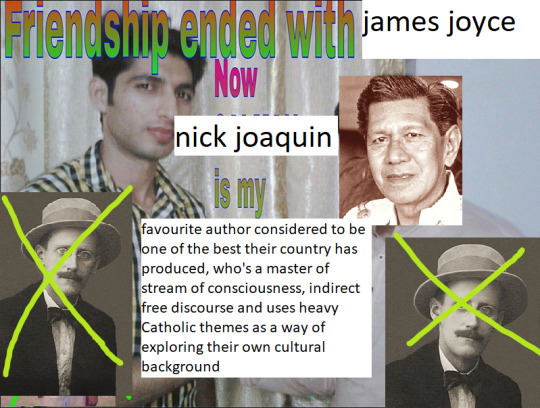
i am only half joking.
overall rating: 4.4
three generations - 3 stars
legend of the dying wanton - 4 stars
the mass of st sylvestre - 5 stars
the summer solstice - 5 stars
may day eve - 4.5 stars
the woman with two navels - 4 stars
guardia de honor - 5 stars
doña jerònima - 5 stars
the order of melkizedek - 4 stars
candido's apocalypse - 4.5 stars
portrait of the artist as filipino - 4 stars

May 16, 2017
An amazing collection of stories. I'm glad that Penguin decided to include this in their Classics line and hope it would lead to a growing interest in Philippine literature internationally.
Joaquin deals with a lot of themes but his most prominent would have to be the clash between East and West as seen through the unique Filipino lens. My favorites have this running theme Summer Soltice, the Order of Melchidezek etc.
I especially liked 'A Portrait of the Artist as Filipino'. Even though the characters may seem pretentious and unable to cope with the changing times I was able to relate to their troubles. I saw the Spanish era as a glorious golden even though it never actually was.
It would be easy to fit these stories in the magical realist genre but don't expect something like Garcia Marquez. Nick was a contemporary so he wasn't necessarily influenced by Marquez. He created something uniquely his own that he dubbed as 'Tropical Gothic'. An apt title if you ask me as the stories can be dark and claustrophobic while at the same time teeming with life.
He was able to capture a pivotal moment in Philippine history wherin the decay of the old Spanish-speaking Manila gave way to the American English influenced modernity that is the Philippines today.
Joaquin deals with a lot of themes but his most prominent would have to be the clash between East and West as seen through the unique Filipino lens. My favorites have this running theme Summer Soltice, the Order of Melchidezek etc.
I especially liked 'A Portrait of the Artist as Filipino'. Even though the characters may seem pretentious and unable to cope with the changing times I was able to relate to their troubles. I saw the Spanish era as a glorious golden even though it never actually was.
It would be easy to fit these stories in the magical realist genre but don't expect something like Garcia Marquez. Nick was a contemporary so he wasn't necessarily influenced by Marquez. He created something uniquely his own that he dubbed as 'Tropical Gothic'. An apt title if you ask me as the stories can be dark and claustrophobic while at the same time teeming with life.
He was able to capture a pivotal moment in Philippine history wherin the decay of the old Spanish-speaking Manila gave way to the American English influenced modernity that is the Philippines today.

May 4, 2022
The Manila of Nick Joaquin's time is very different from the Manila that I was born in. And yet, too often I could see myself in his sentences. There's my religious trauma, there's my adamant quest for freedom, and there is the intergenerational conflict that I grew up and still grapple with. It's true. Our generation and our parents' generation speak in different languages, literally.
My favorites from this collection:
The Order of Melkizedek - about the clash of traditional Catholic worldviews and alternative movements in a society heavily influenced by American counterculture
Cándido's Apocalypse - an ode to petit bourgeois parents and their "overacting" teenage children
The Mass of St. Sylvestre, Doña Geronima, May Day Eve - just fun tales that double as criticism of the church
My favorites from this collection:
The Order of Melkizedek - about the clash of traditional Catholic worldviews and alternative movements in a society heavily influenced by American counterculture
Cándido's Apocalypse - an ode to petit bourgeois parents and their "overacting" teenage children
The Mass of St. Sylvestre, Doña Geronima, May Day Eve - just fun tales that double as criticism of the church

June 29, 2017
Finally finished another book for the SEA Reading Challenge and this is probably my favourite book so far!
The Woman With Two Navels and tales of the tropical Gothic is a collection of short stories by Nick Joaquin, who is apparently very famous in Philippines but sadly unknown almost anywhere else (at least that's what I got from the introduction before I skipped it because I do not want to read literary analysis before I read the text).
These are stories that you experience rather than read. I've never been to the Philippines so I can't tell if this is an accurate picture of the country, but the stories gave me the impression of heat, of humidity that might choke you, of the chaos of life and everything I've said so far sounds universal (at least to SEA) but it also feels so specific. I would, for example, never mistake these stories for being set in Singapore or Malaysia.
Each story is a snapshot of an aspect of life, and if I'm honest I don't quite get what they're about, but they make me feel. It's intense and amazing. Even the last story, 'A Portrait of the Artist as Filipino', which is actually a play in three acts and which I was unsure if I could pay enough attention managed to pull me in and make me experience a squabbling family with a treasure that functions more like a threat.
Warning: the sentences here are really long and you will need to come up for air every now and then, but I find that the language is beautiful without being distracting. I admire it when I've closed the book but when I'm reading, it feels really immersive.
I really, really love this book. I do not understand it, probably because that requires work and I haven't analysed anything since IB (I think?) but it was such a fantastic reading experience. It's available from the NLB's ebook lending service too so as long as you have a phone you can get this too.
This review was first posted at Inside the mind of a Bibliophile
The Woman With Two Navels and tales of the tropical Gothic is a collection of short stories by Nick Joaquin, who is apparently very famous in Philippines but sadly unknown almost anywhere else (at least that's what I got from the introduction before I skipped it because I do not want to read literary analysis before I read the text).
These are stories that you experience rather than read. I've never been to the Philippines so I can't tell if this is an accurate picture of the country, but the stories gave me the impression of heat, of humidity that might choke you, of the chaos of life and everything I've said so far sounds universal (at least to SEA) but it also feels so specific. I would, for example, never mistake these stories for being set in Singapore or Malaysia.
Each story is a snapshot of an aspect of life, and if I'm honest I don't quite get what they're about, but they make me feel. It's intense and amazing. Even the last story, 'A Portrait of the Artist as Filipino', which is actually a play in three acts and which I was unsure if I could pay enough attention managed to pull me in and make me experience a squabbling family with a treasure that functions more like a threat.
Warning: the sentences here are really long and you will need to come up for air every now and then, but I find that the language is beautiful without being distracting. I admire it when I've closed the book but when I'm reading, it feels really immersive.
I really, really love this book. I do not understand it, probably because that requires work and I haven't analysed anything since IB (I think?) but it was such a fantastic reading experience. It's available from the NLB's ebook lending service too so as long as you have a phone you can get this too.
This review was first posted at Inside the mind of a Bibliophile

December 12, 2017
I had never heard of Joaquin, but the fantastic cover and intriguing title caught my eye. He should definitely be better known outside of the Philippines. I liked this collection more and more as I read - I didn't quite know what to make of the first story, Three Generations, and almost put it down at that point. I'm glad I didn't, because I found beautiful, sad, funny, and enlightening writing as I went on. He has an excellent writing style and much to tell us about his home country.

April 1, 2021
Anyone who knows me well absolutely knows that I am not the biggest fan of classics. Although I do believe in their educational value, I admit that I simply don’t enjoy reading them. Nick Joaquin’s works are the exception to that.
The Woman Who Had Two Navels and Tales of the Tropical Gothic is an anthology of Nick Joaquin’s short stories. All of them are definitely worth reading. Joaquin extremely talented at capturing the intimacies and nuances of Filipino life at numerous points in history, from the Spanish occupation to post World War II. And to top it all of, he’s also amazing at really getting into his chaacter’s heads and making you see things from their point of view.
Another great thing about Nick Joaquin, especially if you’re a homeland Filipino reader, is that he does his level best to try and capture the Filipino national identity in as broad and inclusive a manner as possible. Anyone who’s grown up and lives here knows that this is a task fraught with many pitfalls. We all know this country only exists because of colonization, and that many tribes and kingdoms independently existed prior the arrival of the Spanish. But we also know that that acknowledgment does little in uplifting us as a nation today. Nick Joaquin’s stories attempt to bring us all closer together using art, and I appreciate him and his work for it.
Check my blog for more!
The Woman Who Had Two Navels and Tales of the Tropical Gothic is an anthology of Nick Joaquin’s short stories. All of them are definitely worth reading. Joaquin extremely talented at capturing the intimacies and nuances of Filipino life at numerous points in history, from the Spanish occupation to post World War II. And to top it all of, he’s also amazing at really getting into his chaacter’s heads and making you see things from their point of view.
Another great thing about Nick Joaquin, especially if you’re a homeland Filipino reader, is that he does his level best to try and capture the Filipino national identity in as broad and inclusive a manner as possible. Anyone who’s grown up and lives here knows that this is a task fraught with many pitfalls. We all know this country only exists because of colonization, and that many tribes and kingdoms independently existed prior the arrival of the Spanish. But we also know that that acknowledgment does little in uplifting us as a nation today. Nick Joaquin’s stories attempt to bring us all closer together using art, and I appreciate him and his work for it.
Check my blog for more!

June 20, 2022
Rep: Filipino cast & setting

June 8, 2017
4.5 stars!
This took me 5 hours of intense debate to decide whether or not this would be a goodreads 4 stars or 5 stars. Honestly, its time that goodreads makes use of half star ratings. It would have saved me hours of my mouse hovering back and forth over 4 and 5 stars.
There is a total of 10 short stories along with a play at the end in this collection. Each story has the weight of a novel and after finishing each one I needed a break to digest what I had read. I swear after the last sentences of a story I had to sit there, recount what had happened, decide whether I liked what I had read, and lastly wait for the epiphany to come crashing down on me. All of these stories deal, in one way or another, with the idea of the Filipino's search to grasp and obtain an understanding of who and what he or she is. This is done so by confronting and exploring all the layers of what ultimately comprises the Filipino identity. These include the centuries under Spanish colonialism, the strong ties of Catholicism, the years of American occupation, and even the days of our primal pre-colonial past. Add in Nick Joaquin's mesmerizing prose and surreal plotlines and you're in for a very interesting and fascinating time.
Whenever I review a book that pertains to the Philippines I seem to always state how well the author was able to portray the Filipino culture alongside the plot. However, I haven't encountered an author that was able to capture the Filipino experience,throughout several periods in history, so poignantly and surreal-like as Joaquin was able to.
I am generally curious as to what people who aren't Filipino would find this book. Sincerely, if anyone has read this book and isn't familiar with Filipino culture please tell me how you found it, whether you hated it or loved it. I'm really curious :). I wouldn't be surprised if some people were turned off by this book. There are a lot (as in a lot) of Spanish and Catholic terms in this book, and if you aren't familiar with any of them they might just fly over your head and leave you frustrated. Even as a Filipino, some of the stuff mentioned in the stories flew over my head. I wouldn't say this is the book you want to start with if you just wanna dip your toe in Filipino culture, more like take a canon-ball plunge. Because, I feel like this can really overwhelm some people.
Also, I'm gonna note that there is a scene of animal violence in one of the stories so if that makes anyone uncomfortable than take that into consideration.
My favorites include:
The Legend of the Dying Wanton
May Day Eve
The Portrait of the Artist as Filipino
All the rest, except for two, were all equally enjoyable (4-4.5stars each). I found Three Generations and Dona Jeronima to be my least favorites and the least impactful. Although I consider The Order of Melchizedek to be great overall, I found the beginning to be slow and some of the dots that the main character tried to connect in the beginning didn't make much sense to me. For these reasons this book isn't currently a 5.
Would I recommend this book: yes!
Would I probably change the rating from 4 to 5 sometime soon: probably
I understand why Nick Joaquin is considered one of the most influential and famous writers in the Philippines. I am extremely glad Penguin has made his stories available internationally. Mr. Joaquin certainly deserves it.
This took me 5 hours of intense debate to decide whether or not this would be a goodreads 4 stars or 5 stars. Honestly, its time that goodreads makes use of half star ratings. It would have saved me hours of my mouse hovering back and forth over 4 and 5 stars.
There is a total of 10 short stories along with a play at the end in this collection. Each story has the weight of a novel and after finishing each one I needed a break to digest what I had read. I swear after the last sentences of a story I had to sit there, recount what had happened, decide whether I liked what I had read, and lastly wait for the epiphany to come crashing down on me. All of these stories deal, in one way or another, with the idea of the Filipino's search to grasp and obtain an understanding of who and what he or she is. This is done so by confronting and exploring all the layers of what ultimately comprises the Filipino identity. These include the centuries under Spanish colonialism, the strong ties of Catholicism, the years of American occupation, and even the days of our primal pre-colonial past. Add in Nick Joaquin's mesmerizing prose and surreal plotlines and you're in for a very interesting and fascinating time.
Whenever I review a book that pertains to the Philippines I seem to always state how well the author was able to portray the Filipino culture alongside the plot. However, I haven't encountered an author that was able to capture the Filipino experience,throughout several periods in history, so poignantly and surreal-like as Joaquin was able to.
I am generally curious as to what people who aren't Filipino would find this book. Sincerely, if anyone has read this book and isn't familiar with Filipino culture please tell me how you found it, whether you hated it or loved it. I'm really curious :). I wouldn't be surprised if some people were turned off by this book. There are a lot (as in a lot) of Spanish and Catholic terms in this book, and if you aren't familiar with any of them they might just fly over your head and leave you frustrated. Even as a Filipino, some of the stuff mentioned in the stories flew over my head. I wouldn't say this is the book you want to start with if you just wanna dip your toe in Filipino culture, more like take a canon-ball plunge. Because, I feel like this can really overwhelm some people.
Also, I'm gonna note that there is a scene of animal violence in one of the stories so if that makes anyone uncomfortable than take that into consideration.
My favorites include:
The Legend of the Dying Wanton
May Day Eve
The Portrait of the Artist as Filipino
All the rest, except for two, were all equally enjoyable (4-4.5stars each). I found Three Generations and Dona Jeronima to be my least favorites and the least impactful. Although I consider The Order of Melchizedek to be great overall, I found the beginning to be slow and some of the dots that the main character tried to connect in the beginning didn't make much sense to me. For these reasons this book isn't currently a 5.
Would I recommend this book: yes!
Would I probably change the rating from 4 to 5 sometime soon: probably
I understand why Nick Joaquin is considered one of the most influential and famous writers in the Philippines. I am extremely glad Penguin has made his stories available internationally. Mr. Joaquin certainly deserves it.

May 21, 2017
Nick Joaquin and his lyrical prose, simply magical. I almost forgot how much I've loved these surreal stories. This Penguin Classic Edition would make the Filipino in all of us proud. (It's an honor to be selected for printing by such a prestigious international book company.) Oh, also it's his Centennial this year. Time to make halungkat in your bauls for his reads.

September 7, 2018
I'm so glad I discovered Nick Joaquin. I admit I was turned onto this book by way of its cover and the title, "Tales of the Tropical Gothic," which mesmerized and confused at the same time. Neither the cover or the title clearly demonstrates what's contained within, however. I found Joaquin an extension of my relationship with both European Modernist writers and Latin American writers of the mid-20th Century (including: Borges, Garcia Marquez, Bolano, etc.), but the fact that Joaquin is writing from the Philippines makes it all the more special. Truly a huge, sprawling country with countless cultures means having such a sprawling author representing many of those cultures is a huge task indeed, and one that a single book can't really do, especially when taking into account colonialism, religious dominance, and other severe themes that run through that country's history. Still, the book is incredibly fulfilling and is able to provide fairly satisfying representations of the Philippines in many of its chapters of history. I think more people should read Joaquin and feel compelled by the literature offered here. My favorite pieces in this collection are: Dona Jeronima, Candido's Apocalypse, and A Portrait of the Artist as Filipino.

May 13, 2021
The stories from this book are from the Philippines and I
was curious about them. The last one is a play. They are all very nice but I didn’t find myself engaged with any of them.
was curious about them. The last one is a play. They are all very nice but I didn’t find myself engaged with any of them.

April 9, 2020
It is very rare that you pick up a book at random and end up discovering a whole new world. This is what happened to me with this book. I didn't know anything about the author nor even about Filipinos and now I can't recommend this book enough. The stories are soooooooooooo beautiful and they remind me of Marquez but they have their own unique quality as well. Perhaps tales of the Tropical Gothic is the right label although I don't know what that shit means. A truly great writer. The play at the end, though long, is also very beautiful. I have to read these stories again.

June 30, 2024
Each story in this collection was so bizarre and thought provoking. The way Joaquin lifts the veil of Filipino life in early 1900s Manila influenced by Spanish colonization while juxtaposing it to pre-colonial culture and heritage is what made the “gothic” elements for me. I was not prepared for the underlying themes in these stories like folklore, religion, class, familial dynamics, culture, etc that really drove the impact of how Spanish colonization would bury the traditions of the original Filipinos.
Some of my most favorite stories were Doña Jeronima, Guardia de Honor, and The Order of Melkizedek. One similarity these three stories had in common was the plight of a Filipina across different stations in life. Joaquin writes about the women in a way that insinuates feminine power exists in all Filipina women when they get in touch with their pre-colonial roots. In Spanish Manila, women are the forefront of the home and of social standing warranting respect but Joaquin also highlights the fear others have when these women abandon or disregard the status quo expected of them.
The stories do get quite long and some of the language takes time getting used to as you get a mix of English, Filipino, Spanish, and Chinese influences. Although these stories weren’t specifically about me or the experiences of my family, I felt like I learned a lot of new aspects of my history and why modern Filipinos are so complex ethnically.
Some of my most favorite stories were Doña Jeronima, Guardia de Honor, and The Order of Melkizedek. One similarity these three stories had in common was the plight of a Filipina across different stations in life. Joaquin writes about the women in a way that insinuates feminine power exists in all Filipina women when they get in touch with their pre-colonial roots. In Spanish Manila, women are the forefront of the home and of social standing warranting respect but Joaquin also highlights the fear others have when these women abandon or disregard the status quo expected of them.
The stories do get quite long and some of the language takes time getting used to as you get a mix of English, Filipino, Spanish, and Chinese influences. Although these stories weren’t specifically about me or the experiences of my family, I felt like I learned a lot of new aspects of my history and why modern Filipinos are so complex ethnically.

March 27, 2025
Hardest fucking read of my life. That was boring as fuck I don’t know why I kept reading. Honestly actually just call me dumb or something—I hated it, I don’t know why I kept reading, maybe it’s the stubbornness. Definitely not an easy read. I don’t like the prose, it’s so stilted. I’m also so fucking sleepy while typing this idk what else I think about this book, maybe it’s actually good I’m just a bitch pero I wont even read this again just ro re prove myself because I’m neva putting myself through that again

December 21, 2025
lots of catholicism woven with the ooky spooky in these short stories. i enjoyed a lot of these but the last three were more modern stories (set in the 1940s) that really did not entice me--just a ton of dialogue and not really any spooky. for being almost half the book, i can't rate the collection any higher than this. the first half, though, i'd give 4⭐️.
May 18, 2025
nick joaquin is my hero; a monumental giant of philippine literature. pahalipay!

April 7, 2025
painful read tbh. most of the stories are set in spanish colonial period in ph—made it f boring 😭 but i really appreciate nick joaquin's messages in each story that he wanted to portray. it heavily relies on culture and religion which i am not fan of ✋🏻
out of 11 stories in this book, i enjoyed the summer solstice and doña jerónima only. the play "a portrait of the artist as filipino" was fire: it's giving what are we willing to give up to survive—and what’s worth holding onto even if it breaks us?
out of 11 stories in this book, i enjoyed the summer solstice and doña jerónima only. the play "a portrait of the artist as filipino" was fire: it's giving what are we willing to give up to survive—and what’s worth holding onto even if it breaks us?

Read
March 8, 2021I have no words. Nick Joaquin is incomparable and unparalleled.

February 24, 2018
Breathtaking. Some of it I had already read and were my first forays into feminist literature (SUMMER SOLSTICE, especially, played a huge part in my 'awakening' when I first encountered it at 15 y/o; MAY DAY EVE is a close second), and the ones I've only read now did not disappoint.
A story I can't forget days after having finished it: PORTRAIT. A true masterpiece of Philippine literature, and one whose praises I will always sing. I did not prefer MELKIZEDEK or the mass story very much; perhaps the allegories went over my head. CANDIDO was an arresting work, with a hint of scifi/fantasy but with a social commentary that I found compelling. THREE GENERATIONS touches on themes too close to my heart, and DONA JERONIMA employs a mythological style of storytelling that I've always been partial to.
Reanne got this for my 24th birthday, at an outlet store near the plaza in Vigan. I brought this with me to a beach in Baler, a plane to Masbate, and to various cozy spots in Quezon City. This collection is quality Nick Joaquin, and I hope it is only the beginning of my journey with Phil lit in English. It is a rich trove, and I have much to learn and discover. I can't wait.
A story I can't forget days after having finished it: PORTRAIT. A true masterpiece of Philippine literature, and one whose praises I will always sing. I did not prefer MELKIZEDEK or the mass story very much; perhaps the allegories went over my head. CANDIDO was an arresting work, with a hint of scifi/fantasy but with a social commentary that I found compelling. THREE GENERATIONS touches on themes too close to my heart, and DONA JERONIMA employs a mythological style of storytelling that I've always been partial to.
Reanne got this for my 24th birthday, at an outlet store near the plaza in Vigan. I brought this with me to a beach in Baler, a plane to Masbate, and to various cozy spots in Quezon City. This collection is quality Nick Joaquin, and I hope it is only the beginning of my journey with Phil lit in English. It is a rich trove, and I have much to learn and discover. I can't wait.

June 28, 2022
127📱🇵🇭PHILIPPINES🇵🇭Nick Joaquin’s “The Woman Who Had Two Navels” is considered a classic Filipino literature, so I had to read it! Unfortunately (🤷🏻♀️) I downloaded the short story version instead of the novel. Oh well! It’s an interesting story that is a metaphor for the Philippines - two navels referring to two mothers, in this case Spain and America. The story takes place in Hong Kong amongst the exiled Filipino community. We have Pepe the horse doctor who is approached by the newly married Connie to remove her second navel. She’s in love with a jazz musician, her mother is more beautiful and Pepe’s father returns to Manila to fin the family home in ruins except for the stone staircase. Lots to work with there. #🌏📚#readingworldtour2021 #readtheworld #worldliterature #readingworldliterature #reading #readingwomenchallenge #readersofinstagram #readmorebooks #bookstagram #booklover #book #booknerd #bibliophile #travel #travelogue #fiction #nonfiction #nonfictionreads #travelbooks #ayearofreadingaroundtheworld #filipinoliterature #philippines #nickjoaquin
February 7, 2021
LMAOAO I FORCED MYSELF TO READ THIS AND I NEVER UNDERSTOOD A THING

August 29, 2019
"For grieving, I have loved my grief; betrayed, I have loved my resentments; humiliated, I have loved my injured pride. On these have I lived and thrived; on these has my young beauty persisted and endured, like a rose growing on charnel ground."
Nick Joaquin is the Philippines' finest lyricist through prose which colonial and the local mythos are seemingly like lovers who would bear a surreal universe.
Labyrinthine lines in poetic demonstration, women as leading characters, and post-war evaluation: this collection is overwhelming—the Old Man of Philippine literature sweeps the post-modern generation through an impressive literary re-imaginings how rich Manila was and will ever be—no matter how the decays brought by the West—whether Spain or the United States, still seep in to the Filipino identity.
'Three Generations' is one of most beautiful and powerful stories a reader will (or must) witness regardless of time and language—a short story that levels with the great works out there by Henry Miller, Anton Chekhov, Alice Munro, and other universally known short story experts.
'May Day Eve' meanwhile breaks more than the literary scale, as this story alone became a tradition, something to look back on after the cruelest month—April. The story's opening line is ahead of time, almost Faulkner in being avant-garde. But in its unique and unrivaled length, it stands supreme. On opening lines still, 'Candido's Apocalypse' also shows a psychological inhibition that disrupts the silence in reading:
"Telephones are latest in the house to wake up, which they do only after breakfast or in the forenoon. A household is in trouble whose telephone rings before breakfast."
The last piece of the collection, the play: A Portrait of the Artist as a Filipino, is definitely a mapping how the war with its diplomatic and dumb ideals ravaged the borders of the pacific and even the soul of the ones who were there. It can be assessed, that if Rizal wrote the great Filipino novel—the very literature of the first Asian resistance against Western colonialism; Joaquin's play can at least be the great play which fueled the Philippine intelligentsia to look into itself and see how far had the country become, centuries after religion and revolution ran over to the archipelago and shaped our own national visions.
Nick Joaquin is the Philippines' finest lyricist through prose which colonial and the local mythos are seemingly like lovers who would bear a surreal universe.
Labyrinthine lines in poetic demonstration, women as leading characters, and post-war evaluation: this collection is overwhelming—the Old Man of Philippine literature sweeps the post-modern generation through an impressive literary re-imaginings how rich Manila was and will ever be—no matter how the decays brought by the West—whether Spain or the United States, still seep in to the Filipino identity.
'Three Generations' is one of most beautiful and powerful stories a reader will (or must) witness regardless of time and language—a short story that levels with the great works out there by Henry Miller, Anton Chekhov, Alice Munro, and other universally known short story experts.
'May Day Eve' meanwhile breaks more than the literary scale, as this story alone became a tradition, something to look back on after the cruelest month—April. The story's opening line is ahead of time, almost Faulkner in being avant-garde. But in its unique and unrivaled length, it stands supreme. On opening lines still, 'Candido's Apocalypse' also shows a psychological inhibition that disrupts the silence in reading:
"Telephones are latest in the house to wake up, which they do only after breakfast or in the forenoon. A household is in trouble whose telephone rings before breakfast."
The last piece of the collection, the play: A Portrait of the Artist as a Filipino, is definitely a mapping how the war with its diplomatic and dumb ideals ravaged the borders of the pacific and even the soul of the ones who were there. It can be assessed, that if Rizal wrote the great Filipino novel—the very literature of the first Asian resistance against Western colonialism; Joaquin's play can at least be the great play which fueled the Philippine intelligentsia to look into itself and see how far had the country become, centuries after religion and revolution ran over to the archipelago and shaped our own national visions.

February 2, 2022
I started reading this because I was intrigued by the title of the book... Especially the subtitle of "Tropical Gothic." What I found instead was more along the lines of Magic Realism. A genre that is usually associated with the colonized literati. So, Gabriel Garcia Marquez comparisons are apt, but this is not the sweeping multigenerational epics of GGM. Rather they are vignettes that reminisce on the forgotten history of Manila. Nick Joaquin was very much a big city boy. And his love for Manila shines through each of the stories in this collection... Another reason for picking this book up was the realisation that I didn't know much about The Philippines and Filipino culture. And as I was hoping, these stories gave me a glimpse of it, albeit from a dream-like perspective. I realise now that the subtitle of "Tropical Gothic" is a bit of an exaggeration. I guess some of the stories in this collection could be described as such, but not all. What does tie them all together though is a sense of Filipino pride and confidence of cultural identity... And a sense of loss over the past customs and traditions. Especially the loss of the old city of Manila. The fact that these stories were all originally written in English is itself a bit of a paradox. As English is very much a product of The Philippines as an American colony, after the war and after the destruction of Manila. And yet, that is why Nick Joaquin is remembered. By writing about the old days in English he calls to attention the fact that The Philippines was a mixing pot of two empires, the Spanish and the American, and all that mixed in with its own culture of the Pacific. I can't help but think that by choosing to write these stories in English, he is leaving the door open behind him, to make his stories more accessible to the younger generations and others abroad. I am glad I was able to peek through the door left ajar.

Currently Reading
May 28, 2026writing this right now to remember exactly how i felt about the stories i've read so far, and considering that it's been months, i'm starting to forget about it.
previously read May Day Eve (solid short, i feel so ambivalent about the outcome but the concept of prophecy and superstition and its impact on your personal fate is interesting to me)
2024-11-09 & 2024-12-09 - started to read The Woman Who Had Two Navels, realized that the edition here and the edition by Adarna Books are different. apparently the Adarna Books one is the expanded version... it's intriguing to me, but the second half of the book started to feel somewhat rushed with its fast resolution. it reminded me of the time i watched glee season 1, reached episode 13 sectionals and felt like "wow that was nice, that was a complete story" but then for some reason they added 9 more episodes that could have been delayed and dedicated to a second season. but i think given enough thought, Two Navels would be interesting to adapt, i'm just not 100% sure i fully understand it. i was swept away by the mood, the post-war freedom and unsettledness in HK, the visualization of the car driving by.... i need filipino filmmakers to read this NOW 🫵‼️
2026-01-06 - read Guardia de Honor and Doña Jerónima. fuck, really loved Guardia - i'm lowkey obsessed about the concept of opportunity cost and potential timelines to take, the time travel "echo" concept solidifies the idea. it somewhat reminds me of this polish film Blind Chance, except that Natalia is actively going through the thing, and the story isn't just presenting the outcomes. the imagery of a procession also helps me visualize the concept nicely. following that up with Doña Jerónima? holy shit, it was devastating, like Natalia's choosing between suitors, but Jerónima is one of the choices instead. though Natalia roughly did the same thing, the impact felt so different because of how long it took and how many people got involved, oh my gosh the archbishop pissed me off
2026-01-17 to -18 - given how the last read was, i tried to read the rest in order... The Three Generations made me feel utter despair over the way we aren't really born with a clean slate, we're born into a family, and because of the people we grew up with, we make certain choices that we wouldn't have otherwise made if we had different history. not that i was against Celo going into priesthood or anything, it's just that would he have chosen it if it weren't for the past? unsure.
not really sure what to make about The Legend of the Dying Wanton because Currito Lopez and Doña Ana have a connection, to the point that somehow they have a shared cognition, and considering their conflicting mindsets, there's something there but idk what it was. i need to reread this. The Mass of St. Sylvestre also escapes explanation for me. what was Mateo's deal? not sure
The Summer Solstice though.... i don't know what to say other than cinematic, the way religion and superstition can be married to each other, i really felt like i was there, seeing the Tadtarin, something about the image feels so vivid.
i couldn't finish the whole book that weekend because of The Order of Melkizedek, i remember needing to reread this two times but i remember liking the story. something about the siblings trying to deal with one of them nearly getting sucked into what i could only describe as a cult intrigues me.
didn't finish yet::
- Candido's Apocalypse - i remember only reading this halfway but to be honest clumping three of the longest stories at the end was overwhelming. i remember the hensons was going to have a birthday party for one of the teens but then there was a frat?? hmmm unsure where i left off
- A Portrait of an Artist - delayed bc i knew the story from Ang Larawan... that was a good film imo, i was just thinking that i would be distracted by mr avelino
edit:
2026-06-22 - I have been informed that as of 2022, Isabel Sandoval may be working on a film inspired by this anthology OH MY GOD???
previously read May Day Eve (solid short, i feel so ambivalent about the outcome but the concept of prophecy and superstition and its impact on your personal fate is interesting to me)
2024-11-09 & 2024-12-09 - started to read The Woman Who Had Two Navels, realized that the edition here and the edition by Adarna Books are different. apparently the Adarna Books one is the expanded version... it's intriguing to me, but the second half of the book started to feel somewhat rushed with its fast resolution. it reminded me of the time i watched glee season 1, reached episode 13 sectionals and felt like "wow that was nice, that was a complete story" but then for some reason they added 9 more episodes that could have been delayed and dedicated to a second season. but i think given enough thought, Two Navels would be interesting to adapt, i'm just not 100% sure i fully understand it. i was swept away by the mood, the post-war freedom and unsettledness in HK, the visualization of the car driving by.... i need filipino filmmakers to read this NOW 🫵‼️
2026-01-06 - read Guardia de Honor and Doña Jerónima. fuck, really loved Guardia - i'm lowkey obsessed about the concept of opportunity cost and potential timelines to take, the time travel "echo" concept solidifies the idea. it somewhat reminds me of this polish film Blind Chance, except that Natalia is actively going through the thing, and the story isn't just presenting the outcomes. the imagery of a procession also helps me visualize the concept nicely. following that up with Doña Jerónima? holy shit, it was devastating, like Natalia's choosing between suitors, but Jerónima is one of the choices instead. though Natalia roughly did the same thing, the impact felt so different because of how long it took and how many people got involved, oh my gosh the archbishop pissed me off
2026-01-17 to -18 - given how the last read was, i tried to read the rest in order... The Three Generations made me feel utter despair over the way we aren't really born with a clean slate, we're born into a family, and because of the people we grew up with, we make certain choices that we wouldn't have otherwise made if we had different history. not that i was against Celo going into priesthood or anything, it's just that would he have chosen it if it weren't for the past? unsure.
not really sure what to make about The Legend of the Dying Wanton because Currito Lopez and Doña Ana have a connection, to the point that somehow they have a shared cognition, and considering their conflicting mindsets, there's something there but idk what it was. i need to reread this. The Mass of St. Sylvestre also escapes explanation for me. what was Mateo's deal? not sure
The Summer Solstice though.... i don't know what to say other than cinematic, the way religion and superstition can be married to each other, i really felt like i was there, seeing the Tadtarin, something about the image feels so vivid.
i couldn't finish the whole book that weekend because of The Order of Melkizedek, i remember needing to reread this two times but i remember liking the story. something about the siblings trying to deal with one of them nearly getting sucked into what i could only describe as a cult intrigues me.
didn't finish yet::
- Candido's Apocalypse - i remember only reading this halfway but to be honest clumping three of the longest stories at the end was overwhelming. i remember the hensons was going to have a birthday party for one of the teens but then there was a frat?? hmmm unsure where i left off
- A Portrait of an Artist - delayed bc i knew the story from Ang Larawan... that was a good film imo, i was just thinking that i would be distracted by mr avelino
edit:
2026-06-22 - I have been informed that as of 2022, Isabel Sandoval may be working on a film inspired by this anthology OH MY GOD???
This entire review has been hidden because of spoilers.

July 2, 2023
Tropical Gothic? Ano yun?
The best definition for "Gothic" I've heard was from an episode of the Digital Folklore podcast. To paraphrase, Gothic is when a shocking secret is concealed beneath layers of pretention and pomp, and yet decays so much that its stench becomes obvious anyway.
In Tales of the Tropical Gothic, this secret is sometimes folk Catholicism: a lithe, feral belief system brimming with dark power that is a scandal to frigid and prudish 19th and 20th century Catholic Filipinos (see: The Summer Solstice). In other stories, this secret is what Nick Joaquin felt to be the "special temper of Manila and its people: a combination of primitive mysticism and slick modernity," strange bedfellows that allow us to "see the holiness and the mystery of what is vulgar" (see: May Day Eve, the best story in this selection).
It's been said that Nick Joaquin's work is reminiscent of the magic realism of Gabriel Garcia Marquez, and that is true, but Nick also has some of Jose Luis Borges' speculative streak, as in the story "Guardia de Honor," where people travel through mirrors and through time; and even some of (gasp!) Dan Brown, as in the novella "The Order of Melkizedek," where a middle class family becomes embroiled in the mysterious workings of a millenarian cult.
Nick Joaquin is hands down one of the best writers I've ever read. Biting into his prose is like sinking your teeth into a thick and luscious cake. That said, Nick's portrayal of the youth can be corny and nauseating (see: Guia in the Order of Melkizedek, the teenagers in Candido's Apocalypse).
The best definition for "Gothic" I've heard was from an episode of the Digital Folklore podcast. To paraphrase, Gothic is when a shocking secret is concealed beneath layers of pretention and pomp, and yet decays so much that its stench becomes obvious anyway.
In Tales of the Tropical Gothic, this secret is sometimes folk Catholicism: a lithe, feral belief system brimming with dark power that is a scandal to frigid and prudish 19th and 20th century Catholic Filipinos (see: The Summer Solstice). In other stories, this secret is what Nick Joaquin felt to be the "special temper of Manila and its people: a combination of primitive mysticism and slick modernity," strange bedfellows that allow us to "see the holiness and the mystery of what is vulgar" (see: May Day Eve, the best story in this selection).
It's been said that Nick Joaquin's work is reminiscent of the magic realism of Gabriel Garcia Marquez, and that is true, but Nick also has some of Jose Luis Borges' speculative streak, as in the story "Guardia de Honor," where people travel through mirrors and through time; and even some of (gasp!) Dan Brown, as in the novella "The Order of Melkizedek," where a middle class family becomes embroiled in the mysterious workings of a millenarian cult.
Nick Joaquin is hands down one of the best writers I've ever read. Biting into his prose is like sinking your teeth into a thick and luscious cake. That said, Nick's portrayal of the youth can be corny and nauseating (see: Guia in the Order of Melkizedek, the teenagers in Candido's Apocalypse).
Displaying 1 - 30 of 89 reviews