During the Second World War, approximately 4,000 Japanese-Canadians were "repatriated" to Japan. Among those Canadians sent back to were members of author and poet, Sally Ito's family. As a Japanese Canadian child growing up in the suburbs of Edmonton, Alberta, Ito's early life was a lone island of steamed tofu and vegetables amidst a sea of pot roast and mashed potatoes. Through the Redress movement of the late 80s, the eventual Parliamentary acknowledgment of wartime injustices, and the restoration of citizenship to those exiled to Japan she considers her work as an author of poetry and prose, meditating on themes of culture and identity. Later as a wife and mother of two, Sally returns to Japan and re-lives the displacement of her family through interviews, letters, and shared memories. Throughout her journey Ito weaves a compelling narrative of her family's journey through the darkest days of the Pacific War, its devastating aftermath, and the repercussions on cultural identity for all the Emperor's Orphans.
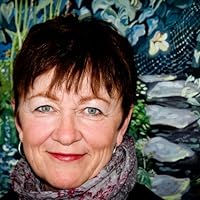
Sally Ito is a writer, translator and editor and creative writing instructor who lives in Winnipeg, Canada. She has published four books of poetry -- Frogs in the Rain Barrel, Season of Mercy, Alert to Glory, Heart's Hydrography and a collection of short stories, Floating Shore. She has been a former judge for the late Kiriyama Pacific Rim Book prize as well as a blog contributor and reviewer to the multicultural children's literature blog, PaperTigers. She has also written a blog on the late Margaret Avison called Month with Margaret: http://monthwithmargaret.blogspot.ca/ Her two translated books with co-translators Michiko Tsuboi are Are you an Echo: The Lost Poetry of Misuzu Kaneko and with co-translators Joanne Epp and Sarah Klassen, Wonder-Work: Selected Sonnets of Catharina Regina Von Greiffenberg.
I was enjoying this to a certain extent but by around the 40% mark, I decided to abandon it because of the pages and pages of horrifically eye-straining italics font. It ended up being a dealbreaker for this particular reader.
Favourite quote: "In Japan was embodied the loss of what I felt was missing all these years in my life in Canada, I was still looking for the motherland." (page 118).
I'm also a child of immigrants and understand the need to go back . . . the need to find one's self.
And my second favourite quote, relating to attending Japanese weekend school in Alberta: "If only I could be wholly Sansei, or wholly Japanese, or wholly anything but this mixed-up bag of jumbled identities, I would be fine. And probably not a writer." (page 101).
Sally Ito does a great of exposing the insecurities of growing up 'other' in Canada.
When I began reading this story, I found it difficult to keep up with the narrative as it jumped perspectives and times often. These were regularly revisited, and so my confusion was sorted out as I continued reading. Because of the jumping in time, sometimes it was difficult to be sure when our narrator was in Japan or her age, but again this sorted itself out fairly well. Overall, a unique perspective about life in Canada for the Japanese during WWII, life for Canadian-both Japanese, and the relationship between them all and their relatives in Japan.
Originally reviewed by Mary Barnes for Prairie Fire's Book Reviews Program. prairiefire.ca
People and landscapes inhabit our memory but when we want to recall them it can be difficult; we must either pull at them or ask someone, or rely on written records. And it is so with family. What do we remember of our grandmothers and grandfathers or of our distant ancestors? What stories did they tell, stories that still resonate in our minds? It is good to remember, even better when we can record and pass on to our children the stories we’ve been given.
When Japan bombed Pearl Harbor on December 7, 1941, the attack set off a ripple that widened and spread around the world. In Canada, the Federal government decided that Japanese people were enemies and proclaimed they either vacate over the mountain to the eastern part of the country or leave Canada and return to Japan. For many these actions would mean separation from families. Some families decided to return to their motherland while others crossed the mountains to the beet fields of Alberta and beyond to southwestern Ontario.
The Emperor’s Orphans, Sally Ito’s memoir, writes of this disconnection, how divisive the Second World War was, how it separated families, how for decades it made a break so large that becoming whole again seemed an impossible task. In her preface, the author tells a fellow writer that she writes “…to find my cultural identity”. (vii) She uses extracts from family diaries and poems to explain her quest for cultural identity. She soon discovers that family history can be complicated in that stories can differ depending who tells them, that unravelling the inconsistencies can be challenging.
Ito begins the book with the journey of taking members of her family one spring in 2014 to contact some of her relatives: “We are driving down Highway 3 to Taber, Alberta, in two cars—my sister’s family in one and mine in the other.” (5) They leave British Columbia and return to the place of her birth, Taber, Alberta. While driving to their destination, she listens intently as members of the family begin to tell their stories.
As the author digs deeper and deeper into the history of her family, her perseverance leads her on a fascinating exploration into the past with startling discoveries. Ito’s is an ambitious undertaking for there is a confusion of relatives that Ito must sort out on the Saito and Ito sides of the family, the Japanese spellings of names and who is who.
Her Auntie Kay had told her some things; her grandfather Toshiro had written in his diary. Her mother had recorded portions of the Saito family tree, but her father’s side—Ito—his story was oral; there was no diary or written book to refer to, and the author knew she would have to visit Japan to obtain a considerable part of the family history’s past. The opportunity arose when she was in Grade 10 and her father announced they would make the journey together. This she tells us this in flashback.
Interspersed with this journey and others that followed, Ito writes about the internment camps, the journey to the beet fields, the beginnings of strawberry farms and how large the strawberries grew. She speaks about racial slurs and its lasting effect (one never forgets) on the emotional psyche. She also writes of her childhood, and the stories her parents and relations tell her of their families. It isn’t long before Ito stumbles upon family secrets long buried that eventually lead her once again across the Pacific Ocean to Japan where she is reunited with her relatives, where she discovers a land dispute in progress. She also discovers the meaning of ‘emperor’s orphans’ and it strikes home that even in their motherland the Japanese people were looked on as outsiders.
Years later in 1988, the Canadian government apologized to the Japanese Canadians for their actions and this apology was accompanied with a $300 million compensation package. But it is stories such as Ito’s that lead towards healing. It is the telling that eases the pain and relieves the emotional distress to restore health.
I read this book for the High Plains Book Awards. It speaks very clearly of the Japanese in Canada especially during and after WWII. many Japanese were sent back to Japan after Pearl Harbor. During the Second World War, approximately 4,000 Japanese-Canadians were "repatriated" to Japan. Among those Canadians sent back to were members of author and poet, Sally Ito's family. As a Japanese Canadian child growing up in the suburbs of Edmonton, Alberta, Ito's early life was a lone island of steamed tofu and vegetables amidst a sea of pot roast and mashed potatoes. Through the Redress movement of the late 80s, the eventual Parliamentary acknowledgment of wartime injustices, and the restoration of citizenship to those exiled to Japan she considers her work as an author of poetry and prose, meditating on themes of culture and identity.
Later as a wife and mother of two, Sally returns to Japan and re-lives the displacement of her family through interviews, letters, and shared memories. Throughout herjJourney Ito weaves a compelling narrative of her family's journey through the darkest days of the Pacific War, its devastating aftermath, and the repercussions on cultural identity for all the Emperor's Orphans.
An interesting series of essays about Japanese Canadians, and the lives of Japanese and how they were affected by the war in Japan and the internment in Canada.
Sally Ito is of Japanese descent, and she investigates her family history.
My sole complaint was that I got a little confused at times and had trouble remembering who was who. (This is a common complaint from me).
This book would have benefitted from a family tree at the front.
However, this is important history and I'm glad that someone has written about it and published it.
The Emperor’s Orphans is written by a Winnipeg friend of mine, Sally Ito. She did a lot of research on this as well as her family history. It’s about how we in Canada treated Japanese Canadians during WWII. A part of our history that I’m not proud of. Deuteronomy 26:1-2 came to my mind many times while reading this. The book is well written and very moving. I got my copy at McNally Robinson Booksellers. Congratulations Sally! 📚
I really enjoyed and related to the story of this Japanese Canadian family and revisiting their family history in Canada and Japan. I sometimes found it hard to follow the setting and characters.