

What do you think?

The Philanderer
This is a reproduction of the original artefact. Generally these books are created from careful scans of the original. This allows us to preserve the book accurately and present it in the way the author intended. Since the original versions are generally quite old, there may occasionally be certain imperfections within these reproductions. We're happy to make these classics available again for future generations to enjoy!
Paperback
First published January 1, 1913
About the author
George Bernard Shaw
2,500 books4,291 followersGeorge Bernard Shaw stands as one of the most prolific and influential intellectuals of the late nineteenth and early twentieth centuries, a man whose literary output was matched only by his fervent commitment to social reform. Rising from a modest background in Dublin to become a global icon of letters, Shaw redefined the purpose of the stage, transforming it from a place of mere entertainment into a forum for rigorous intellectual debate and moral inquiry. His unique "Shavian" style—characterized by sharp-witted dialogue, paradoxical reasoning, and a relentless assault on Victorian hypocrisy—ensured that his voice resonated far beyond the footlights. As a playwright, critic, and philosopher, he remains a singular figure in history, being one of only two individuals to have been honored with both a Nobel Prize in Literature and an Academy Award. This rare crossover of high-art recognition and mainstream cinematic success speaks to his versatility and the enduring relevance of his narratives. His dramatic work, which includes over sixty plays, often tackled the most pressing issues of his day, from the rigid structures of the British class system to the complexities of gender roles and the ethical dilemmas of capitalism. In masterpieces like Pygmalion, he used the science of phonetics to demonstrate the artificiality of class distinctions, a theme that would later reach millions through the musical adaptation My Fair Lady. In Man and Superman, he delved into the philosophical concepts of the "Life Force" and the evolution of the human spirit, while Major Barbara forced audiences to confront the uncomfortable relationship between religious idealism and the industrial military complex. Beyond his theatrical achievements, Shaw was a foundational force in political thought, serving as a leading light of the Fabian Society. His advocacy for gradual socialist reform, rather than violent revolution, helped shape the trajectory of modern British politics and social welfare. He was instrumental in the creation of the London School of Economics, an institution that continues to influence global policy and economic theory. Shaw was also a formidable critic, whose reviews of music and drama set new standards for the profession, characterized by an uncompromising honesty and a deep knowledge of the arts. His personal lifestyle was as distinctive as his writing; a committed vegetarian, teetotaler, and non-smoker, he lived with a disciplined focus that allowed him to remain productive well into his ninth decade. He was a man of contradictions, often engaging in provocative public discourse that challenged the status quo, even when his views sparked intense controversy. His fascination with the "Superman" archetype and his occasional support for authoritarian figures reflected a complex, often elitist worldview that sought the betterment of humanity through radical intellectual evolution. Despite these complexities, his core mission was always rooted in a profound humanitarianism and a desire to expose the delusions that prevented society from progressing. He believed that the power of the written word could strip away the masks of respectability that hid social injustice, and his plays continue to be staged worldwide because the human foibles he satirized remain as prevalent today as they were during his lifetime. By blending humor with gravity and intellect with accessibility, Shaw created a body of work that serves as both a mirror and a compass for modern civilization. His legacy is not just in the scripts he left behind, but in the very way we think about the intersection of art, politics, and the individual’s responsibility to the collective good. He remains the quintessential public intellectual, a man who never feared to speak his mind or to demand that the world become a more rational and equitable place.
Ratings & Reviews
Friends & Following
Create a free account to discover what your friends think of this book!
Community Reviews
Displaying 1 - 27 of 27 reviews

November 21, 2016
This second play by Shaw (written in 1883 but not performed until 1902, when censorship permitted) is a daring effort for its time. Indeed, it might even by considered to have contemporary relevance, for it deals—among other matters—with sexual politics and animal testing (or, as the Victorians would have put it, Ibsenism and vivisection.) Unfortunately, though, it seems more like a curiosity than successful social criticism. Shaw had not yet found his voice, and the dramatic structure of the play is not sound enough, its witticisms not sharp enough, to carry Shaw’s ambitious messages.
The plot is so complicated that I am already starting to forget it. I do remember, though, that it revolves around Leonard Charteris (the “philanderer” of the title) who wishes to break off with his long time lover Julia and begin a dalliance—and perhaps a courtship—with his new love Grace. What might otherwise be a conventional comedy is complicated by the fact that Charteris and most of the other characters are members of the “Ibsen Club” (named for the author of A Doll’s House), a forward-looking organization which challenges conventional sexual roles and refuses to admit as members men who are too “manly” or women who are too “womanly.” How then, must a proper devotee of “Ibsenism” meet the challenge of an explosive emotional triangle?
The question is indeed interesting. More interesting, I think, than the play. Still, anyone willing to explore the workings of Shaw’s first-rate and unconventional mind will find much here to engage them.

July 31, 2020
I really enjoy Shaw's plays – readable, clever and interesting.

January 20, 2018
A Question of Marriage
20 January 2018 - Singapore
Well, I've finally got my computer back, and the keyboard now works fine (though I'm not entirely sure how much longer this laptop is going to last since it is now over six years old). It was somewhat annoying, being in Singapore only to discover that the keyboard that I ordered in from Hong Kong ended up being a shoddy piece of junk that basically broke within two weeks of it being installed. Fortunately, I found a laptop repair place in a local shopping centre who agreed to fix it for me, which ended up being much cheaper than buying a new one (and if you're ever in Singapore and are looking for some electronic equipment – stay well away from a shop called Challenger – they are hopeless).
Anyway, another honest admission is that I had never heard of the term philanderer until I read this play (I previously read it back in 2007), and even then I had no idea what it meant. However, I really loved the word, even after discovering that it is basically a person (usually a male) who sleeps around a lot. However, I'm not entirely sure whether it is a complement or not since it isn't a word that is used all that often. I would have loved to have discovered this word back in High School (particularly since I went to one of those Christian schools that will fail you if you do a science project supporting evolution) and when asked by the career councillor what I wanted to be when I grew up, to simply reply 'a philanderer'. Mind you, that would have probably got me a ticket straight to the principle's office.
As for this play, well, I'm not sure what I can say about it, and even Shaw, by his own admission, claimed that it was dated when the 'office of morality' changed its opinion on allowing the play to be performed. I guess back when it was written, respectable English gentlemen weren't philanderer's. The other thing is that there seems to be a huge focus on Ibsen, particularly since most of the characters are self proclaimed Ibsenites, and are even members of a club that carries such a name.
Yet there are a couple of things that stand out. It seems that we are seeing the seeds of the emancipation of women here, particularly since the women in the play are members of the club. This would have been shocking back in Victorian England because men and women did not mix in such contexts – in fact women would never engage in topics of conversation that the men would engage in, and vice versa. In a sense it was too complicated for the women, and too base for the men. However, in this play we have discussions ongoing between all the major characters, and references to 'an advanced view of marriage'. Oh, and this play would also go down on that list of 'plays that open with a sex scene'.
The interesting thing is that there is still that suggestion that Charteris could never play the Philanderer for ever because while he may do this when he is young, he simply could not sustain it as he grows older. It sort of reminds me of the two types of people that I encountered in my hey days at uni – you had those that would sleep around and never have a commitment, and you would have those that were only interested in forming a relationship and had no time for one night stands. Mind you, many of the philanderers that I knew didn't have any respect for the boundaries that relationships set up, and in a sense many people that I knew were actually appalled by such shenanigans.
But what about this advanced view on marriage – does that mean that open relationships are fine? What about adultery? Well, I guess it really depends on where you stand. I'm not a big fan of either because I tend to be more traditionalist in that regards. Okay, while I've never been married myself, I do look at my parents, and how they have managed to stick together through thick and thin, and I admire it. In fact there are a number of people I know that are appalled at how marriages have become as disposable as everything else in this society. We look back at a time where if problems arose then couples would actually work through these problems instead of rushing straight to the family lawyers. However, this disposable view of marriage is, in a way, a boon for the wedding industry.
I guess it comes down to two things though. Look at the celebrities, such as Elizabeth Taylor, who change husbands as often as they change their socks. Also, there is this idea that your wedding should be 'the happiest day of your life'. Honestly, it sounds as if we are courting danger here because by making the wedding the happiest day of our lives, then basically everything is downhill from there.
20 January 2018 - Singapore
Well, I've finally got my computer back, and the keyboard now works fine (though I'm not entirely sure how much longer this laptop is going to last since it is now over six years old). It was somewhat annoying, being in Singapore only to discover that the keyboard that I ordered in from Hong Kong ended up being a shoddy piece of junk that basically broke within two weeks of it being installed. Fortunately, I found a laptop repair place in a local shopping centre who agreed to fix it for me, which ended up being much cheaper than buying a new one (and if you're ever in Singapore and are looking for some electronic equipment – stay well away from a shop called Challenger – they are hopeless).
Anyway, another honest admission is that I had never heard of the term philanderer until I read this play (I previously read it back in 2007), and even then I had no idea what it meant. However, I really loved the word, even after discovering that it is basically a person (usually a male) who sleeps around a lot. However, I'm not entirely sure whether it is a complement or not since it isn't a word that is used all that often. I would have loved to have discovered this word back in High School (particularly since I went to one of those Christian schools that will fail you if you do a science project supporting evolution) and when asked by the career councillor what I wanted to be when I grew up, to simply reply 'a philanderer'. Mind you, that would have probably got me a ticket straight to the principle's office.
As for this play, well, I'm not sure what I can say about it, and even Shaw, by his own admission, claimed that it was dated when the 'office of morality' changed its opinion on allowing the play to be performed. I guess back when it was written, respectable English gentlemen weren't philanderer's. The other thing is that there seems to be a huge focus on Ibsen, particularly since most of the characters are self proclaimed Ibsenites, and are even members of a club that carries such a name.
Yet there are a couple of things that stand out. It seems that we are seeing the seeds of the emancipation of women here, particularly since the women in the play are members of the club. This would have been shocking back in Victorian England because men and women did not mix in such contexts – in fact women would never engage in topics of conversation that the men would engage in, and vice versa. In a sense it was too complicated for the women, and too base for the men. However, in this play we have discussions ongoing between all the major characters, and references to 'an advanced view of marriage'. Oh, and this play would also go down on that list of 'plays that open with a sex scene'.
The interesting thing is that there is still that suggestion that Charteris could never play the Philanderer for ever because while he may do this when he is young, he simply could not sustain it as he grows older. It sort of reminds me of the two types of people that I encountered in my hey days at uni – you had those that would sleep around and never have a commitment, and you would have those that were only interested in forming a relationship and had no time for one night stands. Mind you, many of the philanderers that I knew didn't have any respect for the boundaries that relationships set up, and in a sense many people that I knew were actually appalled by such shenanigans.
But what about this advanced view on marriage – does that mean that open relationships are fine? What about adultery? Well, I guess it really depends on where you stand. I'm not a big fan of either because I tend to be more traditionalist in that regards. Okay, while I've never been married myself, I do look at my parents, and how they have managed to stick together through thick and thin, and I admire it. In fact there are a number of people I know that are appalled at how marriages have become as disposable as everything else in this society. We look back at a time where if problems arose then couples would actually work through these problems instead of rushing straight to the family lawyers. However, this disposable view of marriage is, in a way, a boon for the wedding industry.
I guess it comes down to two things though. Look at the celebrities, such as Elizabeth Taylor, who change husbands as often as they change their socks. Also, there is this idea that your wedding should be 'the happiest day of your life'. Honestly, it sounds as if we are courting danger here because by making the wedding the happiest day of our lives, then basically everything is downhill from there.

January 22, 2012
An amusing commentary on marriage, and the new 'feminist' attitudes. The Manly women vs. the feminine women. It seems by the end of the play, no ideology is proved or disproved, but rather Shaw has made fun of the whole situation. Marriage is funny, and hopeless, and being a strong woman and allowing oneself to possess love is equally as funny. The play is an exploration of ideas in a playful, teasing manner. He published it in a collection called, "Plays Unpleasant", which is telling. He intended it as a critique of capitalism, and to increase awareness about social problems. Which, I suppose, in this play would be, the crisis of the definition of man and woman with the rise of feminism?

April 27, 2015
One of the hard things about appreciating Shaw, particularly an older,less famous play such as the Philanderer, is overcoming a pile of prejudice and misinformation which includes Shaw's supposed asexuality, the assumed social naïveté of a play written in 1893, the "unpleasantness" of the play, and in general the presumed superiority of contemporary values.
It doesn't help that Shaw himself helped foster some of those preconceptions, but I cannot fault him for it. He did so in the course of good literature and with the expectation of a less literal readership. For instance, when he called the play a "dating" one, in his preface to the 1930 edition, he didn't mean obsolete: with Shaw "minor" and "dating" means _merely_ a bit more topical than latter works, but still at least 36 years ahead its time, not 36 years behind it.
The Philanderer seems relevant as long as "womanly women" are in conflict with the demands of independence and "independent men” long secretly for simpler values. The conflict may become pointless as Independence gets redefined in narrower ways for the wider working public, but that's hardly Shaw's fault.
It doesn't help that Shaw himself helped foster some of those preconceptions, but I cannot fault him for it. He did so in the course of good literature and with the expectation of a less literal readership. For instance, when he called the play a "dating" one, in his preface to the 1930 edition, he didn't mean obsolete: with Shaw "minor" and "dating" means _merely_ a bit more topical than latter works, but still at least 36 years ahead its time, not 36 years behind it.
The Philanderer seems relevant as long as "womanly women" are in conflict with the demands of independence and "independent men” long secretly for simpler values. The conflict may become pointless as Independence gets redefined in narrower ways for the wider working public, but that's hardly Shaw's fault.
July 1, 2023
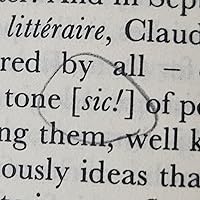
Asks too much from its characters; that they be both farcical and intelligent, keen-eyed and blind; the comedy undermines the commentary, and vice versa.
Similarly, the narrative suffers from tumourous side-plots; the exploration of gender-realpolitik elbowing for room with classic time-wasters like the quack doctor or the foolish old man.
Similarly, the narrative suffers from tumourous side-plots; the exploration of gender-realpolitik elbowing for room with classic time-wasters like the quack doctor or the foolish old man.

July 18, 2023
Whew, this one was a slog. I'm pretty sure GBS had a point in writing this play, but I really have no idea what that point is. Lots of very unlikable characters.
February 5, 2016
Women - and too, enlightened men - were in favour of women's education, property and voting rights, enfranchisement, suffragists demanding and chaining themselves. many identified these movements with left for obvious reasons - it seemed against interest of any conservatives to lose any source of free labour, and women just as slaves or colonial possessions were source of it.
But most people also misuderstood women's liberty and freedom first and foremost in the wrongest possible direction - one that would actually benefit men. Some people saw it coming and they were not all against women's rights - and Mr. Shaw was one such man.
With women free, and access to women granted freely to any man, those that had no honourable intentions were in heaven. They could play with women's hearts and discard them - all in name of women's freedom, since the misunderstanding was, it was about no chaperone watching over to make sure their real important rights were guarded - those related to just such men not destroying hearts and lives.
This is the story of just such a woman who has a heart and would hide it behind talk of freedom, so she can try to attract one playing with her heart, her subsequent - or even, consequent - heartbreak when it is clear he never had any intention that could be then called honourable (now the word has gone out of usage, almost), and the philanderer who nevertheless sees what havoc he has wreaked, with clear eyes.
Monday, September 22, 2008.
But most people also misuderstood women's liberty and freedom first and foremost in the wrongest possible direction - one that would actually benefit men. Some people saw it coming and they were not all against women's rights - and Mr. Shaw was one such man.
With women free, and access to women granted freely to any man, those that had no honourable intentions were in heaven. They could play with women's hearts and discard them - all in name of women's freedom, since the misunderstanding was, it was about no chaperone watching over to make sure their real important rights were guarded - those related to just such men not destroying hearts and lives.
This is the story of just such a woman who has a heart and would hide it behind talk of freedom, so she can try to attract one playing with her heart, her subsequent - or even, consequent - heartbreak when it is clear he never had any intention that could be then called honourable (now the word has gone out of usage, almost), and the philanderer who nevertheless sees what havoc he has wreaked, with clear eyes.
Monday, September 22, 2008.

January 17, 2013
This classic unpleasant play was written in 1898, though it was not staged until 1902 because of the strict British Censorship Laws.
The play starts with the leading character Leonard Charteris making love with Grace Tranfield. The play flows ceaselessly with these two characters until we are introduced to Julia Craven and her wild outburst of emotions. The play revolves centering Leonard and Julia who were once lovers.
It was an amusing experience to read (re-read to be exact) the play. Several ideologies are discussed in it by the characters, the 'modern' notion of feminism, the difference between the 'manly' women and the 'feminine' women, the institution of marriage and friendship; but at the end no such ideology is proved to be right or wrong. At the end Julia finds her perfect match, and the readers sigh of relief. Shaw rather made fun of the heavy ideologies, proving that no particular idea or principle could tie human nature limiting their ways of expressing themselves.
I am not fortunate enough to watch any of the stage production of this play, but I dearly wish to. The characters Leonard and Julia were very beautifully written that the readers could imagine them in their visions while reading the acts. My favorite character is Julia of course, at some points I felt sympathetic to her.
My rating for this play - three stars.
The play starts with the leading character Leonard Charteris making love with Grace Tranfield. The play flows ceaselessly with these two characters until we are introduced to Julia Craven and her wild outburst of emotions. The play revolves centering Leonard and Julia who were once lovers.
It was an amusing experience to read (re-read to be exact) the play. Several ideologies are discussed in it by the characters, the 'modern' notion of feminism, the difference between the 'manly' women and the 'feminine' women, the institution of marriage and friendship; but at the end no such ideology is proved to be right or wrong. At the end Julia finds her perfect match, and the readers sigh of relief. Shaw rather made fun of the heavy ideologies, proving that no particular idea or principle could tie human nature limiting their ways of expressing themselves.
I am not fortunate enough to watch any of the stage production of this play, but I dearly wish to. The characters Leonard and Julia were very beautifully written that the readers could imagine them in their visions while reading the acts. My favorite character is Julia of course, at some points I felt sympathetic to her.
My rating for this play - three stars.

June 20, 2014
This was a nice play , not a patricularly striking one. It was entertaining albeit a little bit too short . The wit is extremely subtle , sometimes you have to think twice about what the characters say and what they really mean . It was really interesting how in a society full of masks , poker faces , those who show their true colors are more or less shunned . I enjoyed this depiction of the 19th century society and how women were starting to grow out of their meek housewives selves . It can certainly have many interpretation and what I truly enjoyed is the characters' complex portrayal. I will definitely try more of Shaw's plays !!!

June 22, 2020
This is the best play from Shaw that I've ever read, as good as "Man of Destiny", better than "Mrs Warren's Profession", Arms and The Man, You Never Can Tell, The Devil's Disciple, Caesar and Cleopatra, Man and Superman, Don Juan in Hell, Major Barbara, Pygmalion, Heartbreak House, The Apple Cart, The Millionairess. I can't believe he wrote so many plays and for many years I only know about Pygmalion. Somehow I suspect that Shaw wanted to compete with Shakespeare and worked tirelessly to reach his goal. If so, Shaw has already won me over. Shakespeare is just too archaic for me language-wise.
The Philanderer himself is not as villain like as I had imagined when I first started; the contrast of characters between Grace and Julia is real and insightful; Paramore's dogmatic view of social interactions is presented right to the point. The best scene is between Grace and Julia. If this play is all about Grace and Julia, I would have liked it better, but I know this cannot be. Shaw is a man and he can only write from a man's point of view. His power of understanding women, in his own peculiar way, makes me think that he is surrounded by those that he wrote about in his play--all interesting characters.
The Philanderer himself is not as villain like as I had imagined when I first started; the contrast of characters between Grace and Julia is real and insightful; Paramore's dogmatic view of social interactions is presented right to the point. The best scene is between Grace and Julia. If this play is all about Grace and Julia, I would have liked it better, but I know this cannot be. Shaw is a man and he can only write from a man's point of view. His power of understanding women, in his own peculiar way, makes me think that he is surrounded by those that he wrote about in his play--all interesting characters.
July 8, 2018
"The Philanderer" is the first play I've read by George Bernard Shaw. The plot is set off by the idea of an "Ibsenite" club, influenced by the work of the master Norwegian playwright to break down barriers between men's and women's behavior. To join the club, one has to prove that one is neither manly nor womanly. This was an interesting conceit, and one that made me wish I were more than casually familiar with Ibsen's plays.
The tone of "The Philanderer" veered between comedy and drama. I sometimes didn't know how to take a scene, or interpret a character's intentions. Shaw gives long, detailed performance indications, which to me sometimes got in the way of imagining the scenes in my head. Perhaps it would help to see the play interpreted by a good cast under good direction.
"The Philanderer" was one of Shaw's earliest plays, so I imagine his later work may be stronger. I look forward to continuing to read more of his oeuvre.
The tone of "The Philanderer" veered between comedy and drama. I sometimes didn't know how to take a scene, or interpret a character's intentions. Shaw gives long, detailed performance indications, which to me sometimes got in the way of imagining the scenes in my head. Perhaps it would help to see the play interpreted by a good cast under good direction.
"The Philanderer" was one of Shaw's earliest plays, so I imagine his later work may be stronger. I look forward to continuing to read more of his oeuvre.
September 13, 2020
Read this for my drama class, i think i will choose this play to analyze one of its themes or characters, i read that Shaw’s female characters are well known as strong independent women, i think its a good reason for me to choose one of his plays hehe
But overall, i liked Grace more and maybe Sylvia too but Charteris is an ass seriously i hated him so bad
Honestly i didnt really understand what happened in this play i still dont know
But overall, i liked Grace more and maybe Sylvia too but Charteris is an ass seriously i hated him so bad
Honestly i didnt really understand what happened in this play i still dont know
September 6, 2017
Labors of Love
Universal implications connecting close relationships, makes for this great play. Never settle for anything less than true love! Fine work by G.B. Shaw.
Universal implications connecting close relationships, makes for this great play. Never settle for anything less than true love! Fine work by G.B. Shaw.

May 24, 2018
A play about manly man, womanly woman and in-betweeners.

February 7, 2022
Complicated. I good try, but terribly dated.

January 1, 2024
The most wonderful edition of a Shavian play I could have ever asked for! I’ll never question again with the contexts and critical passages included!
Read
April 11, 2024Really old style of comedy and since its theater, everything has to be extremely expository and on the nose
October 19, 2024
eh…i liked it better than widowers houses though. i will say, act 3 GOT me lmaoooo i was audibly cackling
February 14, 2026
never make a hero of a philanderer🙏

April 23, 2026
Ugh. I suppose one must never read a writer they initially liked too often. Drawn out and a headache. This would make me hate Ibsen, not appreciate him.

May 31, 2026
3.5⭐️
February 2, 2024
Full Disclosure: This had been an (unread, by me,) assignment at my University before I dropped its class. I chose to keep the script, to read eventually, instead of selling it back to the bookstore.
That being said, I am not generally a fan of plays. Almost every play I've been able to see is an amateur production, and I always find something lacking (often many somethings.)
However, I would most likely enjoy seeing this play acted by the right people. What appears overlong on the page might be enjoyable with the right cast, who could make the multiple pages of basically the same idea pop and fizzle-in a good way.
That being said, I am not generally a fan of plays. Almost every play I've been able to see is an amateur production, and I always find something lacking (often many somethings.)
However, I would most likely enjoy seeing this play acted by the right people. What appears overlong on the page might be enjoyable with the right cast, who could make the multiple pages of basically the same idea pop and fizzle-in a good way.

August 29, 2012
A short play and quite an average one at that.
Read
August 14, 2014Comedy graduate course
October 6, 2025
read as part of my "Shaw and Stoppard Course"

Want to Read
June 12, 2012Shaw, George Bernard
The Complete Bernard Shaw Plays
In compilation only.
The Complete Bernard Shaw Plays
In compilation only.
Displaying 1 - 27 of 27 reviews