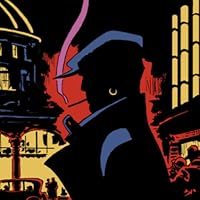
Começando com as origens obscuras de um super-herói dos anos 50, o Escritor Original, com a ajuda de uma mão-cheia dos maiores artistas de comics de sempre, escreveu uma das mais tremendas sagas de super-heróis de sempre. Depois do seu primeiro confronto com o super-vilão que viria a ser a sua némesis, Miracleman irá partir em busca do segredo das suas origens, enquanto o Escritor original irá levar o arquétipo intemporal do super-herói até às suas últimas consequências e à sua visão tremenda de um futuro utópico. O resultado foi uma obra-prima da banda desenhada, a primeira grande história de super-heróis “realista”, que ajudou a redefinir todas as regras do género.
A G. Floy orgulha-se de apresentar aos leitores portugueses a primeira edição integral mundial de uma das obras-primas esquecidas da banda desenhada de super-heróis, e uma das mais influentes de sempre.
Miracleman foi o primeiro de uma série de obras “revisionistas” que puseram em questão todos os clichés e características das histórias de super-heróis. Foi só na sequência de Miracleman, que O Regresso do Cavaleiro das Trevas, Watchmen, ou histórias como Batman Ano Um ou Piada Mortal, escritas por autores inovadores como Frank Miller ou Alan Moore, estabeleceram o cânone deste revisionismo, que aplicava a psicologia real ao universo dos super-heróis, com resultados nem sempre agradáveis, que iam da violência excessiva, da subversão social e política à psicose e sociopatia. Mas até nisso Miracleman foi revolucionário, e abriu caminho a um novo entendimento do género super-heróico, com as suas raízes no mito e na lenda. De certo modo, Miracleman pode ser visto como uma exploração daquilo que pode acontecer num mundo povoado de super-heróis, se levarmos até às últimas consequências a sua existência. Onde é que tudo pode acabar? O que pode sair dali?
Inclui os volumes originais A Dream of Flying, The Red King Syndrome e Olympus, bem como todas as histórias curtas da fase do Escritor Original.
Inclui uma extensa galeria de capas originais e alternativas, desde capas das revistas dos anos 80 até capas alternativas das recentes edições da Marvel, por artistas como Joe Quesada, Alan Davis, Bill Sienkiewicz, Gabrielle Dell’Otto, Tim Sale e muitos mais!
Contém inúmeros extras, desde esboços e reproduções de páginas a preto e branco, prefácio exclusivo, entrevista, etc…
Still one of the all-time great superhero deconstructions. One of the first, by the ultimate author, and it holds up this very day. An exploration of the terrifying implications of what superhumans would be in real life, ending with a hauntingly dark utopia poetically scribed as only the original writer could...
This was an incredible read, something everyone who reads comics should definitely check out. It’s one of Alan Moores earliest works and shaped the landscape of comics. The story itself I really enjoyed, it got a bit over the top towards the end for my taste but every leading up to that was so excellent I didn’t mind. Considering that Miracleman was a copy of Shazam, Moore did a great job of completely redefining the character in an interesting way. It was also really interesting to find out the history surrounding this character. Overall a must read in my opinion.
Uno de los mejores cómics de superheroes que he leído. Lo pondría incluso por encima de Watchmen que ha sido mi favorito del género durante mucho tiempo. Imprescindible. Que grande es Moore.
While superhero deconstruction stories rarely do it for me, I can't think of one that captivated my imagination more than Miracleman and I was happy to finally get an all-in-one collection of the run for my first re-read in years. The run, written by Alan Moore (credited as "The Original Writer" due to his consternation with the legal issues behind the rights to Miracleman) and illustrated by an elite motley of artists like Garry Leach, Alan Davis, Chuck Austen, Rick Veitch & John Totleben, regales the reader with a story about a classic comic book character revived in the modern age. There's a substantial meta narrative underlying the story, and it's filled to the brim with both reverence for classic storytelling and nihilism. Miracleman is the story about the ascension of a god on Earth, and how the consequences for ascension results in utopia - but perhaps not in the way we may like. The entire run is divided into three books, which can further be understood as a cycle of godliness.
Mild spoilers below:
"A Dream of Flying" takes on the concept of the awakened god. Micky Moran, suffering from vivid dreams and headaches, comes into the realization that he is the classic superhero, Miracleman. This arc presents one of the better "evil Superman" tropes in an incredible twist, but also tackles the idea of how the two alternate identities of the superhero can be in absolute conflict with each other. Moran is decrepit and washed out, while Miracleman is a godlike being. Superhero stories often touch on this, but rarely is it demonstrated with as much nuance as we see in this run.
In "The Red King Syndrome", Miracleman delves deep into his own mythology and his creation. Learning that he is the product of clandestine government experiments nearly breaks him, and forces him to take on to meet his own maker, Dr. Gargunza. The story arc is somewhat presented as the classic "chicken or the egg" problem, and culminates with Miracleman reconsidering his own divinity.
"Olympus" addresses the ascension of Miracleman into the all-benevolent deity and the spread of godlike entities across the world following the inevitable cataclysmic showdown set up in the first book. It's brutal and gut-wrenching, and the destruction is not taken as lightly as it often is in similar types of books. The series ends with a slightly overwritten epilogue, but one that is crucial to the core themes of the run. Bringing heaven to earth sounds like a change worth making, but it's built on blood and ashes. Is the price of godhood worth it?
The other underlying meta-narrative in this run is the homage it pays to classic superhero comics. Despite the somewhat nihilistic take on superheroes, there is substantial reverence paid to classic comics and how its own outlook on the genre is inspired by what came before. The opening salvo to "A Dream of Flying" utilizes reworked and re-written pages of Mick Anglo's Marvelman Family #1 from 1956. The choice of story is inherently poetic - the future goes to conquer the past, only for the past to go and conquer the future, symbolizing the return of Miracleman for a more modern audience. Classic comics are thus shown reverence and not seen as lesser for it.
Beyond the stellar narrative themes presented in this run is the spectacular art by several renowned artists. This omnibus has perhaps the most extras I've seen for this format, with tons of scanned original artwork and unfinished pages, covers and pinups. The story itself only comprises ~half of the actual book page count which could be something that bothers some. But as a lifelong fan of Miracleman, I was more than happy to get all the extra content.
I highly recommend this run, especially for fans of Moore's other works like Promethea, Saga of the Swamp Thing and Watchmen, all of which delve into similar concepts and yet all feel distinctly unique.
Se, nas páginas iniciais, parece estarmos perante uma versão banal, inocente e cliché de um super-herói, com a progressão rapidamente percebemos que existem outros níveis de complexidade e de escuridão naquele que parece ser a encarnação da perfeição. Ou não fosse Miracleman uma criação de Alan Moore.
Tendo como nome inicial Marvelman (nome que foi alterado pela sua semelhança com a Marvel), Miracleman apresenta-se como um homem que se transforma num ser invencível ao proferir uma frase mágica. De mente sublime, pensamentos perfeitos e capacidades físicas invejáveis por qualquer mortal, enquanto Miracleman conta com a parceria de outros dois seres de capacidades sobrenaturais, o Jovem Miracleman e o Kid Miracleman. Juntos, constituem a família Miracleman.
A inicial perfeição, enjoativa na sua simplicidade e sublime harmonia, representada pelo trio, assemelha-se aos episódios familiares americanos onde o mundo é puro e perfeito e as forças do mal são sempre vencidas pelos poderosos heróis. Felizmente, o episódio inicial onde decorre uma típica batalha contra o vilão é apenas a porta para nos serem apresentados os conflitos interiores do homem e do herói em que se transforma, numa dualidade que não é de fácil convivência.
Cerca de 30 anos depois deste episódio inicial, de batalha contra um típico vilão, em 1982, encontramos Miracleman enquanto homem vulnerável, esquecido das suas capacidades e do seu outro eu, a acordar ao lado da esposa. Enquanto jornalista, acorre a uma manifestação que se transforma em assalto e é aqui que redescobre Miracleman. Inicia-se aqui o choque entre o homem e o herói – esquecido do herói o humano criou uma vida própria e a transformação em super, e consequente dissociação de personalidade, torna-se de difícil convivência e aceitação.
Se, na sua condição humana, tem boas intenções mas é falível, enquanto super-herói consegue o impossível, incluindo engravidar a esposa, acontecimento que se transforma em ponto de ruptura no relacionamento e com ele próprio, principalmente quando se vê incapaz de proteger a família dos que a atacam. A consequente necessidade de ceder espaço de acção ao Miracleman, deixando-o ocupar o seu próprio espaço, deixa o homem psicologicamente fracturado e cada vez mais ausente.
O conhecimento das circunstâncias negras que produziram o super-herói fazem amadurecer Miracleman. Enquanto ultrapassa a quebra da inocência torna-se cada vez mais sólido e poderoso mas, com a crescente perfeição, aumenta, também o afastamento com o seu lado humano e, consequentemente, torna-se menos íntimo do leitor. Miracleman torna-se progressivamente um Deus, um ser perfeito, capaz de feitos incríveis, muito acima dos defeitos dos seres humanos. Com esta progressão muda o tom, a perspectiva e a proximidade com a personagem.
Enquanto livro de super-heróis Miracleman de Alan Moore ultrapassa o relato episódico de batalhas sublimes com vilões. Ainda que estas existam são passagens secundárias em comparação com a criação do herói perfeito que seguimos ao longo do livro. E se inicialmente era uma falsa perfeição, romântica, simplista e inocente na sua ignorância, com o desenvolvimento da história assistimos ao aparecimento do verdadeiro ser perfeito, intelectualmente superior, de aparente distanciamento emocional e correcto agir.
De papo cheio do que é bom e escrito pelo Alan Moore me queixo que virar isto chegou quase a enfadar-me. Claro que é um portento narrativo com uma arte irrepreensível, desconstruindo o género super-heróis, colocando questões de índole existencial sem cair em lugares-comuns, dotando as personagens de uma densidade inusitada no género sem descurar a exploração das fórmulas cliché que são usadas para logo depois serem elas próprias analisadas e adensadas, sempre em falso simples, porque a simplicidade está toda do lado de quem se habituou às facilidades maniqueístas de malta voadora vestida de lycra e com capa de cetim. Ler The Watchmen antes disto é que ajudou pouco.
Criançada aí em casa: quando pegarem na obra do tio Moore (e que fofinho que ele é, basta googlá-lo) comecem por aqui!
Alan Moore doesn’t want you to know this is an Alan Moore book anymore, for a bunch of truly labyrinthine legal reasons, but make no mistake, this is as Alan Moore-ish as any Alan Moore series I’ve ever read.
It’s pretty incredible to read this, really Moore’s first genuine foray into comic writing, and see just how many of his recurring tropes and themes find their way into this book. You’ve got a deeply subversive approach to superhero mythology that simultaneously pays homage to the superhero writing of his childhood; gigantic, mind-bending ideas about space and time; superheroes as a New Pantheon; a deep disdain for Margaret Thatcher; horrifically disturbed yet sympathetic villains; and, of course, the theme that Sex Rules. The guy simply loves sex and wants you to love it too. Don’t worry, Alan! We love sex!
But what I’m saying is, these are basically the Alan Moore Thematic Greatest Hits, and he’s firing on all cylinders with them here. I really loved reading about 90% of this. His attentiveness to the characters and world is on point and feels very similar to his approach to Swamp Thing, which he would begin writing shortly after this with some of the same artists. The series grows and morphs as it continues, at first reading as a fairly straightforward but above-average superhero comic, before turning into a treatise on the human reliance on the divine.
That’s a little bit where I got bored, though. Moore loves going on at length, using narration to cram in every detail he doesn’t have time to explore or show through art, and you can feel him really start to blast through all his remaining ideas in the latter quarter of this. He still finds time for some thrilling, upsetting action toward the end, but I think a bit more narrative time would’ve made it all easier to process and witness. As is it kind of starts to feel like a Wikipedia entry.
But, that’s really only a minor flaw at the end. I’m so glad the legal mess behind the rights to this finally got ironed out so we can get a full, beautiful collection of it here. Mostly holds up, and definitely is worth a read!
I first heard about Alan Moore’s “Miracleman” when I read a comment saying that Marvel’s character of The Sentry to be almost a ripoff of Miracleman. That led me to researching Miracleman and discovering the character’s convoluted publishing history as well as how the series was the precursor for many of the superhero deconstruction stories that would follow. Pre Moore, Miracleman was a traditionally wholesome superhero (the British version of Captain Marvel/Shazam) whose stories played the genre straight. As Moore is want to do, his take on the character is much more in line with what he would later do with “Watchmen”, showing how unpleasant superheroes in the real world could and would be. The omnibus edition collects the three volumes of Moore’s work as well as some bonus stories from this universe, including a story with art by Mike Allred (whose work on Silver Surfer I adore and which lends itself well here).
A Dream of Flying: The first volume plays out as you expect. We open with an old timey Miracleman comic akin to your standard Golden Age of Comics superhero story, harmless escapism. Then we get to see in contemporary times Miracleman in his secret identity living a dreary life in the real world for a bit before remembering he’s Miracleman only for several unfortunate plot points to occur to ruin the power fantasy (his kid sidekick grew up with delusions of godhood/is now a supervillain, all the fun campy stories were false memories). The space opera story at the end honestly did nothing for me. But the first part with him rediscovering his real identity before things are shown to not be so fine and dandy are solid enough.
Red King Syndrome: The second volume is when the nasty and deconstructive side of this universe really takes off. Miracle Man’s wife is kidnapped by his creator who reveals all the Golden Age stories were just made up illusions projected into MM’s and his sidekicks’ brains (clearly this is where Garth Ennis’ took some inspiration for “The Boys” comic). This causes MM to snap and be particularly brutal in his rampage to rescue his wife. The first volume could be violent and brutal but this volume is when it gets really violent and NSFW. I personally really did not need to see the miracle of childbirth shown here as it was. I don’t care if it's a natural part of life and this is a boundary pushing comic NO THANK YOU.
Olympus: The final volume is when things really get climatic and play out in the line of thought of Moore’s who recently claimed how superhero stories can double as fascist power fantasies. The space opera part from volume 1 comes back here as Miracle Man, a female partner and a few other human superheroes become the new type of deities on Earth. First they have to deal with the resurgent evil Kid Miracleman who goes all evil overlord and makes London a Hell on Earth. Clearly this is the directly/indirectly the origin point of all subsequent depictions of mass superhero destruction scenes in media (clearly brings to mind “Man of Steel’s” climatic fight but even “Invincible’s” subway scene owes its existence to almost the exact same panel here). After which MM and his fellow deities go about reshaping the world and trying to create a utopia that uplifts all of humanity save some exceptions. I found part of this rushed and underdeveloped (i.e., the black Philadelphian firestarter character is all introduced via exposition off page) as well as a bit unnerving due to underlying assumption that there’s still something “off” about this perfect world that feels incompatible with humanity. I did appreciate Moore working in this feeling of unease to paradise, if the section is meant to be a Rorschach Test (heh) I guess I’m perhaps in favor of messy mankind making its own way in a flawed world. Overall this volume could be climatic even if like the last volume I felt like I was having trouble connecting it.
Overall I don’t think “Miracleman” isn’t Alan Moore’s best work despite how influential it is. That’s perhaps part of the reason I was not gushing over it, the phenomenon of superhero deconstructions Moore launched is so pervasive I’ve seen so many variations of what he does here elsewhere. Likewise, there’s the usual over-the-topness prevalent in his work here which can be a bit much at times. That plus his need to deconstruct previously existing superheroes in an overly gritty manner brings to mind Moore’s guest appearance on The Simpsons when he does the same thing to Bart’s favorite superhero. Yet all the same, there’s the usual quality Moore content here as well and it is cool seeing one of the earliest and perhaps influential superhero deconstructions out there. It could be extreme but I did find myself enjoying and appreciating the bulk of the omnibus. It’s no Watchmen but Miracleman is still worth checking out for those that want to see one of the little known but influential stories in Moore’s bibliography.
Allen Moore deconstructive story telling is amazing. Even after all the dark superman stories we’ve been saturated with over the years this still comes off really original
This is pretty close to the edition I read, though it was in English. Not sure what this title is referring to. Alan Moore is a master at writing comic books and his run on Miracleman is no exception. The book had many starts and stops ,but read in total like this gives an appreciation of how Mr. Moore stayed on point. Yes there are super heroes, but that is where this stops being like any other comic you may have read. There is nothing else like this.
What if a magical superhero, that was made for children, is viewed through a scientific and mature lense? What happens to society if a godlike being dwells among humans? Also, aliens.
This comicbook run from the 80s is famous for breaking the boundaries and rules of a superhero comics. Miracleman is a hero, that gets his powers by saying the magic word 'Kimota', in the very same manner how the Shazam movies are depicted. Said hero changes into a musular and athletic being with powers beyond belief. This concept was made to punch nazis and burglars, in a world where the status quo is good and desirable.
Along comes Alan Moore and questions everything. What happens to the body that is currently inactive? Are the two the same person? If not, why would they ever want to switch back and give up control? If there's no magic involved, how can the superpowers be explained scientifically? If that's the case, what does this say about the past, where everything was just fun and games? Along this line of thought, things escalate quickly and the tone gets very very dark.
Yes, this is work is incredibly creative and totally surpasses the typical superhero punches bad guy comic. As soon as the reader understand and plays around with the thought that everything should be questioned and that no rules apply to people in power, the whole story becomes very philosophical and there is a lot to unpack here.
Yet, I'm only giving this 3 stars. First of all, roughly 50% of this omnibus, which is 400 pages, is bonus material, namely scripts, sketches and covers. That's just unnecessary bloat in my opinion. Secondly, Alan Moore's writing tends to get very obscure, eloquent and straight up incomprehensible. There's pages and pages full of text boxes that do nothing for me. Maybe I don't understand it and that's on me, but it does dampen my enjoyment of the story.
I haven't touched upon the aliens yet. Wow, these ideas are so cool and I wished they could be explored further. Same as the way the story flows. Every victory of Miracleman takes away his humanity further and further. Unfortunately, the book ends at a point that I wish could be continued on.
In the end I'm obligated to recommend this story, but it does take some work to get through.
This features some of the best comic issues I've read and some of my favorite and most poignant of Moore's work. I confess that apart from an accident of history I do not know why this is overshadowed by WATCHMEN and other Moore works. The run also features some of Moore's standard vices. In later issues he pushes things beyond the boundaries of good taste, drowns the pages in words, and after the original vision is fulfilled meanders into unfocused scifi tales. The same vices are found in later SWAMP THING books, but MIRACLE MAN maintains has less of a drop in quality. Moore and Veitch apparently had no editor tell them not to show a vaginal birth in graphic detail here and the comic is not better for it. I confess I never liked WATCHMEN or THE KILLING JOKE, but I understand them better as Moore did it here first and with greater passion.
I've been curious about this book for a long time and after a talk with an old friend at a friend's birthday I decided to pick it up!!! And the book has an interesting concept and I really enjoyed some of the things it was trying to say, but the execution wasn't the best - the story was confusing and weird, and at most times it lacked a personal stake!!! I've also wondered for awhile if I've moved past Alan Moore, it's not the first time I find his books really lacking and with a sensibility that doesn't work for me anymore (this worries me considering I have a 1000-something pages book of his still on my physical tbr...)
Uma visão incrível sobre o super-herói ou a sua antítese, focando-se em dilemas morais, na dicotomia entre causa e consequência, partindo do princípio do Salvador até às implicações de um mundo em que se banalize e responsabilize o Salvador. Miracleman vai além de todas as questões até hoje levantadas sobre o mito do super herói, brincando até - pareceu-me - com a teoria do super-homem de Nietzsche, incidindo o seu debate sobre as consequências de um mundo onde ser salvo é uma obrigação. Além disso, a perfeição tem custos internos. Numa leitura mais pessoal, faço de certa forma um paralelismo com o nosso Sistema Nacional de Saúde, um sistema que salva diariamente milhões de pessoas e, no entanto, tudo o que passa para a Comunicação Social são as suas falhas, esquecendo a humanidade daqueles que trabalham além do que lhes era obrigado. Genial e, em simultâneo, triste.
Devastatingly sad and also very beautiful in parts. If you have any interest in seeing how comics became as highly regarded as novels, read this. Alan Moore really is the best comic book writer of all time.
It's very hard to articulate the magic trick Alan Moore pulls narratively with Miracleman. He starts with a premise that has some intrigue, but otherwise has a certain familiarity to it. Leading you to brace yourself for the predictable road it's going to go down. And then, it doesn't. Instead, as the story unfolds and the characters dige into the central mystery, things get less clear and stranger. The reader struggles to understand with the characters themselves. And that's before it REALLY hits you that this is a story about what it means to be human, the danger of inhumanity, and what it's like to lose your humanity. Tying in perfectly with a vicious critique of the superhero genre that our world wouldn't survive of superheroes were real. The shifting art styles per issue was something that it took me a minute to adjust to, and some of the edgy stuff felt shocking for the sake of being shocking, but neither of these took away from the overall experience. Oh, A word of warning, There are things in these comics that nothing will prepare you for. Nothing.
Uma das grandes histórias universais de um género que só costuma apelar a "geeks", Miracleman é a súmula quasi-perfeita (melhor só mesmo Watchmen) do engenho de Alan Moore em condensar grandes questões filosóficas com uma aparente "historieta" de heróis em licra. Uma paródia à infantilidade dos clássicos desta e de outras personagens, Miracleman evolui a cada instante para se tornar num épico violento, sarcástico e genial sobre o Homem, o Poder e a relação entre classes sociais. Tudo isto para culminar na mais perfeita utopia (que deixa em aberto a impressão de que, afinal, até mesmo o herói mais extraordinário da Humanidade pode ter as suas falhas). Uma excelente edição em Português pela G Floy.
Who knows maybe I’m another gen Z kid with no respect for the classics, maybe it’s a product of it’s time and I can’t experience how ground breaking it was like when it came out. All I know for certain is that I found it painfully boring.
I liked the idea at first, Shazam knockoff created out of a lawsuit. The first two books were cool in a weird way. Not amazing but I figured the third book was why everyone likes it as much as they do. I understand why people like it I just didn’t enjoy it.
Another reason I really don’t care for this omnibus is I just wanted to read the run. But half the book is filler and art which is nice if you enjoy the series or the character but with my steadily lowering interest it just felt like filler used to justify the price.
Es sorprendente que este cómic no tenga la fama de Watchmen, The Kiling Joke o los otros clásicos de Alan Moore. Miracleman, también conocido como Marvelman, es el gran personaje de la Edad Dorada del cómic británico. Es el Capitán Marvel original que luego de una disputa con DC, tuvo que cambiar el nombre. Este cómic es el origen del estilo Moore, de revertir los estereotipos y escribir historias diferentes y con reacciones y sentimientos humanos realistas. Se nota que es uno de sus primeros trabajos porque aunque no tiene la elegancia de sus títulos posteriores, la originalidad y contundencia de sus otros trabajos están allí.
Имао сам јако испланирану визију како ћу да напишем рецензију за ово срање, и толко сам се јебено исписао, брате оно, развалио сам га од писања, ал ми се све јебено избрисало, па ћете сада уместо тога да добијете краћу, глупљу и благо пасивно агресивну рецензију овог искрено јако кул дела. Пробајте да уживате.
Разлог зашто је овај стрип уопште познат и запамћен до данас је то што је вишемање зачетак целог озбиљаре паметњаковићког еџијаштва у стриповима, због овога су ваши омиљени ивичасти хероји са гаћама преко панталона толико ивичасти и толико кул, ово их је све започело. Лако је рећи колико је то досадно и предвидиво данас, али пре 40 година тако нешто апсолутно није постојало; ово је изродило све те досадне и предвидиве идеје после, иако Алан Мур, брат што је написао причу, никада није хтео да ово буде неки покрет у стриповима који је неминовно постао. Ипак јесте, и то са разлогом. Невероватна деконструкција лика који је био мираклмен-тј Марвелмен, компликовано је, и увучено у страшне легалне борбе тако да ћу га само звати ММ да себи олакшам- је стварно била револуционарна и мени као читаоцу јако јако забавна. ММ, овај лик који је настао као копија лика који је настао као копија Супермена још педесетих година, али реално, било који лик из тог доба стрипова, фини шашави Добрица пун догодовштина и ванлајнера, увек весео и никако ни случајно не долази у обзир озбиљан, у сталном сукобу са још шашавијим и глупљим зликовцима, блеји и олакшава живот људима у граду, да би се на крају сваког стрипа све вратило одакле је почело и ова игра између злоће и Добрице поновила по сто пута. Помислити да би Алан Мур узео оваквог једног веселог момка скоро 20 година касније, обрнуо му цео живот наглавачке, обрнуо њега целог наглавачке, обрнуо цео његов свет наглавачке и генерално окренуо много глава на ону страну где не треба да буду тада, па, није ни могло да се помисли.
Ипак, Алан Мур је то некако помислио у својој поремећеној глави и изродио ово дело. Естетски прелепо, невероватно кохерентно осмишљено и испанирано са све почетком и крајем, револуционарно, веома забавно, врло мрачно, врло контраверзно(некад превише), и јако, јако паметно, додуше понекад мало превише претенциозно дело. Тако бих га најкраће описао. Ако бих ишао у детаље, а идем у детаље ево управо сад то радим, онда бих рекао и кажем да пре свега морају да се похвале илустратори овога. Брате, ово је стварно било прелепо, често сам морао само да застанем са свим читањем и упијем миниремекдела које су нацртали браћа која су радила на овоме. Цртежи би често били јако грандиозни, један панел заузимао би и по више од две трећине стране, ал већином се не бих бунио јер су ствснро били невероватни за гледање, чак и ако је било ужасно напорно то радити у пдф фајлу, толико је добро било да нисам смео да се нервирам око тога. Ни текст и прича наравно нису били много иза илустрација, штавише били су још бољи. Цело ово чудо написано је буквално као да читаш праву правцату књигу, стварно невероватне и нарације и дијалози, баш пуно сам се уживео у дело управо због тога како је Алан Мур ову причу испреплитао кроз медију коју је стрип на оволико језиво кул начин и за то стварно свака похвала. Ал већ ту почиње прва ствар која ми је мало сметала, а то је сама усклађеност онога што гледаш и онога што читаш.
Гледајући и једно и друго у изолацији, оба су стварни невероватни прикази генија и креативне визије уметника који су ту да направе нешто што нико до сад није видео и поносе се тиме, можда и превише, ал опет са разлогом; међутим, када једно и друго гледаш заједно, често су посвађани. Чинило ми се док сам читао ово, као да су слике и слова стално биле у неком надметању ко је бољи, често је изгледало као да претерано истичу своје квалитете како би се ти уверио да је ово једно боље од овог другог, отприлике ко да ти се два најбоља играча на тиму макљају око лопте и онда нико није срећан тип ситуације. Не кажем да је то било стално, некад би се тако добро уклопили текст и слике, поготово у моментима када је требало, тако да барем за те кључне тренутке сарађивали, вероватно јер је Алан Мур имао визију како би те тренутке нацртао да је он тај који црта, мсда не могу никако то сигурно да тврдим. Врхунац ових тренутака био је у трећем делу приче, када су слике биле толико велике и накинђурене и кутијице са текстовима толико огромне и пуне речи које никад у животу нисам чуо, само сам чекао да пређем на следећу страну и надао се да ће бити мало уљуднија. Ово донекле има смисла са причом веровали или не, ал свеједно баш баш напорно. Директно се повезује са још једним проблемом којим имам, некад га баш претерају са тиме колико им је распоред ових панела луд, мислим кул је све то, лишаваш се граница обичног стрипа и то све, ал нису те кутијице безвезе биле тако распоређене, лако је да се чита и упије слика, овде је некад стварно било тешко да се гледа колико су луде биле стране, ал то је можда више до тога што сам читао у ПДФу него било чега, свеједно јако незгодно.
Још једна критика је да су га генерално претеривали некад са пуно ствари, баш је било онако романтичарски гротескно са времена на време, ал донекле иде у прилог причи па нисам много љут на то.
Осим тога, стрип је јако забаван и баш те тера на размишљање, има одличан крај, одличан почетак, и још много одлучности између, али просто му фали пар ствари да би било толико добро колико је могло да буде. С тога 4 звездице, вероватно бих дао и 3,5 или 3,7 јер су мане, мада их нема пуно, присутне кроз цео стрип и ствсрно некад нервира превише, иначе јако добро и препоручујем свима да прочитају ако желе нешто ново, нешто дивље, нешто зајебано итд итд све у свему јако кул.
As Zarathustra/ubermensch allegories go, this is all-time top 5. John Totleben at the height of his powers, the 80's cool of the Warpsmiths, the Billy Batson story that no other book would dare, the horror of destroyed London, it goes on and on. This is the height of the artform for me, a complete and untouchable work.
Shameful that it's been denied it's rightful place in the heirarchy by decades of legal fights about rights and names and reprints.
If it had the same accessibility as Watchmen did over the past 40 years, it would have reached the same tier.