

What do you think?

Heretics and Believers: A History of the English Reformation
Centuries on, what the Reformation was and what it accomplished remain deeply contentious. Peter Marshall’s sweeping new history—the first major overview for general readers in a generation—argues that sixteenth-century England was a society neither desperate for nor allergic to change, but one open to ideas of “reform” in various competing guises. King Henry VIII wanted an orderly, uniform Reformation, but his actions opened a Pandora’s Box from which pluralism and diversity flowed and rooted themselves in English life.
With sensitivity to individual experience as well as masterfully synthesizing historical and institutional developments, Marshall frames the perceptions and actions of people great and small, from monarchs and bishops to ordinary families and ecclesiastics, against a backdrop of profound change that altered the meanings of “religion” itself. This engaging history reveals what was really at stake in the overthrow of Catholic culture and the reshaping of the English
With sensitivity to individual experience as well as masterfully synthesizing historical and institutional developments, Marshall frames the perceptions and actions of people great and small, from monarchs and bishops to ordinary families and ecclesiastics, against a backdrop of profound change that altered the meanings of “religion” itself. This engaging history reveals what was really at stake in the overthrow of Catholic culture and the reshaping of the English
672 pages, Hardcover
First published June 27, 2017
About the author
Peter Marshall
17 books26 followersPeter Marshall is Professor of History at the University of Warwick, with a particular interest in the study of religious belief and practice in sixteenth and seventeenth-century England and the cultural impact of the English Reformation. He has published widely in the field, including a survey of the period, Reformation England 1480-1642, and The Catholic Priesthood and the English Reformation, also published by Oxford University Press.
Ratings & Reviews
Friends & Following
Create a free account to discover what your friends think of this book!
Community Reviews
Displaying 1 - 30 of 64 reviews

November 11, 2018
I coveted this big book for months before I got it. I coveted it way more than my neighbour’s ass*. Finally I got it. It’s a slow read, but very good. I’ve just read part one so far, and here are the two most interesting things I found.
Chapter 1 gives us the best summary of medieval Christianity I have ever come across. So here is a summary of the author’s summary. First, it might be worth stating the obvious here, that in those days no one chose to be a Christian. You automatically were. (Also, no one called themselves Catholics, there was only one type of Christianity.) And here’s the thing – I should say The Thing : as soon as you got born into this world, the major obsession was how to get out of it well, meaning, how to get to heaven and avoid hell. This could be very tricky if you did not follow the rules. Here are the rules.
1. As soon as you are born you must get baptized. Unbaptized infants go to Limbo, not Hell. At first it was thought they did go to hell but although medieval types were pretty cool with all kinds of horrible torture they found the vision of eternally frying babies a bit too much so they came up with Limbo, which is not heaven and not hell, it’s strictly nowhere. This solved another problem – Christians were kind of upset at the idea of good non-Christians being fried eternally too so they figured those also go to Limbo.
(Note : I’m surprised there wasn’t more of a protest from traditional Christians in 1962 when Chubby Checker released “Limbo Rock” : “Every limbo boy and girl
All around the limbo world
Gonna do the limbo rock”
– there’s no rocking in Limbo, it’s a non-place. Chubby was theologically way off. )
2. You must confess your sins but only once a year, so it’s not too much of a drag. The pressure on hard-working priests hearing all those confessions during the same week (Holy Week) “rendered a detailed grilling improbable” as Peter Marshall says, so you didn’t have to go to great lengths remembering all the coveting you did in the previous year. However, mnemonics were available to help really keen people remember all their sins.
3. When you die a priest has to grant you absolution so you can die in a State of Grace but sorry to say that while you can’t proceed without it, absolution doesn’t get you to heaven. No, only saints and martyrs go straight to heaven. You still have to work off the guilt of your accumulated sins so you have to do time in Purgatory. It’s true that you have to contort words and meanings furiously to find the slightest trace of the idea of purgatory in the Bible. But this idea solved another problem. People thought it was really unfair if a nasty murderer got absolution and died in a state of grace and went to heaven in exactly the same way a good nice person would. So the idea was that the murderer would do 50,000 years and the nice person just maybe 4 months or so.
4. Purgatory is not hell, but it’s hell to be there, and the idea is that you’re going to be there for thousands of years as you burn away all your fornications and shoplifting and fiddling of tax returns. Even non-murderers will have to do some significant purging. But take heart, you can do something about it. Before you die, in your will, set aside some cash to pay people to say prayers and masses and add a stained glass window installation here and there for your soul. Depending on the strength and frequency of these prayers & masses, your time in purgatory will be massively reduced. Prayers on earth really affect what happens in the afterlife! I think this was a real spiritual breakthrough – it gave people some hope. Otherwise the afterlife could seem a depressing prospect. So, one really special mass = one thousand years in Purgatory. One pater noster probably = about 5 years.
Here’s Paulie Walnuts in The Sopranos figuring out how much time you have to do :
You add up all your mortal sins and multiply that number by 50. Then you add up all your venial sins and multiply that by 25. You add that together and that's your sentence. I figure I'm gonna have to do 6,000 years before I get accepted into heaven and 6,000 years is nothin' in eternity terms. I can do that standing on my head. It's like a couple of days here.
I don’t think Paulie Walnuts set aside any dough at all for priests to chant masses for his soul so you can see that this part of theology has evolved in the last 500 years, but not that much. I think that many people still think yeah, that’s about how the whole thing works. It’s interesting to note that in the above scheme there is no mention of Jesus. He comes in to the formulas used by the priests in baptism and absolution but an average medieval person would only have a hazy notion of what he was all about. All the services were in Latin.
LOLLARDS
These were the English heretics who didn’t believe half the things the Church was telling them. Such as that praying to saints was useful, or that going on a pilgrimage was a good thing, or that relics (like a fragment of the fingernail of St Simeon etc etc) were fakes, and especially, that during the Mass the bread and wine did NOT transubstantiate and become the actual body and blood of Christ. Wow, the Church was very prickly on that point and wanted to burn alive all disbelievers in this most bizarre idea.
Etymological notes:
Limbo is from the Latin limbore, meaning a stupid dance performed with a piece of wood. Lollard is from the Latin lolium, meaning lollard.
* "Thou shalt not covet thy neighbour's wife, nor his manservant, nor his maidservant, nor his ox, nor his ass" Exodus 18:21
Chapter 1 gives us the best summary of medieval Christianity I have ever come across. So here is a summary of the author’s summary. First, it might be worth stating the obvious here, that in those days no one chose to be a Christian. You automatically were. (Also, no one called themselves Catholics, there was only one type of Christianity.) And here’s the thing – I should say The Thing : as soon as you got born into this world, the major obsession was how to get out of it well, meaning, how to get to heaven and avoid hell. This could be very tricky if you did not follow the rules. Here are the rules.
1. As soon as you are born you must get baptized. Unbaptized infants go to Limbo, not Hell. At first it was thought they did go to hell but although medieval types were pretty cool with all kinds of horrible torture they found the vision of eternally frying babies a bit too much so they came up with Limbo, which is not heaven and not hell, it’s strictly nowhere. This solved another problem – Christians were kind of upset at the idea of good non-Christians being fried eternally too so they figured those also go to Limbo.
(Note : I’m surprised there wasn’t more of a protest from traditional Christians in 1962 when Chubby Checker released “Limbo Rock” : “Every limbo boy and girl
All around the limbo world
Gonna do the limbo rock”
– there’s no rocking in Limbo, it’s a non-place. Chubby was theologically way off. )
2. You must confess your sins but only once a year, so it’s not too much of a drag. The pressure on hard-working priests hearing all those confessions during the same week (Holy Week) “rendered a detailed grilling improbable” as Peter Marshall says, so you didn’t have to go to great lengths remembering all the coveting you did in the previous year. However, mnemonics were available to help really keen people remember all their sins.
3. When you die a priest has to grant you absolution so you can die in a State of Grace but sorry to say that while you can’t proceed without it, absolution doesn’t get you to heaven. No, only saints and martyrs go straight to heaven. You still have to work off the guilt of your accumulated sins so you have to do time in Purgatory. It’s true that you have to contort words and meanings furiously to find the slightest trace of the idea of purgatory in the Bible. But this idea solved another problem. People thought it was really unfair if a nasty murderer got absolution and died in a state of grace and went to heaven in exactly the same way a good nice person would. So the idea was that the murderer would do 50,000 years and the nice person just maybe 4 months or so.
4. Purgatory is not hell, but it’s hell to be there, and the idea is that you’re going to be there for thousands of years as you burn away all your fornications and shoplifting and fiddling of tax returns. Even non-murderers will have to do some significant purging. But take heart, you can do something about it. Before you die, in your will, set aside some cash to pay people to say prayers and masses and add a stained glass window installation here and there for your soul. Depending on the strength and frequency of these prayers & masses, your time in purgatory will be massively reduced. Prayers on earth really affect what happens in the afterlife! I think this was a real spiritual breakthrough – it gave people some hope. Otherwise the afterlife could seem a depressing prospect. So, one really special mass = one thousand years in Purgatory. One pater noster probably = about 5 years.
Here’s Paulie Walnuts in The Sopranos figuring out how much time you have to do :
You add up all your mortal sins and multiply that number by 50. Then you add up all your venial sins and multiply that by 25. You add that together and that's your sentence. I figure I'm gonna have to do 6,000 years before I get accepted into heaven and 6,000 years is nothin' in eternity terms. I can do that standing on my head. It's like a couple of days here.
I don’t think Paulie Walnuts set aside any dough at all for priests to chant masses for his soul so you can see that this part of theology has evolved in the last 500 years, but not that much. I think that many people still think yeah, that’s about how the whole thing works. It’s interesting to note that in the above scheme there is no mention of Jesus. He comes in to the formulas used by the priests in baptism and absolution but an average medieval person would only have a hazy notion of what he was all about. All the services were in Latin.
LOLLARDS
These were the English heretics who didn’t believe half the things the Church was telling them. Such as that praying to saints was useful, or that going on a pilgrimage was a good thing, or that relics (like a fragment of the fingernail of St Simeon etc etc) were fakes, and especially, that during the Mass the bread and wine did NOT transubstantiate and become the actual body and blood of Christ. Wow, the Church was very prickly on that point and wanted to burn alive all disbelievers in this most bizarre idea.
Etymological notes:
Limbo is from the Latin limbore, meaning a stupid dance performed with a piece of wood. Lollard is from the Latin lolium, meaning lollard.
* "Thou shalt not covet thy neighbour's wife, nor his manservant, nor his maidservant, nor his ox, nor his ass" Exodus 18:21

November 4, 2018
Yes, I give five strong stars as for me this was the most comprehensive book on the reformation in England that can be offered to a reader who is not a scholar in this discipline. I admit that my interests are general but this book is a detailed presentation of the path of the reformation. The Author provides unbiased views, which I valued most.

November 14, 2018
From papists to puritans, and all points in-between...
In this massive history of the English Reformation, Marshall looks in detail at the people and events that gradually led England from Catholicism to Protestantism. He doesn’t fixate on the bickering Tudor Royals, although of course they play their part. Instead he focuses mostly on those of the ranks below – the lords, bishops and religious thinkers of the period, with the occasional nod to the common people. He therefore gives a picture of the Reformation as being fundamentally about points of difference in interpretation of the Gospel, rather than, as is sometimes portrayed, a largely political change carried out by and for the benefit of those pesky Kings and Queens. He suggests that the Reformation was bloodier than is often claimed, and that its relative slowness meant that people became accustomed to thinking about questions that had previously been simply accepted. He gives the impression that he believes the Reformation allowed the genie of individual thought out of the bottle, whether for good or ill.
The book begins with an excellent exposition of medieval religious rites and traditions, and how the Biblical stories were interpreted into daily ritual. The sacraments and sacramentals, the eucharist, transubstantiation, purgatory, etc., are all explained simply and without judgement or commentary. This is enormously helpful to those of us who are not practising Christians and so are vague about what these things mean today, much less half a millennium ago. Marshall points out that the pre-Reformation Catholic church had not been an unchanging entity for centuries, as it is often portrayed, and that even prior to the Reformation there was a growing number of people who were concerned that the rituals, relics and so on, were taking away from the simplicity of the core message of salvation through Christ.
The history is largely given in a linear fashion, starting with an in-depth look at the status of the Church prior to what would come to be seen as the beginning of the Reformation, then going through all the various stages of it, the advances and retreats, power-struggles, factions, purges, burnings and bloody executions. Along the way Marshall introduces us to the major, and many minor, players, and discusses the development of the theology underpinning the religious arguments and the political considerations motivating the powerful.
The book contains a massive amount of detail, and it is well written without unnecessary academic jargon. So in that sense, it is approachable for the general reader. However, this general reader often felt swamped by the hundreds of unfamiliar names trotted out once to illustrate a particular point. For me, with only a superficial knowledge of the period, I found the meat of the argument was often lost in the minutiae which surrounded it. I’m sure all the detail would make it an excellent read for people with a sound existing knowledge of the period who wish to gain additional insight, or particularly for students. But I don’t know that I’d wholeheartedly recommend it as an introduction to the subject, or even as a next step to the relative newcomer.
Having said that, I left it for a few weeks before writing this review to see how it settled in my mind, and now that my memory has expelled all the minor names and incidents, I do feel I have a much clearer idea about the broad sweep of events and, more importantly, about the religious arguments behind them. I find Marshall has also made me more aware that ordinary worshippers were more than simply pawns of the powerful – that these arguments mattered to them too and that pressure for change came from the bottom up as much as from the top down. So, although I admit I struggled at times with what felt like information overload, in the end I feel I have gained from the reading of it. 3½ stars for me, so rounded up.
Peter Marshall is professor of history at the University of Warwick. Heretics and Believers won the 2018 Wolfson History Prize.
NB This book was provided for review by the publisher, Yale University Press.
www.fictionfanblog.wordpress.com
In this massive history of the English Reformation, Marshall looks in detail at the people and events that gradually led England from Catholicism to Protestantism. He doesn’t fixate on the bickering Tudor Royals, although of course they play their part. Instead he focuses mostly on those of the ranks below – the lords, bishops and religious thinkers of the period, with the occasional nod to the common people. He therefore gives a picture of the Reformation as being fundamentally about points of difference in interpretation of the Gospel, rather than, as is sometimes portrayed, a largely political change carried out by and for the benefit of those pesky Kings and Queens. He suggests that the Reformation was bloodier than is often claimed, and that its relative slowness meant that people became accustomed to thinking about questions that had previously been simply accepted. He gives the impression that he believes the Reformation allowed the genie of individual thought out of the bottle, whether for good or ill.
The book begins with an excellent exposition of medieval religious rites and traditions, and how the Biblical stories were interpreted into daily ritual. The sacraments and sacramentals, the eucharist, transubstantiation, purgatory, etc., are all explained simply and without judgement or commentary. This is enormously helpful to those of us who are not practising Christians and so are vague about what these things mean today, much less half a millennium ago. Marshall points out that the pre-Reformation Catholic church had not been an unchanging entity for centuries, as it is often portrayed, and that even prior to the Reformation there was a growing number of people who were concerned that the rituals, relics and so on, were taking away from the simplicity of the core message of salvation through Christ.
The history is largely given in a linear fashion, starting with an in-depth look at the status of the Church prior to what would come to be seen as the beginning of the Reformation, then going through all the various stages of it, the advances and retreats, power-struggles, factions, purges, burnings and bloody executions. Along the way Marshall introduces us to the major, and many minor, players, and discusses the development of the theology underpinning the religious arguments and the political considerations motivating the powerful.
The book contains a massive amount of detail, and it is well written without unnecessary academic jargon. So in that sense, it is approachable for the general reader. However, this general reader often felt swamped by the hundreds of unfamiliar names trotted out once to illustrate a particular point. For me, with only a superficial knowledge of the period, I found the meat of the argument was often lost in the minutiae which surrounded it. I’m sure all the detail would make it an excellent read for people with a sound existing knowledge of the period who wish to gain additional insight, or particularly for students. But I don’t know that I’d wholeheartedly recommend it as an introduction to the subject, or even as a next step to the relative newcomer.
Having said that, I left it for a few weeks before writing this review to see how it settled in my mind, and now that my memory has expelled all the minor names and incidents, I do feel I have a much clearer idea about the broad sweep of events and, more importantly, about the religious arguments behind them. I find Marshall has also made me more aware that ordinary worshippers were more than simply pawns of the powerful – that these arguments mattered to them too and that pressure for change came from the bottom up as much as from the top down. So, although I admit I struggled at times with what felt like information overload, in the end I feel I have gained from the reading of it. 3½ stars for me, so rounded up.
Peter Marshall is professor of history at the University of Warwick. Heretics and Believers won the 2018 Wolfson History Prize.
NB This book was provided for review by the publisher, Yale University Press.
www.fictionfanblog.wordpress.com

April 17, 2017
'To virtually all the people making use of the word, "Reformation" suggested a lineal process of betterment and change - of an agent acting progressively upon object to produce one perfected, or at least improved, bastion of faith. The experience of the English Reformation, for those who have lived through it, could scarcely have been less like that.'
I have been deeply impressed with the depth of understanding and analysis in Heretics and Believers. Peter Marshall has expertly handled the crowd of competing contemporary voices to demonstrate - better than any historian I have ever read - the true extent to which the English Reformation rested on debate, argument and compromise.
Moving away from his Long Reformation thesis, he delves into the 'key century' of 1490-1590, demonstrating how even pre-Lutheran dissidence was defined by a divergence of opinions. His analysis into pre-Reformation evangelicalism is incredibly
insightful, and demonstrates part of the social context which allowed Protestantism to take root in England in the 16th century.
What is truly remarkable is that, despite embracing widely divergent opinions and vehement debate, Marshall's 579-page assessment does not feel overwhelming. He carved a clear path for the reader to follow, to see the arguments around us, but not become embroiled or confused by the noise.
I wholeheartedly recommend this book to anyone seeking the true nature of the Reformation.
I have been deeply impressed with the depth of understanding and analysis in Heretics and Believers. Peter Marshall has expertly handled the crowd of competing contemporary voices to demonstrate - better than any historian I have ever read - the true extent to which the English Reformation rested on debate, argument and compromise.
Moving away from his Long Reformation thesis, he delves into the 'key century' of 1490-1590, demonstrating how even pre-Lutheran dissidence was defined by a divergence of opinions. His analysis into pre-Reformation evangelicalism is incredibly
insightful, and demonstrates part of the social context which allowed Protestantism to take root in England in the 16th century.
What is truly remarkable is that, despite embracing widely divergent opinions and vehement debate, Marshall's 579-page assessment does not feel overwhelming. He carved a clear path for the reader to follow, to see the arguments around us, but not become embroiled or confused by the noise.
I wholeheartedly recommend this book to anyone seeking the true nature of the Reformation.
May 14, 2018
My main complaint about this book is that the title on the dust-cover is in gold foil of such low quality that after only average reading wear and tear, my copy is now called "Heretics and Believi_s". Why gold foil? And why shitty gold foil?
So, the book is pretty great. It's truly enormous, but Marshall's writing is so good that I barely noticed--and good in a stylish way, not in the increasingly popular, almost painfully clear, one-sentence-structure-is-all-I-need way. It's a model of how to organize an historical narrative; it helps, of course, that the material is so gripping. I must also confess that Marshall seems to me to be of the slightly revisionist, post-Duffy school of thinking; Mary comes off better than you'd expect, and Edward worse. That's important, because I'd like to think that's true. Convinced Calvinists might find it rather more upsetting. Even for them, though, this is highly recommendable.
So, the book is pretty great. It's truly enormous, but Marshall's writing is so good that I barely noticed--and good in a stylish way, not in the increasingly popular, almost painfully clear, one-sentence-structure-is-all-I-need way. It's a model of how to organize an historical narrative; it helps, of course, that the material is so gripping. I must also confess that Marshall seems to me to be of the slightly revisionist, post-Duffy school of thinking; Mary comes off better than you'd expect, and Edward worse. That's important, because I'd like to think that's true. Convinced Calvinists might find it rather more upsetting. Even for them, though, this is highly recommendable.
August 17, 2024
The best book I've read on the English Reformation. Fairly hefty but worth the time.
June 22, 2024
Just wonderful.
My theory is that the author's success comes from the fact that he takes the religious debates seriously, without scoffing at them, but neither does he demonize or exculpate either side. He "gets it" without becoming a partisan (that I could tell).
Peter does a great job of exploring the themes of this conflict's role in pushing towards a more democratic England without straying too far from the narrative. He is very frank about the level of unrest, rancor, and hatred that the conflict unleashed, while also being able to see the very beautiful work that was being accomplished at the level of the English commoner. During the tug of war at the highest levels of English power, the opinion of the commoner was coveted and many campaigns to inform them of the evils of Protestant or Catholicism gave the strong impression that it mattered what they personally thought, which was not so important previously.
I was completely unaware of Henry VIII's very real conscientious scruples regarding the Papal dispensation required for him to marry Catharine in the first place and his suspicion that his (apparent) violation of Deuteronomic law was the cause of his inability to get an heir. It was fascinating to read the letter that he secretly sent to Luther to feel out Luther's opinion on the matter.
UPDATE: I found a book that serves as the perfect "chaser" to this one. John M. Barry's "Roger Williams and the Creation of the American Soul: Church, State, and the Birth of Liberty." All of the questions I had that were left unresolved in this book are answered only when the debate spilled over onto the much larger stage of the American Frontier.
My theory is that the author's success comes from the fact that he takes the religious debates seriously, without scoffing at them, but neither does he demonize or exculpate either side. He "gets it" without becoming a partisan (that I could tell).
Peter does a great job of exploring the themes of this conflict's role in pushing towards a more democratic England without straying too far from the narrative. He is very frank about the level of unrest, rancor, and hatred that the conflict unleashed, while also being able to see the very beautiful work that was being accomplished at the level of the English commoner. During the tug of war at the highest levels of English power, the opinion of the commoner was coveted and many campaigns to inform them of the evils of Protestant or Catholicism gave the strong impression that it mattered what they personally thought, which was not so important previously.
I was completely unaware of Henry VIII's very real conscientious scruples regarding the Papal dispensation required for him to marry Catharine in the first place and his suspicion that his (apparent) violation of Deuteronomic law was the cause of his inability to get an heir. It was fascinating to read the letter that he secretly sent to Luther to feel out Luther's opinion on the matter.
UPDATE: I found a book that serves as the perfect "chaser" to this one. John M. Barry's "Roger Williams and the Creation of the American Soul: Church, State, and the Birth of Liberty." All of the questions I had that were left unresolved in this book are answered only when the debate spilled over onto the much larger stage of the American Frontier.

July 18, 2018
I first read seriously about the English Reformation in Dickens and Hughes histories in the late 1960’s for my first degree. They were Protestant and Catholic respectively in their approaches. I found this history an excellent account and analysis of the period and a thorough review of the enormous complexities of the change. Peter Marshall leads the reader confidently through the immense range of religious beliefs England in the times up to the end of the reign of Elizabeth. In a coda, he draws the history to a satisfactory end after the Restoration in 1660 when the Church assumed essentially its present shape with the exit stage left as it were of the Puritan elements. It’s well worth reading.

February 21, 2019
Took me almost as long as the Reformation to read...
While I disagree with Marshall's framework, I cannot help but celebrate his book. In its wealth of detail and breadth of coverage it is a definitive account of what took place during the Reformation. From the early religious arguments before Henry VIII's reign to the years of confusion that marked his rule, to the near Civil War that takes place afterwards, Peter Marshall manages to keep the narrative rooted in historical records. He never looses sight of the human aspect to the period - and whether its the execution of Thomas Cromwell, or the burning of some unfortunate heretic - Marshall puts each story into its wider context. It should also be noted that Heretics and Believers is an excellent read with smatterings of humour - quarrels between King and Pope, Marshall jokes, were to be expected "like rain on a Scottish holiday". So despite my reservations about the authors' framework for understanding the period, I have no hesitation in recommending that those interested in the period read it. Few books have the material and fewer still keep the reader engaged for 600+ pages.
Full review: http://resolutereader.blogspot.com/20...
While I disagree with Marshall's framework, I cannot help but celebrate his book. In its wealth of detail and breadth of coverage it is a definitive account of what took place during the Reformation. From the early religious arguments before Henry VIII's reign to the years of confusion that marked his rule, to the near Civil War that takes place afterwards, Peter Marshall manages to keep the narrative rooted in historical records. He never looses sight of the human aspect to the period - and whether its the execution of Thomas Cromwell, or the burning of some unfortunate heretic - Marshall puts each story into its wider context. It should also be noted that Heretics and Believers is an excellent read with smatterings of humour - quarrels between King and Pope, Marshall jokes, were to be expected "like rain on a Scottish holiday". So despite my reservations about the authors' framework for understanding the period, I have no hesitation in recommending that those interested in the period read it. Few books have the material and fewer still keep the reader engaged for 600+ pages.
Full review: http://resolutereader.blogspot.com/20...

August 12, 2025
Wow. What a journey. Much death. Honestly not alot of Jesus. Kinda very sad. Very informative.
Marshal did a good job. For a history book, it definitely had its funny moments. It is obviously an academic book, but he did a good job of making it semi entertaining and definitely engaging.
Queen Elizabeth never married. What a shocker. But still there was a protestant heir. The son of mary queen of scotts. How is that even possible??? He just drops this in the postscript. I guess it isn’t that important and past the time he was writing, but I was waiting on the edge of my seat.
Anyways. Proud of myself for reading such a tome.
Marshal did a good job. For a history book, it definitely had its funny moments. It is obviously an academic book, but he did a good job of making it semi entertaining and definitely engaging.
Queen Elizabeth never married. What a shocker. But still there was a protestant heir. The son of mary queen of scotts. How is that even possible??? He just drops this in the postscript. I guess it isn’t that important and past the time he was writing, but I was waiting on the edge of my seat.
Anyways. Proud of myself for reading such a tome.
July 9, 2020
Outstanding first half, latter third a bit of a slog. Possibly because Catholics and Henry VIII are more intrinsically interesting than Puritans under Elizabeth. Strange choice to tackle the Spanish Armada in a paragraph. Last page transcendent, though, one of the best nonfiction last pages I've read since NT Wright's The Resurrection and the Son of God. Here, in a Reformation notable for its vicious doctrinal fights, from name-calling to people-burning, Marshall saved up three beautiful examples of forgiveness.

September 20, 2024
Amazing!
I loved this book from start to finish. I have learned so much from this book. This very powerful book transformed me spiritually and loyally. I have gone from a Church of England Protestant with loyalty to the Roman Catholic Church, to an ardent Church of England Protestant with no loyalty to Roman Catholicism. I have learned so much history. Thank you to the author.
I loved this book from start to finish. I have learned so much from this book. This very powerful book transformed me spiritually and loyally. I have gone from a Church of England Protestant with loyalty to the Roman Catholic Church, to an ardent Church of England Protestant with no loyalty to Roman Catholicism. I have learned so much history. Thank you to the author.

July 13, 2019
That was very long.
Very informative and thorough, deals with the sources.
Shows that the reformation in England grew on the fertile soil of residual Lollardy and late medieval clerical reforms.
Presents the decades-long ping-pong between romanism and protestantism from pre-Luther, to Henry VIII, to Edward, to Mary, to Elizabeth.
Points to the political motivations and implications of reform and resistance to reform.
Reminds that the idea of tolerance being a heritage of the Reformation is hard to uphold in light of historical data.
Very informative and thorough, deals with the sources.
Shows that the reformation in England grew on the fertile soil of residual Lollardy and late medieval clerical reforms.
Presents the decades-long ping-pong between romanism and protestantism from pre-Luther, to Henry VIII, to Edward, to Mary, to Elizabeth.
Points to the political motivations and implications of reform and resistance to reform.
Reminds that the idea of tolerance being a heritage of the Reformation is hard to uphold in light of historical data.
February 23, 2022
This is a remarkable book. The first section contains one of the best and most readable summaries of the state of late medieval Christianity in England on the eve of the Reformation I have yet to come across. The book is worth reading for this alone.
The rest of the book is a journey up naves and into chancels, redolent with colour and smell, and into Europe and back out again. It takes us to the doors of royal courts and into bishops' palaces. Ladders into rood lofts are scaled and descended as the religious temperature rises and falls, and the motives and movements of individuals are neatly and pithily examined.
Although this book is a history of the English Reformation, and of necessity it also engages with developments on the continent and in Scotland, with Scotland especially, it would have been useful to track the progress of the Reformation there in slightly greater depth to enable a greater understanding of what was going on in the 1550s and 60s in England.
I thoroughly enjoyed this book, and I now have a much fuller understanding of what the Reformation actually 'was' in England. This is a story that deserves to be told, and as this book shows, is so much more than a story of right or wrong, of who should govern the church, or of communion in both kinds or one.
This is a principled telling of stories and ideals for which some of our forbears were prepared to die.
The rest of the book is a journey up naves and into chancels, redolent with colour and smell, and into Europe and back out again. It takes us to the doors of royal courts and into bishops' palaces. Ladders into rood lofts are scaled and descended as the religious temperature rises and falls, and the motives and movements of individuals are neatly and pithily examined.
Although this book is a history of the English Reformation, and of necessity it also engages with developments on the continent and in Scotland, with Scotland especially, it would have been useful to track the progress of the Reformation there in slightly greater depth to enable a greater understanding of what was going on in the 1550s and 60s in England.
I thoroughly enjoyed this book, and I now have a much fuller understanding of what the Reformation actually 'was' in England. This is a story that deserves to be told, and as this book shows, is so much more than a story of right or wrong, of who should govern the church, or of communion in both kinds or one.
This is a principled telling of stories and ideals for which some of our forbears were prepared to die.

June 7, 2022
Remarkable work. It engages all levels of the English Reformation, from the Tudor court to the country peasant. Marshall demonstrates that the Reformation was not merely a political project detached from the everyday life of the individual; the Reformation involved every level of society. The average person understood their beliefs and what Reformation entailed. Many violently resisted, and many others joined with enthusiasm. Moreover, the vacillating religious policies of four different monarchs forced the church to swing between polar theologies. These policies were were enacted at the parish level, and the average person watched the effects of the different theologies alternatively reform and counter-reform their own churches. These drastic swings helped the average person truly understand the different theological positions and crystallize their own theological articulations.
I was deeply moved throughout this work. Well-written, and easily readable for anyone with an interest in this history.
I was deeply moved throughout this work. Well-written, and easily readable for anyone with an interest in this history.

January 1, 2018
Peter Marshall recounts the process of the English Reformation in great detail, providing new insights into the attitudes of its principal proponents, the Tudors. He carefully steers away from endorsement or condemnation of the vast cast of actors in the drama - More, Cranmer, Bonner, Whitgift, to name but a few, and thereby forges a readable and balanced account of the period. Although the book is mainly written for academics, the interested lay reader should also be able to savour it. In addition, Marshall has the gift of an amusing turn of phrase which he employs periodically.

May 30, 2022
There are a few places where some names could (should?) have been slapped into a footnote so that the narrative didn't get quite so bogged down and confusing. But this is very strong work. I knew a lot of it, but this was extremely useful to get a better sense of who slots in where and how the various surges and retreats worked.
I must say that pretty much every person mentioned in the book must have been exhausting.
I must say that pretty much every person mentioned in the book must have been exhausting.

October 17, 2018
This is a massive book but the topic is so vast that it feels like the author merely skimmed the surface concerning many of the characters. The canvas is too huge, personalities involved are larger than life: à Kempis, More, Cromwell, Dudley, Cranmer, Drake, Shakespeare, Jonson, Milton, huge figures, one could write volumes on each and every one of them. Then there are the kings and queens: Henry VIII, writing, in his own hand, refutation of Luther's 'Babylonian Captivity' and publishing it and then going on to give an end to monasteries. He flipped-flopped in his religious beliefs as much as he flip-flopped in his choice of a spouse. His unfortunate son, Edward who ruled as a minor for only a couple of years but his caretakers pushed with the anti-Roman reforms, Mary Tudor, who tried dragging England back to Catholicism. Elizabeth I, the "queen of Nicodemites", trained to hide her true beliefs while growing up under the care of her Catholic half-sister. The great things that happened in her time: Queen Mary Stuart's execution, Spanish Armada, her suitors. There is so much in this book that you could compile an encyclopedia of early modern Britain by just skimming through and picking things from its pages. Nothing is neglected. Butcher's wife, Margaret Clitherow, who was executed for harbouring Popish priests and "Humphrey Newman, nicknamed ‘Brown-bread’" a cobbler and an active distributor of Presbyterian pamphlets for populist writers. This is a huge tapestry which gives an indication of the complications and the long time-span involved in English Reformation. It took England three centuries to completely sever links with the Roman Church. This took so long because the nation was divided from top of the social hierarchy to the very bottom of it on the issue of links with the Roman Church. We live in similar times when the British society is completely divided on the issue of our ties with the EU. The magnitude of this division indicates that the issue of our EU membership is not going to be resolved any time soon. We are in for a very long ride.

January 4, 2020
It’s a tome! The thing I really liked about this book is that Marshall is interested in how the English Reformation is affecting the lives of the non-nobility. This means you get something more than your normal gloss of history which is largely focused on the politics of Court, but it comes with a shadow side... there is a TON of detail. If you expect that going in, if that excites you, then you’ll enjoy this.
I read this with an accountability group at church and we all enjoyed it even if it was really dense. I read along in the hard copy with the audiobook playing in my earbuds and found it immensely helpful.
I read this with an accountability group at church and we all enjoyed it even if it was really dense. I read along in the hard copy with the audiobook playing in my earbuds and found it immensely helpful.

August 6, 2020
Marshall's introduction and conclusion show that he is more interested in the secular appurtenances of Reformation (the rise of religious toleration, e.g.) than picking a side in the Henrican or Elizabethan religious debates that he renders in detail. But in a sense, that makes him a more impartial historian than might be expected. There is admiration in his account for Campion's Jesuits as well as for Cranmer.
The English Reformation is complex, and Marshall's book is correspondingly long, but this excellent book is a great counterpart to McDiarmaid's "The Reformation" and a perfect launching pad for further study.
The English Reformation is complex, and Marshall's book is correspondingly long, but this excellent book is a great counterpart to McDiarmaid's "The Reformation" and a perfect launching pad for further study.

March 28, 2019
This book is the definitive book on the English Reformation. Incredibly easy to read and compellingly written, Marshall knows how to distribute information to an audience. Never falling too far into dry academic writing, but also incredibly detailed, this book is perfect for the interested (if not rabidly zealous) reader! Though a hefty tome, it provides everything you would need to know for a solid century of English religious history without feeling overwrought.
All in all, I heartily recommend this book to anyone interested in the English Reformation
All in all, I heartily recommend this book to anyone interested in the English Reformation

March 26, 2026
Taking our church's confirmation/membership class and really wanted to know more of the history of our denomination (Anglican). I've done lots of reading on the early church, but wanted much more on the English Reformation and the birth of modern Anglicanism. Are we really just born from Henry VIII wanting a divorce? Yes and no. This book does a great job digging into the theological issues of the time, showing the birth of Anglicanism as definitely intertwined with politics, but also richly theological and anchored in the Reformation. Really helpful!

March 30, 2019
Absolutely amazing. Peter Marshall has written the definitive book about the English Reformation (in my humble opinion). It is informative and he has such a good writing style he makes what could seem to be a dry subject vibrant and alive. I borrowed this from the library but I am now going to buy a copy because I will re-read this many times.

August 15, 2025
This took quite a lot of hours to get through, but in the end it was worth it. I feel I would actually start to understand half of what was going on if it read it a second time.
The main reason I’m giving 5 stars though is because of the shear amount of scholarship and research the went into this tome is insane! Very well written and even handed with analysis.
The main reason I’m giving 5 stars though is because of the shear amount of scholarship and research the went into this tome is insane! Very well written and even handed with analysis.

September 18, 2024
A brilliantly fleshed out take on England’s Reformation! 🤩🤗📖
February 23, 2026
Woah, this is a big book. It covers a heavy topic. It is dense with information. But did I want to keep reading? Yes. Was it readable? Yes. Did I enjoy it, and get plenty of food for thought? Yes. Whilst it has taken a chunk of time to get through, I can't think of any fair rating other than 5/5. I am glad to have made the effort. Now time for a few months of lighter material...

November 8, 2019
This is a great read on the English Reformation, but is almost too exhausting to take on entirely. At times, it gets bogged down with so much detail and name-dropping that it becomes tiresome to follow. I read another reader's review on Amazon where he said something along the lines of this should maybe not be the first book someone reads about the English Reformation, but it certainly could be the last one. I think that about sums it up.

January 26, 2026
For much of the population today, if they have heard of it at all, the Reformation probably evokes feelings similar to how Prime Minister Neville Chamberlain regarded the 1938 crisis in Czechoslovakia: ‘a quarrel in a faraway country, between people of whom we know nothing’.
I was interested in how a catholic English people at the beginning of the sixteenth century changed amongst the general population to a divided Roman Catholic, Church of England and more extreme Protestant sects by the end. I had already read books (Weir and Gooding) that explained the political changes, but didn’t understand how this so changed the views of “ordinary folk”.
This very readable book goes a long way towards helping me understand that change, providing an understanding of religious views at the beginning of the sixteenth century against which monarchs moved the church hierarchy to break with Rome under Henry, then enforce Puritanism under Edward, try to move back to Catholicism under Mary, to try to create a “middle way” of Anglicism under Elizabeth. These changes created the questioning of religious beliefs and rituals that I can now understand brought change to the general population over a generation or two.
The book is well written, with lightness of learning and an occasional humorous style used sparingly but sufficiently to vary reading, although at the end of chapter one Marshall goes overboard with an extended metaphor about conservative and progressive academic Christians being Trojans and Agamemnon!
Chapter 4, Marvellous Foolishness, makes a balanced and persuasive argument for divergent interpretations of Christianity existing at the end of the fourteenth century and later, using the Lollards as an example of such divergence, rather than arguing that the Lollards became the Protestants. This is very much what I was looking for when trying to understand the Reformation, as Marshall puts it:
Most of all, Lollardy’s existence, and persistence, reveals the capacity of ordinary men and ordinary women, orthodox and heretic alike, to think seriously and deeply about issues of conscience and belief. And it prepares us for the paradox at the very heart of the Reformation story – a story of how shared visions of faith produced deep and lasting divisions in religion.
Chapter 5 then clearly explains the basis for arguing that that Tyndale was not a heretic for translating scripture, or even for translating it incorrectly. His translation was toxic because it was made, like Luther’s, with blatant heretical intent.. There is also a convincing argument that Tyndale’s translation of the New Testament gained authority because the Church hadn’t issued an approved translation, and continued to not to issue an approved translation.
Reading this has drawn depressing parallels between Trump’s United States of America and Henry VIII’s Reformation.
I was interested in how a catholic English people at the beginning of the sixteenth century changed amongst the general population to a divided Roman Catholic, Church of England and more extreme Protestant sects by the end. I had already read books (Weir and Gooding) that explained the political changes, but didn’t understand how this so changed the views of “ordinary folk”.
This very readable book goes a long way towards helping me understand that change, providing an understanding of religious views at the beginning of the sixteenth century against which monarchs moved the church hierarchy to break with Rome under Henry, then enforce Puritanism under Edward, try to move back to Catholicism under Mary, to try to create a “middle way” of Anglicism under Elizabeth. These changes created the questioning of religious beliefs and rituals that I can now understand brought change to the general population over a generation or two.
The book is well written, with lightness of learning and an occasional humorous style used sparingly but sufficiently to vary reading, although at the end of chapter one Marshall goes overboard with an extended metaphor about conservative and progressive academic Christians being Trojans and Agamemnon!
Chapter 4, Marvellous Foolishness, makes a balanced and persuasive argument for divergent interpretations of Christianity existing at the end of the fourteenth century and later, using the Lollards as an example of such divergence, rather than arguing that the Lollards became the Protestants. This is very much what I was looking for when trying to understand the Reformation, as Marshall puts it:
Most of all, Lollardy’s existence, and persistence, reveals the capacity of ordinary men and ordinary women, orthodox and heretic alike, to think seriously and deeply about issues of conscience and belief. And it prepares us for the paradox at the very heart of the Reformation story – a story of how shared visions of faith produced deep and lasting divisions in religion.
Chapter 5 then clearly explains the basis for arguing that that Tyndale was not a heretic for translating scripture, or even for translating it incorrectly. His translation was toxic because it was made, like Luther’s, with blatant heretical intent.. There is also a convincing argument that Tyndale’s translation of the New Testament gained authority because the Church hadn’t issued an approved translation, and continued to not to issue an approved translation.
Reading this has drawn depressing parallels between Trump’s United States of America and Henry VIII’s Reformation.

November 17, 2017
Earlier this week I was at a city-wide ecumenical prayer gathering, along with the coffee and doughnuts which appear to be obligatory at such events. During the time of prayer one member prayed a passionate and lengthy prayer thanking God for the anniversary of the Reformation, the reforming and renewing of the church and the move of the Spirit 500 years ago. Not that unremarkable, perhaps, coming from an almost exclusively Protestant gathering - except that the man offering the prayers up was almost certainly from the (ana)baptist tradition. No babies were likely to be baptised in his church. The Reformation did very little for anabaptists. They were reviled by both Catholics and Lutherans and put to the stake by Henry VIII, Mary and Elizabeth. The Reformation is a far more complicated set of events than a simple Catholic (bad) Protestant (good) narrative can relay.
It is not an easy story to tell, which makes Peter Marshall's history all the more remarkable. In short, this is undoubtedly one of the best history books that I have ever read and should remain the definitive history of the English Reformation for decades to come.
Marshall is a gifted storyteller. He has a wry humour that never falls to flippant but continually piques the reader's interest. He is a historian of the grass roots, and this history is replete with telling anecdotes and illustrations from clergy and laity across the country. At the same time, this is not a series of local histories - Morebath writ large - the significant characters, Henry, More, Mary, Pole, Elizabeth, Grindall are all fleshed out and given humanity.
Nor is this a partisan history. Eamonn Duffy's work on popular Catholic forms of religion finds its place alongside more traditional Protestant retellings. Marshall is ambivalent as to whether the Edwardian Reformation thoroughly Protestantised England, or whether Mary became Queen of a country desperate for the restoration of the old religion. It depended very much on where you happened to be - Essex or Lancashire, for instance.
The postscript is one of the most moving and poignant endings to a work of history that I have come across. We are left with a picture of humans struggling to be true to their faith and to the teachings of Jesus whilst living amidst the cross-currents of history and politics, national and European. The humanity of those who died, and killed, for their faith shines out brightly. This is a history book to treasure.
It is not an easy story to tell, which makes Peter Marshall's history all the more remarkable. In short, this is undoubtedly one of the best history books that I have ever read and should remain the definitive history of the English Reformation for decades to come.
Marshall is a gifted storyteller. He has a wry humour that never falls to flippant but continually piques the reader's interest. He is a historian of the grass roots, and this history is replete with telling anecdotes and illustrations from clergy and laity across the country. At the same time, this is not a series of local histories - Morebath writ large - the significant characters, Henry, More, Mary, Pole, Elizabeth, Grindall are all fleshed out and given humanity.
Nor is this a partisan history. Eamonn Duffy's work on popular Catholic forms of religion finds its place alongside more traditional Protestant retellings. Marshall is ambivalent as to whether the Edwardian Reformation thoroughly Protestantised England, or whether Mary became Queen of a country desperate for the restoration of the old religion. It depended very much on where you happened to be - Essex or Lancashire, for instance.
The postscript is one of the most moving and poignant endings to a work of history that I have come across. We are left with a picture of humans struggling to be true to their faith and to the teachings of Jesus whilst living amidst the cross-currents of history and politics, national and European. The humanity of those who died, and killed, for their faith shines out brightly. This is a history book to treasure.
June 12, 2023
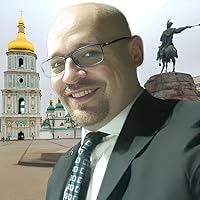
First off, I have a confession to make. When I think of Henry Tudor, it is the picture of an Irishman who I am imagining.
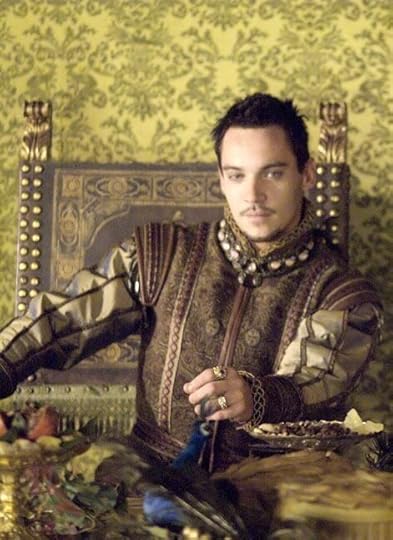
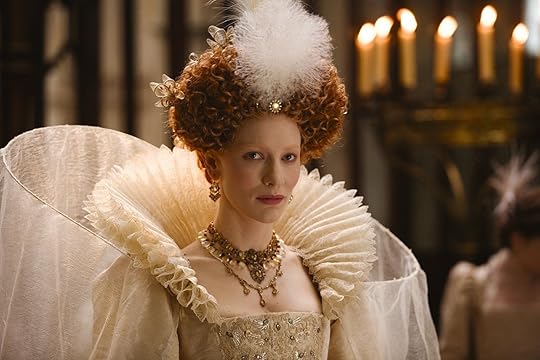
And when I am thinking about his second daughter, Elizabeth, I am really thinking about Cate Blanchett, an Aussie.
Now time for the real review. Heretics and Believers traces the history of the English Reformation from the ascension of Henry to the throne right through the reign of Elizabeth. The primary point that Marshall is bringing home is that the process was far more violent and far less linear than we would normally assume.
My general view has been that Henry broke with the RCC because he couldn't keep it in his pants. His son Edward was the first true reformer but he died young, before his reforms could really take root. Bloody Mary was a reactionary Catholic who tried (violently) to roll back the clock... or else.
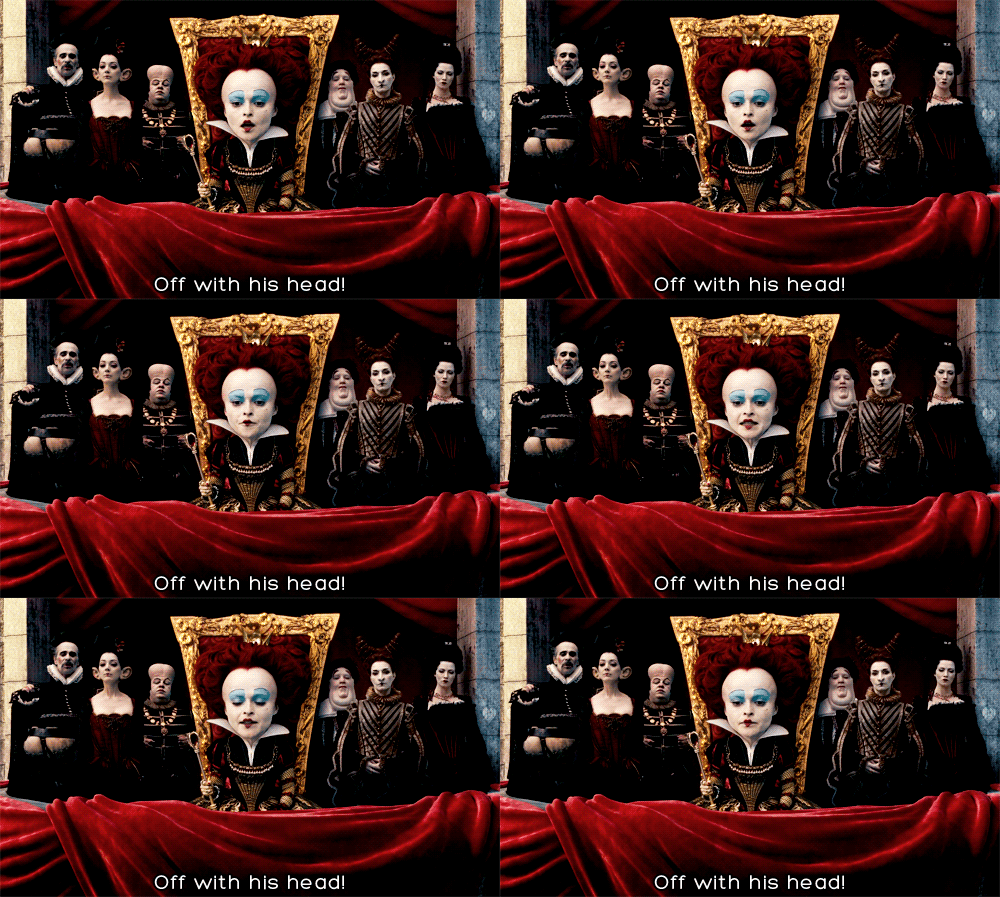
Elizabeth was a moderate pragmatist who tried to slowly bring back her brother Edward's reforms, but when the Puritans started to rise, she sought instead some middle ground.
In general, this book demonstrated that my understanding was correct in the broad strokes... but that it was FAR more complicated than that. If someone is moderately familiar with the Tudors and British history, this book will be excellent. The prose is great and the amount of research and detail is astounding, but his writing style is so good, you hardly realize that this is a mammoth 700-page tome you are reading. Dan Carlin likes to say that history is so much better than fiction. When Marshall is writing, this is certainly true.
With all that praise, why only four stars? Because I don't think this book is for everybody. If someone isn't at least relatively familiar with the history of this time, many of the events and names will seem confusing. Marshall is focusing on the religious history of this time and often assumes the reader will be familiar with the nonreligious events happening that impact, but aren't mentioned enough, with the circumstances of his book.
And when I am thinking about his second daughter, Elizabeth, I am really thinking about Cate Blanchett, an Aussie.
Now time for the real review. Heretics and Believers traces the history of the English Reformation from the ascension of Henry to the throne right through the reign of Elizabeth. The primary point that Marshall is bringing home is that the process was far more violent and far less linear than we would normally assume.
My general view has been that Henry broke with the RCC because he couldn't keep it in his pants. His son Edward was the first true reformer but he died young, before his reforms could really take root. Bloody Mary was a reactionary Catholic who tried (violently) to roll back the clock... or else.
Elizabeth was a moderate pragmatist who tried to slowly bring back her brother Edward's reforms, but when the Puritans started to rise, she sought instead some middle ground.
In general, this book demonstrated that my understanding was correct in the broad strokes... but that it was FAR more complicated than that. If someone is moderately familiar with the Tudors and British history, this book will be excellent. The prose is great and the amount of research and detail is astounding, but his writing style is so good, you hardly realize that this is a mammoth 700-page tome you are reading. Dan Carlin likes to say that history is so much better than fiction. When Marshall is writing, this is certainly true.
With all that praise, why only four stars? Because I don't think this book is for everybody. If someone isn't at least relatively familiar with the history of this time, many of the events and names will seem confusing. Marshall is focusing on the religious history of this time and often assumes the reader will be familiar with the nonreligious events happening that impact, but aren't mentioned enough, with the circumstances of his book.
Displaying 1 - 30 of 64 reviews