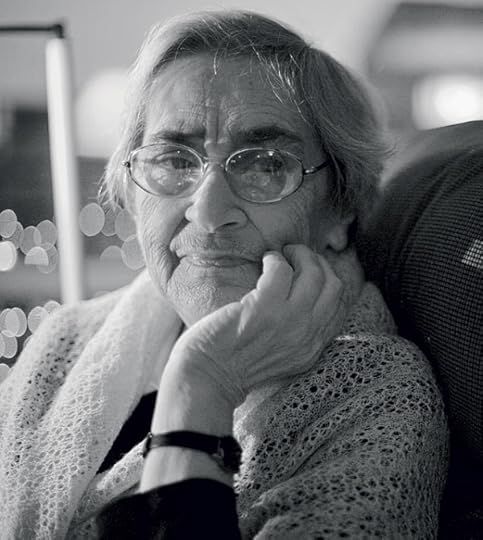
A pre-glasnost Soviet dissident and wife of Andrei Sakharov tells of her privileged childhood in Stalin's Russia, the tragedies of the Stalin purges, and the special relationship she shared with her often hostile mother
Personal memoirs of Елена Боннэр. They have nothing to do with Андрей Сахаров; Елена Боннэр talks here about her family and her own life, in particular — her childhood. Her childhood ended in 1937, when she was 14 years old and both her father and mother were arrested (her father was killed immediately, and her mother was sent to the “АЛЖИР” camp in the GULAG).
I liked these memoirs, although they are very sad, of course. You can learn a lot of interesting things about the life of the Communist elite in the USSR, which was very different from the ordinary lives of millions of other Soviet people, of course. Елена Боннэр’s family was a remarkable one: her parents were very sincere and eager Communists and worked for the Party and for the Comintern. That’s why they mostly were living similarly to all those foreign Communists from all over the world who worked in the USSR in order “to make the global revolution” and together with all these people, in the same former hotels remodeled into living apartments. As a kid, Елена Боннэр studied in the most central school in Moscow; in Leningrad, she always lived with a view to Исаакиевский собор; her mother was a close friend of Николай Ежов (“И всем хотелось увидеть вождей на мавзолее. Тогда мы все их знали в лицо. От знакомых лиц казалось, что они очень свои, как друзья или родные. (…) тогда замирало внутри от волнения, что сейчас увижу Сталина, Ворошилова, Буденного, конечно, Ежова (как же, мамин приятель, говорят, у него на столе стояла одно время фотография нас с Егоркой. Того времени, когда мы были маленькими ленинградцами). А жена его еще со времен Одессы была приятельницей Багрицкого — совсем свои люди! И все остальные на мавзолее.”), and little Люся even stayed in an “OGPU pioneer camp” one summer (yeah, there was such a thing! again, you can read quite curious observations about it in the book), etc., etc.
Overall, although Елена Боннэр does not talk about anything special (her parents were as decent/humble as it was possible for people of their status), her memoirs are quite interesting because they provide a lot of little details about various things — how these people lived, what relationships they had with each other, what was the general atmosphere, etc. (I am always amazed how some people manage to remember so many aspects, names, chronological order of events of their lives from a very young age — it makes their lives so significant and bright!).
The memoirs are titled “Дочки-матери” because the mother-daughter relationship is one of the central lines here. Елена Боннэр’s father, grandmother, and other people described here are very interesting personalities as well, but her mother was a very special person in her life. They had extremely difficult and unpleasant relationships during Елена Боннэр’s childhood, but the harder their life became, the closer to each other they were. Eventually, they lived all the last years of Руфь Боннэр’s life together, and Руфь Боннэр had very warm relationships with Андрей Сахаров as well. The memoirs start with her (Руфь Боннэр’s) death and deep, deep sorrow of her daughter about it, and this was why Елена Боннэр eventually decided to write this book (although this book is not only about her mother). It’s a very interesting case of a quite radical change in such complicated relationships.
I regret that she decided to write only about her first years of life. I now know that her whole life story was absolutely amazing, especially her experience during World War Two and, of course, her dissident period of life (both in connection with Андрей Сахаров and separately from him). Besides, she was apparently a talented writer and just a very intelligent and thoughtful person. It was a pleasure to read her memoirs even regardless of the contents (it was impossible not to compare them with Андрей Сахаров’s memoirs who was definitely “not a writer”…). You can judge her personality and her writing style even by this short quote, for example:
“Что мы были «как все», сейчас видно даже больше, чем раньше. Что ни начнешь читать, что ни возьмешь в руки, с кем ни поговоришь — у всех среди самых близких, среди друзей, среди родни были «незаконно репрессированные». Я всегда говорила, я знала с ранней юности — в стране нет людей, которых бы лично не коснулся этот, тоже ведь «странный», процесс. «Гражданская война», «спекулянты», «проститутки», «бывшие», «нэпманы», «прячущие золото», «промпартия», «шахтинцы», «кулаки», «лишенцы», «националисты», «оппозиция», «с оккупированной территории», «из плена», «космополиты», «врачи», «татары», «немцы», «чечены», «ингуши», «балкары», «калмыки», «прибалты», «ленинградцы», «писатели», «диссиденты» — наверное, я кого-нибудь пропустила — рабочие и крестьяне, солдаты, моряки и профессора, интеллигенты и неграмотные, верующие и атеисты, партийные и без партбилета. Все, все, все — черненькие и беленькие, серо-буро-малиновые и в крапинку. У всех — арестованные, сосланные, расстрелянные. Может, отец, может, мать, может, брат, сват, тесть, друг, сосед, дядя, тетя, сестра, муж сестры, жена брата. И у всех (конечно, кто дожил) — дети! Дети! Дети! А теперь уже и внуки. И когда сегодня вдруг слышишь, что кто-то не знал, что кто-то говорит: «Боже, неужели это могло быть», или реже: «Этого не могло быть!» — так и хочется крикнуть: «Не верьте!».
Это значит — не хотел видеть, не желал знать. И самое главное — значит, у него ни разу не защемило сердце, ни разу не помог посылкой, бандеролью, письмом, сочувствием, словом, улыбкой, взглядом, даже мыслью. Не человек это. И это он «не как все». А мы — «странные сироты» — мы-то и есть «как все». Архивы должны быть открыты. И близкие должны знать правду о времени и месте гибели своих родных. Но всем ли хватит сил принять ее так. чтобы она не добавила зла и ненависти в нашей жизни?”
Like all the memoir books written by Елена Боннэр and Андрей Сахаров, this one was first published in New York in 1991 — although it was already “Perestroika” when Елена Боннэр started writing them, she did not believe much in the true reformation of the USSR and preferred transferring her writing abroad as soon as possible and publish it there. Contrary to Андрей Сахаров, she did survive the USSR and had seen the “new Russia” but if you know her life, you can see clearly that she did not believe in it much as well.
From wikipedia:
“Входила в Комиссию по правам человека при президенте России с её основания до 28 декабря 1994 года. Вышла из состава комиссии, не считая для себя возможным сотрудничество с администрацией президента, развязавшей российско-чеченскую войну. В 2001 году подписала письмо в защиту телеканала НТВ. В 2006 году уехала к детям в США, где проживала в Бостоне. В августе 2008 года осудила действия России в Южной Осетии в период вооружённого конфликта. 10 марта 2010 года первой подписала обращение российской оппозиции к гражданам России «Путин должен уйти».”
She died in 2011, and I cannot believe now that she was so close to contemporary “us” chronologically, but I did not know anything about her at the time. I knew that such a person existed, of course, but her name was just “a wife/widow of Андрей Сахаров” for me then, and did not say anything to me. Now I respect her immensely and feel that she was one of the most interesting and strong personalities of the 20th century.
This book is paced slowly and covers the light & dark of a young girl's upbringing, particularly during 1930s soviet era. I felt a little lost when I wasn't able to pinpoint the historical significance of various figures, however Elena's writing is forgiving, full of feeling and wide-eyed detail. It's akin to the intimacy of one's journal, which is a style I quite enjoy.
There's always a lingering heartbreak after reading Soviet authors. Elena's recount of lives snatched away overnight and the repercussions for those left behind are so melancholic. Nevertheless, I am left inspired by Elena's bravery and unwillingness to have nothing but a happy life, fighting to stay far away from a victim mentality.
I found this an extremely interesting and telling story, as Elena Bonner details her childhood and adolescence, growing up in the 1920s & ‘30s Soviet Union with her pre-Revolutionary grandmother, a “former,” and her Party-member mother and step-father. Between Leningrad, Moscow, and the summer dachas, the reader truly gets a feel for the life she led leading up to and during Stalin’s rule. Additionally, as the title would suggest, the memoir depicts Elena's relationships with her grandmother “Batanya” and her mother, complicated by their often-conflicting societal and political views. It's told pretty much in chronological order, with italicized inserts throughout, indicating that Elena has jumped to memories from during or after the war. I think this is definitely a must-read for anyone interested in this subject, especially in learning about it from a personal viewpoint rather than a history book.
Though I couldn't really piece together the timeline of events, or ages, or even what was actually going on at some points, there was an extraordinary emotional journey that happens throughout the book. Where some are organised chronologically or thematically, Mothers and Daughters felt like it was written based off feeling, and it was an entirely different experience. Perhaps this is because I don't usually read memoirs, but it was nice to try something different. I'm devastated about what happened to Seva, and the last few chapters were really where the true impact hit.
Overall, it was really interesting, though I would have preferred a more story-like feel, it is a memoir and it definitely achieves a deeper understanding and emotional response to the experimental years of Stalin's control.