

What do you think?

Bed-Stuy Is Burning
"Aaron, a disgraced rabbi turned Wall Street banker, and Amelia, his journalist girlfriend, live with their newborn in Bedford-Stuyvesant, one of the most rapidly gentrifying neighborhoods in New York City. The infusion of upwardly mobile strivers into Bed-Stuy's historic brownstones belies the tension simmering on the streets below. But after a cop shoots a boy in a nearby park, a riot erupts--with Aaron and his family at its center. Over the course of one cataclysmic day, issues of race, policing, faith, and professional ambition will collide. Pulled into the riot's vortex are Antoinette, Aaron and Amelia's devout nanny; Jupiter, the single father who lives on their block with his son, Derek; Daniel, Aaron's unhinged tenant in their basement unit; and Sara, a smart local girl, broiling with confusion and rage. As the day unfolds, these diverse characters are forced to reckon with who they are and what really matters to them. Unexpected truths emerge from the crisis, offering a window into complex lives--and society as a whole. Platzer conjures a sharp-eyed, fast-paced, and compassionate story about a changing neighborhood and its residents, as they struggle to raise children, establish careers, and find love, fulfillment, and meaning. A fearless debut, Bed-Stuy Rising deftly wrestles with the most pressing issues of our time with unflinching focus, wisdom, and hope" --
336 pages, Paperback
First published July 11, 2017
About the author
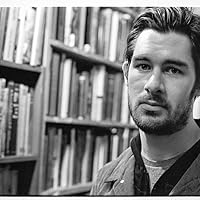
Brian Platzer
4 books91 followersBrian Platzer is the author of BED-STUY IS BURNING ('17) and THE BODY POLITIC ('20) from Atria/Simon & Schuster, and THE TAKING THE STRESS OUT OF HOMEWORK ('20) from Avery/Penguin Random House. Brian has an MFA from the Johns Hopkins Writing Seminars, and a BA from Columbia University. His writing has appeared often in the New Yorker’s Shouts and Murmurs and McSweeney’s Internet Tendency, as well as in the New York Times, The New Republic, Salon, and elsewhere. He lives with his wife and two young sons in Bed-Stuy, Brooklyn, teaches middle school English in Manhattan, and suffers from chronic dizziness.
Ratings & Reviews
Friends & Following
Create a free account to discover what your friends think of this book!
Community Reviews
Displaying 1 - 30 of 96 reviews

March 5, 2017
I'm at 2.5 stars here.
No matter how far we believe we've come as a society, the issue of racial tension is still a very real one, one that can trigger violence as a result of real or perceived antagonistic actions. Couple that tension with the resentment often felt when a neighborhood predominantly occupied by minorities is on the cusp of being "gentrified," where long-time residents are pushed out by those with more money and greater ambitions, and you have a recipe for potential disaster.
Such is the environment in which Brian Platzer's novel Bed-Stuy is Burning is set. Bed-Stuy, short for Bedford-Stuyvesant, is a neighborhood in Brooklyn, New York. It's often referred to as "still gritty," even as wealthy people move in, drive up housing prices, and push others out. Aaron and his girlfriend Amelia are one such couple—Aaron, a former rabbi who left the rabbinate in a crisis of faith (among other things), is now a wealthy Wall Street banker, and Amelia is a journalist trying to find her big break. They live with their newborn son in one of the neighborhood's historic brownstones, once occupied by an African-American family.
Already-simmering tensions in the neighborhood are about to come to a head when a 12-year-old African-American boy is shot by police 10 times, and it is discovered he was holding a video game controller, not a weapon. A large group of youths are mobilizing, tired of the violence being perpetrated against them and tired of the haves getting what is rightfully theirs, and they're ready to take their neighborhood back. And in a split second, it explodes at full throttle, as rioting begins, with enormous numbers of young adults taking control and inciting violence, destruction, and total chaos.
It's not long before the riots reach Aaron and Amelia's doorstep. That afternoon, Amelia is home, ostensibly working, and the baby is being cared for by Antoinette, their nanny, a woman seeking religious salvation. Visiting Antoinette at the house is Amelia and Aaron's neighbor, Jupiter, a single father who is smitten with Antoinette, and wants her to know he will protect her, even as he worries about the fate of his own son during the riots. Also at home is Daniel, one of the tenants who lives in Aaron and Amelia's basement apartment. Daniel is an increasingly suspicious person who has grown slightly afraid to leave his home.
While Amelia, Antoinette, Jupiter, and Daniel deal with circumstances at home, Aaron is struggling with dangerous circumstances of his own. And over the course of one afternoon, each of these individuals will be affected by the events of the day, events which will test them physically and emotionally, challenge everything they hold dear, and make them wonder about what the future holds.
I thought Bed-Stuy is Burning had a lot of potential, a lot of things going for it. Platzer is a capable storyteller, and I really found Aaron in particular a fascinating if flawed character. I felt as if in trying to tell a comprehensive story, Platzer took on more than was necessary. If the plot really was about the events of that day, I found the periodic forays into the backgrounds of all of the supporting characters, including a young rioter and even NYC Police Commissioner Bratton(!), extraneous. I also really wasn't sure what Platzer's ultimate message was here, because the characters' actions didn't all add up for me. (In particular, I was unclear about one of Antoinette's interactions with the baby.)
Sometimes books have great ambition but don't succeed in the execution. For me, Bed-Stuy is Burning was one of those books. Platzer's talent is impressive, and he definitely knows how to ratchet up suspense and tension. Some may not be as thrown off course by what I found excessive about the plot, so if what I've described appeals to you, definitely give it a try.
NetGalley and Atria Books provided me an advance copy of the book in exchange for an unbiased review. Thanks for making this available!
See all of my reviews at http://itseithersadnessoreuphoria.blo....
No matter how far we believe we've come as a society, the issue of racial tension is still a very real one, one that can trigger violence as a result of real or perceived antagonistic actions. Couple that tension with the resentment often felt when a neighborhood predominantly occupied by minorities is on the cusp of being "gentrified," where long-time residents are pushed out by those with more money and greater ambitions, and you have a recipe for potential disaster.
Such is the environment in which Brian Platzer's novel Bed-Stuy is Burning is set. Bed-Stuy, short for Bedford-Stuyvesant, is a neighborhood in Brooklyn, New York. It's often referred to as "still gritty," even as wealthy people move in, drive up housing prices, and push others out. Aaron and his girlfriend Amelia are one such couple—Aaron, a former rabbi who left the rabbinate in a crisis of faith (among other things), is now a wealthy Wall Street banker, and Amelia is a journalist trying to find her big break. They live with their newborn son in one of the neighborhood's historic brownstones, once occupied by an African-American family.
Already-simmering tensions in the neighborhood are about to come to a head when a 12-year-old African-American boy is shot by police 10 times, and it is discovered he was holding a video game controller, not a weapon. A large group of youths are mobilizing, tired of the violence being perpetrated against them and tired of the haves getting what is rightfully theirs, and they're ready to take their neighborhood back. And in a split second, it explodes at full throttle, as rioting begins, with enormous numbers of young adults taking control and inciting violence, destruction, and total chaos.
It's not long before the riots reach Aaron and Amelia's doorstep. That afternoon, Amelia is home, ostensibly working, and the baby is being cared for by Antoinette, their nanny, a woman seeking religious salvation. Visiting Antoinette at the house is Amelia and Aaron's neighbor, Jupiter, a single father who is smitten with Antoinette, and wants her to know he will protect her, even as he worries about the fate of his own son during the riots. Also at home is Daniel, one of the tenants who lives in Aaron and Amelia's basement apartment. Daniel is an increasingly suspicious person who has grown slightly afraid to leave his home.
While Amelia, Antoinette, Jupiter, and Daniel deal with circumstances at home, Aaron is struggling with dangerous circumstances of his own. And over the course of one afternoon, each of these individuals will be affected by the events of the day, events which will test them physically and emotionally, challenge everything they hold dear, and make them wonder about what the future holds.
I thought Bed-Stuy is Burning had a lot of potential, a lot of things going for it. Platzer is a capable storyteller, and I really found Aaron in particular a fascinating if flawed character. I felt as if in trying to tell a comprehensive story, Platzer took on more than was necessary. If the plot really was about the events of that day, I found the periodic forays into the backgrounds of all of the supporting characters, including a young rioter and even NYC Police Commissioner Bratton(!), extraneous. I also really wasn't sure what Platzer's ultimate message was here, because the characters' actions didn't all add up for me. (In particular, I was unclear about one of Antoinette's interactions with the baby.)
Sometimes books have great ambition but don't succeed in the execution. For me, Bed-Stuy is Burning was one of those books. Platzer's talent is impressive, and he definitely knows how to ratchet up suspense and tension. Some may not be as thrown off course by what I found excessive about the plot, so if what I've described appeals to you, definitely give it a try.
NetGalley and Atria Books provided me an advance copy of the book in exchange for an unbiased review. Thanks for making this available!
See all of my reviews at http://itseithersadnessoreuphoria.blo....

January 3, 2017
** Downloaded an ARC from Edelweiss in return for an honest review **
I REALLY wanted to like this book every since I saw the plot summary months ago. The gentrification of Bedford–Stuyvesant has been happening at a rapid speed. The basic problem for me is that the couple was very unlikeable. I feel bad saying this but it was just..boring.
Also did we need several paragraphs on a 12 year old preparing to eat an apple?
I REALLY wanted to like this book every since I saw the plot summary months ago. The gentrification of Bedford–Stuyvesant has been happening at a rapid speed. The basic problem for me is that the couple was very unlikeable. I feel bad saying this but it was just..boring.
Also did we need several paragraphs on a 12 year old preparing to eat an apple?

March 14, 2018
4 Stars - Great book
I tried to hide all spoilers but I may have forgotten a few. I know I did not hide anything that’s on the book jacket.
I really liked this book and there’s a part of me that feels I shouldn’t have liked it so much. Overall this book is well written and the story is interesting.
When I first read the book jacket I thought that this book would be about the cross section of gentrification and police violence. I would say that that is at the core of this book but it’s also more complicated than that. The book follows the lives of Amelia and Aaron, a young white couple living in the Bedford-Stuyvesant neighborhood in Brooklyn; Antoinette, their nanny; Jupiter and his son Derek, their next door neighbors; Daniel and Thela, their tenants; and Sara, a local teenage girl over the course of (mainly) one day and the aftermath of that day. The book starts by alerting the reader that a 12 year old boy was recently shot 10 times by the police and of course he died. What follows is the story of how all the above people are thrust into the action and the consequences of their actions.
Platzer created some very interesting characters. I don’t think I liked any of them very much except for Jupiter but I have to admit they’re all really well laid out. I’m not going to go into every character but I will discuss the characters that stood out the main.
Aaron, in a nutshell, is a former Rabbi turned Wall Street employee with a gambling addiction. He lives with his girlfriend Amelia and son Simon in Bedford-Stuyvesant. He is a weird weird character. I don’t like him as a person but I did, at times, feel empathy toward him. He has a weird savior complex that appears to originate from his days as a Rabbi. He thinks that by talking to people he can change the world. Now this is me being cynical but I don’t believe a nice little speech can change everything. Don’t get me wrong, I think that there are places where talking to people and speeches even can be helpful. I just don’t think it’s going to completely alter interactions between black people and police. Overall, I found him quite narcissistic and ignorant but a fascinating read.
Amelia, Aaron’s girlfriend, is a freelance writer. She’s very clearly middle to upper-middle class white woman, I mean to a T. She seems to have good intentions but her… privilege gets in the way of her seeing the full reality. Amelia’s living in her own little white privilege bubble and glosses over serious concerns because she believes she understands it all. She doesn’t. Honestly, she’s probably my least favorite character.
I initially thought Antoinette was very strange and to an extent she is. However, I respected her dedication to her son. She’s an excellent mother for sure. Jupiter, Aaron and Amelia’s neighbor, was just nice and thoughtful. He too loved his son so much.
The writing is great. It flows well and is engaging. I didn’t want to put the book down and was fully invested throughout the whole book.
One of the sections (or couple of sections) that I could have done without was about the police commissioner. I don’t care. Genuinely. And I don’t think it added anything to the story. Those 2 or 3 sections could’ve been cut out. (I’m referring specifically to his inner monologue. I understand why he was in the story. I just didn’t care about his thoughts.)
Do I recommend this one? Yes. I think it’s a quick, easy read and an interesting read as well.
I tried to hide all spoilers but I may have forgotten a few. I know I did not hide anything that’s on the book jacket.
I really liked this book and there’s a part of me that feels I shouldn’t have liked it so much. Overall this book is well written and the story is interesting.
When I first read the book jacket I thought that this book would be about the cross section of gentrification and police violence. I would say that that is at the core of this book but it’s also more complicated than that. The book follows the lives of Amelia and Aaron, a young white couple living in the Bedford-Stuyvesant neighborhood in Brooklyn; Antoinette, their nanny; Jupiter and his son Derek, their next door neighbors; Daniel and Thela, their tenants; and Sara, a local teenage girl over the course of (mainly) one day and the aftermath of that day. The book starts by alerting the reader that a 12 year old boy was recently shot 10 times by the police and of course he died. What follows is the story of how all the above people are thrust into the action and the consequences of their actions.
Platzer created some very interesting characters. I don’t think I liked any of them very much except for Jupiter but I have to admit they’re all really well laid out. I’m not going to go into every character but I will discuss the characters that stood out the main.
Aaron, in a nutshell, is a former Rabbi turned Wall Street employee with a gambling addiction. He lives with his girlfriend Amelia and son Simon in Bedford-Stuyvesant. He is a weird weird character. I don’t like him as a person but I did, at times, feel empathy toward him. He has a weird savior complex that appears to originate from his days as a Rabbi. He thinks that by talking to people he can change the world. Now this is me being cynical but I don’t believe a nice little speech can change everything. Don’t get me wrong, I think that there are places where talking to people and speeches even can be helpful. I just don’t think it’s going to completely alter interactions between black people and police. Overall, I found him quite narcissistic and ignorant but a fascinating read.
Amelia, Aaron’s girlfriend, is a freelance writer. She’s very clearly middle to upper-middle class white woman, I mean to a T. She seems to have good intentions but her… privilege gets in the way of her seeing the full reality. Amelia’s living in her own little white privilege bubble and glosses over serious concerns because she believes she understands it all. She doesn’t. Honestly, she’s probably my least favorite character.
I initially thought Antoinette was very strange and to an extent she is. However, I respected her dedication to her son. She’s an excellent mother for sure. Jupiter, Aaron and Amelia’s neighbor, was just nice and thoughtful. He too loved his son so much.
The writing is great. It flows well and is engaging. I didn’t want to put the book down and was fully invested throughout the whole book.
One of the sections (or couple of sections) that I could have done without was about the police commissioner. I don’t care. Genuinely. And I don’t think it added anything to the story. Those 2 or 3 sections could’ve been cut out. (I’m referring specifically to his inner monologue. I understand why he was in the story. I just didn’t care about his thoughts.)
Do I recommend this one? Yes. I think it’s a quick, easy read and an interesting read as well.
February 12, 2017
This is a stunning debut novel! Not only is it incredibly relevant, but it so very accurately depicts the climate and culture of the unrest in many of our cities. When ex-Rabbi, Aaron and his journalist wife, Amelia get caught up in the melee during a day of chaos in their newly-gentrified neighborhood, we are introduced to their devout nanny, Antoinette, a troubled young teen, Sara, and single father, Jupiter. As their lives become entwined in chaos we see that this one day will forever change their perspectives about grief, family, love, and fulfillment. Dealing with racism, diversity, marriage, parenthood, and many other issues, the novel is a perfect statement reflecting current often-unresolved conflicts we all face. Platzer understands that nothing is "clean or easy or perfectly comprehensible...." And that is the genius of this book!
July 2, 2017
The best book I have read in a really long time! Bed-Stuy Is Burning is a relevant novel that addresses some really complex issues... while capturing my attention from the first paragraph! I couldn't put it down ... if it isn't on your list of books to read, add it immediately.

January 26, 2017
This novel simmered and erupted into a macabre dance and was utterly un-put-downable. I love how the author got into the heads of so many different people, revealing the effects of the riots from an array of disparate perspectives. Most of the characters were despicable except for Antoinette and Jupiter -- and my heart ached for them. It's been 24 hours since I finished reading, yet I'm still thinking about Amelia and Aaron and their baby Simon ... A very good read.
Thank you, Netgalley, for the e-review edition of this book.
Thank you, Netgalley, for the e-review edition of this book.

February 24, 2017
I can't imagine I'll read a better book in 2017. Platzer's range of empathy is amazing. His vision is dark but humane, and at times very funny. His takes on gentrification, race relations, and religion feel true. Everyone is comparing this book to Bonfire of the Vanities but this book is far more accomplished and mature--remarkable for a debut writer.

Read
August 16, 2017This might be the worst book I ever read. It's shameful this book would even be published. It's a story about white privilege and white guilt with shallow, predictable characters. What's most upsetting is all of the writers who struggle to get published when a book like this was not only published but received a NY Times book review (although poor).

January 26, 2017
I absolutely loved this novel. I was hooked on the story from the first page, and I'm obsessed with how well written it is. It takes on a tricky subject with a lot of grace and heart, but also intelligence and humor. I'd recommend it to anyone.

September 8, 2017
I got halfway through this book feeling like it was a four star type book, or at least feeling like I was going to put this book down having read it straight through. The story concept is compelling, not least because it feels deeply relevant--I'm a new white resident of a room in bed stuy, and I feel like I want to be part of this neighborhood but I know that even if I am a broke kid who talks with people at laundromats, I'm not really from here , and while I'm not the people flipping houses, I'm part of a manifestation of a force that is probably ultimately nothing but bad for the place I live. So I'm curious about the place, about the history, about how I can not represent the worst parts of the world to my neighbors, how I can be respectful and also not go on all damn day about how guilty I am for living where I live. Maybe I need to move, maybe I don't belong here. I read this book because I have this kind of question.
I picked up this book and looking at the jacket I knew it was gonna be by a guy who was at least somewhat coming from an angle of white guilt . The author lives in bed stuy and "teaches middle school English in Manhattan". I was reassured a little bit by the prominence of different narratives, many of which are narratives of black residents of bed stuy. The single mother who is converting to Islam and is a nanny for the white couples baby, the single dad who makes chocolate cake, the lesbian kid who gets arrested.
Okay, I was thinking, he's trying to do some kind of Another Country Baldwin stuff or something and he isn't as good as Baldwin but at least he's trying to really inhabit the narratives of other people--though from the start I was nervous about the way he wrote Sara, the lesbian, because in her first page of narrative she tells the reader that she physically abused her ex girlfriend. I love complicated characters, but like, if you aren't a black woman or a lesbian , I think it's a bad idea to have one of the first named traits of your lesbian character be "is physically abusive to a femme girlfriend". Like .......come on.
I was giving it a chance anyway because the author is really good at setting up this interesting scenario of a 1991 style riot in what is presumably 2017. He also is decent at describing the psychological states of Aaron and Amelia and sort of describing how they got where they are. There's this scene where the neighbor guy, Jupiter, comes over w cake for the nanny, Antoinette, and Amelia (the white mom) has been working on this celebrity piece upstairs for a magazine and she comes downstairs and sees Antoinette and Jupiter eating cake w her baby who like loves the nanny more than her and she has an internal crisis n goes upstairs and calls the dad who is working as an investment advisor because he quit being a rabbi and he is like "he's our neighbor be nice" because he saw a bunch of kids getting arrested that morning and feels guilty , and then the dad like skips work and goes to the racetrack to bet on horses. I like that scene.
And then I reached the middle of the book, and realized that the black characters in this narrative aren't real characters. They're collections of traits, they're window dressing, they're anything to dress up this story of two (Jewish) white gentrifiers as something more complicated , something epic and cosmopolitan and complex. And like, I really wanted it to be complex, but it just isn't. We don't learn enough about Antoinette's life, and what we do learn makes it clear that this writer sees black people only in their relationships with white people and cannot even conceive what a person like Antoinette might think about or feel or who she might know. Her story, while remaining the outline of someone who could be a real woman and including enough details to pass muster with a white audience (her descriptions of churchgoing and dancing), she still has no adult friends other than Jupiter, has no complicated internal flaws in the way Aaron does--and her relationship with God is so simplistic that I almost feel it is meant to be some kind of contrast with Aaron's supposed educated doubt. We know she is converting and that is interesting but that--her modesty and motherhood and devotion--becomes her single character trait. Meanwhile Sara the lesbian has no vignettes about specific girlfriends. I don't know if this author has ever heard a woman talk to another woman.
Then there is the matter of Jupiter and his death. That is the point where the book lost me. This man likes, what , chocolate cake and hitting on Antoinette and defending his white neighbors ? Who is he? He's the man who dies protecting Amelia and Antoinette. That is all. His politics are out, his religion is out, his music tastes--god forbid we learn anything about him. He is dead. And lo and behold it is time for the random white guy who lives in the basement to shoot Derek's practically motiveless murderer and incite mobs of Bed Stuy residents to gather around in a threatening way until they're dispersed by Aaron's bizarre sermon about Lot and Sodom (??????????) and go back to being background characters for white people.
This book really gets that weird, it really goes there. I don't know what else to say about it, except I cannot believe that nobody made this man rewrite the sections where the mob is gathered around Aaron and Amelia's house, or the part written from the perspective of Barrett. Presumably the publisher was in such a rush to get this thing to press in time for summer relevance that he forgot to read the whole thing.
This ends up being a white fantasy of black violence, with two dimensional black characters and deeply unlikable white ones (except for the baby, who I can only hope isn't super messed up.) As the story progresses it gets ever more unrealistic and more like a Goddard fever dream. Thumbs way, way down.
I picked up this book and looking at the jacket I knew it was gonna be by a guy who was at least somewhat coming from an angle of white guilt . The author lives in bed stuy and "teaches middle school English in Manhattan". I was reassured a little bit by the prominence of different narratives, many of which are narratives of black residents of bed stuy. The single mother who is converting to Islam and is a nanny for the white couples baby, the single dad who makes chocolate cake, the lesbian kid who gets arrested.
Okay, I was thinking, he's trying to do some kind of Another Country Baldwin stuff or something and he isn't as good as Baldwin but at least he's trying to really inhabit the narratives of other people--though from the start I was nervous about the way he wrote Sara, the lesbian, because in her first page of narrative she tells the reader that she physically abused her ex girlfriend. I love complicated characters, but like, if you aren't a black woman or a lesbian , I think it's a bad idea to have one of the first named traits of your lesbian character be "is physically abusive to a femme girlfriend". Like .......come on.
I was giving it a chance anyway because the author is really good at setting up this interesting scenario of a 1991 style riot in what is presumably 2017. He also is decent at describing the psychological states of Aaron and Amelia and sort of describing how they got where they are. There's this scene where the neighbor guy, Jupiter, comes over w cake for the nanny, Antoinette, and Amelia (the white mom) has been working on this celebrity piece upstairs for a magazine and she comes downstairs and sees Antoinette and Jupiter eating cake w her baby who like loves the nanny more than her and she has an internal crisis n goes upstairs and calls the dad who is working as an investment advisor because he quit being a rabbi and he is like "he's our neighbor be nice" because he saw a bunch of kids getting arrested that morning and feels guilty , and then the dad like skips work and goes to the racetrack to bet on horses. I like that scene.
And then I reached the middle of the book, and realized that the black characters in this narrative aren't real characters. They're collections of traits, they're window dressing, they're anything to dress up this story of two (Jewish) white gentrifiers as something more complicated , something epic and cosmopolitan and complex. And like, I really wanted it to be complex, but it just isn't. We don't learn enough about Antoinette's life, and what we do learn makes it clear that this writer sees black people only in their relationships with white people and cannot even conceive what a person like Antoinette might think about or feel or who she might know. Her story, while remaining the outline of someone who could be a real woman and including enough details to pass muster with a white audience (her descriptions of churchgoing and dancing), she still has no adult friends other than Jupiter, has no complicated internal flaws in the way Aaron does--and her relationship with God is so simplistic that I almost feel it is meant to be some kind of contrast with Aaron's supposed educated doubt. We know she is converting and that is interesting but that--her modesty and motherhood and devotion--becomes her single character trait. Meanwhile Sara the lesbian has no vignettes about specific girlfriends. I don't know if this author has ever heard a woman talk to another woman.
Then there is the matter of Jupiter and his death. That is the point where the book lost me. This man likes, what , chocolate cake and hitting on Antoinette and defending his white neighbors ? Who is he? He's the man who dies protecting Amelia and Antoinette. That is all. His politics are out, his religion is out, his music tastes--god forbid we learn anything about him. He is dead. And lo and behold it is time for the random white guy who lives in the basement to shoot Derek's practically motiveless murderer and incite mobs of Bed Stuy residents to gather around in a threatening way until they're dispersed by Aaron's bizarre sermon about Lot and Sodom (??????????) and go back to being background characters for white people.
This book really gets that weird, it really goes there. I don't know what else to say about it, except I cannot believe that nobody made this man rewrite the sections where the mob is gathered around Aaron and Amelia's house, or the part written from the perspective of Barrett. Presumably the publisher was in such a rush to get this thing to press in time for summer relevance that he forgot to read the whole thing.
This ends up being a white fantasy of black violence, with two dimensional black characters and deeply unlikable white ones (except for the baby, who I can only hope isn't super messed up.) As the story progresses it gets ever more unrealistic and more like a Goddard fever dream. Thumbs way, way down.
This entire review has been hidden because of spoilers.
June 30, 2017
A riveting read that touches upon a range of topics from racism to relationships. Impossible to put down once you start reading! I highly recommend this novel to all readers alike.
June 25, 2017
There is a wonderful range of characters in Bed-Stuy Is Burning: from handcuffed Sarah to Police Commissioner Bratton; from disgraced rabbi and gambling addict turned day trader Aaron to a guy at the track called "Oranges." But it may be Amelia, a celebrity gossip columnist yearning to write more serious and important journalism, whose story becomes the most powerful in the novel. Platzer takes the vast energies of New York City and distills them into a single explosive day in Brooklyn. An ambitious, complex, emotive, and often very funny novel. A must read for 2017!

March 31, 2017
This is an important and timely book. Platzer deftly tells the story of racial tensions exploding in Bed-Stuy. At the beginning, we can see the tightly wound powder keg that is this neighborhood, and soon this tension spills over into riots in response to the police shooting of a boy. But Platzer doesn't sensationalize the violence. Instead, he finds the nuanced human elements through his characters. The book is woven well and tackles an increasingly relevant topic.
June 27, 2017
Bed-Stuy Is Burning by Brian Platzer is the funniest book I've ever read about a public tragedy, and the saddest book I've ever read about a neurotic yuppie in New York. Putting it down between chapters was nearly impossible. I only wish I could read it again for the first time.

January 27, 2017
They let authors review our own novels? 5 Stars! But mostly I'd love to hear what other people think, so please drop me a note at BrianPlatzer.com.
July 3, 2017
This current day narrative engages the reader with characters who are realistically flawed, fiercely loving, and faced with personal and politically charged life events. It's a captivating and engrossing read - which I highly recommend!

August 12, 2017
BED-STUY IS BURNING by Brian Platzer
This book carried me through from beginning to end with keen interest and lively involvement. It is well-written, well-paced, well-plotted and timely, with its main characters being real, deeply etched, and multilayered, and supporting ones appropriately sketched and authentic. It gave me a palpable sense of the Bed-Stuy neighborhood and ambience and the complicated, multilayered racial, cultural, political, law-enforcement and generational forces in play—along with relevant religious/belief-system issues. It deftly weaves in those belief-system issues (especially Judaism) and how they underpin both the choices the characters are forced to make and the contrapuntal left-leaning ideologies of the main protagonists that make those decisions genuinely conflicted. One example is the way the well-intentioned, can’t-we-just-get along young mother journalist Amelia finds herself on the edge of shooting a young black girl she fears menacing herself and her baby, and shattering the perceived safety of home.
An interesting subtext to the race-thick nature of the novel, is the (white) author’s bold willingness to inhabit the black characters, a special challenge with the young black woman Sara, who is a fascinatingly edgy figure, written in a way that keeps her both richly complicated and just this side of too-far. As far as I’m concerned, author Brian Platzer makes the depiction of the black characters work beautifully—and I’m greatly interested to see the reaction of African-American readers. The issue of “cultural appropriation” is a hot one these days, but as a similarly white author of a novel whose main characters are African American (FAR STONES, Northloop Books, 2017), I strongly assert that if another’s culture, gender, race, religion, sexual orientation are approached and inhabited with love, respect, and due diligence for authenticity, then that “outside” view affords an audience a perspective that enhances, not diminishes, the conversations we all need to be having with each other.
This book carried me through from beginning to end with keen interest and lively involvement. It is well-written, well-paced, well-plotted and timely, with its main characters being real, deeply etched, and multilayered, and supporting ones appropriately sketched and authentic. It gave me a palpable sense of the Bed-Stuy neighborhood and ambience and the complicated, multilayered racial, cultural, political, law-enforcement and generational forces in play—along with relevant religious/belief-system issues. It deftly weaves in those belief-system issues (especially Judaism) and how they underpin both the choices the characters are forced to make and the contrapuntal left-leaning ideologies of the main protagonists that make those decisions genuinely conflicted. One example is the way the well-intentioned, can’t-we-just-get along young mother journalist Amelia finds herself on the edge of shooting a young black girl she fears menacing herself and her baby, and shattering the perceived safety of home.
An interesting subtext to the race-thick nature of the novel, is the (white) author’s bold willingness to inhabit the black characters, a special challenge with the young black woman Sara, who is a fascinatingly edgy figure, written in a way that keeps her both richly complicated and just this side of too-far. As far as I’m concerned, author Brian Platzer makes the depiction of the black characters work beautifully—and I’m greatly interested to see the reaction of African-American readers. The issue of “cultural appropriation” is a hot one these days, but as a similarly white author of a novel whose main characters are African American (FAR STONES, Northloop Books, 2017), I strongly assert that if another’s culture, gender, race, religion, sexual orientation are approached and inhabited with love, respect, and due diligence for authenticity, then that “outside” view affords an audience a perspective that enhances, not diminishes, the conversations we all need to be having with each other.

August 14, 2017
STAY AWAY. Ugh. Kudos to Platzer for the attempt but he should have stayed away too. Not only does the writing style try and fail to achieve more than it can, the story is flimsy and is unsupported by substantial, genuine characters at the focus.
Why does Amelia (white female lead) laugh when the second tower fell on 9/11?? How does mentioning this with no back-up help the story or help me understand her character? It makes me hate her.
Aaron needs to donate $50,000 to charity or he'll gamble it away? He loses religion and then goes back to the synagogue with his baby to be blessed by his old boss? I HATE him. He doesn't want to change despite his new family.
I thought Sara would be the saving grace but she only got a dozen or so pages total. And in those a description is used on a bank teller: "He was Indian. Dot not feather." and I screamed.
It's not that I'm looking for solely PC descriptors but what's the point? They're so much buildup about the 1-day riot and there's lots of excitement and then... it's over, time speeds up and nothing is resolved.
Why does Amelia (white female lead) laugh when the second tower fell on 9/11?? How does mentioning this with no back-up help the story or help me understand her character? It makes me hate her.
Aaron needs to donate $50,000 to charity or he'll gamble it away? He loses religion and then goes back to the synagogue with his baby to be blessed by his old boss? I HATE him. He doesn't want to change despite his new family.
I thought Sara would be the saving grace but she only got a dozen or so pages total. And in those a description is used on a bank teller: "He was Indian. Dot not feather." and I screamed.
It's not that I'm looking for solely PC descriptors but what's the point? They're so much buildup about the 1-day riot and there's lots of excitement and then... it's over, time speeds up and nothing is resolved.
July 2, 2017
An evocative and timely story. I couldn't put it down!

June 1, 2017
This is a complex book that addresses the continuing problems of race relations and police procedures, set in the Bed-Stuy section of Brooklyn. The author explores how easily lives can be changed or ruined by choices that are made, over the course of a day or in just a split second.

December 11, 2017
Bed-Stuy is one of the most sought after places to live in New York City. At present, Aaron, a disgraced rabbi turned Wall Street broker and Amelia, his journalist girl friend and their baby. The infusion of upwardly mobile professionals into the historic brownstones belie the tension simmering below. But, after a policeman shoots an boy in a nearby park, conflict escalates with Aaron and his family at its center. Pulled into the vortex is Aaron's nanny, Jupiter, the single father who lives in the block with his son Derick, and Daniel, a tenant living in the basement. and Sara, a teenage drop-out roiling with rage. As the day unfolds, these divers characters must come to grips with who they are and what really matters to them. The novel is fast-paced and emotional compelling and offers a window into the complex lives of those living in Bed-Stuy.

October 24, 2017
I highly recommend this book, especially to folks who live in cities and/or are concerned about gentrification. The author tackles all the big issues in this novel set in Brooklyn's Bed-Stuy neighborhood--police violence, broken windows, demographic changes, education, employment.
The author attempted to tell the story from quite diverse perspectives. This is where I think he went a bit off track. The characters were well drawn, but I found some of their actions and words implausible, especially those of the African American characters.
The author attempted to tell the story from quite diverse perspectives. This is where I think he went a bit off track. The characters were well drawn, but I found some of their actions and words implausible, especially those of the African American characters.

November 14, 2017
I love the format of the book and how it allowed you to see the story from the various characters. I thought the author did a good job of addressing tough issues like gentrification, police brutality, and race.

December 8, 2017
I absolutely, highly recommend it!

December 27, 2018
Not 100% sure how I feel about this one. Part about relationships, part about the race/class divide of urban cities experiencing gentrification, I feel like the author is tackling too much in too little space to really make a commitment to either one. I could've done without the relationship part, honestly...the female half of our protagonist couple, Amelia, is one of the worst women I've ever read in the history of literature. Her husband Aaron is a bumbling idiot with a gambling addiction, but Amelia is true garbage and needs to shut the fuck up for the rest of her life. Together, they're obnoxious and boring and need to get over themselves. I couldn't have cared less about either of these two if I tried my hardest, and the entire book without them would've been far more tolerable, but the book needed an ignorant white couple for most of the plot, and so alas, here we are.
SO, the cops in Bed-Stuy, an historic black neighborhood in Brooklyn, shoot a 12-year-old boy who was doing nothing but existing, and rightfully so, the neighborhood flips out. Teenagers start trying to get arrested on purpose as a way to protest, which eventually leads to a riot, part of which takes place on the doorstep of Aaron and Amelia, who own a 19th century mansion on Stuyvesant. Shit goes down, people get shot and killed, the city burns, and Aaron somehow saves it all by telling a biblical story? Idk man.
The plot has a great premise but ends up going nowhere, though I did like how it all unveiled over the single day of the riot, and while I like what was said about the racial divide and gentrification in general, which raises my rating of this book, I think that it's almost solely told through the story of white people – featuring a few secondary minority characters who are all far more interesting yet feature 20% as much – is kind of disappointing. There's a bit of irony here, because Amelia is a wannabe writer (who pens the worst history of Bed-Stuy in the world for some online blog and then cries for a hundred years because she gets mean comments lol) and because her house is targeted in the riots, she becomes a sort of public voice of the black community despite being a wealthy white woman, getting a book deal where she'll discuss the community through the lens of her experiences in the riot. But considering the writer of this book is a white man making similar commentary, I'm like...are we supposed to be like "I see what you did there" and walk away from this book with the desire to read more works about Bed-Stuy from people who actually belong? Or does the author not get the parallel between himself and Amelia? I hope it's the former, but I don't know.
I guess this is a ramble so take what I say with a grain of salt. This isn't a glowing recommendation but I didn't hate it either. Pick it up and read it for yourself and decide?
SO, the cops in Bed-Stuy, an historic black neighborhood in Brooklyn, shoot a 12-year-old boy who was doing nothing but existing, and rightfully so, the neighborhood flips out. Teenagers start trying to get arrested on purpose as a way to protest, which eventually leads to a riot, part of which takes place on the doorstep of Aaron and Amelia, who own a 19th century mansion on Stuyvesant. Shit goes down, people get shot and killed, the city burns, and Aaron somehow saves it all by telling a biblical story? Idk man.
The plot has a great premise but ends up going nowhere, though I did like how it all unveiled over the single day of the riot, and while I like what was said about the racial divide and gentrification in general, which raises my rating of this book, I think that it's almost solely told through the story of white people – featuring a few secondary minority characters who are all far more interesting yet feature 20% as much – is kind of disappointing. There's a bit of irony here, because Amelia is a wannabe writer (who pens the worst history of Bed-Stuy in the world for some online blog and then cries for a hundred years because she gets mean comments lol) and because her house is targeted in the riots, she becomes a sort of public voice of the black community despite being a wealthy white woman, getting a book deal where she'll discuss the community through the lens of her experiences in the riot. But considering the writer of this book is a white man making similar commentary, I'm like...are we supposed to be like "I see what you did there" and walk away from this book with the desire to read more works about Bed-Stuy from people who actually belong? Or does the author not get the parallel between himself and Amelia? I hope it's the former, but I don't know.
I guess this is a ramble so take what I say with a grain of salt. This isn't a glowing recommendation but I didn't hate it either. Pick it up and read it for yourself and decide?

March 18, 2020
I felt "Bed-Stuy is Burning" had great potential. It's a complex story about relationships, race, culture filled with interesting characters, but it manages to bite off more than it can chew.
Bedford-Stuyvesant is a section of Brooklyn best known as the birthplace of several great basketball players and as a crime-riddled neighborhood. A yuppie family (white, unmarried with a baby son, he's an ex-rabbi/gambling addict with a good job in finance, she's a writer) buys a very nice brownstone where they live in comfort on the upper floors. Aaron, the ex-rabbi, is a self-important but fairly sensitive sort, his wife, Amelia, thinks highly of herself as well but at least has a baby to attend to (sometimes). The lower level of their abode is rented to another couple, a white part-time college teacher who mostly sits or sleeps and feels sorry for himself and his Asian-American wife who has to travel to the far reaches of the city for her job. Outside of a Jonathan Franzen novel (any one, just pick...), a lesser likable cast of characters doesn't exist. There are a few other important characters that are more human and better developed, such as the Jamaican nanny and the black handyman neighbor. They both figure into the major action later in the story.
There's a lot of angst and anger in the surrounding neighborhood over encroaching gentrification, which is exacerbated by ongoing aggressive police actions and a recent shooting of an unarmed 12 year old by a cop. In other words, Bed-Stuy is at a boiling point and the poster children for the small group of gentrifiers, Aaron and Amelia, find themselves in the cross-hairs of the community's plan of action.
The author, Brian Platzer, is a fine writer and the story moves along well, with a sense of foreboding being built along the way until the violence really begins. The dialogue seems real and none of the action seems forced. My issue with the book is basically around the obliviousness of the main characters. To begin with, I understand the concept of trying to find affordable housing in a big city, but the couple decides to be pioneers in a part of town that hates what they're doing. They live their lives apparently unaware that almost everyone they come in contact with despises them and they don't realize they're basically symbols of what the community is up in arms (literally) about. When it hits the fan, the ultimate resolution is so unlikely that it spoils what, up to that point, was pretty believable and the conclusion was just silly. I know there are messages about redemption and faith and so forth in there, but I think in the real world we'd be reading these people's obits after the big conflagration. Nice writing, bad characters, poor ending.
Bedford-Stuyvesant is a section of Brooklyn best known as the birthplace of several great basketball players and as a crime-riddled neighborhood. A yuppie family (white, unmarried with a baby son, he's an ex-rabbi/gambling addict with a good job in finance, she's a writer) buys a very nice brownstone where they live in comfort on the upper floors. Aaron, the ex-rabbi, is a self-important but fairly sensitive sort, his wife, Amelia, thinks highly of herself as well but at least has a baby to attend to (sometimes). The lower level of their abode is rented to another couple, a white part-time college teacher who mostly sits or sleeps and feels sorry for himself and his Asian-American wife who has to travel to the far reaches of the city for her job. Outside of a Jonathan Franzen novel (any one, just pick...), a lesser likable cast of characters doesn't exist. There are a few other important characters that are more human and better developed, such as the Jamaican nanny and the black handyman neighbor. They both figure into the major action later in the story.
There's a lot of angst and anger in the surrounding neighborhood over encroaching gentrification, which is exacerbated by ongoing aggressive police actions and a recent shooting of an unarmed 12 year old by a cop. In other words, Bed-Stuy is at a boiling point and the poster children for the small group of gentrifiers, Aaron and Amelia, find themselves in the cross-hairs of the community's plan of action.
The author, Brian Platzer, is a fine writer and the story moves along well, with a sense of foreboding being built along the way until the violence really begins. The dialogue seems real and none of the action seems forced. My issue with the book is basically around the obliviousness of the main characters. To begin with, I understand the concept of trying to find affordable housing in a big city, but the couple decides to be pioneers in a part of town that hates what they're doing. They live their lives apparently unaware that almost everyone they come in contact with despises them and they don't realize they're basically symbols of what the community is up in arms (literally) about. When it hits the fan, the ultimate resolution is so unlikely that it spoils what, up to that point, was pretty believable and the conclusion was just silly. I know there are messages about redemption and faith and so forth in there, but I think in the real world we'd be reading these people's obits after the big conflagration. Nice writing, bad characters, poor ending.

August 15, 2017
A story that takes place all in one day. However, there is a lot of history about Bed-Stuy, so be prepared for that.
It's really a sad sort of story about what can happen, or maybe did, when the rich try to come into a neighborhood and take it over from the people who have been there for decades. People who may not have the ways or means to move anywhere else.
There is also a lot of discrimination going on in this book. Towards the people, the police and the neighborhood.
A story of a riot and the people who were involved whether by choice or by just being in the wrong place at the wrong time.
Thanks to Atria Books and Net Galley for providing me with a free e-galley in exchange for an honest, unbiased review.
It's really a sad sort of story about what can happen, or maybe did, when the rich try to come into a neighborhood and take it over from the people who have been there for decades. People who may not have the ways or means to move anywhere else.
There is also a lot of discrimination going on in this book. Towards the people, the police and the neighborhood.
A story of a riot and the people who were involved whether by choice or by just being in the wrong place at the wrong time.
Thanks to Atria Books and Net Galley for providing me with a free e-galley in exchange for an honest, unbiased review.
July 11, 2017
I was excited when I first saw this book was coming out. I loved the author's shorter work in the New Yorker, salon.com and the NYTimes. Let me tell you, the book did not disappoint! A compassionate and powerful story of a community in transition, it brilliantly weaves together the lives of several unforgettable characters. As the stories coalesce, the tension ramps up to a point where I couldn't put the book down for 125 pages or so. It was so intense!
I highly recommend this book! I guarantee you won't regret opening it up -- It was the best book I've read in a long time.
I highly recommend this book! I guarantee you won't regret opening it up -- It was the best book I've read in a long time.

August 28, 2017
This promised a lot, but in the end was a little too ambitious in its all encompassing, wannabe 'Bonfire of the Vanities' style, making it feel more than a little fad fetched, if truth be told. I loved the setting, but if you want a clash of social cultures / classes in NYC, stick to the Wolfe...

May 4, 2022
just bad!
Displaying 1 - 30 of 96 reviews