In September 1971, the bloodiest prison riot in American history took place in sleepy upstate New York town of Attica. Yet most of that blood was spilled not by the inmates who took over Attica Correctional Facility during four desperate days, but by the state's governor and future vice president Nelson Rockefeller. This is the personal story of what those days were like, what went wrong, and how the tragedy at Attica holds up a mirror to America's dark treatment of its prison population. Clarence B. Jones and Stuart Connelly, the authors of the acclaimed memoir Behind the The Making of the Speech That Transformed a Nation , take on the most urgent and least understood civil rights issue of today's society - prisoners' rights. Jones, the reverend Dr. Martin Luther King, Jr.'s former attorney and draft speechwriter, now tells the personal story of his time battling and negotiating for the inmates' survival as one of the observers and requested by the inmates during the rebellion. But Understanding Attica, Revolution, and the Incarceration State goes beyond memoir - Jones and Connelly use Attica as a touchstone for a clear-eyed critique of what has gone wrong with America's prison system over the last 40 years.
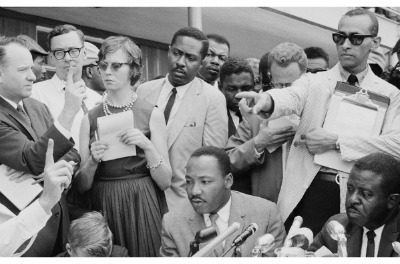
On September 9th,1971, when the inmates of the Attica Prison took control of the facility, a committee of prisoners drew up a list of demands that were included in their Declaration to the People of America read aloud by L.D. Barkley. Item five included the presence of certain witnesses and observers, including this book's author, Clarence B. Jones (below). Word of this request reached Jones by way of what was effectively an APB on the radio, and, after a brief call from a phone booth with the then Governor of New York, Nelson Rockefeller, was flown to Attica to meet with Commissioner Oswald and his fellow drafted committee members. The book itself is brief (a “single” in Kindle parlance), and is meant to be more of a meditation on the meaning of Attica in the present and what has and has not changed in our modern "incarceration state" in the past 40 years. [For an outline of the events leading up to and during the riots check out “Attica Prison Uprising 101: A Short Primer” by Mariame Kaba (Project NIA), which is both illustrated and free!] Jones is well-aware that Attica is often remembered more as a result of its reference in Dog Day Afternoon than anything else. I actually watched good old Charlie Day, of It's Always Sunny in Philadelphia, shouting ‘Attica man!’ outside of Paddy's Pub before I ever saw Pacino's performance as Sonny Wortzik. However, just knowing that Clarence Jones was on the prisoners' list of demands says a lot, since Attica would not be Jones' first time emerging from a jail to act as a mouthpiece for an inmate. In addition to having Jones as a speechwriter, Martin Luther King Jr. entrusted Jones with his “Letter From a Birmingham Jail.” Whatever Attica became, or how the list of demands morphed and grew over the four days that the inmates held control over the facility, Jones' presence tethered the riots to something larger.
An interesting perspective on a horrific incident, but also somewhat self-serving? And also not published until pretty much no repercussions could be had. Maybe I am too cynical.
Not really about Attica as some blurbs might have you believe, it's the POV of one of the actors called in there to act as a mediary, but negotiations fail. How central Jones actually is to the story is hard to tell, given that this is a part memoir and his view is of course biased to star himself. The book is just as much a very superficial look at how the US prison system works, a list of grievances including the idea that the CIA intentionally seeded crack to the US (nobody seems able to verify Webb's take on this leaving it a conspiracy theory), and no part is really in depth enough to make a proper argument. To his credit he lists a number of sources for some of the claims. The main problem is that it's neither here nor there as a text, neither a substantial memoir, or an account of Attica, or even a call to action on the failure of the US prison system - you leave it not much wiser on any of the topics broached.
This is a Kindle Single so it's a quick read and highly recommended for anyone with any interest in social justice, civil rights, racism in America, or just U.S. history. It contains a short and fascinating account of the prison riot at Attica Prison in upstate NY in 1971, as well as some interesting comments on how that uprising fit into the cultural and historical context of the time. Because this Single is so short, the attempts to connect the Attica uprising with the problems of today and the current fact of massive incarceration in the U.S. are definitely the weak points of the piece. While I tend to agree with most of Jones' observations and conclusions, the short space doesn't allow him to support his claims with detailed data, leaving this more of a conversation-starting polemic than a solid argument for change. That said, it's short and fascinating and well worth the low price of admission.
A brisk, well-written read that is has a cinematic element; at least in the first half of the book. The author is confident and speaks with authority and a clear tone. The second half of this Kindle Single could stand to be fleshed out, but that doesn't appreciably deduct from my enjoyment of this book. I would recommend it to anyone with an interest in America's prison system and the radical political movements that held America in rapt attention during the turbulent 1970s.
A must read for anyone interested in our prison system and a great read for everyone interested in Social Justice, Negotiation, and the Sociology of Power.