Jump to ratings and reviews
Rate this book

Elä tai kuole: Valitut runot

Rate this book
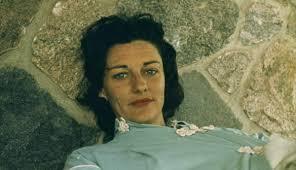
Anne Sexton (1928-1974) oli Yhdysvaltain rakastetuimpia runoilijoita, jonka teos “Live or Die” palkittiin vuonna 1967 Pulitzerilla. Traagisesti itsemurhaan päätyneen kirjailijan tuotanto tunnettiin erityisesti niiden tunnustuksellisuudesta ja henkilökohtaisuudesta.

337 pages, Paperback

First published January 1, 1966

149 people are currently reading
4825 people want to read

About the author

Anne Sexton

149 books2,492 followers
Anne Sexton once told a journalist that her fans thought she got better, but actually, she just became a poet. These words are characteristic of a talented poet that received therapy for years, but committed suicide in spite of this. The poetry fed her art, but it also imprisoned her in a way.

Her parents didn’t expect much of her academically, and after completing her schooling at Rogers Hall, she went to a finishing school in Boston. Anne met her husband, Kayo (Alfred Muller Sexton II), in 1948 by correspondence. Her mother advised her to elope after she thought she might be pregnant. Anne and Kayo got married in 1948 in North Carolina. After the honeymoon Kayo started working at his father-in-law’s wool business.

In 1953 Anne gave birth to her first-born, Linda Gray. Two years later Linda’s sister, Joyce Ladd, was born. But Anne couldn’t cope with the pressure of two small children over and above Kayo’s frequent absence (due to work). Shortly after Joy was born, Anne was admitted to Westwood Lodge where she was treated by the psychiatrist Dr. Martha Brunner-Orne (and six months later, her son, Dr. Martin Orne, took over). The original diagnosis was for post-natal depression, but the psychologists later decided that Anne suffered from depression of biological nature.

While she was receiving psychiatric treatment, Anne started writing poetry. It all started after another suicide attempt, when Orne came to her and told her that she still has a purpose in life. At that stage she was convinced that she could only become a prostitute. Orne showed her another talent that she had, and her first poetry appeared in print in the January of 1957. She wrote a huge amount of poetry that was published in a dozen poetry books. In 1967 she became the proud recipient of the Pulitzer Prize for Live or Die (1966).

In March 1972 Anne and Kayo got divorced. After this a desperate kind of loneliness took over her life. Her addiction to pills and alcohol worsened. Without Kayo the house was very quiet, the children were at college and most of Anne’s friends were avoiding her because they could no longer sympathize with her growing problems. Her poetry started playing such a major role in her life that conflicts were written out, rather than being faced. Anne didn’t mention a word to Kayo about her intention to get divorced. He knew that she desperately needed him, but her poems, and her real feelings toward him, put it differently. Kayo talks about it in an interview as follows: “... I honestly don’t know, never have known, what her real, driving motive was in the divorce. Which is another reason why it absolutely drove me into the floor like a nail when she did it.”

On 4 October 1974 she put on her mother’s old fur coat before, glass of vodka in hand, she climbed into her car, turned the key and died of monodioxide inhalation. She once told Orne that “I feel like my mother whenever I put it [the fur coat] on”. Her oldest daughter, Linda, was appointed as literary executor and we have her to thank for the three poetry books that appeared posthumously.

Ratings & Reviews

What do you think?
Rate this book

Friends & Following

Create a free account to discover what your friends think of this book!

Community Reviews

5 stars
781 (39%)
4 stars
706 (35%)
3 stars
394 (19%)
2 stars
75 (3%)
1 star
21 (1%)
Displaying 1 - 30 of 265 reviews
Profile Image for Julie G.
1,010 reviews3,923 followers
April 4, 2025
I choose to begin at the ending, today, to begin with the line that hit me the hardest, on the very last page:

I am not what I expected.

I could stop right there. This one line does, after all, summarize the essence of this, Anne Sexton’s Pulitzer Prize for Poetry winner (1967), LIVE OR DIE.

This collection is heartbreaking. Truly. Anne Sexton, a peer of John Updike’s (with a similar penchant for color), was a woman who could NOT GET OVER BEING ALIVE.

She felt ancient, after her childhood:

as old as a stone she was,
each hand like a piece of cement


She was envious of her famous friend’s suicide (this would be one Sylvia Plath):

I know at the news of your death,
a terrible taste for it, like salt.


This collection includes titles like “Wanting to Die” and “Suicide Note.”

Ms. Sexton wasn’t kidding; she committed suicide less than a decade after she published this, at the age of 45.


This is my third collection of Anne Sexton’s poetry in a short span of time (THE AWFUL ROWING TOWARD GOD is still my favorite). I glory in her style and her savage honesty; I cringe at her suicidal despair and the perpetually dark themes.

They were an accursed crew, Ms. Sexton and her people. For several generations, they had been institutionalized, battled multiple forms of mental illness, suffered several types of abuse.

It turns out, if you can’t be the one to break the mold on the madness, you are forced to succumb to the same fate:

The ship goes on
as though nothing else were happening.
Generation after generation,
I go her way.
She will run East, knot by knot, over an old bloodstream,
stripping it clear,
each hour ripping it, pounding, pounding,
forcing through as through a virgin
.

Back to the ending: Live or die, but don’t poison everything.

May you always choose life, my friends.
Profile Image for Théo d'Or .
651 reviews304 followers
Read
September 18, 2021
Sylvia's Death

for Sylvia Plath

....how did you crawl into,
crowl down alone
into the death I wanted so badly
and for so long,

the death we said we both outgrew,
the one we wore on our skinny breasts,

the one we talked of so often each time

we downed three extra dry martinis in Boston
the death that talked like brides with plots,

the death we drank to,
the motives and the quiet deed ?

In Boston the dying ride in cabs,
yes, death again, that ride home
with our boy.

And I say only with my arms stretched out into that stone place,
what is your death
but an old belonging,

a mole that fell out
of one of your poems ?
Profile Image for Nader Qasem.
59 reviews41 followers
February 25, 2020


{نصائح الى شخص مميز }

حذار السلطه
فمن شأن ركام جبلها الجليدي ان يغمرك كلك
ومن ذلك الجليد، الجليد، الجليد
من شأنه ان يدفن جبلك

حذار الكراهية
فما أن تفتح فمها حتى ترمي نفسك خارجا
لكي تلتهم ساقك ك الجذام.

حذار الأصدقاء
لأنك حين تخونهم ... وستخونهم
سيدفنون رؤوسهم في المرحاض ...ويهاجرون بعيدا


حذار العقل
لأنه يعرف الكثير ولا يعرف شيئا
وسيتركك معلقا ب المقلوب
تثرثر المعرفه بينما يسقط قلبك من فمك

حذار المسرحيات
دور الممثل ... والخطاب الجاهز.
لانهم سيضحون بك.... وستقف كصبي عار تبول في سريرك.

حذار الحب
مالم يكن حقيقا وكل مافيك ينبئك بذلك حتى أصابع رجليك
فسيكتنفك كمومياء
ولن يسمع أحد صراخك ..ولن تنتهي من الركض

——————


{ قتل الحب }


قاتله الحب أنا
أقتل الموسيقى
التي طالما حسبناها حميمه بيننا
التي طالما أشتعلت بيننا
ثم أنحر نفسي ... حيث ركعت في محراب قبلتك
أحز ب السكاكين الأيدي
التي خلقت من اثنين واحداً
لكنها لا تنزف ....اذا لم تزل مقيمه خزيها
أجر قوارب أسرتنا وأغرقها
أدعها تحضرك في البحر وتختنق
وفي الفراغ تغوص
أحشو فمك ب الوعود التي قطعتها لي وأتأملك
تتقيأها في وجهي

————

{شاعر الجهل }

ربما الأرض تطفو ... لا أعرف
ربما النجوم قصاصات ورق صغيره
صنعتها مقصات عملاقه..... لا أعرف
ربما القمر دمعه معلقه ......لا أعرف
ربما الله ليس الا صوتا عميقا
يسمعه الأصم .....لاأعرف
وربما لست أحدا ...صحيح ان لي جسدا
ولايمكنني الفرار منه
احب الفرار من رأسي ...وهذا غير وارد البته
قد كتب على لوح القدر
أن أظل عالقه على هذه الهيئة البشرية
ولذلك ربما ....أود لفت النظر الى مشكلتي

———-


{ المسرحيه }


انني الممثلة الوحيدة
يصعب على امرأه
أن تمثل مسرحيه كامله
المسرحيه هي حياتي
فصلي الوحيد
ركضي وراء الأيدي
وعجزي عن اللحاق بها
(الأيدي غير مرئيه ... لانها خارج الخشبه)
وكل ما أفعله على الخشبه هو الركض
مطارده شيء ما
دون ان أصل اليه أبدا


———-

{ تقاليد الغرق }


الخوف
الخوف من الغرق
الخوف من الوحده
أشغلني في صنع الصفقات
وكأن لي المقدرة على شراء
مخرجي من هذا كله
أشغلني الأمر عامان ... وشهر يوليو بأكمله.
ففي اغسطس ...بدأت أحلم ب الغرق
كان الموت فوق الماء ب الأبيض والأسود
ف الرحيل للمره الاخيره ..تغفوا معه النفس الأخير
أصارع الثعابين وكأنها حبال


———

{ ل سلفيا بلاث }

يا سلفيا ، سلفيا
مع صندوق ميت من الحجارة والملاعق
مع طفلين ، وشهبين
يتجولان بمرونه في غرفه اللعب الصغيرة
وفمك حول تلك الاغطيه
في شعاع السقف
في الصلاه البكماء

سلفيا يا سلفيا
الى أين ذهبتي
بعد ان كتبتي لي من ديفونشاير
عن نمو البطاطا
وتربيه النحل
بجانب ماذا كنتي تقفين
وكيف استلقيتي ؟
لصه أنتي !
كيف قمتي ب الزحف !
ب الزحف وحيده !
الى موت اردته انا !
اردته انا بشده لوقت طويل !
ذاك الموت الذي قلنا سويا اننا تجاوزناه !
ذاك الذي لبسناه على صدورنا النحيله !
ذاك الذي تحدثنا عنه كثيرا وكثيرا !

تنويه ( القصيدة طويله جده ... وهذا جزء صغير منها ) .


Profile Image for Tom.
102 reviews4 followers
April 13, 2019
This was by far my favourite collection of Anne Sexton’s that I’ve read so far.

She starts off by quoting Arthur Rimbaud within one of the first poems which made me instantly fall hook, line and sinker for her once again. She coincidentally has a habit of quoting everyone that I’ve always wanted to see indexed in this type of literature.

She also dedicates one of her poems to Sylvia Plath who was a close friend of hers at college. This one really gnaws at your heartstrings considering the fact that she soon fell victim to a similar fate a few years later.

Themes which are present throughout include: fear, betrayal, depersonalisation, existentialism, mortality, menstruation and mourning.

I would also say that Sexton introduces many more taboo and subversive subjects in this collection. For example: she includes the sexual abuse which she was subjected to by her parents when she was a girl. This is further perpetuated and reaffirmed by her literary nods to Oedipus and Judas.

To give you another idea of the heavy despondency which lingers throughout this narrative, one of the poems is dedicated to her daughter in which she apologises to her for having to send her off to stay with a relative for a couple of years whilst she was institutionalised for psychiatric treatments.

Her words dance across the pages in a wistful way which slowly seduces you into sinking head first into her doleful disposition with her.

Using juxtaposition to catch the reader off guard, she swiftly ends the collection with a life affirming poem entitled: “Live” which confronts all of the previous themes that are addressed previously in the book.

She even won the Pulitzer Prize in 1967 for this and I can definitely see why.

Highly recommended. 👌👌
Profile Image for Kimber.
219 reviews120 followers
December 7, 2025
This Pulitzer Prize winning collection was written from 1962-1966 and is in chronological order. I can definitely feel the trajectory here. Anne seems apologetic, in the short intro note on the title page, concerning the melancholy contained here. Although there are glimpses into her painful and tortuous upbringing, the glances of light are intermittent and continual, culminating in the final poem-(a word that feels beautiful)-"Live." Also present, within such starkness, such "Wanting to Die" is humor. "Protestant Easter" made me laugh. She shares her feelings about being at midlife, such as in the poem "Menstruation at Forty"--(for in her era, you were old at thirty) and sons that were not born. Her most beautiful poems are the ones written for her daughters, "Little girl, my string bean, my lovely woman," "A Little, Uncomplicated Hymn," "Pain for a daughter"--this one stopped me in my tracks, the way it ended. Anne's presence feels to me so mystical, so present, within her experience of "madness." Biblical allusions, God, "Consorting with Angels"--my favorite poem of this volume.

Many of these poems have moments that feel dissociative, particularly the intense interest in death. The way she wrote about her father's death, like there is some distance yet no emotion. Lines from "Self in 1958" further shows some of her depressed detachment:

But I would cry,
rooted into the wall that
was once my mother,
if I could remember how
and if I had the tears.
Profile Image for Liam O'Leary.
553 reviews145 followers
June 25, 2018

"But suicides have a special language.
Like carpenters they want to know which tools.
They never ask why build."
This collection is really just all DIE. Her 'Love Poems' are more LIVE.

I liked these, many are clear descriptions of losing sanity, willpower, feeling, someone...
But I prefer her 'Love Poems', because I get a kick out of Sexton's explicit and strong yearning in her poems, and I find this was more captivating in her poems for love than those for death.

Favorites:
Flee On Your Donkey
Wanting To Die
Profile Image for Jonfaith.
2,146 reviews1,746 followers
August 14, 2024
I look for uncomplicated hymns
but love has none.


My discovery of these pale, somewhat aged, volumes has proved a triumph. An otherwise stale book style offered a mound of Sexton, even if not d already the collected verse. She’s been most welcome this week, reeling from grief and the birthday mania in our household I needed to look past the Oppenheimer and the fantasy novels which again have failed to ensnare. This is where my pulse beats audible.
Profile Image for Mary Tsiara.
99 reviews9 followers
December 31, 2019
''But I would cry,
rooted into the wall that
was once my mother,
if I could remember how
and if I had any tears''


My poor heart:
description

Sexton pierces my soul with blunt needles and laughs in the process.

This is the best collection of hers I've read so far. The best way to end a year full of struggle and raw questions about reality and all things we pretend to understand in vain.
Profile Image for Caitlin.
83 reviews164 followers
October 20, 2020
"O Sylvia, Sylvia,
with a dead box of stones and spoons,

with two children, two meteors
wandering loose in the tiny playroom,

with your mouth into the sheet,
into the roofbeam, into the dumb prayer,

(Sylvia, Sylvia,
where did you go
after you wrote me
from Devonshire
about raising potatoes
and keeping bees?)

what did you stand by,
just how did you lie down into?

Thief!—
how did you crawl into,

crawl down alone
into the death I wanted so badly and for so long,

the death we said we both outgrew,
the one we wore on our skinny breasts,

the one we talked of so often each time
we downed three extra dry martinis in Boston,

the death that talked of analysts and cures,
the death that talked like brides with plots,

the death we drank to,
the motives and then the quiet deed?

(In Boston
the dying
ride in cabs,
yes death again,
that ride home
with our boy.)

O Sylvia, I remember the sleepy drummer
who beat on our eyes with an old story,

how we wanted to let him come
like a sadist or a New York fairy

to do his job,
a necessity, a window in a wall or a crib,

and since that time he waited
under our heart, our cupboard,

and I see now that we store him up
year after year, old suicides

and I know at the news of your death,
a terrible taste for it, like salt.

(And me,
me too.
And now, Sylvia,
you again
with death again,
that ride home
with our boy.)

And I say only
with my arms stretched out into that stone place,

what is your death
but an old belonging,

a mole that fell out
of one of your poems?

(O friend,
while the moon’s bad,
and the king’s gone,
and the queen’s at her wit’s end
the bar fly ought to sing!)

O tiny mother,
you too!
O funny duchess!
O blonde thing!"

-- "Sylvia's Death"
Profile Image for Krzysztof.
171 reviews34 followers
January 7, 2013
This is a problem.

When a person suffers and expresses that suffering incisively, shouldn't we feel compassion and shouldn't that compassion be absolute?

Why isn't it then?

Why do goths grate on us so much and why do people sometimes say, "Then kill yourself already!" when what they'd rather have is for the person to get better?

It must be the self-centeredness of the whining. Suicide shouldn't be judged harshly, but complaining endlessly probably should.

As someone not known for being Mr. Sunshine, this is difficult to reconcile. But I don't like this one-note morose poetry. Didn't anything ever make Anne Sexton happy? Anything at all? It doesn't matter that she ends the book with "Live", a rallying call to get through it. It doesn't matter because she didn't earn it. It's sad that this was obviously her way of convincing herself to live, but that doesn't make her poetry not a chore.

"Confession, while good for the soul, may become tiresome for the reader if not accompanied by the suggestion that something is being held back.... In [ Live or Die ] Miss Sexton's toughness approaches affectation. Like a drunk at a party who corners us with the story of his life,... the performance is less interesting the third time, despite the poet's high level of technical competence." ~ Poetry Foundation

I don't object to solemnity in poetry. I do object to moping.
Profile Image for M. J. .
158 reviews6 followers
October 30, 2022
I don't know if my soul is already formed, as Clarice Lispector would say, so I could fully grasp all that is contained within this book. And such a small one, it went by so fast on my kindle edition, and yet it left me so emotional... but it's complicated. I've read a lot of horror books this past month and I'm pretty sure this is one of them. The themes of death, lunacy and fear are lyrically and sometimes satirically developed along side themes of motherhood, gender and family bonds. These poems feel cruel, heavy, sad and tender. I'm not used to read much poetry. And recently when I mentioned the subject to some friends most of them revealed an apprehension around this particular literary form. I get it now, a poem can be a frightening thing, Anne Sexton proved it by writing Live, Pain for a Daughter and The Addict. Three poems so crude and honest I felt like hugging the pillow for some comfort after reading, there was none. There was only an aftertaste in my mouth, a lingering of something sweet, honest and decayed. It's beautiful stuff, at once sophisticated and brutal. If this is what poetry is like I desperately need to read more of it.
Profile Image for Hind.
141 reviews65 followers
October 2, 2019
"I was
the girl of the chain letter,
the girl full of talk of coffins and
keyholes,
...
the one
who kept dropping off to sleep,
...
for hours and hours
and then she’d wake,
after the small death,
...
and then she’d be
as soft and delicate as
an excess of light..."
Profile Image for azra presley.
210 reviews11 followers
February 16, 2023
yani... Anne Sexton'in hayatini arastirdiktan sonra okursaniz daha iyi anlayabileceginiz bir siir kitabi. beni ciddi ciddi depresyona soktu

"Kadın olmaktan usanmıştım,
kaşıklardan ve demliklerden usanmıştım,
ağzımdan ve göğüslerimden usanmıştım,
kozmetiklerden ve ipeklilerden usanmıştım."
syf; 47 Meleklerle Yoldaşlık

"tek başına nasıl uzandın
ne zamandır yana yakıla arzuladığım ölüme,"
syf; 69 Sylvia'nın Ölümü

"Bu yüzden gözlerinden bahsedeceğim
kapalı olsalar da.
Söyle bana, inatçı irislerin her biri nerede?
Nerede ayağımı yerden kesen
hayat dolu gözbebekleri?
syf; 111 Yüzün Köpeğin Boynunda
Profile Image for Karyn.
51 reviews4 followers
March 19, 2009
Painfully sensitive, horribly depressing, joyful and heart-wrenching... I read this a lot as a teen
Profile Image for kate.
230 reviews51 followers
Read
December 27, 2022
i was actually murdered and left dead in the mud ... punched in the face over and over again ,,, and to that i say thank you xoxo
Profile Image for Judy.
1,961 reviews459 followers
August 5, 2025
64th book read in 2025

While reading Anne Sexton’s third book of poetry, I also began reading a biography by Diane Wood Middlebrook. I enjoyed that synergy because I learned about how she came to be a poet, how her poetry is autobiographical, how she used her creativity to combat her mental health issues.

In Live or Die, she is debating with herself (and her therapists) whether she will ever be well, whether to keep trying, but also realizing that her poetry will save her when nothing else can. Some of these poems are micro-short stories. Some are flights of fancy, some are bursts of defiant life. I feel her writing skills in this collection have reached a new level of competence and impact.

I was struck by how life for women in mid-20th century America could constrain their creativity, punish them for not being fully functional mothers while requiring them to have children. Psychiatry was still heavily Freudian.

Also, as always, there are the critics, the marketers, etc. She was heralded as one of the first female confessional poets. She was also maligned for it. In truth, along with Sylvia Plath, I feel she broke ground for so many female writers in all genres. She won the Pulitzer Prize for poetry for this 1966 cri di coeur!
Profile Image for Dan.
1,249 reviews52 followers
June 1, 2021
Live or Die

This book of poems by Anne Sexton won the Pulitzer Prize in 1967.

As the title suggests many of the poems in this collection deal with death. But even more often the poems discuss depression and Sexton makes no attempt to hide her depression, suicidal ideation or even her suicide attempt. Despite weighing heavily on the reader’s psyche, her poetry is quite extraordinary - both beautiful and haunting.

The poem entitled ‘Sylvia’s Death’ was penned just days after Sylvia Plath committed suicide. Plath and Sexton were friends and often discussed their struggle with depression with one another. They even had personified it - calling it the sleepy drummer. The poem is just an incredible piece of writing and quite unlike anything I’ve read before.

5 stars. Probably six stars if GR allowed such a thing. Quite dark however.
Profile Image for salva.
245 reviews1 follower
October 21, 2023
i have swallowed these words like bullets...
Profile Image for mariana ૮₍˶ᵔ ᵕ ᵔ˶₎ა (perrito lector).
118 reviews192 followers
January 8, 2022
me gustó mucho este poemario :- ) es una exploración muy sombría ?? de la ideación suicida q padece la autora a raíz de su depresión posparto ,, el último poema se llama "live" y habla del rayito esperanzador q nos brindan las cositas chiquitas de la vida y q nos motivan a seguir viviendo y se me hizo una manera bonita de terminarlo ♡(ᐢ ᴥ ᐢし) les pongo dos fragmentitos q me gustaron y q reflejan el rango emocional q podemos llegar a sentir al lidiar con sentimientos especialmente difíciles !!

"don't they know
that i'm promised to die!
i'm keeping in practice.
i'm staying in shape."


"so i won't hang around in my hospital shift,
repeating the black mass and all of it.
i say live, live because of the sun,
the dream, the excitable gift"
Profile Image for Kirsty.
2,788 reviews189 followers
January 14, 2017
Live or Die is Anne Sexton's fourth collection of poetry. I'd not read any of her work before, but had a feeling that I would love it. There were some poems here which I didn't much like, I must admit, but others far made up for them. There are so many interesting ideas and themes at play throughout, and her tribute to Sylvia Plath was quite beautiful. The downside for me was that there was too much religious imagery included for my personal liking.
Profile Image for rafael montenegro fausto.
37 reviews1 follower
March 14, 2017
[...]
I wanted to write such a poem
with such musics, such guitars going;
I tried at the teeth of sound
to draw up such legions of noise;
I tried at the breakwater
to catch the star off each ship;
and at the closing of hands
I looked for their houses
and silences.
I found just one.
you were mine
and I lent you out.
I look for uncomplicated hymns
but love has none.
Profile Image for Reyhan G.
51 reviews7 followers
April 23, 2022
"But suicides have a special language.
Like carpenters they want to know which tools.
They never ask why build."

"Better (someone said)
not to be born
and far better
not to be born twice"

"O little mother,
I am in my own mind.
I am locked in the wrong house."
Profile Image for Cali.
431 reviews7 followers
December 6, 2025
I planned my growth and my womanhood
as one choreographs a dance.


Not my favourite. Like Plath, Sexton's bleakness bleeds dead melodies; her poetry is like still water, so indifferent it immobilizes metaphor itself. Perhaps I'm too romantic, but I prefer my poetry underscored with urgency, or, at least, care.
Profile Image for Holly.
5 reviews1 follower
March 8, 2024
I’ve loved Sylvia Plath for years, so I was surprised to read, when attempting to dip my toes further into the world of confessional poetry, that she had a contemporary - another woman, only a few years older than her, whose life followed a similarly tragic trajectory.

I had to wonder why I had heard so much more about Plath than Sexton (I know Sexton is still well-acclaimed, but in my experience she hasn't penetrated popular culture in the same way). Perhaps the quality of the poetry had something to do with it, but after reading this collection, and seeing just how much acclaim Sexton gained during her lifetime, I can't say that this is the case. Her life, I suppose, was messier (to put it lightly), even more complicated than the legacy Plath left behind. Her poetry, too, seems to touch on even more taboo topics than Plath, topics which remain controversial even today - abortion, menstruation. And, as grim as it is to say, her method of suicide was less novel, less memorable; they both went out by way of carbon monoxide, but sitting in a parked car doesn’t conjure the same grotesque imagery as sticking your head in an oven, something repeated not as a tragic fact but instead as a morbid curiosity.

There are clear echoes of Plath and her poetry in Sexton's work here, most obviously in Sylvia's Death, an elegy for her friend. Cripples and Other Stories calls to mind Plath's most famous, Daddy, not only in the subject matter, but also in the rhyme and meter. Here the differences between them are most clear, however. Both use dark imagery, Plath invoking Nazism to illustrate her relationship with her father, but Sexton utilises more directly grotesque imagery, rather than relying on associations of atrocity - rats, enemas, deformity, maggots. The directness of much of Sexton's work in this collection reads not just as confessional but also confrontational: she challenges the reader with the full face of mental illness, not a sanitised image but instead a warts-and-all depiction of a series of mental breakdowns.

Considering Sexton's work on its own merits, then, separate from Plath - as she deserves - her standout images, for me, deal primarily with religion. I'm not educated in theology and thus probably can't do justice to her utilisation of biblical metaphors and Protestantism as metaphor, but The Legend of the One-Eyed Man is truly cutting as Sexton's narrator relates to (and draws comparisons to) Judas and Oedipus, a cutting remark on guilt, whilst the final stanza certainly can be read in tangent with Sexton's mediations on the subjugation of women (Her Kind, not in this collection, is perhaps my favourite of hers I've read so far).

Sexton also frequently refers to dolls in this collection; while I can't say whether or not she's read it, for me there are clear thematic parallels to Ibsen's The Doll House, particularly considering once more Sexton's writings on womanhood. Dolls represent an image of idealised femininity a young Sexton seems to fail to live up to in Those Times..., a chilling depiction of childhood, later, a kind of lobotomised housewife in Self in 1958. Her clearest writing on gender here, though, is of course Consorting With Angels, beginning with "I was tired of being a woman, / tired of the spoons and the pots, / tired of my mouth and my breasts, / tired of the cosmetics and the silks," and ending with the wonderfully provocative "I am no more a woman / than Christ was a man." Reading with the knowledge that Sexton was, at a time, diagnosed with hysteria, and, of course, the nature of the restrictions placed on women at the time she was writing, it's no wonder that Sexton was tired of being a woman, when her illness was labelled a problem of being female, when she would be labelled promiscuous, a drug addict, suggestible, developmentally immature, a liar, someone for whom suicide was a way of life, any potential trauma she may have suffered dismissed.

It's interesting that for a collection so often dark and death-occupied that it ends with Live, a fairly hopeful poem of Sexton's that seems to contradict both her earlier and later writings, the most notable parallel in this collection being with Wanting to Die. Read with the knowledge of Sexton's eventual fate, the hopefulness of the poem feels bittersweet at best, but it's difficult to imagine how else this collection would conclude. While not every poem in this collection engaged me totally, I fully intend to look into the rest of Sexton's poetry, as while I find the alleged abuse she perpetrated discomforting (to say the least), it's also difficult not to see her as an incredibly compelling, challenging, tragic figure, one who deserves more of my attention.
Profile Image for Ife.
191 reviews52 followers
January 20, 2024
3.5/5

I was tired of being a woman,
tired of the spoons and the pots,
tired of my mouth and my breasts,
tired of the cosmetics and the silks.
There were still men who sat at my table,
circled around the bowl I offered up.
The bowl was filled with purple grapes
and the flies hovered in for the scent
and even my father came with his white bone.
But I was tired of the gender things.

Live Or Die is a collection that is brimming with feminine angst. A lot of the poems are oneiric and capture a liminal space between being awake and asleep and eponymously, alive or dead. Sexton probably tread this liminal space as someone who suffered from mental illness and eventually took her own life and this is reflected through the dark themes of the collection. It definitely tilts more towards death than it does to life.

I found the language to be incredibly stunning. There is such a lack of pomp while still maintaining sophistication. The poems at the end started to lose my attention but this may be a matter of the headspace I was in when I read it.

This collection is extremely ahead of its time and I'm sure that further analysis of it will give me a deeper appreciation of it. I would recommend it to anyone who likes aesthetic dark poetry.
Profile Image for pridna katoliška punca.
166 reviews9 followers
January 2, 2021
15:37 — FOR THE YEAR OF THE INSANE

a prayer

O Mary, fragile mother,
hear me, hear me now
although I do not know your words.

________

i enjoyed it. it was explicit, but that's something to be expected with anne sexton, so it's not something im upset with lol.

my favourite poems were the one mentioned above^, the addict, live, the legend of the one eyed man, flee on your donkey, imitations of drowning, sylvia's death and love song.
Profile Image for Caspar "moved to storygraph" Bryant.
874 reviews56 followers
Read
January 2, 2023
do you know I am more than a little delirious but on the whole I felt Pretty Ones more interesting. all the same a glimmering, fabulous collection

and on this note I felt the poems opening in new ways. the bodes are well. I am excited
Profile Image for ….
71 reviews21 followers
February 6, 2024
first impression is that this poetry collection is inferior to the awful rowing toward god
Profile Image for Brok3n.
1,452 reviews114 followers
July 25, 2025
Madness and first-person pronouns

Anne Sexton and Sylvia Plath are famous as founders of the Confessional Poetry movement of the mid-twentieth century. Plath began writing poetry in the 1950s and wrote until her suicide in 1963. That was not her first suicide attempt, only the first successful one. Sexton was admitted to a psychiatric hospital in 1955 to be treated for what we now call bipolar disorder. There one of her doctors encouraged her to write poetry to battle her melancholia. In 1974 she, too, committed suicide. Like Plath's, her successful suicide was preceded by several unsuccessful attempts. One certainly gets the impression that "Confessional Poet" is a terribly hazardous career choice. (Yeah, yeah, correlation is not causation...)

For a poetry writing class, I am required to read poems by Sexton and Plath. Live or Die is perhaps Sexton's most celebrated book -- it won a Pulitzer Prize -- so I chose to read it.

You will not be surprised to learn that many of the poems concern madness and suicide. The poems are in order of the date of composition. I, alas, found the first half very hard going, not because it was sad -- I expected that. No, the problem was that I had a lot of trouble understanding the poems. After that the fog lifted a bit. I can pinpoint the exact place that happened. It was the poem "Little Girl, My Stringbean, My Lovely Woman" which, you will not be surprised to hear, is addressed to one of her daughters. The next poem, "A Little Uncomplicated Hymn" addressed to her daughter Joy, is powerful. It is not, in fact, uncomplicated.
In the naming of you I named
all things you are …
except the ditch
where I left you once,
like an old root that wouldn’t take hold,
that ditch where I left you
while I sailed off in madness
That is a complication, indeed!

The best of the poems in Live or Die are very good. It is possible that all the poems are equally good, even those beyond my comprehension, but that I can't judge.

Blog review.
Displaying 1 - 30 of 265 reviews

Can't find what you're looking for?

Get help and learn more about the design.