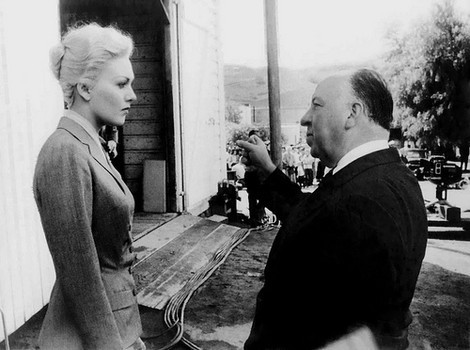
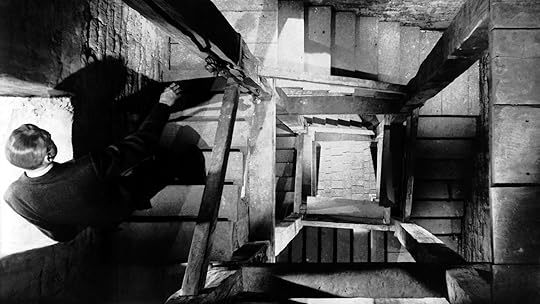
I am moving to San Francisco. To prepare for this move I have spent the last few months immersing myself in the history and cultural output of the city, and so it was inevitable that I should find myself watching Hitchcock’s Vertigo, which is based in part on this slim thriller by the French masters Boileau and Narcejac. The story of Vertigo is in a tradition aside from the English puzzle mysteries of Conan Doyle and Agatha Christie, and of the American tradition of crime mysteries from Hammett, Chandler, et al. While there is an atmosphere of suspense an mystery, the story is an exploration of love, loss, identity, obsession, and masculinity. While many of the reviews on this site have focused on the richness of Hitchcock’s classic at the expense of Boileau’s and Narcejac’s source material. But I see tremendous virtues for both; and by comparing them side by side, I can see concentration of the character of San Francisco as it was injected by Hitchcock into his greatest film.
To start, the character of Scottie in the film is the self-conscious Flavieres in the book. While Scottie is a social being, good-natured, and loveable, often in the company of women like his ex-fiancee Midge, Flavieres is a loner, inwardly disparaging of his own sense of self-worth after his failure to follow a suspect onto the roof which resulted in his partner’s death. While Scottie is very candid about his handicap and diagnosis of vertigo, Flavieres is standoffish and embarrassed. He was exempted from the ongoing Second World War as a result of his poor lungs or cowardice, and he feels that embarrassment often as he travels about with Madeline. The wartime backdrop is removed in Hitchcock’s film, and the focus falls more closely on the characters of Scottie and Madeline.
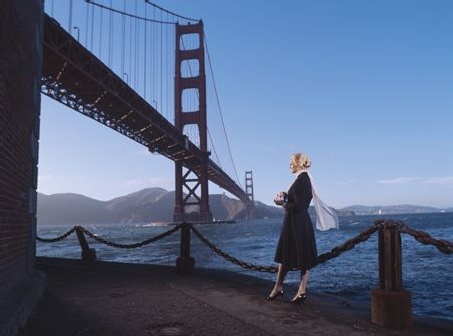
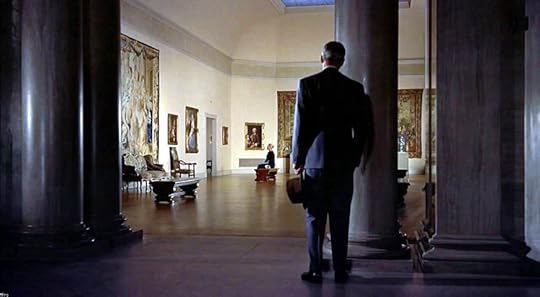
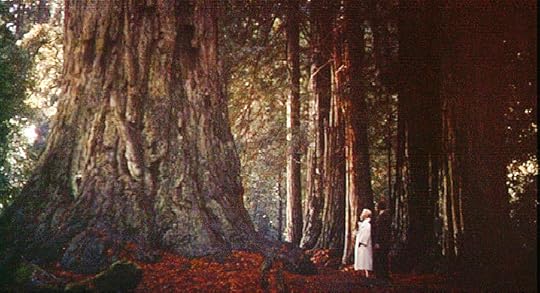
When Flavieres/Scottie are called up by an old friend (Gevigne/Elstir) and shipping magnate to watch his wife, he reluctantly accepts though he is skeptical of the verity of Madeline’s being possessed by the wayward spirit of her dead ancestor (Pauline Lagerlac/Carlotta Valdez). The meanderings of Madeline in both book and film create a profound sense of place for both Paris and San Francisco. While in the book she traverses along the quay and to the Passy cemetery, the film takes her to much more iconic San Franciscan locations: the Mission Dolores cemetery (one of two cemeteries in the city), the Legion of Honour art museum, and Fort Point beneath the Golden Gate Bridge, where she takes her first jump. While Pauline was a troubled French socialite who committed suicide for no apparent reason, Carlotta was a jilted young woman left with a child – a representation of the American exploit of the local Latin/Mexican community in California. While many reviewers found the book’s romance less believable than the movies, I am tempted to disagree. The psychology of Flavieres – never having been in love not ever having had the confidence to approach women, he is suddenly in a position of guardianship and savior to a beautiful young bride of a man of whom he is jealous. Madeline is an empty vessel for his longings and his insecurities, and her seeming helplessness fortifies his diminished sense of masculinity. While Scottie is a troubled man in the film, it does not seem he suffers from a diminished sense of the masculine (for that matter, neither do any of Hitchcock’s male leads). The character of both Madelines is blank, scarcely formed while she is “alive” and our sense of her is inhabited by Scottie’s and Flavieres’s interpretation of her. In the film she is an easel of blank and nervous stares, wide eyes, pristinely coiffed hair, and striking green eyes. In the book she is the lacuna between words and phrases on the page, she is vacant.
The cowardice of Flavieres reaches a fever pitch when Madeline dies and he lies to Gevigne about his attendance at the scene. Perhaps the most poignant moment in the film is the inquisition of Scottie after the jump which forces him to accept her death and admit to his inability to save her. For Flavieres he has never had confidence in his ability to save her, and constantly he has felt her beyond his grasp – not because of his fear of heights but because of her magnetism toward death, and his own cowardice and unmanliness. When he spirits away to Dakar, to escape the encroaching war, Flavieres takes to alcoholism and dissoluteness. He returns four years later to a changed Paris. All the trace of Madeline is gone from the Paris he knew. Pauline Lagerlac’s house put to new purpose. The memory of her death lives alone in the memory of an old woman who discovered her body and the hotel attendant where the Gevignes lived. Madeline’s grave has been destroyed by acts of war, and Gevigne too has been erased, dead. While Flavieres is often in a fog, at turns literal and metaphorical, Scottie’s San Francisco is preternaturally (for the locale) clear-skied – and Scottie’s voyeuristic obsession and later madness is brutally clearsighted.
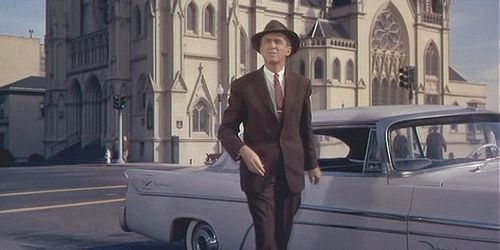
When the book is stripped away, what remains is Hitchcock’s love letter to San Francisco – a city whose hilly topography and thick matte air lends itself so well to the meandering mystery of Madeline. Whose imperial history lends itself so well to the tragedy of Carlotta. Whose historically seedy underworld lends itself so well to the corrupt motives of the industrialist Elstir. A story which uncovers Hitchcock’s mannered yet mysterious San Francisco: the counterpoint to the rough and seedy Tenderloin of Dashiell Hammett’s San Francisco.