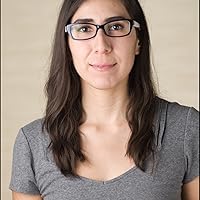
There is no American writer alive who is funnier, more inquisitive, or more surprising than Julie Hecht. The Unprofessionals, her first novel, whose nameless narrator also told the stories in the author’s bestselling collection, Do the Windows Open?, is a mordant triumph. It follows the friendship between the narrator—a photographer in her late forties—and a young man whom she has known since his childhood and who has always shared the narrator’s dismay about the way Americans live now: our discount chain stores, our incomprehensible architecture, our preoccupation with pets, our lack of manners. As the narrator takes us through the various stages of this friendship, she also tells the story of the young man’s incongruous predicament on his path to heroin addiction and the absurdities of his attempted recovery. The Unprofessionals is in part a masterpiece of comic despair, in part an illumination of the customs and mores of a new and bewildering century, in part a hilarious and sad story of two outsiders who see the world with painful clarity—and, as a whole, a novel of unexampled originality.
Julie Hecht is a contemporary American fiction writer specializing in interlacing short stories. She is best known for her book "Do the Windows Open?," a series of short stories some of which first appeared independently in The New Yorker.
OK, I wish there was a way to give this book MORE stars. Ms. Hecht might just be my new favorite contemporary American author. I read an interview (rarely granted I've found) with her in "Believer." Although this was her first published novel, she's been writing stories for years, many published in Harpers, The New Yorker, etc. Such a simple and insightful style, rich and easy, everything I look for in an American writer. Strong, reductive, disaffected, I could go on and on but I would sound like a book-reviewer!!
A brilliant contemporary novel in which two misfits forge a tenuous and important connection, in spite of obvious differences of age, gender, and life-experience. The world is a painful place for both characters; our narrator suffers from sensitivities to bad music, terrible lighting, and the patently unhealthy and inconsiderate habits of other humans, but she soldiers on, searching for one decent natural-fiber garment in an enormously empty TJMaxx. If you don't see the humor and pathos in this quest, don't bother to read this book. You will hate it. I loved it although it was super sad.
(Warning: contains a spoiler - avoid quote at end) This book painted a portrait of a slice of passive-aggressive, meaningless middle class society. It is sardonically humorous, but at the core it's depressing and you can't really relate to the characters except to feel compassion for their failure to make connections, to find any kind of happiness, or hope for their bland moments of clarity. The voice of the protagonist reminds me of my friend Harriett who has a similar way of expressing her comments on life, except Harriett is wry and hilarious and lacks cynicism, so you find her observations enlightening and refreshingly funny, whereas Hecht's characters, despite their incisive yet twisted perceptions leave you feeling glad you don't know them. Which may have been the point.
I did find this paragraph amusing:
"The weekend was a time of hot, humid nothingness. "What's wrong my husband asked a few times. I'd already told him the news, which he was able to forget right away. I reminded him:'My close friend committed suicide. I'm thinking about him.' I had to learn that men were a kind of nonhuman species, they were like beings from outer space who needed a form of simple communication. I'd seen this in science fiction movies - earthlings try to talk to robots and beings from other planets. When I tried it out, it worked and kept down the expectations Men weren't like actual human beings, and I'd proceed accordingly. I hadn't read the Men Are from Mars book, but I understood the principle behind it."
I absolutely adored this. The voice of the narrator is so distinct. Its a little offputting and oppositional at times, but the characterization is so specific. Both deeply internal and very observational. The way this jumps back and forth between events is incredibly satisfying. It really establishes time well (both the specific moment it is set in as well as the temporal relations of the events in the book). I really must check out the short stories she wrote.
This was a surprising read. It's weird, I became so attached to these characters and yet...never ONCE do you find out their names. The humor is biting and the characters are flawed. I love imperfections!
I was excited about this one for a while but it didn’t really hit for me. I feel like maybe I would enjoy her writing more in short story format bc I just couldn’t get grounded in it with this novel so I’d still try her other stuff
This book was terrible. And the author seemed kind of racist? I was shocked at how open she was in criticizing middle eastern folks in particular. A pretty vapid piece overall.
My husband asked me to please, stop reading this book, so I am giving up.
The characters are completely foreign to me. More than halfway through the book I could not find a single aspect of either main character that I could relate to. Moreso, these characters just made me sad. Their idiosyncrasies are impenetrable, unrelenting, and just plain weird.
I am amazed at the author's ability to write these characters so consistently. They are total oddballs with off-color ways of relating to the world, but the main character's narration never strays once from this disorienting worldview. I am worried that the author may have gone insane immersing herself in this unnamed character's head in order to write the world from her perspective.
The impressive consistency in worldview makes me think I am missing something in the writing, something I should be enjoying, but I just can't look at the world from this character's point of view anymore. Rather than lose my mind in Dr. Weil references and precision shirt ironing, I am putting this book away.
I spotted this book at a library book fair in Vermont. I had read Julie Hecht's other two books--Do These Windows Open? and Happy Trails to You--and it turns out this was the first in a trilogy of sorts.
The central character, who in all three books is unnamed, is both hypercritical and insecure, a misanthrope and yet curious enough about people to develop a platonic friendship (by phone) with a teenage boy, who may or may not be a heroin addict. She likes him because he's as quirky and demanding as she is.
You'll either love or hate Hecht's voice. Some may find it too depressing, but I think the gloominess is balanced by some laugh-out-loud observations.
I just lost interest in this one. It'll be entertaining, then just seem to be going nowhere. Maybe someday I'll finish it, but I'm calling it quits for now.
Despite my earlier misgivings, I did end up finishing this book. Not really because I was truly enjoying it, but more out of sort of tortured curiosity. The only real reason I didn't give The Unprofessionals one star is that there were portions where I was interested in what the narrator had to say, but more often than not it didn't really turn out to be anything all that good.
It was a chore to get through this book. I started off enjoying it and sympathizing with the main female character. However, "the boy," the main male character, really wore on my nerves. I was never able to think of him as other than a whiny selfish brat. I wish the author would have explained how their relationship evolved. It always felt awkward to me, and unrealistic how her husband was never in the picture. He was mentioned all of two or three times - where was he during this whole time? I think this book had potential, but for me, failed to realize it.
Perhaps if the jacket had not described the book as it did (her humor is deadpan, wild, sibylline…. no American writer alive who is funnier….. more surprising…etc.) I would not have been so disappointed. It would be a stretch to see this as a "funny revelation" of … pain. Painful, yes.
While one member of our book club said it was well written, and I agree for the most part, not one of us actually liked the book. A few even decided to quit reading when they only had a few chapters left.
I might have tolerated or even enjoyed The Unprofessionals if it had been a short story. Stretched into a novel, the narrative becomes as obsessive and repetitive as the nameless narrator herself—which, I guess, is probably the point, but not one that seemed worth pursuing. The novel’s dark humor and oblique insights kept me turning the pages, but in the end I felt I’d been banging my head against the wall for hours as if it would eventually feel good.
There were some nice and clever things in this book, but everything about the narrator and the story disturbed me from the start. That she didn't realize what was going on was simply confounding to me, and the fact that she didn't get involved in addressing a friend's obvious addiction and depression even more confusing. I did not relate to this writer at all.
This semi-sequel to Do The Windows Open? turned out better than I'd thought (feared?), being primarily the story of the never-named Loquesto boy; however, the events are filtered through the (highly distorted!) lens of the same Nameless Neurotic Narrator, including tangents to how her own crazy life is going. Doesn't stand alone - if this one sounds interesting, read Windows first.
This book was really good. Got slow inbetween but kept me reading till the end However the author was racist and kept categorizing pakistanis arabs and eastern people as "Terrorists and the "People who burn America's flag" Really? As if America doesnt hate other countries??? thats perfectly normal??? Really shameful
Interesting book. The narrator has unique and quirkly takes on life. The book is worthwhile just for these little insights. As far as a concrete plot goes...not so much, but that's ok. The on-going dialogue with 'the boy' keeps you interested.
I give up, just cannot get into the book. I see what the author is trying to do and I applaud the effort to come in with a different angle and perspective, but I just can't get into it.