

What do you think?
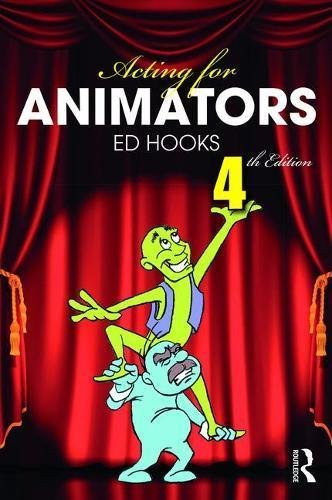
Acting for Animators
Ed Hooks' essential acting guidebook for animators has been fully revised and updated in this 4th edition.
Hooks uses classical acting theory - from Aristotle to Stanislavsky and beyond - to explain everything from character analysis and physical movement to facial expression and scene structure. He speaks directly to animators, instead of stage or screen actors. Acting for Animators is an invaluable primer for beginner animators and a useful reference for experienced pros.
New to this fourth edition:
- 6 new scene-by-scene acting analyses of animated feature films, including Zootopia and The Little Prince
- an annotated analysis of Walt Disney's famous 1935 memo to Don Graham, regarding how best to train animators
- advice to the animator about how best to perform visual references
- a chapter on Virtual Reality
- an online database of Ed's previous film analyses, all in one place.
Hooks uses classical acting theory - from Aristotle to Stanislavsky and beyond - to explain everything from character analysis and physical movement to facial expression and scene structure. He speaks directly to animators, instead of stage or screen actors. Acting for Animators is an invaluable primer for beginner animators and a useful reference for experienced pros.
New to this fourth edition:
- 6 new scene-by-scene acting analyses of animated feature films, including Zootopia and The Little Prince
- an annotated analysis of Walt Disney's famous 1935 memo to Don Graham, regarding how best to train animators
- advice to the animator about how best to perform visual references
- a chapter on Virtual Reality
- an online database of Ed's previous film analyses, all in one place.
212 pages, Paperback
First published September 2, 2003
About the author
Ed Hooks
16 books2 followersEd Hooks is a professional actor, acting coach, and writer. As an actor, he has appeared in numerous commercials and television shows.
Ratings & Reviews
Friends & Following
Create a free account to discover what your friends think of this book!
Community Reviews
Displaying 1 - 11 of 11 reviews

February 18, 2018
Re-read for my master thesis

January 28, 2018
It has helpful points, but it wasn't as good as the articles I read by Ed Hooks in which he analyzes the acting in recent animated movies. Perhaps it's because in this book he doesn't mercilessly rip movies apart. (I think you learn more that way). Oh well.
Extra star for mentioning Aristotle's Poetics. Animation and philosophy are my two favorite things. (Especially philosophy of storytelling).
Extra star for mentioning Aristotle's Poetics. Animation and philosophy are my two favorite things. (Especially philosophy of storytelling).

July 25, 2022
Caveat: the version I read is from 2000, and I know it's been revised. However, the revision notes all seem to imply that nothing was removed, only added, and so I feel the majority of my critique here will most likely stand.
tl;dr: skip it
This book feels like it was written as a college essay with a minimum word count that could have been a 'recommended reading' pamphlet, because anything useful was a cited quote from some other source and the rest was repetitive bloviating, hero worship, and shilling his personal world view, far removed from anything specifically useful to animators. He spends a lot of time condescending the reader and social signaling, to boot, which leaves me with the impression that (all things considered) this book cornered the market because it was the only one with all the keywords in the title for the first ten years of its shelf life.
There are plenty of excellent books out there on developing characters, body language, cinematography, and acting theory that you could read instead and get more out of. If you're enrolled in animation classes, most likely they've already covered the basics of performance touched (lightly) on in this book.
Here's a short list of prominently featured sources:
- The Illusion of Life: Disney Animation
- Various papers by Leslie Bishko about the application of Laban Movement Theory to animation
- On the Technique of Acting
If you really want to read it, here's the highlight reel:
- Skim the numbered headings of Chapter 1 (Seven Essential Acting Concepts)
- Start reading from Chapter 5 (Movement and Body Language) to 9 (The Form)
- Skip to the acting analysis
- Make a decision about which sources sounded useful along the way, and move on to reading one of those
tl;dr: skip it
This book feels like it was written as a college essay with a minimum word count that could have been a 'recommended reading' pamphlet, because anything useful was a cited quote from some other source and the rest was repetitive bloviating, hero worship, and shilling his personal world view, far removed from anything specifically useful to animators. He spends a lot of time condescending the reader and social signaling, to boot, which leaves me with the impression that (all things considered) this book cornered the market because it was the only one with all the keywords in the title for the first ten years of its shelf life.
There are plenty of excellent books out there on developing characters, body language, cinematography, and acting theory that you could read instead and get more out of. If you're enrolled in animation classes, most likely they've already covered the basics of performance touched (lightly) on in this book.
Here's a short list of prominently featured sources:
- The Illusion of Life: Disney Animation
- Various papers by Leslie Bishko about the application of Laban Movement Theory to animation
- On the Technique of Acting
If you really want to read it, here's the highlight reel:
- Skim the numbered headings of Chapter 1 (Seven Essential Acting Concepts)
- Start reading from Chapter 5 (Movement and Body Language) to 9 (The Form)
- Skip to the acting analysis
- Make a decision about which sources sounded useful along the way, and move on to reading one of those
September 20, 2020
A useful yet incredibly problematic book with women reduced to being baby making machines. If you can put the beaten out dated notions aside there's the occasional useful tip.

August 15, 2017
Muy buen libro, te hace ser más observador al ver peliculas, analizar cada detalle, angulo de cámara, vestuario, postura del personaje, iluminación, el porqué de las acciones de los personajes, en que están pensando, muy interesante. Recomendable.

February 12, 2020
A great analysis of the psyche behind a character's actions to create a believable animation.

June 27, 2021
Super interesting, I was hooked from the start. I want to read his other book now.
March 12, 2021
A nice introduction into the world of acting for new animators. Has a nice pacing and covers most of the basics when talking about how to make a more interesting shot.
Wouldn’t consider this an indispensable read for animators. But is a good guide for beginners who feel lost and don’t know where to start. (Not so much a tool to improve your skills once you already know the fundamentals).
Wouldn’t consider this an indispensable read for animators. But is a good guide for beginners who feel lost and don’t know where to start. (Not so much a tool to improve your skills once you already know the fundamentals).
January 15, 2017
Structured in a way that anyone can understand it even if you are not an animator and with a lot a practical examples this is a great tool to improve your character development or story telling skills.

Read
May 8, 2012This was real step up in my HND year. Great guidance for beginners.

Read
April 7, 2017Great insight in to intentions behind action and response, my highlighter went dry as Ed reminded and taught valuable lessons in animation directly relating to Animators.
I was also lucky enough to see a lecture by Ed in Bangkok when he was there, great speaker, and full of knowledge. This books a keeper.
I was also lucky enough to see a lecture by Ed in Bangkok when he was there, great speaker, and full of knowledge. This books a keeper.
Displaying 1 - 11 of 11 reviews