This black satire on old age and modern attitudes to it concerns the growing practice of "granny-dumping". It is Christmas, but Kathleen is no longer welcome at her children's homes. She's not ready for the the soulless old people's home, so she decides to cut and run.
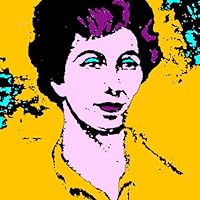
Thea Astley was one of Australia's most respected and acclaimed novelists. Born in Brisbane in 1925, Astley studied arts at the University of Queensland. She held a position as Fellow in Australian Literature at Macquarie University until 1980, when she retired to write full time. In 1989 she was granted an honorary doctorate of letters from the University of Queensland.
She won the Miles Franklin Award four times - in 1962 for The Well Dressed Explorer, in 1965 for The Slow Natives, in 1972 for The Acolyte and in 2000 for Drylands. In 1989 she was award the Patrick White Award. Other awards include 1975 The Age Book of the Year Award for A Kindness Cup, the 1980 James Cook Foundation of Australian Literature Studies Award for Hunting the Wild Pineapple, the 1986 ALS Gold Medal for Beachmasters, the 1988 Steele Rudd Award for It's Raining in Mango, the 1990 NSW Premier's Prize for Reaching Tin River, and the 1996 Age Book of the Year Award and the FAW Australian Unity Award for The Multiple Effects of Rainshadow.
Praise for Thea Astley:
'Beyond all the satire, the wit, the occasional cruelty, and the constant compassion, the unfailing attribute of Astley's work is panache' Australian Book Review
A sobering look at the burden of ageing (both on the individual and their family) laced with Astley’s trademark bite and cynicism. Tragic, monstrous and frequently terrifying, this is not a book for the faint-hearted, or even the most Pollyanna-ish optimist like myself.
Our August bookclub read published in 1994 continues the 30th anniversary of the group, comprising novels published in that year.
It occurred to me, as I typed in the password to boot the laptop I’m using to write this, that one day when I’m old, I won’t be able to remember it. I will disappear out of this online world and this blog will freeze in cyberspace – and there will be people who will never know why. It’s a scary thought that the multiple passwords I use every day to manage my life are vulnerable to the vagaries of old age and a failing memory.
Thea Astley, when she wrote Coda in 1994, may not have had too many passwords to worry about but she knew about the vulnerabilities of old age. Born in 1925, she was only 69 at the time of publication, and she would go on to write two more novels before her death in 2004 (The Multiple Effects of Rainshadow in 1996, and Drylands in 1999). But she knew: she was anticipating. Coda celebrates a spiky old lady called Kathleen and her refusal to cooperate with the plots and plans of her indifferent offspring. It’s a satire to break your heart.
The four ages of women: bimbo, breeder, baby-sitter, burden. Kathleen doesn’t remember much about the first two now, but she has bitter memories of being used as the third by her daughter, ironically named Shamrock, viciously diminished to ‘Sham’. Sham wants Kathleen to baby-sit her 13-year-old for the weekend. On the phone, Kathleen watches cars terrorising an old man trying to cross the pedestrian walkway and refuses.
Such a sad little story of an elderly woman's life, memories, eventual decay into senility but with a steely backbone of defiance and humour which stops it becoming too depressing. Loved the Australian setting and vocabulary.
Poor Kathleen, alone with her fading, confused memories, lonely, and neglected by her two children. Ironically - and satisfyingly, I have to admit - their lives are as suffocating as the novel’s humid, tropical location. He is weak; she is cruel. I despised them both. Kathleen does what she can to maintain her independence and dignity. The ending is brave and dreadful. This is a wry read, sometimes amusing, but ultimately a dark and savage commentary on ageing. 3/5 stars.
A short book and just as well as couldn’t have read much more. Sadly a lot of content is reality. Author suggested four stages of women’s life are BIMBO, BREEDER, BABY SITTER, and BURDEN and referred to retirement homes as “death camps” - would be funny if wasn’t an element of truth in both.
I’m not a fan of books with no defined ending such as this.
Bit close to the bone on how ruthless, manipulative and bullying adult children can be to ageing parents especially if the parent(s) have diminishing mental capacity.
I didn't warm to this. Some of the terminology was 'old fashioned' & un PC (how she referred to Solomon Islanders is quite derogatory) and perhaps not what would be written now (even in 1994??). I didn't realise where the book was set (Solomon Islands) until I read a summary elsewhere. I enjoyed the story itself, as it's quite true about growing old, but I found that I didn't really care much about the characters. I didn't really enjoy the style.
Clever satire on ageing, written in the early 1990’s. Kathleen is a great character, the feisty grandmother who refuses to conform and her horrible children - gutless Brain and social climber Sham. Astley is such a terrific writer. A tribe of feral grandmothers pushing back agains the BS is probably exactly what the world needs.
Was so excited by the first line of this book - 'I'm losing my nouns' which is happening to me with advancing years! Read the rest of the book with great interest and as the back of the novel states, Astly gives us a 'brilliant satire on old age with grief and irony'
Thea Astley writes really good sentences. She is extremely cynical. She loves Romantic and Victorian poetry. These are all attractive features in a novelist, and even though Coda isn’t quite as good as A Kindness Cup, it’s still a cracker.
I liked the 10-metre statue, The Big Developer. I appreciated the conversations that Kathleen had with Daisy eve when they were only in Kathleen's mind
The four ages of woman are bimbo, breeder, baby sitter and burden. Kathleen is a burden. She is slowly losing her memories and tries to keep her independence against mounting pressure from her children.
Astley is a wonderful writer and crafts the most remarkable descriptions. This is a beautiful book, that deftly deals with becoming older. There is humour laced throughout. Kathleen despite her difficulties is a sassy and defiant woman who is extremely determined. It may be short but the story packs in a great deal.
Astley's novel focuses on a woman with dementia and incorporates the story of her marriage and that of her children's relationships. She writes for weary people and has an impressive ability to cut through to expose that in her characters. Occasionally a little melodramatic, the novel nonetheless does a nice reflection on hazy warmth and sadness of memory and the tension between hopes and reality. I really appreciate her sentence construction and the sharpness of her vocabulary.
I enjoyed it. Indulgent use of language that I would have gobbled up if I had less on my plate. Trying to read it with a buzzing brain, however, was hard work. The characters rang true despite the bizarre situations they ended up in throughout the story. A slog at times but I got through it. Might try again when I've got more time... or perhaps try one of her other books.
Certainly not my favourite book by this author by it still has lashings of the author’s acerbic humour and just wonderful storytelling. A sad story but lifted by the quality of the writer, who was one of Australia’s great authors.