This is the first archaeological and historical biography of the most fascinating and revered woman in history, the Mother of Christ. Millions of faithful around the world invoke her as their Queen, Protectress and Advocate. But who was this extraordinary woman chosen by God to give birth to the Savior? Michael Hesemann searched for her traces in Italy, Israel, Turkey and Egypt. Based on biblical traditions, legends and archaeological discoveries, he reconstructs the life of Mary of Nazareth, the Mother of the Messiah.
From the most ancient icon of Christianity to the Holy House in Loreto, from the Grotto of Nazareth to the refuge of the Holy Family in Egypt, from Mary's residence in Ephesus, Turkey, to Mount Zion and her empty tomb in Jerusalem, this is a journey of discovery, full of surprising insights that deepen our faith in the great mystery of the Mother of God.
Michael Hesemann is a German journalist and author. In the late 1980s he became known in Germany as an author of several books on UFOs and extraterrestrial visitors on Earth. Later in his career he turned to topics related to Catholicism.
Mary of Nazareth is the definitive story about the Blessed Mother. Dr. Hesemann leaves no stones unturned as he reaches back into history to provide a true image of what we know about Mary. He draws on Tradition, proto-gospels, the Bible, and, most importantly, archaeological evidence.
Dr. Hesemann is extensively familiar with and seems to master the body of literature supporting his positions. He does an excellent job of comparing historical arguments about Mary and uses archeological evidence to buttress his positions. There is an abundance of archaeological evidence that he uses to shape his narrative, which makes for a compelling story, and is the beauty and strength of his book.
Mary of Nazareth is a must-read for readers who have doubts about the life of Mary or desire to know more about her.
I have a devotion to Our Lady and enjoy reading books about her. This is the best one I've ever read that looks at Mary from a combined earthly and devotional angle. Hesemann writes from a Catholic perspective. He delves into biblical accounts, historical records, legends, and archaeological discoveries to present a beautiful and well-rounded account of Mary as a person and as the Blessed Virgin Mary, mother of Jesus.
'Mary of Nazareth' is more than history and more than hagiography. It's very readable but isn't a quick read. In fact, it took me a while to get through it. There's much to digest and re-read. I highly recommend this book for Catholics who want to learn more about Mary's life and how she has been honored since the church's beginnings, and for non-Catholics who may wonder why Catholics have such respect and honor for Mary.
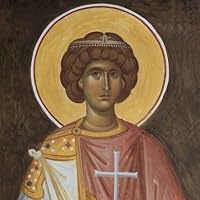
We have just celebrated the Solemnity of Mary, the Mother of God, so it seemed like a perfect time to review a book about her. The book I am reviewing today is called Mary of Nazareth: History, Archaeology, Legends, and it is published by Ignatius Press. The book begins by talking about the Advocata Nostra, which is the oldest icon in Rome and also the cover image of this book. The book then discusses the prophecy of a virgin birth, and how a lot of people tried to attribute it to Octavian the Roman emperor, but he clearly did not fit the bill. The third and one of the most interesting chapters to me delves into oral tradition and apocryphal books to give us a fuller picture on the life of Mary. The Proto-Gospel of James is the major source of inspiration for this chapter and discusses not only Mary, but James the Brother of God, which the Orthodox would say makes him Joseph's, but not Mary's son, and the Catholics would say make him Jesus' cousin.
Rather than continuing to go on and tell you about each and every chapter, I am going to give a brief summary now. The first eight chapters take us all the way up to Jesus' birth. There is a brief aside in the middle of the book, in which the author pinpoints when Jesus was born. The second part of the book talks about the time after Jesus' birth. We see the Flight into Egypt (to escape Herod), Mary's agony under the Cross, and Mary in Ephesus with John the Apostle taking care of her after Jesus' death and Resurrection. At the end of the book is a brief chronology; a very detailed bibliography of other books I now want to read; and most importantly of all, an epilogue on Marian devotion. This brief epilogue shows us that Marian devotion is not a new phenomenon but has roots in Scripture and Tradition.
This book lives up to its billing, as it does a fine job of mixing many different sources of knowledge to give us a detailed portrait of Our Lady. We already know we should have great reverence and devotion to Mary, but this book helps provide us with a wealth of information that should only make our devotion even deeper. What I appreciated most about this book is the variety of sources and interpretations the author (Michael Hesemann) used. It is very easy to get the Roman Catholic blinders on when it comes to matters of Church history and tradition, but within this book were Eastern Orthodox interpretations as well, which helps provide a fuller picture of the greatest saint of all. If you are looking for a fascinating and educational book on Mary for the new year, I highly recommend this one!
The book is riddled with historical errors. I was in disbelief when the author mentioned Alexander the Great's most pivotal battle at Gaugamela and got the date of 331 B.C. wrong. I gave it two stars--instead of one-- because there were interesting parts of the book. It did discuss Jewish Culture a lot in regard to the author's proposed role of Mary as a virgin worker in the temple until she was of age. It also gave another interesting tale of the house in Loreto 'miraculous' journey. However, the book makes a lot of assertions without any in-text citations or any notes in the back of the book.
The author also has a dating of Zechariah in the temple, which appears to be off in comparison to early Christians. A good text on the dating of the Zechariah is written by a historian named Nothaft at Oxford. He indicates that Zechariah is in the temple during the Day of Atonement. Furthermore, this is actually discovered by the source of Josephus, which the author mentions.
A very thoroughly researched book. If you like to mingle history and archeology with your theology, this is the Marian book for you. If you prefer a more classical approach to Mariology, dwelling on traditions and legends, then this book will be dry for you. "Mary of Nazareth" is very well researched and well written but it is the academic angle that was a hindrance to my enjoyment. It helps to reconcile the traditions of the early Church with dates and historical findings, which helps to contextualise early Christianity within Jewish traditions. This is a valuable insight in understanding where Mary, and the Holy Family, came from.
Detailed and at times charming account of the historical evidence of the life and times of Mary. Fascinating presentation and evaluation of the traditions and how many of them can be relied on to better know the Blessed Mother.
What was most compelling to me about this work was its idiosyncracy—this is a much more personal work than the survey-esque title might have you believe. Weirdly, schizophrenically rigorous throughout but with moments of poetic levity. A very German project, Hesemann is essentially performing a kind of Vergangengeitsbewältigung. Mary is truly “of Nazareth” here, studied as a Jewish women of the turn of the eras. It seems to be Hesemann’s attempt to help German Catholics build an appreciation for the Jewish heritage of their faith. Although it hit my American ass obliquely, I thought it was a wonderful reminder of the origins of so many Christian spiritual traditions that became unexpectedly timely as the Israeli siege of Gaza has intensified.
The author is an engaging writer, and was able to visit a lot of places he was interested in for this book, which was interesting. That said, I would have loved more footnotes (they are very rare) and he is constantly making assertions which I couldn't figure out where he was coming from (statements of a fact, then "we can thus assume"..."naturally implies"....well, but can we? I started fact checking all the stuff I could find. There are engaging bits of the book, but they don't always have to do with Mary herself.
He relies heavily on the proto-gospel of James, which is non-canonical and dated to the 2nd century C.E., so quite a while after the events of Mary. It is highly unlikely to be written by James although it was attributed to him. There's a reason, no one, including Catholics, included it in the canon, nor in the apocrypha.
He also makes a major error in his attempt to ground his belief in Mary being dedicated to the Lord as a Nazarite.
There is no evidence for this, although it is quite true that women as well as men could do this, but it is not at all true that Nazarites were forbidden from sexual relations. They were forbidden from grape products and wine, from exposure to dead bodies (even loved ones), and cutting their hair (see Numbers 6 for the list of restrictions).
He states for his case the case of Hannah dedicating Samuel. She did, but it is very clear if the author had read the whole of scripture that Samuel had sons. And this cannot be misinterpreted, because it not only NAMES these sons (Joel and Abijah) and lists Joel as the firstborn (which the author here later goes into great detail about the word "firstborn" in reference to Jesus), but it is one of the whole reasons Israel asked for a king was because Samuel's sons were dishonest and did not follow Samuel's example (see 1 Samuel 8: 1-4).
This massive Biblical error is not something that should be overlooked. The idea that Samuel was celibate is not a major tenet of Catholicism or Christianity in general. There have been a few factions over the years, mostly those who believe, unsupported by scripture, that celibacy is somehow much better or more holy than marriage, but the idea that Samuel was celibate cannot be supported, in any way, by Scripture. It made me question everything else he wrote, because if he could miss something this obvious, what else is incorrect in the book?
This author is passionate about his beliefs, and not unenjoyable to read, but it felt much of the read like sitting with your friend during dinner who suddenly takes left turns into conspiracy theory territory, while I am politely listening.
If you are interested in some of the history of Herod the Great, he did a good job with that, and the chapter on Loreto was interesting though I really had no initial interest in that. But if you want any sort of actual history about the life of Mary, and what her life may have been like, especially if you want sources with a lot more credibility than some he used, this may not be the book for you.
This is a book I read because a friend bought it and wasn't interested in it. I found it a bit difficult to get into, because it's not my kind of book, but once I did get into it I enjoyed it. Probably because it was something I wouldn't normally read. Lots of information from traditional and apocryphal sources along with adventurous journeys in and around the Holy Land made this an informative and enjoyable book.
Hesseman presents very interesting historical arguments concerning the person of the Virgin Mary. The only downside to this book is the lack of detailed academic references/ footnotes to the sources he cited so that I could explore these topics further. As with any history book, this presents interpretations of evidence. One should do some research to reach their own conclusion.
This was a gift and so a labor of love to get through it. While I did glean historical information, it was not the type of book I would normally choose. Having said that I did mark several pages that contained interesting tidbits.