Sanatçı, ister bir dahi olsun ister bütün zamanların en büyük yaratıcısı, sonuçta aynı havayı soluduğumuz, benzer çelişkilerle boğuştuğumuz bir insandır. Sanat ve edebiyat filozofu Tzvetan Todorov, bir sanat eserinin ilettiği mesaj ile yaratıcısının hayat tarzı ve gündelik yaşamı arasındaki ilişkiyi irdeleyerek çoğu zaman unutulan bu basit ve temel gerçeği son derece yalın ve berrak bir dille hatırlatıyor.
Genelde hepimiz gibi "geçinmek için" eser üretmek zorunda olan sanatçının gündelik yaşamla ilişkisini büyük ressam Rembrandt örneğini ele alarak aktaran Todorov, gerek ressamın tablo ve gravürlerinden bize uzanan insani değerleri gerekse sıradan bir hayat süren bu aynı kişinin eşleri, çocukları, yakınları ve komşularıyla arasındaki ilişkiyi gözler önüne seriyor. Ya Sanat Ya Hayat, aslında eserin de sanatçının da aynı hayatın içinden beslenerek karşımıza çıktığını gösterirken ikilemi tersine çeviriyor: Hem sanat hem hayat!
Kitabın ikinci bölümünde ise, bu kez bambaşka bir noktadan, sanat ile ahlak arasındaki yüzlerce yıllık çatışmadan yola çıkan Todorov, Iris Murdoch üzerinden dünyaya, hayata duyulan sevginin hem sanatın hem de ahlakın temelinde yattığını gösterirken, yine hem sanat hem hayat demektedir.
Bunca karmaşa ve kafa karışıklığı içinde yaşadığımız, sanatla hayatın bağını çoğu zaman kaçırdığımız günümüzde, ayakları sağlam bir zemine basan açık ve net çözümlemeler, yorumlar okumak, hayata ve sanata yeniden inanç duymak isteyen herkese...
In Bulgarian Цветан Тодоров. Todorov was a Franco-Bulgarian historian, philosopher and literary theoretician. Among his most influential works is his theory on the fantastic, the uncanny and marvellous.
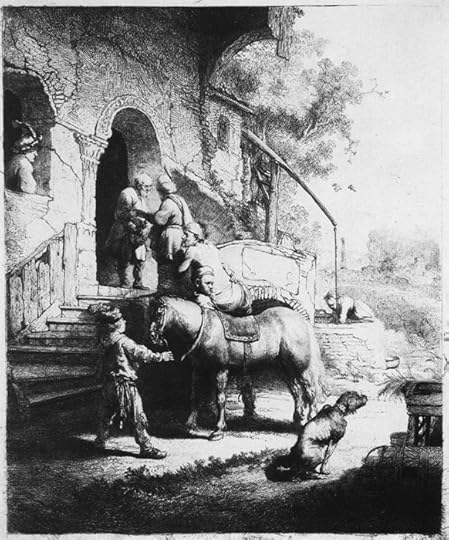
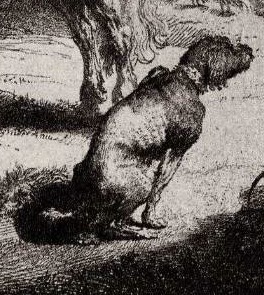
Rembrandt answering the Call of Art while his dog answers the Call of Nature…
…....
I finally have picked up a book by Todorov. I was drawn to this volume first because as I am lately exploring Dutch art, I wanted to read his views on Rembrandt.
With The Case of Rembrandt Todorov’s aim is to trace the painter’s creative process. For this he concentrates on what he calls Rembrandt’s ‘intense years’. This period covered the time he was married to Saskia. He wed her at the age of 27 in 1633, and became a widower at 36, in 1642. These were nine fruitful years.
In this pursuit Todorov indirectly raises another topic—one that has been discussed several times here in GR. Can the life of an artist (or of a writer) explain his work, or vice versa?
Interestingly, before engaging in his quest, Todorov presents Rembrandt against the backdrop of the painting tradition he had inherited, precisely because he did not belong to it. He was undoubtedly the most admired painter by his Dutch contemporaries and has been considered throughout his posterity as the topmost artist from 17C Holland. Yet, his art contrasted with/stood apart from that of his peers.
Todorov has another book dedicated exclusively to Dutch 17C painting Eloge du quotidien : Essai sur la peinture hollandaise du XVIIe siècle, but it is now out of print and frightfully expensive -- I am considering getting hold of it in a cheaper copy – a translation. But in the essay on Rembrandt he reminds us of the novelty that a new kind of painting had in the Netherlands and the great success it had. This new mode extolled daily life (éloge du quotidien). Todorov reminds us that this was the first time that the banal – scenes of meals, sleeping, house-concerts, care of children, cooking and cleaning – were treated with veneration. This was an art in which the individual and identity did not matter. It was the action, the performance, and the situations, which did matter. Furthermore, this art was not textual, like the reputed History painting, which relied on myth and religion and the past, as represented in texts. Instead the thematic sources of import surrounded the painters and were part of their observable lives. Daily.
Even if several other historians consider this painting of common life as entirely visual and descriptive (The Art of Describing: Dutch Art in the Seventeenth Century), Todorov does not agree. He insists that the common object, the common person, the common spectacle are rich in symbols and loaded with morals of transcendental weight.
It is out of this background that Rembrandt is singled out: his concerns were neither the everyday nor a coded morality.
So, how did he come to produce this different vision?
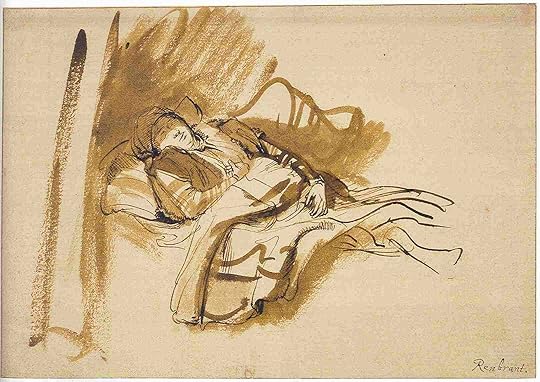
For Todorov does start to find visual parallels in Rembrandt’s art and with episodes in his life during the selected period. He did depict that which surrounded him. During those years with Saskia, when they had four children, he paints her many times. He also draws many scenes with children. And when Saskia fell ill, he draws women lying an suffering in sickness. And he paints himself too. He was always there in his world.
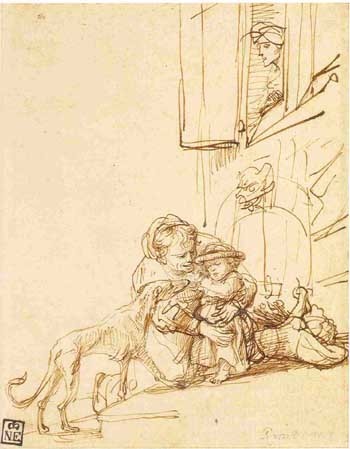
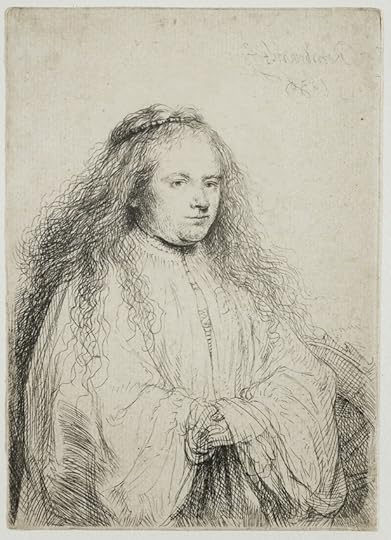
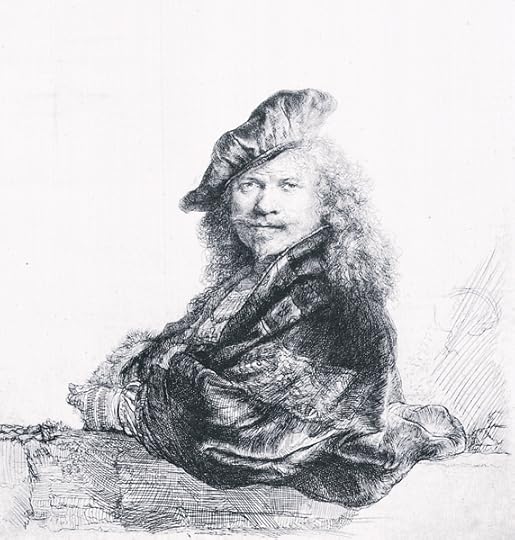
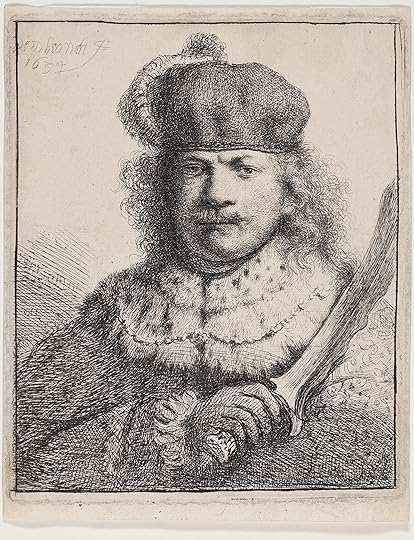
In this study Todorov refers to many paintings, but he does not include their reproductions. We have to google them and it is worth dedicating time to doing so, because we can then detect that Todorov has looked at them carefully. But the pebbles he has included to guide our way are not the finished paintings, but drawings and etchings. We are thankful he has included them since they are a lot harder to locate in the web. Those helped him more distinctly to find his search of the creative process.
And with these Todorov discovers that if Rembrandt starts contemplating his life, his art departs and takes him off --elsewhere. These sketches indicate that Rembrandt moves away from the particular, for even if some aspects of his life around him have awoken his awareness and sensitiveness to certain themes or subjects or scenes, by the time he has represented them he has generalized the traits, the particulars, and offered to us scenes of a more universal humanity.
For example, during this period when he and Saskia had four children, Rembrandt drew children repeatedly. But these studied children were not his own. They are mostly toddlers, while their children died soon after birth. Only the last one, Tito, survived, but the drawings antedate him. The painter must have been capturing those seen around him, in the street, with the neighbours, but not at home. As a mourning father: what did he feel when he painted these alive children? Is this even a valid question? May be the question is: as a painter, what attracted him in those scenes?
A similar point could be made of his portraits of Saskia. She is shown in different guises, and showing different moods. Some are happier images others are less so. Infant mortality and financial concerns had to shade her disposition. And yet, her portraits do not seem to portray her in all her individuality. Her effigy is hers but it seems borrowed and applied for other settings and other figures, some historical, some biblical. Her joys and sorrows are taken out of her own private context. Rembrandt transfigures Saskia into delivering a more general human side.
This can also be ascertained when he depicts her in her sickness. Although her last child survived, she contracted TB and died soon afterwards. Rembrandt drew her with sharp inquisitiveness but also with a certain emotional distance. She and her sad surroundings are observed and recreated with great empathy; but she is deprived of her own particular identity as his wife.
That Rembrandt painted himself repeatedly notorious, and during this particular period he devoted himself to this too. Out of the forty to fifty paintings of himself about twelve were produced during this nine-year period. This centring the subject back to himself is what brings most clearly to the fore the debate about the relationship between the life and the work of an artist. Self-portraits could be compared with Memoirs or with semiautobiographical novels in the literary world.
In Rembrandt’s self-portraits what may seem an obsession with representation lacks narcissistic tones. He does not seem so concerned with his own individual ‘looks’. Instead, it is the theatrical, the inventive use of accoutrements, the becoming of someone else, the disguising transformation of a travesty, the individual emulating a type, that he has given to stare at us in those paintings. Outstripping and stripping himself he becomes just anybody.
Rembrandt’s art then sets off from the life that surrounds him, or is embedded in him, but that is not what he represents visually. He strives for more general situations, more universal, more extensive to all humans, estranging himself if necessary. If his contemporaries had aggrandized the daily, Todorov says that Rembrandt humanizes the divine.
And so there is moral message in Rembrandt either.
…….........
The second essay, Art and Morality, was more absorbing that I had expected. Todorov traces the dogma that was passed on from classical times and survived until the Enlightenment, that aesthetics and ethics go hand in hand. Then modern aesthetics formulated an independent role for Art. The issue was no longer Art and Nature, but the Nature of Art.
As I have been lately reading more about the early German Romantics (Frühromantik), and the profound change they brought about to Western Aesthetics, I welcomed Todorov’s survey. But the most interesting section for me was his chapter on the beliefs of Iris Murdoch, because I knew nothing about this. She defended that Art went beyond the Self, because it was itself the Consciousness of that which existed outside the Subject.
T. Todorov deneme yazarı ve eleştirmen. Bu kitabında bir sanat eserinin yaratıcısının hayat ile olan ilişkisi üzerinden sanat ile ahlak, sanat ile hayat ilişkisini irdeliyor. Kitabın büyük bölümü ressam Rembrandt üzerinden anlatılıyor. Sanatçının gündelik yaşamıyla eserleri arasındaki bağın varlığını ele alıyor. Daha sonra farklı düşünürlerin görüşlerini değerlendirse de ağırlığı Irıs Murdoch’a veriyor. Dili çok yalın, fazla derinleşmeden, Rembrandt’ın desen ve gravürlerinin görselleriyle iyi bir okuma sağlıyor. Edebiyat ve sanatın teoriğiyle ilgilenenlere yararlı olacak fazla iddialı olmayan bir kitap. Öneririm.
Mükemmel bir eser Rembrandt Temel’inde felsefe okumak isteyenlere tavsiye ederim Ayrıca sanatçının müzelerde göremeyeceğiniz gravürleri ve kara kalem çalışmalarını da derin anlam ve dönem perspektifini görebileceksiniz
I appreciated the book, yet I couldn’t help wishing it had widened its lens. Rather than circling so insistently around Rembrandt alone, it might have strengthened its argument by presenting a constellation of brief case studies—poets, painters, and other artists whose lives and contradictions could have illuminated the theme from different angles. A single star, no matter how brilliant, cannot map the whole sky.
Midway through, the narrative abruptly loosens its grip on Rembrandt and turns toward a broader history of the relationship between art and morality. The shift feels sudden, almost disorienting, as if the ground beneath the reader quietly changes texture. What began as an intimate portrait becomes an abstract meditation, and the thread between the two is not always easy to follow.
I also found the emphasis on Rembrandt’s more toxic masculine traits somewhat detached from the central inquiry. While such details may complicate a portrait, here he seemed to drift, untethered, from the book’s larger philosophical concerns.
By the final pages, everything accelerates. The arguments compress, conclusions arrive in swift succession, and I struggled to steady my attention as the book hurried toward its end. I closed it with admiration for its ambition, yet with the lingering sense that its insights—like light refracted too quickly—might have shone more clearly had he been given a wider and more patient frame.
Dünyada kendini en çok resmeden Rembrandt'ın resimlerinin karşısında tek tek imgelerin anlamını soruşturmalı mıyız ? o 17. yüzyıl Hollandasını yeterince yansıtmış mıdır? çağdaşı Hollandalı ressamlardan nasıl öne çıkmıştır? Otoportrelerinde herkes olmuştur artık kimse değildir. Sanatçı yazdığı veya resmettiği anda üreteceği etkiyi umursamamalı ve eserin mükemmeliyetini düşünmelidir.
Me encantó conocer más de la vida y obra de Rembrandt a través de este ensayo, que además nos plantea una pregunta central en la filosofía del arte, ¿qué tanto debe sacrificar un artista sus vínculos, su estado de ánimo, su vida, con la misión de lograr una obra?¿Somos nosotros como espectadores los que exigimos de alguna forma ese sacrificio?
Un libro a mi parecer muy bueno para aquellos a los que le interese el arte. Siendo el primer libro que hace referencia a este tema, creo que fue un buen comienzo y espero seguir leyendo mas sobre ello, ya que me sirvió para comprender como las obras pueden cuestionar una jerarquía, como puede acercar el pensamiento y lo lejano a la cotidianidad, al mismo tiempo que el autor se aleja de su propio yo para poder alcanzar su objetivo. Lo releeré de seguro, ya que sobre todo el tema de la moral me gustaría profundizarlo y debido a mi inexperiencia en el tema, porque no me cabe duda de que se me pasaron ideas de largo.