Новата книга на Джипи е чудо... Трудна за преглъщане, бурна, горчива, безпощадна и в същото време чудо. Историята ѝ е минималистична, първична и започва от края – от края на всички истории, защото героите са мъртви, мъртви са авторите, мъртво е самото писане... Ето затова трябва да се четат книги: за да те захвърлят във вихър от емоции, който добре да нашамароса целия ти свят, да го преобърне и да те остави на ново и сияйно място... Corriere della Sera
“Земя на синовете” е съвършено различен от предишните му романи, но и тяхно логично продължение: както в “С.” или “Зле нарисуваният мой живот” и тук има отношения бащи-синове; както в най-първите му работи (“Целувки от провинцията”) и тук има покрайнини без име и усещане за празнота, което от околностите се просмуква в душите. Няма я само явната автобиографичност, но така или иначе Джипи не е способен да направи комикс просто за разтуха – той изтръгва всяка страница от дъното на душата си... Джипи не се занимава със злободневие, политика и моди, не предлага удобства на читателя. Затова именно неговите комикси ще останат. Il Fatto Quotidiano
Увлекателен, наситен, доставящ удоволствие комикс в неговата най-изчистена и честна форма – квинтесенция на разказа в последователни картини... Тази антиутопия минава по пътя, прокаран от класици от Джак Лондон с “Алената чума” през Филип К. Дик до “Сблъсък” на Стивън Кинг. ...а откровената мизерия, която заобикаля главните герои, е способна да се превръща в дива красота. La Stampa
“Земя на синовете” е книга-река – заради темите и мощта си, – която не е просто разказ за бащи и синове и обич и привързаност, не е и само манифест или критика на всичко повърхностно и лицемерно, а още толкова много неща. Многопластова, въздействаща и страшно (защото на места причинява истинска болка) лична. Черно-бели рисунки, оскъдни думи и лица, които изплуват като дървени скулптури... L’Indice
Италианският художник Джипи няма равен в обрисуването на юношеството... The Wall Street Journal
Джипи ни изправя пред екстремни, варварски, примитивни ситуации... в книгите му няма да намерите лесни отговори, а само силни страници, всяка от които е рисувана сякаш е последната. И в дъното на всичко – собственото ни лице без лифтинг, с всичките си бръчки. La Repubblica
Работата на Джипи е зряла и почти брутална в онова, което заявява на всеослушание: комиксът е точно толкова изкуство колкото литературата, музиката, живописта. Il Venerdì di Repubblica
Новият Джипи не използва акварелите, на които дължи славата си – в “Земя на синовете” предпочита море от тъмен туш, особено ефектен в постиндустриалните панорами от последната част на книгата. Две момчета трябва да се справят с особено предизвикателство – дневника на своя баща, – докато бродят из свят, съсипан от хората, където езикът е сведен до допотопно състояние... Десет години след комикса си “С.” Джипи се завръща към темата бащи-деца, този път чрез разказ за премеждията на синовете. Rolling Stone
От шедьовъра си “еднаистория” насам Джипи все по-вярно следва своята интуиция и в почти шамански транс се стреми към корена на човешкото, към същината му... В тази книга той ни подарява един от най-красивите завършеци за последните трийсет години – финал едновременно на надеждата и забравата. L’Internazionale
В новия комикс на Джипи всеки щрих е премерен, всяка чертичка тежи на мястото си. Изключителен синтез на формата и изразителността, плод на внушителен труд. Wired.it
Четеш антиутопичното бъдеще като метафора за настоящето и си мислиш, че човекът, оголен от всичко, си остава едно бясно и трагично животно. И че търсенето на обич и разбиране е мъчно, често обречено, но не бива да се отказваме. Това именно е посланието на книгата. А великолепните рисунки само ни помагат да повярваме. Smemoranda.it
Gianni Pacinotti, better known by his pen name Gipi, is an Italian illustrator and comic book author. Gipi is regarded as one of the most influential Italian cartoonists of his generation. His graphic novels are perennial best-sellers in Italy and have received international acclaim. Pacinotti was born in 1963 in Pisa, Italy, where he still lives. He started his career as an illustrator for the publishing and advertising fields. Since 1992, Gipi has created illustrations and comics for several Italian magazines and newspapers, such as Cuore, Il Clandestino, Il Manifesto, La Straniero, Internationale, La Repubblica. Gipi's graphic novel Note per una Storia di Guerra (Notes for a War Story) won the 'Best Book Award' at the 2006 Angoulême International Comics Festival in France. His other notable works include: LMVDM, La mia vita disegnata male (2008, translated as MBDL, My Badly Drawn Life), unastoria (2013, translated as One Story), La terra dei figli (2016, translated as Land of the Sons), Momenti straordinari con applausi finti (2019). He also teaches and has directed the film The Last Man on Earth (2011).
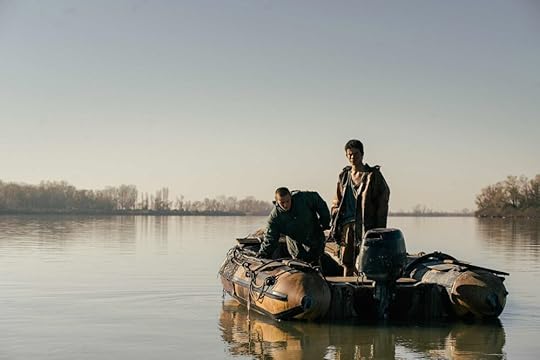
Acqua, barche…Mare? Lago? Fiume? Più probabilmente laguna.
Sulle cause e i motivi che portarono alla Fine si sarebbero potuti scrivere interi capitoli nei libri di storia. Ma dopo la Fine nessun libro venne scritto più. Questa l’epigrafe della graphic novel di Gipi.
Siamo, infatti, davanti a una storia distopica, ucronica: la Terra ha subito una Fine, per motivi che non vengono spiegati – quello che esiste è un mondo alquanto terribile, che si spera di non conoscere mai di persona. Sopravvissuti che impiegano il tempo a procacciarsi cibo, spesso avvelenato – a difendersi, perché il pericolo e la minaccia sono di casa. Una società per molti versi ritornata primordiale. Una Terra post apocalisse luogo di brutalità, miseria, denutrizione, violenza, ignoranza, superstizione, prevaricazione. Cadaveri sfigurati emergono dall’acqua, appaiono tra le canne. Un mondo senza bellezza che i bei disegni di Gipi (senza colore) trasmettono magnificamente.
Il padre e il maggiore dei due figli.
Gipi mette in scena una specie di storia familiare, col padre che cresce i figli preparandoli allo scontro, educandoli alla sopravvivenza, con la durezza che ormai regna sovrana. Il padre sa scrivere, i figli non sanno leggere e l’uomo si guarda bene da insegnarglielo: leggere e scrivere mal si conciliano con la durezza necessaria per sopravvivere. Si ignora cosa sia una carezza. Ma quando se ne riceve una, non si rimane insensibile. Anche una storia di formazione di due fratelli senza madre, una famiglia mutilata.
Un’altra coppia di fratelli, questa ben più inquietante.
Si mangiano cani, si pratica il cannibalismo, il sadismo per alcuni è pratica comune (i discepoli della setta del dio Fiko governati dall’Uberprete, società nella quale contano i like di gradimento). La lingua è incerta, essenziale, ma anche senza grazia. I riferimenti sono tanti: per me il più immediato è stato il romanzo di McCarthy, “La strada”. Solo che qui il paesaggio è molto diverso, prevalentemente acquatico, le barche sono il mezzo di trasporto più usato.
Ed ecco il fratello minore, forse il vero protagonista, divorato dalla voglia di sapere cosa è scritto nel diario del padre.
Nessuna didascalia, nessun narratore, nessun fumetto con i pensieri dei personaggi, dialogo asciutto, disegni che evocano e suggeriscono anche per quello che non mostrano, per quello che rimane fuori dal quadro.
Si cacciano i cani, anche i cani sono selvaggina.
PS Nel 2021 è apparso il film tratto da questa graphic novel. Stesso titolo, regia del bravo Claudio Cupellini, scritto dai suoi fedeli ‘pard’, Filippo Gravino e Guido Iuculano, girato nel Polesine, con un cast interessante (Paolo Pierobon, Valerio Mastandrea, Valeria Golino, Fabrizio Ferracane, e poi Alessandro tedeschi, Franco Ravena, Maurizio Donnadoni), rende bene atmosfera e situazioni. Secondo me, merita.
This might indeed be a 5 star book, but it is, in the tradition of McCarthy's The Road, Lemire's Sweet Tooth an absolutely brutal dystopian graphic novel that features an ailing father and two surviving sons. The father keeps a journal, but the boys can't read. Survival is almost secondary for one boy to learning what is in this journal that reflects on their early life, their mother, and their father's true feelings for them (since he forbids words like love and caring, because they can only lead to pain).
The time is The End, after "The Poisoning," and now it is all about survival of the fittest and meanest. Or is it, as in The Road? The boys find a slave girl that two "deformed" (let's call them physically disabled) twins are using to bargain with a brutal group with some quasi-religious pretensions. They also find a middle aged woman who they see as "good people" to face the future with. So you have been warned, this is brutal and even nightmarish and about family and love and caring, maybe just the slightest threads of those impulses, but they keep hoping, striving, on their road. That the boy eventually finds someone to tell him even a little of what is in the journal is central to any hope in the story.
Hard to read, but more hopeful than the dystopian series Crossed, by Garth Ennis, which I couldn't continue reading. This is the third graphic novel I have been able to get in English from Gipi. One, Garage Band, is really a short story in comparison to this, and lighter, feels like memoir. A second one, a little more developed, Notes for a War Story, which is similarly episodic and coming-of-age to Land of the Sons, is about two brothers also just trying to survive in an endless war.
These books are really preparation for his magnum opus, this book, which I would read with The Road, or with something like Alone by Chabouté, which is to say that Sons is an allegory for facing The End of anything, of devastation, of personal tragedy or global disaster. Powerful. This is Gipi's best realized artistic accomplishment, in delicate (black and white) pencil drawings.
Това е най-новото и най-нетипичното от Джипи (джи-пи = джъ-пъ = G.P. = инициалите на Джани Пачиноти :), най-събраното, най-еднородното, най-чисто фикционалното и единственото в жанра постапокалиптична антиутопия :) Дано някой не много далечен ден ми се наложи да преведа и "еднаистория", и "С.", и "Зле нарисуваният мой живот", защото са страхотно впечатляващи и вълнуващи, а акварелите (специално в "еднаистория") са истински произведения на изкуството.
La Toscana post-apocalittica alla Mad Max (senza moto corazzate e chitarre lanciafiamme) se la poteva inventare solo Gipi.
I disegni, belli belli. La narrazione è tesa e sempre avvincente, ma si prende tutto il tempo di respirare nell'ambientazione, un mondo finito ancora attraversato da qualche vita allo sbando.
A poco a poco si scoprono lati inaspettati su Lino, suo padre e i pochi avanzi di società umana che incontrano. E il bello è che a ogni risposta spunta una nuova domanda.
È una storia che mi ha lasciata soddisfatta, un po' disorientata, e con la voglia che non sia davvero finita. Infatti non lo è: da qualche parte nella mia testa continuo a immaginarmi tutto quello che non è stato detto.
Cute (???) little portrait of a dystopian future. Not that cute, in reality. Lots of death and sexual brutalities. And no food and therefore scavenging. And the thing that always remains even if you remove all the shit around us: love. You’ll see it coming, but that’s never stopped anyone from reading anything before, has it?
La tierra de los hijos es una cruda distopía con un dibujo casi igual de crudo y monocromo, un sálvese quien pueda en la línea de La carretera de Cormac McCarthy. Al igual que esta, gira en torno a la relación paterno-filial en un mundo muy poco propicio para criar hijos, pero las viñetas permiten más silencios y más espacio. Hasta ahora es de lo que más me ha gustado de Gipi.
Из интернет форумите бях срещал основно суперлативи за тая графична новела, но черно-белият уродлив арт в зърнатите тук-там панели години наред ме държеше на разстояние от нея. Все пак, миналата седмица импулсивно я добавих в онлайн кошницата и сега, час и нещо, след като я разгърнах, и просто не можах да я оставя, докато не я изядох с кориците, съм изключително радостен, че ѝ дадох шанс. Артът, признавам си чистосърдечно, така и не успя да ми се понрави, обаче постапокалиптичният сюжет беше брилянтно разгърнат, даже в моите очи се оказа шедьовър от ранга на "Пътят" на Кормак Маккарти.
За причините и обстоятелствата, довели до края, могат да се изпишат десетки глави в книгите по история. Но след края книги вече не се пишеха.
A mean and nasty post-apocalyptic tale about unlikeable people killing and dying. There's some stuff in here about a son trying to get to know his emotionally distant father, but not enough to make it interesting for me.
Read Cormac McCarthy's The Road for a better story of a father and son surviving after the fall of civilization.
In some ways, Land Of The Sons is The Road in comics form. It's missing McCarthy's lovely bleak writing but has in its place Gipi's lovely bleak writing-with-pictures.
In some ways, this post-apocalyptic story is like all the other post-apocalyptic stories and we know what to expect. Societal collapse, anarchy by way of pocket monarchies, cannibalism, rape, strength as right-to-power, and the last gasps of religion. That's all here, as one would expect from the genre. But there's a little bit more too that pushes the book to the surface to which the better post-apocalypses rise.
Just as The Road is about a father's love, so too is Land Of Sons. And sons' love for their father. It's a bit more circuitous than The Road, but its also right there in the book's title. As well, Lino and Santo are largely referred to throughout the book by those who know them as "the sons." That the book is principally about relationship is clear despite how much of the page count the father and his sons spend apart from each other.
Amusingly, there's a running quest throughout where Lino is trying to find someone who can read a notebook he's acquired. The plot hinges on its importance, but simultaneously, it could be read as Gipi making a small argument for the value of comics: in an illiterate world, people can still read pictures hopefully. ___ The only aspect of the story that I was on the fence about was the specialized fetishistic jargon the religious sect has adopted. They are known as the Followers (a name culled from social media) and their speech patterns are peppered with terms culled from the contemporary tech landscape. It felt a bit off BUT simultaneously I can never predict the next inanity that will jump into the lexicon of the moment, so who knows? Maybe more plausible than I'd guess.
Boníssim. Comença com una novel·la de David Vann i continua com una barreja entre el The Road de Cormac McCarthy i Mad Max de George Miller. Aventura apocalíptica clàssica, de pocs personatges, cruel, dura, que mena per indrets ja coneguts però no per això menys tenebrosos. De fet, si té alguna pega és que és previsible perquè tot plegat ja ho hem vist o llegit abans, però tant li fa perquè és una història explicada amb emoció i sense contemplacions. I quin dibuix, per favor. Quina narrativa visual. Quina força a cada vinyeta.
Farklı bir yok oluş ya da dünyanın sonu senaryolarının sonrasında hayatta kalanların yaşamına değinilmiş gibi bir senaryosu olan farklı bir çizgi roman. Bir aile üzerinden gidilmiş ve aile bireylerinin günümüzde normal sayılanlardan ne kadar uzak olduğu, dünyanın artık bunlara uzak olduğunu anlatmış. Mad Max tarzı bir atmosfer ile Viggo Mortensen'in The Road filmi arası bir dünyayı çağrıştırdı bana. Benzer bir sonrası dünya tasviri. Tabi bir diğer gönderme daha var çizgi romanda. Okuma bilmeyen cahillerin, sözde bilen ya da gerçekten bilen ama kafasına göre, çıkarına göre yorumlayan ve öyle lanse edenlerin, toplumları yönettiği bir düzen var. Az biraz fazlası olsa da bir yerlerden tanıdık geldi mi? Özellikle ülkemizin içinde bulunduğu ve her geçen gün daha büyük bir bilgisizlik, cahillik ve zırvalar havuzunda çırpındığı şu günlerde... İster istemez bu duruma bir şekilde geliniyor işte. Sinirler yıpranıyor ve abartılı gibi gelse de okunan, az biraz yumaşatıldığında içinde bulunduğun, yaşadığın toplumu ve hayatı görüyorsun ister istemez. Sözün kısası alınız ve okuyunuz.
the art in this book is fantastic. The author has built a bleak, mean post-apocalyptic world - but you don't really get to know much about it through the story -- which is probably for the best. It's really about two sons who lose their father and how they navigate the world after that.
Nunca havia lido nada de Gipi e que surpresa do caralho!
Tudo é perfeito nesta história pós-fim-do-mundo desde os traços brutos e 'esquizóides' de Gipi até a trama quase sem diálogos, tudo é sentido no olhar dos personagens, nas cenas, na composição dos quadros e no que não é dito.
Brilhantemente, não se explica ou informa sobre qual foi a catástrofe que se abateu sobre a humanidade e isso é de pouco importância, basta saber que tudo que um dia foi conhecido não mais existe e, nesse mundo sem eixo, um pai luta para criar seus dois filhos.
Ciente de que o mundo agora é outro, ele cria os meninos feito feras, sabe que a única chance de sobrevivência para eles reside em serem apenas animais, sem consciência, sem afeto, sem carinho, sem humanidade, em não-ser. Ele é o único elo entre os meninos e um mundo que morreu, mantém essa lembrança viva para si talvez como escape, para manter alguma sanidade ante o ato cruel de estar criando seus filhos sem qualquer esperança, que não saibam como eram as coisas antes, não sabem ler e assim, evitam maiores desgostos e desventuras afinal, num mundo onde só interessa a sobrevivência, saber ler e escrever é algo sem utilidade e até mesmo perigoso pois 'amolece' o espírito e a mente.
Para os meninos, o pai é um mistério a ser desvendado, não entendem nada que seja força bruta mas, aqui reside a magia da novela, mesmo sob essas condições pode florescer o espírito humano, embrutecido é verdade mas ainda vivo e pronto para ceder e voltar ao menor sinal de amor e afeto.
No fim, a pergunta é o que vale sacrificar para sobreviver, a humanidade ou o humano?
Pocos libros he leído en mi vida tan perturbadores e inquietantes como este cómic postapocalíptico en el que un padre y sus dos hijos tratan de sobrevivir a un mundo mermado por una hecatombe de origen desconocido. Las líneas duras y cortantes de Gipi sirven para esculpir un mundo de supervivencia en el que la ternura o el amor no tienen espacio, ni si quiera en las relaciones familiares, debido a la dureza del entorno. Los personajes principales están casi desprovistos de humanidad después de haber sucumbido a un nuevo orden natural. La historia tiene retazos de algunas obras maestras del género fantástico (ciencia ficción, apocalíptico, gore): una familia que sobrevive a la manera del padre y el hijo de “La carretera” (Cormac McCarthy, 2006) sobrevive en un mundo con criaturas dignas de “Las colinas tienen ojos” (Wes Craven, 1977) y se embarcan en una aventura a lo “Mad Max: Fury Road” (George Miller, 2015) con un subtexto al estilo de “El libro de Eli” (Albert y Allen Hughes, 2010). Maravilloso. Imperdible. Una joya del género.
Един баща не желае да предаде значението на всички думи на децата си – “любов” например е излишна. Не ги учи на изкуството на четенето. Не ги допуска да излизат от една тясна зона, чиито обитатели са… особени. Живеят ден за ден, с малък речник и много мъка около себе си. Двамата братя трудно оформят своите мисли и желания, единствено омразата им е лесна и достъпна. Светът около тях наистина е загубил цвят, в него няма радост и щастие – сякаш ведно с човечеството и цивилизацията са изчезнали и цветовете. В момента, в който двамата излизат от този пашкул, става страшно.
Изданията на „Жанет 45” никога не са се водили по модни тенденции, те по-скоро създават такива. Така че изданието „Земя на синовете” е колкото логично, толкова и изненадващо. Логично, защото в момента, в който от „Жанет 45” са решили да издадват и комикси със сигурност никой не е обмислял комерсиални супергерои и мейнстрийм марки. Неочаквано, защото графичният роман на италианския художник Джипи наистина е нещо нестандартно и разширяващо представите за седмото изкуство. Прочетете ревюто на "Книжни Криле":
Un futuro postapocalittico. Un romanzo in bianco e nero, che inizia muto e dove le parole arrivano poco per volta. Un'Italia dopo la civiltà, tra i superstiti di qualche assurda catastrofe, veleni, guerre. L'amore di un padre per i figli, il ricordo di ciò che era, la consapevolezza di quanto richiede invece il nuovo mondo in cui vivranno, la terra ereditata dai figli.
Un'opera che parte quasi in sordina, per poi colpire duro.
A brutal dystopian comic in the vein of McCarthy’s The Road. I really was engrossed for most of it but the end feels like it rushes through a lot of plot following more interesting meditative scenes of these characters surviving in a poisoned land.
Llegamos a Gipi por Daniel, y Daniel llegó a Gipi por Sebastián, que tenía uno de sus libros por algún motivo nunca demasiado claro para nosotras. Lo leímos, ese libro, en préstamo, y tanto a María como a mí nos gustó, y a Daniel le gustó. Este mes, cuando María iba a cumplir años, el grupo del Quijote (les amigues con quienes leemos semanalmente alguna cosa) preguntó que libro regalarle, difícil decisión ahora que María lee todo descargado en Kindle (en esta casa reconocemos la piratería como un oficio artesanal como cualquier otro). Daniel recordó a Gipi, y recordó que existía este libro de Gipi y que María en físico lee los libros ilustrados. Así llegó a la casa La tierra de los hijos y una noche toda llena de perfumes y de música de alas empecé a leerlo. Lo terminé esa misma madrugada, en un insomnio trepidante de distópicas canciones.
La tierra de los hijos es un punto intermedio entre Mad Max: Fury road y Captain Fantastic. Habla del mundo después del fin del mundo, y de criar hijos en el mundo después del fin del mundo. De alguna manera, supongo, podría uno verlo como un comentario sobre la paternidad de la posguerra, como esa dinámica de legar el trauma que habita en el corazón de quienes juran que de ese modo comparten un tesoro: el grial de la supervivencia, la enseñanza de lo arduo y brusco y brutal y mustio y seco y árido y cortante que es el universo, y mejor que aprendan a luchar, y mejor que no se acostumbren al cariño que no otorgan las pedradas, y mejor que sean parcos, y fuertes, y que no haya grietas por las que se cuele la ternura o la misericordia porque nadie será con ustedes tierno o misericordioso.
La historia es sencilla. Un padre, en un mundo postapocalíptico, se dedica a criar a sus dos hijos. Lo hace, según la ley de la supervivencia, sin amor o cariño: sólo dureza. Golpes para que aprendan y sigan las reglas. Voz recia. Advertencias. Normas. Enseñanza práctica. Lo que consigue son dos adolescentes bestiales, hábiles en todo lo que significa llenar la panza y no caer mutilados por fieras o enemigos, rápidos, de cuerpos graníticos. Luego el padre muere, y el cadáver se echa al río, con peso en los bolsillos para que se hunda, como se debe hacer con los cadáveres. Entre las cosas del muerto queda un cuaderno, lleno de texto. Los hijos no saben leer, y emprenden entonces la búsqueda por un intérprete. Porque alguien tiene que saber dilucidar lo que el padre puso allí, lo que pasaba tantas horas gestando, a lo que dedicaba el tiempo que podía dedicar a estar con ellos.
El cuaderno es un diario. Los apuntes son apuntes cotidianos. Esto lo sabremos luego, cuando sigamos el viaje de los hijos a través de un universo demencial, ocupado por sobrevivientes caníbales envueltos en el delirio religioso de un líder totalitario. Sobreviven, los hijos, a fuerza de sus aprendizajes, o mejor, a pesar de sus aprendizajes. Hay algo cálido en ellos, hay algo tierno que se muere por expresarse. Algo que tiembla para brotar por un rasguño. Algo que anhela un recipiente para derramar la tibieza del sabernos juntos y rotos y atemorizados en este bendito mundo que habitamos.
De la trama y los dibujos y las acciones baste decir que Gipi sabe decir y entretener, que uno pasa por las viñetas con alucinación cinematográfica y que cualquier otra cosa suya sobre la que pueda poner los ojos seguro me detenga en una lectura compulsiva. Del final, me basta el arco, tan viejo como los errores, de que toda resquebrajadura concluye, se cierra, sana finalmente en la caricia. De que al final, como en un verso de Kafka, la hermosa herida que heredamos puede ser cicatriz si se derrama en ella —no soy digno de que entres en mi casa, pero una gota bastará para sanarme— un poco de ternura.
La terra dei figli è una graphic novel intensa e suggestiva che racconta un futuro distopico in cui la società è crollata, lasciando dietro di sé un mondo spoglio e brutale. In questo scenario desolante, due ragazzi vivono con il padre su una palude, lontani da ogni forma di civiltà e isolati da una cultura e un passato che non conoscono. La narrazione esplora le difficoltà di sopravvivere in un mondo senza regole e senza un sistema di valori condiviso, riflettendo al contempo sull’assenza di speranza e sulle tensioni legate alla crescita in un ambiente ostile.
Gipi racconta questa storia attraverso uno stile grafico spoglio e incisivo, fatto di tratti essenziali e di toni cupi che rispecchiano il mondo crudo in cui si muovono i protagonisti. Le immagini, apparentemente semplici, riescono a trasmettere profondamente il peso della solitudine e la durezza della vita quotidiana, mentre il diario lasciato dal padre — incomprensibile per i figli — diventa il simbolo della distanza tra generazioni, un legame perduto con una cultura e una conoscenza che sembrano ormai svanite.
L'opera esplora temi universali come il rapporto padre-figlio, la trasmissione dei valori e la ricerca di significato in un contesto di perdita totale. Attraverso il viaggio dei ragazzi, La terra dei figli si interroga su cosa resti dell'umanità quando tutto è perduto, mostrando come anche in un mondo devastato possa persistere una forma di empatia e di speranza. Con questa graphic novel, Gipi ha creato un lavoro potente e toccante, capace di coinvolgere il lettore con domande profonde e una riflessione sulla natura umana.
Açıkçası tekrar okuma yaptığım iki Gipi de beni şaşırttı. Zihnime çok beğenmemiş olarak kaydetmişim. Demek ki geçen zaman beni değiştirmiş.
Evet hala hem dört başı mamur (ve fakat kör göze parmak olmadan) sanatlı da olmayı başaran anlatıları daha çok beğeniyorum. Ama anlaşılan asimetrik, karanlık noktalar bırakan, her soruya cevap vermek, sarih bir finale sahip olmak gibi özellikleri olmayan eserleri de sevebilir hale gelmişim.
Çizgi romanın bir güzelliği de işte böyle tekrar okunabilirliğin yüksek olması. Beş yılın ardında temel bir omurga dışında oldukça taze bir okuma yapabildim.
Postapokaliptik bir dünyaya aniden giriş yapıyoruz. Neler olmuş, neler oluyor bilmiyoruz. Öğrenemeyeceğiz de. İlk okuduğumda bundan çok rahatsız olmuştum. Şimdi ise usulca akışa bırakmayı başardım kendimi. Baba, oğullarının hayatta kalabilmesi için acı bir yol seçmiş. Onları zayıflatabilecek her şeyden uzak, sert bir rahle. Kelimeler ve duygular bile kısıtlı. Sevgi, okşama, merhamete yer yok! Eski dünyaya dair zihinlerinde kırıntı varsa dahi yok etmeye çalışmış. Okuma yazma öğretmemiş çocuklara fakat kendisi yazıyor, sürekli. Babanın yazdıkları dışında okunacak bir şey de yok gibi üstelik. Okunacak bir şey yoksa okumayı öğrenmenin anlamı yok mu demeliyiz yoksa zaten okunacak şey yok öğrenseler ne olur ki mi? Baba kendi duygularını dökmek zorunda hissettiklerini koruma içgüdüsü ile mi yapıyor bunu tam anlamak mümkün değil. Ya da belki bir yerlerde hala okunabilecek şeyler var ve çocuklar bir tesadüf ile ömürlerinde buna rastlarlarsa okuyamasınlar, zayıf düşmesinler diye mi? Her neyse, bu ve benzeri pek çok soruya cevap yok.
Finalde okunmayan bir kitabın gücü etrafında konsolide olmuş vahşi bir tarikatla da karşılaşıyoruz. Kitap ve güç falan deyince haliyle inanç sistemleri akla gelse de bugün kontrolü elinde bulunduran her sistem için bunu uyarlamak mümkün. Bir sembolü elinde bulunduran hükmetmeye çalışıyor. Baba da elinde çocuklara okutmadığı kitapla bunu yapıyordu, diğer grup da. Bu sembolizm kokan şeylerden de somut bir istifade veya aydınlanma çıkmıyor kendi adıma. Toplumu işitmeyen sağır adam meşhur klişe sağır kurbağa hikayesi gibi mi? Küçük kardeş nizama baş kaldıran bir devrimci mi? Bilmem. Dediğim gibi bu defa kendimi akışa kaptırıp Gipi’nin inşa ettiği vahşi dünyaya girip keyif almaya baktım ve başardım.
non riesco a essere oggettiva con le storie che riescono a trasmettermi emozioni molto profonde e questo che ha creato Gipi 'sembra quasi un incubo riuscito' con una chiusura che vorrei immaginare di speranza.
In uno scenario post-apocalittico in cui i pochi sopravvissuti lottano per tirare avanti tra pericoli e difficoltà la forma più grande d'amore di un padre verso i suoi due figli (i protagonisti della storia) è privarli dell'amore, della tenerezza e quindi anche della vulnerabilità che questi sentimenti generano in chi li prova.
– I pesci amano le trippe. – Le amano? – No? – Se ridici quella parola ti spacco il remo sulla testa.
Si resiste solo se si seguono le regole, se si è spietati. I ragazzini sono due "macchine da sopravvivenza", a differenza del padre che cerca di esserlo di fronte a loro ma poi quando è solo si lascia andare al ricordo della vita di prima e si sfoga tenendo un diario, che tanto i figli non possono leggere perché non ha insegnato loro a farlo. A rendere il tutto ancora più terribile è la minaccia rappresentata da una setta di fanatici omicidi/cannibali che incarna la degenerazione e l'imbarbarimento (agghiacciante perché niente affatto implausibile) della vuota società del consenso in cui viviamo. La terra dei figli è una graphic novel durissima, un flusso continuo di immagini incantevoli e atroci, in cui lo stile di Gipi si combina perfettamente con i temi e i toni che abbraccia. Il lavoro sul linguaggio è altrettanto importante: in un mondo regredito anche il modo di parlare è tale. Quanto ai membri della setta, l'impoverimento morale si riflette in quello linguistico con un uso smodato di prefissi come giga e uber, una cosa che sfido a non rintracciare nel modo di comunicare di oggi (coincidenza delle coincidenze: da un po' di tempo mi ritrovavo a pensare a quanto fossi diventata intollerante all'abusato super). E quindi va tutto a schifio? Forse no. Forse l'amore non è stato davvero cancellato, resiste, riemerge.
– Sei viva? – Più o meno. Sì. E tu come stai? Stai bene? – Che domanda è?
Flaenur Yayınevi'nden sevgili Türker'in önerisi ile alıp okuduğum bir çizgi roman oldu. Siyah beyaz üzerine kurulan sade ama çok güzel, ilgi çekici bir eser. Gipi'yi deneyimlemek harikaydı. Sadece çizerek ya da konuşma balonu ile kurgu yapanlar yerine gittikçe boşlukları iyi kullanan, az materyalle çok şey ifade edenlere doğru kaymaya başladım. Özellikle kitabın ortasındaki baba defterinin aynen sayfalara aktarımı acayip bir ruh hali yaratıyor.