Jump to ratings and reviews
Rate this book

Walter Benjamin at the Dairy Queen: Reflections at Sixty and Beyond

Rate this book
The author presents a memoir of his odyssey from rancher's son to critically-acclaimed novelist, in a reminiscence set against the backdrop of the Lone Star State.

288 pages, Hardcover

First published November 5, 1999

109 people are currently reading
1653 people want to read

About the author

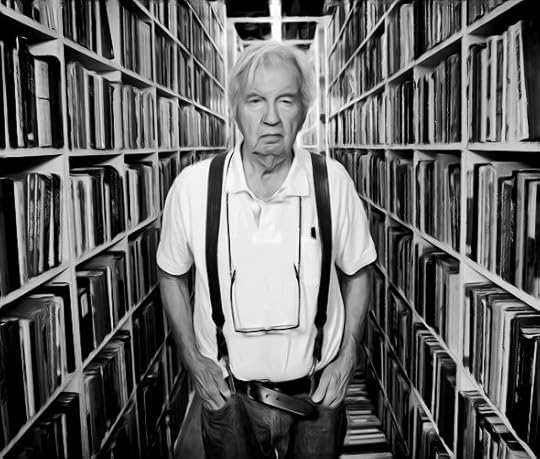
Larry McMurtry

150 books4,041 followers
Larry Jeff McMurtry was an American novelist, essayist, and screenwriter whose work was predominantly set in either the Old West or contemporary Texas. His novels included Horseman, Pass By (1962), The Last Picture Show (1966), and Terms of Endearment (1975), which were adapted into films. Films adapted from McMurtry's works earned 34 Oscar nominations (13 wins). He was also a prominent book collector and bookseller.
His 1985 Pulitzer Prize-winning novel Lonesome Dove was adapted into a television miniseries that earned 18 Emmy Award nominations (seven wins). The subsequent three novels in his Lonesome Dove series were adapted as three more miniseries, earning eight more Emmy nominations. McMurtry and co-writer Diana Ossana adapted the screenplay for Brokeback Mountain (2005), which earned eight Academy Award nominations with three wins, including McMurtry and Ossana for Best Adapted Screenplay. In 2014, McMurtry received the National Humanities Medal.
In Tracy Daugherty's 2023 biography of McMurtry, the biographer quotes critic Dave Hickey as saying about McMurtry: "Larry is a writer, and it's kind of like being a critter. If you leave a cow alone, he'll eat grass. If you leave Larry alone, he'll write books. When he's in public, he may say hello and goodbye, but otherwise he is just resting, getting ready to go write."

Ratings & Reviews

What do you think?
Rate this book

Friends & Following

Create a free account to discover what your friends think of this book!

Community Reviews

5 stars
366 (25%)
4 stars
600 (42%)
3 stars
365 (25%)
2 stars
74 (5%)
1 star
13 (<1%)
Displaying 1 - 30 of 216 reviews
Profile Image for Julie G.
1,010 reviews3,922 followers
August 17, 2019
I don't even eat beef, but if Larry McMurtry were to invite me to his cattle ranch right now, I'd be out on his land with a branding iron and a ten gallon hat, faster than you could say Quarter Pounder with cheese.

Before the week was out, I'd be shouting toward the stables, “Hey Larry, where're my muck boots at?”

And, at 83-years-old, Larry would likely forget he'd invited me and be like. . . who in the hell is this woman, standing in manure, on my ranch?

But just before he called the authorities, I can picture myself kissing the top of his head and telling him. . . listen, you old bastard, I'm your biggest fan.

And I am. (At the risk of having to arm wrestle someone, I'll settle with describing myself as one of his biggest fans).

I haven't read all of his fiction yet, but I'm almost there. . .

I am, in fact, so worried about reaching the end of his novels. . . I'm digging into his non-fiction now, to slow down the inevitable.

And I'm not the least bit disappointed, either.

Without having read any of his autobiographical works before this, I'm not at all surprised. Not surprised by who he is or how he thinks. It's actually amazing, what I've managed to piece together about this man from 14 novels and a handful of articles.

What's here is what was on Larry's mind in his early 60s (when this book was published in 1999). That he “was a reader, not a cowboy,” that he was from pioneer stock, that he maintained “old fashioned values” despite having spent part of his life in places like Los Angeles and Washington, D.C., that he was a man who “felt a tension between reading and writing” always in his life.

Some of this was utterly fascinating to me, especially his perspective on the storyteller's important and dwindling position within their community and the essential (and sometimes lacking) connection between reading and writing for all authors.

Other parts were less fascinating, especially the section on his lifelong obsession with book scouting and the business of owning bookstores. You really need to be a Superfan in these parts.

But, I loved every page of this eclectic little memoir.

To sum up my experience, I will share that my 11-year-old entered the room at some point while I was reading this and said, “Mom, did you know that you're smiling?”

I didn't, but I wasn't surprised.

Profile Image for Brina.
1,238 reviews4 followers
August 9, 2024
At the end of 2023 I organized my reading goals for the coming year. In a given year I don’t have a particular goal so to speak because I am mood reader, and a book that sounded inspiring I. February might appear dull in May. Toward the end of the year I read Stephen King’s On Writing. I am not one to read King as spooky stories tend to spark my overactive imagination, but the doorway to his writing process sparked a different idea in me. I wanted to read those who I considered the masters of their craft in any craft, King included. Yes, there would be wiggle room for mood reads and my favored sports micro histories. I am me after all. I set off on my 2024 reading adventure with no apparent plan other than reading those who are considered top authors by both reviewers and their peers. To my delight, at the Pulitzer announcement in May, I discovered that the runner up for biography was Larry McMurtry: A Life by Tracy Daughtery. Having already read the winner King: A Life by Jonathan Eig, I selected McMurtry: A Life from the library shelves and savored every word. I selected McMurtry along with King and David McCullough as my featured authors in this year of reading masters. At count, I have read one installment of the Lonesome Dove tetralogy and two memoirs. All have been captivating in their own way. I have at least one novel left to read later this year and wanted to save this third memoir for later, but a title that mentions the Dairy Queen has to be read in summer. I thusly set off once again for Archer City, Texas.

As an adult, Larry McMurtry divided his time between reading, writing, and book selling. Each activity stimulated the other and kept McMurtry the writer from growing stale in his older age. Being an antiquarian book seller, McMurtry came across a vast spectrum of selections that most of us who he would consider great readers never heard of. One such volume was a book of essays by German author Walter Benjamin. As an author, McMurtry received a spark of inspiration from Benjamin’s essay “The Storyteller.” McMurtry never wanted to be an author. He knew that he did not want to be a rancher but as a young man the only profession that whetted his appetite was book seller. Northwest Texas did not provide many opportunities for book acquisition, but Houston, Dallas, and even Wichita Falls did. McMurtry would acquire a few books, enough to satisfy his craving to read classics, and then sell his entire collection to pay bills. He did this twice before he published his first novel and established himself as a book seller in the antiquarian trade. At first, he might not have been interested in being a book seller either. Growing up in Archer City in the days before television or computers, McMurtry surmised that he would return to his hometown after college graduation and work at something. Years later, he did just that, but not until after he was both a renown author and book seller. Archer City became the place where he would work after he grew tired of life elsewhere, and it is Archer City that is the focal point of the essays in this book.

In 1893 Frederick Jackson Turner declared the west closed. McMurtry’s grandparents had recently settled in the plains outside of Archer City. They would have nine sons and three daughters, and most of them became cattlemen, ranchers, or farmers. McMurtry grew up hearing stories of the old west from his grandfather and uncles, the west of battles between rangers and native peoples, cattle and horse drives up the length of the west, and early days on the panhandle where ranching might have been the only possible profession. During this era, there was not even much access to radio on the Texas panhandle. The McMurtry’s did not have running water or electricity until the family moved into town so that Larry and his younger siblings would not have endure a forty mile bus ride to school. The only stories available were those given over by story tellers, earlier on front porches, and later in McMurtry’s life at watering holes such at the Dairy Queen. These eateries began to dot the west, and cowboys would gather at the Archer City location to tell tales of the old west over cheeseburgers and lime Dr Peppers. The location might have changed to one providing air conditioning during hundred degree Texas summers, but the yarns did not. Old ranchers knew of life in the old west, only two generations removed from McMurtry’s childhood. At first he did not believe that he could tell the story of the west before his time. The west was still young in comparison to Europe. It had not produced any great books. Authors like Wallace Stegner wrote about western life but when judged against classics, even Big Rock Candy Mountain did not measure up. Over the course of McMurtry’s career, he would humbly shatter the myth of the west not being conducive to producing great writers. I believe that over the course of his career he became a great storyteller.

McMurtry holds the highest regard for Marcel Proust and Virginia Woolf, who he refers to as the White Nile and Blue Nile of writers. These are the only two writers who he could willingly read following open heart surgery, where he poignantly noted that he left himself behind. Following the surgery, McMurtry could not read nor write much. By that point in his life he had written twenty three novels, telling the tale of the west that he claimed he would not write about. Lonesome Dove won the Pulitzer Prize for fiction. The tale of Gus and Call resonated with readers, who demanded more. The book grew to a tetralogy that encompassed nearly sixty years of western history from the early days of the rangers to the closing of the west. Besides this epic, McMurtry wrote about what he knew, and most of these stories began on a hill, much like the one abutting his grandparents’ ranch. Hollywood fell in love with his work, and many of his books translated to award winning films, many of which McMurtry also wrote the screenplay for. He never set out to be a storyteller along the lines of Walter Benjamin as a storyteller; all McMurtry desired to do was acquire and read books. He made amends of his by becoming a key player in the antiquarian book trade, reading European classics while writing about the old west.

Perhaps Walter Benjamin would have felt at home amongst the old ranchers at the Dairy Queen. They all came to this modern watering hole to tell their tales. That, according to Benjamin, is the difference between a storyteller and a novelist. Later in his life, McMurtry feared that younger children would not read anymore. They had television at their disposal and after the turn of the 21st century endless computerized gadgets as well. He cites the closing of countless antiquarian book stores throughout America, having acquired hundreds of thousands of these books for his own book store, Booked Up, Inc, which is now located in Archer City. The story of McMurtry’s life as a book seller can be found in his memoir Books, which is equally fascinating. In his essays focusing on storytelling, McMurtry comes to terms with his life as a storyteller. He found book trading to be a more thrilling profession, but America regarded him as a top echelon storyteller in the end. I for one would have loved to hear McMurtry regale me with stories of the old west from a Dairy Queen booth, but, then, I am one of the minority who loves to read and makes it an integral part of my life. Most of us here on goodreads would ascertain to that as well. I wonder if McMurtry knew of goodreads as this site did not take off until the end of his life. Had he been aware of it, perhaps he would no longer fear the demise of book reading. As long as society continues to produce story tellers as adept as McMurtry, books and readers are not going anywhere anytime soon.

4 stars

Profile Image for Peter Tillman.
4,038 reviews476 followers
June 25, 2022
Larry McMurtry (1936-2021) grew up in Archer County in north Texas, on a ranch his grandparents homesteaded around 1880. He still lives nearby, in a nicer house he bought from an oilman’s heirs in 1986 — a man who was one of the very few serious readers in Archer City. Which presented a problem for a future bellelettrist, as the supply of books in or near Archer City was uncertain at best. So when young Larry entered the Rice Institute in 1954, in Houston, he spent a good deal of time in Rice’s capacious (and air-conditioned!) Fondren Library.

As it happens, I entered Rice University in 1963; had I not been clueless, I could have taken classes from McMurtry then. Dammit! He says he was an indifferent teacher, but still....

Just as good as I recalled. I'm learning something new/forgotten, useful, interesting and/or cool on just about every page. It's a chewy book. This is one of McM's two best books, I think. Which is saying a lot. Also one of the 2 or 3 best books to come out of the American western frontier experience. The other great McM book being the incomparable LONESOME DOVE.

From my notes: his memory of a "Dutchman" (German) neighbor who got up one morning, milked the cows, then blew his brains out with a shotgun. His father's cowboys talked about this event for a couple of years, dividing between those who supported him for doing his chores first, and those who commented that they would have skipped that last milking, with "those old shitty tails in your face." Larry was about 5 at the time. A memorable moment. "That dairy farming, it's gloomy work," one of the hands remarked.

Lots more stuff I could use -- but deep enough! --for now. Absolute must-read, if you want to suss out McMurtry, and/or north Texas. And you should, as he's the best writer to come out of the Western US frontier tradition. This is a great book. My highest possible recommendation. One of my 100 favorite books.
Profile Image for Dan.
1,249 reviews52 followers
September 1, 2021
Memoirs by acclaimed writers are usually quite good in my experience. Stephen King, Robert Caro, Norman MacLean, and so on. This one is no exception and it sparkles with humanity. And its pace and tone are measured so there is little of the unnecessary drama that is seen in a lot of memoirs.

The chapter where McMurtry writes about his bypass surgery while still in his fifties and then his long 'mental' recovery is about as insightful and touching as a chapter can be. He didn't even read books let alone write them for several years afterwords. He describes the funk in that reading is an outward process of wanting to know about the world and others. Instead he was quite depressed and thought about the self that was lost when he was put on a heart-lung machine during the bypass surgery. I have two family members who had bypass surgery and they were both changed in similar ways.

Much of the book however is McMurtry writing about his younger days on the range and horseback and how ill suited he was to that life. He tries to dispel the cowboy myth again and claims that his novel Lonesome Dove was largely misinterpreted. He despises the glorification of cowboy life as espoused by the likes of Louis L'Amour. There are some deep insights as to how arduous the homesteading and ranching life were and that the toil was even more difficult for the women. His paternal grandmother disliked her daughter in-law (his mother) because she used modern conveniences. Modernization and the mother-in-law were a source of friction in his parents' marriage during their whole unhappy married life.
But he still grudgingly respected his parents work ethics.

Late in the memoir, McMurtry writes that while he penned twenty novels, he thinks only four of them were any good. He didn't specify which ones were any good, but I have to say that Terms of Endearment and The Last Picture Show are two of my favorite novels ever. So my guess is these were on the list.

McMurtry also writes about the book store business as well. It is certainly unrelated to cowboy life but an important theme in his life. He is a book aficionado and owns hundreds of thousands of volumes himself. So I was a little doubtful that I would like the chapter, called Book Scouting, but it was insightful and goes a long ways to explaining how reading was an escape for him. And his subsequent enrollment at Rice University and his access to books in the great libraries became an off-ramp from that bleak future of following in his father's footsteps as a small-time rancher and cowboy.

5 stars. Only 200 pages. Highly recommended.
Profile Image for ~☆~Autumn .
1,200 reviews173 followers
March 10, 2024
The first part of this is a little boring unless you are a big fan of Larry McMurtry but the very last chapter about his collecting made me give this book an extra star as I found it to be so entertaining. If you read the book and start to give out be sure to turn over to read the last chapter about collecting books!
Profile Image for Carol.
155 reviews5 followers
July 11, 2011
Saw this on a remainder table in Waldoboro, Maine and couldn't resist. Not only did it prove to be a wonderful read -- I'm a McMurtry fan -- but it sent me scurrying to find out more about Walter Benjamin, inspired me to read Proust, taught me a critical lesson about bypass surgery that I later needed for a friend, painted a remarkable picture of the weird form in which depression can be manifest...and turned out to be a book that I truly enjoy re-reading.
Profile Image for Ron.
761 reviews145 followers
April 15, 2012
I've read much more of Larry McMurtry's fiction than his nonfiction, and sometimes I find myself enjoying his nonfiction a great deal more. His wry, humorous point of view, gift for quiet irony, and depth of thought come across so much more strongly in his own voice, compared to those of the characters in his novels. And while I am very fond of "Leaving Cheyenne," "Horseman, Pass By" and "The Last Picture Show," my favorite McMurtry novels, it is an equal pleasure to be in the presence of the man himself, as he reveals himself in the essays in this book.

Writing in his 62nd year, McMurtry lets himself free associate across a number of subjects; his life as a compulsive reader and book collector; the brief span of West Texas frontier history where three generations of McMurtrys lived, worked, and multiplied; the realities and myths of cowboys and ranching; his education at Rice in Houston; a short story writing course at Stanford with Frank O'Connor; his life as a novelist; the making of the movie "The Last Picture Show"; the passing of the urban secondhand bookstores; the emergence of Dairy Queens as social centers in small towns; the Archer City, Texas, centennial celebration; the demise of storytelling; the fragmentation of the American family; the importance of Proust and Virginia Woolf at a critical point in his life; the winning of the Pulitzer Prize for "Lonesome Dove"; and - most remarkably - his descent into a fierce depression following heart surgery in his 50s, from which he has not completely recovered at the time he was writing this book.

There is a deep melancholy in many McMurtry novels, played sometimes for laughs, as in "Texasville" (where characters hang out at the Dairy Queen). Indirectly, he accounts for some of that in this book, turning as he sometimes does to the themes of loss and the impermanence of things - represented in so many ways, from the vast outpouring of books that sit in piles and on shelves, collect dust and will never be opened again, to the death of his father, a rancher who worked hard all his life and saw in his last years that his achievements were far too few.

I recommend this book to anyone who's read McMurtry's novels and has wondered about the man whose imagination has produced so many memorable characters and stories. For the fun of it, you might just take it down to the Dairy Queen and read it there over a MooLatte.
Profile Image for alex angelosanto.
121 reviews89 followers
April 4, 2024
McMurty is America’s Proust, if that means anything to you, or if that means anything at all. That is to say, after peeling back the layers of relativity, Proust and MccMurtry are brothers because they're both thinking about time and what time really does to us.

Lonesome Dove isn’t just a masterpiece, it’s the product of a harvest-a harvest of the past. McMurty long evaded his own past, spending 2+ decades writing books on contemporary Texas. He didn't want to dig the soil he came from, and only dug in when he saw it for it was, as America’s past.

The story of his grandparents, in on the land grab right at the end of a long western migration, was the story of American expansion. Once he understood himself as like them, as one of the last people, he understood in some way their struggle was a mirror to his own. Once he understood himself as one of a privileged few with access to a living memory, McMurty looked back and poured himself and them out onto the page. What came out was a masterpiece. A book so real you could smell it.

How did he do that?

This long essay isn't just an explication of Lonesome Dove. It's a panoramic view from a writer who has had the privilege and the pain of being at the end of something. A man who's held a secret. The secret of personal knowledge and poured that knowledge into a book for mass consumption into a world that treated it all as pure alien.

McMurty is writing it all in A Dairy Queen because he understood in all that movement the world can't stand still.

As a young writer, he benefited from that fast American pace, becoming a writer instead of a farmer. He outpaced his father who got in late and had to manage the decline. But in that toil and tragedy McMurty was able to see the generations past. And in that suffering, he was able to dig so deep into the personal he broke through to the universal. Just like Proust. Just like the great writers of all time

This book tries to explain the man behind some of the great and some of the subpar books in the American canon. It situates a boy who saw the world of his ancestors shrinking and chose to run to books. And in that journey, he found a way to give them all new life in a land beyond land.

Anyone who loves Lonesome Dove needs to read this long essay. Because Lonesome Dove is a great book, and great books demand some sort of explanation. McMurty has done us a favor by trying, as best as he can, to do that. It is a glory to read.
Profile Image for Tyler McGaughey.
564 reviews4 followers
August 5, 2009
This might be my favorite Larry McMurtry book so far. His voice is just as confident and assured when writing nonfiction as it is in his novels, if not even a bit more. This book leaps between literary and cultural criticism, memoir, and historical illumination, often in the span of a three-page chapter, and with only the briefest of segues, but the ideas are always conveyed seamlessly.

Maybe this book worked so well for me because it is the first chronicle of the life of a fellow from west Texas who, at a young age, becomes enchanted by books and develops aspirations of becoming a writer. If there were more such books floating around, maybe I would not have found as many passages here so resonant to me that I felt I might as well print them on a sign to wear around my neck in lieu of any other form of identification.

Another thing that I loved in this book was Mr. McMurtry's absolute candor, his willingness to talk shit about whatever he finds fraudulent or subpar. Only three pages in, the reader finds this gem: "People on their way to Abilene (Texas) might as well be on their way to hell - why talk to them?" (OK, that's a little out of context, but still - suck it, Abilene.) His dismissals of those writers he feels have portrayed the West all wrong are priceless. He notes astringently that Frederick Jackson Turner, famous for his book The Significance of the Frontier in American History, was "already a coat-and-tie professor at the University of Wisconsin while (McMurtry's) grandparents were building their first cabin." He twice sets his sights on Louis L'Amour, the ever-prolific Western writer, first noting that "lies about the West are more important to them (readers) than truths, which is why the popularity of the pulpers - Louis L'Amour particularly - has never dimmed;" and then a few pages later delivering the even more biting assessment that L'Amour was little more than an "industrious pulper who spent a good part of his life hoping that people would mistake him for a realist."

Of course, McMurtry is just as critical of his own writing, acknowledging that he finds some of his works "unsuccessful" and a few downright "lugubrious." He figures that only "two or three" of his more-than-twenty books are any good, which sounds a little too harsh, or perhaps too falsely modest, to me.
Profile Image for Simon Robs.
505 reviews101 followers
June 10, 2019
This book is one of his best, he thinks so too, as it captures a little bit of everything, a bit of suming up and/or recapitulating the winding road of Larry McMurtry. The fulcrum point of this essay/auto/bio/mem. being the Walter Benjamin essay "The Storyteller" bemoaning the loss of oral passing down which McMurtry then repurposes and expands to his all encompassing looks at the cowboy/pioneer myths and lore. McMurtry is post surgery and devestated dividing his life in before and after split - he's recovering back home in Archer City sitting in the local DQ reading and pondering where to from there. He's a bookman from several angles and it's time for him to decide how to go on and where he should put his focus. It's another book about the Texas plains and the rugged people who scratched out a living only to see how fast times changed around them. McMurtry has amassed a sizable time capsule of fiction, non-mem's worthy of representaion to a way of life and done so with integrity, soul & adeptly quantifiable, history likes his collage.

"My self has more or less knitted itself together again, the trauma has faded, but the grandeur of those books, The White Nile of Proust, the Blue Nile of Virginia Woolf, will be with me all my life."

"Walter Benjamin said Proust was the Nile of language; if he was the White Nile, then Virginia Woolf, in her diaries and letters, may have been the Blue -- and joining these great waters were the long tributaries of Joyce, Lawrence, Musil, and many others. Most of my reading life has been a trip up those Niles, into the riverine abundance of European literature, ... "

"We are still less than two hundred years from Lewis and Clark, out here. How many centuries does it take to get from a pioneer family with all thier posessions in a wagon to Proust and Virginia Woolf?"

I'm not through w/LM's books yet, got a ways to go, whether or not [I'll] a completist be, and, that's ok.
Profile Image for Donavan.
131 reviews
August 12, 2011
My bookmark was between pages 102 and 103, in the section titled Reading. This is what I had marked: "The minute I began to write I felt a tension between reading and writing..." As time passes and we readers try to guess how many years might be left, we study our shelves and wonder if we'll get through all the books we planned to read.

McMurtry writes about great readers. We know a lot (or think we do) about great writers, but great readers are usually anonymous, quiet souls whose deserved fame is never broadcast. Reading is a solitary activity, not a performance. (Although, social networking might be changing that: reading and tweeting?)

On page 103 I had also bracketed and starred this: "The great readers will always know about books that neither the marketplace nor the academy has got around to." And I found great comfort in this. The notion that great readers are explorers of the literary landscape in search of undiscovered worlds.
Profile Image for Jay.
539 reviews25 followers
July 26, 2018
This is a tough book to categorize: Part memoir, part criticism (of literary criticism), it's a mess, but an enjoyable one.
The memoir parts focus on his pioneer/cowboy lineage and his life in books as both reader and seller. His metaphors of writer as cowherd are a bit strained, but the sentiment is relateable. The bookselling sections are the least accessible bits, unless you are an avid collector.
The critical portions are also a bit "inside baseball", but are at least given more context. That doesn't mean the average reader will be interested, though.
This book is, oddly, both superficial and inaccessible. The autobiography is, at best, incomplete, while the literary side is often obscure. This is a frustrating read, but McMurtry's prose is always enjoyable. Proceed with caution.
Profile Image for Karen.
417 reviews6 followers
September 2, 2016
Larry McMurtry is one of my favorite writers & reading this book for the second time reconfirmed it. Not your typical biography more of a look back & insight into how his life took the journey it took.
Profile Image for mark….
102 reviews32 followers
June 28, 2021
Thanks to GR friend fir recommendation…
167 reviews
December 15, 2019
I know nothing of the American prairies, of Walter Benjamin, nor of Larry McMurtry. In fact, I am near certain that I found this book as the result of a Google suggested search when I, a second-generation city mouse, wanted to know if ice cream was available in my area. Yet I find this a deeply and artfully moving (in both senses) essay on what it is to be both a lover of books and "American," in every sense of the stereotype: the uncultured boor, rough by no fault of his own; the materialist who builds a life for himself in acquisition and divestment utterly divorced -- yet, can it ever be? -- from the meaning of the chattel traded; the loud, lonely idiot sounding his barbaric yawp in ink on paper; he who has known only a very singular prosperity and knows it well enough to call it its own kind of penury.

It's rare to have an author who actually comes from "the sticks," and we as readers -- consumers of cultural capital -- miss out on a great deal, for when one comes from the sticks it matters a great deal more where and which those sticks were. McMurtry hails from "the frontier," a land mythical to most every American and, I find, nigh unimaginable to Eurasians. The great insight of this book -- the value of its diversity -- is its heartbroken account of the doomed Great Plains life. Barely educated and raising doomed cattle: small wonder he found sanctuary and intellectual satisfaction in literature. However, McMurtry never portrays his land as anti-intellectual, merely non-intellectual. The invocation of Walter Benjamin is the real thesis of the essay: there's really no comparison between the trope-weary overpopulated cities of Benjamin's Europe and the empty, traumatized Plains of McMurtry's Texas. That's the merit of McMurtry's perspective: who else could see through such an opaque fog of mythology to the core of The Cowboy, that mythical, incorrigibly misogynistic avatar of America?

The essay moves from a well-considered, rarely-expressed soliloquy on what it meant to live this archetype to the experience of induction into the demi-monde of literature to the alternate reality of antiquarian book collection -- and back. Does McMurtry really believe that his heart, and perhaps that of America, is sunken irretrievably into the sod of the U.S. Midwest? He provides interesting arguments on both fronts: he recognizes the failings of that great genre of non-thought, and in doing so, crafts an excellent meditation on the realities of being "in the middle of nowhere."
Profile Image for Zade.
485 reviews48 followers
June 20, 2016
Not having been an avid reader of westerns, this is the first of McMurtry's books I've read. I'm not even sure why I picked it up at the used bookstore, other than a vague memory that besides having written a great many good novels (or at least people said they were good), he was the owner of an enormous number of books and therefore at least partially a kindred soul.

This short collection of essays covers so much ground and manages to be both so simple and so multilayered and complex, that it's hard to describe. It is, in a sense, a memoir, but more than that, it's an interweaving of ideas about the end of the brief and arduous life of frontier settlers and cowboys, the art of story-telling, the experience and value of reading, and the world of book scouting/book collecting, which appears even more today to be dying. Having given such an unsatisfactory summary, let me try to make it up to you by simply saying that if you love books, if you have a sense of nostalgia for the past--regardless of where your past may lie--and if you actually think sometimes about the value of storytelling, this book is likely to touch you deeply.

I read a lot. About a book every day or two. This one, at only about 200 pages, I took two weeks to read. Not because it was slow or difficult. Although it certainly gave me plenty to think about and I'll definitely read it again to see what I've missed, it was entirely enjoyable. I found myself slowing down, lolligagging as it were, because I didn't want this conversation to end. And it did feel like a conversation. Despite the differences in our ages, genders, and geographic roots, I found much in common with McMurtry. It was like meeting a friend you haven't seen in years and finding that the connection you once shared hasn't changed at all--except, of course, I've never met McMurtry and likely never will. I'm tempted, of course, to make a pilgrimage of sorts to Archer City, Texas, to explore the remaining quarter million volumes of his once-larger bookstore, to see what his offerings reveal of this man who so cogently expresses thoughts I've long harbored. Instead, I think I'll take a look at more of his work and encourage my friends to do the same.
Profile Image for Cody.
604 reviews50 followers
May 8, 2012
This is actually the first McMurtry I’ve read (I know, I know!), though I’m familiar enough with his recurring themes (and the vast influence he’s had on how we think and write about the American West over the past 40 or so years) to appreciate that this memoir is an attempt to work in similar territory as his fiction, but from a much more personal standpoint. McMurtry is out to demythologize the American West in hopes of telling a truer story, and, thus, in his own way, fulfilling the crucial but forgotten role of Benjamin’s storyteller, which is so essential to maintaining cultural ties. He does this by relaying the story of his family’s settlement in Archer County, TX and their struggle to eke out a couple generations of ranching (until McMurtry decided that his herding was to be of words and rare books).

McMurtry’s mostly nostalgia-free and measured way of looking at history (both personal and shared) allows him to more reasonably determine what the crucial losses and gains have been in the few generations before and throughout his lifetime, and he presents all of this for our consideration instructively but not at all didactically. His humor, directness, and often self-effacing tone allow McMurtry to employ a kind of Benjamin-esque take on the humble, no-nonsense storyteller we've come to associate with Western narrators, as though this were just an extended--but also deeply critical and resonant--conversation over lime Dr. Peppers at the neighborhood Dairy Queen.
Profile Image for Dana Wilkes.
86 reviews
March 16, 2015
I had purchased this book years ago and then set it aside for whatever reason -- life, children, and my inept housekeeping buried it under a stack of books that I planned to read. I picked it up again this summer after attending a writer's workshop where we studied an excerpt of McMurtry's writing, and it reminded me how much I loved his command of language and through his writing, completely immerse the reader in the setting of his stories. This book of essays was no exception, but much denser than his novels which (for me at least) merited more time to ponder the individual sections. Or maybe that's just my excuse for taking almost seven months to read it. Some essays resonated more with me than the others, but they are all worth the time and effort and will leave you in awe of the writer, scholar, book scout, and man that is a Texas treasure.
Profile Image for Will.
307 reviews83 followers
July 15, 2013
Five stars for the tremendous reflections on growing up in the American West, the mythologies of loneliness and madness on the frontier, and the power of books, from reading Benjamin far from the Old World he reflected upon to book collection and obsessive reading and what it can do to an individual's understanding of themself and their place in the world.
15 reviews
August 16, 2020
This was an absolute cathartic revelation from start to finish. It reminds me of why I am partial to fiction vs, non-fiction. There is something in the essay form that engages me more than just about any fiction out there. And what’s funny here, is that it is a writer who has (I think) made his name mostly by writing fiction who is now writing a personal narrative (sort of) that brought this preference into focus for me. Maybe it’s the fact that that the essay can contain more direct reference to life’s poignancy, regrets, joys, and heartbreaks which can only be, in fiction, alluded to, inferred and fleshed out in literacy device, mainly under the guise of “character development”; whereas here, in Dairy Queen, McMurtry can actually write,” I feel like I am in the twilight of life” (or some similar sounding thing) and you know exactly where he stands and what he means.

What I did not expect in Walter Benjamin was that there would be so much beautiful writing about books and the search for them and (here is the best part) the lament of the passing of the used (and probably new, too) bookstore. As well as the lament of so many other things and their passing and the reflection on what all of this means and why some of us spend so much of our time thinking about these things and feeling the loss and change of so much that was always weighted with meaning as it’s replaced with things that it’s hard to find any meaning in. (Will people view the iPhone in the same way that we now view the typewriter? I don’t mean as technological development, where, of course, there is plenty to discuss, but as an object of meaning, I mean. How is it that things—like guns or knives or watches or cars or typewriters or a diner or a pinball machine or a fountain pen or a dictionary or a set of tools that were your grandfather’s—hold meaning, in a kind of metaphysical way? What physical objects, today, hold such significance now, let alone the chance of holding value still, fifty years from now?)

And how is this connected with McMurtry’s writing about the west? The desperation to capture and hold the past, the way of life of the cowboy, the sense of spirit embodied in the American west and the “Marlborough Man” even if that’s not at all a realistic cowboy image. The writer’s sad but sunny lament of his father’s life that he could not replicate as the west is no more is just that—simultaneously sorrowful and joyful.

Like the modern poetry of Billy Collins, and the books of Jack Kerouac, McMurtry’s “essay” (as I will call it) is a reminder of how the mind thinks and oversees and what it means to be a person and how the life of a thinking person is full of angst and aches and poetry, even while being drawn to the salt of the earth life and experiences of turning wrenches, shooing horses, and (as McMurtry notes) piloting a car across an interstate, cutting paths across the land in a way that evokes the same passion for the frontier that was felt by early pioneers, but is all but forgotten by most.
Profile Image for Vicky.
689 reviews9 followers
December 1, 2016
I liked his later memoir, Books, better, but I enjoyed this one too. I had never heard of Walter Benjamin, a 20th-century German philosopher, but this is the starting point because at the time Benjamin was writing, McMurtry's pioneer grandparents were settling in west Texas. Also it is one of Benjamin's essays, "The Storyteller", which prompts much of McMurtry's ruminations on the demise of oral storytelling, his own family's story and the future of books and storytelling. I seem to be in the mood for books about books, reading, readers and literary criticism for some reason and both McMurtry's books were nice complements to The Magician's Book by Laura Miller. The subtitle: Reflections at Sixty and Beyond also appealed to me as I am beginning more and more to reflect on the important things in my life.
Profile Image for Robert.
4,549 reviews29 followers
October 12, 2013
You forget just how excellent some authors are - I'll be reading more McMurtry soon. With a precise vocabulary to rival anything by George Will or William F Buckley, McMurtry explores his personal experiences with the nature of storytelling and his experiences as a lover of books from both the creative and consumptive side of the industry. Chock full of references to authors and philosophers I am unfamiliar with, this work will seed my reading lists for years to come.
Profile Image for Joe.
112 reviews1 follower
August 17, 2022
I have great affection for everything about this book: the Dairy Queen cover photo, the West Texas rumination, the author’s cherishing of books and words. What a delicious book.

That DQ photo reminds me of the Dairy Queen I’d often stop at in Goldthwaite, Texas, at the intersection of Highway 183 and 16. I used to go there as a teenager when driving to college. Now I take my own kids there now when passing through. A DQ can be a cultural hub in a rural area.

The cover photo, though, is the Dairy Queen in Archer City, Texas. That’s Larry McMurtry’s hometown, as well as the subject of his book The Last Picture Show. As he shares here, most of his books are probably about Archer City. They’re about big spaces and the people resolved to stay on them. Even if staying on them doesn’t make any sense. McMurtry is a patron author of lost causes – the West, cowboys, independent second-hand booksellers, small towns.

What surprised me the most in this book is the affection McMurtry has for so many things – his childhood, his family, reading, and of course for books themselves. For some reason I thought he was a bit of a curmudgeon. I thought that being a cultural “fish out of water” as a reader in a small West Texas town without a library would make him self-conscious or bitter when looking back. Not really – he seemed more bemused than anything, laughing at his own fear of poultry and his inability to cowboy. After college and all of his success, he was happy to return to Archer City. Even to bring hundreds of thousands of books home to share what he loves.

Some passages I loved:

On taking reading seriously:

“I remember thinking, after two of three readings [of ABC of Reading, that this man, Ezra Pound, was as serious about writing as my father was about cattle – in those days I measured all seriousness against my father’s attitude about cattle.”

On books and love:

“Why does one remember one thing vividly and another thing vaguely, if at all? In this course of this piece I’ve come to realize that the only things I remember as well as I remember certain books, found in certain bookshops, in such and such condition, are women, about whom I mean to say little or nothing just at the present time.”

McMurtry also writes candidly about his heart attack and the trauma of the surgery. During his recovery he read Proust and Woolf, but then was unable to read for years afterwards. He was fixated on an idea that while his brain didn’t remember the surgery, his body did, and somehow he was a different person after that. It took him years to make peace with the invasiveness of his heart surgery (Where do you go when you’re not in your body?).

He also spends considerable time talking about the thrill of the hunt of collecting great books. For him, bookselling uses a different skillset than writing. However, he compares both writing and bookselling to herding cattle – herding words into paragraphs and chapters and books; amassing collections and choosing the best ones.

It’s interesting to think that McMurtry grew up in Archer City and that writer Robert E. Howard (creator of Conan the Barbarian) grew up only 125 miles away in Cross Plains. McMurtry often wrote, more or less, about Archer City. Howard wrote about anything but Cross Plains, inventing new worlds and creatures. We engage with our worlds very differently. (Cross Plains has a good Dairy Queen, too, by the way.)

A personal note – McMurtry sold off hundreds of thousands of his books around 2013. However, he did keep the location of his main book store in Archer City. It’s called Booked Up. As far as I can tell, it’s only open from Thursdays – Sundays. Not enough business. A lost cause? I’m going to drive up there in a couple of weeks, eat at the local cafe, browse the stacks, spend too much money. Pay respects to the legacy of a fellow book lover
Profile Image for Beth Bonini.
1,414 reviews326 followers
November 18, 2024
I first read this memoir in 2001, and although I’ve dipped into it at various times since, this is only the second occasion on which I’ve read it all the way through again. Much has changed - for both me, and for Larry McMurtry - in the intervening 23 years. Larry McMurtry is “late” as of 2021 - a euphemism for death that he repeatedly employed in his later memoir titled Books - and unfortunately his bookshop in Archer City has also been dismantled. Certainly the book selling business has continued to change, but hasn’t entirely died - as he might have feared. Cowboy myth and culture hasn’t died out either; the enduring appeal of his own masterpiece Lonesome Dove, not to mention the huge success of Yellowstone, is evidence of that.

A lot of the material in this book feels familiar, not just because I’ve read it before - certainly my memory isn’t that good - but because I’ve only recently reread Books, a later memoir that refashions much of this material from his life and art. He wrote this book at 60, and perhaps after that he entered a storytelling phase where his material was already gathered - and the telling became more of a “greatest hits” rehashing.

McMurtry uses Walter Benjamin’s essay “The Storyteller” as a jumping off point for exploring his own contributions to storytelling and how he has fit into a pretty much nonexistent north Texas tradition of storytelling, oral or otherwise. He describes the place which formed him, his family history, his lifelong reading habit and his nearly lifelong career as a bookseller, whilst also touching on the subject matter which has preoccupied him during his writing career. If you are new to the McMurtry canon - fiction, nonfiction or both - it’s a good introduction to his “voice” and what has inspired and interested him.

The aridity of the small west Texas towns was not all a matter of unforgiving skies, baking heat, and rainlessness, either; the drought in those towns was social, as well as climactic. The extent to which it was moral is a question we can table for the moment. What I remember clearly is that before the Dairy Queens appeared the people of the small towns had no place to meet and talk; and so they didn’t meet or talk, which meant that much local lore or incident remained private and cased to be exchanged, debated, and stored as local lore had been during the centuries that Benjamin describes.

The Dairy Queens, by providing a comfortable setting that made possible hundreds of small, informal local forums, revived, for a time, the potential for storytelling of the sort Walter Benjamin favoured. Whether what he favoured actually occurred, as opposed to remaining potential, is a question I want to consider in this essay.



Despite being extremely well-read in the European classics that formed Walter Benjamin, McMurtry is entirely an American writer - and although there is something delightful about the juxtaposition and contradiction of the European cafe intellectual and the Dairy Queen setting, McMurtry references Benjamin mostly as a way of identifying and locating himself. Although the book has elements of cultural criticism, it’s really just a particular way of structuring a memoir.
Profile Image for Rozanna Lilley.
207 reviews7 followers
May 31, 2024
It seems a little ridiculous to offer a star rating to Larry McMurtry. He is a giant of American literature and even this provincial Australian adored Lonesome Dove and watched Terms of Endearment on a loop over the decades. I was attracted to this relatively slim memoir partly by the title - I like the idea of Benjamin at a Western diner, grappling with the expanse of Texas as he wandered the grasslands in search of an arcade - and also by the subtitle. I am over 60 and, like most people my age, I've started to wonder what the point of it all has been. For McMurtry the point has been a life spent loving books as well as writing them. It's a very restrained volume - we learn a little about the book trade, about having grown up still in touch with the feeling of a frontier, about a father who spent his life working. Indeed, like all good cowboy stories, women occupy the margins. There's a straight line drawn from father to son and to his son. Some of it is very funny - an account of a historical pageant in McMurtry's home town had me in stitches. Often it's a lot more intellectually agile than it might superficially appear to be. The description of how The Last Picture Show drew on local lore and went on to shape it is an analytic masterpiece. Perhaps the most overtly personal part is the description of how McMurtry felt after a bypass, of the way he was altered by illness and surgery and his efforts to connect back to his deep love of reading. His reserve is, I think, also his strength. He enjoys puncturing pomposity and guards his privacy. Overall, I was left with the feeling that the point of life might just be a good book, and that this is one of them.
Profile Image for Paul Hiaumet.
8 reviews
August 19, 2022
Fiction or non-fiction Larry McMurtry's prose is a pleasure to read. Reading about his boyhood on the ranch, I realized, once again, how he manages to populate such a vast landscape and make it seem full using only a handful of unforgettable characters. During the section detailing the author's passion for rare book hunting and collecting, it was his prose that kept the narrative moving, full as it was with titles, authors and book stores. The stores that still exist (please let there be some!) would be fascinating to visit.

Overall it was a most enjoyable read, relatively short, jumping off from an essay McMurtry read on storytelling in the oral tradition and its predictable decline, written by the duly referenced Walter Benjamin. It also chronicles quite a bit of the writer's other reading, from the classic to the occasionally esoteric, from childhood through college and on, and attempts in some measure to come to grips with how a boy born into ranching and cowboying in Texas found and followed a calling that led him initially to Rice University and eventually to a career as a best selling, Pulitzer Prize winning author, with an imagination formed somehow in the vast emptiness of the Texas prairie. Finally, what, if anything, does it all have to do with storytelling in the oral tradition?
Profile Image for Josh.
1,001 reviews19 followers
September 30, 2023
Delightful essay on the loss of oral tradition and local memory, which morphs into a sneakily moving memoir about a life spent writing, reading, and collecting books. For 200 pages, you just get to enjoy spending time in the company of a gracious, learned, and often funny raconteur who’s clearly thought about this stuff a lot, and whose genuine interest in things like frontier life and rare book scouting make you care, even if you wouldn’t normally.
Profile Image for Christie.
153 reviews12 followers
September 18, 2020
A set of essays ranging from 3 stars to 5 (the one on losing the will to read after heart surgery was very moving), but somehow it averages to only 3 because it is so bound in time: ladies making their husbands dinner, lots of pioneers and cowboys but essentially no Indians, old-school notions of the failure of information technology and the disappearance of stories, pre-internet.

He’s a good essay writer but it felt like it was written in 1952.
Displaying 1 - 30 of 216 reviews

Can't find what you're looking for?

Get help and learn more about the design.