

What do you think?

Man Alone
Man Alone is one of the foundation stones of New Zealand literature. Almost all copies of the first edition, published in England in 1939, were destroyed in the Blitz. When it was republished in New Zealand in 1949, after the author’s suicide in Cairo in 1945, the publisher Paul’s Book Arcade made a number of changes for unknown reasons. This edition restores John Mulgan’s original text for the first time. Johnson, an English WWI veteran, comes to New Zealand to find a new life. In Auckland he is caught up in the Great Depression riots, and heads south to the central North Island, where he work as a farm hand. An affair with his boss’s wife and the accidental killing of his boss cause him to flee across rough hill country, and by the end of the novel he is contemplating leaving the country to fight in the Spanish Civil War. Man Alone is a portrait of an existential loner, and a testament to the necessity of comradeship in times of hardship. Cover: Selwyn & Blount dustjacket, 1939 (private collection)
205 pages, Paperback
First published January 1, 1939
About the author
John Mulgan
12 books3 followersJohn Alan Edward Mulgan was a New Zealand journalist, writer and editor. He was the eldest son of writer and journalist, Alan Edward Mulgan.
Ratings & Reviews
Friends & Following
Create a free account to discover what your friends think of this book!
Community Reviews
Displaying 1 - 30 of 46 reviews
May 18, 2012
Man Alone by John Mulgan was definitely one of the few books I have read which focused so intensely on the typically masculine qualities men are said to acquire. In the beginning of the novel we are introduced to Johnson, an English soldier who has survived WW1 and has now settled into Auckland, NZ in midst of the depression. He takes up farming in Waikato and later in the centre of the North island and is also involved in riots over the countries economic situation.
Johnson represents a traditional New Zealander in post-war times, despite being English. He portrays the typical 'loner' quality, men were said to have. He refrained from forming any close bonds and rarely made the effort to meet new people. This was very interesting to me as Johnson essentially became the symbol of Kiwi men "going it alone" to make something of themselves in life. Although Johnson had abstained from forming relationships with men or in this case women he eventually had an affair with his boss's life, which led him to run from the mistakes he had made. This also extenuates the problems women were said to have brought upon and created for men. I thought this was effective of Mulgan as he expressed the qualities of men in contrast to that of women in post-war New Zealand.
I found Man Alone an engaging and informative read. Mulgans portrayal of the life of Johnson and other Kiwi men in post-war NZ was rather depressing but also gave me knowledge of the origin of traditional masculine qualities, portraying men as 'strong silent types'and how the effect of the war and depression influenced these qualities. I highly recommend this novel as it makes both an enjoyable and interesting read.
Johnson represents a traditional New Zealander in post-war times, despite being English. He portrays the typical 'loner' quality, men were said to have. He refrained from forming any close bonds and rarely made the effort to meet new people. This was very interesting to me as Johnson essentially became the symbol of Kiwi men "going it alone" to make something of themselves in life. Although Johnson had abstained from forming relationships with men or in this case women he eventually had an affair with his boss's life, which led him to run from the mistakes he had made. This also extenuates the problems women were said to have brought upon and created for men. I thought this was effective of Mulgan as he expressed the qualities of men in contrast to that of women in post-war New Zealand.
I found Man Alone an engaging and informative read. Mulgans portrayal of the life of Johnson and other Kiwi men in post-war NZ was rather depressing but also gave me knowledge of the origin of traditional masculine qualities, portraying men as 'strong silent types'and how the effect of the war and depression influenced these qualities. I highly recommend this novel as it makes both an enjoyable and interesting read.
August 20, 2024
Thoroughly enjoyed this, there's a lot of travelling in this book and it's fun recognizing the places in a novel from experience

March 25, 2019
The comparison with Hemingway in the foreword is apt: Mulgan's prose is clipped and straightforward, sacrificing linguistic flourishes in favour of a strong narrative. And on this evidence, his empathy for women is limited. But what a feat of storytelling: in barely 200 pages, he covers the effect of war on the individual, the Depression-era struggle to survive, the increasingly angry socialist response, a man's relationship with the landscape he inhabits, how our choices shape us, how national ideals and beliefs shape us, the foibles of masculinity and particularly friendship between men... and there are spellbinding stretches of prose, too, particularly the Kaimanawas section, where you can feel the rising damp and taste the bitter tea through his words. It unravels a little in the final pages in Mulgan's quest for resolution where perhaps none was warranted. Still, required reading for any New Zealander.
September 14, 2018
Read like a Cormac McCarthy novel. Plain writing, set in between the world wars. Man travelling around NZ. Paints a great picture of what life was like back then (as it was written then as well). Touches on unions and the great depression, as well as solitude and community and finding your people. Really good novel to give to your dad who loves Cormac McCarthy, but has read all his books.
January 15, 2021
lived up to the title
January 7, 2024
An exploration of masculinity and life in the Great Depression. There’s a dry humour around class conflict that runs through the book. Read in the context of Mulgan’s own life it’s an important clue in understanding Kiwi masculinities both real and imagined.
March 5, 2025
4 ⭐️
Such a great book to understand the mind of New Zealanders in the early 1900’s. I loved the story and reading about the adventures of the main character all over the North Island. Learnt a lot about our national identity and what makes our little country tick. Definitely recommend!
Such a great book to understand the mind of New Zealanders in the early 1900’s. I loved the story and reading about the adventures of the main character all over the North Island. Learnt a lot about our national identity and what makes our little country tick. Definitely recommend!
January 26, 2024
Overall enjoyed the book, though I found it quite hard to follow the story in some parts. Interesting to learn about new zealand from the authors perspective particularly so long ago and how some people perceived the country post war.

April 17, 2013
A novel of it's time - written in 1939 by New Zealander John Mulgan, during his time in England, but set in New Zealand. It is a dry, cold story, written in a dry, cold style. But it contains a lot of historical snippets that convey the times in New Zealand between WWI and WWII, as well as men's thinking of the time. This book is acclaimed in NZ literary tradition as a "landmark in the emergence of local literature", and while that is undeniable, Jane Mander's The Story of a New Zealand River, written in 1920, is a far more skilfully-written and absorbing story.
April 14, 2017
This is a classic Kiwi novel which I highly recommend to anyone who enjoys a good adventure. It follows an ex-soldier from England who turns up in Auckland, NZ, a survivor from the trenches of WWI. We follow him as he makes his way through the wild and unforgiving country that has yet to be tamed by modernity or western conveniences. It puts me in mind of "The Grapes of Wrath" and "The Thirty Nine Steps".

March 30, 2016
2.5
I wasn't as offended by the ending as I expected to be
BookTube-A-Thon 2016
I wasn't as offended by the ending as I expected to be
BookTube-A-Thon 2016
June 27, 2016
Great story of early New Zealand, set after the Great War. Not sure I agree that Women are marginalised, just that it is mainly a story of men...

April 12, 2026
This often gets touted as a foundation stone of New Zealand literature, capturing the national consciousness and character in a document from which all later thought and writing has flowed. Perhaps it's true. Man Alone oozes a certain sort of character, a certain viewpoint, a certain bent of mind. I'd hesitate to call it representative of New Zealand, though.
Representative perhaps, at the most, of a generation in New Zealand. More accurately, representative of a particular sort of person, at a particular moment in time, who would have comfortably called themselves and their experience and perspective representative of the whole country and thought no more about it.
The story here is simple. Our hero Johnson—he only has a surname, because he's the kind of stoic, taciturn archetypal New Zealander who doesn't need frivolous excess belongings—our hero Johnson arrives in Auckland a demobilised soldier after the First World War. He wants to wander around and see the country, and he's happy to work to keep himself clothed and housed and fed while he wanders. Unfortunately, things get in the way.
First, other people: Johnson works on this and that farm, tries to hew a farm out of the bush together with a couple of mates, but the land is difficult and the isolation drives them a bit nuts so Johnson leaves. He works on a sailing scow but diesel boats come in and out-compete them, so Johnson leaves. The Depression comes, which makes work in the countryside hard to come by, so Johnson leaves. He goes to a relief camp building a road in the hills west of the city, but the work is hard and the conditions are bad, so Johnson leaves. He ends up on a farm on the west slopes of Ruapehu and has an affair with his boss's young wife. The wife keeps it insufficiently quiet, and matters escalate. So Johnson leaves.
There's a lot here to like, some of it quite New Zealand. Mulgan writes terse, frank prose, self-consciously imitating Hemingway. Some of it is really accomplished, especially when he gets away from the social world of people and buildings and into the wilderness. He captures and reflects the New Zealand of his day pristinely: sections of the book take place on Queen Street, in the Waitakere Ranges or in the Oturere Valley above the Rangipo Desert; they are immediately recognisable despite the eighty years intervening between Mulgan writing and my being there.
What's less to like, though, is the tone and timbre of the book itself and the reading of it as capturing something innately New Zealand. The most notable thing about Johnson and this text is the assumption, underpinning all of it, that freedom is this ability to leave: to do whatever one wants and face no consequences, and that it is accorded—in fact it seems to be owed—to Johnson by some unspoken right which one can only assume has to do with him being white and male. The women and Māori who appear in the book do not seem to have the same freedom, and this is never remarked upon.
With that in mind, the overarching theme and tone of the book is less to do with New Zealand-ness or the changing interwar world or the unique way that New Zealanders relate to one another. Rather, this book stands out because it's so aggrieved. All Johnson wants is to live his life utterly free and bound by no responsibilities whatsoever, but he can't. And it's never his fault: there's a Depression, there are these stupid women, or stupid other characters. Constantly people are getting in the way of what Johnson wants, which—we are given to believe—is perfectly reasonable and rational and entirely owed to him—and by no fault of his own.
It seems to me that perhaps this is redolent of a certain cadre of New Zealanders living around and after the time that Mulgan was writing. In a certain light Man Alone starts to look like a sort of foundation-text of the Boomer ideology, an articulation of that generation's assumptions. They deserve to be rich and comfortable, hoard as much toilet paper and pay as little tax as they like, not to mention park where they please, and all these bloody people and consequences getting in the way are the ones in the wrong. Perhaps in that light, Mulgan did capture something. My qualm is only with the widespread idea that this puerile idea of freedom gets at the heart of something called Kiwi culture.
Representative perhaps, at the most, of a generation in New Zealand. More accurately, representative of a particular sort of person, at a particular moment in time, who would have comfortably called themselves and their experience and perspective representative of the whole country and thought no more about it.
The story here is simple. Our hero Johnson—he only has a surname, because he's the kind of stoic, taciturn archetypal New Zealander who doesn't need frivolous excess belongings—our hero Johnson arrives in Auckland a demobilised soldier after the First World War. He wants to wander around and see the country, and he's happy to work to keep himself clothed and housed and fed while he wanders. Unfortunately, things get in the way.
First, other people: Johnson works on this and that farm, tries to hew a farm out of the bush together with a couple of mates, but the land is difficult and the isolation drives them a bit nuts so Johnson leaves. He works on a sailing scow but diesel boats come in and out-compete them, so Johnson leaves. The Depression comes, which makes work in the countryside hard to come by, so Johnson leaves. He goes to a relief camp building a road in the hills west of the city, but the work is hard and the conditions are bad, so Johnson leaves. He ends up on a farm on the west slopes of Ruapehu and has an affair with his boss's young wife. The wife keeps it insufficiently quiet, and matters escalate. So Johnson leaves.
There's a lot here to like, some of it quite New Zealand. Mulgan writes terse, frank prose, self-consciously imitating Hemingway. Some of it is really accomplished, especially when he gets away from the social world of people and buildings and into the wilderness. He captures and reflects the New Zealand of his day pristinely: sections of the book take place on Queen Street, in the Waitakere Ranges or in the Oturere Valley above the Rangipo Desert; they are immediately recognisable despite the eighty years intervening between Mulgan writing and my being there.
What's less to like, though, is the tone and timbre of the book itself and the reading of it as capturing something innately New Zealand. The most notable thing about Johnson and this text is the assumption, underpinning all of it, that freedom is this ability to leave: to do whatever one wants and face no consequences, and that it is accorded—in fact it seems to be owed—to Johnson by some unspoken right which one can only assume has to do with him being white and male. The women and Māori who appear in the book do not seem to have the same freedom, and this is never remarked upon.
With that in mind, the overarching theme and tone of the book is less to do with New Zealand-ness or the changing interwar world or the unique way that New Zealanders relate to one another. Rather, this book stands out because it's so aggrieved. All Johnson wants is to live his life utterly free and bound by no responsibilities whatsoever, but he can't. And it's never his fault: there's a Depression, there are these stupid women, or stupid other characters. Constantly people are getting in the way of what Johnson wants, which—we are given to believe—is perfectly reasonable and rational and entirely owed to him—and by no fault of his own.
It seems to me that perhaps this is redolent of a certain cadre of New Zealanders living around and after the time that Mulgan was writing. In a certain light Man Alone starts to look like a sort of foundation-text of the Boomer ideology, an articulation of that generation's assumptions. They deserve to be rich and comfortable, hoard as much toilet paper and pay as little tax as they like, not to mention park where they please, and all these bloody people and consequences getting in the way are the ones in the wrong. Perhaps in that light, Mulgan did capture something. My qualm is only with the widespread idea that this puerile idea of freedom gets at the heart of something called Kiwi culture.
January 30, 2019
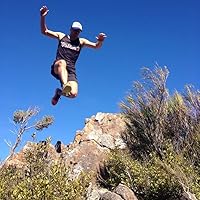
I ran it!
I mentioned a desire to run across the Kaimanawas and someone directed me to this book. I read it cover to cover - it was okay - and in the process formulated a route from Raetihi to the Eastern Kaweka ranges.
Recreating Johnsons flight from certain imprisonment I ran first to Ohakune, then up the Blyth track, Anti-clockwise around the mountain to Tukino before crossing SH1 and entering the Kaimanawas in the Southern Access Corridor. After 74km I slept. The next day would take around 14hrs and consisted of traversing from the southern end of the Kaimanawas to the start of the Kawekas. I arrived at Tussock Hut 12hrs later - broken. Bad weather slowed my progress and with an agonizing 3hrs from exiting the Kawekas I was stuck at Tira lodge for 2 days. My 3 day run became 5 but I emerged at Middle Hill acess on Makahu road successfully overcoming what took Johnson 3 months enduring a short dose of many of his hardships.
If you know of other similar journeys, fictional or other, please let me know.
I mentioned a desire to run across the Kaimanawas and someone directed me to this book. I read it cover to cover - it was okay - and in the process formulated a route from Raetihi to the Eastern Kaweka ranges.
Recreating Johnsons flight from certain imprisonment I ran first to Ohakune, then up the Blyth track, Anti-clockwise around the mountain to Tukino before crossing SH1 and entering the Kaimanawas in the Southern Access Corridor. After 74km I slept. The next day would take around 14hrs and consisted of traversing from the southern end of the Kaimanawas to the start of the Kawekas. I arrived at Tussock Hut 12hrs later - broken. Bad weather slowed my progress and with an agonizing 3hrs from exiting the Kawekas I was stuck at Tira lodge for 2 days. My 3 day run became 5 but I emerged at Middle Hill acess on Makahu road successfully overcoming what took Johnson 3 months enduring a short dose of many of his hardships.
If you know of other similar journeys, fictional or other, please let me know.
April 7, 2024
A somewhat bleak tale, set in bleak times, of a depressed character who seems to have difficulty with inter-personal relationships is not a great basis for an entertaining novel. However, the thirties were difficult in New Zealand and the protagonist Johnson arrives in the country having served and suffered in the Great War. He struggles to find a job and a place in any community. Circumstances lead him to flee a possible murder charge and he spends time living in grim circumstances in the Kaimanawas. The tale is saved by the evocative, spare prose and justifies the praise for this novel, setting it among the finest in New Zealand literature. I was glad to have read it.
June 28, 2025
A grim read, but one of those books I'll be glad that I have read as I grapple with my own history. Johnson represents a sad and lonely way of living that seems almost a prerequisite of survival for many pakeha men who made their way to NZ, and that still hangs heavy over many families here today.
Johnson did at least know that he yearned for community, but always found reasons to abnegate his desire. There were hints throughout at how societal, political, and economics structures failed men like him.
At its best moments the book was sympathetic and unflinching, but unfortunately often it seemed to romanticize the tragic detached stoicism of the Man Alone.
Johnson did at least know that he yearned for community, but always found reasons to abnegate his desire. There were hints throughout at how societal, political, and economics structures failed men like him.
At its best moments the book was sympathetic and unflinching, but unfortunately often it seemed to romanticize the tragic detached stoicism of the Man Alone.

January 4, 2026
What a miserably boring protagonist set in a moderately interesting time and place.
John Mulgan, who was tired of the 'effete' and 'weak' literature and poems of the time before and after WW1 wrote this book to be about strong, stoic and hard-working men. Women are not absent but portrayed as annoying inconveniences that get in the way.
The result is a book about a painfully boring man and his complete apathy to the world around him, who by the end of the book, decides to go to Spain to fight fascism just because he's bored.
The only redeeming things about the book are the descriptions of the New Zealand country side and a very uninformed view into the Queen St riots.
John Mulgan, who was tired of the 'effete' and 'weak' literature and poems of the time before and after WW1 wrote this book to be about strong, stoic and hard-working men. Women are not absent but portrayed as annoying inconveniences that get in the way.
The result is a book about a painfully boring man and his complete apathy to the world around him, who by the end of the book, decides to go to Spain to fight fascism just because he's bored.
The only redeeming things about the book are the descriptions of the New Zealand country side and a very uninformed view into the Queen St riots.

December 11, 2019
An interesting read. The blurb describes this book as "a literary landmark, an insight into the sort of mind that dominated New Zealand society for so long. "
Written in 1939, just after the Great War, we have a picture of a returned soldier, trying to make his way back into society. The backdrop is the New Zealand of that era.
Written in 1939, just after the Great War, we have a picture of a returned soldier, trying to make his way back into society. The backdrop is the New Zealand of that era.

November 10, 2025
This wee number is very very unlikely to have missed out on a full fiver. I think for a book to get 5 it must make me see the world in a different way or at least make me think considerably deeply about a subject. In any event, Man Alone is a confronting book. The setting of 1930s New Zealand is jarring. The protagonist is a simple man. Not a satisfying ending.

August 12, 2026
Like climbing Ruapehu, a slow and turgid start that ramps up appropriately by the apex, and then a fast pace track down to the finish line.
I liked the frank depiction of early 20th century New Zealand, not entirely positive, though also not negative. Gave the feeling that it’s honest and that at its heart New Zealand is a country made up of some, in general, nice people.
I liked the frank depiction of early 20th century New Zealand, not entirely positive, though also not negative. Gave the feeling that it’s honest and that at its heart New Zealand is a country made up of some, in general, nice people.
March 21, 2021
A classic New Zealand book. Focuses mainly on one man and his adaptation to the environment around him. However, the ending and conclusion of the novel is slightly clouded and unclear. A good read, nevertheless.
February 6, 2019
This is a New Zealand classic
November 24, 2022
Read in one sitting on the flight over from Brisbane to Perth. Really enjoyed it. The prose is really good.

January 1, 2024
A new country and a young man’s journey through the wars and Great Depression in New Zealand - personal interaction with country and events.
December 4, 2024
A book about masculinity. Well written and interesting to see the way NZ has changed and is now heading. Recommended - especially if you are dreaming of dropping out of society
November 22, 2025
Never really realised Mulgan was such a poncey nepo baby. Extra star for personal reasons

April 27, 2026
3 1/2 stars. It took me half the book to really get into the swing of this novel. The second half was richer in prose and description
September 19, 2026
NZ classic
February 4, 2025
Taught me more NZ history than I learnt in school 👍

December 9, 2016
I have a friend with a passion for this book, which made me decide to read it.
To begin with I thought, "NZ blokes, bloody great (not)." And not just any bloke, the sort born and raised before the first world war, who'd fought in it and come back to NZ harder, perhaps with the expectation that home would make it all better. And these men worked, went to the pub, expected meat and 3 vege on their dinner plate, raised children they probably never helped nurture. Their wages made them the boss of their home and they did what they wanted while their wives stayed home and cleaned, cooked, and had babies.
The story of Johnson has little to do with the story of the domesticated NZ man. He's English, he wants to enjoy peace time. He wants to work hard, eat, drink, see women when he needs sex, but otherwise spend his time with men. He does all of these things, moving through NZ (Auckland to Hamilton to New Plymouth, Northland, and tiny NZ villages). Johnson has no wish to settle down or buy a farm. He is the Man Alone who lives, as we would say today, "in the moment".
Yet within this context there's echoes of the man alone in Greek and Roman myths. I was reminded of the Odyssey, the journeys from place to place, working, meeting people, moving through before becoming attached, never settling, the homeland Over There, in the subconscious, waiting.
Ancient Greeks believed that the greatest relationship a man could have was with another man. The Spartans encouraged homosexuality among its warriors because they would be incentivised to fight all the harder with their lover beside them in the fray. Once again this side-by-side-ness is echoed in Johnson's relationships with men like Scotty and Stenning. Here were people he spent long periods of time with either working or travelling. They are so close they do not need to speak, they share clothes, the sleep in tents together, they wake and hear the other person breathing next to them.
But one day Johnson makes a stupid mistake, which snowballs into catastrophe. He becomes a man alone and fleeing, a man no longer part of the army of men, but peripheral to it. He goes bush and manages to survive. He changes from the easy-go-lucky sort with no real worries to someone who struggles.
There's more to be said. This is a book with the interesting subtext of great change. Governmental change, economic change, the eroding of the hard working but relatively happy lifestyle and cheap land that so many colonists came out for. It's a book of contrasts, too, hard men, tough work, few words alongside fear and confusion, beauty and real pain as hopes are dashed.
I can't say this is a favourite book, but it's so clever and well written, it encapsulates NZ (working class NZ) so well it deserves my 5 stars. I don't believe it's the great NZ novel, actually I don't believe in any such thing in any country, but it holds a special place in NZ literature because it is a record of a particular time in our history, just as Jane Meander's novel, Story of a River, records that period of early colonialism and NZ as a land covered in kauri, totara, supplejack, and many other native trees. All important books worth reading even if you never love them.
To begin with I thought, "NZ blokes, bloody great (not)." And not just any bloke, the sort born and raised before the first world war, who'd fought in it and come back to NZ harder, perhaps with the expectation that home would make it all better. And these men worked, went to the pub, expected meat and 3 vege on their dinner plate, raised children they probably never helped nurture. Their wages made them the boss of their home and they did what they wanted while their wives stayed home and cleaned, cooked, and had babies.
The story of Johnson has little to do with the story of the domesticated NZ man. He's English, he wants to enjoy peace time. He wants to work hard, eat, drink, see women when he needs sex, but otherwise spend his time with men. He does all of these things, moving through NZ (Auckland to Hamilton to New Plymouth, Northland, and tiny NZ villages). Johnson has no wish to settle down or buy a farm. He is the Man Alone who lives, as we would say today, "in the moment".
Yet within this context there's echoes of the man alone in Greek and Roman myths. I was reminded of the Odyssey, the journeys from place to place, working, meeting people, moving through before becoming attached, never settling, the homeland Over There, in the subconscious, waiting.
Ancient Greeks believed that the greatest relationship a man could have was with another man. The Spartans encouraged homosexuality among its warriors because they would be incentivised to fight all the harder with their lover beside them in the fray. Once again this side-by-side-ness is echoed in Johnson's relationships with men like Scotty and Stenning. Here were people he spent long periods of time with either working or travelling. They are so close they do not need to speak, they share clothes, the sleep in tents together, they wake and hear the other person breathing next to them.
But one day Johnson makes a stupid mistake, which snowballs into catastrophe. He becomes a man alone and fleeing, a man no longer part of the army of men, but peripheral to it. He goes bush and manages to survive. He changes from the easy-go-lucky sort with no real worries to someone who struggles.
There's more to be said. This is a book with the interesting subtext of great change. Governmental change, economic change, the eroding of the hard working but relatively happy lifestyle and cheap land that so many colonists came out for. It's a book of contrasts, too, hard men, tough work, few words alongside fear and confusion, beauty and real pain as hopes are dashed.
I can't say this is a favourite book, but it's so clever and well written, it encapsulates NZ (working class NZ) so well it deserves my 5 stars. I don't believe it's the great NZ novel, actually I don't believe in any such thing in any country, but it holds a special place in NZ literature because it is a record of a particular time in our history, just as Jane Meander's novel, Story of a River, records that period of early colonialism and NZ as a land covered in kauri, totara, supplejack, and many other native trees. All important books worth reading even if you never love them.
Displaying 1 - 30 of 46 reviews