

What do you think?
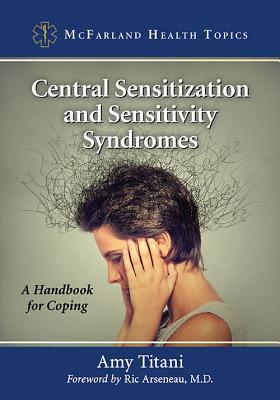
Central Sensitization and Sensitivity Syndromes: A Handbook for Coping
Millions of people experience symptoms of central sensitization (CS) and central sensitivity syndromes (CSS) such as chronic fatigue syndrome, fibromyalgia and multiple chemical sensitivities. Yet many lack diagnoses, education and resources. Without proper support, some patients may become withdrawn, suffering needlessly and possibly developing mental illness.
Covering the syndromes within the context of central sensitization (CS), this book provides candid personal experience, strategies for symptom management, and suggested methods for coping and long-term healing, with easy-to-understand science.
This book is for both patients and medical providers who deal with Central Sensitization and/or Central Sensitivity Syndromes such as these:
Chronic Fatigue Syndrome
Fibromyalgia
Multiple Chemical Sensitivities
Irritable Larynx Syndrome
POTS
Orthostatic Intolerance
Irritable Bowel Syndrome
Restless Legs Syndrome
Peridodic Limb Movements in Sleep
Costochondritis
Migraine headaches
Myofascial Pain Syndrome
and several other chronic pain syndromes
These conditions can be incredibly isolating and wreak havoc on all aspects of people's lives, biological, psychological, social, and financial. The book teaches patients and medical providers alike about the science behind Central Sensitization and Central Sensitivity Syndromes (CSS), the overlapping nature of the syndromes, and how to manage symptoms, increase functionality, cope with the overarching impact of these conditions, and improve quality of life.
Having stumbled through medical system and insurance hoops, job loss, home loss, and debilitating symptoms for nearly two years before gaining a diagnosis, Titani has a mile-long list of lessons learned. In this inspiring and educational book, she provides easily digestible scientific facts and shares her experiences with humor, compassion, and with every intention to educate both patients and medical providers, and to save patients from her mistakes and help them make their own lives better.
Part handbook, part memoir, and part pure healing compassion, this book is for medical providers, caregivers, and anyone who has Central Sensitization and/or any of the CSS. In addition to gaining a firm understanding of a primary mechanism behind these illnesses, patients will discover that they are not alone with these conditions, and they will gain a compassionate companion as they confront the challenges Central Sensitization and CSS present.
The book's foreword is written by Ric Arseneau, M.D., an academic internist and clinical associate professor at the University of British Columbia. He is also the director of program planning at the Complex Chronic Diseases Program at BC Women s Hospital, an innovative new program with a focus on ME/CFS, FM, MCS and related Central Sensitivity Syndromes (CSS). He has more than 20 years of experience working with patients with CSS.
Covering the syndromes within the context of central sensitization (CS), this book provides candid personal experience, strategies for symptom management, and suggested methods for coping and long-term healing, with easy-to-understand science.
This book is for both patients and medical providers who deal with Central Sensitization and/or Central Sensitivity Syndromes such as these:
Chronic Fatigue Syndrome
Fibromyalgia
Multiple Chemical Sensitivities
Irritable Larynx Syndrome
POTS
Orthostatic Intolerance
Irritable Bowel Syndrome
Restless Legs Syndrome
Peridodic Limb Movements in Sleep
Costochondritis
Migraine headaches
Myofascial Pain Syndrome
and several other chronic pain syndromes
These conditions can be incredibly isolating and wreak havoc on all aspects of people's lives, biological, psychological, social, and financial. The book teaches patients and medical providers alike about the science behind Central Sensitization and Central Sensitivity Syndromes (CSS), the overlapping nature of the syndromes, and how to manage symptoms, increase functionality, cope with the overarching impact of these conditions, and improve quality of life.
Having stumbled through medical system and insurance hoops, job loss, home loss, and debilitating symptoms for nearly two years before gaining a diagnosis, Titani has a mile-long list of lessons learned. In this inspiring and educational book, she provides easily digestible scientific facts and shares her experiences with humor, compassion, and with every intention to educate both patients and medical providers, and to save patients from her mistakes and help them make their own lives better.
Part handbook, part memoir, and part pure healing compassion, this book is for medical providers, caregivers, and anyone who has Central Sensitization and/or any of the CSS. In addition to gaining a firm understanding of a primary mechanism behind these illnesses, patients will discover that they are not alone with these conditions, and they will gain a compassionate companion as they confront the challenges Central Sensitization and CSS present.
The book's foreword is written by Ric Arseneau, M.D., an academic internist and clinical associate professor at the University of British Columbia. He is also the director of program planning at the Complex Chronic Diseases Program at BC Women s Hospital, an innovative new program with a focus on ME/CFS, FM, MCS and related Central Sensitivity Syndromes (CSS). He has more than 20 years of experience working with patients with CSS.
252 pages, Paperback
Published July 6, 2017
About the author
Amy Titani
1 book5 followersAmy Titani is a writer and teacher who resides in Vancouver, BC, and has Central Sensitization and three Central Sensitivity Syndromes: Chronic Fatigue Syndrome (CFS), Irritable Larynx Syndrome (ILS), and Multiple Chemical Sensitivities (MCS). Her first book on her adventures with these chronic illnesses, Central Sensitization and Sensitivity Syndromes: A Coping Handbook, was published by McFarland Books in June 2017. She also runs Titan Amy's Art Shop--an online clothing and gifts shop that donates 50% of profits to research, treatment facilities, and advocacy groups for Central Sensitivity Syndromes such as CFS, MCS, and Fibromyalgia. Every purchase brings us closer to a cure. Visit at http://TitanAmy.threadless.com.
About the book: Having stumbled through medical system and insurance hoops, job loss, home loss, and debilitating symptoms for nearly two years before gaining a diagnosis, Titani has a mile-long list of lessons learned. In this inspiring and educational book, she provides easily digestible scientific facts and shares her experiences with humor, compassion, and with every intention to save her readers from her mistakes. See the book description for details.
Titani also offers peer support to those with these conditions. Learn more at http://www.TitanAmy.com
About the book: Having stumbled through medical system and insurance hoops, job loss, home loss, and debilitating symptoms for nearly two years before gaining a diagnosis, Titani has a mile-long list of lessons learned. In this inspiring and educational book, she provides easily digestible scientific facts and shares her experiences with humor, compassion, and with every intention to save her readers from her mistakes. See the book description for details.
Titani also offers peer support to those with these conditions. Learn more at http://www.TitanAmy.com
Ratings & Reviews
Friends & Following
Create a free account to discover what your friends think of this book!
Community Reviews
Displaying 1 - 4 of 4 reviews

November 18, 2018
First of all, I recognize and respect the amount of work and time that Amy Titani devoted to this book. As someone who writes and educates about Community Based Care, Care Collectives and living with chronic illness, and who is disabled by CSS, I know what it can take to do this work. Despite my rating I do think this book is important and valuable and I know that it will benefit many people.
Beyond several issues I think would have been resolved with more editing, namely areas of repetition, long-windedness, and disorganization of and within chapters, there are several reasons this book was disappointing for me.
I've been living with CS for over twenty years, with many CSS developing slowly over those years - TMJ, IBS, Fibro, ME/CFS, MCS, IC, Vulvodynia - most of which got barely a mention in the book. In fact, it wouldn't be misleading to say this book is actually about CS and MCS (and ME/CFS to a smaller degree) given the amount of the book devoted to coping with, managing, and treating MCS. There's not even an introductory section devoted to pain in Chapter 1, despite pain being a defining part of most CSS. I understand she is writing from her personal experience, which is clearly dominated by MCS, but given this I would have liked to see less of Amy's personal narrative and the addition of short narratives or vignettes from people living with different CSS than her. Or at least more of the book devoted to the particularities of coping with, managing and treating various other CSS that comprise CS. Pain not being *her" primary experience of CS shouldn't have resulted in it's essential exclusion from a book on CS and CSS. Even in Appendix F, resources on pain are as thin as the attention paid to it in the book.
Additionally, is unacceptable that Titani recommended, as part of treatment and recovery from MCS (which I also have), the use of fragrances out in the world. Why does she think it's OK to expose people to things that SHE KNOWS will trigger horrible symptoms in some of them? I'm not disagreeing that exposing ourselves to fragrances in thoughtful and controlled ways is useful or effective (it has been for me), but this MUST be done in environments that do not put others at risk (or put others at risk with their consent). Creating a world that is safer for all of us to live in is part of disability justice and I don't see that reflected here.
So, the section discussing being a "hopeless loser". Frankly, it's appalling. I respect that this term worked for her but to include it in a book and promote its use shows a significant level of ignorance regarding chronic mental illness. She was depressed for a period of time secondary to developing CSS so I recognize she does have some lived experience with depression. Nevertheless, for those of us (of whom there are many), who have lived with mental illness all or most of our lives, in addition to living with CSS, this comes across in one way: stigmatizing, belittling, and so, so ignorant. Her "warning signs of becoming a 'hopeless loser'" are the warning signs of DEPRESSION. There is literally NO REASON why this section couldn't just discuss depression. In fact, every single use of "hopeless loser" could be replaced with "depression" and the section would work just fine. I could go on and on about this but will stop here.
Lastly, Chapter 6 has so much good stuff in it but why, why, why are basic things like sleep, self-care, food, and faith presented as things to work on only when you've "spent some time in stability phase"? I mean, how do you even get to stability phase without these things? I wish these things had been presented earlier in the book and without the caveat. This is an example of an area further editing could have improved.
Despite these issues, this book is also filled with gems. The work of redefining one's identity post-illness, identifying triggers, "bubble time", the critical importance of rest as treatment, pacing during times of crisis and stability, identifying functional capacity and post-exertional malaise, valuing ourselves outside of what we can produce, coping with enormous losses, resentment, anger, building faith and self-care practices. I also appreciate Amy's vulnerability sharing her stories and her work to lighten the content a bit with her sense of humour (although it grated me the wrong way I can see it really working for others).
I think this book will be particularly relevant to people living with MCS and I will recommend it with caution regarding my previous comments.

February 26, 2019
I was hoping for more with this book, there are parts of it that really applied to my experience but for the most part I found it very focused on Titani's own CSSs like Multiple Chemical Sensitivities and Irritable Larynx Syndrome. Which is fine if you suffer from the same syndromes, but Central Sensitization is so broad and the book doesn't touch on as much as I'd like, so I was disappointed that the "handbook for coping" didn't give me much for my particular concerns. It would be better if the title referenced more specifically what the book was going to cover. Another Goodreads reviewer, Jennie Chantal, goes into detail with a lot of the same thoughts I had.
That said, there's a lot of information here that is helpful/ would be great for someone who suffers from the same form of CS as Titani. And some of the broadly applicable tips were good to think about. So many forms of chronic pain are extremely misunderstood by so many people, that it can be comforting to read about other people in a similar/related situation.
That said, there's a lot of information here that is helpful/ would be great for someone who suffers from the same form of CS as Titani. And some of the broadly applicable tips were good to think about. So many forms of chronic pain are extremely misunderstood by so many people, that it can be comforting to read about other people in a similar/related situation.
August 28, 2017
This one-of-a-kind handbook will come as a blessing to those of you who face the challenges of living with central sensitivity syndromes (CSS) as well as to your families and friends. Not only does Amy make the latest research into the various CSS conditions easy to understand but she also shares her own experiences in coping with them, since she herself struggles with chronic illnesses. Her strategies for getting through difficult days are founded in an unflagging faith in the potential for long term healing. Amy never downplays the roller coaster of emotions you will face but she will inspire you to persevere, just as she has. And if you’re someone like me who has a dear friend with CSS issues, Amy teaches you how to offer appropriate support and find ways to sustain your relationship. In any event, this is the book you need by the teacher and friend you’ve been looking for.
April 14, 2026
This book was wildly helpful in managing my CS symptoms. It was validating and full of helpful reminders and remedies. I made myself a bubble room for flare days and rest, it’s the greatest, and I because more understanding of the environmental impact. I have gone back to this book time and time again.
Displaying 1 - 4 of 4 reviews