

What do you think?
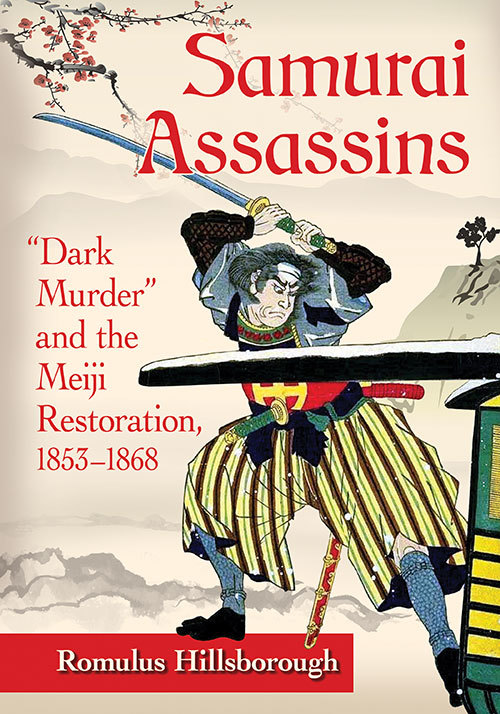
Samurai Assassins: "Dark Murder" and the Meiji Restoration, 1853-1868
The Japanese word for assassination is ansatsu, “dark murder,” and its significance in the samurai-led revolution that was the Meiji Restoration, by which the shōgun’s military government was overthrown and the Imperial monarchy restored in 1868, forms the substance of this book. The ideology and moral philosophy of the men behind the revolution--including bushido or "the way of the warrior"--informed their actions and would become the foundation of the Emperor-worship of World War II. This first-ever account in English of the assassins who drove the revolution details one of the most volatile periods in Japanese history--also known as "the dawn of modern Japan."
224 pages, Paperback
Published April 4, 2017
About the author
Romulus Hillsborough
16 books44 followersRomulus Hillsborough is a leading Western authority on the political upheaval and samurai of nineteenth-century Japan during the fall of the Tokugawa shogunate and the Meiji Restoration. His fascination with this period spans more than four decades, including sixteen years living in Japan, where he conducted original research and interviewed descendants of Bakumatsu-era figures.
He is the author of several acclaimed books on nineteenth-century Japan, specializing on the Bakumatsu era, including Ryoma: Life of a Renaissance Samurai, Samurai Revolution, Samurai Assassins, and the forthcoming Samurai Swordsmen: The Definitive History of the Shinsengumi amid the Fall of the Tokugawa Shogunate. His books have been published in nine languages and have been praised for their narrative style, historical accuracy, and cultural insight.
A lifelong practitioner of traditional Japanese martial arts, Hillsborough has trained in Shotokan karate for more than five decades under Tsutomu Ohshima, founder of Shotokan Karate of America and a direct student of Gichin Funakoshi, the father of modern karate.
He is the author of several acclaimed books on nineteenth-century Japan, specializing on the Bakumatsu era, including Ryoma: Life of a Renaissance Samurai, Samurai Revolution, Samurai Assassins, and the forthcoming Samurai Swordsmen: The Definitive History of the Shinsengumi amid the Fall of the Tokugawa Shogunate. His books have been published in nine languages and have been praised for their narrative style, historical accuracy, and cultural insight.
A lifelong practitioner of traditional Japanese martial arts, Hillsborough has trained in Shotokan karate for more than five decades under Tsutomu Ohshima, founder of Shotokan Karate of America and a direct student of Gichin Funakoshi, the father of modern karate.
Ratings & Reviews
Friends & Following
Create a free account to discover what your friends think of this book!
Community Reviews
Displaying 1 - 5 of 5 reviews

May 28, 2020
I really enjoyed this one. Though a bit confusing at times due to the great amount of recurring names and the time leaps, it is the most "practical" text I've read on the Bakumatsu and early Meiji periods, as it deals with specific facts that shaped the history of the time.

August 2, 2017
Another masterpiece from the man who brings the Bakumatsu era to life . If you enjoyed Samurai Revolution, than you know what to expect . Regardless the book is more than worth it for the info on Okada Izo alone .

August 14, 2023
A look at the political assassinations and climate leading to them in the run up to the Meiji Restoration, it's very readable for those like me who are just getting into this era of Japanese history. I will say, their is a large amount of names and terms initially thrown at you and I worried this would be more a list of people and dates than anything. But, once you get through that first two or three chapters, it settles nicely into a flow. The author breaks up the chapters and presents them in a way that makes the events and information rather easy to follow.
Some notes though, presenting the names in a non-westernized way is a fine call as our most similar decisions made by the author. The one place I disagree with it is using era names instead of Gregorian years, especially since months and days don't align which made organizing events within the same year pretty difficult for the Western reader. While I understand the authors reasoning and intent with this choice, I think it would have done the work good to switch it to provide Gregorian years with the era's in parenthesis rather than the other way around (and note there is a handy chart in the back doing whole year conversation that I did not find until finished).
But, overall, I doubt you'll find a better introduction in English to the subject of the rise of Japanese political assassination. A method of political policy to be heavily important through the end of WW2 and still occasionally rearing it's head today as we have seen.
Some notes though, presenting the names in a non-westernized way is a fine call as our most similar decisions made by the author. The one place I disagree with it is using era names instead of Gregorian years, especially since months and days don't align which made organizing events within the same year pretty difficult for the Western reader. While I understand the authors reasoning and intent with this choice, I think it would have done the work good to switch it to provide Gregorian years with the era's in parenthesis rather than the other way around (and note there is a handy chart in the back doing whole year conversation that I did not find until finished).
But, overall, I doubt you'll find a better introduction in English to the subject of the rise of Japanese political assassination. A method of political policy to be heavily important through the end of WW2 and still occasionally rearing it's head today as we have seen.

April 26, 2024
Most of the stories, either I already watched in classic to present day jidaigeki-chanbara series or movies. Some I already read in websites especially Wikipedia.

January 9, 2022
In another fascinating work on Japanese history, Hillsborough takes a close look at the role played by assassinations and those who directed them and carried them out during the Bakumatsu era. Some familiarity with at least the broad strokes of this history and its major playors is recommended before going into a book containing this much otherwise likely to be confusing detail. As usual with Hillsborough's books, this is an invaluable resource for the non-Japanese-speaking reader interested in these events, as he remains the only writer tackling them comprehensively and relying largely on Japanese sources that, to my everlasting despair, remain unavailable in translation.
Displaying 1 - 5 of 5 reviews