

What do you think?

Starcrossed #1
Vervloekt
De 16-jarige Helen woont met haar vader op het eiland Nantucket, waar zelden iets gebeurt. Dus wanneer de mysterieuze familie Delos op het eiland komt wonen, heeft iedereen het erover. Alleen Helen wantrouwt van begin af aan de Delos-familie. Dan ontmoet ze Lucas. Hij maakt een storm aan emoties in haar los. Hij is belachelijk knap en ze kan hem wel met haar blote handen wurgen. Door een oude Griekse vloek voelen ze een diepe haat voor elkaar. Maar soms is de liefde sterker dan de haat en kunnen zelfs de goden niet voorkomen wat er gebeurt...
'Angelini blies me omver! Als je net als ik gek bent op verboden liefdes en Griekse goden, dan is dit boek zeker een aanrader.' De Leesfabriek
'Een verrukkelijke en onheilspellende saga die me compleet overrompelde. Net als Helen viel ik als een blok voor Lucas. OMG, ik kan niet wachten om meer te lezen!' Lauren Kate, auteur van o.a. Fallen
'Angelini blies me omver! Als je net als ik gek bent op verboden liefdes en Griekse goden, dan is dit boek zeker een aanrader.' De Leesfabriek
'Een verrukkelijke en onheilspellende saga die me compleet overrompelde. Net als Helen viel ik als een blok voor Lucas. OMG, ik kan niet wachten om meer te lezen!' Lauren Kate, auteur van o.a. Fallen
400 pages, Paperback
First published May 31, 2011
About the author
Josephine Angelini
21 books7,653 followersHi! Thanks so much for stopping by my Goodreads page. I only check in on it occasionally, so if you’d like to send me a message please use the contact form on my website: http://josephineangelini.com.
I can also be found on Instagram, TikTok, and Facebook, and I love connecting with readers. Check out the Linktree url above for more info.
I am a #1 international bestselling author, a Massachusetts native, and the youngest of eight siblings. I graduated from New York University's Tisch School of the Arts in theater with a focus on the classics and now live in Los Angeles with my husband and daughter.
I can also be found on Instagram, TikTok, and Facebook, and I love connecting with readers. Check out the Linktree url above for more info.
I am a #1 international bestselling author, a Massachusetts native, and the youngest of eight siblings. I graduated from New York University's Tisch School of the Arts in theater with a focus on the classics and now live in Los Angeles with my husband and daughter.
Ratings & Reviews
Friends & Following
Create a free account to discover what your friends think of this book!
Community Reviews
Displaying 1 - 30 of 5,739 reviews

March 25, 2011
No, GoodReads.
NO.
How about NO FUCKING STARS?
Quick, someone get me chocolate. Lots and lots of chocolate!

I should have known that when Lauren Kate blurbed this book I wouldn't like it. No, wait, that doesn't fully express my hatred for Starcrossed. How about this:
After reading this shit storm of a book I feel like I should go straight to my book shelf and give "Catastrophe": Hush, Hush, "My Eyes, They Bleed!": House of Night, "Kill it with Fire!": Twilight, and even, yes, "Are You Fuckin' Kidding Me?!": Carrier of the Mark all 5 glorious stars.
This is the worst book I have ever read.
Why, oh, why did I read it? I should have listened to the Fates (Kat, Paige, Phoebe). They warned me of this, but I didn't listen. I almost ALWAYS agree with them on books. Why did I think this would be a different story? I will never doubt your wisdom again, ladies.
This one time I let myself be influenced by another popular reviewer who claimed to absolutely love this book. I was conned! Fooled! Bamboozled! Hoodwinked!
The only logical answer is that Hades himself was behind the plot to fry my remaining brain cells. *rubs chin* Yes, that must be it. I've been trolled by the Lord of the Underworld himself.
HADES!!
ARE YOU HAPPY?!
ARE YOU FUCKING HAPPY NOW?!
WHAT DO YOU HAVE TO SAY FOR YOURSELF?!

Y-y-you heartless bastard.
This review will not be nice. No one will be spared. Not even the children.
*flips through her notebook*
Good thing I took plenty of notes then. Hahahaha!
The Writing
Dear, Gandhi! It was terrible! Immediately when I started to read, I felt my eye balls start rebuking me. "Noooooooooo, don't make us! You are evil! You are heartless! Why do you hate us! We've been good to you!" I'm not exaggerating when I say this was amateur at best and eye-bleeding bad at worse. The book is littered with ridiculously simple sentences that remind me of a children's book. "SeeHelen Spot run? Helen Spot can run fast! Run, Helen Spot. Run!" Metaphors and similes exsit for a reason. Let's use them. But that's not event the worst of it. There were countless pages of info-dumping as well. SHOW DON'T TELL! And the dialogue...OMFG. It was painfully obvious that they were trying entirely too hard to sound like "hip" teens.
I just wanted to shake them. Shake them all.
The Plot
The plot was a damn mess. Basic run down:
- Lucas and his Brady Bunch family move to the neighborhood.
- Helen and Lucas almost kill each other.
- They break curse/spell/whatever and fall in love over night.
- Oh noz! Helen is in danger.
- Helen suddenly becomes a sex kitten.
- Lucas denies her advances.
- Helen wonders if he is gay. Contemplates sex change.
- Demi-god training.
- Oh, but wait! Now, she is invincible!
- "Sex, please," says Helen. "No means no, Helen. It would destroy the world!" Lucas cries.
- Shit happens, people die.
- "OMG! So we won't destroy the world after all! I'm horny. Let's do it," Lucas declares. *rams tongue down throat* "Ew. We are first cousins! We can never be together! Fuck our fuckin' life!" she whines.
Fin.

Keep up Hades!
Angelini tries to confuse the readers with her many plot twists, but all the plot really does is run around the mulberry bush chasing the weasel. There was nothing clever about it. I could tell that I was supposed to be like, "Whoa! My teeny little brain never saw that coming!" IT NEVER HAPPENED!
Helen
Let's play Name That Sue! But first you're going to need a few clues about her personality:
- I'm super beautiful, but I don't notice it!
- I'm the "last" person in my family. Woe is me!
- I'm so powerful and useless, love me!
- I'm so selfless. Here, let me love you!
- My characterization has been used over and over in tons of books, but I have super speshul powers! I'm kewler than them!
Answers: Black Hole Sue, God Mode Sue, Sympathetic Sue, Anti-Sue... my god. It's too many Sues to count! It's a Thirty Sue Pileup!
Helen is an idiot.

Most of the novel she's running around with twinkling stars in her eyes and clueless to everything that is happening around her. She is beautiful in every way. So much so, that it is normal for people to just sit and stare at her. Everybody loves her and the world kisses her ass every chance it gets. Her favorite hobbies include going grocery shopping, cooking for her dad, doing homework, and personal hygiene. Oh hey, Bella! I didn't see you there!
The moment Helen and Lucas stop attempting to end each other's life, they immediately start holding hands and declaring their love for one another. (Oh, insta-love! How I hate thee!) She's never had a boyfriend or been kissed until Lucas and his family move into town. There is just something about Lucas that brings out everything in Helen. And I do mean everything. Her entire life she has had all these powerful mystical powers, but she never knew about them because whenever she would use them unknowingly in front of mortals she would get a nasty bout of menstrual cramps! Little does Helen know that her cramps were a cursed placed on her by her very own mother. But it was totally for her protection. Of course. *eyeroll* If that isn't some bullshit, I don't know what is.
So anyway, with every new plot twist, Helen seems to get a new power. Which basically means she keeps getting more and more useless. All she does is say, "Oh, but I don't want to hurt anyone! Even if they are trying to kill me, I can't justify their deaths!" Are you kidding me? She has no sense of self-preservation.
She.is.a.demi-god.

Go on and let it out, Hades!
That was during a SELF-DEFENSE session. How is it that a character can be so powerful and do NOTHING with her powers? What is the point?!*breath in, breath out* Sorry, guys. The stupidity makes it hard to breath. Thankfully, one of the other characters noticed this madness and said:
That was the only good part of the entire book. >_>
Then I hit the next chapter and Cassandra has a sword aimed for Helen's head and she JUST STANDS THERE.

Why won't she roll over and die already?!
So now she's invincible and can't be killed by any weapons AND she's the most powerful demi-god. REALLY?! >Implied Facepalm<
Yet, believe it or not all those things I could have semi-forgiven and gave this book 1 star, maybe 2 for good effort. The biggest problem with this book: It's SEXIST. This book offended me on so many levels, it's not even funny. Let me count the ways:
Causal jokes about domestic abuse:
"I'll just tell him you abuse me," she said with a shrug. "And I'll tell him you like it," he teased back.
That shit is not amusing. AT ALL. Lots of women suffer from domestic abuse every day and Angelini pokes fun?! What messages are we sending our young girls? That this is romantic banter? This is why young girls think it is okay to tweet crazy shit like they would let Chris Brown hit them any time. This is why we are seeing people happy about him singing songs with Rihanna. We need to speak up against this. IT IS NOT OKAY! OMG, I'm so angry right now, I'm seeing red. RAGE.
Use your powers in the kitchen!:
WHAT?! The only reason why they fight is to stay in shape? THEY ARE DEMI-GODS!!!!!
Controlling boyfriend:
Come again? He what?! Oh, hell no. Let a guy come home and start ordering me around. I've got two words for him:

Bitch, please.
OMGOMGOMGOMGOMGOMG.
At this point he never even asked her to be his girl friend! He goes throughout most of the book just holding her hand, but telling everyone else they don't really have a relationship. And then he pulls this line:
I just... can't.
Women should be held to high standards and oh, yeah, they're evil:
And:
Yup, thats right. It's totally a woman's fault a man can't control himself. I can't believe women have been fighting for RIGHTS just so we can write about this kind of stuff! Around 80% this book gets super ridiculous with making Helen and her mother out to be "semxy sex pots". Helen is so damnuseless powerful and horny that she pretty much starts playing Lady GaGa's Love Game, trying to take off Lucas' clothes at every opportunity she gets.

Let's have some fun this beat is sick. I wanna take a ride on your disco stick!
I suppose this is what she is supposed to look like:

I can see you staring there from across the block with a smile on your mouth and a hand on your HUH!
There are a ton of other problems with this book, but I've wasted enough of my life with Starcrossed. I probably have enough anger and quotes to write a damn book myself. I just... can't. I'm offended this was written. I offended that it was published. I offended people think this is okay.
This book FAILED at failing.

More reviews and other cool things at Cuddlebuggery Book Blog.
NO.
How about NO FUCKING STARS?
Quick, someone get me chocolate. Lots and lots of chocolate!

I should have known that when Lauren Kate blurbed this book I wouldn't like it. No, wait, that doesn't fully express my hatred for Starcrossed. How about this:
After reading this shit storm of a book I feel like I should go straight to my book shelf and give "Catastrophe": Hush, Hush, "My Eyes, They Bleed!": House of Night, "Kill it with Fire!": Twilight, and even, yes, "Are You Fuckin' Kidding Me?!": Carrier of the Mark all 5 glorious stars.
This is the worst book I have ever read.
Why, oh, why did I read it? I should have listened to the Fates (Kat, Paige, Phoebe). They warned me of this, but I didn't listen. I almost ALWAYS agree with them on books. Why did I think this would be a different story? I will never doubt your wisdom again, ladies.
This one time I let myself be influenced by another popular reviewer who claimed to absolutely love this book. I was conned! Fooled! Bamboozled! Hoodwinked!
The only logical answer is that Hades himself was behind the plot to fry my remaining brain cells. *rubs chin* Yes, that must be it. I've been trolled by the Lord of the Underworld himself.
HADES!!
ARE YOU HAPPY?!
ARE YOU FUCKING HAPPY NOW?!
WHAT DO YOU HAVE TO SAY FOR YOURSELF?!

Y-y-you heartless bastard.
This review will not be nice. No one will be spared. Not even the children.
*flips through her notebook*
Good thing I took plenty of notes then. Hahahaha!
The Writing
Dear, Gandhi! It was terrible! Immediately when I started to read, I felt my eye balls start rebuking me. "Noooooooooo, don't make us! You are evil! You are heartless! Why do you hate us! We've been good to you!" I'm not exaggerating when I say this was amateur at best and eye-bleeding bad at worse. The book is littered with ridiculously simple sentences that remind me of a children's book. "See
"What the holy hand grenade was that?"
It felt goofy as hell.
"Unbefrickinglievable," Hector cusses quietly into the silence.
I just wanted to shake them. Shake them all.
The Plot
The plot was a damn mess. Basic run down:
- Lucas and his Brady Bunch family move to the neighborhood.
- Helen and Lucas almost kill each other.
- They break curse/spell/whatever and fall in love over night.
- Oh noz! Helen is in danger.
- Helen suddenly becomes a sex kitten.
- Lucas denies her advances.
- Helen wonders if he is gay. Contemplates sex change.
"...she decided that if Lucas was gay then she was going to have to get a sex change operation. He would be so worth it."
- Demi-god training.
- Oh, but wait! Now, she is invincible!
- "Sex, please," says Helen. "No means no, Helen. It would destroy the world!" Lucas cries.
- Shit happens, people die.
- "OMG! So we won't destroy the world after all! I'm horny. Let's do it," Lucas declares. *rams tongue down throat* "Ew. We are first cousins! We can never be together! Fuck our fuckin' life!" she whines.
Fin.
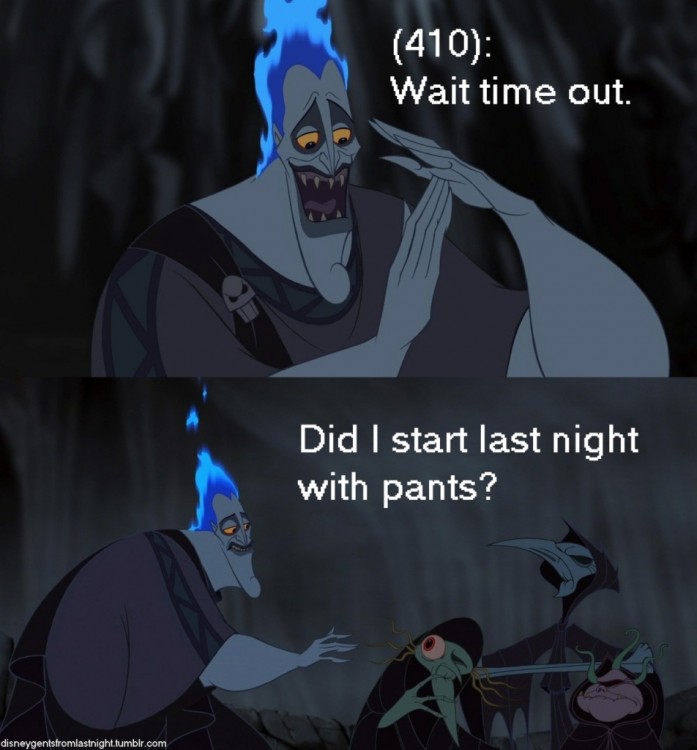
Keep up Hades!
Angelini tries to confuse the readers with her many plot twists, but all the plot really does is run around the mulberry bush chasing the weasel. There was nothing clever about it. I could tell that I was supposed to be like, "Whoa! My teeny little brain never saw that coming!" IT NEVER HAPPENED!
Helen
Let's play Name That Sue! But first you're going to need a few clues about her personality:
- I'm super beautiful, but I don't notice it!
- I'm the "last" person in my family. Woe is me!
- I'm so powerful and useless, love me!
- I'm so selfless. Here, let me love you!
- My characterization has been used over and over in tons of books, but I have super speshul powers! I'm kewler than them!
Answers: Black Hole Sue, God Mode Sue, Sympathetic Sue, Anti-Sue... my god. It's too many Sues to count! It's a Thirty Sue Pileup!
Helen is an idiot.
Most of the novel she's running around with twinkling stars in her eyes and clueless to everything that is happening around her. She is beautiful in every way. So much so, that it is normal for people to just sit and stare at her. Everybody loves her and the world kisses her ass every chance it gets. Her favorite hobbies include going grocery shopping, cooking for her dad, doing homework, and personal hygiene. Oh hey, Bella! I didn't see you there!
The moment Helen and Lucas stop attempting to end each other's life, they immediately start holding hands and declaring their love for one another. (Oh, insta-love! How I hate thee!) She's never had a boyfriend or been kissed until Lucas and his family move into town. There is just something about Lucas that brings out everything in Helen. And I do mean everything. Her entire life she has had all these powerful mystical powers, but she never knew about them because whenever she would use them unknowingly in front of mortals she would get a nasty bout of menstrual cramps! Little does Helen know that her cramps were a cursed placed on her by her very own mother. But it was totally for her protection. Of course. *eyeroll* If that isn't some bullshit, I don't know what is.
So anyway, with every new plot twist, Helen seems to get a new power. Which basically means she keeps getting more and more useless. All she does is say, "Oh, but I don't want to hurt anyone! Even if they are trying to kill me, I can't justify their deaths!" Are you kidding me? She has no sense of self-preservation.
"I knew if I started blocking him he'd just get angrier, and then I would eventually have no choice by to hit him so hard he wouldn't be able to hit me back."
She.is.a.demi-god.
Go on and let it out, Hades!
That was during a SELF-DEFENSE session. How is it that a character can be so powerful and do NOTHING with her powers? What is the point?!*breath in, breath out* Sorry, guys. The stupidity makes it hard to breath. Thankfully, one of the other characters noticed this madness and said:
"She'd better get it in her. Because I don't want any of the people I love to die defending her lazy ass."
That was the only good part of the entire book. >_>
Then I hit the next chapter and Cassandra has a sword aimed for Helen's head and she JUST STANDS THERE.
Cassandra swung her sword. In that millisecond Helen knew she'd had a good life, because she suddenly loved it so much that she could have wept with gratitude. She'd had amazing friends, the best dad in the world, and a strong, healthy body...I thought she was going to finally die! I was like, "Yes! KILL HER NOW! Doooo iiiittttt!" And you know what happens? She levels up out of nowhere!
Why won't she roll over and die already?!
So now she's invincible and can't be killed by any weapons AND she's the most powerful demi-god. REALLY?! >Implied Facepalm<
Yet, believe it or not all those things I could have semi-forgiven and gave this book 1 star, maybe 2 for good effort. The biggest problem with this book: It's SEXIST. This book offended me on so many levels, it's not even funny. Let me count the ways:
Causal jokes about domestic abuse:
"I'll just tell him you abuse me," she said with a shrug. "And I'll tell him you like it," he teased back.
That shit is not amusing. AT ALL. Lots of women suffer from domestic abuse every day and Angelini pokes fun?! What messages are we sending our young girls? That this is romantic banter? This is why young girls think it is okay to tweet crazy shit like they would let Chris Brown hit them any time. This is why we are seeing people happy about him singing songs with Rihanna. We need to speak up against this. IT IS NOT OKAY! OMG, I'm so angry right now, I'm seeing red. RAGE.
Use your powers in the kitchen!:
Everything about Ariadne was so feminine and round and lovely that Helen simply couldn't imagine anyone hitting her. "Do you guys do this to each other often? The fighting, I mean." Ariadne was shaking her head before Helen had even finished talking. "No. We spar together to stay in shape, but only the boys really fight, and only when they need to get something off their chests."
WHAT?! The only reason why they fight is to stay in shape? THEY ARE DEMI-GODS!!!!!
Controlling boyfriend:
"Now go to sleep," he ordered.
Come again? He what?! Oh, hell no. Let a guy come home and start ordering me around. I've got two words for him:
Bitch, please.
He kissed her neck and said he was sorry over and over, but try as she might, he wouldn't let her face him. She began to feel like she was being used.
OMGOMGOMGOMGOMGOMG.
"Is Zach after you?" Lucas asked with wide eyes.
"Oh, not really. He wants to talk to me about something, I think," Helen said as if it wasn't important. She shut her mouth before she could say too much.
"Yeah, I'll bet," Lucas said with a sneer, his blue eyes turning nearly black as he sensed her untruth. Is there any reason for Zach to think that you might be single?"
At this point he never even asked her to be his girl friend! He goes throughout most of the book just holding her hand, but telling everyone else they don't really have a relationship. And then he pulls this line:
"Are you trying to make me jealous or are you just so frustrated that you're already looking for someone else? Someone who would give in to you?"
I just... can't.
Women should be held to high standards and oh, yeah, they're evil:
"A lady never cheapened herself by using foul language."
And:
"He had sworn to remove the feminine evil of the cestus from the world so that all men could control their lust.
Yup, thats right. It's totally a woman's fault a man can't control himself. I can't believe women have been fighting for RIGHTS just so we can write about this kind of stuff! Around 80% this book gets super ridiculous with making Helen and her mother out to be "semxy sex pots". Helen is so damn
Let's have some fun this beat is sick. I wanna take a ride on your disco stick!
I suppose this is what she is supposed to look like:
I can see you staring there from across the block with a smile on your mouth and a hand on your HUH!
There are a ton of other problems with this book, but I've wasted enough of my life with Starcrossed. I probably have enough anger and quotes to write a damn book myself. I just... can't. I'm offended this was written. I offended that it was published. I offended people think this is okay.
This book FAILED at failing.
More reviews and other cool things at Cuddlebuggery Book Blog.
This entire review has been hidden because of spoilers.

June 3, 2010
Starcrossed is the story of a teenage school girl, Helen, who meets new boy, Lucas, and tries to murder him with her bare hands for no reason. Lucas, also, wishes to kill Helen in a horrifically violent way because they’re both demigods on the opposite side of a war.

I really thought this book was going to kill me – either with hypertension or an aneurysm for all the times it had me almost screaming in frustration. For example:
Lucas is violently dragging Helen out of a supermarket. Helen doesn’t want to leave and is worried that Lucas is going to kill her but can’t say or do anything or she’ll make a scene.
No. Fuck no. Girls, if someone is manhandling you against your will then that is actually the perfect time to make a scene! Why is this concept of meek submissiveness in women perpetuated? It literally costs women their lives to be like this. I’m not shitting you. Making a scene saved my life once. Big time. It was the difference between seeing my parents that night – or never again.
Or what about the part where Helen is debating meeting up with Lucas, who she knows has been trying to hurt her? However, she has a feeling that he won’t kill her because he doesn’t seem like the type.

Are we trying to perpetuate a mindset in young women that could directly cause them severe harm?
Approximately 2/3 of rapes were committed by someone known to the victim.
73% of sexual assaults were perpetrated by a non-stranger.
38% of rapists are a friend or acquaintance.
28% are an intimate.
7% are a relative.
"Girls ages 16-19 are 4 times more likely than the general population to be victims of rape, attempted rape, or sexual assault."
Nobody is more vulnerable than the young girls reading these novels yet, consistently, there are messages that impede them from knowing what the right and normal responses are to sexual assault or physical violence perpetuated against them.
What I also find quite aggravating is that, in this novel, all the girls at school are jealous of Helen because she’s just too beautiful. Look, there are a variety of reasons why people might not like you. Your manners, social skills, lifestyle, personality, politics, religion, race, style, if you like Nickelback…

If you think the only reason that people don’t like you is because you’re just too beautiful then maybe you should reconsider. It’s more likely that they despise you because your head is so far up your own ass that you could perform a colonoscopy with your own nose. And, yes, you’re all welcome for that little mental image.
But even if you took all these factors away, I STILL wouldn’t like this book. Angelini seems confused over what makes love powerful, or Starcrossed love tragic. Look, it wasn’t just that Romeo and Juliet *spoiler* died that made the story powerful. Lucas and Helen don’t really hate each other and nobody in this story actually has a reason to hate anyone else. It’s all a manufactured emotion by the furies to get them to fight. But this misses the point completely because if the hate isn’t real and thus meaningless, then the love isn’t real and thus meaningless too! Neither are real emotions and both are just created by the furies to perpetuate their story arcs.
And Lucas and Helen not being together isn’t tragic because they never sacrificed anything to be together anyway. Romeo turned his back on his family and tried to befriend a hated foe, in the process losing his best friend. The tragedy is that he makes a terrible decision and then fate, from that point on, makes it impossible for him to redeem the situation. The tragedy is that Juliet takes a leap of faith, trusts in others and Romeo, is brave enough to step out and defy her family, only to be betrayed by destiny and left to wake alone and deserted in a tomb.
My frustration with YA authors is that I think they forget what it’s like to be teenagers and in love. I think they write characters and try to convince the reader that the love these people are experiencing is so strong it can conquer anything – that it’s epic love.
Most of the time I don’t think these couples would last a year, let alone eternity. Because, after all, when they survive the scheming madman or the ancient prophecy against their love, will they be able to survive each other?
The miserly old crone in me thinks, no.
********************************Spoilers below**************************************
WTF is up with the ending?!
Helen: Oh Lucas, I love you so much!
Lucas: Helen, I love you too! Our love in unconquerable! Eternal! All-consuming!
Helen: Damn the fact that us being together means the gods will unleash their wrath upon the earth and that innocent people will die! Let’s be together anyway!
Lucas: I agree! The feelings I have for you are so strong that I can’t stay away – no matter the damage this will do to countless people and to my entire family!
Helen: Wait! I just found out that we’re cousins!
Lucas: Oh! Gross! Well, I guess I’ll see you around some time then.
Helen: Yeah! That was close! Well, have a nice life then, Lucas.
*Kat tears hair out in frustration* Okay, so possibility of war and danger and impossible obstacles, they can overcome, but the fact that their love impinges on antiquated social norms destroys it? Look, I’m not exactly advocating that you seek out your cousins for the purposes of reproduction here. However, if you were to find out tomorrow that your significant other has been your cousin all along, is it really that big a deal? After all, it is not uncommon for siblings, separated at birth, to accidentally find each other as adults and marry. There’s been more than one case of people finding out after marriage that they were closely related.
Also, that they are being separated merely because of the fact that apparently NOBODY can do some basic mathematics?
[image error]
Numbers…too… hard…to…subtract!
Lastly, apparently if the furies don’t repeat these storylines, the fabric of the universe is going to come apart. Why...?

I really thought this book was going to kill me – either with hypertension or an aneurysm for all the times it had me almost screaming in frustration. For example:
Lucas is violently dragging Helen out of a supermarket. Helen doesn’t want to leave and is worried that Lucas is going to kill her but can’t say or do anything or she’ll make a scene.
No. Fuck no. Girls, if someone is manhandling you against your will then that is actually the perfect time to make a scene! Why is this concept of meek submissiveness in women perpetuated? It literally costs women their lives to be like this. I’m not shitting you. Making a scene saved my life once. Big time. It was the difference between seeing my parents that night – or never again.
Or what about the part where Helen is debating meeting up with Lucas, who she knows has been trying to hurt her? However, she has a feeling that he won’t kill her because he doesn’t seem like the type.
Are we trying to perpetuate a mindset in young women that could directly cause them severe harm?
Approximately 2/3 of rapes were committed by someone known to the victim.
73% of sexual assaults were perpetrated by a non-stranger.
38% of rapists are a friend or acquaintance.
28% are an intimate.
7% are a relative.
"Girls ages 16-19 are 4 times more likely than the general population to be victims of rape, attempted rape, or sexual assault."
Nobody is more vulnerable than the young girls reading these novels yet, consistently, there are messages that impede them from knowing what the right and normal responses are to sexual assault or physical violence perpetuated against them.
What I also find quite aggravating is that, in this novel, all the girls at school are jealous of Helen because she’s just too beautiful. Look, there are a variety of reasons why people might not like you. Your manners, social skills, lifestyle, personality, politics, religion, race, style, if you like Nickelback…
If you think the only reason that people don’t like you is because you’re just too beautiful then maybe you should reconsider. It’s more likely that they despise you because your head is so far up your own ass that you could perform a colonoscopy with your own nose. And, yes, you’re all welcome for that little mental image.
But even if you took all these factors away, I STILL wouldn’t like this book. Angelini seems confused over what makes love powerful, or Starcrossed love tragic. Look, it wasn’t just that Romeo and Juliet *spoiler* died that made the story powerful. Lucas and Helen don’t really hate each other and nobody in this story actually has a reason to hate anyone else. It’s all a manufactured emotion by the furies to get them to fight. But this misses the point completely because if the hate isn’t real and thus meaningless, then the love isn’t real and thus meaningless too! Neither are real emotions and both are just created by the furies to perpetuate their story arcs.
And Lucas and Helen not being together isn’t tragic because they never sacrificed anything to be together anyway. Romeo turned his back on his family and tried to befriend a hated foe, in the process losing his best friend. The tragedy is that he makes a terrible decision and then fate, from that point on, makes it impossible for him to redeem the situation. The tragedy is that Juliet takes a leap of faith, trusts in others and Romeo, is brave enough to step out and defy her family, only to be betrayed by destiny and left to wake alone and deserted in a tomb.
My frustration with YA authors is that I think they forget what it’s like to be teenagers and in love. I think they write characters and try to convince the reader that the love these people are experiencing is so strong it can conquer anything – that it’s epic love.
Most of the time I don’t think these couples would last a year, let alone eternity. Because, after all, when they survive the scheming madman or the ancient prophecy against their love, will they be able to survive each other?
The miserly old crone in me thinks, no.
********************************Spoilers below**************************************
WTF is up with the ending?!
Helen: Oh Lucas, I love you so much!
Lucas: Helen, I love you too! Our love in unconquerable! Eternal! All-consuming!
Helen: Damn the fact that us being together means the gods will unleash their wrath upon the earth and that innocent people will die! Let’s be together anyway!
Lucas: I agree! The feelings I have for you are so strong that I can’t stay away – no matter the damage this will do to countless people and to my entire family!
Helen: Wait! I just found out that we’re cousins!
Lucas: Oh! Gross! Well, I guess I’ll see you around some time then.
Helen: Yeah! That was close! Well, have a nice life then, Lucas.
*Kat tears hair out in frustration* Okay, so possibility of war and danger and impossible obstacles, they can overcome, but the fact that their love impinges on antiquated social norms destroys it? Look, I’m not exactly advocating that you seek out your cousins for the purposes of reproduction here. However, if you were to find out tomorrow that your significant other has been your cousin all along, is it really that big a deal? After all, it is not uncommon for siblings, separated at birth, to accidentally find each other as adults and marry. There’s been more than one case of people finding out after marriage that they were closely related.
Also, that they are being separated merely because of the fact that apparently NOBODY can do some basic mathematics?
[image error]
Numbers…too… hard…to…subtract!
Lastly, apparently if the furies don’t repeat these storylines, the fabric of the universe is going to come apart. Why...?
This entire review has been hidden because of spoilers.

February 28, 2011
**EDIT: I originally gave this book three stars, simply because it is based on Greek mythology, and I've had a love affair with Greek mythology since I was a kid. However, upon further consideration and a sudden recall of my Homer and Bullfinch, I am forced to concede that the Greek Mythology in this book is about as authentic as cranberry sauce in a can. So, only two stars, and I'm STILL being generous!
Two Twifans are walking down the street to the cinema
Fangirl 1: ZOMG, I h8 steffie meyer! Y hasn’t she written more Twilight buks alredy? I miss edwrd, n bella is so cool, zomg, I jus cnt get enuf of her!
Fangirl 2: Did u see the trailer fr breaking dawn? Omigod, arnt Robsten the cutest couple eva? I cnt blive we hav 2 w8 til nvmbr fr prt 1!
Fangirl 1: But at least thr r 2 more movies to luk frwrd 2! Wht if smeyer neva writs anuther Twilight buk?! Aftr the movies, wll have nuthin 2 luk forwrd 2! *sobs*
Fangirl 2 spots a poster at the cinema and jumps for joy
Fangirl 1: wht r u so excited abt?
Fangirl 2: this :

Fangirl 1: ZOMG, s thr a new twilight muvi? Y didn’t I know abt this?
Fangirl 2: No silly, it’s tht nu buk by Josephine Angelini, cald Starcrossed. It’s JUST lyk Twilight, bt 4 smarter ppl. Lyk us! It’s so cool, its abt this couple of teenagers who fall in luv, but they cn NEVA B 2GETHR! I hurd dey signed Robsten 4 dis muvi b4 the buk was even printed!
Fangirl 1: *gasps* NO! Did u read de buk? I wnt it NOW! Lts go buy it. And oh! I gotta tell my Tweet peeps abt dis! And put it up on fb! And my space! Oh I cnt w8 2 read dis!
...and that is why, ladies and gentlemen, Josephine Angelini will be laughing her way to the bank in a couple of months, when the book comes out!
I think I would have enjoyed this book more if the soundtrack of Bella’s Lullaby hadn’t been running in my head the whole time. What is Starcrossed about, you ask. Starcrossed is the story of a painfully shy, socially inept girl who meets a really hot boy with whom she feels an instant ‘connection’ even though they must stay away from each other for fear that one of them may kill the other. However, this (seemingly insurmountable) problem is soon solved when girl and boy save each other’s lives, thereby easing the path to true luurve. The boy has a large, close-knit family, some of whom are warm and welcoming while the others are hostile and suspicious of the girl. The girl, unbeknownst to her, has been super-speshul all her life, but neither this, not her stunning beauty (of which she is also largely unaware) has catapulted her to fame and popularity. In short, she is a wallflower who likes to hide behind her hair. (I wonder if her hair, too, smells of strawberry shampoo? *random Twilight factoid*)
Anyway, moving on, boy and girl do, of course, fall in love, but they can NEVER be together! Or at least, not without causing the destruction of all human civilisation! (Wow, I knew teenage dating was a minefield, but this is the first time I’ve heard of it being a nuclear warhead!) Of course, boy’s family are very different from the rest of their kind, they don’t believe in killing, except in self-defense, and have moved into a small town to avoid the rest of their clan, who are rabid, psychotic killers. Blessed with extraordinary good looks and great athleticism, the boys of the family are all star footballers.
Where there is true love, of course, there must be danger. There are a whole bunch of people out to get the girl, including a very dangerous member of boy’s psychopathic extended family. So while girl is busy debating whether boy likes her, since he is making no moves towards her, boy’s cousin is hunting down girl. Girl is being protected by stalker-ish members of boy’s family. Until girl finds out that boy has vowed never to touch her, goes off in a snit, gets attacked, gets rescued, sneaks boy upto her room while oblivious single father watches TV and declares her love, only to find out the shattering truth that keeps them apart.
Sounding familiar yet?
Yeah, so basically, this is fanfic. This is what you get when a Twifan decides, why don’t I make Bella and Edward demigods instead of vampires? Why don’t I flip it a little and see what happens if it’s Bella who has the bloodlust and the super-powers right from the beginning? And while I am at it, why don’t I sell my fanfic to a publisher for a million dollars or so? After all, there are over 15 million people worldwide jonesing for a Twilight fix, so I might as well cash in while Smeyer is busy writing about An Alien Called Wanda.
But here’s the deal; this is not a badly written book. I would rate it slightly higher on technique than Twilight. And there are parts where the book gets positively interesting, before she ruins it altogether, but more on that later.
Five reasons why Starcrossed is better than Twilight:
1. The love interest is a teenager the same age as the heroine. No immortal hundred-year old with an inexplicable penchant for cradle-snatching here!
2. Nobody falls in love with their food.
3. No love triangle (thus far!)
4. Greek mythology!!! (even fake Greek mythology is better than fake vampire lore)
5. Claire, the heroine’s best friend, is an actual character, as opposed to a cardboard cutout like whatsherface Angela. (Although the constant references to her height and her fierceness and her hurriedly put-together chemistry with Jason were sort of boring.)
Unfortunately, the unmistakable resemblance to Twilight sort of killed every other thought in my brain for the duration of this book. It’s not just that the larger plot structure reminded me of Twilight; it’s also very many, many small details. Like Helen’s habit of hiding behind her hair. Like Helen’s brand of awkward, insecure social interaction. Like how she logs on and Googles all the suspicious paranormal people stalking her. Like the fact that Helen’s dad is a single father who spends most of the book watching sports on TV and being away on work at all the crucial times. Like the fact that Helen is so modest she can’t change in front of another girl. Like the fact that Lucas has a loving, close-knit family with a sister who is a seer and can see the future. Like the fact that there is a scene with a car crash from which Lucas emerges unscathed. Like the fact that Lucas manages to sneak into her bedroom without her father knowing, and lies on top of the bedcovers while she lies under them; in fact there is one scene where she brushes her teeth in the bathroom and gets ready quickly for bed while Lucas is waiting for her in the bedroom, then goes to the head of the stairs and yells goodnight to her father, who is watching sport on TV. My memory may be at fault, but isn’t there the EXACT. SAME. SCENE in Twilight?
Also there are several points in the book where Angelini seems to be trying too hard to refute the fact that she is writing Twilight fanfic. There are references to stalker-ish men, and women who do what they’re told because their men wanted them to, and both characters claim that they don’t indulge in such behaviour. Helen’s best friend is all like, oh you have superpowers, you must be a vampire. And then there are corny vampire jokes. The lady doth protest too much, methinks.
The only thing this book has in common with the Percy Jackson series is that they are both vaguely based on Greek mythology. And Angelini twists the myths beyond recognition in an attempt to make them fit the parameters of the story. A simple Wiki search would tell her that Helen had no dealings with Aphrodite. And that Paris was the one caught in Aphrodite's clutches. Not to mention the fact Helen is directly descended from Zeus, owing nothing of her conception to Aphrodite. I'm not saying, read the Iliad, but at least read Wikipedia!! And all of her demi-gods are so super, super, SUPER speshul, with a vast array of supernatural knuckle dusters, that even the gods would have difficulty surpassing them! Wish fulfillment much?
So anyway, I’m breezing along, trying to get Robsten’s faces out of my head, feeling my usual illicit thrill at the idea of star-crossed lovers, when I get to a point in the book that’s actually sort of thrilling, and doesn’t remind me of any other work of fiction. I start to think that maybe there’s some hope for Angelini, after all. And then what does she do? As if it’s not enough that Zeus, the Furies and the Fates are conspiring to keep these two desperate lovers apart, she decided she needed to toss the kitchen sink at them as well!
So why two stars? One star for the fact that the book is written moderately well and paces itself decently; one star for the fact that I get an illicit thrill out of the we-can-never-be-together, no-we-WILL-be-together-against-all-the-odds, i-will-mope-and-only-be-an-empty-shell-if-you-abandon-me plotline, despite the sneers from my saner, feminist alter ego!
So if you hate Twilight and Twilight fanfic, or you know, badly-researched literature, stay away from this book. If you’re a Twifan desperate for another dose, rush to the stores and pre-book your copy now! If you’re like me and couldn’t care less either way, well, we can band together and nitpick!
Two Twifans are walking down the street to the cinema
Fangirl 1: ZOMG, I h8 steffie meyer! Y hasn’t she written more Twilight buks alredy? I miss edwrd, n bella is so cool, zomg, I jus cnt get enuf of her!
Fangirl 2: Did u see the trailer fr breaking dawn? Omigod, arnt Robsten the cutest couple eva? I cnt blive we hav 2 w8 til nvmbr fr prt 1!
Fangirl 1: But at least thr r 2 more movies to luk frwrd 2! Wht if smeyer neva writs anuther Twilight buk?! Aftr the movies, wll have nuthin 2 luk forwrd 2! *sobs*
Fangirl 2 spots a poster at the cinema and jumps for joy
Fangirl 1: wht r u so excited abt?
Fangirl 2: this :

Fangirl 1: ZOMG, s thr a new twilight muvi? Y didn’t I know abt this?
Fangirl 2: No silly, it’s tht nu buk by Josephine Angelini, cald Starcrossed. It’s JUST lyk Twilight, bt 4 smarter ppl. Lyk us! It’s so cool, its abt this couple of teenagers who fall in luv, but they cn NEVA B 2GETHR! I hurd dey signed Robsten 4 dis muvi b4 the buk was even printed!
Fangirl 1: *gasps* NO! Did u read de buk? I wnt it NOW! Lts go buy it. And oh! I gotta tell my Tweet peeps abt dis! And put it up on fb! And my space! Oh I cnt w8 2 read dis!
...and that is why, ladies and gentlemen, Josephine Angelini will be laughing her way to the bank in a couple of months, when the book comes out!
I think I would have enjoyed this book more if the soundtrack of Bella’s Lullaby hadn’t been running in my head the whole time. What is Starcrossed about, you ask. Starcrossed is the story of a painfully shy, socially inept girl who meets a really hot boy with whom she feels an instant ‘connection’ even though they must stay away from each other for fear that one of them may kill the other. However, this (seemingly insurmountable) problem is soon solved when girl and boy save each other’s lives, thereby easing the path to true luurve. The boy has a large, close-knit family, some of whom are warm and welcoming while the others are hostile and suspicious of the girl. The girl, unbeknownst to her, has been super-speshul all her life, but neither this, not her stunning beauty (of which she is also largely unaware) has catapulted her to fame and popularity. In short, she is a wallflower who likes to hide behind her hair. (I wonder if her hair, too, smells of strawberry shampoo? *random Twilight factoid*)
Anyway, moving on, boy and girl do, of course, fall in love, but they can NEVER be together! Or at least, not without causing the destruction of all human civilisation! (Wow, I knew teenage dating was a minefield, but this is the first time I’ve heard of it being a nuclear warhead!) Of course, boy’s family are very different from the rest of their kind, they don’t believe in killing, except in self-defense, and have moved into a small town to avoid the rest of their clan, who are rabid, psychotic killers. Blessed with extraordinary good looks and great athleticism, the boys of the family are all star footballers.
Where there is true love, of course, there must be danger. There are a whole bunch of people out to get the girl, including a very dangerous member of boy’s psychopathic extended family. So while girl is busy debating whether boy likes her, since he is making no moves towards her, boy’s cousin is hunting down girl. Girl is being protected by stalker-ish members of boy’s family. Until girl finds out that boy has vowed never to touch her, goes off in a snit, gets attacked, gets rescued, sneaks boy upto her room while oblivious single father watches TV and declares her love, only to find out the shattering truth that keeps them apart.
Sounding familiar yet?
Yeah, so basically, this is fanfic. This is what you get when a Twifan decides, why don’t I make Bella and Edward demigods instead of vampires? Why don’t I flip it a little and see what happens if it’s Bella who has the bloodlust and the super-powers right from the beginning? And while I am at it, why don’t I sell my fanfic to a publisher for a million dollars or so? After all, there are over 15 million people worldwide jonesing for a Twilight fix, so I might as well cash in while Smeyer is busy writing about An Alien Called Wanda.
But here’s the deal; this is not a badly written book. I would rate it slightly higher on technique than Twilight. And there are parts where the book gets positively interesting, before she ruins it altogether, but more on that later.
Five reasons why Starcrossed is better than Twilight:
1. The love interest is a teenager the same age as the heroine. No immortal hundred-year old with an inexplicable penchant for cradle-snatching here!
2. Nobody falls in love with their food.
3. No love triangle (thus far!)
4. Greek mythology!!! (even fake Greek mythology is better than fake vampire lore)
5. Claire, the heroine’s best friend, is an actual character, as opposed to a cardboard cutout like whatsherface Angela. (Although the constant references to her height and her fierceness and her hurriedly put-together chemistry with Jason were sort of boring.)
Unfortunately, the unmistakable resemblance to Twilight sort of killed every other thought in my brain for the duration of this book. It’s not just that the larger plot structure reminded me of Twilight; it’s also very many, many small details. Like Helen’s habit of hiding behind her hair. Like Helen’s brand of awkward, insecure social interaction. Like how she logs on and Googles all the suspicious paranormal people stalking her. Like the fact that Helen’s dad is a single father who spends most of the book watching sports on TV and being away on work at all the crucial times. Like the fact that Helen is so modest she can’t change in front of another girl. Like the fact that Lucas has a loving, close-knit family with a sister who is a seer and can see the future. Like the fact that there is a scene with a car crash from which Lucas emerges unscathed. Like the fact that Lucas manages to sneak into her bedroom without her father knowing, and lies on top of the bedcovers while she lies under them; in fact there is one scene where she brushes her teeth in the bathroom and gets ready quickly for bed while Lucas is waiting for her in the bedroom, then goes to the head of the stairs and yells goodnight to her father, who is watching sport on TV. My memory may be at fault, but isn’t there the EXACT. SAME. SCENE in Twilight?
Also there are several points in the book where Angelini seems to be trying too hard to refute the fact that she is writing Twilight fanfic. There are references to stalker-ish men, and women who do what they’re told because their men wanted them to, and both characters claim that they don’t indulge in such behaviour. Helen’s best friend is all like, oh you have superpowers, you must be a vampire. And then there are corny vampire jokes. The lady doth protest too much, methinks.
The only thing this book has in common with the Percy Jackson series is that they are both vaguely based on Greek mythology. And Angelini twists the myths beyond recognition in an attempt to make them fit the parameters of the story. A simple Wiki search would tell her that Helen had no dealings with Aphrodite. And that Paris was the one caught in Aphrodite's clutches. Not to mention the fact Helen is directly descended from Zeus, owing nothing of her conception to Aphrodite. I'm not saying, read the Iliad, but at least read Wikipedia!! And all of her demi-gods are so super, super, SUPER speshul, with a vast array of supernatural knuckle dusters, that even the gods would have difficulty surpassing them! Wish fulfillment much?
So anyway, I’m breezing along, trying to get Robsten’s faces out of my head, feeling my usual illicit thrill at the idea of star-crossed lovers, when I get to a point in the book that’s actually sort of thrilling, and doesn’t remind me of any other work of fiction. I start to think that maybe there’s some hope for Angelini, after all. And then what does she do? As if it’s not enough that Zeus, the Furies and the Fates are conspiring to keep these two desperate lovers apart, she decided she needed to toss the kitchen sink at them as well!
So why two stars? One star for the fact that the book is written moderately well and paces itself decently; one star for the fact that I get an illicit thrill out of the we-can-never-be-together, no-we-WILL-be-together-against-all-the-odds, i-will-mope-and-only-be-an-empty-shell-if-you-abandon-me plotline, despite the sneers from my saner, feminist alter ego!
So if you hate Twilight and Twilight fanfic, or you know, badly-researched literature, stay away from this book. If you’re a Twifan desperate for another dose, rush to the stores and pre-book your copy now! If you’re like me and couldn’t care less either way, well, we can band together and nitpick!

July 3, 2011
Beware of spoilers!
Characters:
So this is where I wentslightly balistic. I'm going to talk about the two main freaks of the book.
Helen Hamilton:

Grams is a Mary Sue. She's so damn perfect and untouchable that it's difficult for me to relate to her. Tall, beautiful, graceful, heavenly. Hence, her nickname, "Heaven Hamilton." Really? She's quite pathetic really. She whines a lot and can't stand if someone makes fun of her, which reminds me of mostly ever other YA MC. She is also very selfish. Especially with her father! Everytime Jerry tries to talk to her or ask her anything, she completely disregards him and flees.
Lucas:
Did he even exist in the book? Lucas makes Edward Cullen look like the most complex character in the world. Lucas was a blank sheet of paper. Without even the college-ruled lines. Oh, yes. However, he did everything he could to make him look like the creepiest man in the world.
1. He stares at Helen. Typical of a creepy main hero.
2. He follows her around. To her house. The market. Anywhere. You name it, he's been there!
3. He tells other people to follow her around.
4. He tries to kill her, lmao.
But it's just so romantic, though. Right?

Plot:
Silly and dull.
Writing:
Angelini's writing wasn't even there. Where was it? The sentences were simple and short. Imagery was a whole different concept to Angelini. Similes and metaphors? What are they?! And every once in a while, she would bring up a vague word that had nothing to do with the sentences at all. She didn't even seem like she knew what she was talking about.
I do not know what happens in the next 200 and something pages I decided to not read. I don't even want to know.
Characters:
So this is where I went
Helen Hamilton:
Grams is a Mary Sue. She's so damn perfect and untouchable that it's difficult for me to relate to her. Tall, beautiful, graceful, heavenly. Hence, her nickname, "Heaven Hamilton." Really? She's quite pathetic really. She whines a lot and can't stand if someone makes fun of her, which reminds me of mostly ever other YA MC. She is also very selfish. Especially with her father! Everytime Jerry tries to talk to her or ask her anything, she completely disregards him and flees.
Lucas:
Did he even exist in the book? Lucas makes Edward Cullen look like the most complex character in the world. Lucas was a blank sheet of paper. Without even the college-ruled lines. Oh, yes. However, he did everything he could to make him look like the creepiest man in the world.
1. He stares at Helen. Typical of a creepy main hero.
2. He follows her around. To her house. The market. Anywhere. You name it, he's been there!
3. He tells other people to follow her around.
4. He tries to kill her, lmao.
But it's just so romantic, though. Right?
Plot:
Silly and dull.
Writing:
Angelini's writing wasn't even there. Where was it? The sentences were simple and short. Imagery was a whole different concept to Angelini. Similes and metaphors? What are they?! And every once in a while, she would bring up a vague word that had nothing to do with the sentences at all. She didn't even seem like she knew what she was talking about.
I do not know what happens in the next 200 and something pages I decided to not read. I don't even want to know.

March 16, 2013
--->WHAT THE HOLY GRENADE WAS THAT?! <---
A damn good book, that’s what that was. ;)

I am officially a Josephine Angelini fan, that’s for sure. She’s one intelligent, story-choreographic, badass woman! She definitely wrote a book that, from the very first page, has it all:
Romance.
Suspense.
Intrigue.
Action.
Mythology.
And it has Lucas Delos.
*eyebrow waggle*

____________________________________________
♦ Helen ♦

Helen Hamilton has always been different.
She’s workin’ her way up to being 5’11 (which on the ultra small island of Nantucket, IS a pretty big deal).
She has super-human strength.
She could probably beat Superman in the 400 meter track meet event.
She’s the high school freak.
She’s always waking up with cuts down her legs and sand in her bed.
Oh!
And she can shoot lightning bolts from her hands.
Yep! And when the Delos family comes into town, and has very similar abilities… she gets a LOT curious.
Especially when Lucas Delos, who she can’t decide if she wants to kiss or kill, tells her she’s a demigod.
-:- Just like him. -:-
♥ Lucas ♥

Lucas introduces Helen to his greek tragedy of a world.
He and his family alone teach her how to fight, to defend, and to reach her full potential.
But he can’t touch her.
He can’t hold her.
He can’t kiss her.
He can’t love her.
And he desperately wants to.
“If I kiss you, I won’t stop,” he said in a desperate whisper.
But it’s forbidden.
Thrust into a world of rules and godly regulations, Lucas and Helen can’t be together without serious and very lethal ramifications.
Particularly when all the other demigods of the world want to kill Helen for a chance at full immortality.
So Lucas and his family take it under their responsibility to protect her at any costs.
But in between her training and protection…
Beneath secret smiles and hushed caresses…
During pick-pocketed moments…
Lucas and Helen seemingly repeat a mistake as old as the fates, themselves.
And fall in love.

“And if they still want to separate us?”
“Then we run,” Lucas said, his voice low and even.

“They’ll chase us,” she whispered.
A damn good book, that’s what that was. ;)

I am officially a Josephine Angelini fan, that’s for sure. She’s one intelligent, story-choreographic, badass woman! She definitely wrote a book that, from the very first page, has it all:
Romance.
Suspense.
Intrigue.
Action.
Mythology.
And it has Lucas Delos.
*eyebrow waggle*

____________________________________________
♦ Helen ♦

Helen Hamilton has always been different.
She’s workin’ her way up to being 5’11 (which on the ultra small island of Nantucket, IS a pretty big deal).
She has super-human strength.
She could probably beat Superman in the 400 meter track meet event.
She’s the high school freak.
She’s always waking up with cuts down her legs and sand in her bed.
Oh!
And she can shoot lightning bolts from her hands.
Yep! And when the Delos family comes into town, and has very similar abilities… she gets a LOT curious.
Especially when Lucas Delos, who she can’t decide if she wants to kiss or kill, tells her she’s a demigod.
-:- Just like him. -:-
♥ Lucas ♥

Lucas introduces Helen to his greek tragedy of a world.
He and his family alone teach her how to fight, to defend, and to reach her full potential.
But he can’t touch her.
He can’t hold her.
He can’t kiss her.
He can’t love her.
And he desperately wants to.
“If I kiss you, I won’t stop,” he said in a desperate whisper.
But it’s forbidden.
Thrust into a world of rules and godly regulations, Lucas and Helen can’t be together without serious and very lethal ramifications.
Particularly when all the other demigods of the world want to kill Helen for a chance at full immortality.
So Lucas and his family take it under their responsibility to protect her at any costs.
But in between her training and protection…
Beneath secret smiles and hushed caresses…
During pick-pocketed moments…
Lucas and Helen seemingly repeat a mistake as old as the fates, themselves.
And fall in love.

“And if they still want to separate us?”
“Then we run,” Lucas said, his voice low and even.

“They’ll chase us,” she whispered.

August 21, 2013
This is a story of an impossible love and two people destined to repeat history...

Wanna know who I loved most in the book?

I was never a fan of Helen and Paris, dunno why, and in this book the main couple certainly didn't change my mind.
I liked Hector the best, he is an amazing character and I wish HE was the main one instead of Paris, but oh well, can't have everything :(
The world building
Well, like I said, the main story here is the Trojan war about to repeat itself, and Paris+Helen's tragic love story happening all over again.
What's different here is that all the main characters are descendants of Greek gods.
They have special powers (when I say special powers I mean every damn possible power you can think of and then some you can't).
A bit too perfect for a half-god, didn't like that part.
There are pages and pages of rehashing Greek history (unfortunately for me, I know Greek history/mythology very well so I got bored at that part but oh well :D).
Still, it was interesting, it really was :DD
The story

Helen is the most beautiful woman ever. And I mean Helen, a 16-17 (don't remember exactly but let's say teenager) girl who has known she was different for a long time.
When a new family moves into her town, and she meets one of them, Helen gets overcome with the need to KILL that dude from that new family.
Yes, it's hate at first sight, I love those and I loved it here too.
It all has an explanation, one I'm not about to give you (ehehehehe), and eventually, Helen and Lucas fall in looooooove <3
What I loved here:
Hector.
OMG! He is the best part of this book, I can't say enough how much I loved EVERY scene with that guy. EVERY!!!!
I would die of happiness if he was to get his own book <3
But then knowing how wonderfully Hector's fate ends, I don't have high hopes :((((
The Greek mythology and everything about it!
I love GM and I loved it here, though at times the explanations were a bit overwhelming and too detailed.
The whole concept of the book is great, different, and I really liked it.
What I didn't like here:
The main couple.
Let me explain:
I loved them in the first half of the book. Well, I loved Lucas *blushing*
All the love/hate thing was great and all, I have to admit.
But then, something happened near the end that really pissed me off, I was irritated and they all got on my nerves! All of them (except Hector of course <3 <3 <3).
Helen.
As someone who carries the whole series, she never warmed up to me, I didn't like her at all. She's lucky she had Lucas as other MC cause I liked them as couple (in the first half).
The ending.
It was stupid and unnecessary, the drama that happened in the end. Well it happened about 85% I think.
It was so idiotic that I couldn't read anymore, I actually skimmed and read the last 15% in about 5 min.
I admit, I am not dying to read the sequel :(
Overall, the book was good at the beginning, great in the middle, but near the end I just couldn't stomach it :(
So I'm somewhere in the middle with my rating as well.
3 stars for Starcrossed

April 12, 2011
Alright, I know that I originally rated this book 2.5 stars and, back then, I honestly thought that it deserved that much; I really did. However, a little over a month ago I was given an assignment for my AP class (we were reading the Iliad at the time) to cover the "apology of Helen" as was told in the Odyssey and really her whole life; especially the time when she was in Paris and how she effected the Trojan war. At first I was kind of moaning about it (my GR friends can attest to that) but, then, as I got more and more into the topic and really finding out as much as I could in that time about Helen. Now, I am far from an expert in the subject; there are still so many opinions that I don't know about (but would really like to) but since I consider myself more well-versed than your average GR member, I will spend this whole review talking about how horribly wrong Angelini is about Helen and Paris' relationship.
[image error]
Seriously, peeps, this is a lot of research that I am going to include to enlighten you all.
1. How Angelini suggests that Helen and Paris, "ran off together" and abandoned both Trojans and Greeks like it was something incredibly romantic.
First thing I'm going to address is that THEY DIDN'T FUCKING RUN AWAY ROMANTICALLY! As a little backstory to why Paris even found Helen in the first place was, one day, the three main goddesses (Aphrodite, Hera, and Athena) appeared to Paris while he was tending his sheep, for he was thought to be the most beautiful man in the world (and also the son of king Priam although he didn't know that yet) and asked him to tell them who was the most beautiful. Hera offered him power over many countries, Athena offered him wealth, and Aphrodite promised him the most beautiful woman in existence. Paris, being the exceptional man whore that he his, said Aphrodite was the most beautiful, and she promised him the then Helen of Sparta, then married to Menelaus and already with one child, Hermione. So, one month while Menelaus was out journeying, Paris came and took Helen, with help from Aphrodite. So, backstory over, one of the main ideas held by many artists like Primaticcio and scholars, both ancient and more recent is that Helen was fucking raped as she was taken away by Paris. Then an even bigger majority believe that if she did love Paris, it was because Aphrodite was controlling her emotions making her feel that way (she is the goddess of passion, after all). Some even say that Hera, being so miffed at Paris for not choosing her, sent Helen to live in Egypt for the duration of the war and gave Paris a fake Helen made out of clouds, just to provoke the whole war. One ancient philosopher, Sophocles, actually went so far as to go to Egypt and ask random Egyptians if Helen had been there, and they said yes, although that idea is one of the less well-known ones. Not very.....romantic, now is it? And even if Helen chose to go with him, they didn't "run away" and leave both of their peoples all romantically and such. They ran their asses back to big daddy Priam and let him protect them from the Acheans (also known as the Greeks) when they came to take back what was rightfully theirs.
[image error]
The art doesn't lie, folks. Oh, and the random nude woman is Aphrodite, making Helen go with Paris.
2. That female descendants of the half-bloods from the time of the Trojan war on are also super powerful, and that both sexes can fly and have spur speshul powers.
That is, again, a bunch of shit. Not even the males had superpowers all of the time; they only were able to do mind-boggling feats when they were in the aristea (which, in a roundabout way means a scene of glory/ victory) where they put on some shiny armor, fight for a while, get injured, then the gods heal them and grant them strength then they kill an important enemy. They could not fly, they could not control the weather or anything of the sort, the half-blood men were just warriors. Especially the women back in Greek times; any woman who was born of a woman and a god was not even strong. She was just beautiful and that's about it. I know part of why that is is because of the sexist opinions back then, but that's the way it was written and told and that's the way I and Angelini have to and should take it. The only semi-important thing a woman could do back then was be an Oracle or be a priestess to a god/goddess. They were basically only seen as property for men; especially the beautiful ones like Helen. Nowhere in all of my research have I seen a woman or man who has been able to fly or control the weather; maybe if Angelini had laid it out better and used some actual facts then I could have accepted it, but she most obviously didn't, so I'm calling a major amount of bullshit on the whole idea.
3. That Helen and Paris had a "great love" and loved each other sooooooooooo much.
[image error]
Can ya detect the sarcasm?
This is going to be the longest part of my rant review because this is the biggest most annoying statement that has ever been laid upon my ears. As I said earlier it is a widely known and accepted fact that Helen was forced by both Aphrodite and Paris to leave Menelaus and her daughter. Don't believe me? Here's a quote from the Helen herself as she talks about when the Greeks finally defeated Troy from The Odyssey, a thousand of years-old novel that is considered, along with The Iliad, one of the most important works of literature in early european history:
The rest of the Trojan women shrilled their grief. Not I: / my heart leapt up--my heart had changed by now--I yearned / to sail back home again! I grieved too late for the madness / Aphrodite sent me, luring me there, far from my dear land, / forsaking my own child, my bridal bed, my husband too, / a man who lacked for neither brains nor beauty
[image error]
Notice how there's always a naked woman flying around in the background? It was Aphrodite, peeps.
Still think that she may still like him? Well, here's a scene from The Iliad where she has even more wonderful things to say about Paris; this is where Aphrodite is trying to make Helen come have sex with Paris after he chickened out and left in the middle of a fight between Menelaus and himself:
But why now?-
because Menelaus has beaten your handsome Paris
and hateful as I am, he longs to take me home?
Is that why you beckon here beside me now
with all the immortal cunning in your heart?
Well, go to him yourself- you hover beside him!
Abandon the gods' high road and be a mortal!
Never set foot again on Mount Olympus, never!-
Suffer for Paris, protect Paris, for eternity...
until he makes you his wedded wife- that or his slave.
Not I, I'll never go back again!”
Oh, and did I also fail to mention that Helen, when she does go to do it with Paris, and only because Aphrodite forces her, she outright says she wished that he had died on the battlefield?
Do your damned research, Angelini
Honestly, I don't blame the woman; Paris is just about the biggest douchebag in existence (at least that's one thing Angelini got right about Lucas' character). Before he had even taken Helen to be his wife he was about as close that you could be to love back in those days with a concubine named Oenone. On the day that Paris leaves to take Helen on his little secret mission, she comes to the docks and begins to cry in earnest and tells him that if he's injured, she will heal him. Let me tell you that kind of declaration was a big deal back in those days, and what does Paris do? As soon as he has Helen in his greedy little paws he basically "dumps" Oenone. In another scene in the Iliad, when Helen comes up to beg him to at least go fight the Greeks, he's sitting in a room with about ten other concubines, doing who the hell knows what with all of them. When he finds out that Helen had been having sex with one of his sons ( a lot of concubines= a lot of kids) he gets so enraged and jealous that he kills his own son. He has always been a coward as I have shown; he's the one that came up with the quote "I'm a lover not a fighter". But it comes to a point hat he would rather fight the most dangerous human on the planet at that time, Achilles, than be with Helen. Even when he's on his death bed, he doesn't allow Helen to choose her own husband and forces her to marry a man named Deiophobus.
Yeah.....he sounds like such a controlling bastard loving fellow.....
The closest that you will get to true love in almost any Greek fable is the story of Hector his wife Andromache, and their son Astyanax (which is kind of ironic because the Iliad was supposed to be all about the glory of the Greeks, but Homer makes us as readers sympathize a lot more with the Trojans than the Greeks). Andromache truly cares about her husband and child, and when he comes to check on them she begs him to not fight and stay with her and their son. Hector replies that he's only fighting because he doesn't want her to be sold into slavery; that's how much he values her has a person, and when he dies Andromache grieves horribly. She describes Hector's death as her own:
Ilium only just now for you has fallen, for me it has fallen already, when the savage one (Achilles) drives his war chariot, my limbs had been dragged and the axle of Pelion (made from trees of Mt. Pelion, in Thessaly), trembling with Hector's heavy weight, was groaning with noise. Then [myself] having been overpowered and ruined, whatever has come to pass, I endure rigid and without emotion, being numbed by hardships.
While Helen just sits around and hopes for someone to save her, and when they don't she has to stip herself naked in front of Menelaus just to keep him from gutting her on the spot, Andromache takes her husband's death and stays fierce.
Threaten with flames wounds and dire arts of evil grief and starvation and savage thirst and varied plagues from all directions and iron thrusted in my internal organs, the plague of a dark prison, and whatever the victor dares in anger. Courageous mother admits no fears.
And when they threatened to burn her husband's grave and throw his ashes over the ocean if she didn't tell them where Astyanax was, she refuses and tries to protect her son. Even when she's sold into prostitution she stays a staunch and proud woman throughout the rest of her life.
In fact, Andromache is a straight up badass. I wish a story would have been written about her and not Helen. I wouldn't want Angelini to write it, but I still want one written.
Honestly, now knowing what this whole story is about, I can't re-read this book without looking like a seizing cat:
[image error]
'Nuff said. Er, shown. Whatever; you guys get my point.
[image error]
Seriously, peeps, this is a lot of research that I am going to include to enlighten you all.
1. How Angelini suggests that Helen and Paris, "ran off together" and abandoned both Trojans and Greeks like it was something incredibly romantic.
First thing I'm going to address is that THEY DIDN'T FUCKING RUN AWAY ROMANTICALLY! As a little backstory to why Paris even found Helen in the first place was, one day, the three main goddesses (Aphrodite, Hera, and Athena) appeared to Paris while he was tending his sheep, for he was thought to be the most beautiful man in the world (and also the son of king Priam although he didn't know that yet) and asked him to tell them who was the most beautiful. Hera offered him power over many countries, Athena offered him wealth, and Aphrodite promised him the most beautiful woman in existence. Paris, being the exceptional man whore that he his, said Aphrodite was the most beautiful, and she promised him the then Helen of Sparta, then married to Menelaus and already with one child, Hermione. So, one month while Menelaus was out journeying, Paris came and took Helen, with help from Aphrodite. So, backstory over, one of the main ideas held by many artists like Primaticcio and scholars, both ancient and more recent is that Helen was fucking raped as she was taken away by Paris. Then an even bigger majority believe that if she did love Paris, it was because Aphrodite was controlling her emotions making her feel that way (she is the goddess of passion, after all). Some even say that Hera, being so miffed at Paris for not choosing her, sent Helen to live in Egypt for the duration of the war and gave Paris a fake Helen made out of clouds, just to provoke the whole war. One ancient philosopher, Sophocles, actually went so far as to go to Egypt and ask random Egyptians if Helen had been there, and they said yes, although that idea is one of the less well-known ones. Not very.....romantic, now is it? And even if Helen chose to go with him, they didn't "run away" and leave both of their peoples all romantically and such. They ran their asses back to big daddy Priam and let him protect them from the Acheans (also known as the Greeks) when they came to take back what was rightfully theirs.
[image error]
The art doesn't lie, folks. Oh, and the random nude woman is Aphrodite, making Helen go with Paris.
2. That female descendants of the half-bloods from the time of the Trojan war on are also super powerful, and that both sexes can fly and have spur speshul powers.
That is, again, a bunch of shit. Not even the males had superpowers all of the time; they only were able to do mind-boggling feats when they were in the aristea (which, in a roundabout way means a scene of glory/ victory) where they put on some shiny armor, fight for a while, get injured, then the gods heal them and grant them strength then they kill an important enemy. They could not fly, they could not control the weather or anything of the sort, the half-blood men were just warriors. Especially the women back in Greek times; any woman who was born of a woman and a god was not even strong. She was just beautiful and that's about it. I know part of why that is is because of the sexist opinions back then, but that's the way it was written and told and that's the way I and Angelini have to and should take it. The only semi-important thing a woman could do back then was be an Oracle or be a priestess to a god/goddess. They were basically only seen as property for men; especially the beautiful ones like Helen. Nowhere in all of my research have I seen a woman or man who has been able to fly or control the weather; maybe if Angelini had laid it out better and used some actual facts then I could have accepted it, but she most obviously didn't, so I'm calling a major amount of bullshit on the whole idea.
3. That Helen and Paris had a "great love" and loved each other sooooooooooo much.
[image error]
Can ya detect the sarcasm?
This is going to be the longest part of my
The rest of the Trojan women shrilled their grief. Not I: / my heart leapt up--my heart had changed by now--I yearned / to sail back home again! I grieved too late for the madness / Aphrodite sent me, luring me there, far from my dear land, / forsaking my own child, my bridal bed, my husband too, / a man who lacked for neither brains nor beauty
[image error]
Notice how there's always a naked woman flying around in the background? It was Aphrodite, peeps.
Still think that she may still like him? Well, here's a scene from The Iliad where she has even more wonderful things to say about Paris; this is where Aphrodite is trying to make Helen come have sex with Paris after he chickened out and left in the middle of a fight between Menelaus and himself:
But why now?-
because Menelaus has beaten your handsome Paris
and hateful as I am, he longs to take me home?
Is that why you beckon here beside me now
with all the immortal cunning in your heart?
Well, go to him yourself- you hover beside him!
Abandon the gods' high road and be a mortal!
Never set foot again on Mount Olympus, never!-
Suffer for Paris, protect Paris, for eternity...
until he makes you his wedded wife- that or his slave.
Not I, I'll never go back again!”
Oh, and did I also fail to mention that Helen, when she does go to do it with Paris, and only because Aphrodite forces her, she outright says she wished that he had died on the battlefield?
Honestly, I don't blame the woman; Paris is just about the biggest douchebag in existence (at least that's one thing Angelini got right about Lucas' character). Before he had even taken Helen to be his wife he was about as close that you could be to love back in those days with a concubine named Oenone. On the day that Paris leaves to take Helen on his little secret mission, she comes to the docks and begins to cry in earnest and tells him that if he's injured, she will heal him. Let me tell you that kind of declaration was a big deal back in those days, and what does Paris do? As soon as he has Helen in his greedy little paws he basically "dumps" Oenone. In another scene in the Iliad, when Helen comes up to beg him to at least go fight the Greeks, he's sitting in a room with about ten other concubines, doing who the hell knows what with all of them. When he finds out that Helen had been having sex with one of his sons ( a lot of concubines= a lot of kids) he gets so enraged and jealous that he kills his own son. He has always been a coward as I have shown; he's the one that came up with the quote "I'm a lover not a fighter". But it comes to a point hat he would rather fight the most dangerous human on the planet at that time, Achilles, than be with Helen. Even when he's on his death bed, he doesn't allow Helen to choose her own husband and forces her to marry a man named Deiophobus.
Yeah.....he sounds like such a
The closest that you will get to true love in almost any Greek fable is the story of Hector his wife Andromache, and their son Astyanax (which is kind of ironic because the Iliad was supposed to be all about the glory of the Greeks, but Homer makes us as readers sympathize a lot more with the Trojans than the Greeks). Andromache truly cares about her husband and child, and when he comes to check on them she begs him to not fight and stay with her and their son. Hector replies that he's only fighting because he doesn't want her to be sold into slavery; that's how much he values her has a person, and when he dies Andromache grieves horribly. She describes Hector's death as her own:
Ilium only just now for you has fallen, for me it has fallen already, when the savage one (Achilles) drives his war chariot, my limbs had been dragged and the axle of Pelion (made from trees of Mt. Pelion, in Thessaly), trembling with Hector's heavy weight, was groaning with noise. Then [myself] having been overpowered and ruined, whatever has come to pass, I endure rigid and without emotion, being numbed by hardships.
While Helen just sits around and hopes for someone to save her, and when they don't she has to stip herself naked in front of Menelaus just to keep him from gutting her on the spot, Andromache takes her husband's death and stays fierce.
Threaten with flames wounds and dire arts of evil grief and starvation and savage thirst and varied plagues from all directions and iron thrusted in my internal organs, the plague of a dark prison, and whatever the victor dares in anger. Courageous mother admits no fears.
And when they threatened to burn her husband's grave and throw his ashes over the ocean if she didn't tell them where Astyanax was, she refuses and tries to protect her son. Even when she's sold into prostitution she stays a staunch and proud woman throughout the rest of her life.
In fact, Andromache is a straight up badass. I wish a story would have been written about her and not Helen. I wouldn't want Angelini to write it, but I still want one written.
Honestly, now knowing what this whole story is about, I can't re-read this book without looking like a seizing cat:
[image error]
'Nuff said. Er, shown. Whatever; you guys get my point.
This entire review has been hidden because of spoilers.

October 14, 2012
The first time I read this book, I just threw it down 50 pages in in disgust. I absolutely hated the initial pages of the book. Helen was insipid. Despite there being no clear description of her, I could tell that she was going to be another of those I-am-so-pretty-but-I-just-can't-see-it type of girl. Well, she is, and she is so typically Mary Sue, but upon a rereading, the entire book is so well-written and its portrayal of mythology so well-explained and creative that I am so glad I gave this another shot.
I still have problems with Helen. She is so perfect, but her perfection, her typical way of underplaying herself and underestimating herself becomes a lot more understandable in the book as one goes along. That's where the book shines. In so many YA books these days, there are huge, gigantic, gaping plot holes, and I end up finishing the book with more questions than answers. This is not so with this book. Every question I had was explained, every complaint I had was addressed in a rational manner true to the book's imagined and actual mythological world. I can say overall that I have very few complaints with the characters besides the intrinsically perfect quality of the main character, Helen, and her equally perfect star-crossed love, Lucas.
The plot is fairly confusing, but essentially the Delos family moves onto the Nantucket island where Helen and her single father has lived their whole life. Helen starts dreaming about wandering across a dry landscape, and has hallucinations of three women weeping. Her encounter with the Delos clan ends up disastrously, with the entire family and her locked in inexplicable hatred of each other. As they fight their predestined hate, the family and Helen get to know each other and seek to solve the mystery of Helen's true heritage.
As I've stated, the beginning did not do it for me. From the first few pages, we get the impression that Helen attracts attention, although we never get a clear impression of how Helen looks from herself: Some of the Labor Day tourists were staring at her, not unusual, so Helen tried to turn her face away as subtly as she could. Helen is such a frustrating character, particularly in the beginning when we first get to know her. It's all Helen-Helen-Helen for the first part of the book. Helen goes to school. Helen talks to her friend. Helen talks to her teachers. Helen dreams, or rather, gets nightmares. What made this worse is that the impression she forms is not a very good one. She constantly downplays herself and her talents. She tries to play dumb in class so she won't attract attention, even if she's in need of a scholarship so she can attend college: her teachers notice this and calls her out on it, but all she has are weak, halfhearted excuses as to why she's not exerting herself or displaying her true intelligence.
"I think you're capable of much more than you are willing to admit," Hergie said, frowning. "I know you aren't lazy, Helen. I also know you are one of the brightest students in your class. So what's keeping you from taking advantage of all that this educational system has to offer you?"
Even in track, she devalues her own performance, deliberately slowing down her true speed...and still she hopes to get by to college on an athletic scholarship.
"Coach Brant and I have noticed something interesting about your times, Helen. No matter who you're running against, no matter how fast or slow your opponents are, you always come in either second or third. How can that be? Do you have an answer?"
"No. I don't know. I just run, okay? I try my best."
"No, you don't," Coach said harshly.
And on, and on, and on, for the first part of the book. Helen is initially such a whiny martyr, getting cramps and being shy and reticent at attracting attention, She just wants to be left alone: "Why couldn't they all just ignore her? Secretly, Helen had always felt she was different, but she thought she had done a pretty good job of hiding it her whole life." By this point, this early on in the book, I was on high Mary Sue alert.
Then came the appearance of the Delos family and the Furies. I dislike anger and violence in this book, and this part gave me such a claustrophobic feeling. It's like being stuck in an elevator with someone clearly hiding some intense emotions like trying their best not to cry in public. It feels so awkward and frustrating and as much as you sympathize with them...you just want to get out of there ASAP. That's what it felt like with the inexplicable hatred and violence that the Delos family and Helen get when they're thrown together, and with Helen's violent and inexplicable emotions thrown into turbulence whenever she is in their presence.
Later on in the book, Helen improves. She never becomes truly likeable to me, but it was explained clearly why she was the way she was. It was well-explained as to why she is special, why she holds so much value to the Delos family, and why she has all these special powers that she has. It is not intrinsic. The powers are given to her, she is not special for the sake of being special, and her reticence to shine and to show her true self, be it academically or athletically, stems from the mystery surrounding her heritage. And what a heritage. I loved the mystery surrounding her mother, and how it is gradually revealed, and why she is literally unable to let herself shine or be seen as intelligent or special by others.
I did feel bad for Helen, having a mysterious mother who left her at birth. She grew up thinking that her mother hated her, and to be honest, the things revealed throughout the story kind of confirms that. I can't reveal the other things, but her name itself shows that her mother probably doesn't like her own daughter that much: the name Helen is rooted in Greek mythology as the woman who betrayed Troy, "It's why we Scions never name our children after her. For us, naming your daughter Helen is like a Christian naming their child Judas."
Ouch, and I thought naming your child hashtag was bad (true story, sadly). Actually, I think I'd rather be named Helen than hashtag, regardless of how much my mother hated me, it's better to have a name nobody will laugh at.
As a character, Helen grows and matures realistically. She comes to realize how selfish she is, and how she needs to get her head out of the sand. "Her life was also the only thing keeping the Olympians from coming back to earth and starting World War Whatever. So the Delos family had to protect her even if they all died doing it. And here she was refusing to learn how to fight. No wonder Hector hated her." Helen learns from her mistakes.
The rest of the characters in the book were very well done. There is an enormous supporting cast; the Delos family are a giant clan, and their younger children all go to school with Helen and is subsequently involved in her training. Their sheer number and names (all Greek names, all fairly accurate except for Castor and Pallas. IT'S CASTOR AND POLLUX, DAMMIT) are overwhelming at first, but they all play a separate role and each character has their own personality. I ended up liking them all immensely.
I love the fact that the girls in the Delos family are beautiful, stunning, smart, but also kind and never jealous of Helen. There's so much girl-on-girl hatred, especially towards beautiful girls out of jealousy and coming from beautiful queen bee mean girls in YA fiction that it is refreshing to meet the lovely creatures in this novel. Ariadne, Cassandra, and Pandora are kindhearted and warm, and as beautiful on the inside as they are physically stunning. They are the calming presences among the sea of adolescent male Delos testosterone.
Lucas is rather too perfect for me to fully love. I liked his endless patience with Helen, the fact that they meet, recognize that their hate is controlled by destiny and by something beyond their control, and fight through it all despite their overwhelming antagonistic emotions. Once they get past that part, Lucas becomes a rather too-perfect guy for Helen. I feel like he enables her self-pity, and loves her so much to the extent that he can never see her flaws, although he does reach his breaking point eventually and tell her that she's got to get over her fear of herself and start fighting. Their insta-love is explained through mythology, and is understandable, although clichéd.
Hector, for me, was a much more likeable character. He's somewhat of a rogue, he's got considerably more personality than Lucas, and I love that he sees Helen's flaws. He never treats her like a princess like Lucas does, and he calls Helen out on her bullshit whenever he sees it. When Helen is too scared to fight, because she is a pacifist, instead of insisting that he'll protect her as Lucas does, Hector kicks her ass and tells her not to be a wuss. He seriously trains Helen, and does not shy away from hurting her (she heals extremely rapidly, Hector is in no way needlessly abusive) if he feels she needs to learn how to seriously fight and defend herself. He is the one who stands his grounds and tell Helen to suck it up when everyone is pussyfooting around her.
"There are so many ways to kill a person, Helen. You think you're safe because you passed Cassandra's test with the sword, but you're not," Hector said, his voice thick with frustration and worry. "I know you're still in shock, but I don't have time to wait for you to get comfortable with what you are. People are coming for you. You have to grow up, and you have to do it now or a lot of people are going to die. So go home. Eat something and get some rest. You look sick and I don't want Luke blaming that on me. But tomorrow you come to train. No more excuses."
The explanation of how their family is related to Greek mythology is extremely well done. I had a lot of questions: why are they all so beautiful? Why are they all so talented? Why do the houses exist? All eventually answered, and so well-explained. I hate books with complicated schemes that end up digging a deeper hole for themselves for lack of a credible plot. This book is extremely well-written. Despite my initial hatred for the main character, I am so glad I revisited this book. I ended up loving it, and will continue to read the rest of the series.
I still have problems with Helen. She is so perfect, but her perfection, her typical way of underplaying herself and underestimating herself becomes a lot more understandable in the book as one goes along. That's where the book shines. In so many YA books these days, there are huge, gigantic, gaping plot holes, and I end up finishing the book with more questions than answers. This is not so with this book. Every question I had was explained, every complaint I had was addressed in a rational manner true to the book's imagined and actual mythological world. I can say overall that I have very few complaints with the characters besides the intrinsically perfect quality of the main character, Helen, and her equally perfect star-crossed love, Lucas.
The plot is fairly confusing, but essentially the Delos family moves onto the Nantucket island where Helen and her single father has lived their whole life. Helen starts dreaming about wandering across a dry landscape, and has hallucinations of three women weeping. Her encounter with the Delos clan ends up disastrously, with the entire family and her locked in inexplicable hatred of each other. As they fight their predestined hate, the family and Helen get to know each other and seek to solve the mystery of Helen's true heritage.
As I've stated, the beginning did not do it for me. From the first few pages, we get the impression that Helen attracts attention, although we never get a clear impression of how Helen looks from herself: Some of the Labor Day tourists were staring at her, not unusual, so Helen tried to turn her face away as subtly as she could. Helen is such a frustrating character, particularly in the beginning when we first get to know her. It's all Helen-Helen-Helen for the first part of the book. Helen goes to school. Helen talks to her friend. Helen talks to her teachers. Helen dreams, or rather, gets nightmares. What made this worse is that the impression she forms is not a very good one. She constantly downplays herself and her talents. She tries to play dumb in class so she won't attract attention, even if she's in need of a scholarship so she can attend college: her teachers notice this and calls her out on it, but all she has are weak, halfhearted excuses as to why she's not exerting herself or displaying her true intelligence.
"I think you're capable of much more than you are willing to admit," Hergie said, frowning. "I know you aren't lazy, Helen. I also know you are one of the brightest students in your class. So what's keeping you from taking advantage of all that this educational system has to offer you?"
Even in track, she devalues her own performance, deliberately slowing down her true speed...and still she hopes to get by to college on an athletic scholarship.
"Coach Brant and I have noticed something interesting about your times, Helen. No matter who you're running against, no matter how fast or slow your opponents are, you always come in either second or third. How can that be? Do you have an answer?"
"No. I don't know. I just run, okay? I try my best."
"No, you don't," Coach said harshly.
And on, and on, and on, for the first part of the book. Helen is initially such a whiny martyr, getting cramps and being shy and reticent at attracting attention, She just wants to be left alone: "Why couldn't they all just ignore her? Secretly, Helen had always felt she was different, but she thought she had done a pretty good job of hiding it her whole life." By this point, this early on in the book, I was on high Mary Sue alert.
Then came the appearance of the Delos family and the Furies. I dislike anger and violence in this book, and this part gave me such a claustrophobic feeling. It's like being stuck in an elevator with someone clearly hiding some intense emotions like trying their best not to cry in public. It feels so awkward and frustrating and as much as you sympathize with them...you just want to get out of there ASAP. That's what it felt like with the inexplicable hatred and violence that the Delos family and Helen get when they're thrown together, and with Helen's violent and inexplicable emotions thrown into turbulence whenever she is in their presence.
Later on in the book, Helen improves. She never becomes truly likeable to me, but it was explained clearly why she was the way she was. It was well-explained as to why she is special, why she holds so much value to the Delos family, and why she has all these special powers that she has. It is not intrinsic. The powers are given to her, she is not special for the sake of being special, and her reticence to shine and to show her true self, be it academically or athletically, stems from the mystery surrounding her heritage. And what a heritage. I loved the mystery surrounding her mother, and how it is gradually revealed, and why she is literally unable to let herself shine or be seen as intelligent or special by others.
I did feel bad for Helen, having a mysterious mother who left her at birth. She grew up thinking that her mother hated her, and to be honest, the things revealed throughout the story kind of confirms that. I can't reveal the other things, but her name itself shows that her mother probably doesn't like her own daughter that much: the name Helen is rooted in Greek mythology as the woman who betrayed Troy, "It's why we Scions never name our children after her. For us, naming your daughter Helen is like a Christian naming their child Judas."
Ouch, and I thought naming your child hashtag was bad (true story, sadly). Actually, I think I'd rather be named Helen than hashtag, regardless of how much my mother hated me, it's better to have a name nobody will laugh at.
As a character, Helen grows and matures realistically. She comes to realize how selfish she is, and how she needs to get her head out of the sand. "Her life was also the only thing keeping the Olympians from coming back to earth and starting World War Whatever. So the Delos family had to protect her even if they all died doing it. And here she was refusing to learn how to fight. No wonder Hector hated her." Helen learns from her mistakes.
The rest of the characters in the book were very well done. There is an enormous supporting cast; the Delos family are a giant clan, and their younger children all go to school with Helen and is subsequently involved in her training. Their sheer number and names (all Greek names, all fairly accurate except for Castor and Pallas. IT'S CASTOR AND POLLUX, DAMMIT) are overwhelming at first, but they all play a separate role and each character has their own personality. I ended up liking them all immensely.
I love the fact that the girls in the Delos family are beautiful, stunning, smart, but also kind and never jealous of Helen. There's so much girl-on-girl hatred, especially towards beautiful girls out of jealousy and coming from beautiful queen bee mean girls in YA fiction that it is refreshing to meet the lovely creatures in this novel. Ariadne, Cassandra, and Pandora are kindhearted and warm, and as beautiful on the inside as they are physically stunning. They are the calming presences among the sea of adolescent male Delos testosterone.
Lucas is rather too perfect for me to fully love. I liked his endless patience with Helen, the fact that they meet, recognize that their hate is controlled by destiny and by something beyond their control, and fight through it all despite their overwhelming antagonistic emotions. Once they get past that part, Lucas becomes a rather too-perfect guy for Helen. I feel like he enables her self-pity, and loves her so much to the extent that he can never see her flaws, although he does reach his breaking point eventually and tell her that she's got to get over her fear of herself and start fighting. Their insta-love is explained through mythology, and is understandable, although clichéd.
Hector, for me, was a much more likeable character. He's somewhat of a rogue, he's got considerably more personality than Lucas, and I love that he sees Helen's flaws. He never treats her like a princess like Lucas does, and he calls Helen out on her bullshit whenever he sees it. When Helen is too scared to fight, because she is a pacifist, instead of insisting that he'll protect her as Lucas does, Hector kicks her ass and tells her not to be a wuss. He seriously trains Helen, and does not shy away from hurting her (she heals extremely rapidly, Hector is in no way needlessly abusive) if he feels she needs to learn how to seriously fight and defend herself. He is the one who stands his grounds and tell Helen to suck it up when everyone is pussyfooting around her.
"There are so many ways to kill a person, Helen. You think you're safe because you passed Cassandra's test with the sword, but you're not," Hector said, his voice thick with frustration and worry. "I know you're still in shock, but I don't have time to wait for you to get comfortable with what you are. People are coming for you. You have to grow up, and you have to do it now or a lot of people are going to die. So go home. Eat something and get some rest. You look sick and I don't want Luke blaming that on me. But tomorrow you come to train. No more excuses."
The explanation of how their family is related to Greek mythology is extremely well done. I had a lot of questions: why are they all so beautiful? Why are they all so talented? Why do the houses exist? All eventually answered, and so well-explained. I hate books with complicated schemes that end up digging a deeper hole for themselves for lack of a credible plot. This book is extremely well-written. Despite my initial hatred for the main character, I am so glad I revisited this book. I ended up loving it, and will continue to read the rest of the series.
March 6, 2010
I hate to say this but I am going to be tearing this one apart. I think I'm the first person to write a negative review for Starcrossed by Josephine Angelini on the entirety of the internet. But that said, here goes nothing.
This book did nothing for me. Nothing. Absolutely nothing. And here's why.
Starcrossed is set on Nantucket island and features the shy, willowy Helen as she gears up for the first day of her junior year of high school. She and her father live alone and she has a job and a best friend, but something is coming. Something that will change Helen forever. Before she can even realize it the island is abuzz with news of the Delos family moving to the island. Helen begins to develop feelings of rage and unrest as she hears more about them. She begins to see visions of three women demanding blood. And, worse of all, the minute she meets the gorgeous Lucas Delos she tries attacks him.
Is Helen going insane? And what does all of it mean? And, why oh why, should I care?
I heard about this book over a year ago... all the book world has been waiting for it. "It's Percy Jackson for high school girls! It's the new Twilight series!" Blah, blah, blather. I was as excited as everyone else, but I'm over it. This book did so little for me.
Part of the problem is in the writing itself. This is a debut novel and it shows. Angelini's writing is less of a fluid storytelling style and more of a disjointed spewing of every thought Helen (or rather Angelini) has as she goes along. I watched as paragraphs of random thoughts congealed together to form what is supposed to be a narrative and I wondered why the character was so ADD. Then it hit me; Percy was ADD and this book is trying to be exactly that. I can't help but feel that Angelini decided to smash two popular things together to try to make something new and failed miserably.
I see that she loves Meyers. It shows. The writing is so similar. The problem is that no matter how much I (and everyone) loved Twilight (and the subsequent books) upon the initial reading there seems to be a universally agreed upon fact. Meyers, for all her success, is not a good writer. She's great at character development and in capturing the essence of Bella's spirit but not a great writer. We follow Bella because we identify so hard with her. Helen is no Bella. She's drippy and annoying and easy to disconnect from. I found nothing engaging about her.
To mimic something in tone, and do it worse than Meyers, is a crime. To try to tailor it after something that is so universally loved is also a bad move. It's going to get weighed against and slaughtered if it fails. I didn't even make it through one hundred pages and I was tossing this down in annoyance. I didn't like the voice of the main character, the smashed together plot line (which I feel I've read before) and the direction it was going. It felt overly contrived, and I was not amused by it. The only thing I enjoyed about it was the setting.
I'm not even the hardest core Meyers fan and I feel bad for her. In this case imitation is not flattery. The formula is way too similar. I feel even worse for Rick Riordan who shares a very like idea. This is an example of how his books could have been done if they were done. Very. Badly.
I wish I had more reviews up to compare it with. I know others are going to love this, and it will sell a ton. However, I did not love it. I did not like it. I couldn't go on, and that is always a bad sign.
1 out of 5 stars.
- review courtesy of www.bibliopunkkreads.com

November 19, 2010
Starcrossed is not your typical girl meets boy they fall in love and defeat the bad guy together. No, it’s much much MORE. I absolutely adored this book! I was left thinking about it long after I finished this enthralling story that entwines Greek mythology and modern day times so flawlessly and with such vivid accuracy I almost question if Ms. Angelini had witnessed the Gods-and all that that entails-herself.
Helen has lived her entire life on Nantucket Island, she’s always known she was different so she tries very hard to ‘fly under the radar’. This means never drawing attention to her unusual strength, speed or intelligence. Then the dreams come-acrid dry desert dreams that are so realistic she’s actually parched when she wakes; when the dreams become even more realistic, Helen realizes that whatever is happening is real and out of her control.
It’s only when the very large Delos family moves in to Nantucket’s largest most expensive home that Helen realizes why she’s different. The entire Delos family is a mystery to Helen; at first she hates the very sound of their name, it’s only when she sees Lucas Delos the first time and tries to kill him that she begins to come to terms with who or what she is. Danger now seems to lurk around every corner, if not from Helen herself then from others who want to capture or kill her. With the help of the Delos family, especially that of the gorgeous Lucas, Helen comes to terms with what she’s capable of. For the first time, Helen is comfortable with who she is and who she loves. She knows true happiness for awhile, despite the danger lurking but with the arrival of a family member that has been missing from Helen’s life for years, the danger increases and Helen’s left with chaotic feelings that tear her apart. Will Helen make the right choices to protect those she loves or will she choose a different path altogether?
This is such a complex story but to thoroughly review it would be to spoil it for the reader. What I can say is that I feel certain that this book will appeal to audiences of all ages and many genres. The brilliant weaving of Greek mythology with current times was dazzling-it was what I like to call -A One Sit Read- which is the highest of honors given by this reviewer.
Helen has lived her entire life on Nantucket Island, she’s always known she was different so she tries very hard to ‘fly under the radar’. This means never drawing attention to her unusual strength, speed or intelligence. Then the dreams come-acrid dry desert dreams that are so realistic she’s actually parched when she wakes; when the dreams become even more realistic, Helen realizes that whatever is happening is real and out of her control.
It’s only when the very large Delos family moves in to Nantucket’s largest most expensive home that Helen realizes why she’s different. The entire Delos family is a mystery to Helen; at first she hates the very sound of their name, it’s only when she sees Lucas Delos the first time and tries to kill him that she begins to come to terms with who or what she is. Danger now seems to lurk around every corner, if not from Helen herself then from others who want to capture or kill her. With the help of the Delos family, especially that of the gorgeous Lucas, Helen comes to terms with what she’s capable of. For the first time, Helen is comfortable with who she is and who she loves. She knows true happiness for awhile, despite the danger lurking but with the arrival of a family member that has been missing from Helen’s life for years, the danger increases and Helen’s left with chaotic feelings that tear her apart. Will Helen make the right choices to protect those she loves or will she choose a different path altogether?
This is such a complex story but to thoroughly review it would be to spoil it for the reader. What I can say is that I feel certain that this book will appeal to audiences of all ages and many genres. The brilliant weaving of Greek mythology with current times was dazzling-it was what I like to call -A One Sit Read- which is the highest of honors given by this reviewer.

August 25, 2017
3,5 Sterne
Puh schwierig schwierig. Also der Anfang war mir viel zu klischeehaft. Sowas a la Twighlight-Teenager-Highschool-Lovestory 🙄 aber ich mochte die Richtung in die die Geschichte ging und obwohl ich dachte, dass es durchaus viele Parallelen zu Percy Jackson - griechische Mythologie halt - geben könnte, war das absolut nicht der Fall. Diese Welt hier folgt anderen Regeln. Allerdings sind mir hier manche noch nicht so ganz klar/logisch, aber das kommt vielleicht mit dem nächsten Band. Also für den Plot gibt es auf jeden Fall einen Daumen hoch 👍🏻 die Charaktere fand ich eigentlich auch alle ganz gut, auch wenn mir unsere Protagonistin Helen manchmal ein wenig suspekt war. Ich fand Ihre Gedanken und ihr Handeln einfach nicht konsistent genug. Manchmal kam sie mir vor wie jemand ganz anderes (und jüngeres) als die 17-Jährige, die sie eigentlich ist. Aber alles in allem wurde ich hier nicht enttäuscht.
Puh schwierig schwierig. Also der Anfang war mir viel zu klischeehaft. Sowas a la Twighlight-Teenager-Highschool-Lovestory 🙄 aber ich mochte die Richtung in die die Geschichte ging und obwohl ich dachte, dass es durchaus viele Parallelen zu Percy Jackson - griechische Mythologie halt - geben könnte, war das absolut nicht der Fall. Diese Welt hier folgt anderen Regeln. Allerdings sind mir hier manche noch nicht so ganz klar/logisch, aber das kommt vielleicht mit dem nächsten Band. Also für den Plot gibt es auf jeden Fall einen Daumen hoch 👍🏻 die Charaktere fand ich eigentlich auch alle ganz gut, auch wenn mir unsere Protagonistin Helen manchmal ein wenig suspekt war. Ich fand Ihre Gedanken und ihr Handeln einfach nicht konsistent genug. Manchmal kam sie mir vor wie jemand ganz anderes (und jüngeres) als die 17-Jährige, die sie eigentlich ist. Aber alles in allem wurde ich hier nicht enttäuscht.

August 23, 2010
*This ebook was provided to me at no cost by the publisher*
Gah! I just finished this book and I don’t know if I want to scream or cry! I was so frustrated by the ending and revelations of this book. I don’t remember being this upset since the famous Clary-and-Jace-are-siblings revelation of The Mortal Instruments series. And just knowing the truth and what it all means just makes me madder. I was devastated by what we learned and was told---there’s no other way to describe it and I wanted to cry out in frustration.
This book was incredible! Really, truly. It’s very rare to find a book that manages to draw such a range of emotions from me. Josephine Angelini has created something amazing right here. I went through excitement, happiness, frustration, happiness again, shock, surprise, sadness and finally devastation.....devastation at how this book ended.
I thought it was brilliant how she took the idea of demigods and Greek Myth and gave it a twist and direction that I’ve never seen before! There is nothing out there like this!
The storyline was marvellous. I was drawn in from the very first page by the characters and the idea and I just didn’t want to stop reading. The idea of the modern day tragedy is alluring and appealing. You know it’s going to lead to heartbreak, and yet you keep reading regardless--I love that!
This book had a great cast of characters, Helen and Lucas obviously, but Hector, Jason, Arianne, Cassandra, Claire were all big draws for me. I love nothing more than when there’s a great family dynamic within a book and this one sure had that!
I admit I had my issues with Helen at the very beginning of this book. Although I thought she was a cool gal there was just something about he that didn’t sit right with me. BUT as the story went on, I came to really love her. There’s no denying she had her issues though. She had no idea who she was and she wanted to kill Lucas, which is a big no, no in my eyes, because....let’s face it, he’s Lucas (insert dreamy sigh here). I thought it was really nice to see how she approached everything and I never felt like she accepted things too easily, like I sometimes do in books. I think there’s a lot in her though that could be subject to some growth in the next couple of books and I honestly look forward to seeing it.
As for Mr. Lucas Delos....what can I say about him besides, “squeee”. Loved the guy! First I have to say that he reminded me of a certain vampire we all know *cough* Edward Cullen *cough* but not in a way that occasionally annoys me like in other books. I think he was similar in the way that they had the same personality traits and all, but Lucas had his own individual personality too. Lucas knew who is was and what he couldn’t do. Sure he fought it and sure....he lost the fight with himself, but he still saw the consequences and was willing to fight for Helen---gotta love a man like that! He was wicked, with a sense of humour too and a serious side that just captivated me.
I thought the romance between Helen and Lucas was beautiful. For once it wasn’t one of those love-at-first-sight tales you always see. It was more hate-at-first-sight or kill-him-at-first-sight! Their relationship grew with time and wasn’t in your face from the very beginning. It changed gradually and altered as they got to know each other and as they were drawn together. There was a chemistry and a spark between them and I can’t wait to see how their relationship continues over the course of the series. Especially after the revelation that we shall never speak of..... *sob*
I must say I adore Hector! For all his faults he’s one of my faves in this series and he’s got a special place in my heart. I love his mischievousness and his sometimes meanness (so what? He rocks anyway) and I hate what happened to him—he does not deserve what he’s going through.
Claire and Jason cracked me up too. Seriously, like you can’t tell straight away what all their bickering means and where it’s heading--so cute! Can’t wait to see more of them, they’re gonna be firecrackers those two, I can totally see it.
DAPHNE!!!! Grrrr! Sooo not liking that woman. After what she’s done and continues to do, I’d like nothing more than to beat her senseless (I know! Where does this violence come from inside me, I have no idea?”) and I’m wondering just what she’s gonna do next. She wants to play nice and all that, but I don’t trust her at all. And if Helen doesn’t well, then I don’t see how anyone can.
Lots of surprises towards the end of this book. This chapter of the story seems like it’s been summed up, what with Creon killed and everything out in the open (kinda).
I am, and will continue to root for Helen and Lucas all the way through. It’s just not fair that they found each other and can’t be together. Seems like everywhere you turn nowadays in the book world are a pair of star crossed lovers, but there hasn’t been a couple like this for a while.
Josephine Angelini debut novel is beautiful, capturing and incredible. It’s a story you start and don’t want to stop.
I have no issues what-so-ever with this books, except that technically it’s not even out yet and I’m DYING for the sequel already. I cannot wait until Dreamless and I recommend this book with my heart and soul!
This entire review has been hidden because of spoilers.

October 7, 2010
Greek Mythology! YAY!
Starcrossed is completely addicting.... I read these 400 some pages in one afternoon, because I simply could not stop.
I don't know it if was because I found the story so addicting or if it was because I was enchanted by the cast of characters. Either way Starcrossed was an unforgettable read. Helen is a normal teenager, well as normal as a teenage demigod is. I like that Helen knew she was different, but didn't exactly know what that meant. This wasn't a story where the character is completely surprised that they are a little different, yet at the same time Helen still discovers what exactly she is and what exactly it mean to be her. I loved solving that mystery with her.
I thought I had the story figured out, but I didn't. The first meeting between Lucas and Helen didn't go how I had anticipated at all, and I delighted in the story even more for that very reason! Angelini definitely threw some curve balls in there.... if you don't get your 'wow' face on at least once, there is something wrong with you! No really.... you will be sporting that 'wow' face! I think I may have even spouted "oh no she didn't!" at least one or two times. Angelini killed me in a few spots... she really did!
After that ending, and the history that we learn about in the story, I am dying to read the next book. Starcrossed is a unique, fast-paced, fun book that fans of YA and Greek Mythology will be infatuated with!
Starcrossed is completely addicting.... I read these 400 some pages in one afternoon, because I simply could not stop.
I don't know it if was because I found the story so addicting or if it was because I was enchanted by the cast of characters. Either way Starcrossed was an unforgettable read. Helen is a normal teenager, well as normal as a teenage demigod is. I like that Helen knew she was different, but didn't exactly know what that meant. This wasn't a story where the character is completely surprised that they are a little different, yet at the same time Helen still discovers what exactly she is and what exactly it mean to be her. I loved solving that mystery with her.
I thought I had the story figured out, but I didn't. The first meeting between Lucas and Helen didn't go how I had anticipated at all, and I delighted in the story even more for that very reason! Angelini definitely threw some curve balls in there.... if you don't get your 'wow' face on at least once, there is something wrong with you! No really.... you will be sporting that 'wow' face! I think I may have even spouted "oh no she didn't!" at least one or two times. Angelini killed me in a few spots... she really did!
After that ending, and the history that we learn about in the story, I am dying to read the next book. Starcrossed is a unique, fast-paced, fun book that fans of YA and Greek Mythology will be infatuated with!

Read
February 28, 2011WOW!!! I really loved this book. Just finished it a few hours ago, and my mind keeps dragging me back to go over one detail or another. I love characters whose personalities aren't clear-cut black or white - ones who are motivated by both good and evil. And Josie's addition of the Furies makes this possible.
I love the fact that she takes ideas from ancient literature and molds them into something that works well in a contemporary story. Placing the story on the island of Nantucket is pure genius in so many (untold) ways. We are left hanging at the end, but I don't mind it in this case because I still have so much to mull over in this book. (And a year to re-read the Iliad so that I'll be up to par on all of the back-stories.) That is not to say I won't be doing everything I can to wrangle an advance copy of Book 2!
I am proud to say that Josie and I will be traveling together on the Dark Days of Summer tour. I can't wait to meet her and congratulate her in person on STARCROSSED.
I love the fact that she takes ideas from ancient literature and molds them into something that works well in a contemporary story. Placing the story on the island of Nantucket is pure genius in so many (untold) ways. We are left hanging at the end, but I don't mind it in this case because I still have so much to mull over in this book. (And a year to re-read the Iliad so that I'll be up to par on all of the back-stories.) That is not to say I won't be doing everything I can to wrangle an advance copy of Book 2!
I am proud to say that Josie and I will be traveling together on the Dark Days of Summer tour. I can't wait to meet her and congratulate her in person on STARCROSSED.

March 28, 2011
THE BLURB:
How do you defy destiny?
Helen Hamilton has spent her entire sixteen years trying to hide how different she is — no easy task on an island as small and sheltered as Nantucket. And it's getting harder. Nightmares of a desperate desert journey have Helen waking parched, only to find her sheets damaged by dirt and dust. At school she's haunted by hallucinations of three women weeping tears of blood . . . and when Helen first crosses paths with Lucas Delos, she has no way of knowing they're destined to play the leading roles in a tragedy the Fates insist on repeating throughout history.
As Helen unlocks the secrets of her ancestry, she realizes that some myths are more than just legend. But even demigod powers might not be enough to defy the forces that are both drawing her and Lucas together—and trying to tear them apart.
THE REVIEW:
DAMN YOU JOSEPHINE ANGELINI HOW COULD YOU LEAVE IT LIKE THAT ARE YOU TRYING TO KILL PEOPLE HOW AM I EVEN SUPPOSED TO SLEEP TONIGHT YOU ARE EEEEEVIIIILLL...!
*Pant, Pant*
Okay, it's fine. I'm calm now.
Suffice it to say, then, that STARCROSSED ends on a fairly huge cliffhanger. And anyone who knows me knows that I *do not* like cliffhangers. At all. I usually deduct a star from my rating of books that end this way, because it ruins my enjoyment to be left hanging like that. I also usually preface reviews of such books by saying: 'Don't pick this book up until the series/trilogy is complete'.
But I can't do that in this case, because STARCROSSED is just. That. Good.
STARCROSSED, how do I love thee? Let me count the ways:
A beautifully thought out and cohesive mythic structure for the story to play out within? Check.
A whole host of complex and wonderfully changeable characters who evolve and surprise the reader constantly throughout the story? Check.
A well-paced plot which never quite twisted in the way I was expecting and which forced me to read the book literally in one sitting because I had to know What Happened Next? Check.
Pared down, competent writing with some really lovely descriptive touches and a minimum of repetitiveness? Check.
A strong, real, wonderful heroine who seemed like an actual person instead of a reader/author insert? Check.
A hero who I could actually fall in love with instead of wanting to whack around the head with a two-by-four? CHECK!
I think I've pretty much summed it up there, but let me delve a little bit deeper on some of my favourite points.
First of all Helen, our protagonist in this story, is ridiculously beautiful. Yes, yes - yawn. And when I say that Helen doesn't really notice or care about her own beauty, you'll roll your eyes. But it's not like that. You see, Helen values other things about people than the way they look. She's been brought up by a rumpled, seemingly average, loving father who has taught her to look a little deeper than the average teenager. Helen doesn't walk around (as certain heroines do) bemoaning how ugly/normal/average she is despite the fact that everyone treats her like a hottie. She just DOESN'T CARE. And this fact does not win her any fans amongst her schoolmates, none of whom can quite believe that she doesn't know how gorgeous she is. But Helen has a great best friend and a wonderful support system within her family (her father and his co-worker Kate) and, frankly, too much attention gives her stomach cramps anyway, so she just shrugs it off. She's aware that she's a little stronger and faster than the people around her, but she wants to get on with her normal, human life, so she pushes that away too.
When she first meets the gorgeous new boy in town (Lucas) and his gorgeous family, is she instantly smitten by how beautiful they are, and fancying herself in love? No way. Helen couldn't really care less about how people look. And she's got way more important stuff to worry about, like the nightmares and the fact that she's getting violent impulses towards Lucas and keeps wanting to strangle him. It's only after Lucas proves to Helen that he's worthy of her interest that she begins to develop feelings for him. Any guy who can sweetly reassure a girl and make her laugh after she has accidentally crushed his ribcage is A-O-flipping-Kay with Helen (and with me too).
Helen gradually gains confidence throughout the book, tranforming from a shy, painfully diffident girl to one who can stand her ground and walk tall no matter what. Some of the book's most moving passages show her finally coming to accept and glory in how fast she can run, how hard she can push, and her various other talents (which, by the way? ARE AWESOME). At no point does she look in a mirror and realise 'Oh, I'm pretty!' She becomes more confident because she realises that she owns her own strength and power. How feminist is THAT? I love it!
And because Helen is a strong character with her own opinions and viewpoint, her relationship with the too-hot-to-be-real Lucas is convincing and truly romantic. She's woman enough to stand up to him and not be overwhelmed by everything he can do. Even though he spends a lot of time teaching Helen and educating her about her powers, he never patronises her - or at least, when he shows signs of it, she slaps him down. Their affinity and deepening love for each other is wonderful.
A quick shout-out must go to the secondary cast here. I love it when I feel as if each and every person in a story is nuanced and interesting enough to probably carry a book of her own, and STARCROSSED pulls that off and more. I adored how the author tricked me into believing I could tell which people were friends and which enemies, and then flipped it all on me. Hector is a great example of this. At the beginning of the story I was seriously hoping Helen would wrench his head off. By the end I was weeping quietly over his tragedy. Ah, Hector. *Sigh*
A word of warning. For some reason I found the first chapter, maybe the first chapter and a half of STARCROSSED really hard to get into. I felt as if a little too much backstory was being pushed at me all at once. You may or may not experience this - but if so, push through it and I guarantee you will not be sorry.
In closing - STARCROSSED is the book that has renewed my faith in the overcrowded paranormal genre. It's a heart-wrenchingly romantic action adventure story with strong characters and a breathless plot. The next book, DREAMLESS, cannot come too soon.
How do you defy destiny?
Helen Hamilton has spent her entire sixteen years trying to hide how different she is — no easy task on an island as small and sheltered as Nantucket. And it's getting harder. Nightmares of a desperate desert journey have Helen waking parched, only to find her sheets damaged by dirt and dust. At school she's haunted by hallucinations of three women weeping tears of blood . . . and when Helen first crosses paths with Lucas Delos, she has no way of knowing they're destined to play the leading roles in a tragedy the Fates insist on repeating throughout history.
As Helen unlocks the secrets of her ancestry, she realizes that some myths are more than just legend. But even demigod powers might not be enough to defy the forces that are both drawing her and Lucas together—and trying to tear them apart.
THE REVIEW:
DAMN YOU JOSEPHINE ANGELINI HOW COULD YOU LEAVE IT LIKE THAT ARE YOU TRYING TO KILL PEOPLE HOW AM I EVEN SUPPOSED TO SLEEP TONIGHT YOU ARE EEEEEVIIIILLL...!
*Pant, Pant*
Okay, it's fine. I'm calm now.
Suffice it to say, then, that STARCROSSED ends on a fairly huge cliffhanger. And anyone who knows me knows that I *do not* like cliffhangers. At all. I usually deduct a star from my rating of books that end this way, because it ruins my enjoyment to be left hanging like that. I also usually preface reviews of such books by saying: 'Don't pick this book up until the series/trilogy is complete'.
But I can't do that in this case, because STARCROSSED is just. That. Good.
STARCROSSED, how do I love thee? Let me count the ways:
A beautifully thought out and cohesive mythic structure for the story to play out within? Check.
A whole host of complex and wonderfully changeable characters who evolve and surprise the reader constantly throughout the story? Check.
A well-paced plot which never quite twisted in the way I was expecting and which forced me to read the book literally in one sitting because I had to know What Happened Next? Check.
Pared down, competent writing with some really lovely descriptive touches and a minimum of repetitiveness? Check.
A strong, real, wonderful heroine who seemed like an actual person instead of a reader/author insert? Check.
A hero who I could actually fall in love with instead of wanting to whack around the head with a two-by-four? CHECK!
I think I've pretty much summed it up there, but let me delve a little bit deeper on some of my favourite points.
First of all Helen, our protagonist in this story, is ridiculously beautiful. Yes, yes - yawn. And when I say that Helen doesn't really notice or care about her own beauty, you'll roll your eyes. But it's not like that. You see, Helen values other things about people than the way they look. She's been brought up by a rumpled, seemingly average, loving father who has taught her to look a little deeper than the average teenager. Helen doesn't walk around (as certain heroines do) bemoaning how ugly/normal/average she is despite the fact that everyone treats her like a hottie. She just DOESN'T CARE. And this fact does not win her any fans amongst her schoolmates, none of whom can quite believe that she doesn't know how gorgeous she is. But Helen has a great best friend and a wonderful support system within her family (her father and his co-worker Kate) and, frankly, too much attention gives her stomach cramps anyway, so she just shrugs it off. She's aware that she's a little stronger and faster than the people around her, but she wants to get on with her normal, human life, so she pushes that away too.
When she first meets the gorgeous new boy in town (Lucas) and his gorgeous family, is she instantly smitten by how beautiful they are, and fancying herself in love? No way. Helen couldn't really care less about how people look. And she's got way more important stuff to worry about, like the nightmares and the fact that she's getting violent impulses towards Lucas and keeps wanting to strangle him. It's only after Lucas proves to Helen that he's worthy of her interest that she begins to develop feelings for him. Any guy who can sweetly reassure a girl and make her laugh after she has accidentally crushed his ribcage is A-O-flipping-Kay with Helen (and with me too).
Helen gradually gains confidence throughout the book, tranforming from a shy, painfully diffident girl to one who can stand her ground and walk tall no matter what. Some of the book's most moving passages show her finally coming to accept and glory in how fast she can run, how hard she can push, and her various other talents (which, by the way? ARE AWESOME). At no point does she look in a mirror and realise 'Oh, I'm pretty!' She becomes more confident because she realises that she owns her own strength and power. How feminist is THAT? I love it!
And because Helen is a strong character with her own opinions and viewpoint, her relationship with the too-hot-to-be-real Lucas is convincing and truly romantic. She's woman enough to stand up to him and not be overwhelmed by everything he can do. Even though he spends a lot of time teaching Helen and educating her about her powers, he never patronises her - or at least, when he shows signs of it, she slaps him down. Their affinity and deepening love for each other is wonderful.
A quick shout-out must go to the secondary cast here. I love it when I feel as if each and every person in a story is nuanced and interesting enough to probably carry a book of her own, and STARCROSSED pulls that off and more. I adored how the author tricked me into believing I could tell which people were friends and which enemies, and then flipped it all on me. Hector is a great example of this. At the beginning of the story I was seriously hoping Helen would wrench his head off. By the end I was weeping quietly over his tragedy. Ah, Hector. *Sigh*
A word of warning. For some reason I found the first chapter, maybe the first chapter and a half of STARCROSSED really hard to get into. I felt as if a little too much backstory was being pushed at me all at once. You may or may not experience this - but if so, push through it and I guarantee you will not be sorry.
In closing - STARCROSSED is the book that has renewed my faith in the overcrowded paranormal genre. It's a heart-wrenchingly romantic action adventure story with strong characters and a breathless plot. The next book, DREAMLESS, cannot come too soon.
December 17, 2016
On one hand this book is without a doubt a direct rip off of Twilight. So many similarities not just in the setting and the characters but down to whole scenes such as Lucas spending the night in Helen's room with her father in the house and leaving in the morning by jumping out of the window. The only thing different was the characters' names.
On the other hand it was still a very entertaining book with many likable characters and a fun, interesting story very loosely based on Greek mythology. The beautiful people are descendants of the Greek gods instead of vampires but they are still super strong and fast and can do things like see into the future or fly or heal others. All a bit silly really but so much fun to read that I am still going to give it four stars:)
On the other hand it was still a very entertaining book with many likable characters and a fun, interesting story very loosely based on Greek mythology. The beautiful people are descendants of the Greek gods instead of vampires but they are still super strong and fast and can do things like see into the future or fly or heal others. All a bit silly really but so much fun to read that I am still going to give it four stars:)

June 9, 2013
Zu meiner Rezension: https://youtu.be/X-gkWJiT1JM

August 21, 2013
BO-RING.
This is easily on Parr with Twilight, Fallen and the Selection. Utter tripe. It was a good idea but the execution was painful and uninspiring.
I wanted to grab Helen and shake her by the shoulders screaming "GO BACK TO NURSERY YOU SPOILT, PETULANT LITTLE CHILD!" She was so immature it was infuriating. Oh, and she's a special Mary Sue too. The most beautiful, the most powerful, the fastest, the freaking best at everything and INDESTRUCTIBLE. Seriously. Now let me go puke...
The characters, all of them, were very flat. They feel as though they've been given only just enough to be classified as a character rather then a name on some paper, but no more. As though by adding some depth would have been a curse. This makes the story even more flat and shallow and DULL.
This is easily on Parr with Twilight, Fallen and the Selection. Utter tripe. It was a good idea but the execution was painful and uninspiring.
I wanted to grab Helen and shake her by the shoulders screaming "GO BACK TO NURSERY YOU SPOILT, PETULANT LITTLE CHILD!" She was so immature it was infuriating. Oh, and she's a special Mary Sue too. The most beautiful, the most powerful, the fastest, the freaking best at everything and INDESTRUCTIBLE. Seriously. Now let me go puke...
The characters, all of them, were very flat. They feel as though they've been given only just enough to be classified as a character rather then a name on some paper, but no more. As though by adding some depth would have been a curse. This makes the story even more flat and shallow and DULL.

August 22, 2013
I love when books I read back in elementary school hold up and are still just as good as they were back then. This is one of those books.
The fourth book in the series (which is technically a prequel to it) is coming out tomorrow so I decided it was time to reread Starcrossed, especially since the first time I read it, it was in my language and I didn't remember much except bits and pieces. So reading it in English is a different experience for sure.
I don't even remember it being so fast paced, but I love that it is. I would've finished it sooner, but unfortunately I lost my dog and wasn't in the mood to read. I'm still not, to be honest, but I wanted to finish this.
Hector is still my favourite character 10+ years on, some things never change. And of course I love Helen too, my tall queen. As a tall girl Helen meant a lot to me back then, and still does.
Starcrossed is original, full of mythology, lovely characters and the romance is cool too. OBVIOUSLY I shipped Helen and Hector for most of my life, but I can't deny that the romance between her and Lucas is kinda perfect, as far as the soulmates trope (my fav trope) goes.
On I go to the next one.
The fourth book in the series (which is technically a prequel to it) is coming out tomorrow so I decided it was time to reread Starcrossed, especially since the first time I read it, it was in my language and I didn't remember much except bits and pieces. So reading it in English is a different experience for sure.
I don't even remember it being so fast paced, but I love that it is. I would've finished it sooner, but unfortunately I lost my dog and wasn't in the mood to read. I'm still not, to be honest, but I wanted to finish this.
Hector is still my favourite character 10+ years on, some things never change. And of course I love Helen too, my tall queen. As a tall girl Helen meant a lot to me back then, and still does.
Starcrossed is original, full of mythology, lovely characters and the romance is cool too. OBVIOUSLY I shipped Helen and Hector for most of my life, but I can't deny that the romance between her and Lucas is kinda perfect, as far as the soulmates trope (my fav trope) goes.
On I go to the next one.

reviews-told-me-to-flee
November 11, 2012
No more insta-love for Nat
May 13, 2015
What a ridiculous and embarassing book. I won’t ever read the next books in the series and other books by this author. This book was enough to turn me into a very angry person.
Half of the ideas in this book are good ones, the problem is that they’re developed in an awful way. And the author’s writing is like the one of a 10-year-old.
The dialogue is stupid and incoherent, even adults feel like 13-year-olds. Jerry should be the father? To me it was like Helen was his mother.
Characters fell also flat and fake. Helen is told that she descends from the gods and she’s so happy about it! She has NO doubts whatsoever because she’s always known that she was different. Are you serious??
She’s so dumb!! Example: she has a particular dream and doesn’t want to forget it. So, resulting action that everyone would do, she writes on the mirror with an eye-liner. Paper and pen? No?
Then she looks exactly like Helen of Troy, but she thinks she’s ugly. She’s blonde and tall, but she’d really do anything to be short. Obviously.
At school everyone hates her but every damn boy is in love with her (What?).
And the "love story" with Lucas. I kept laughing, and not because it was funny. Every page I read I was rolling my eyes like I never did in my entire life.
The first time Helen and Lucas meet they try to kill each other, but then after only 50 pages they already are so in love that they want to marry.
At 16 years old. And they met like one week before they have this great idea.
I actually thought I was reading about 3 year-olds that play at being wife and husband. But there's always some incredibly stupid problem that keeps them from being "together" (which actually means having sex for them).
Action scenes didn't make sense and the only character I actually liked died at the end.
Half of the ideas in this book are good ones, the problem is that they’re developed in an awful way. And the author’s writing is like the one of a 10-year-old.
The dialogue is stupid and incoherent, even adults feel like 13-year-olds. Jerry should be the father? To me it was like Helen was his mother.
Characters fell also flat and fake. Helen is told that she descends from the gods and she’s so happy about it! She has NO doubts whatsoever because she’s always known that she was different. Are you serious??
She’s so dumb!! Example: she has a particular dream and doesn’t want to forget it. So, resulting action that everyone would do, she writes on the mirror with an eye-liner. Paper and pen? No?
Then she looks exactly like Helen of Troy, but she thinks she’s ugly. She’s blonde and tall, but she’d really do anything to be short. Obviously.
At school everyone hates her but every damn boy is in love with her (What?).
And the "love story" with Lucas. I kept laughing, and not because it was funny. Every page I read I was rolling my eyes like I never did in my entire life.
The first time Helen and Lucas meet they try to kill each other, but then after only 50 pages they already are so in love that they want to marry.
At 16 years old. And they met like one week before they have this great idea.
I actually thought I was reading about 3 year-olds that play at being wife and husband. But there's always some incredibly stupid problem that keeps them from being "together" (which actually means having sex for them).
Action scenes didn't make sense and the only character I actually liked died at the end.

September 8, 2014
WOW. Nemůžu. Uvěřit. Že. Jsem. To. Opravdu. DOČETLA!

Zasloužím si medaili, protože Proroctví mě stálo hodně pevné nervy a tunu zmrzliny navrch. :D
Vzkaz pro osobu, která mi TOHLETOTO doporučila:
Milá Maťo, jestli se my dvě někdy potkáme... domů se vrátíš skrz poštu .. a bude to spousta balíčků. Poštovné mi za to stojí! :*
Vzkaz pro ty, co TOHLETOTO přirovnávají k Percymu Jacksonovi:

Zasloužím si medaili, protože Proroctví mě stálo hodně pevné nervy a tunu zmrzliny navrch. :D
Vzkaz pro osobu, která mi TOHLETOTO doporučila:
Milá Maťo, jestli se my dvě někdy potkáme... domů se vrátíš skrz poštu .. a bude to spousta balíčků. Poštovné mi za to stojí! :*
Vzkaz pro ty, co TOHLETOTO přirovnávají k Percymu Jacksonovi:

March 23, 2017
“The Gods know what it is to be eternal, and they love to toy with mortals who use absolutes.”

I've read this series when it first came out 10 years ago and I remember like it was yesterday how obsessed I was with it and how hot and bothered I was by some scenes.
I've always wanted to re-read all three books to see if the excitement would go down in time, and now that I was in a little slump that trying to get out of by rereading books, it seems like the perfect time to test my theory.
It turned out I was right and re-reading this little gem totally worked.
I'm not sure I'll have time to re-read the entire trilogy but I'm glad I was able to get back into this world, because it was just as good and entertaining as I remembered.
One thing I totally forgot, though, was how cringey and passive some YA book parents were. Of course there's a special mention for those single fathers who we saw digest everything they were told when their daughters were dealing with supernatural stuff and decided to keep it to themselves throwing around the most absurd lies. I'm sorry Charlie and Jerry. Just know I would have never played you guys around if I was lucky enough to call you Dad.
Also, authors really loved their back then, uh?
Anyway...
Last year I read Angelini's Worldwalker trilogy and I was stunned by it as I'd already read one of her trilogies and loved it, but not as much as I ended up loving that one.
Starcrossed shows all the signs of Angelini's unripe writing but she definitely makes up for it with the characterization of her characters, romance for ages and an interesting plot filled with modern turns of some of the most famous Greek myths.
It's painfully underrated and I recommend it to all urban fantasy aficionados who also have a thing for anything Greek mythology.


February 19, 2018
I adored the first 100 pages. The writing was beautiful, I loved the small island atmosphere that was being set up. The whole tone actually just had me enamoured. Then the love interest made his entrance, and the tension was so engaging because Helen wanted to kill him, she was going to weird places in her dreams and I was like YES here for it.
Then she started to fall in love with Lucas and that's where my enjoyment completely dropped off. The backstory and mythology took so long to explain, and I don't think it sets great groundwork for the rest of the series until a bunch of stuff happens at the end and by then I had whiplash and couldn't understand a word.
A lot of the later half of the book felt contrived and the romance was laborious. There was some very uncomfortable conversations about virginity where Lucas was all like 'it's fine if you're not one' yet everything he said afterwards suggested otherwise. If I wasn't already like 300 pages through this thing I probably would've DNF'd there.
Then she started to fall in love with Lucas and that's where my enjoyment completely dropped off. The backstory and mythology took so long to explain, and I don't think it sets great groundwork for the rest of the series until a bunch of stuff happens at the end and by then I had whiplash and couldn't understand a word.
A lot of the later half of the book felt contrived and the romance was laborious. There was some very uncomfortable conversations about virginity where Lucas was all like 'it's fine if you're not one' yet everything he said afterwards suggested otherwise. If I wasn't already like 300 pages through this thing I probably would've DNF'd there.

July 2, 2019
“I don’t care how hard being together is, nothing is worse than being apart.”
It has been like four years or something since I last read this and hot damn, I remembered absolutely nothing from this book. Does that mean I enjoyed things a bit more this time around? Honestly, not really sure right now. It was kind of wild to start reading this during the worst possible time (work wise) for me. Anyways, definitely happy I did actually dive into this my goodness, I really hope I continue this path and finally dive into the next book of the series. If not.. then I will probably end up rereading this book for the fourth time lol.
________________________________________
Definitely enjoyed the audiobook this time around.
Not sure what exactly happened last time but I'm going to try and do better. With the series that is because I ghosted the heck out of Starcrossed years ago. My opinion on everyone and everything hasn't really changed and I'm proud of that. I still really enjoy getting to know Helen and Lucas. Not a fan of the whole "we can't be together" bullshit though because we all know that is going to make them want to be with each other even more. Just saying.
I can't wait for the next book!
_________________________________________
Hot damn.. I really neglected reviews in June.
Starcrossed was a pretty entertaining book to dive into. A lot better than I was expecting which is always a plus in my eyes. Even though it did start a bit slow for me I was glad that I stuck with it because it got a lot better.
In it, you will meet Helen. She's a pretty shy person that just wants to fit in at school. It's kind of sad that she has one friend and basically only likes Track. Nothing else for this boring girl. Luckily for her, there's a new family that just moved into town. Here is a chance for her to bloom into a butterfly and to become less boring.
Holy cow, enter Lucas. I needed him like SpongeBob needs water. Without him, I would've been so bored with this book. With him, I was entertained once again. It was interesting to see them grow together throughout this book. There was an obvious connection between the two and I wanted to know more about them both. Especially Lucas.
Overall, I liked it but I was also a bit bored with the whole thing. The ending wasn't my favorite and I figured I would've dove into the second book already but I haven't. Hopefully I will be able to finish this series before the year ends because I'm intrigued to see what's going to happen next.

February 11, 2013
Σε αυτό το βιβλίο δίνονται στον αναγνώστη πολλές πληροφορίες (υπερβολικά πολλές) και ολίγον τι μπερδεμένες, ενώ η πλοκή είναι σχετικά αργή. Αυτά είναι γεγονός. Παρόλα αυτά δεν με ενόχλησε καθόλου. Μου άρεσε πολύ η αφήγηση, όπως επίσης και οι χαρακτήρες όλων, και των πρωταγωνιστών και των δεύτερων ηρώων. Να κάνω μια παρατήρηση κάπου εδώ για την πρωταγωνίστρια η οποία και ο κόσμος να γκρεμιζόταν αυτή θα σκεφτόταν "Γιατί δεν με φιλάει ο Λούκας;" Αυτο στη αρχή με εκνέυριζε και μου φαινόταν ξεκάρφωτο. Απο ένα σημείο και μετά το κατανόησα... Έφηβη, πρώτος έρωτας, βράζει το αίμα... συν και ότι υπό την επήρεια ισχυρών σοκ το μυαλό ψάχνει έναν καλό και δυνατό αντιπερισπασμό.
Η ιστορία μου φάνηκε πολύ ενδιαφέρουσα, με κράτησε από την αρχή έως το τέλος. Η απόδειξη; Είναι η δεύτερη φορά που το διαβάζω και πάω βουρ για το δεύτερο βιβλίο της σειράς.
Η ιστορία μου φάνηκε πολύ ενδιαφέρουσα, με κράτησε από την αρχή έως το τέλος. Η απόδειξη; Είναι η δεύτερη φορά που το διαβάζω και πάω βουρ για το δεύτερο βιβλίο της σειράς.

January 20, 2019
2-
It’s interesting how writing of YA books has changed over time, how it got better, or maybe this wasn’t that great to begin with no matter what year it was written/published.
Reading this for the second time was a torture. I don’t remember much of the book since reading it first, I know I liked the mythology but wasn’t much impressed with the rest. I kinda wish I didn’t re-read it. When irritating and stupid things happen in books that I read I like to take a pause, half close the book and stare at nothing, because I’m internally screaming ARE YOU KIDDING ME? Reading of Starcrossed was longer than expected solely because of those mentioned pauses; there are so many wtf worth moments. Thank the universe I didn’t write down everything that was irritating me from the beginning, because this review/mini rant would’ve have been way longer.
The characters are so annoying and whiny, and create problems when there aren’t any. There’s so much drama, but not the drama that could be fun, no, no, it’s all boring drama. The writing is bad, it’s telling me things and I don’t want to be told, I want to be shown. Also, it would appear the author forgot things that she wrote only a few sentences ago, because a character would answer some question and moments later someone else would ask the same question that was answered like they haven’t been in the same freaking room when it was said. The only, ONLY, good thing about this was the usage of mythology.
Spoilery spoilers
Things that irritated me (because I’m so annoyed with the book to compose good sentences):
• The main character, Helen, is so pretty, so smart, so freakin’ marvelous (imagine me rolling my eyes) and the author tries to make her plain and “normal”. WHY? Having a plain character and making her million things I can get but trying to make an invisible character when she’s all but is stupid. That (with so many things) made Helen annoying.
• They hate each other and literally want to murder one another but can’t keep their hands to themselves after Lucas saves Helen is so, so, so STUPID. I don’t know if it’s needed to say something more for this point. It was stupid and annoying how that thing between them changed just like that, a snap of fingers and they are all lovey-dovey.
• Lucas knows what would happen if they get together and still he doesn’t tell her, he gives her false hope and is always in her face with: “but we can’t”.
• Someone wants to kill her and the logical step would be to train her, to show her how to defend herself, and the most logic thing of them all would be that SHE would want to know those things, but what actually happens is… she just stands there as a guy beats her. Why, you may ask? Well, our dear Helen doesn’t like to hurt people and if she fought back that would make the guy angry… the guy that trains her to fight, the guy who WANTS her to return the punch. !!!!
• She contemplated changing her sex if Lucas was gay. WTF?!
• Oh, she doesn’t have to train after all because she’s basically invincible: she can fly, has lightning bolts and a magical girdle/necklace that destroys any weapon that wants to khhhh her. Why the hell wouldn’t you leave your life in the hands of ancient objects? It’s not like things don’t fail to do things they were supposed to.
• Lucas and Helen are brother and sister* and still lust after one another.
• Helen saying she won’t leave without a good bye with her father like her mother did, and what does she do? She leaves a note that she’s going away and won’t be coming back. If you say you won’t do something then don’t do it after only two pages!
(Serbian language likes to make things complicated, and there are few ways someone can be your brother/sister. For example, the children of your aunt/uncle are your brother(s)/sister(s). I suppose in the original it says they are cousins because English, however I read it in Serbian and it being written as brother and sister made me sick.)
It’s interesting how writing of YA books has changed over time, how it got better, or maybe this wasn’t that great to begin with no matter what year it was written/published.
Reading this for the second time was a torture. I don’t remember much of the book since reading it first, I know I liked the mythology but wasn’t much impressed with the rest. I kinda wish I didn’t re-read it. When irritating and stupid things happen in books that I read I like to take a pause, half close the book and stare at nothing, because I’m internally screaming ARE YOU KIDDING ME? Reading of Starcrossed was longer than expected solely because of those mentioned pauses; there are so many wtf worth moments. Thank the universe I didn’t write down everything that was irritating me from the beginning, because this review/mini rant would’ve have been way longer.
The characters are so annoying and whiny, and create problems when there aren’t any. There’s so much drama, but not the drama that could be fun, no, no, it’s all boring drama. The writing is bad, it’s telling me things and I don’t want to be told, I want to be shown. Also, it would appear the author forgot things that she wrote only a few sentences ago, because a character would answer some question and moments later someone else would ask the same question that was answered like they haven’t been in the same freaking room when it was said. The only, ONLY, good thing about this was the usage of mythology.
Spoilery spoilers
Things that irritated me (because I’m so annoyed with the book to compose good sentences):
• The main character, Helen, is so pretty, so smart, so freakin’ marvelous (imagine me rolling my eyes) and the author tries to make her plain and “normal”. WHY? Having a plain character and making her million things I can get but trying to make an invisible character when she’s all but is stupid. That (with so many things) made Helen annoying.
• They hate each other and literally want to murder one another but can’t keep their hands to themselves after Lucas saves Helen is so, so, so STUPID. I don’t know if it’s needed to say something more for this point. It was stupid and annoying how that thing between them changed just like that, a snap of fingers and they are all lovey-dovey.
• Lucas knows what would happen if they get together and still he doesn’t tell her, he gives her false hope and is always in her face with: “but we can’t”.
• Someone wants to kill her and the logical step would be to train her, to show her how to defend herself, and the most logic thing of them all would be that SHE would want to know those things, but what actually happens is… she just stands there as a guy beats her. Why, you may ask? Well, our dear Helen doesn’t like to hurt people and if she fought back that would make the guy angry… the guy that trains her to fight, the guy who WANTS her to return the punch. !!!!
• She contemplated changing her sex if Lucas was gay. WTF?!
• Oh, she doesn’t have to train after all because she’s basically invincible: she can fly, has lightning bolts and a magical girdle/necklace that destroys any weapon that wants to khhhh her. Why the hell wouldn’t you leave your life in the hands of ancient objects? It’s not like things don’t fail to do things they were supposed to.
• Lucas and Helen are brother and sister* and still lust after one another.
• Helen saying she won’t leave without a good bye with her father like her mother did, and what does she do? She leaves a note that she’s going away and won’t be coming back. If you say you won’t do something then don’t do it after only two pages!
(Serbian language likes to make things complicated, and there are few ways someone can be your brother/sister. For example, the children of your aunt/uncle are your brother(s)/sister(s). I suppose in the original it says they are cousins because English, however I read it in Serbian and it being written as brother and sister made me sick.)

March 9, 2014
I absolutely love modern twists on Greek mythology!
I have always loved modern twists on Greek mythology, and this is one of my absolute favourites! I think this is definitely fun and imaginative ways to interpret what happens with demi-god descendants of Trojan War survivors. Plus, the fact that godly blood gets stronger with each generation rather than weaker makes weird sense.
The way Helen and Lucas want to kill themselves in the beginning... Well, I usually both like and find that trope irritating, but this time I find it endearing.
I read this series more than two times and will definitely come back and re-read it in the future.
I have always loved modern twists on Greek mythology, and this is one of my absolute favourites! I think this is definitely fun and imaginative ways to interpret what happens with demi-god descendants of Trojan War survivors. Plus, the fact that godly blood gets stronger with each generation rather than weaker makes weird sense.
The way Helen and Lucas want to kill themselves in the beginning... Well, I usually both like and find that trope irritating, but this time I find it endearing.
I read this series more than two times and will definitely come back and re-read it in the future.

March 4, 2016
Die Story ist super aber irgendwie hat die Perspektive mich oft verwirrt. Hat auch eine Zeit gedauert bis ich reingekommen bin. Werde bald aber auch weiterlesen.

May 21, 2018
Reread #3. 4.25/5 stars
It's funny how, every time I reread this trilogy, I'm hit with just how far out of my usual genres of preference it is. Romance heavy, with starcrossed lovers and high school drama. But if you pair that with Greek heroes and reincarnation and centuries of manic bloodlust feuds that stem from the participants of the Trojan war? Hell yeah, I'm going to give this book a go.
Starcrossed is about a girl named Helen. She lives a normal life of avoiding drawing attention to herself and just trying to suffer through two more years of high school on Nantucket island. It's junior year, and enter the Delos family. A massive group of brothers and sisters and cousins from Spain who quickly insert themselves into Helen's school and intrude upon her life. She tries to stay away from them, given their status and her dislike of being the center of attention, but the second she sees Lucas Delos for the first time in the hallway, everything changes.
All she wants is to murder him.
She's instantly drawn into a hidden world of Greek demigods, reenacting an age old play, and the discovery that she's the modern Face that Launched a Thousand Ships.
I really don't know how, but I fucking love this book. I first read it in 2014 when I borrowed it from the mini library in my teacher's room, and I was obsessed for the longest time. Thanks to Percy Jackson, I've always been in love with anything Greek/Roman wise, and this was definitely no exception.
The characters are all their own individuals, and it's easy to keep them apart in your mind, even though there are a lot. Not only are the main characters-Lucas and Helen- carved out with unique personalities that readers can relate to, but a majority of the side characters are very fun to read about. From Hector's deadpan humor and pushy attitude to train Helen to keep herself alive, to Ariadne's feminine willpower and her connection to her twin Jason, to Claire's ferocity tucked neatly into a 5'2" frame, it's hard not to find at least a few characters to love in Starcrossed.
I absolutely recommend giving this book a try. It quickly became an unexpected favorite of mine, and I can still see myself reading it again and again for years to come.
“So, what can't you take? Decide which of the two options is harder, and do the other. That way, no matter how hard your choice turns out to be, at least you can find comfort in knowing you're avoiding something even worse.”
It's funny how, every time I reread this trilogy, I'm hit with just how far out of my usual genres of preference it is. Romance heavy, with starcrossed lovers and high school drama. But if you pair that with Greek heroes and reincarnation and centuries of manic bloodlust feuds that stem from the participants of the Trojan war? Hell yeah, I'm going to give this book a go.
Starcrossed is about a girl named Helen. She lives a normal life of avoiding drawing attention to herself and just trying to suffer through two more years of high school on Nantucket island. It's junior year, and enter the Delos family. A massive group of brothers and sisters and cousins from Spain who quickly insert themselves into Helen's school and intrude upon her life. She tries to stay away from them, given their status and her dislike of being the center of attention, but the second she sees Lucas Delos for the first time in the hallway, everything changes.
All she wants is to murder him.
She's instantly drawn into a hidden world of Greek demigods, reenacting an age old play, and the discovery that she's the modern Face that Launched a Thousand Ships.
I really don't know how, but I fucking love this book. I first read it in 2014 when I borrowed it from the mini library in my teacher's room, and I was obsessed for the longest time. Thanks to Percy Jackson, I've always been in love with anything Greek/Roman wise, and this was definitely no exception.
The characters are all their own individuals, and it's easy to keep them apart in your mind, even though there are a lot. Not only are the main characters-Lucas and Helen- carved out with unique personalities that readers can relate to, but a majority of the side characters are very fun to read about. From Hector's deadpan humor and pushy attitude to train Helen to keep herself alive, to Ariadne's feminine willpower and her connection to her twin Jason, to Claire's ferocity tucked neatly into a 5'2" frame, it's hard not to find at least a few characters to love in Starcrossed.
I absolutely recommend giving this book a try. It quickly became an unexpected favorite of mine, and I can still see myself reading it again and again for years to come.
Displaying 1 - 30 of 5,739 reviews