

What do you think?

Coming Alive
This follow-up to the transformative New York Times bestseller The Tools sets its sights on Part X, the enemy of the life force that resides within every one of us, teaching us how to not only identify it but, via four new tools, to defeat it and realize our full potential.
From the Hardcover edition.
From the Hardcover edition.
306 pages, Kindle Edition
Published August 22, 2017
Ratings & Reviews
Friends & Following
Create a free account to discover what your friends think of this book!
Community Reviews
Displaying 1 - 30 of 76 reviews

November 10, 2017
This is a really weird self-help book. It seems to follow very few of the scientific or pseudo-scientific cadences of the genre, and depending on your specific proclivities, this may refresh or repel you. The specific "tools" they teach (which are specific kinds of, but are never referred to as, visualization techniques) are so psychedelic, and presented with so little explanation or background or history, that they don't get the kind of trust that I need to give them in order to make them particularly effective.
That said, it is precisely these weirdnesses that give the book and its tools a unique kind of mental stickiness that forbids dismissal. So definitely give this one a chance; I can imagine for the right kind of person, this could really unlock a lot of doors.
FULL DISCLOSURE: I received this book as part of a GR giveaway.
That said, it is precisely these weirdnesses that give the book and its tools a unique kind of mental stickiness that forbids dismissal. So definitely give this one a chance; I can imagine for the right kind of person, this could really unlock a lot of doors.
FULL DISCLOSURE: I received this book as part of a GR giveaway.

February 1, 2021
This book will give you the tools you need to defeat your inner enemy.
“Most people suspect they could live a completely different life from the one they’re living now. In this other life their days are joyful. They’re more confident, they take more risks, the things they do feel more meaningful. It’s as if—in this alternate existence—they’ve plugged into a different kind of energy, an energy that makes anything seem possible.
What they suspect is true. This energy is real and it has the power to change lives. We call it the Life Force. It’s the great prize of the universe—immortal, unstoppable, endlessly creative. …
Think of this book as a can opener for your soul. It will give you the tools you need to access the Life Force and defeat your inner enemy. Only then will you discover what you’re truly capable of and come alive in a way you never have before.”
~ Barry Michels & Phil Stutz from Coming Alive
I’m a HUGE fan of The Tools —the first book by Phil Stutz and Barry Michels. It’s at least tied for first for my favorite book ever.
Coming Alive is kinda like The Tools Part 2. It’s a next-level immersion into a new set of 4 tools to deal with that part of us that’s constantly getting in the way of us living at our Heroic best.
They call that “Part X” and the book is all about helping us defeat that inner enemy so we can “ignite creative expression and unleash your soul’s potential.”
If that sounds like a good time, then I think you’ll love the book. (Get a copy here.)
Some of my favorite big ideas from this book include:
1. The Life Force + Part X - Meet our soul and its enemy.
2. The Tools - Actions > thoughts.
3. Self-Restraint → Self-confidence.
4. Small Things → Important things.
5. A Great Life - Requires you to go ALL IN.
6. Problems as Gifts - Spiral up!
I’ve summarized those Big Ideas in a video review that you can watch here.
I’ve also added Coming Alive by Phil Stutz and Barry Michels to my collection of Philosopher’s Notes--distilling the Big Ideas into 6-page PDF and 20-minute MP3s on 600+ of the BEST self-development books ever. You can get access to all of those plus a TON more over at heroic.us.
“Most people suspect they could live a completely different life from the one they’re living now. In this other life their days are joyful. They’re more confident, they take more risks, the things they do feel more meaningful. It’s as if—in this alternate existence—they’ve plugged into a different kind of energy, an energy that makes anything seem possible.
What they suspect is true. This energy is real and it has the power to change lives. We call it the Life Force. It’s the great prize of the universe—immortal, unstoppable, endlessly creative. …
Think of this book as a can opener for your soul. It will give you the tools you need to access the Life Force and defeat your inner enemy. Only then will you discover what you’re truly capable of and come alive in a way you never have before.”
~ Barry Michels & Phil Stutz from Coming Alive
I’m a HUGE fan of The Tools —the first book by Phil Stutz and Barry Michels. It’s at least tied for first for my favorite book ever.
Coming Alive is kinda like The Tools Part 2. It’s a next-level immersion into a new set of 4 tools to deal with that part of us that’s constantly getting in the way of us living at our Heroic best.
They call that “Part X” and the book is all about helping us defeat that inner enemy so we can “ignite creative expression and unleash your soul’s potential.”
If that sounds like a good time, then I think you’ll love the book. (Get a copy here.)
Some of my favorite big ideas from this book include:
1. The Life Force + Part X - Meet our soul and its enemy.
2. The Tools - Actions > thoughts.
3. Self-Restraint → Self-confidence.
4. Small Things → Important things.
5. A Great Life - Requires you to go ALL IN.
6. Problems as Gifts - Spiral up!
I’ve summarized those Big Ideas in a video review that you can watch here.
I’ve also added Coming Alive by Phil Stutz and Barry Michels to my collection of Philosopher’s Notes--distilling the Big Ideas into 6-page PDF and 20-minute MP3s on 600+ of the BEST self-development books ever. You can get access to all of those plus a TON more over at heroic.us.

August 25, 2017
Up until this week, I never read self help books or gravitated towards the self-help section of a bookstore. I felt my problems couldn't be solved by the trite aphorisms of pop psychology. However, I listened to Dr. Stutz on a podcast (Marc Maron's WTF) and I was transported. I was galvanized by what he had to say about procrastination, lethargy, and the way many of us fail to live fully realized lives. I decided to buy this book. While I have not yet put the tools in to regular practice, and it will be a bit of a challenge as I am a secular person, I found this book profound and meaningful. I intend to do my best to put the tools in to practice and to re-read this as many times as necessary to imbue my life with a greater sense of purpose. I cannot believe I I cannot help but be a little evangelical about this book. It came to me at just the right time and I would recommend it to others grappling with how to live their life with improved energy, focus and clarity. At the very least this is an inspiring guide to self-improvement and the exercises, aimed at repelling one's demons, are hopeful and edifying. A million thumbs up. I devoured this book and I'd recommend it to anyone looking for a renewed sense of purpose and optimism.

December 9, 2022
i found this book to be both brilliant and problematic. This is a highly useful book which addresses the myth of perfection and normalizes problems and pain. It offers some tools which are not THE tools but some helpful tools. It is extremely readable. My objections are the following.
1) there is a straw man presented of a culture where most individuals are robotic and mindless.
2) constructs are presented as absolutes rather than useful metaphors. Part X can be related to Thanatos conceptualized by Freud -a destructive impulse. In the book it is also considered as the devil and then the tools become a sort of religious ritual to achieve righteousness. I would have preferred that the language not be so polarizing and intermingled with religious rhetoric.
3) these concepts are borrowed from many sources and it would have been helpful if the authors had given credit and discussed the evolution of their theory.
In summary, for a book asking us to put aside ego and reach for a higher world which will increase our life energy and connect with one another, the authors could have offered it more as a helpful construct vs The Truth.
1) there is a straw man presented of a culture where most individuals are robotic and mindless.
2) constructs are presented as absolutes rather than useful metaphors. Part X can be related to Thanatos conceptualized by Freud -a destructive impulse. In the book it is also considered as the devil and then the tools become a sort of religious ritual to achieve righteousness. I would have preferred that the language not be so polarizing and intermingled with religious rhetoric.
3) these concepts are borrowed from many sources and it would have been helpful if the authors had given credit and discussed the evolution of their theory.
In summary, for a book asking us to put aside ego and reach for a higher world which will increase our life energy and connect with one another, the authors could have offered it more as a helpful construct vs The Truth.

October 11, 2022
We've probably had 50 years of books on this topic, and last night I compared a dozen to them to this and this book came up as best. This review explains why.
Past literature, from Jung's clinical intellectual observations in the 50s to the wild experiments of the 60s and 70s, to the flaky 80s and self-absorbed 90s, these ideas have sought expression unsuccessfully. Until now.
Now in the 2020s we have an operational linear path for accessing archetypal forces in a realistic and practical way... in this book. It's an epochal step forward.
Deeply informed with Platonic, Hermetic, and Kabbalistic wisdom, these tools also include the stream of thought from Goethe and Rudolf Steiner and formalise all of it in a remarkably accessible way.
The simplicity of the ideas and practice is deceptive. Don't listen to your thinking but your heart with this book. It demands doing, not thinking, to be read. Ignore reviews that haven't done the work of reading the book as it is written: a set of tools to be used.
It really seems to be a rare great book.
Past literature, from Jung's clinical intellectual observations in the 50s to the wild experiments of the 60s and 70s, to the flaky 80s and self-absorbed 90s, these ideas have sought expression unsuccessfully. Until now.
Now in the 2020s we have an operational linear path for accessing archetypal forces in a realistic and practical way... in this book. It's an epochal step forward.
Deeply informed with Platonic, Hermetic, and Kabbalistic wisdom, these tools also include the stream of thought from Goethe and Rudolf Steiner and formalise all of it in a remarkably accessible way.
The simplicity of the ideas and practice is deceptive. Don't listen to your thinking but your heart with this book. It demands doing, not thinking, to be read. Ignore reviews that haven't done the work of reading the book as it is written: a set of tools to be used.
It really seems to be a rare great book.

July 20, 2021
Mostly psycho babble, to be honest. If you can wade through this, there are some very helpful elements within. The format worked better than I have seen in books of this type before. The authors use stories from their own experience as therapist, but do so in a way that actually elevates what they are saying, and makes this a more compelling read. This is not unique to this book, of course. What is unique, however, is my not being turned off by it. So often I find myself wishing that the author would just get to the point of what they are trying to say. But Michels and Stuz give just enough story to make the methods, or tools, as they call them, that they are developing, tangible. It worked. And far better than in other works of the same genre. Now if they could get over the babble, I would be happy. But is it is, I find myself sifting through the nonsense to get to the nuggets. There are a few in here, but I wouldn't say it is worth spending almost 300 pages looking for them.

November 3, 2024
tied with emily nagoski as the best self help book i’ve ever read. my dad recommended this to me which probably makes it more special and makes me able to overcome the fact that it’s written by two old white men, but seriously the strategies and thoughts here genuinely intertwine all of the science and religion and meaning of life i believe in. i love that there are tangible steps for you to take to feel better, and it all comes back to that same purpose of giving of yourself and connecting with others to engage with something bigger than yourself 🥹
January 29, 2018
This book was phenomonal. If you are depressed, low self-esteem, life just isn't quite going your way, or... you know someone who is experiencing any of these, this book can help.
I have gone through therapy, medications, quick fixes, slow fixes, but this book was my moment. It explained things in totally novel ways that made so much sense for my life. While I don't believe in everything they suggest, and there were chapters in the book I skimmed, or skipped. I definitely think this book can help just about all of us. For me it was life changing, and I plan on rereading it very frequently. I haven't read any of there previous books, so not sure if there is different material in there or not.
Recommended for : ALL HUMANS!
I have gone through therapy, medications, quick fixes, slow fixes, but this book was my moment. It explained things in totally novel ways that made so much sense for my life. While I don't believe in everything they suggest, and there were chapters in the book I skimmed, or skipped. I definitely think this book can help just about all of us. For me it was life changing, and I plan on rereading it very frequently. I haven't read any of there previous books, so not sure if there is different material in there or not.
Recommended for : ALL HUMANS!

May 14, 2019
This is a book with tools, that can help some people. Probably not very skeptic people. And maybe not people that are overly dependent on other people to solve their issues.
I am very close to the first group, and had to work with my mind to stop listening (audiobook) and throw the book out the window as overly rah-rah.
In the frame of repackaged visualisation techniques, I did manage to understand the gist of the four tools and I understand why they work, if you commit to them. It's a leap, that I need a little less "energy"-language to make.
I found this book harder to commit to compared to The Tools, and would recommend the earlier book over this one.
I am very close to the first group, and had to work with my mind to stop listening (audiobook) and throw the book out the window as overly rah-rah.
In the frame of repackaged visualisation techniques, I did manage to understand the gist of the four tools and I understand why they work, if you commit to them. It's a leap, that I need a little less "energy"-language to make.
I found this book harder to commit to compared to The Tools, and would recommend the earlier book over this one.

December 12, 2019
Phil Stutz and Barry Michels have written a very important book for dealing with the self-sabotaging side of ourselves, which produces hard to defeat, recurring problems and separates us from being fully alive--it creates a feeling of impossibility. This book shows how to detect and correct those problems.
The genius of their method is to turn the best lessons of philosophy, religion, and depth psychology into operational techniques that can be used in seconds. A very useful addition to your toolbox.
The genius of their method is to turn the best lessons of philosophy, religion, and depth psychology into operational techniques that can be used in seconds. A very useful addition to your toolbox.

June 3, 2019
I felt like I got a lot out of their first book, but not so much from this one. While this book had some good insight into ways that we are self-destructive and block our own progress and growth, I didn’t really connect with the terms that these insights were described in.
I appreciate the authors’ ability to be frank about the hard work and dedication that are necessary to be fully alive. However, at the same time, a lot of this book felt sort of too pat.
I appreciate the authors’ ability to be frank about the hard work and dedication that are necessary to be fully alive. However, at the same time, a lot of this book felt sort of too pat.

November 1, 2017
I had trouble getting through this book. I kept waiting for the solution and could not concentrate because all I read was Part X Part X Part X. It got to be a bit annoying. Once you get to the tools, they are basically visualization. I think the concepts are good, but I need something easier.

February 16, 2023
This book is like every other form of therapy; you might find it useful or not but it is potent with healing tools of it works for you and it sure did wonders on me :)
June 25, 2023
Um pouco demais
July 1, 2023
Great collection of tools for people who are visual and enjoy mindfulness

July 14, 2023
Another knockout book by Michels and Stutz. The question stands: why if books like this exist, do people waste their time with shallow, delusional, intellectualized pap?
April 7, 2024
Oh boy. So, I really struggled with this book. Before I say anything else: if you found this book useful to you then I am very happy for you and I can only talk here about my personal view.
Let’s start with the positives. I think this book does a great job of explaining common thought patterns, behaviours and feelings that can bring us down or that are self defeating. Pooling all of these under the vague unifying concept of Part X is a bit of a master stroke. Don’t worry about where it comes from or why, just see it as the enemy within, accept that you will fight this for the entirety of your life, and be on your guard. I found this a helpful concept.
So why did I struggle? Frankly I found the visualisation exercises ludicrous. I could barely read about them, never mind try them. The descriptions of them are bizarre and discussed in the strangest metaphysical or pseudo spiritual terms. It is one thing to visualise a universal mother, it’s quite another to strongly imply that the universal mother is real.
I read this because I saw the film Stutz and was curious to find out more. I was surprised how far this book is from the film, which may mean that the filmmakers went out of their way to minimise the worst excesses of Stutz’s approach so it was more palatable. But then again, maybe this doesn’t bother most people as it does me.
But I am giving this book 3 stars because I got some helpful ideas and thoughts from it, and maybe some other people may get something from it even if it isn’t what the authors intended.
Let’s start with the positives. I think this book does a great job of explaining common thought patterns, behaviours and feelings that can bring us down or that are self defeating. Pooling all of these under the vague unifying concept of Part X is a bit of a master stroke. Don’t worry about where it comes from or why, just see it as the enemy within, accept that you will fight this for the entirety of your life, and be on your guard. I found this a helpful concept.
So why did I struggle? Frankly I found the visualisation exercises ludicrous. I could barely read about them, never mind try them. The descriptions of them are bizarre and discussed in the strangest metaphysical or pseudo spiritual terms. It is one thing to visualise a universal mother, it’s quite another to strongly imply that the universal mother is real.
I read this because I saw the film Stutz and was curious to find out more. I was surprised how far this book is from the film, which may mean that the filmmakers went out of their way to minimise the worst excesses of Stutz’s approach so it was more palatable. But then again, maybe this doesn’t bother most people as it does me.
But I am giving this book 3 stars because I got some helpful ideas and thoughts from it, and maybe some other people may get something from it even if it isn’t what the authors intended.
February 20, 2023
the friend of mine gave me a voucher so I wasted it for 2 books written by these 2 shrinks;
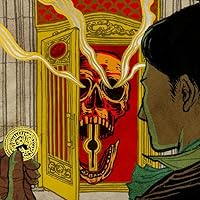
the first one was junk imho, this one might have something to it but then the whole development you are starting to trust and believe... gets destroyed by some nonsense about Towers - being dead and imagining your resurrection full of flowers and collywobbles.
a piece (p.124):
"Twelve suns in a circle lined up directly over your head. Summon the Vortex (capital letter) by silently screaming the world "help" at them with focused intensity. This will set the entire circle of suns spinning, creating a gentle tornado-shaped vortex."
There is a constant effort to fuck up everything you have read - the reasoning behind situations taken from their practice (I hope these are true-ish stories) by introducing imaginary Vortexes, Mothers and loving Fathers, Black Suns etc;
I am sure it wasn't written by ghost writer cause they should be taking some serious drugs.
They did it themselves, I presume it is easier to persuade people to come again when you happen to promise a connection to the Life Force (capital letters).
I mean... yes, the examples are rough and clear, they remind me on Peterson (his brilliant lectures) but then they hit with a hammer by sending butterflies your way.
I have given up, somewhere down the road, couldn't finish this brochure.
the first one was junk imho, this one might have something to it but then the whole development you are starting to trust and believe... gets destroyed by some nonsense about Towers - being dead and imagining your resurrection full of flowers and collywobbles.
a piece (p.124):
"Twelve suns in a circle lined up directly over your head. Summon the Vortex (capital letter) by silently screaming the world "help" at them with focused intensity. This will set the entire circle of suns spinning, creating a gentle tornado-shaped vortex."
There is a constant effort to fuck up everything you have read - the reasoning behind situations taken from their practice (I hope these are true-ish stories) by introducing imaginary Vortexes, Mothers and loving Fathers, Black Suns etc;
I am sure it wasn't written by ghost writer cause they should be taking some serious drugs.
They did it themselves, I presume it is easier to persuade people to come again when you happen to promise a connection to the Life Force (capital letters).
I mean... yes, the examples are rough and clear, they remind me on Peterson (his brilliant lectures) but then they hit with a hammer by sending butterflies your way.
I have given up, somewhere down the road, couldn't finish this brochure.
This entire review has been hidden because of spoilers.

February 7, 2023
Phil Stutz & Barry Michels have teamed up with the practical user's manual for getting unstuck, dealing with trauma, confronting the black hole inside, and finding everything necessary to live that higher calling for Truth, Beauty, and Goodness. This is not a theoretical book; they provide steps and techniques, along with profiles of situations that wounded patients find themselves in.
Sure, they quote Marcus Aurelius and Confucius and Jung and others--I suppose you could criticize it by calling it another re-working of familiar psychological techniques. What I found different about this manual compared to other psychology books on personal development was their emphasis on direct language that calls each malady for what it is as well as the stress on presenting practical steps that have shown to work for multiple patients (and they relate why some have walked out of their offices too).
I was exposed to Stutz by the Jonah Hill documentary on Netflix and reading up on his material for a more complete understanding I am finding to be very rewarding.
Sure, they quote Marcus Aurelius and Confucius and Jung and others--I suppose you could criticize it by calling it another re-working of familiar psychological techniques. What I found different about this manual compared to other psychology books on personal development was their emphasis on direct language that calls each malady for what it is as well as the stress on presenting practical steps that have shown to work for multiple patients (and they relate why some have walked out of their offices too).
I was exposed to Stutz by the Jonah Hill documentary on Netflix and reading up on his material for a more complete understanding I am finding to be very rewarding.

Read
April 13, 2023I picked up this book after watching Jonah Hill's documentary "Stutz" because the things he talked about in the movie really spoke to me. I especially identify with the whole idea of "Part X" this voice inside of me that tells me I'm shit and pulls me into a dark place. It's funny how books come to you at certain moments. I haven't had an argument with my partner in a while, but halfway through this book, we got into a big fight, a lot of which is about my communication issues. I was brooding about this fight, reading this book AND watching the new tv show 'Beef', all of which have made me think profoundly about how to be a better person. I don't know if I could really use the tools talked about in the book. They felt really abstract to me just reading about it, or maybe they work a lot better when there's someone to guide you through it. A lot of food for thought in this book.

March 17, 2019
I was listening to a podcast https://tim.blog/2019/02/28/graham-du... when Graham Duncan recommended “The Tools” by Barry Michels and Phil Stutz. As I often do, I quickly checked my local library to see if they had it, they didn’t have it available, but they had this book instead. I noticed it was written by the same two authors and seemed like a sequel of sorts to The Tools. I went ahead and checked it out and thought it was pretty good. There were times when what they said seemed a little bit too much like common sense, but it’s an illusion that stuff is supposed to be complicated. I learned a lot and enjoyed the book. I liked seeing the stories of people changing and improving their lives using the proven systems Barry and Phil developed.

November 4, 2017
Phil Stutz and Barry Michel's have once again, done a great service to creative people everywhere. Coming Alive shows us how to use their "Tools" to overcome the obstacles, setbacks, calamities, and catastrophes life puts before us. The Tools are a way to proactively deal with every unfortunate event, to walk through, rather than run, from them. Stutz and Michels empower us to face each of these situations as they occur, and having faced them, to become increasingly empowered as we go. They say rather than being weakened or diminished by negative events, we can use them to make us stronger. I believe them. Read this book!

September 6, 2017
Although I do very much love to read self-help books, many of them (not this one!) are....bad. So many people seem to just write feel-good, pop-physiologic books that do nothing other then encourage you to smile more (as opposed to actually giving you tools to help yourself). I loved how this book was just super practical. It shows you the holes you've fallen down, and gives you a map to get out of them. I'm at a point in my life where I can really use that, because I've fallen down a hole (10 years with an alcoholic partner). Now, if only I could get him to read this book! :-)

March 29, 2023
This is a great guide on bringing yourself out of bad habits, low moods, and stagnation. It can get a tad preachy but the analysis and tools are truly illuminating. (I say preach away.) In addition to a guided look inside yourself, there is a genuine critique of the modern therapy industry. I highly recommend this book to anyone regardless of where they are in their quest for a better existence.
June 28, 2018
If you can buy into the concept that you have an "inner enemy," this book has some visualizations to help you "defeat" it. I'm not sure all the "life force" examples aren't a little too New Age, but whatever works for you is fine.

July 5, 2023
I watched 'Stutz' on Netflix and saw the questionable take on genuine interview vs scripted drama in some melodramatic confession of "honesty". Which brought me to this, so it obviously had some impact.
I was curious to see what these tools are, given the supposed "numbers" of professional Holywood stars who use this approach. There are 4 tools in this book, the first book (The Tools, of which I have not read) has more. The Tools in the film are sort of strategically covered across both books.
There is emphasis on labelling Part X inside of you daily, which can take sometime to tease out the full extent. Knowing your adversary early on is useful. The book encourages you to look beyond what are the obvious signs of Part X to get a better understanding of yourself.
I appreciate the approach taken in this type of psychology, it's more active, feels more physical then merely retelling stories or reciting affirmations to help with focus or pushing yourself through (mundane tasks or dealing with difficult scenarios for example). Simply becuase it literally feels like an exercise than just positively thinking your way through a task and calling that a success.
The Tools are not toooo dissimilar to a body scan, but with more active guidance on what to imagine or experience. In that sense, kind of relaxing, a mini meditation with a little extra effort. So you are joining a thought process with a physical sensation. There appears to be some science around adding some sensation to feelings or thoughts (of which I'm not getting into here).
Comparably, Prof. Steve Peters Chimp Management model which advocates for positive affirmations / autopilots in ONE section of his model, appears to be a little lost on me. However I think the chimp management model contains MORE rounded approach for activities over a long term plan which all contribute to positive life management.
Why am I bringing up the chimp model? I suggest The Tools (of which iv read this book) could be used in CONJUNCTION with, or replacing some of, the exercises for creating "autopilots" in Prof Steve Peters approach (I reccomend reading that book also if you haven't).
Having said that, I found 1 of the tools in this book useful, the other 3 lean heavily on spirituality, which lost me a little. I was pushing to get to the end of some chapters. I understand I could be more open to the spiritual approach, (Un)fortunately my upbringing has made me very skeptical of such approaches....ok I'll try be more open and try use them if a time arises.
Overall, it felt like a new approach (to me at this time), which is a positive when I'm curious in this area. The approach for using the tools can be immediately used while reading the chapters and you are encouraged to tease out the efficacy as you go. Obviously won't be the best use at a click of fingers, practise and all that.
I've docked stars as some of the more spiritual tools are not well teased out in explanation for my practical / logical mind.
Tools in this book:
The Black Sun
The Mother
The Vortex
The Tower
I was curious to see what these tools are, given the supposed "numbers" of professional Holywood stars who use this approach. There are 4 tools in this book, the first book (The Tools, of which I have not read) has more. The Tools in the film are sort of strategically covered across both books.
There is emphasis on labelling Part X inside of you daily, which can take sometime to tease out the full extent. Knowing your adversary early on is useful. The book encourages you to look beyond what are the obvious signs of Part X to get a better understanding of yourself.
I appreciate the approach taken in this type of psychology, it's more active, feels more physical then merely retelling stories or reciting affirmations to help with focus or pushing yourself through (mundane tasks or dealing with difficult scenarios for example). Simply becuase it literally feels like an exercise than just positively thinking your way through a task and calling that a success.
The Tools are not toooo dissimilar to a body scan, but with more active guidance on what to imagine or experience. In that sense, kind of relaxing, a mini meditation with a little extra effort. So you are joining a thought process with a physical sensation. There appears to be some science around adding some sensation to feelings or thoughts (of which I'm not getting into here).
Comparably, Prof. Steve Peters Chimp Management model which advocates for positive affirmations / autopilots in ONE section of his model, appears to be a little lost on me. However I think the chimp management model contains MORE rounded approach for activities over a long term plan which all contribute to positive life management.
Why am I bringing up the chimp model? I suggest The Tools (of which iv read this book) could be used in CONJUNCTION with, or replacing some of, the exercises for creating "autopilots" in Prof Steve Peters approach (I reccomend reading that book also if you haven't).
Having said that, I found 1 of the tools in this book useful, the other 3 lean heavily on spirituality, which lost me a little. I was pushing to get to the end of some chapters. I understand I could be more open to the spiritual approach, (Un)fortunately my upbringing has made me very skeptical of such approaches....ok I'll try be more open and try use them if a time arises.
Overall, it felt like a new approach (to me at this time), which is a positive when I'm curious in this area. The approach for using the tools can be immediately used while reading the chapters and you are encouraged to tease out the efficacy as you go. Obviously won't be the best use at a click of fingers, practise and all that.
I've docked stars as some of the more spiritual tools are not well teased out in explanation for my practical / logical mind.
Tools in this book:
The Black Sun
The Mother
The Vortex
The Tower

June 23, 2025
Jest to publikacja dość specyficzna i nietypowa. Bo z jednej strony jest bardzo praktyczna i konkretna, z drugiej mocno metafizyczna.
Barry Michels i Phil Stutz do doświadczeni terapeuci. Skupiają się na sposobach przekształcania problemów w okazje, w sytuacje wprowadzające zmiany. Ukazują „jak wykorzystywać przeciwności do obudzenia w sobie odwagi, przyjęcia dyscypliny i pogłębienia własnej kreatywności”. Proponują wizualizacje i ćwiczenia mentalne. Raczej na zasadzie: rób to przez tydzień i zobacz co się wydarzy. Wszystko jest utrzymane w coachingowym tonie, jednak pozbawione jest naiwnego wydźwięku.
Fun fact: Phil Stutz - współautor książki i psychiatra, był wieloletnim terapeutą aktora Jonaha Hilla. Wspólnie zrobili film dokumentalny „Stutz” na Netfliksie. Polecam go Waszej uwadze.
To co cenię w tej publikacji najbardziej to pozytywne podejście do kryzysów, że problemy i trudne emocje są ważną częścią życia. I nie chodzi o to by je usuwać, a przekształcać reakcje na nie. Uczą jak sprawić by lęk przestał rządzić naszymi decyzjami. Myślę, że niektóre z wskazówek wprowadzę do swojej codzienności.
Jestem przekonana (i też to sprawdziłam), że autorzy mają ogromną wiedzę psychologiczną. Jednak zabrakło mi w ich publikacji odniesień naukowych, bibliografii, podstawy na której się opierali. Rozumiem, że popierają swoje metody doświadczeniem i intuicją, ale w przypadku stricte psychologicznego i naukowego podejścia dla mnie to trochę mało. Przyznam, że momentami uduchowiony ton również mnie nieco irytował.
To książka dla osób, które lubią połączenie psychologicznego podejścia i filozofii. W lekturze odnajdą się również czytelnicy, którzy lubią działać intuicyjnie. Dla których duchowość jest istotna.
Barry Michels i Phil Stutz do doświadczeni terapeuci. Skupiają się na sposobach przekształcania problemów w okazje, w sytuacje wprowadzające zmiany. Ukazują „jak wykorzystywać przeciwności do obudzenia w sobie odwagi, przyjęcia dyscypliny i pogłębienia własnej kreatywności”. Proponują wizualizacje i ćwiczenia mentalne. Raczej na zasadzie: rób to przez tydzień i zobacz co się wydarzy. Wszystko jest utrzymane w coachingowym tonie, jednak pozbawione jest naiwnego wydźwięku.
Fun fact: Phil Stutz - współautor książki i psychiatra, był wieloletnim terapeutą aktora Jonaha Hilla. Wspólnie zrobili film dokumentalny „Stutz” na Netfliksie. Polecam go Waszej uwadze.
To co cenię w tej publikacji najbardziej to pozytywne podejście do kryzysów, że problemy i trudne emocje są ważną częścią życia. I nie chodzi o to by je usuwać, a przekształcać reakcje na nie. Uczą jak sprawić by lęk przestał rządzić naszymi decyzjami. Myślę, że niektóre z wskazówek wprowadzę do swojej codzienności.
Jestem przekonana (i też to sprawdziłam), że autorzy mają ogromną wiedzę psychologiczną. Jednak zabrakło mi w ich publikacji odniesień naukowych, bibliografii, podstawy na której się opierali. Rozumiem, że popierają swoje metody doświadczeniem i intuicją, ale w przypadku stricte psychologicznego i naukowego podejścia dla mnie to trochę mało. Przyznam, że momentami uduchowiony ton również mnie nieco irytował.
To książka dla osób, które lubią połączenie psychologicznego podejścia i filozofii. W lekturze odnajdą się również czytelnicy, którzy lubią działać intuicyjnie. Dla których duchowość jest istotna.

January 20, 2023
Etdah ini adalah buku tentang melawan hawa nafsu versi barat.
Konsep utama dari buku ini adalah tentang pertempuran antara ruh dan hawa nafsu dalam diri kita yang dalam buku ini disebut Life Force dan Part X.
Hawa Nafsu atau part X ini memiliki 1001 cara agar sinar dari ruh kita tertutupi. Efeknya hidup kita jadi penuh kesedihan, kegelisahan dan hal hal negatif lainnya.
Nah, buku ini memberikan cara atau alat untuk melawan tipu daya hawa nafsu itu sehingga sinar ruh kita bercahaya.
Contoh yang paling relate denganku adalah tool the vortex.
Hawa nafsu menyamar seolah menjadi penjaga kita. Dia selalu menyuruh kita beristirahat saat kita melakukan sesuatu dengan dalih energi kita terbatas dan mau habis. Jika kita menurutinya kita akan mengisolasi diri dan menutup kesempatan untuk berinteraksi dengan orang lain, mengerjakan sesuatu dengan maksimal dsb.
Cara mengatasinya adalah dengan duduk dengan tenang dan membayangkan hal berikut.
See twelve suns in a circle lined up directly over your head. Summon the Vortex by silently screaming the word “help” at them with focused intensity. This will set the entire circle of suns spinning, creating a gentle tornado-shaped vortex.
Relax and allow your body to become one with the vortex. Feel the pull of the vortex as it lifts you up through the circle of suns.
Once you’re through the circle, feel yourself grow into a giant with unlimited energy, moving slowly but deliberately through the world without any resistance.
Konsep utama dari buku ini adalah tentang pertempuran antara ruh dan hawa nafsu dalam diri kita yang dalam buku ini disebut Life Force dan Part X.
Hawa Nafsu atau part X ini memiliki 1001 cara agar sinar dari ruh kita tertutupi. Efeknya hidup kita jadi penuh kesedihan, kegelisahan dan hal hal negatif lainnya.
Nah, buku ini memberikan cara atau alat untuk melawan tipu daya hawa nafsu itu sehingga sinar ruh kita bercahaya.
Contoh yang paling relate denganku adalah tool the vortex.
Hawa nafsu menyamar seolah menjadi penjaga kita. Dia selalu menyuruh kita beristirahat saat kita melakukan sesuatu dengan dalih energi kita terbatas dan mau habis. Jika kita menurutinya kita akan mengisolasi diri dan menutup kesempatan untuk berinteraksi dengan orang lain, mengerjakan sesuatu dengan maksimal dsb.
Cara mengatasinya adalah dengan duduk dengan tenang dan membayangkan hal berikut.
See twelve suns in a circle lined up directly over your head. Summon the Vortex by silently screaming the word “help” at them with focused intensity. This will set the entire circle of suns spinning, creating a gentle tornado-shaped vortex.
Relax and allow your body to become one with the vortex. Feel the pull of the vortex as it lifts you up through the circle of suns.
Once you’re through the circle, feel yourself grow into a giant with unlimited energy, moving slowly but deliberately through the world without any resistance.

June 10, 2023
"Coming Alive" es la segunda entrega de la serie "El Método", escrito por dos autores destacados en el campo de la salud emocional. Este libro va más allá al ofrecer una amplia gama de herramientas y técnicas que pueden ser especialmente beneficiosas para aquellos que luchan con la depresión y la ansiedad generalizada.
Los autores presentan de manera magistral una serie de prácticas transformadoras que nos ayudarán a encontrar la paz interior y sanación. Estas prácticas van más allá de lo abordado en el primer libro y nos invitan a explorar nuevas formas de liberarnos de las cadenas emocionales que nos limitan.
"Coming Alive" es una guía invaluable que nos proporciona ejercicios y técnicas específicas para superar los desafíos emocionales y encontrar una mayor plenitud en nuestras vidas. Los autores abordan el tema con profesionalismo y profundidad, brindando herramientas prácticas respaldadas por la experiencia y la investigación en el campo de la salud mental.
Recomiendo encarecidamente "Coming Alive" a todas aquellas personas que buscan una guía adicional para superar la depresión y la ansiedad generalizada. Este libro ofrece una visión compasiva y un conjunto de recursos valiosos para aquellos que desean encontrar un equilibrio emocional y vivir una vida más plena y satisfactoria.
Los autores presentan de manera magistral una serie de prácticas transformadoras que nos ayudarán a encontrar la paz interior y sanación. Estas prácticas van más allá de lo abordado en el primer libro y nos invitan a explorar nuevas formas de liberarnos de las cadenas emocionales que nos limitan.
"Coming Alive" es una guía invaluable que nos proporciona ejercicios y técnicas específicas para superar los desafíos emocionales y encontrar una mayor plenitud en nuestras vidas. Los autores abordan el tema con profesionalismo y profundidad, brindando herramientas prácticas respaldadas por la experiencia y la investigación en el campo de la salud mental.
Recomiendo encarecidamente "Coming Alive" a todas aquellas personas que buscan una guía adicional para superar la depresión y la ansiedad generalizada. Este libro ofrece una visión compasiva y un conjunto de recursos valiosos para aquellos que desean encontrar un equilibrio emocional y vivir una vida más plena y satisfactoria.

July 7, 2025
Phenomenal read. I think the only precursor needed to this book is some practice identifying emotions, habits, behaviors, and beliefs. Once that has begun this is such a great set of visualization practices that take less than a minute each to give confidence in combating Part X. This book highlights realities of the world while giving incredibly powerful resources to combat the realities while also instilling lots of hope and belief in oneself along the way.
I would rate this a 10/5 stars if I could. This is truly a book that can change one’s life if they are willing to put in the work to engage with the tools.
The tools are well thought out and give the reader a real sense of when to use them through both theory and narrative.
Totally impressed with this book and had been wait for it after the Stutz documentary and this book exceeding my expectations and they were high because I think Stutz is a counter culture thinker providing action in a space we typically think about how to think our way through problems and experiences.
Couldn’t be more grateful for his work. Thank you Phil Stutz and Barry Michel’s for putting this work together!
I would rate this a 10/5 stars if I could. This is truly a book that can change one’s life if they are willing to put in the work to engage with the tools.
The tools are well thought out and give the reader a real sense of when to use them through both theory and narrative.
Totally impressed with this book and had been wait for it after the Stutz documentary and this book exceeding my expectations and they were high because I think Stutz is a counter culture thinker providing action in a space we typically think about how to think our way through problems and experiences.
Couldn’t be more grateful for his work. Thank you Phil Stutz and Barry Michel’s for putting this work together!
Displaying 1 - 30 of 76 reviews