

What do you think?

روسمرسهولم
زمانی که ایبسن تصمیم گرفت شخصیتهای آثارش به کلام منظوم سخن نگویند، چون شعر را دیگر «زبان خدایان» میدانست، نبوغ را در معبد مدرنیته قربانی کرد، از عرش به فرش آمد، و کوشید با مدرنیته به عنوان یک دگرگونی اجتماعی، سیاسی، و فلسفی از درِ گفت و گوی رک و راست در آید. او میخواست از مدرنیته و مردمی که درگیر آن بودند سر در آورد. همین است که در دشمن دوم با نشان دادن ریاکاری مطبوعات در دوران مدرن از آیین باستانیِ قربانی کردن برای رهایی جمع از شر نقیضی ساخت، ابزاری که اینک به اندک اشارهای میتواند یک فعالِ اجتماعی را به صلیب بکشد. در روسمرسهولم ایبسن با دید بازتری به نقش مطبوعات در پریشان کردن ذهن مردم و جامعه به نفع ریاکاری و جناح بازی برای بسیج مردم میپردازد.
روسمرسهولم را نمایشنامهای میدانند که به نروژ میپردازد؛ اما این اثر کنایهای به شیلر و گوته و برنامهٔ روشن گری آنها مبنی بر آموزش و تعالی بخشی جامعه از راس هرم اندیشه ورزان نیز هست. از این گذشته، این اثر توصیهای است به اروپای مسیحی که برای زیستن در مدرنیته، یعنی برای گریز از خشونت و جناح بندیهای رایج مذهبی و سیاسی، باید در معادلات خود شمال، جنوب، چپ، و راست را به بازی بگیرند.
روسمرسهولم را نمایشنامهای میدانند که به نروژ میپردازد؛ اما این اثر کنایهای به شیلر و گوته و برنامهٔ روشن گری آنها مبنی بر آموزش و تعالی بخشی جامعه از راس هرم اندیشه ورزان نیز هست. از این گذشته، این اثر توصیهای است به اروپای مسیحی که برای زیستن در مدرنیته، یعنی برای گریز از خشونت و جناح بندیهای رایج مذهبی و سیاسی، باید در معادلات خود شمال، جنوب، چپ، و راست را به بازی بگیرند.
148 pages, Paperback
First published January 1, 1886
About the author
Henrik Ibsen
2,461 books2,180 followersHenrik Johan Ibsen was a major Norwegian playwright largely responsible for the rise of modern realistic drama. He is often referred to as the "father of modern drama." Ibsen is held to be the greatest of Norwegian authors and one of the most important playwrights of all time, celebrated as a national symbol by Norwegians.
His plays were considered scandalous to many of his era, when Victorian values of family life and propriety largely held sway in Europe and any challenge to them was considered immoral and outrageous. Ibsen's work examined the realities that lay behind many facades, possessing a revelatory nature that was disquieting to many contemporaries.
Ibsen largely founded the modern stage by introducing a critical eye and free inquiry into the conditions of life and issues of morality. Victorian-era plays were expected to be moral dramas with noble protagonists pitted against darker forces; every drama was expected to result in a morally appropriate conclusion, meaning that goodness was to bring happiness, and immorality pain. Ibsen challenged this notion and the beliefs of his times and shattered the illusions of his audiences.
His plays were considered scandalous to many of his era, when Victorian values of family life and propriety largely held sway in Europe and any challenge to them was considered immoral and outrageous. Ibsen's work examined the realities that lay behind many facades, possessing a revelatory nature that was disquieting to many contemporaries.
Ibsen largely founded the modern stage by introducing a critical eye and free inquiry into the conditions of life and issues of morality. Victorian-era plays were expected to be moral dramas with noble protagonists pitted against darker forces; every drama was expected to result in a morally appropriate conclusion, meaning that goodness was to bring happiness, and immorality pain. Ibsen challenged this notion and the beliefs of his times and shattered the illusions of his audiences.
Ratings & Reviews
Friends & Following
Create a free account to discover what your friends think of this book!
Community Reviews
Displaying 1 - 30 of 213 reviews

August 29, 2025
Is it you that go with me, or I that go with you?
The setting of this psychological drama in 4 acts is Rosmersholm, the ancestral house of the ex-clergyman and widower, John Rosmer.
Rosmer lives with Rebecca West, his deceased wife’s companion and now, a close friend of his.
The play revolves around the themes of tradition vs. modern ideas, emancipation of women, repression, desire, faith and disillusionment.
Life carries a perpetual rebirth with it. Let us hold fast to it, dear. We shall be finished with it quite soon enough.
The setting of this psychological drama in 4 acts is Rosmersholm, the ancestral house of the ex-clergyman and widower, John Rosmer.
Rosmer lives with Rebecca West, his deceased wife’s companion and now, a close friend of his.
The play revolves around the themes of tradition vs. modern ideas, emancipation of women, repression, desire, faith and disillusionment.
Life carries a perpetual rebirth with it. Let us hold fast to it, dear. We shall be finished with it quite soon enough.

December 4, 2024
پروژهی "تحلیل نمایشنامه" ترم چهارم بنده بر این نمایشنامه:
مقدمه:
روسمرسهولم هفدهمین نمایشنامهی هنریک ایبسن است که در سال 1886 منتشر شد. این اثر مثل بسیاری از آثار دیگر او نقدی بر اخلاقیات اجتماعی و فشار های سنتی دارد که اشخاص باید برای یافتن آزادی ها و اهدافشان از آن عبور کنند و بین خودشان حل و فصل بکنند. به خصوص در این نمایشنامه که به کلی درمورد تضاد و تداخل سنت و مدرنیته ای است که به مرور به جامعه نفوذ می کند.
خلاصه داستان:
(⚠️برای اسپویل نشدن اینجارو کامل نخونید)
داستان این نمایشنامه حول شخصیت اصلی جان روسمر می چرخد که کشیشی است متأثر از تغییرات اجتماعی و روشنفکری. او پس از مرگ همسرش با ربکا وست، زنی با عقایدی باز و آزاداندیشانه آشنا میشود که از اول هم باعث ایجاد تردید و بحران در باورهای مذهبی کشیش ما میشود. او که با جان و خانم هل ست پیشخدمت او زندگی می کند، شخصیتی مرموز با ظاهری معصوم به ما نشان می دهد.
روسمر که از مقام کشیشی کنار کشیده و زندگی و فعالیت های آزاد اندیشانه ی خودش را دارد، مورد انتقاد نزدیک ترین دوستش که سبک زندگی و تفکراتی سنتی دارد قرار می گیرد اما اهمیتی نمی دهد یا به قول خودش که در پرده ی دوم می گوید " منم می خوام یه بارم که شده وارد جدال زندگی بشم." فکر می کند همه چیزاز نگاه خودش و دیگران عادی است تا وقتی که می فهمد همسر سابقش درواقع بخاطر رابطه ای که بین او و ربکا بوده خودش را کشته و پایانی فاجعه آور و تراژیک برای هر دوی آنها به بار می آورد.
فردیت و اجتماع:
اول از همه باید این موضوع را بررسی کنیم که آیا آزادی ای که روسمر و جامعه ی آن موقع از آن صحبت می کنند فردی است یا اجتماعی ؟
اگر مسئله ای فردی ست پس نظام اجتماعی چه می شود.
همانطور که می دانیم قرن نوزده و بیست چالش و بحث جوامع بر سر فردیت و رابطه ای که با اجتماع داشته بوده و ایبسن به ظرافت این را در نمایشنامه جا داده.
آیا اصلا می شود برای انسان فردیت مستقلی قائل بود نسبت به تغییرات جامعه؟
کشیش ما به اجبار پدرش کشیش شده بود. اما حقیقتا صداقتی کامل در کارش داشته. زمانی که کشیش بوده واقعا کشیش بوده و زمانی که به آزاداندیشی روی آورد، لحظه ای پا پس نکشید.
در کل چهار عامل را می توان در شخصیت جا داد:
-فردیت
-اجتماع
-روان
-تغییر(عقاید)
روسمر از تمام اینها گذر می کند و انتخاب و تصمیمش بر تمامی این عوامل تاثیر می گذارد.
نماد های داستان: اسب سفید.
اولین نمادی که ما با آن برخورد می کنیم اسب سفیدی است که در جلد کتاب(نشر بیدگل) هم می بینیم.
در ابتدای پرده ی اول می بینیم که ربکا می پرسد:"ماجرای این اسب سفید که همه ازش حرف می زنن چیه، خانوم هل ست؟"
هل ست می گوید: "اه بهتره حرفشو نزنیم تازه شما که به این جور چیز ها اعتقاد ندارید."
اینجا پس از به سخن کشیدن اسب سفید به کنایه توجه ما را به شال سفیدی که ربکا می بافد جلب می کند که در پرده ی آخر برای اولین و آخرین بار همچو کفنی به تن می کند.
نویسنده اسب سفید را در نمایش تقریبا بی مقدمه و به صورت مبهم و غیرمستقیم به میان می کشد و تقریبا در پایان هر پرده نیز به آن اشاره می شود. چرا؟ این شبح در نمایشنامه یادآور چه مفهومی است؟ حتی در ابتدا ایبسن می خواهد اسم این نمایشنامه را اسب های سفید بگذارد(به به نظر اینجانب به مراتب انتخاب بهتری بود)
در جواب ما بکا در پرده ی چهارم می گوید:
"این اطراف همه میگن ارواح مرده ها به شکل اسب سفید برمیگردن اینجا. فکر کنم این یکی از اوناست."
رود، پل و آسیاب:
صحنه ای که از بیرون خانه می بینیم یک رودخانه است که رویش پلی قرار دارد و پس از اینکه عابران از پل رد می شوند در آن سوی رود به آسیابی می رسند. تعبیر فوق العاده ای که می توان از این صحنه داشت این است که آسیابی که می چرخد به معنای چرخش و دگرگونی زمانه است که مردم باید از رود روان زندگی رد بشوند و به سوی تغییرات پا بگذارند. اما شخصیت های ما، از همسر سابق جان گرفته تا خود جان و ربکا، قربانی رود می شوند، حاضرند آخود را غرق کنند تااینکه تسلیم روزگار متفاوت آسیاب بشوند.
تغییر جامعه ی ما قطعی است اما ظرفیتی که مردمان آن برای تغییر دارند مهم است. چرا که مردم در ابتدا آزادی را به طور فردی می پذیرند اما به طور جمعی پذیرفتنش سخت تر است.
و این دقیقا اتفاقی است که شخصیت های این داستان را به سر انجامی تراژیک می کشاند.
انگیزه و عمل گرایی:
دو رکن اساسی که در نمای کلی نمایشنامه میبینیم انگیزه و عمل کردن است. که به طوری واضح انگیزه از طرف زن های نمایش (آنیما) و به عمل در آوردن انگیزه از سوی مرد ها (آنیموس) شکل می گیرد.
سبک نمایشنامه و دیدگاه نویسنده:
روسمرسهولم سبکی ملو درام دارد. در ابتدا گویی فضایی غمگین و عاشقانه دارد اما در نهایت با یک ضربه ی خودکشی مواجه می شویم که بخاطر نبودن شرایط برای ابراز اون غم یا عشق است.
از نگاه ایبسن این کافی نیست که انسانها فقط روشنفکر باشند بلکه باید نگاهی از بالا داشته باشیم به موضوع تا بتوانیم به خوبی شرایط را بر انداز کنیم و بر اساس آن عمل کنیم.
با آرمان شهر گرایی مخالف بود، از پارادوکس زیاد استفاده کرده است و هیچ چیز افراطی یا سیاسی نمی باشد. تمرکزش بیشتر روی اجتماع است.
مثل روسمر که در پرده ی یک می گوید:"تو خودت خوب می دونی که من از سیاست چقدر کم اطلاع دارم. ولی راستش فکر می کنم این چند سال اخیر، مردم فهمیده ن که بیشتر به خودشون فکر کنن...و مستقل تر باشن."
حرف ایبسن ناسازه هایی است که انسانهای مدرن را نابود می کند. تقدیر انسان جدید، ناسازه ها و پارادوکس هایی که روزانه با آن سر و کله می زنیم و راه نجاتی از آن نداریم. باید با اسازه ها ساخت و ساز کنیم و خودمان را از منجلاب مدرنیته زنده بیرون بکشیم.
مقدمه:
روسمرسهولم هفدهمین نمایشنامهی هنریک ایبسن است که در سال 1886 منتشر شد. این اثر مثل بسیاری از آثار دیگر او نقدی بر اخلاقیات اجتماعی و فشار های سنتی دارد که اشخاص باید برای یافتن آزادی ها و اهدافشان از آن عبور کنند و بین خودشان حل و فصل بکنند. به خصوص در این نمایشنامه که به کلی درمورد تضاد و تداخل سنت و مدرنیته ای است که به مرور به جامعه نفوذ می کند.
خلاصه داستان:
(⚠️برای اسپویل نشدن اینجارو کامل نخونید)
داستان این نمایشنامه حول شخصیت اصلی جان روسمر می چرخد که کشیشی است متأثر از تغییرات اجتماعی و روشنفکری. او پس از مرگ همسرش با ربکا وست، زنی با عقایدی باز و آزاداندیشانه آشنا میشود که از اول هم باعث ایجاد تردید و بحران در باورهای مذهبی کشیش ما میشود. او که با جان و خانم هل ست پیشخدمت او زندگی می کند، شخصیتی مرموز با ظاهری معصوم به ما نشان می دهد.
روسمر که از مقام کشیشی کنار کشیده و زندگی و فعالیت های آزاد اندیشانه ی خودش را دارد، مورد انتقاد نزدیک ترین دوستش که سبک زندگی و تفکراتی سنتی دارد قرار می گیرد اما اهمیتی نمی دهد یا به قول خودش که در پرده ی دوم می گوید " منم می خوام یه بارم که شده وارد جدال زندگی بشم." فکر می کند همه چیزاز نگاه خودش و دیگران عادی است تا وقتی که می فهمد همسر سابقش درواقع بخاطر رابطه ای که بین او و ربکا بوده خودش را کشته و پایانی فاجعه آور و تراژیک برای هر دوی آنها به بار می آورد.
فردیت و اجتماع:
اول از همه باید این موضوع را بررسی کنیم که آیا آزادی ای که روسمر و جامعه ی آن موقع از آن صحبت می کنند فردی است یا اجتماعی ؟
اگر مسئله ای فردی ست پس نظام اجتماعی چه می شود.
همانطور که می دانیم قرن نوزده و بیست چالش و بحث جوامع بر سر فردیت و رابطه ای که با اجتماع داشته بوده و ایبسن به ظرافت این را در نمایشنامه جا داده.
آیا اصلا می شود برای انسان فردیت مستقلی قائل بود نسبت به تغییرات جامعه؟
کشیش ما به اجبار پدرش کشیش شده بود. اما حقیقتا صداقتی کامل در کارش داشته. زمانی که کشیش بوده واقعا کشیش بوده و زمانی که به آزاداندیشی روی آورد، لحظه ای پا پس نکشید.
در کل چهار عامل را می توان در شخصیت جا داد:
-فردیت
-اجتماع
-روان
-تغییر(عقاید)
روسمر از تمام اینها گذر می کند و انتخاب و تصمیمش بر تمامی این عوامل تاثیر می گذارد.
نماد های داستان: اسب سفید.
اولین نمادی که ما با آن برخورد می کنیم اسب سفیدی است که در جلد کتاب(نشر بیدگل) هم می بینیم.
در ابتدای پرده ی اول می بینیم که ربکا می پرسد:"ماجرای این اسب سفید که همه ازش حرف می زنن چیه، خانوم هل ست؟"
هل ست می گوید: "اه بهتره حرفشو نزنیم تازه شما که به این جور چیز ها اعتقاد ندارید."
اینجا پس از به سخن کشیدن اسب سفید به کنایه توجه ما را به شال سفیدی که ربکا می بافد جلب می کند که در پرده ی آخر برای اولین و آخرین بار همچو کفنی به تن می کند.
نویسنده اسب سفید را در نمایش تقریبا بی مقدمه و به صورت مبهم و غیرمستقیم به میان می کشد و تقریبا در پایان هر پرده نیز به آن اشاره می شود. چرا؟ این شبح در نمایشنامه یادآور چه مفهومی است؟ حتی در ابتدا ایبسن می خواهد اسم این نمایشنامه را اسب های سفید بگذارد(به به نظر اینجانب به مراتب انتخاب بهتری بود)
در جواب ما بکا در پرده ی چهارم می گوید:
"این اطراف همه میگن ارواح مرده ها به شکل اسب سفید برمیگردن اینجا. فکر کنم این یکی از اوناست."
رود، پل و آسیاب:
صحنه ای که از بیرون خانه می بینیم یک رودخانه است که رویش پلی قرار دارد و پس از اینکه عابران از پل رد می شوند در آن سوی رود به آسیابی می رسند. تعبیر فوق العاده ای که می توان از این صحنه داشت این است که آسیابی که می چرخد به معنای چرخش و دگرگونی زمانه است که مردم باید از رود روان زندگی رد بشوند و به سوی تغییرات پا بگذارند. اما شخصیت های ما، از همسر سابق جان گرفته تا خود جان و ربکا، قربانی رود می شوند، حاضرند آخود را غرق کنند تااینکه تسلیم روزگار متفاوت آسیاب بشوند.
تغییر جامعه ی ما قطعی است اما ظرفیتی که مردمان آن برای تغییر دارند مهم است. چرا که مردم در ابتدا آزادی را به طور فردی می پذیرند اما به طور جمعی پذیرفتنش سخت تر است.
و این دقیقا اتفاقی است که شخصیت های این داستان را به سر انجامی تراژیک می کشاند.
انگیزه و عمل گرایی:
دو رکن اساسی که در نمای کلی نمایشنامه میبینیم انگیزه و عمل کردن است. که به طوری واضح انگیزه از طرف زن های نمایش (آنیما) و به عمل در آوردن انگیزه از سوی مرد ها (آنیموس) شکل می گیرد.
سبک نمایشنامه و دیدگاه نویسنده:
روسمرسهولم سبکی ملو درام دارد. در ابتدا گویی فضایی غمگین و عاشقانه دارد اما در نهایت با یک ضربه ی خودکشی مواجه می شویم که بخاطر نبودن شرایط برای ابراز اون غم یا عشق است.
از نگاه ایبسن این کافی نیست که انسانها فقط روشنفکر باشند بلکه باید نگاهی از بالا داشته باشیم به موضوع تا بتوانیم به خوبی شرایط را بر انداز کنیم و بر اساس آن عمل کنیم.
با آرمان شهر گرایی مخالف بود، از پارادوکس زیاد استفاده کرده است و هیچ چیز افراطی یا سیاسی نمی باشد. تمرکزش بیشتر روی اجتماع است.
مثل روسمر که در پرده ی یک می گوید:"تو خودت خوب می دونی که من از سیاست چقدر کم اطلاع دارم. ولی راستش فکر می کنم این چند سال اخیر، مردم فهمیده ن که بیشتر به خودشون فکر کنن...و مستقل تر باشن."
حرف ایبسن ناسازه هایی است که انسانهای مدرن را نابود می کند. تقدیر انسان جدید، ناسازه ها و پارادوکس هایی که روزانه با آن سر و کله می زنیم و راه نجاتی از آن نداریم. باید با اسازه ها ساخت و ساز کنیم و خودمان را از منجلاب مدرنیته زنده بیرون بکشیم.
June 3, 2025
چه پرسوناژهای زنِ جذابی میسازه آقای ایبسن!

December 16, 2023
Did you know? In 1893, only a few years after Rosmersholm was first published it was produced at the Théâtre Libre in Paris. And working on an earthen floor of a workshop open to every wind, Édouard Vuillard, barely twenty-five, “surpassed himself in ingenuity and economic invention in creating atmosphere and scenic decoration”. So says his biographer, Claude Roger Marx. And you can believe him.
Young Vuillard might not have known much about Ibsen’s latest work but he saw it as a chance to try out Les Nabis' vision and threw in a startling watercolor program cover for good measure. No trace these days of the backdrops but there’s a wonderful sketch of the program with the cast handwritten by Vuillard. It’s on the Met site. Don’t miss it.
https://www.metmuseum.org/art/collect...
Young Vuillard might not have known much about Ibsen’s latest work but he saw it as a chance to try out Les Nabis' vision and threw in a startling watercolor program cover for good measure. No trace these days of the backdrops but there’s a wonderful sketch of the program with the cast handwritten by Vuillard. It’s on the Met site. Don’t miss it.
https://www.metmuseum.org/art/collect...

December 29, 2020
من همیشه تو ذهنم نمایشنامهها و بعضاً رمانها رو بازی میکنم... یعنی برای نقشها بازیگر تعیین میکنم، طراحی صحنه ترتیب میدم و بعضی وقتها هم خودم یک نقش رو برمیدارم که با صدای خودم بخونم... هیچ نمایشنامهای مثل نمایشنامههای ایبسن برام انقدر دلنشین و روون تو این تصور نگنجیده.
این نمایشنامه تمام ریشههای فکری اگزیستنسیالیستی، ناتورالیستی و... ایبسن رو که بقیه نمایشنامههاش وجود داشت، توی خودش داره اما به نظرم نزدیکترین نمایشنامهاش به کارهای چخوف بود و هر چند بهترین نمایشنامهی ایبسن محسوب نمیشه، اما خوندنش بسیار لذتبخشه.
این نمایشنامه تمام ریشههای فکری اگزیستنسیالیستی، ناتورالیستی و... ایبسن رو که بقیه نمایشنامههاش وجود داشت، توی خودش داره اما به نظرم نزدیکترین نمایشنامهاش به کارهای چخوف بود و هر چند بهترین نمایشنامهی ایبسن محسوب نمیشه، اما خوندنش بسیار لذتبخشه.

August 5, 2014
Some of Ibsen's later plays often read like more twisted and complex versions of his earlier prose plays. Hence John Gabriel Borkman reads like The Pillars of Society, and Hedda Gabler offers another take on A Doll's House.
In the case of Rosmersholm, we have a loose reinterpretation of Ghosts. The plot and characters are radically different, but the theme is the same - progressive characters struggling and failing to overcome the ghosts of the past, both their own history and the outdated values of the present age. Indeed, there is even a real ghost in this story, a white horse that appears before the death of a member of the Rosmer family.
John Rosmer, the hero, represents another familiar Ibsen hero. If The Wild Duck offered us a debased version of Brand and Peer Gynt in its heroes, then Rosmersholm has transposed the familiar vacillating Ibsen political hero into a more ordinary setting. Rosmer may not be fighting to lead the state, like Catiline, Skule or Julian, but he similarly agonises about his choices, moving from one opposite to the other.
Set on one side is the past. Rosmer belongs to the traditional aristocratic family whose thinking has dominated the area he lives in, and his house is lined with their portraits. It is a grim, conservative view of life and Rosmer has never learnt to laugh. He is also tormented by guilt about his own past, blaming himself for the suicide of his wife.
Set against that is the promise of the new, progressive ideas that were sweeping through Norway at the time. These are encapsulated in the figure of Rebecca West, his dead wife's nurse with whom Rosmer is beginning to have a relationship.
In spite of the opposition of conservative forces, represented by Rosmer's brother-in-law, Kroll, Rosmer and Rebecca try to move towards those liberating new ideals, but the past proves too much for them. Rebecca refuses John's offer of marriage and reveals her own guilt in having persuaded his wife to commit suicide to make room for her. She may also have had an affair with a man who was probably her own father.
The play therefore ends in defeat for their ideals, but a triumphant statement of their feeling for one another when they agree to a suicide pact, throwing themselves off the same bridge that John's wife did. The gesture reinforces the sense of their past killing them.
If one wanted to be obtuse, one could argue that the play's outcomes appear to back the views of Kroll, the disapproving conservative. After all, the new liberated ideals lead only to murder, incest and suicide. Even the other progressive characters hardly ennoble their cause. Ulrik Brendel is a wastrel and a dreamer, who realises that his ideas are out of date when he sees that the same ambitions can be worked towards by Peter Mortensgaard, but without the need for any scruples or principles.
However, Ibsen seems to lean towards the progressive side in spite of this. For one thing, the play centres on John and Rebecca, and they are his most appealing heroes. This is all the more surprising since one is infirm in his principles and the other one is a siren who lures a woman to her death. Nonetheless we care about them.
By contrast, the conservative forces are represented negatively by Kroll. Kroll is not in fact a monster, and he has clearly shown kindness in the past to both John and Rebecca. However, his defence of rigid conservative values has set him against his own family, and he has no scruples about allowing John's character to be slandered by his followers. His ideals have corrupted his decent standards.
Rosmersholm may not have many new ideas, but it is another fine, richly-complex work, showing a writer at the height of his strength and confidence.
In the case of Rosmersholm, we have a loose reinterpretation of Ghosts. The plot and characters are radically different, but the theme is the same - progressive characters struggling and failing to overcome the ghosts of the past, both their own history and the outdated values of the present age. Indeed, there is even a real ghost in this story, a white horse that appears before the death of a member of the Rosmer family.
John Rosmer, the hero, represents another familiar Ibsen hero. If The Wild Duck offered us a debased version of Brand and Peer Gynt in its heroes, then Rosmersholm has transposed the familiar vacillating Ibsen political hero into a more ordinary setting. Rosmer may not be fighting to lead the state, like Catiline, Skule or Julian, but he similarly agonises about his choices, moving from one opposite to the other.
Set on one side is the past. Rosmer belongs to the traditional aristocratic family whose thinking has dominated the area he lives in, and his house is lined with their portraits. It is a grim, conservative view of life and Rosmer has never learnt to laugh. He is also tormented by guilt about his own past, blaming himself for the suicide of his wife.
Set against that is the promise of the new, progressive ideas that were sweeping through Norway at the time. These are encapsulated in the figure of Rebecca West, his dead wife's nurse with whom Rosmer is beginning to have a relationship.
In spite of the opposition of conservative forces, represented by Rosmer's brother-in-law, Kroll, Rosmer and Rebecca try to move towards those liberating new ideals, but the past proves too much for them. Rebecca refuses John's offer of marriage and reveals her own guilt in having persuaded his wife to commit suicide to make room for her. She may also have had an affair with a man who was probably her own father.
The play therefore ends in defeat for their ideals, but a triumphant statement of their feeling for one another when they agree to a suicide pact, throwing themselves off the same bridge that John's wife did. The gesture reinforces the sense of their past killing them.
If one wanted to be obtuse, one could argue that the play's outcomes appear to back the views of Kroll, the disapproving conservative. After all, the new liberated ideals lead only to murder, incest and suicide. Even the other progressive characters hardly ennoble their cause. Ulrik Brendel is a wastrel and a dreamer, who realises that his ideas are out of date when he sees that the same ambitions can be worked towards by Peter Mortensgaard, but without the need for any scruples or principles.
However, Ibsen seems to lean towards the progressive side in spite of this. For one thing, the play centres on John and Rebecca, and they are his most appealing heroes. This is all the more surprising since one is infirm in his principles and the other one is a siren who lures a woman to her death. Nonetheless we care about them.
By contrast, the conservative forces are represented negatively by Kroll. Kroll is not in fact a monster, and he has clearly shown kindness in the past to both John and Rebecca. However, his defence of rigid conservative values has set him against his own family, and he has no scruples about allowing John's character to be slandered by his followers. His ideals have corrupted his decent standards.
Rosmersholm may not have many new ideas, but it is another fine, richly-complex work, showing a writer at the height of his strength and confidence.

January 14, 2017

 http://www.bbc.co.uk/programmes/b088j46z
Description: Rebekka West, the visionary, passionate heroine of 'Rosmersholm' inspired the English novelist to adopt that name. Ibsen's most complex play sees a society in turmoil through the lens of pastor John Rosmer and Rebekka, his social-revolutionary companion. Rosmer is recovering from the suicide of his unstable wife, Beata. Now Rebekka, replacing her in his affections, urges him to surrender his privileged place in conservative Norwegian society. A local elite plot to make him hold to the status quo. Can Rebekka prevail? Translated by Frank McGuinness and featuring music by Norwegian composer Marius Munthe-Kaas.
Music composed and arranged by Marius Munthe-Kaas
Music supervisor, Giles Perring
Gro Hole Austgulen (violin), Elin Kleppa Michalsen (violin), Anna Cecilia Johansson (viola), Olav Stener Olsen (cello)
Translated by Frank McGuinness
'Rosmersholm' premiered at the National Theatre, London, in 1987.
***************************************************
Frank McGuinness's translation, unperformed since 1985, is a superb rendition of the Norwegian into fluent, everyday English, whilst keeping the poetic flavour of the original.
Ibsen's almost experimental play delves into areas of political upheaval and sexual mores that were ground-breaking to Norwegian audiences in 1886. Rosmer's wife's (apparently) inexplicable suicide has helped seal the lapsed pastor's affection for Rebekka - and her revolutionary worldview also. This is a play of ideas. And of surprises: Rosmer's almost asexual celebacy, the visionary Brendel's blood-lust, the ideologue Mortensgaard's crude opportunism. And that's not to mention the many-stepped discoveries we'll make about Rebekka, another truly three-dimensional proto-feminist figure from the hugely influential playwright.
This in-house production for Radio 3 features the work of a young composer little known in Britain, Marius Munthe-Kaas, and fellow-Norwegian chamber musicians.
Replacing the action of the earlier plays, the plot twists and turns here are based on dramatic revelations made about Rebekka and all the characters. The drama, set on a promontory surrounded on all sides by the weir in which Mrs Rosmer died, develops on new realisations and moral shadings that, kaleidoscope-like, throw each of the dramatis personae into new relief with each new scene. There are no easy moral judgements to be made about any of us, Ibsen seems to be saying; although finally his disapproval does seem to be aimed at the corrupt, self-serving elite who offer little chance of escape to our lovers.
John Rosmer Nicholas Farrell
Rebekka West Helen Baxendale
Professor Kroll Ronald Pickup
Ulrik Brendel Karl Johnson
Peder Mortensgaard Philip Jackson
Mrs Helseth Christine Absolom
Wiki's take on it: In the estimation of many critics the piece is Ibsen's masterwork, only equalled by The Wild Duck of 1884. As expressed by the protagonist, Rosmer, the theme of the play is social and political change, in which the traditional ruling classes relinquish their right to impose their ideals on the rest of society,[2] but the action is entirely personal, resting on the conduct of the immoral, or amoral, "free thinking" heroine, Rebecca, who sets herself to undermine Rosmer's religious and political beliefs because of his influential position in the community. Rebecca has abandoned not only Christianity but, unlike Rosmer, she has abandoned the whole ethical system of Christianity as well. Possibly she may be taken as Ibsen's answer to the question of whether or not Christian ethics can be expected to survive the death of the Christian religion.
4* John Gabriel Borkman
3.5* Rosmersholm
4* Peer Gynt
4* Hedda Gabler
4* Ghosts
3* A Doll's House
3* The Wild Duck
3* The Master Builder
2* Brand
August 29, 2024
Ibsen Re-written
A review of the Oberon Books paperback (April 22, 2019) adaptation by Duncan Macmillan of the original Dano-Norwegian playscript (1886).
I wanted to read Ibsen's Rosmersholm before I see it at Toronto's Crow's Theatre later in September 2024. When I got the Oberon Books playscript I was surprised to read that no translator was credited. Duncan Macmillan has rewritten Ibsen, quite faithfully keeping to his scenes and themes, but in totally revised language. I hope the above example is enough to convey this.
I read the Macmillan in parallel with a public domain translation from 1911 by R. Farquharson Sharp which you can also read on Project Gutenberg here. The versions match scene for scene, but the text varies considerably between the two, although the purpose of each discussion remains the same. There is a rather surprising coup de théâtre at the conclusion of the Macmillan, but I won't spoil that here (I somehow doubt that Crow's will pull that off, although I've seen quite spectacular things at Crow's over the years 😮).
Ibsen's theme of a society poised on the brink of an election between the forces of the status quo and reformers remains intact. This is personified in the Rosmer household, where the former pastor has lost his faith and has gradually moved towards the side of reform under the influence of Rebecca West, his wife's former companion. The wife Beth (Beata in the original) died by suicide and there are secrets about that which gradually come to light, as well as about Rebecca's background. It all leads to a shocking conclusion.
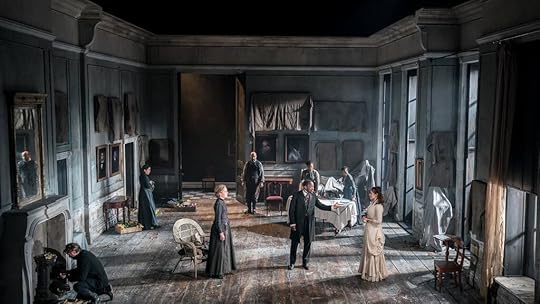
The set and cast of "Rosmersholm" at the 2019 premiere production of the Duncan Macmillan adaptation at the Duke of York Theatre, London UK. Image sourced from Time Out.
I thoroughly enjoyed reading the Macmillan along with the early translation. I also cross-checked against a recent translation contained in Hedda Gabler and Other Plays (Penguin Classics 2020) which was not that much different from the 1911 by R.F. Sharp.
Trivia and Links
You can read Ibsen's original at the University of Oslo's online archive of Henrik Ibsen's Writings here. With a web translator you could even generate your own translation to edit. You may be as surprised as I was to learn that Ibsen wrote in Danish rather than Norwegian (some sources describe it as Dano-Norwegian). Although the Denmark-Norway union dissolved in 1814, apparently the dominant written language continued to be Danish for a considerable time. Ibsen's works were first published in Copenhagen by the publisher Gyldendalske Boghandels Forlag.
A review of the Oberon Books paperback (April 22, 2019) adaptation by Duncan Macmillan of the original Dano-Norwegian playscript (1886).
[Rebecca] West: There's one last 'riddle'. Not that it matters now, but I wish I knew the answer. Are you following me? Or am I following you? - excerpt from Act 4, Duncan Macmillan adaptation (2019).
Rebekka: Ja, sig mig det først. Er det dig, som følger mig? Eller er det mig, som følger dig?
Rosmer: Det grunder vi aldrig ud tilbunds.
Rebekka:Jeg vilde dog gerne vide det. - related passage from Act 4, Danish original.
Rebecca: Yes, but first tell me this—is it you that go with me, or I that go with you?
Rosmer: We shall never get to the bottom of that.
Rebecca: Yet I should dearly like to know. - related passage from Act 4, R. Farquharson Sharp translation (1911 Public Domain).
I wanted to read Ibsen's Rosmersholm before I see it at Toronto's Crow's Theatre later in September 2024. When I got the Oberon Books playscript I was surprised to read that no translator was credited. Duncan Macmillan has rewritten Ibsen, quite faithfully keeping to his scenes and themes, but in totally revised language. I hope the above example is enough to convey this.
I read the Macmillan in parallel with a public domain translation from 1911 by R. Farquharson Sharp which you can also read on Project Gutenberg here. The versions match scene for scene, but the text varies considerably between the two, although the purpose of each discussion remains the same. There is a rather surprising coup de théâtre at the conclusion of the Macmillan, but I won't spoil that here (I somehow doubt that Crow's will pull that off, although I've seen quite spectacular things at Crow's over the years 😮).
Ibsen's theme of a society poised on the brink of an election between the forces of the status quo and reformers remains intact. This is personified in the Rosmer household, where the former pastor has lost his faith and has gradually moved towards the side of reform under the influence of Rebecca West, his wife's former companion. The wife Beth (Beata in the original) died by suicide and there are secrets about that which gradually come to light, as well as about Rebecca's background. It all leads to a shocking conclusion.
The set and cast of "Rosmersholm" at the 2019 premiere production of the Duncan Macmillan adaptation at the Duke of York Theatre, London UK. Image sourced from Time Out.
I thoroughly enjoyed reading the Macmillan along with the early translation. I also cross-checked against a recent translation contained in Hedda Gabler and Other Plays (Penguin Classics 2020) which was not that much different from the 1911 by R.F. Sharp.
Trivia and Links
You can read Ibsen's original at the University of Oslo's online archive of Henrik Ibsen's Writings here. With a web translator you could even generate your own translation to edit. You may be as surprised as I was to learn that Ibsen wrote in Danish rather than Norwegian (some sources describe it as Dano-Norwegian). Although the Denmark-Norway union dissolved in 1814, apparently the dominant written language continued to be Danish for a considerable time. Ibsen's works were first published in Copenhagen by the publisher Gyldendalske Boghandels Forlag.
August 30, 2024
Public Domain Ibsen
Review of the Public Domain Kindle eBook (March 24, 2011) of the 1911 translation by R. Farquharson Sharp from the Dano-Norwegian original playscript (1886).
I read this in parallel with reading Duncan Macmillan's recent adaptation Rosmersholm (2019) which is not a direct translation but rather a re-write. Macmillan makes some things more explicit than perhaps Ibsen would have been allowed to do at the time. Those were more explicit hints of the possible sexual liaisons by some of the characters.
Although the Macmillan reads in more contemporary language (for example, the reformers in the original are called "radicals", in Macmillan they are "the Left"), it is still quite surprising how up-to-date the original Ibsen reads. A society at war between the status quo vs. reformers, the idea of someone being "cancelled" by social media (newspapers in Ibsen's day, twitter/x in our present), female empowerment, the loss of religious faith and its replacement by other beliefs, etc. It is all there. In the case of the current 2024 U.S. election you could even imagine the situation being reversed i.e. who is in power i.e. the status quo, in the present day?
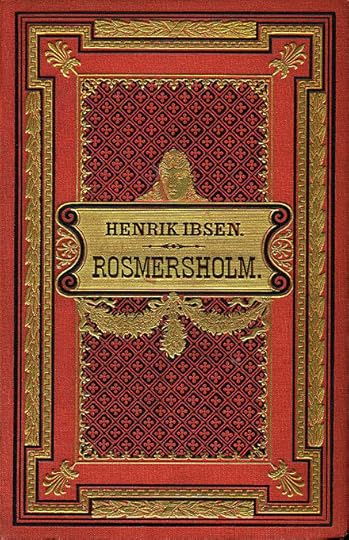
The cover of the original 1886 edition published by Gyldendalske Boghandels Forlag, Copenhagen, Denmark. Image sourced from Wikipedia.
You can read the R. Farquharson Sharp 1911 translation online at Project Gutenberg here. It is also available as a free Kindle eBook from Amazon.
Trivia and Links
You can read Ibsen's original at the University of Oslo's online archive of Henrik Ibsen's Writings here. With a web translator you could even generate your own translation to edit. You may be as surprised as I was to learn that Ibsen wrote in Danish rather than Norwegian (some sources describe it as Dano-Norwegian). Although the Denmark-Norway union dissolved in 1814, apparently the dominant written language continued to be Danish for a considerable time. Ibsen's works were first published in Copenhagen by the publisher Gyldendalske Boghandels Forlag.
Review of the Public Domain Kindle eBook (March 24, 2011) of the 1911 translation by R. Farquharson Sharp from the Dano-Norwegian original playscript (1886).
I read this in parallel with reading Duncan Macmillan's recent adaptation Rosmersholm (2019) which is not a direct translation but rather a re-write. Macmillan makes some things more explicit than perhaps Ibsen would have been allowed to do at the time. Those were more explicit hints of the possible sexual liaisons by some of the characters.
Although the Macmillan reads in more contemporary language (for example, the reformers in the original are called "radicals", in Macmillan they are "the Left"), it is still quite surprising how up-to-date the original Ibsen reads. A society at war between the status quo vs. reformers, the idea of someone being "cancelled" by social media (newspapers in Ibsen's day, twitter/x in our present), female empowerment, the loss of religious faith and its replacement by other beliefs, etc. It is all there. In the case of the current 2024 U.S. election you could even imagine the situation being reversed i.e. who is in power i.e. the status quo, in the present day?
The cover of the original 1886 edition published by Gyldendalske Boghandels Forlag, Copenhagen, Denmark. Image sourced from Wikipedia.
You can read the R. Farquharson Sharp 1911 translation online at Project Gutenberg here. It is also available as a free Kindle eBook from Amazon.
Trivia and Links
You can read Ibsen's original at the University of Oslo's online archive of Henrik Ibsen's Writings here. With a web translator you could even generate your own translation to edit. You may be as surprised as I was to learn that Ibsen wrote in Danish rather than Norwegian (some sources describe it as Dano-Norwegian). Although the Denmark-Norway union dissolved in 1814, apparently the dominant written language continued to be Danish for a considerable time. Ibsen's works were first published in Copenhagen by the publisher Gyldendalske Boghandels Forlag.

June 13, 2020
Per me più ostico rispetto agli altri drammi di Ibsen e forse anche più disperato nel denunciare l’impossibilità di ottenere quello che si desidera e il continuo anelito alla felicità. Felicità che l’uomo sembra riesca a trovare anche nell’autodistruzione, quando ogni altra speranza si è dissolta.

February 8, 2026
"در هر صورت شما، از اونجایی که زن هستید، بعیده که در مجادلات اجتماعی... یا بهتره بگم در جنگ داخلی... که اینجا شعلهور شده، نقش فعالی داشته باشید."
ایبسن در این نمایشنامه یک فرد ضعیفی که هنوز به اعتقادات و افکار خودش باور نداره رو به نمایش میذاره. "روسمر"، کشیشی که تحت تأثیر دیگری از اعتقادات خداباورانهی خودش به مرور دست میکشه و این رو مدیون مطالعه میدونه، مورد سوء استفادهی جناحهای سیاسی با اعتقادات مختلف قرار میگیره چون هنوز به باور نرسیده و دقیق نمیدونه که چه چیزی واقعا درست و چه چیزی غلط است. روسمر صرفا مثل کاربنیست که از الگوهایی که بهش دسترسی داره کپی میکنه و تصور میکنه بعد از سالها زندگی به شیوهی غلط، بالاخره حقیقت رو پیدا کرده و سعی میکنه پای اعتقادات جدیدش بایسته اما چه از سمت چپ رادیکال و چه از سمت راست محافظهکار مورد سوءاستفاده قرار میگیره و به آرامی به سمت ورطه نابودی کشیده میشه.
روسمر هیچگاه نمیتونه از گذشتهی خودش فرار کنه، با هر عقیده و دیدگاهی که داشته باشه. هیچگاه فرصتی برای پیدا کردن حقیقت خودش نداره چون عقایدش در گرو دیگران معنی پیدا میکنن و به راحتی میتونن شکل دیگری به خود بگیرند.
ایبسن در این نمایشنامه یک فرد ضعیفی که هنوز به اعتقادات و افکار خودش باور نداره رو به نمایش میذاره. "روسمر"، کشیشی که تحت تأثیر دیگری از اعتقادات خداباورانهی خودش به مرور دست میکشه و این رو مدیون مطالعه میدونه، مورد سوء استفادهی جناحهای سیاسی با اعتقادات مختلف قرار میگیره چون هنوز به باور نرسیده و دقیق نمیدونه که چه چیزی واقعا درست و چه چیزی غلط است. روسمر صرفا مثل کاربنیست که از الگوهایی که بهش دسترسی داره کپی میکنه و تصور میکنه بعد از سالها زندگی به شیوهی غلط، بالاخره حقیقت رو پیدا کرده و سعی میکنه پای اعتقادات جدیدش بایسته اما چه از سمت چپ رادیکال و چه از سمت راست محافظهکار مورد سوءاستفاده قرار میگیره و به آرامی به سمت ورطه نابودی کشیده میشه.
روسمر هیچگاه نمیتونه از گذشتهی خودش فرار کنه، با هر عقیده و دیدگاهی که داشته باشه. هیچگاه فرصتی برای پیدا کردن حقیقت خودش نداره چون عقایدش در گرو دیگران معنی پیدا میکنن و به راحتی میتونن شکل دیگری به خود بگیرند.
August 5, 2022
ایبسن علاقهی خاصی به کوبیدن نماداش توی صورت مخاطب داره. ده بار تکرار کرد: اسبهای سفید میان. اسبهای سفید اومدن. اسبهای سفید خیلی به روسمرسهولم میان. اسب سفید اسب سفید اسب سفید اسب سفید. ولم کن مرد حسابی
البته که موافق ول کردن نماد هم نیستم و پراکنده بودنش توی همهی عناصر اثر خیلی بهتر از تکرار داغونش فقط با دیالوگه. این دقیقا یکی از مشکلات بزرگم با خانهی عروسکش هم بود. مثلا دوختن شال سفید خیلی خوب بود
من خیلی اتفاقی، توی کتابخونه مدرسه، وقتی بقیه بچهها هم داشتن از ایبسن انتخابشون رو میکردن، منم روسمرسهولم رو امانت گرفتم. توی راه مترو نوشتهی نمایشنامه انتخابیمون رو برای هم خوندیم و وقتی من خوندم و به قسمت کنایهی ایبسن به شیلر و گوته رسید، همه خندیدن. اول اینکه همه از تنفر من نسبت به خانهی عروسک و طبیعتا خود ایبسن که اون رو نوشته، خبر داشتن. ولی از اینکه فاوست رو خیلی دوست دارم هم خبر داشتن
و چه انتخاب اتفاقیای هم بود، نه؟ بینامتنیت فاوست آخر نمایشنامه باعث شد دلم بخواد با ایبسن بزنیم قدش. "اوه اینجا چقدر خفهست"
البته ارجاع برندل به مفیستو رو دوست نداشتم چون برندل فرااحمق بود
ایبسن انگار با کانت هم حسابی کیف میکرده چون از مقالهش توی خانه عروسک هم استفاده کرده بود. ولی اینجا نگاه خیلی بهتری بهش انداخته بود. روسمر، مردی که به خیال خودش حالا دیگه آزاده و با استفاده از فکر مستقل خودش از صغارت دراومده، اتفاقا بیشتر صغیر شده. چون ربکا رسما نقش قیم رو داشت
من بیشتر احساس میکردم کنایه به کانت باشه تا شیلر و گوته. از شیلر و گوته بیشتر ابزاری استفاده کرده بود. مثلا برندل و طرز صحبت کردنش من رو یاد گوته و شیفتهی کلمه بودنش انداخت. ولی همهی اونا درنهایت ختم شد به اینکه با این روشنفکری هم نمیتونی به آزادی برسی
"کرول:خب، فکر میکنم در اغلب مواردی هم که شما بهش میگید آزادگی، وضع به همین رواله. شما خودتون رو غرق یک مشت افکار جدید کتابها کردهاید. تقریبا با نظراتی که در زمینههای مختلف جریان داره آشنا شدهید... نظریاتی که ظاهرا بیشتر اونچه در بین ما وحی منزل و لاتغیر بوده، نفی میکند."
بهنظر من این دقیقا همون حرفیه که وقتی پیرو روشنگری میشی، دوباره وارد صغارت شدی
رابطهم حالا با ایبسن بهتره👍
+بهتره ولی بازم، توی این نمایشنامه هم من اون شخصیتپردازیای که خودش ادعا میکنه چروکهای روح شخصیتاش رو میشناسه واقعا ندیدم. ایبسن شاید چروکهای روح جامعه رو بشناسه ولی شخصیتاش؟ نه اصلا
حداقل بهنظر من کشیشی که در آینده بیدین و آزاداندیش میشه چروک نیست
بیشتر فکر کن هنریک جون
البته که موافق ول کردن نماد هم نیستم و پراکنده بودنش توی همهی عناصر اثر خیلی بهتر از تکرار داغونش فقط با دیالوگه. این دقیقا یکی از مشکلات بزرگم با خانهی عروسکش هم بود. مثلا دوختن شال سفید خیلی خوب بود
من خیلی اتفاقی، توی کتابخونه مدرسه، وقتی بقیه بچهها هم داشتن از ایبسن انتخابشون رو میکردن، منم روسمرسهولم رو امانت گرفتم. توی راه مترو نوشتهی نمایشنامه انتخابیمون رو برای هم خوندیم و وقتی من خوندم و به قسمت کنایهی ایبسن به شیلر و گوته رسید، همه خندیدن. اول اینکه همه از تنفر من نسبت به خانهی عروسک و طبیعتا خود ایبسن که اون رو نوشته، خبر داشتن. ولی از اینکه فاوست رو خیلی دوست دارم هم خبر داشتن
و چه انتخاب اتفاقیای هم بود، نه؟ بینامتنیت فاوست آخر نمایشنامه باعث شد دلم بخواد با ایبسن بزنیم قدش. "اوه اینجا چقدر خفهست"
البته ارجاع برندل به مفیستو رو دوست نداشتم چون برندل فرااحمق بود
ایبسن انگار با کانت هم حسابی کیف میکرده چون از مقالهش توی خانه عروسک هم استفاده کرده بود. ولی اینجا نگاه خیلی بهتری بهش انداخته بود. روسمر، مردی که به خیال خودش حالا دیگه آزاده و با استفاده از فکر مستقل خودش از صغارت دراومده، اتفاقا بیشتر صغیر شده. چون ربکا رسما نقش قیم رو داشت
من بیشتر احساس میکردم کنایه به کانت باشه تا شیلر و گوته. از شیلر و گوته بیشتر ابزاری استفاده کرده بود. مثلا برندل و طرز صحبت کردنش من رو یاد گوته و شیفتهی کلمه بودنش انداخت. ولی همهی اونا درنهایت ختم شد به اینکه با این روشنفکری هم نمیتونی به آزادی برسی
"کرول:خب، فکر میکنم در اغلب مواردی هم که شما بهش میگید آزادگی، وضع به همین رواله. شما خودتون رو غرق یک مشت افکار جدید کتابها کردهاید. تقریبا با نظراتی که در زمینههای مختلف جریان داره آشنا شدهید... نظریاتی که ظاهرا بیشتر اونچه در بین ما وحی منزل و لاتغیر بوده، نفی میکند."
بهنظر من این دقیقا همون حرفیه که وقتی پیرو روشنگری میشی، دوباره وارد صغارت شدی
رابطهم حالا با ایبسن بهتره👍
+بهتره ولی بازم، توی این نمایشنامه هم من اون شخصیتپردازیای که خودش ادعا میکنه چروکهای روح شخصیتاش رو میشناسه واقعا ندیدم. ایبسن شاید چروکهای روح جامعه رو بشناسه ولی شخصیتاش؟ نه اصلا
حداقل بهنظر من کشیشی که در آینده بیدین و آزاداندیش میشه چروک نیست
بیشتر فکر کن هنریک جون

March 5, 2020
از زمانی که خوندن این کتاب رو تموم کردم بیشتر از دو هفته میگذره. اما هنوز هم حس سرمای عجیبی میکنم از فکر کردن بهش. یعنی میخوام بگم انقدر تاثیرگذار بوده این لعنتی.
نمایشنامههای ایبسن معمولا خیلی دینامیک ندارن و بیشتر روی دیالوگهای بین شخصیتها پیش میرن. توی این نمایشنامه که دیگه اصلا هیچی.
با کشیشی طرف هستیم که همسرش فوت کرده و با ندیمهای زندگی میکنه که همدم همسرش بوده. روسمرسهولم قصر خانوادگیشونه و یه اعتقادی که دارن اینه که ارواح روسمرسهولم به صورت اسب سفید برمیگردن و اگر کسی اسب سفیدی ببینه قطعا یه مرگ اتفاق میوفته.
فضای کلی داستان تاریک و سرده. داستان مرحله به مرحله پیش میره و کم کم از همهی رازها پرده برداشته میشه. به نسبت کتاب قبلی که از ایبسن خوندم پیچیدهتر بود و اصلا برای شروع خوندن از ایبسن پیشنهاد نمیشه.
یه خوبی که خوندن ایبسن با ترجمه دکتر قادری از نشر بیدگل داره اینه که شما با یه نقد و تحلیل جانانه از دکتر قادری سر و کار داری که قشنگ برات مو به مو انگار سر کلاس درس نشسته باشی نکتههای نمایش رو باز میکنه. فقط ای کاش به جای مقدمه به صورت موخره میومد چون اگر قبل خوندن داستان برید سراغش کاملا داستان رو اسپویل میکنه. من دیگه حرفی نمیرنم که گفتنیها همه توی این مقدمه مفصل اومده.
از زمانی که خوندن این کتاب رو تموم کردم بیشتر از دو هفته میگذره. اما هنوز هم حس سرمای عجیبی میکنم از فکر کردن بهش. یعنی میخوام بگم انقدر تاثیرگذار بوده این لعنتی.
نمایشنامههای ایبسن معمولا خیلی دینامیک ندارن و بیشتر روی دیالوگهای بین شخصیتها پیش میرن. توی این نمایشنامه که دیگه اصلا هیچی.
با کشیشی طرف هستیم که همسرش فوت کرده و با ندیمهای زندگی میکنه که همدم همسرش بوده. روسمرسهولم قصر خانوادگیشونه و یه اعتقادی که دارن اینه که ارواح روسمرسهولم به صورت اسب سفید برمیگردن و اگر کسی اسب سفیدی ببینه قطعا یه مرگ اتفاق میوفته.
فضای کلی داستان تاریک و سرده. داستان مرحله به مرحله پیش میره و کم کم از همهی رازها پرده برداشته میشه. به نسبت کتاب قبلی که از ایبسن خوندم پیچیدهتر بود و اصلا برای شروع خوندن از ایبسن پیشنهاد نمیشه.
یه خوبی که خوندن ایبسن با ترجمه دکتر قادری از نشر بیدگل داره اینه که شما با یه نقد و تحلیل جانانه از دکتر قادری سر و کار داری که قشنگ برات مو به مو انگار سر کلاس درس نشسته باشی نکتههای نمایش رو باز میکنه. فقط ای کاش به جای مقدمه به صورت موخره میومد چون اگر قبل خوندن داستان برید سراغش کاملا داستان رو اسپویل میکنه. من دیگه حرفی نمیرنم که گفتنیها همه توی این مقدمه مفصل اومده.

July 26, 2017
مثل بقیه ی نمایشنامه هاش این هم به نظرم یک شاهکار محسوب میشه و اولین نمایشنامه ای که در مورد عشق و پی مایه های عاشقانه ازایبسن خوندم .
هرچهار پرده عالی کار شدن و برای خواننده ی آماتوری مثل من ترکیبی از لذت و درد بود؛مخصوصا دو پرده ی آخر.
عشق روسمر و ربکا خیلی زیبا و واقعی ترسیم شده بود و به نوعی برگرفته از متن جامعه بود.
نمایشنامه های ایبسن معمولا یک تراژدی رو در دل خودشون دارن و روسمرسهلم هم با تراژدی همراه بود.
اما تفاوتی که با نمایشنامه های قبلی که خونده بودم داشت این بود که در این نمایشنامه بیش ترتاثیرات اجتماعی تصمیم های افراد را در متن نمایشنامه احساس کردم در صورتی که در آثار قبلی تصمیمات بیش تر جنبه ی فردی داشتن.
هرچهار پرده عالی کار شدن و برای خواننده ی آماتوری مثل من ترکیبی از لذت و درد بود؛مخصوصا دو پرده ی آخر.
عشق روسمر و ربکا خیلی زیبا و واقعی ترسیم شده بود و به نوعی برگرفته از متن جامعه بود.
نمایشنامه های ایبسن معمولا یک تراژدی رو در دل خودشون دارن و روسمرسهلم هم با تراژدی همراه بود.
اما تفاوتی که با نمایشنامه های قبلی که خونده بودم داشت این بود که در این نمایشنامه بیش ترتاثیرات اجتماعی تصمیم های افراد را در متن نمایشنامه احساس کردم در صورتی که در آثار قبلی تصمیمات بیش تر جنبه ی فردی داشتن.

July 3, 2020
- مسرحية خفيفة تحتمل رمزيات كثيرة منها الصراع السياسي الذي كان يسود النرويج أنذاك و يؤرق كاتبها .
تناولت العادات و التقاليد البالية التي لا تزال تضيق الخناق علينا ، الماضي الذي لا ينفك عن مطاردة الحاضر ، صراع التحضر المزعوم بالتعصب الديني والقيم النبيلة و النفس الإنسانية الطاهرة . التقديم والمراجعة التي قرأتها بعد المسرحية للدكتور طه محمود أفسدت علي كتابة المراجعة لم يترك تفصيلاً إلا و طاله قلمه .
تناولت العادات و التقاليد البالية التي لا تزال تضيق الخناق علينا ، الماضي الذي لا ينفك عن مطاردة الحاضر ، صراع التحضر المزعوم بالتعصب الديني والقيم النبيلة و النفس الإنسانية الطاهرة . التقديم والمراجعة التي قرأتها بعد المسرحية للدكتور طه محمود أفسدت علي كتابة المراجعة لم يترك تفصيلاً إلا و طاله قلمه .

March 29, 2023
نمیشنامه مرغابی وحشی ایبسن رو که داشتم می خوندم , یه نقدی توش داشت که به «روسمرسهولم »اشاره کرده بود .
گفته بود راجب آزادیه ، راجب سنت رو به کنار گذاشتن ، عقاید گذشتگان ....
این چند وقت خیلی درگیر این مفاهیم شدم . درگیر مدرن شدن... دوستام بهم اتهام سنتی بودن میزنن... میگم اتهام چون واقعا برای اونا سنت یه جور انگه... یه جور لکه ...
هرچه قدرم می گردم ببینم که مدرنیته چیه ، مدرن کیه خیلی متوجه نمیشم، انگار که مدرنیته « سنتی نبودنه» .
دارم یه کتابایی مثه تجربه مدرنیته رو می خونم که درکم از مدرن بودن و در نهایت شناختم از اطرافیانم بالاتر بره .
در همین راستا وقتی کلمه مدرن از نقد کتاب مرغابی وحشی رو به یاد آوردم سریع خریدم و خوندمش ببینیم مثلا ایبسن چطوری به این قضیه نگاه می کنه که البته ایبسن با تمام توان و تمام امکاناتی که داشت ( البته تا جایی که خیلی هم لو نره ) ریده بود به هرچی جدید شدن و آرمانه...
خلاصه لطفا بیاین منو راهنمایی کنین اگه دانش یا حکمتی تو این زمینه دارین تا بتونم راحت تر زندگی کنم اینجا
اگرم ایبسن رو دوست دارین ، این نمایشنامش بد نبود به نظرم
دوس داشتین بخونین
گفته بود راجب آزادیه ، راجب سنت رو به کنار گذاشتن ، عقاید گذشتگان ....
این چند وقت خیلی درگیر این مفاهیم شدم . درگیر مدرن شدن... دوستام بهم اتهام سنتی بودن میزنن... میگم اتهام چون واقعا برای اونا سنت یه جور انگه... یه جور لکه ...
هرچه قدرم می گردم ببینم که مدرنیته چیه ، مدرن کیه خیلی متوجه نمیشم، انگار که مدرنیته « سنتی نبودنه» .
دارم یه کتابایی مثه تجربه مدرنیته رو می خونم که درکم از مدرن بودن و در نهایت شناختم از اطرافیانم بالاتر بره .
در همین راستا وقتی کلمه مدرن از نقد کتاب مرغابی وحشی رو به یاد آوردم سریع خریدم و خوندمش ببینیم مثلا ایبسن چطوری به این قضیه نگاه می کنه که البته ایبسن با تمام توان و تمام امکاناتی که داشت ( البته تا جایی که خیلی هم لو نره ) ریده بود به هرچی جدید شدن و آرمانه...
خلاصه لطفا بیاین منو راهنمایی کنین اگه دانش یا حکمتی تو این زمینه دارین تا بتونم راحت تر زندگی کنم اینجا
اگرم ایبسن رو دوست دارین ، این نمایشنامش بد نبود به نظرم
دوس داشتین بخونین

March 23, 2020
آه از مقدمههای اسپویلکننده!...

May 27, 2022
"Rosmersholm" is dark, ambiguous and complex.The theme of "white horse" is so true! Rivalry between old and new, fundamentalism and liberalism will go on. Our inner demon will rule and the white horse will keep haunting us.

April 2, 2026
Strange story. Not much fun. Who could be the audience. Was she really a witch?

January 21, 2020
Hauntings from the Past
20 January 2020
I found this play a little more difficult to get into than some of Ibsen’s other plays, though I do note that it was written somewhere near the end of his life. However, that doesn’t necessarily mean that it is any better, or worse, than some of his more well-known plays. In a way, it still has that rather dark and edgy feel to it and the play definitely does not end in a way that leaves you walking out of the theatre with a smile on your face. In fact, considering a lot of the movies that seem to come out of Hollywood, I sometimes wonder how people like Ibsen survived as a playwright when their plays, well, don’t end in the way a Hollywood movie ends.
Like a lot of Ibsen’s plays, this one deals with relationships, and also dark skeletons that exist in the closets of the characters, or at least two of the main characters – that being Johannes Romers, and his perpetual house guest Rebecca West. In fact, Rebecca has been a house guest since the suicide of Romers’ former wife (see, his plays are pretty bleak, though I guess you do have Hollywood movies where the main characters have some nasty skeletons in their closet as well).
The thing with Romersholm, the house, is that it is old and falling down. In a way, it seems to reflect the nature of the monarchy at the time. I notice that Romers happens to be a liberal/progressive politician, that is representing the new way of looking at things, yet ironically he lives in a house that represents the old. Of course, like a lot of plays, were are dealing with members of the upper-middle class, but the catch is that the lives of these people are really all that great.
Yeah, these plays really do seem to make you feel uncomfortable, but also they help us understand that the lives of the upper classes aren’t as wonderful as we think they are. In fact, they can be pretty disastrous, especially when the nasty secrets come to the fore and start to shock those who desire to drift into that realm. In fact, I still remember speaking with people who were convinced that being rich and famous would make their lives so much better, when in reality being rich and famous means that you no longer have any time to yourself, and can no longer simply go out for a quiet walk – no wonder Howard Hughes locked himself away, and Richard Branson bought an island.
However, this play isn’t about the dangers of being rich and famous, but rather the hauntings that the characters’ pasts just seem to keep on dragging up. Yet, many of us have pasts which we cannot escape from, and many of us seek to do what we can to keep them hidden and buried, but it seems that the longer we try to keep them buried, the more damage that it causes when it is finally revealed. However, there is also the catch that you really can’t go around telling everything the truth because the reality is that nobody really wants to hear the truth.
Sure, this whole rant probably has nothing to do with the play, but still, these are thoughts that went through my mind as I was reading it and following the events that were occurring in the twilight of Romersholm.
20 January 2020
I found this play a little more difficult to get into than some of Ibsen’s other plays, though I do note that it was written somewhere near the end of his life. However, that doesn’t necessarily mean that it is any better, or worse, than some of his more well-known plays. In a way, it still has that rather dark and edgy feel to it and the play definitely does not end in a way that leaves you walking out of the theatre with a smile on your face. In fact, considering a lot of the movies that seem to come out of Hollywood, I sometimes wonder how people like Ibsen survived as a playwright when their plays, well, don’t end in the way a Hollywood movie ends.
Like a lot of Ibsen’s plays, this one deals with relationships, and also dark skeletons that exist in the closets of the characters, or at least two of the main characters – that being Johannes Romers, and his perpetual house guest Rebecca West. In fact, Rebecca has been a house guest since the suicide of Romers’ former wife (see, his plays are pretty bleak, though I guess you do have Hollywood movies where the main characters have some nasty skeletons in their closet as well).
The thing with Romersholm, the house, is that it is old and falling down. In a way, it seems to reflect the nature of the monarchy at the time. I notice that Romers happens to be a liberal/progressive politician, that is representing the new way of looking at things, yet ironically he lives in a house that represents the old. Of course, like a lot of plays, were are dealing with members of the upper-middle class, but the catch is that the lives of these people are really all that great.
Yeah, these plays really do seem to make you feel uncomfortable, but also they help us understand that the lives of the upper classes aren’t as wonderful as we think they are. In fact, they can be pretty disastrous, especially when the nasty secrets come to the fore and start to shock those who desire to drift into that realm. In fact, I still remember speaking with people who were convinced that being rich and famous would make their lives so much better, when in reality being rich and famous means that you no longer have any time to yourself, and can no longer simply go out for a quiet walk – no wonder Howard Hughes locked himself away, and Richard Branson bought an island.
However, this play isn’t about the dangers of being rich and famous, but rather the hauntings that the characters’ pasts just seem to keep on dragging up. Yet, many of us have pasts which we cannot escape from, and many of us seek to do what we can to keep them hidden and buried, but it seems that the longer we try to keep them buried, the more damage that it causes when it is finally revealed. However, there is also the catch that you really can’t go around telling everything the truth because the reality is that nobody really wants to hear the truth.
Sure, this whole rant probably has nothing to do with the play, but still, these are thoughts that went through my mind as I was reading it and following the events that were occurring in the twilight of Romersholm.

January 28, 2017
DRAME PSIHOLOGICE SOCIALE
Casa Rosmer este o subtilă dramă psihologică, în care Ibsen, asemenea unui maestru al romanelor polițiste, plasează indicii în replicile personajelor. Astfel, cititorul perspicace poate ajunge la concluzii chiar înainte de a parcurge întregul text.
Pe fundalul splendid al Norvegiei secolului al XIX-lea, se conturează o revoluție socială în strânsă legătură cu expansiunea economică urbană, generând nașterea unei noi burghezii. Această schimbare provoacă conflicte acerbe între membrii acestei clase în curs de dezvoltare.
Alte tensiuni, evidente și în Casa Rosmer, izbucnesc din confruntarea dintre burghezi și vechea aristocrație dinastică. Fiecare grup reprezintă un sistem distinct de valori și adoptă moduri diferite de gândire, generând astfel o atmosferă tensionată și complexă.
În Casa Rosmer, precum în mai toate piesele sale, Ibsen dezvăluie cu măiestrie societatea timpurilor lui fără să altereze câtuși de puțin mecanismele teatrale, ba chiar potențându-le.
Casa Rosmer este o subtilă dramă psihologică, în care Ibsen, asemenea unui maestru al romanelor polițiste, plasează indicii în replicile personajelor. Astfel, cititorul perspicace poate ajunge la concluzii chiar înainte de a parcurge întregul text.
Pe fundalul splendid al Norvegiei secolului al XIX-lea, se conturează o revoluție socială în strânsă legătură cu expansiunea economică urbană, generând nașterea unei noi burghezii. Această schimbare provoacă conflicte acerbe între membrii acestei clase în curs de dezvoltare.
Alte tensiuni, evidente și în Casa Rosmer, izbucnesc din confruntarea dintre burghezi și vechea aristocrație dinastică. Fiecare grup reprezintă un sistem distinct de valori și adoptă moduri diferite de gândire, generând astfel o atmosferă tensionată și complexă.
În Casa Rosmer, precum în mai toate piesele sale, Ibsen dezvăluie cu măiestrie societatea timpurilor lui fără să altereze câtuși de puțin mecanismele teatrale, ba chiar potențându-le.

June 24, 2026
Ένιωσα σαν να μπήκα κατά λάθος σε ετήσιο συνέδριο προτεσταντών παστόρων. Οι χαρακτήρες, προοδευτικοί και συντηρητικοί, είναι θαρρείς ομιλούσες κεφαλές ιδανικών, ακόμα κι ο ίδιος ο Ίψεν εδώ.
Προδιαγεγραμμένη όσο και ιψενική η κατάληξη. Οι άνθρωποι του Ρόσμερσχομ χορτάτοι και ανησυχητικά πεινασμένοι ταυτόχρονα, καλπάζουν πάνω στο άρμα που οδηγούν τα ιδανικά μαζί με τις ενοχές τους, προς τον γκρεμό. Τόσο τα πρώτα όσο και τα δεύτερα δεν έχουν πραγματικά βιωθεί, σχεδόν τους επιβάλλονται απ΄έξω. Σαν η βίαιη λύση του φινάλε να ήταν ο μόνος τρόπος να ξεπληρώσουν το χρέος τους και ν’ απαλλαγούν από τους εαυτούς τους.
Το κείμενο αφήνει πολύ χώρο στους ηθοποιούς και τους σκηνοθέτες, για να το θέσω ήπια.
Ίσως ο ρόλος της Ρεβέκκας από ηθοποιό του βεληνεκούς μιας Κέιτ Μπλάνσετ π.χ. να μπορούσε να δώσει την εσωτερικότητα που θα κάλυπτε τα κενά.
Όχι το πιο δυνατό έργο του Ίψεν, όμως ο ίδιος κατάγεται από τη γενιά του Προμηθέα, βαθύς σεβασμός.
Προδιαγεγραμμένη όσο και ιψενική η κατάληξη. Οι άνθρωποι του Ρόσμερσχομ χορτάτοι και ανησυχητικά πεινασμένοι ταυτόχρονα, καλπάζουν πάνω στο άρμα που οδηγούν τα ιδανικά μαζί με τις ενοχές τους, προς τον γκρεμό. Τόσο τα πρώτα όσο και τα δεύτερα δεν έχουν πραγματικά βιωθεί, σχεδόν τους επιβάλλονται απ΄έξω. Σαν η βίαιη λύση του φινάλε να ήταν ο μόνος τρόπος να ξεπληρώσουν το χρέος τους και ν’ απαλλαγούν από τους εαυτούς τους.
Το κείμενο αφήνει πολύ χώρο στους ηθοποιούς και τους σκηνοθέτες, για να το θέσω ήπια.
Ίσως ο ρόλος της Ρεβέκκας από ηθοποιό του βεληνεκούς μιας Κέιτ Μπλάνσετ π.χ. να μπορούσε να δώσει την εσωτερικότητα που θα κάλυπτε τα κενά.
Όχι το πιο δυνατό έργο του Ίψεν, όμως ο ίδιος κατάγεται από τη γενιά του Προμηθέα, βαθύς σεβασμός.
Read
October 31, 2023Første gang jeg har noe å innvende på et Ibsen stykke. Griper over litt for mye på en gang. I motsetning til mange av Ibsens andre stykker er dette bundet til en tid på grunn av den politisk konflikten som skildres. Der er ikke tidløst. Det er flere karakterer uten noen funksjon, og det hadde hevet stykket om disse var utelatt.
Litt skuffa, men kanskje fint å oppdage at Ibsen er menneskelig også da!
Litt skuffa, men kanskje fint å oppdage at Ibsen er menneskelig også da!

August 13, 2014
Rosmersholm is one of Ibsen's later plays and I think I would have been more inclined to give it a 5 star rating had it not seemed to me so similar to earlier works like Ghosts and The Wild Duck, and even to later works like John Gabriel Borkman. But it is a very fine play, nonetheless, dealing with things such as morals, ideals, happiness and religion, and concerning the Ibsen dilemma which finds its way into most of his works (if not all), the problem of basing one's happiness or contentment on the foundation of a lie.
The similarities between this play and Ghosts started early and continued throughout. Within the first page of dialogue, the following conversation ensues:
Rebecca (folding up her work). They cling to their dead here at Rosmersholm.
Madam Helseth. Now I would say, Miss, that it's the dead that clings to Rosmersholm.
Rebecca (looks at her). The dead?
Madam Helseth. Yes, it's almost as if they couldn't tear themselves away from the folk that are left.
Rebecca. What makes you fancy that?
Madam Helseth. Well, if it wasn't for that, there would be no White Horse, I suppose.
Rebecca. Now what is all this about the White Horse, Madam Helseth?
This dialogue sets the tone for much of the rest of the play, as the concept of the dead (whose grip is so hard to shake loose) and the symbolism of the White Horse figure prominently as the play unfolds. It is no surprise then that I penciled in the margins of the book various times throughout similarities that I noticed between this play and Ghosts, which preceded Rosmersholm by only about five years.
The tragic ending, though (and the dialogue leading up to it), is more reminiscent of The Wild Duck than of Ghosts. But the funny thing is that as much as I appreciated those two plays, I had mentioned in my reviews of them that I would have no desire to see them staged, I think largely because I was so rattled by their subject matter. Yet, despite the similarities, I would be interested in seeing a production of Rosmersholm. This could partly be because the previous two already dulled my reactions, but I think there is more to it than just this. This play is focused (much more so than some of his earlier works), it asks us important social questions without feeding us the answers, it contains philosophically rich dialogue (if a bit stuffy and dated at times) and it contains many dramatic possibilities, particularly via the characters of Rebecca and Rosmer, who are both more complex than they at first seem, like so many of those we meet on a day-to-day basis.
In Rosmersholm Ibsen perhaps refines ideas that he explored in plays like Ghosts and The Wild Duck, making it in that sense (thematically) the best of the three works, but the similarities also devalued the play a bit in my eyes, for though key ideas are presented more keenly here many of the fundamental points are the same and, therefore, somewhat stale. One tires of eating chicken for every meal even if it is prepared differently each time. I really appreciate Ibsen; he revolutionized the concept of dramatic writing. But although he mixed up the existing conventions so much, pushing open the doors for new, modern stage writing, I wish at times that he mixed up his own bag of tricks a bit more.
The similarities between this play and Ghosts started early and continued throughout. Within the first page of dialogue, the following conversation ensues:
Rebecca (folding up her work). They cling to their dead here at Rosmersholm.
Madam Helseth. Now I would say, Miss, that it's the dead that clings to Rosmersholm.
Rebecca (looks at her). The dead?
Madam Helseth. Yes, it's almost as if they couldn't tear themselves away from the folk that are left.
Rebecca. What makes you fancy that?
Madam Helseth. Well, if it wasn't for that, there would be no White Horse, I suppose.
Rebecca. Now what is all this about the White Horse, Madam Helseth?
This dialogue sets the tone for much of the rest of the play, as the concept of the dead (whose grip is so hard to shake loose) and the symbolism of the White Horse figure prominently as the play unfolds. It is no surprise then that I penciled in the margins of the book various times throughout similarities that I noticed between this play and Ghosts, which preceded Rosmersholm by only about five years.
The tragic ending, though (and the dialogue leading up to it), is more reminiscent of The Wild Duck than of Ghosts. But the funny thing is that as much as I appreciated those two plays, I had mentioned in my reviews of them that I would have no desire to see them staged, I think largely because I was so rattled by their subject matter. Yet, despite the similarities, I would be interested in seeing a production of Rosmersholm. This could partly be because the previous two already dulled my reactions, but I think there is more to it than just this. This play is focused (much more so than some of his earlier works), it asks us important social questions without feeding us the answers, it contains philosophically rich dialogue (if a bit stuffy and dated at times) and it contains many dramatic possibilities, particularly via the characters of Rebecca and Rosmer, who are both more complex than they at first seem, like so many of those we meet on a day-to-day basis.
In Rosmersholm Ibsen perhaps refines ideas that he explored in plays like Ghosts and The Wild Duck, making it in that sense (thematically) the best of the three works, but the similarities also devalued the play a bit in my eyes, for though key ideas are presented more keenly here many of the fundamental points are the same and, therefore, somewhat stale. One tires of eating chicken for every meal even if it is prepared differently each time. I really appreciate Ibsen; he revolutionized the concept of dramatic writing. But although he mixed up the existing conventions so much, pushing open the doors for new, modern stage writing, I wish at times that he mixed up his own bag of tricks a bit more.

July 9, 2022
خدای من. چقدر فضای غریبی داشت. بهنظرم خیلی چیزها درونش گنگ و مبهم بود؛ شاید بهخاطر ترجمه باشه شاید هم عامدانه بوده ولی فضای نقرهای و سردش به جانم نشست، حتی اگر روایت برایم مملو از ابهام بود، ساختن چنین اتمسفر غریبی کافی بود تا نفسم بند بیاید.
خوانش دوم:
مثل تمام نمایشنامههای دیگر ایبسن، این یکی را هم در خوانش دوم خیلی بیشتر دوست داشتم. البته این بار از روی ترجمهی بهزاد قادری خواندم که بهنظرم بهتر از میرمجید عمرانی بود و شاید کیفیت ترجمه هم در تجربهی بهترم نقش داشت. این بار هم مثل دفعهی قبل آنچه بیش از همه درگیرم کرد اتمسفر وهمآلود، تاریک و سنگین حاکم بر نمایشنامه بود؛ انگار ایبسن به اتمسفر روسمرسهولم همچون یک شخصیت جان بخشیده بود، موقع خواندنش مِه را میدیدی و رطوبتش را روی پوستت حس میکردی. غیاب بتائه همسر مردهی روسمر هم خیلی پررنگ بود؛ شیفتهی شخصیتهاییام که درعینِ غیاب، بیش از حاضران حاضرند. ایبسن بهشدت درگیر مسئلهی حقیقت است و اینکه اگر هم شانس آوردیم و حقیقتی را کشف کردهایم، چهطور باید با این زیست کنیم و در این نمایشنامه هم مثل قبلیها این موضوع به همراه پیامدهای سیاسی و اجتماعیاش یکی از ستونهای اصلی روایت است، اما آنچه بیشتر ذهنم را درگیر کرد تعریف ماهیت رابطهی روسمر و ربکا بود؛ یک عشق اصطلاحاً افلاطونی غریب و بیمارگونه. حقیقتش سردرآوردن از رابطهی این دو بیش از مسئلهی حقیقت در این نمایشنامه مجذوبم کرد.
خوانش دوم:
مثل تمام نمایشنامههای دیگر ایبسن، این یکی را هم در خوانش دوم خیلی بیشتر دوست داشتم. البته این بار از روی ترجمهی بهزاد قادری خواندم که بهنظرم بهتر از میرمجید عمرانی بود و شاید کیفیت ترجمه هم در تجربهی بهترم نقش داشت. این بار هم مثل دفعهی قبل آنچه بیش از همه درگیرم کرد اتمسفر وهمآلود، تاریک و سنگین حاکم بر نمایشنامه بود؛ انگار ایبسن به اتمسفر روسمرسهولم همچون یک شخصیت جان بخشیده بود، موقع خواندنش مِه را میدیدی و رطوبتش را روی پوستت حس میکردی. غیاب بتائه همسر مردهی روسمر هم خیلی پررنگ بود؛ شیفتهی شخصیتهاییام که درعینِ غیاب، بیش از حاضران حاضرند. ایبسن بهشدت درگیر مسئلهی حقیقت است و اینکه اگر هم شانس آوردیم و حقیقتی را کشف کردهایم، چهطور باید با این زیست کنیم و در این نمایشنامه هم مثل قبلیها این موضوع به همراه پیامدهای سیاسی و اجتماعیاش یکی از ستونهای اصلی روایت است، اما آنچه بیشتر ذهنم را درگیر کرد تعریف ماهیت رابطهی روسمر و ربکا بود؛ یک عشق اصطلاحاً افلاطونی غریب و بیمارگونه. حقیقتش سردرآوردن از رابطهی این دو بیش از مسئلهی حقیقت در این نمایشنامه مجذوبم کرد.

February 5, 2019
From BBC radio 3 - Drama on 3:
Rebekka West, the visionary, passionate heroine of 'Rosmersholm' inspired the English novelist to adopt that name. Ibsen's most complex play sees a society in turmoil through the lens of pastor John Rosmer and Rebekka, his social-revolutionary companion. Rosmer is recovering from the suicide of his unstable wife, Beata. Now Rebekka, replacing her in his affections, urges him to surrender his privileged place in conservative Norwegian society. A local elite plot to make him hold to the status quo. Can Rebekka prevail? Translated by Frank McGuinness and featuring music by Norwegian composer Marius Munthe-Kaas.
Music composed and arranged by Marius Munthe-Kaas
Music supervisor, Giles Perring
Gro Hole Austgulen (violin), Elin Kleppa Michalsen (violin), Anna Cecilia Johansson (viola), Olav Stener Olsen (cello)
Translated by Frank McGuinness
Adapted and directed by Peter Kavanagh
'Rosmersholm' premiered at the National Theatre, London, in 1987.
https://www.bbc.co.uk/programmes/b088...
Rebekka West, the visionary, passionate heroine of 'Rosmersholm' inspired the English novelist to adopt that name. Ibsen's most complex play sees a society in turmoil through the lens of pastor John Rosmer and Rebekka, his social-revolutionary companion. Rosmer is recovering from the suicide of his unstable wife, Beata. Now Rebekka, replacing her in his affections, urges him to surrender his privileged place in conservative Norwegian society. A local elite plot to make him hold to the status quo. Can Rebekka prevail? Translated by Frank McGuinness and featuring music by Norwegian composer Marius Munthe-Kaas.
Music composed and arranged by Marius Munthe-Kaas
Music supervisor, Giles Perring
Gro Hole Austgulen (violin), Elin Kleppa Michalsen (violin), Anna Cecilia Johansson (viola), Olav Stener Olsen (cello)
Translated by Frank McGuinness
Adapted and directed by Peter Kavanagh
'Rosmersholm' premiered at the National Theatre, London, in 1987.
https://www.bbc.co.uk/programmes/b088...

March 7, 2020
I'm not sure if my feelings towards this play are more positive or more just plain neutral and slightly confused but I really enjoyed reading it nevertheless. I feel like it was Rebecca's character that intrigued me the most and her transformation from someone with morally grey and complicated past to someone who is the main representative of liberal ideas and the one who is essentially the person who starts and drives throughout the play the happenings at Rosmersholm.
It was interesting trying to figure out who the "white horse" might come after next and what are the secrets our characters are hiding and overall, I feel like I haven't been bored for a second. The play is somewhat similar to The Wild Duck which I've read two weeks ago so it was interesting to see the parallels between these two stories and downfalls of two families, as well.
It was interesting trying to figure out who the "white horse" might come after next and what are the secrets our characters are hiding and overall, I feel like I haven't been bored for a second. The play is somewhat similar to The Wild Duck which I've read two weeks ago so it was interesting to see the parallels between these two stories and downfalls of two families, as well.

March 6, 2025
Rosmerholm is Norwegian playwright Henrik Ibsen's 1886 play set in the home of John Rosmer known as Rosmerholm manor. The story has two primary characters:
John Rosmer – the aristocratic former clergyman and noted scholar and political thinker
Rebecca West – a Rosmerholm resident who first moved into Rosmerholm as a friend of Rohmer’s wife, Beata, but remains there one year after Beata’s suicide.
Rohmer is a traditionalist thinker who has long advocated on behalf of the ruling class. The central theme is the tension established when his brother-in-law, Beata’s brother Professor Kroll, arrives at Rosmerholm and sees that Rosmer’s has experienced a change to now agreeing with the reformist views of the new local government. Kroll blames the undue influence of Rebecca for Rosmer’s changing views and tries to stir up the local conservatives to put pressure on Rohmer to remain with their side.
The play has several dynamics. Besides the struggle between the conservatives and the reformists for Rohmer’s allegiance, there are questions of whether the relationship of Rosmer with West is platonic or romantic and just why Rebecca West is still at Rosmerholm. Wikipedia describes the book’s themes as exploring “the tension between old and new, between liberation and servitude, between narratives, action or inaction, and of "what to do with ourselves when the world collapses around us." I would also add that the play explores the tension between “guilt” and “pleasure.”
The dialogue is full of this tension and has revelatory moments as underlying facts get slowly revealed. Rebecca West seemed to have the majority of the lines and I consider her rather than Rohmer to be the play’s central character.
I enjoyed the play very much although I thought the ending, although acceptable, was overly dramatic. But I seem able to tolerate more melodrama in play form than in novel form. Besides, the play’s dialogue, well-crafted characters, dramatic tension and themes make this one of the best Ibsen plays I have ever read.
During the 1970s and 1980s I read Ibsen’s Peer Gynt and the eight plays in these two volumes:Four Major Plays: A Doll's House; The Wild Duck; Hedda Gabler; The Master Builder and Four Major Plays, Vol. 2: Ghosts / An Enemy of the People / The Lady from the Sea / John Gabriel Borkman. Yet I had never heard of this Ibsen play until I discovered, when reading her The Return of the Soldier and Black Lamb and Grey Falcon, that the author Rebecca West took her pen name from the character in this play.
In researching Rosmerholm, I found that this play is considered by most critics to be one of Ibsen’s best. It just must be less appreciated during the period since the latter part of the 20th century than in prior times. I found the play to be quite interesting and well-crafted even if a bit melodramatic. I rate it as 4 stars.
John Rosmer – the aristocratic former clergyman and noted scholar and political thinker
Rebecca West – a Rosmerholm resident who first moved into Rosmerholm as a friend of Rohmer’s wife, Beata, but remains there one year after Beata’s suicide.
Rohmer is a traditionalist thinker who has long advocated on behalf of the ruling class. The central theme is the tension established when his brother-in-law, Beata’s brother Professor Kroll, arrives at Rosmerholm and sees that Rosmer’s has experienced a change to now agreeing with the reformist views of the new local government. Kroll blames the undue influence of Rebecca for Rosmer’s changing views and tries to stir up the local conservatives to put pressure on Rohmer to remain with their side.
The play has several dynamics. Besides the struggle between the conservatives and the reformists for Rohmer’s allegiance, there are questions of whether the relationship of Rosmer with West is platonic or romantic and just why Rebecca West is still at Rosmerholm. Wikipedia describes the book’s themes as exploring “the tension between old and new, between liberation and servitude, between narratives, action or inaction, and of "what to do with ourselves when the world collapses around us." I would also add that the play explores the tension between “guilt” and “pleasure.”
The dialogue is full of this tension and has revelatory moments as underlying facts get slowly revealed. Rebecca West seemed to have the majority of the lines and I consider her rather than Rohmer to be the play’s central character.
I enjoyed the play very much although I thought the ending, although acceptable, was overly dramatic. But I seem able to tolerate more melodrama in play form than in novel form. Besides, the play’s dialogue, well-crafted characters, dramatic tension and themes make this one of the best Ibsen plays I have ever read.
During the 1970s and 1980s I read Ibsen’s Peer Gynt and the eight plays in these two volumes:Four Major Plays: A Doll's House; The Wild Duck; Hedda Gabler; The Master Builder and Four Major Plays, Vol. 2: Ghosts / An Enemy of the People / The Lady from the Sea / John Gabriel Borkman. Yet I had never heard of this Ibsen play until I discovered, when reading her The Return of the Soldier and Black Lamb and Grey Falcon, that the author Rebecca West took her pen name from the character in this play.
In researching Rosmerholm, I found that this play is considered by most critics to be one of Ibsen’s best. It just must be less appreciated during the period since the latter part of the 20th century than in prior times. I found the play to be quite interesting and well-crafted even if a bit melodramatic. I rate it as 4 stars.

August 30, 2023
Dark and satisfying.
This Norwegian stands alone in his genre.
Is there a better playwright?
This Norwegian stands alone in his genre.
Is there a better playwright?
February 9, 2019
https://www.bbc.co.uk/sounds/play/b08...Description: Rebekka West, the visionary, passionate heroine of 'Rosmersholm' inspired the English novelist to adopt that name. Ibsen's most complex play sees a society in turmoil through the lens of pastor John Rosmer and Rebekka, his social-revolutionary companion. Rosmer is recovering from the suicide of his unstable wife, Beata. Now Rebekka, replacing her in his affections, urges him to surrender his privileged place in conservative Norwegian society. A local elite plot to make him hold to the status quo. Can Rebekka prevail? Translated by Frank McGuinness and featuring music by Norwegian composer Marius Munthe-Kaas.
Music composed and arranged by Marius Munthe-Kaas
Music supervisor, Giles Perring
Gro Hole Austgulen (violin), Elin Kleppa Michalsen (violin), Anna Cecilia Johansson (viola), Olav Stener Olsen (cello)
Translated by Frank McGuinness
Adapted and directed by Peter Kavanagh
'Rosmersholm' premiered at the National Theatre, London, in 1987.
Displaying 1 - 30 of 213 reviews