In a series of essays linked by his examination into key areas of spiritual growth, Fr. Jacques Philippe develops themes relating to prayer, freedom, the Holy Eucharist, and man’s constant struggle for contentment amid the stresses of everyday life. Through spiritual insights of amazing women of the Church—Etty Hillesum, Thérèse of Lisieux, and Teresa of Avila—Fr. Jacque’s essays examine topics such as:
Why look for interior peace? Knowing God through Mary Touching God through prayer The theological virtues and the Eucharist
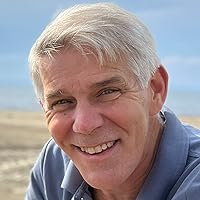
Jacques Philippe was born into a Christian family on March 12, 1947 in Lorraine, France. After studying mathematics in college, he spent several years teaching and doing scientific research. In 1976, he met the then recently-founded Community of the Beatitudes and answered the Lord’s call to follow Him through this vocation (see below for more information on the Community of the Beatitudes). He then spent several years in Jerusalem and Nazareth immersing himself in the study of Hebrew and the Jewish roots of Christianity. In 1981, he traveled to Rome to study theology and canon law and also began his work as a spiritual director, working in the formation of priests and seminarians of the Community. In 1994, he returned to France, where he assumed various responsibilities including spiritual direction, the development of training in the Community, and participation in its General Council. He has also preached retreats regularly in France and abroad and has consolidated his principal retreat themes into five books on spirituality. In recent years, he has devoted himself primarily to spiritual direction, preaching retreats, and working for the development of the Community in Asia and Oceania, where he travels frequently.
To say that I am a fan of Father Jacques Philippe's writings would be an understatement. I first discovered his writings while on retreat 10 years ago. I have read most of his books that are available in English more than once. His writing is so down to earth. He exudes peace and gentleness through his writings. Though he often deals with deep subjects he presents the truths in very accessible ways. And though I have only read Father Jacques works in translation I find that they are excellent for personal spiritual growth.
But this specific book is a little different than most of his other books. It is a collection or articles and lectures. The theme that ties them together is that of accepting the gifts of God, of learning to experience and live in the grace of God. And in this book Philippe draws from many and varied sources to highlight examples of that grace. He draws from the following sources:
Bernard of Clairvaux Catherine de Bar Christiane Sanson Emmanual Hatzidakis Etty Hillesum Faustina Kowalska Geneviève of the Holy Face Glenn E. Myers J. Daoust Jean-Claude Sagne Joel Guibert John Leinenweber John of the Cross John R. Sommerfeldt Lorenzo Scupoli Louis de Montfort Marie de la Trinité Peter of Alcántara Pope Benedict XVI Pope Francis Pope John Paul II The Desert Fathers Thérèse of Lisieux
And many of them he quotes from more than one source, or more than one time. To be honest I have added 5 books to my to be read list just from the quotes that Father Philippe had in this volume.
The chapters in this book are: 1. Spiritual Receptivity: Learn to Receive 2. Living in God's Sight with Thérèse of Lisieux 3. "When I Am Weak, Then I Am Strong!" 4. True and False Freedom 5. Interior Peace, a Spiritual Urgency 6. In Quest of Identity 7. Eucharist and Faith 8. Eucharist and Hope 9. Eucharist and Love 10. Come, Lord Jesus! 11. Knowing God through Mary 12. Touching God in Prayer 13. Teresa of Avila and the Interior Castle 14. Etty Hillesum, Witness of Hope
The final section on Etty Hillesum had the biggest impact upon me the first time I read through this book. I encountered Etty about 17 years ago in a Religious Studies course. Father Philippe states this about Etty: "That is how the name and spiritual itinerary of Etty (Esther) Hillesum came to be known. Since then, her renown and influence have grown unceasingly, a sign of how revolutionary and meaningful the interior life to which Etty's journal (and letters) testify is for men and women of today. Her work, of great literary quality, is increasingly recognized as a major memoir of the twentieth century, destined to be a big influence on our times. Very close to us in her sensibilities, her aspirations, her freedom, and also her wandering, Etty, in less than three years, underwent a spiritual transformation that brought her to a surprising interior maturity and freedom, as well as a remarkable blossoming in the love of God and gift of self." There is something incredible about this young woman and her transformation.
But to be honest the book as a whole is wonderful. And once you have read it through you may find yourself randomly picking chapters to read again and again. It is another amazing book by a wonderful writer. So give it a try.
Read the review on my blog Book Reviews and More and reviews of other books by Father Jacques Philippe.
This book might as well have had the subtitle: “The Fr. Jacques Philippe Reader”. This book is essentially a collection of the various topics he expands upon in his other books. One chapter is essentially a summary of his book “Interior Freedom,” one chapter is essentially a summary of his book “Time for God,” as well as chapters summarizing his “Searching for and Maintaining Peace,” “The Way of Trust and Love,” and so on. If you’ve never read Philippe, this is a good book to introduce you to his style and themes, and from there you can explore books of his which go into greater depth on a particular topic.
If he writes a book, I’ll read that book. I enjoyed this work a lot. Anytime Fr. Philippe starts talking about the Little Flower I’m all in. The ending of the book gives a brief on Etty Hillesum which was powerful and insightful. These books are so rich they can be read again and again with great joy.
First chapter was five stars for me. It is very much along the same lines as Seeking for and Maintaining Inner Peace. The later chapters did not speak to me as much, although I listened on audiobook in and out of sleep so may have missed some key parts.
This is my third book by Jacques Philippe and even if there is some duplication in his messages I find so much relevance that I can't seem to get enough. All through chapter 4 "True and False Freedom" J. P. provides so many examples in nailing down what I (most of us?) fail to acknowledge when defining true freedom of the soul.
And the final chapter describing Etty Hillesum's short life story of redemption during Nazi occupation of Holland left me grieving yet so inspired by her ability to resist bitterness and find Love through finding God and prayer:
"The exterior threat and terror increases day by day. I raise up prayer around me like a protective wall full of protective shadows...I come out more concentrated, stronger, more collected."
And Etty didn't hide herself away. She became an advocate and a beacon, and a martyr.
Jacques Phillipe's books are those that I will never give away. I always find more insight when re-reading.
If you would love a prayerful, wise and fruitful spiritual director but don’t have one, then an alternative to consider is Jacques Philippe books like this one. He dives deep into spiritual matters and brings the great saints into the conversation making them relevant to our daily struggles and challenges. I’ll happily read all the books - and there are many — as even though many are related to one another he has an uncanny way of bringing fresh perspective. My favorite line is from St Augustine that even though we consume the most Holy Eucharist, it is in fact almighty God who consumes us. Going to meditate in that.
On the Eucharist and love: “To love someone is to give him or her the possibility of loving us back. The greatest gift we can give someone is the power of self-giving, to experience the happiness of giving ourselves through love.” Fr Jacque Phillips write inspiring books, as this one is. I learned about the illusion of false freedom, the importance of openness in prayer, and how many times only in weakness comes strength. Maranatha!
This is a wonderful spiritual guide galvanizing the capability of love. I dearly love the passage that "to love someone is to give him or her the possibility of loving back." I sometimes withdraw at a chance of love being afraid of no visible outcome from my perhaps over- or under or even self-assessedly balanced love. This book encourages in peace and calm to entrust this fear or concern to God and just go on with loving fully and whole-heartedly.
This brief volume is a collection of essays on various topics that are tied together by the theme of love for God. The final essay is fantastic and worth reading even if you skip the rest of them. It is about a Dutch Jewish diarist in the Second World War named Etty Hillesum. Her story of conversion is at once remarkable and beautiful. I highly recommend this particular essay in this book, though the other ones were also very helpful and profound.
Some gems for sure, but not as helpful or profound as some of his other great work. The last chapter or so which focused on Etty Hillesum and Julius Spier seemed very out of place in a Catholic spiritual work as it seemed their beliefs never reached the depth of understanding that Fr. Philippe is trying to convey.
the introduction was incredible, I think I listened to it 4 times. I enjoyed the book, it's definitely more Catholic than some Catholic authors I've read, but it was still applicable to all Christians. I did skip the chapter about getting help from Mary, but overall it was a really challenging and encouraging book.
I received this book as a gift and wasn’t familiar with the author. I loved it! Each chapter is rich and gives the reader so much to chew on. There were a few key takeaways that I hope will continue to influence me for days and years to come. I especially loved the chapters on the Eucharist.
A collection of papers and essays, so the quality necessarily varies more than in his other books. But still filled with theological insight and pastoral wisdom.
What makes Jacques Philippe's books so amazing is his insight into the challenges facing us in the 21st century. As an experienced spiritual director, he truly understands what is troubling us and what is holding us back from fully receiving the grace of the Holy Spirit. In this collection of articles and adapted lectures Jacques Philippe helps us open up to receive that grace by being Eucharistic souls and truly Marian with the Carmelite spirituality woven in. His references to spiritual writers is fascinating - not just the classics, St John of the Cross, St Teresa of Avila, St Therese of Lisieux, St Bernard of Clairvaux - but other French writers I'd never heard of but was delighted to encounter including J Daoust, Catherine de Bar, Marie de la Trinite to name but a few. As with all his books, it's incredibly short, but so full of such profound wisdom that you will inevitably read it again and again.
The first time I read this book it did not particularly grab me, other than the chapter on Etty Hillesum. Rereading it recently, I was stunned by its insights. It's a great book to work on your interior disposition if you struggle with anxiety, scrupulosity, or a feeling of a lack of freedom.