A collection of poems in three parts. Part One deals with poems reminiscing about the poet's childhood in Point Edward Ontario, featuring childhood friends and family and village characters. Part Two contains poems about the poet's present life, reflections on being a grandfather and tributes to dead friends. Part Three is a miscellany of occasional poems.
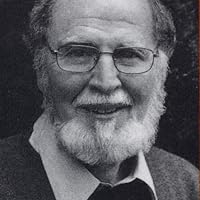
Don Gutteridge was born in Sarnia and raised in the nearby village of Point Edward. He taught High School English for seven years, later becoming a Professor in the Faculty of Education at the Western University, where he is now Professor Emeritus. He is the author of twenty-two novels. including the twelve-volume Marc Edwards mystery series. Don is also an accomplished poet and has published twenty-three books of poetry, one of which, Coppermine, was a finalist for the 1973 Governor-General's Award. In 1970 he won the UWO President's medal for the best periodical poem of that year. To listen to interviews with the author, go to: http://thereandthen.podbean.com. Don currently lives in London, Ontario.
The Blue Flow Below is a collection of poems written by Don Gutteridge. His work is divided into three parts: The Point, Now and Then, and Miscellany. The first part is a celebration of the poet's early life, his family, friends, and adventures, and it begins at the beginning with the title poem, The Blue Flow Below. This poem discusses the Blue Water Bridge which was a focal point of town, being "a stone's throw/from my grandfather's house." Though only 18 lines long, Gutteridge recreates his first impression of this earliest landmark of his childhood: the roaring of the river, how he "marvelled at its canti-/levered leap above/the blue flow below." There's sound, sense, and light as the young boy sees the bridge's lights: "and in the dark its luminous lights/glowed like a radium rainbow" and hears the evocative "hum-/drum of tires wheeling away."
Gutteridge crafts his poems, taking care to craft the past, not in frozen moments, but rather in timeless, animated dioramas with sound, meaning, and sense building complete and unforgettable images. He continues building his tribute to that focal image of his youth in the following poem, Stirring: "I saw it each morning/when a simmering sun awoke/me: that silver arch/bridging the blue flow/below; I waved to the shimmering shapes of cars/as they blurred past towards/some magical kingdoms/that make my dreams seethe,/while the whirr of their wheels/was a music I gloried in,/alone in my room, parched for/something stirring,/something new."
Gutteridge's poems compel the reader to speak them aloud, or at least to mouth the words silently. Each word, and the letters that comprise it, contribute to the overall effect of his work. Sometimes, it’s the canny and unexpectedly flowing alliteration that surprises and pleases the reader; at other times, it's the choice of words, "a simmering sun", "the shimmering shapes", "blurred", "seethe", "whirr", all combining to reanimate those vivid memories of the past, imbuing them with energy and motion.
The poet shares his childhood adventures, enchanted endless evenings playing with friends long ago, getting to know his dad who had been away at war. In Lilliputian, he shares a moment with his beloved grandpa as the older man retells the Goldilocks tale, and in a scant 18 lines, he recreates the tale so brilliantly, rendering it in glowing frame-within-a-frame images. Nature is never far from his consciousness as young boys "paddled in the/Great Lake in a juddering/breeze or fantasized/among the dunes."
Time held a powerful sway over me each time I went back to his poems and let them work their magic on me. And no, I could not resist reading each of them aloud, savoring the sound, sensation, and sensuality of those words forming each piece, delighting in how they fitted together like cunningly crafted puzzle boxes. While the poems in Parts II and III are marvelous, it is those childhood memories so vividly realized and rendered in Part I that speak most powerfully to me. The Blue Flow Below is powerful and haunting, revealing so much of the man who crafted each piece so lovingly. It's gorgeous and lyrical, and a sheer delight to read. This collection by Don Gutteridge is most highly recommended. What joy to read these poems!
Finally, your book arrived yesterday. Wow. What a lovely book. I turned it over in my hands over and over again, marvelling at its feel, its "look." Then I sat down and started reading. It is amazing how different a book is when you move it from manuscript and a digital screen to the actual pages. The reaction is there in your poems. I hadn't realized it, in a crazy kind of way, until just now as I have sat down and read this from cover to cover just how much "walking" takes place, and for the poet, that walk, that meandering, is what carries us into the imagination. I can imagine Wordsworth and Coleridge hiking the Lake District. In your case, there's a boy trailing after his grandfather peppering him with questions, or hurrying to school, or heading home...those tiny journeys within neighbourhoods, our life. What a terrific read The Blue Flow Below is.
One of my favourite quotations from Alice in Wonderland is from the King of Hearts during the trial scene. When the White Rabbit is, as usual, dithering, the King gives him this advice: “Begin at the beginning … and go on till you come to the end: then stop.” That’s good for reading a novel, but not for a book of poetry. Instead I remember Jamie Reaney saying that one should “move around” in a book of poetry rather than going through it in a linear fashion.
But I did begin at the beginning of The Blue Flow Below. “The Point Of It All” is a wonderfully witty introduction, one of your very best poems, and not just because of the multilayered pun in “point,” though that has a lot to do with it. The poem circles from a “point” in the first line to a “point” in the last line, and the “point” of that circle (if there is a such a thing in geometry) is the I’s transition from observer to maker. So structure becomes meaning. Very neat!
I loved the snapshots of childhood and boyhood in Part One. Some are relatively straightforward and evocative; others need some thinking about, like the surprise ending of “Shudder.” That depends upon a repetition of sound that you sometimes use (and that I’ve commented on before), where a word at the end picks up the sound of an earlier word, not noted in passing, but heard in retrospect as important. So here “shuddered” harks back to the earlier and unusual “juddering,” first heard without emotion until “shuddered” evokes the fear in the summer scene. You do something similar (though with a different emotion) in “Grace,” with “aflutter” and “utterly.”
Some bits and pieces that I much enjoyed: in “Presbyterian,” the rising “i” sound of “surprised wives for a higher / cause”; in “Mayflies,” the clogging “f’s” of “fish flies” and “Pharaoh … fared” (another example of your picking up an early sound and sounding it again more fully and with greater complexity at the end of a poem); in “Precious,” the “s” sounds of “precious” and “possession” intertwined with the long “i’s” of “eyes” and “prized,” that make a memorable simile. And, golfers that we both are, I loved the lines “when a putt / surprised the cup” in “Gamble,” where the long “i” sound is a surprise in the midst of the repeated short “u.” (The two poems in memory of Colm O’Sullivan are apt and very moving.)
I remember your saying to me once that you could tell how good a poet is by looking at the line divisions. Well, in “Caw” I noted the happy division of auxiliary and main verb in “when I am / interrupted.”
I need to do some more thinking about “Miracles.” On first reading I thought it was relatively straightforward, though I puzzled over “miraculous manger,” to conclude that “miraculous” is a transferred epithet. But then I started hearing all those “a’s” in the first few lines and later, and began to think that the sound of “Babe” generates a whole scene, a whole narrative. That led me to puzzle over the title. What are the “miracles” - plural? The things that “a” generates, maybe? And is it just a coincidence that “Babe” makes the most of the first two letters of the alphabet? And is it the beginning of many more sounds that are the “miracles” of the title? Don’t answer all those questions. This is a reader re-creating the poem, and you don’t have to explain. As you say in “Tingling,” the poem “means what it is.”
“The Big Bang” as “God’s cough”! That’s wit! That’s good for a “laugh out loud”!
So thank you, thank you, for hours of quiet but intense enjoyment.
The Blue Flow Below is a collection of poems written by Don Gutteridge. His work is divided into three parts: The Point, Now and Then, and Miscellany. The first part is a celebration of the poet's early life, his family, friends, and adventures, and it begins at the beginning with the title poem, The Blue Flow Below. This poem discusses the Blue Water Bridge which was a focal point of town, being "a stone's throw/from my grandfather's house." Though only 18 lines long, Gutteridge recreates his first impression of this earliest landmark of his childhood: the roaring of the river, how he "marvelled at its canti-/levered leap above/the blue flow below." There's sound, sense, and light as the young boy sees the bridge's lights: "and in the dark its luminous lights/glowed like a radium rainbow" and hears the evocative "hum-/drum of tires wheeling away."
Gutteridge crafts his poems, taking care to craft the past, not in frozen moments, but rather in timeless, animated dioramas with sound, meaning, and sense building complete and unforgettable images. He continues building his tribute to that focal image of his youth in the following poem, Stirring: "I saw it each morning/when a simmering sun awoke/me: that silver arch/bridging the blue flow/below; I waved to the shimmering shapes of cars/as they blurred past towards/some magical kingdoms/that make my dreams seethe,/while the whirr of their wheels/was a music I gloried in,/alone in my room, parched for/something stirring,/something new."
Gutteridge's poems compel the reader to speak them aloud, or at least to mouth the words silently. Each word, and the letters that comprise it, contribute to the overall effect of his work. Sometimes, it’s the canny and unexpectedly flowing alliteration that surprises and pleases the reader; at other times, it's the choice of words, "a simmering sun", "the shimmering shapes", "blurred", "seethe", "whirr", all combining to reanimate those vivid memories of the past, imbuing them with energy and motion.
The poet shares his childhood adventures, enchanted endless evenings playing with friends long ago, getting to know his dad who had been away at war. In Lilliputian, he shares a moment with his beloved grandpa as the older man retells the Goldilocks tale, and in a scant 18 lines, he recreates the tale so brilliantly, rendering it in glowing frame-within-a-frame images. Nature is never far from his consciousness as young boys "paddled in the/Great Lake in a juddering/breeze or fantasized/among the dunes."
Time held a powerful sway over me each time I went back to his poems and let them work their magic on me. And no, I could not resist reading each of them aloud, savoring the sound, sensation, and sensuality of those words forming each piece, delighting in how they fitted together like cunningly crafted puzzle boxes. While the poems in Parts II and III are marvelous, it is those childhood memories so vividly realized and rendered in Part I that speak most powerfully to me. The Blue Flow Below is powerful and haunting, revealing so much of the man who crafted each piece so lovingly. It's gorgeous and lyrical, and a sheer delight to read. This collection by Don Gutteridge is most highly recommended. What joy to read these poems!
Like a bridge newly built over the wide expanse of a fast flowing river, these poems span the life of a man who still tingles with amazement at the beauty of the present, as he also sees through misty memory how viewing the past with a clear eye might yield the sacred truth of what it means to be fully human. Whether he is recalling his childhood, remembering the loss of contemporary friends grown old, or he is delighting in the love he feels for his family, he is a man who continues to celebrate his own good fortune. He sees deep into the blue water flowing beneath the bridge, though he sometimes finds himself stranded on the shore. His poetry embraces scripture, celebrating both the child’s Bible Christ of the hymn Jesus Loves Me, and the adult understanding of the suffering of Christ on the cross. He does not shy away from death. These are brave poems. Like small prayers they partake in the possibility of language as a numinous reminder that the best words in the best order might bring inner life to the surface where it shines.
John B. Lee Poet Laureate of the city of Brantford in perpetuity, Poet Laureate of Norfolk County for life