The Pixels of Paul Cezanne is a collection of essays by Wim Wenders in which he presents his observations and reflections on the fellow artists who have influenced, shaped, and inspired him.
"How are they doing it?" is the key question that Wenders asks as he looks at the dance work of Pina Bausch, the paintings of Cezanne, Edward Hopper, and Andrew Wyeth, as well as the films of Ingmar Bergman, Michelanelo Antonioni, Ozu, Anthony Mann, Douglas Sirk, and Sam Fuller.
He finds the answer by trying to understand their individual perspectives, and, in the process revealing his own art of perception in texts of rare poignancy.
He aquí una rareza maravillosa: una serie de impresiones que el director de 'Paris, Texas' escribió sobre otros artistas de diferentes disciplinas.
Wenders habla de cine a través de Ingmar Bergman o Anthony Mann; de movimiento a través de Pina Bausch; o de pintura a partir de la luz de Edward Hopper y de color desde Cézanne.
La lista es amplia y me ha descubierto algunos nombres que desconocía o me ha hecho ponerle autoría a obras que quizá había visto y que podría reconocer pero jamás me molesté en averiguar quién estaba detrás.
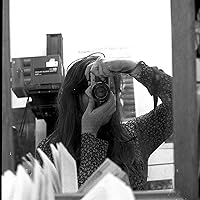
Es el caso de la fotógrafa alemana Barbara Klemm, cuya cámara captó el legendario beso de Honecker y Brezhnev. Gracias al texto que Wenders le dedica he podido explorar la obra fotográfica de esta mujer, que es magnífica, con un contexto
(Gracias, Wim).
Sobre ella, el cineasta dice:
"Barbara Klemm no necesita un punto de apoyo en el universo. Tampoco quiere mover el mundo. Sólo quiere sacudirlo levemente para que suelte, se desprenda o libere sus imágenes. Sobre todo porque ella, como fotógrafa, ya ha encontrado ese punto, que está nada menos que en sus ojos, esos que le permiten tener un 'punto de vista' en el que apoyarse, esos que le prestan toda su atención, su preparación y su esmero a la 'realidad'.
Su mirada le concede lo que reclamaba Arquímedes, y ese ángulo visual es el que le permite clasificar lo que le rodea y esperar, pacientemente, a que esa 'época' se ponga de manifiesto y nosotros, hombres y mujeres, nos manifestemos junto con ella."
Leer este texto y después pasar un rato viendo las imágenes de la obra de Klemm es un planazo para la sobremesa del sábado. Os lo recomiendo para acompañar el café.
Después de leer cada uno de los ensayos del libro, he descubierto cuán poco sé del mundo del arte. Lo que Wenders expone a lo largo de sus ensayos y su trayectoria son las formas en las que se mueve el arte. Explora cine, danza, fotografía, pintura, moda... y en cada uno de estos análisis alcanza la esencia pura del arte. El arte sí mueve las experiencias humanas, pero más allá de eso, también mueve el tiempo mismo. Cuando se encuentra este punto, el arte deja de retratar humanos, experiencias o emociones; expresa su fuerza pura.
I have spent my time immersed in Wim Wender’s universe the past while, watching his movies as well as those of the filmmakers he admires, viewing his photography collections ( the ones I can get my hands on ) and reading his essays…oh I almost forgot about the interviews I have watched on YouTube. As some of my friends probably know, I have an on-going list of artists and authors whom I wish to be friends with( I know I am only dreaming ). I am adding Wenders to my list.
Back to the collection of essays. In this collection, he writes about Bergman ( he actually says “ for “Bergman), Antonioni, Edward Hopper, Peter Lindbergh, Anthony Mann, Douglas Sirk, Samuel Fuller, Manoel de Oliveira, Pina Bausch, James Nachtwey, Yasujirō Ozu, Andrew Wyeth, Barbara Klemm, Yohji Yamamoto and Paul Cézanne. Wenders writes with great clarity and sincerity. And his passion just shines through, there is something irresistible about that. After reading this collection, I can’t help but think that if all art essays are written the way he does, maybe more people would be able to see the joy in appreciating art.
Some of the essays are written in the form of long poems, and those are the ones I love the most. I find the ones on Hopper, Wyeth and Ozu especially helpful.
I will talk about the two painters, whom I personally really like as well, first. I have always told my friends that I generally appreciate the artists who stay out of the convention of their day more. I have a feeling that Wenders feels the same way. Actually, scratch that, I am sure he feels the same way. As a matter of fact, in his essay on Andrew Wyeth, he say the following: “I’ve always been strangely drawn to the painters, who remained ‘ figurative’ ( for the lack of a better word) when the entire art world around them had turned in a different direction.” ( Balthus and Max Beckmann are both on his list of the ones who remain “figurative”) He says even though Hopper was hailed as trailblazer of pop-art by the new avant-garde painters towards the end of his career, for a long period he had been viewed as the bastion of the then out-of-fashion representational art. But Hoppers persevered, seemingly oblivious to the art trends that had come and gone during his lifetime. Wenders considers Wyeth the most “courageous defender of a ‘realist' concept in the 20th century”, he also considers Wyeth a “radical” ( I was nodding along like a pigeon picking up the bread crumbs on the floor reading this): “ He ( Wyeth) lived entirely withdrawn, outside of any school or grouping”.
Wenders considers Hopper a great storyteller, a statement that, in my opinion, all Hopper lovers would agree on. “He (Hoppers) did not wish to dissolve the visual impression; on the contrary, he wanted to reinforce it. No more celebration of the fleeting moment, of the volatile and ephemeral, but a declaration of permanence. Hopper is a storyteller, not a painter of still lifes. It's not only on the surface that his paintings are about America, they dig deep into the American dream and investigate radically that very American dilemma of appearance versus reality. Indeed, these images could all be taken from a giant movie about America, each one marking the beginning of a new chapter.” Wenders describes Wyeth as a great teacher for “the acting of seeing” as well as storyteller. “So Wyeth sees out of the corner of his eyes first, remembers later what he saw, then looks again, immerses himself, penetrates, transcends and reconstructs, thus showing us both the reflection of that first glance and what lies behind it - and what lasts” And I love how he talks about the “timelessness” nature of Wyeth paintings. “ Timelessness is what he (Wyeth) is after. He somehow tries to instill ‘eternity’ into his canvas.” “And in Landscape, he tries to encapsulate the successive ages, the accumulated time that weighs on the place. The house or interior will show its wear, every trace of its use or abuse. Time stands still, the world materializes in utter clarity and as a sheer marvel.” I think anyone who loves Hoppers and Wyeth would get a lot out of Wenders essays on them, whether you like him as a filmmaker or not.
About the piece on Ozu. I find it incredibly moving and personal. If you are into movies, watch Tokyo Story by Ozu, Tokyo-Ga by Wenders then read the essay, you will understand.
Also, for anyone who loves Barbara Klemm, read the essay on her, I did not expect Wenders to have such a great sense of humour. That was a super fun essay to read for me.
The first page is a confession by the author about how he essentially sucks at thinking. Cool mystery - how did he write this book or compose any of his ideas for films if the process of thinking is so difficult for him? He leaves us to solve it, to solve him, as he writes across art and film.
The entire first chapter is dedicated to his writing practice, and in its last line Wim Wenders notes, "I'd go as far as to say that this is the instruction manual for how to read (think along with?) this book." We're supposed to keep in mind while reading this book how the author thinks and how he struggles to think. It made it inadvertently instructional, and that made all the difference for me.
Many of the essays are Wim Wenders extending praise to other artists, across many disciplines, many of them from the generation that came before his. Most of them are worth the read, and only a few of them seem to gas up legends (and those were usually for speeches), and when he writes about himself it is in the loyal fashion of a film maker. 'Here, let me show you something, and you decide what you think about it.'
In the end I finished this book regretfully. I loved it. Props to the translator. I'd go as far to say that this book is an instruction manual for how to watch Wim Wender's movies.
I’ve always been fascinated by directors like Wim Wenders or Werner Herzog for the depth and breadth of their oeuvres. From touching dramas to eclectic documentaries, folks like this with a wide range of interests are my kind of people. So imagine my excitement when I discovered Wenders’ The Pixels of Paul Cézanne and Reflections on Other Artists. Along similar lines to the recently read Cinema Speculation, Wenders expands upon the idea to include essays about a wide range of artists of interest to him, straying outside the bounds of films and directors to include painters and dancers as well. Definitely a worthwhile read if you like Wim Wenders and his films… and if you’re not familiar, may I recommend you to watch Wings of Desire??
I picked this up as I have a great love of a number of Wim Wenders' films and his photography. Also, knowing that Edward Hopper has been a great influence on his work I wanted to read this with the idea that Hopper would at least be mentioned. The chapters on Hopper and Andrew Wyeth are stand outs for me, due to the artworks etc that attract me, but the book as a whole is interesting to read. It is well written, translated very well, and easy to absorb. I kept thinking of it as Wim Wenders' version of John Bergers' 'Ways of Seeing' - a film makers way of looking at film, art and interestingly in one chapter, fashion.
Libro godibilissimo pur con una prosa tutta sua. Diviso in capitoli leggibili in modo indipendente, il libro raccoglie scritti di Wender vergati in occasione di mostre, presentazioni o prefazioni di libri. I temi sono vari, come vari sono i soggetti a cui lo scritto è dedicato, ma accomunati dalla "visione" dell'artista, sia esso un fotografo, regista o artista e declinato dalla sensibilità di Wenders sempre attento alla scelta delle immagini/ambientazioni delle sue opere. Libro di ottima fattura editoriale, pur non essendo un libro caro, e questo va segnalato in un mondo in cui la qualità della pagina è spesso simile a quella della carta igienica
Well, this book was a surprise - director Wim Wenders writing poetry and prose on those artists across genres that have inspired him, from designer Yohji Yamamoto to photographers James Nachtwey and Barbara Klein, to painters Andrew Wyeth, Ed Hopper and Paul Cezanne. As well as odes to brilliance and artistic bravery, these essays also cause us to challenge what we consider art and where skill and craft often lie unseen.
Hermoso libro para amar todo lo que embellezca el mundo en lugar de embrutecerlo. Un llamado a dejarnos conmover y mover por las diversas manifestaciones artísticas de las que son capaces las personas. Wim Wenders escribe sobre lo que lo inspira con mucha sinceridad, respeto y cariño sus creadores.
Liked a lot of the insights and highlights related to Wim Wenders’ work, but I also had no idea what he was talking about sometimes. I had to look up most of it. If I had more context about what he was talking about I may have enjoyed this more. Still, quick and insightful read.
wim wenders ist ein eigensinniger Mann und für mich ist der Begriff eigensinnig ein hohes Kompliment wenn nicht sogar das höchste. Es umschreibt einen Menschen der seinem Leben und den Dingen seinen eigenen Sinn gibt und solche Menschen schätze ich sehr.
Enjoyable without being extremely stimulating or insightful. But he's directed some good films, and so was pleasant to read his short reflections on various artists in various fields.
I found it interesting to read how a visual story teller writes about other visual story tellers. But then the themes felt very similar from one essay to the other.
Maybe an unrealistic goal to set for myself but when I die I want to remembered by people the same way other artists are remembered by Wim Wenders in this book.