In Passionate Spectator , memoirist Peter Leroy and his wife Albertine are living by the skin of their teeth in Manhattan. Casting about for a source of income, Peter purchases a book from a homeless peddler, Creative Self-Promotion for Taxidermists , hoping he can adapt its techniques to promote his fledgling Memoirs While You Wait. That book opens into a beguiling journey from fiction to truth and back again, involving Peter, his childhood friend Matthew Barber (who is undergoing emergency heart surgery), and Peter's witty, urbane alter-ego, Bertram W. Beath--an erotic opportunist and "passionate spectator"of life's pageant.
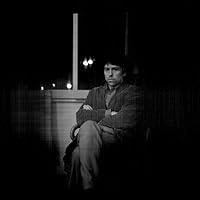
Eric Kraft grew up in Babylon, New York, on the South Shore of Long Island, where he was for a time co-owner and co-captain of a clam boat, which sank. He met or invented the character Peter Leroy while dozing over a German lesson during his first year at Harvard. The following year, he married his muse, Madeline Canning; they have two sons. After earning a Master’s Degree from the Harvard Graduate School of Education, Kraft taught school in the Boston area for a while, moonlighting as a rock music critic for the Boston Phoenix. Since then, he has undertaken a variety of hackwork to support the Kraft ménage and the writing of the voluminous work of fiction that he calls The Personal History, Adventures, Experiences & Observations of Peter Leroy. He has been the recipient of a fellowship from the National Endowment for the Arts; was, briefly, chairman of PEN New England; and has been awarded the John Dos Passos Prize for Literature.
This book delighted me. There were many times when I laughed; the only other authors that have achieved that: Nathaniel Benchley, Perelman, and David Sedaris. Oh, and Jack Handey (no excuses). But Kraft is nothing like these authors. His humor is the humor of the mundane, of daily life.
I think of this book as a cross between a Nicholson Baker novel and a Larry David sitcom. If you enjoy a feeling of surreality/unreality, definitely check this book out.
No spoilers here, but I was impressed with how Kraft wrapped up the book. It was satisfying, and unexpected, as it seemed as though the “plot” had become a tangled mess. Yet Mr. Kraft ended it in a way that made perfect sense.
You can't go wrong with any of Eric Kraft's terrific Peter Leroy reminiscences, as he examines memory and our need to edit them to make them better. Always confessional, these books are hilarious and wise, worth reading aloud to whoever is in earshot. Read them all.