

What do you think?
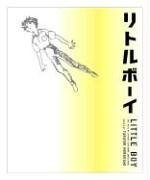
Little Boy: The Arts of Japan's Exploding Subculture
Little Boy examines the culture of postwar Japan through its arts and popular visual media. Focusing on the youth-driven phenomenon of otaku ( roughly translated as “geek culture” or “pop cult fanaticism”), Takashi Murakami and a notable group of contributors explore the complex historical influences that shape Japanese contemporary art and its distinct graphic languages. The book’s title, Little Boy, is a reference to the atomic bomb dropped on Hiroshima in 1945, thus clearly locating the birth of these new cultural forms in the trauma and generational aftershock of the atomic bomb.
This generously illustrated book showcases the work of key otaku artists and designers, many of whom are cult celebrities in Japan, and discusses their feature film and video animations, video games and internet sites, music, toys, fashion, and more. In the process, the following questions are What is otaku, and what does it tell us about contemporary social, economic, and cultural life in Japan and throughout the world? How is it related to the pervasive and curious fixation on “cuteness” evident in Japanese popular culture? What impact did the atomic devastation of World War II have on the development of Japanese art and culture?
This brilliantly designed, bilingual (English and Japanese) publication examines these themes to explore how contemporary Japanese art has become inseparable from the subcultural realms of manga and animé (Japanese animation)—a world where meticulous technique, apocalyptic imagery, and high and low cultures meet.
Little Boy concludes Murakami’s “Superflat” trilogy, a project conceived in 2000 to introduce a new wave of Japanese artists and to place their work in the historical context of traditional styles and concepts.
This generously illustrated book showcases the work of key otaku artists and designers, many of whom are cult celebrities in Japan, and discusses their feature film and video animations, video games and internet sites, music, toys, fashion, and more. In the process, the following questions are What is otaku, and what does it tell us about contemporary social, economic, and cultural life in Japan and throughout the world? How is it related to the pervasive and curious fixation on “cuteness” evident in Japanese popular culture? What impact did the atomic devastation of World War II have on the development of Japanese art and culture?
This brilliantly designed, bilingual (English and Japanese) publication examines these themes to explore how contemporary Japanese art has become inseparable from the subcultural realms of manga and animé (Japanese animation)—a world where meticulous technique, apocalyptic imagery, and high and low cultures meet.
Little Boy concludes Murakami’s “Superflat” trilogy, a project conceived in 2000 to introduce a new wave of Japanese artists and to place their work in the historical context of traditional styles and concepts.
298 pages, Hardcover
Published May 15, 2005
About the author
Takashi Murakami
71 books46 followersSee 村上 隆.
Librarian note: This is not the only author by this name in the database. See other authors with similar names.
Librarian note: This is not the only author by this name in the database. See other authors with similar names.
Ratings & Reviews
Friends & Following
Create a free account to discover what your friends think of this book!
Community Reviews
Displaying 1 - 10 of 10 reviews
July 14, 2012
Good news, here http://www.gwern.net/docs/2005-murakami is an excellent PDF of this Essay on WWII infantilizing Japanese culture such as anime and otaku. Takashi Murakami is a good hands writer. Exploding subculture is a pun. Little Boy is the name of the Hiroshima bomb. Anime is a production of Little Boy. Superflat is a societal autism. The USG Manhattan Project boys, proud physicists all, naming their bombs, or the people they were dropped on, driven into infancy and beyond, emasculated, juvenilized produced Game Boy, Pokémon, Pocket Monsters that did to their own what they done to them, called RPGs, role playing games, not rocket propelled grenades: six hundred Japanese children got epileptic seizures watching Pokémon “Dennō Senshi Porygon“, (Electric Soldier Porygon) in season 1. There were bright explosions with rapidly alternating blue and red color patterns. This is the superflat here , here Hutsume Miku, Vocaloid, (thx Gwern Branwen).
It was not a bombing back to stone, but to the second dimension. Were the costs of shock and awe known they might still be done, but why did Japan ally with the Germans? Sure you can hear the gas, and the Chinese museums of Japan's atrocities. But consider the result of the white out, the orange sun, the total dark and the rain of body parts and that that is different from the holocaust mainly from the shock and awe, for the Nazis delivered their murder hands on, more or less medieval for the time, but Hiroshima was devastated from above. This spawned Godzilla and all the monsters and giants of pop that frightened children in their beds at night. This was an attack on childhood, as Murakami shows, and on old age; neither could exist. Compare it with the PTSD and shock of IUDs among the American Afgans, the disorientation, the devastation, the shocking of brain against bone, sound and lined light, and then think of it coming sudden, immersion complete shock, waves more than felt, producing the inane patter and chatter that followed it in America, justifying...more bombing of the homeland by far than of Japan, American Ground Zero The Secret Nuclear War, but atrocities make more. Superflat means just that, flatted out of existence, existence being three dimensions, and superflatted peoples are the most dangerous to themselves and all, not that they are worse, but action / reaction, as in the shamed German nation of WWI, produces worse. From Godzilla the superflat to aliens from the grotesque, to normal hiding the grotesque, preparation for the super modern superman who never dies, aborned for millennia. Does it strike you that the top 10 evil experiments were all conducted in the 20th century?
Bearden says Japan is a criminal enterprise, just like Biden says Afghanistan. Nations regard others as criminal, their heroes terrorists, so they have to increase the helium to sustain the bubble. Each night I see trucks down the alleys spraying to decease the Schumann Resonance to put people back to sleep. You wonder why this is necessary if the helium works. Just another propo-gram from fail safe. Misinformation has the weather change, blaming local coal to crank up fracking, but everyone knows deep down that the weather is cracking, Yakusa coming down in hurricanes and tornadoes, Yakusa and the old KGB drying up the leaves, driving the blue stem scalar jet stream. It will be some sight, Dr. Strangelove riding the storm, like Roman horses with fog breath and HAARP cloud. Electrosmog gets more for the transmitters, disinformation moves like hi and lo pressures. Yakusa caused the NO flood, but lost the ball on downs from the American earthquake disaster at Yakushima. We score this submarine loss on nuke plants, suitcase scalar earthquake and tsunami kits. In the second half blows up Yellowstone.
I don’t know what the bill is for all the gas, all the helium to pump up the Apocalypse, much the same maybe as the bill for all the gas to pump up the dream of superiority. So while they spray each night to complete the negative optical transfer to the rest of the world, Japan contemplates the demise and gets out the mask. When the American wakes to realize the Hiroshima bomb was named Little Boy, and all Japan has been little boyed so its pop art reflects revenge on the airplane that dropped its humikiation, one can ask, what would you have done in Japan as a nation of warriors? So while Little Boy superflat plots revenge, Goodbars admire the work being more quick and comfortable with Shinto animist technology simply an extension of nature. Superflat means the eyes are expressionless as the face is unwrinkled, unaged, childed, simplified, flattened out of dimensionality. This flat affect, failure to make eye contact is a form of a subculture of autism...
“Hideako Anno, spent several years of his life essentially isolated in his room reading comic books and playing video games in a particularly Japanese affliction known as “otaku.” Otakus are defined by William Gibson as, “the passionate obsessive, the information age’s embodiment of the connoisseur, more concerned with the accumulation of data than of objects. . . Understanding otaku -hood, I think, is one of the keys to understanding the culture of the web. There is something profoundly post-national about it, extra-geographic. We are all curators, in the post-modern world, whether we want to be or not.” Quang Truong here
“The theory that Japan’s defeat stripped the country of its independence and led to the creation of a nation of permanent children, weaklings forced to live under the protection of the American Big Daddy, is widely shared by artists and intellectuals in Japan. It is also a staple of popular cartoons, many of which feature a well-meaning government that turns out to be a facade concealing sinister and more powerful forces.
Anno pauses for a moment, and gives a dark-browed stare out the window. “I don’t see any adults here in Japan,” he says, with a shrug. “The fact that you see salarymen reading manga and pornography on the trains and being unafraid, unashamed or anything, is something you wouldn’t have seen 30 years ago, with people who grew up under a different system of government. They would have been far too embarrassed to open a book of cartoons or dirty pictures on a train. But that’s what we have now in Japan. We are a country of children.” Atlantic Monthly Interview Anno here
The comment on the above is a denial that: “I’m surprised the man who recently directed the remake of Cutie Honey, and is now busy remaking Evangelion, would go so far as to call any adult who reads manga childish.”
The gas is that strong.
It was not a bombing back to stone, but to the second dimension. Were the costs of shock and awe known they might still be done, but why did Japan ally with the Germans? Sure you can hear the gas, and the Chinese museums of Japan's atrocities. But consider the result of the white out, the orange sun, the total dark and the rain of body parts and that that is different from the holocaust mainly from the shock and awe, for the Nazis delivered their murder hands on, more or less medieval for the time, but Hiroshima was devastated from above. This spawned Godzilla and all the monsters and giants of pop that frightened children in their beds at night. This was an attack on childhood, as Murakami shows, and on old age; neither could exist. Compare it with the PTSD and shock of IUDs among the American Afgans, the disorientation, the devastation, the shocking of brain against bone, sound and lined light, and then think of it coming sudden, immersion complete shock, waves more than felt, producing the inane patter and chatter that followed it in America, justifying...more bombing of the homeland by far than of Japan, American Ground Zero The Secret Nuclear War, but atrocities make more. Superflat means just that, flatted out of existence, existence being three dimensions, and superflatted peoples are the most dangerous to themselves and all, not that they are worse, but action / reaction, as in the shamed German nation of WWI, produces worse. From Godzilla the superflat to aliens from the grotesque, to normal hiding the grotesque, preparation for the super modern superman who never dies, aborned for millennia. Does it strike you that the top 10 evil experiments were all conducted in the 20th century?
Bearden says Japan is a criminal enterprise, just like Biden says Afghanistan. Nations regard others as criminal, their heroes terrorists, so they have to increase the helium to sustain the bubble. Each night I see trucks down the alleys spraying to decease the Schumann Resonance to put people back to sleep. You wonder why this is necessary if the helium works. Just another propo-gram from fail safe. Misinformation has the weather change, blaming local coal to crank up fracking, but everyone knows deep down that the weather is cracking, Yakusa coming down in hurricanes and tornadoes, Yakusa and the old KGB drying up the leaves, driving the blue stem scalar jet stream. It will be some sight, Dr. Strangelove riding the storm, like Roman horses with fog breath and HAARP cloud. Electrosmog gets more for the transmitters, disinformation moves like hi and lo pressures. Yakusa caused the NO flood, but lost the ball on downs from the American earthquake disaster at Yakushima. We score this submarine loss on nuke plants, suitcase scalar earthquake and tsunami kits. In the second half blows up Yellowstone.
I don’t know what the bill is for all the gas, all the helium to pump up the Apocalypse, much the same maybe as the bill for all the gas to pump up the dream of superiority. So while they spray each night to complete the negative optical transfer to the rest of the world, Japan contemplates the demise and gets out the mask. When the American wakes to realize the Hiroshima bomb was named Little Boy, and all Japan has been little boyed so its pop art reflects revenge on the airplane that dropped its humikiation, one can ask, what would you have done in Japan as a nation of warriors? So while Little Boy superflat plots revenge, Goodbars admire the work being more quick and comfortable with Shinto animist technology simply an extension of nature. Superflat means the eyes are expressionless as the face is unwrinkled, unaged, childed, simplified, flattened out of dimensionality. This flat affect, failure to make eye contact is a form of a subculture of autism...
“Hideako Anno, spent several years of his life essentially isolated in his room reading comic books and playing video games in a particularly Japanese affliction known as “otaku.” Otakus are defined by William Gibson as, “the passionate obsessive, the information age’s embodiment of the connoisseur, more concerned with the accumulation of data than of objects. . . Understanding otaku -hood, I think, is one of the keys to understanding the culture of the web. There is something profoundly post-national about it, extra-geographic. We are all curators, in the post-modern world, whether we want to be or not.” Quang Truong here
“The theory that Japan’s defeat stripped the country of its independence and led to the creation of a nation of permanent children, weaklings forced to live under the protection of the American Big Daddy, is widely shared by artists and intellectuals in Japan. It is also a staple of popular cartoons, many of which feature a well-meaning government that turns out to be a facade concealing sinister and more powerful forces.
Anno pauses for a moment, and gives a dark-browed stare out the window. “I don’t see any adults here in Japan,” he says, with a shrug. “The fact that you see salarymen reading manga and pornography on the trains and being unafraid, unashamed or anything, is something you wouldn’t have seen 30 years ago, with people who grew up under a different system of government. They would have been far too embarrassed to open a book of cartoons or dirty pictures on a train. But that’s what we have now in Japan. We are a country of children.” Atlantic Monthly Interview Anno here
The comment on the above is a denial that: “I’m surprised the man who recently directed the remake of Cutie Honey, and is now busy remaking Evangelion, would go so far as to call any adult who reads manga childish.”
The gas is that strong.

November 19, 2019
This was a fascinating read on the changes and book of art and Otaku culture in Japan following, and likely as a direct result of, the atomic bombings of Hiroshima and Nagasaki. Breaking it down in a mostly chronological order, with the back half dedicated to essays about the various aspects of Otaku, anime, and art in general, the book is filled with connections and images from the initial popularity of Taro Okamoto ("Art is explosion!") to the use of otaku culture by Aum Shinrikyo, the terrorist group responsible for the Tokyo subway saran gas attack in 1995. It is easy to see how the atomic bomb influenced art and culture in Japan, but this book does a great job of really connecting it all.
January 31, 2010
Seriously one of the most well designed and entertaining art books that I have ever bought. This book covers the rise of the Otaku or nerd culture in Japan and how contemporary artists have been influenced by it.

March 18, 2024
I really enjoy the insights provided by Takashi Murakami in this book, particularly his understanding of the post-war younger generation and the concept of "flat."
The compilation of manga culture within the book makes it a worthwhile read, despite its challenging size to manage.
The compilation of manga culture within the book makes it a worthwhile read, despite its challenging size to manage.

July 30, 2021
A deep-dive into the realm of animanga, otaku culture, and postwar Japan's (exploding) artistic subcultures!

September 21, 2025
Deep down I really am an otaku.

February 8, 2012
This book was very interesting, but too advanced for me I think. I was surprised that I knew so many of the artists involved in this since I don't really follow art, but I guess I've been studying Japan through it's culture long enough that I managed to pick it up by osmosis.
I think the main point of this art project goes something like this. Japan is haunted by the legacy of the atom bomb, and by the American occupation that followed but is in denial because these events are too horrific to process. Because of this Japan is like a child to America's parent and it has lost depth while gaining too much colour and cuteness. The artists are using this phenomena to express the horrors of WW2, while also playing with that culture. Or something like that, again I'm not an artist I just really like anime.
I think if I was still friends with the other Brian I would recommend this book to him, because he first introduced me to Murakami. No one else I know would read this, although it's really informative. Well maybe Erin, because she knows art :)
I think the main point of this art project goes something like this. Japan is haunted by the legacy of the atom bomb, and by the American occupation that followed but is in denial because these events are too horrific to process. Because of this Japan is like a child to America's parent and it has lost depth while gaining too much colour and cuteness. The artists are using this phenomena to express the horrors of WW2, while also playing with that culture. Or something like that, again I'm not an artist I just really like anime.
I think if I was still friends with the other Brian I would recommend this book to him, because he first introduced me to Murakami. No one else I know would read this, although it's really informative. Well maybe Erin, because she knows art :)

January 7, 2008
want.

July 17, 2012
Main use for this book: encyclopedia entries, Murakami's long essay, the dialogue with Okada - rest is completely impenetrable, featuring fine gobbledegook.

April 19, 2007
OTAKU EXPLOSION!!!
Amazing exhibit, awesome catalog.
Amazing exhibit, awesome catalog.
Displaying 1 - 10 of 10 reviews