

What do you think?

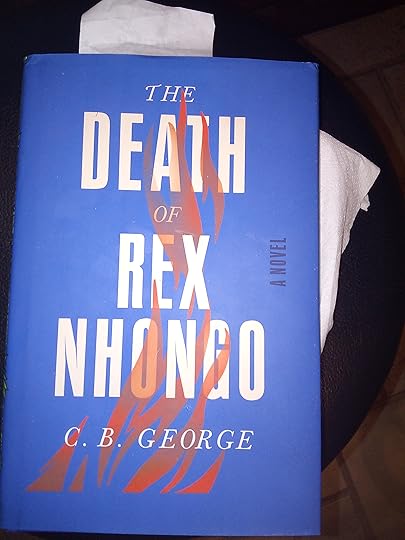
The Death of Rex Nhongo: A Novel
A Boston Globe best book of 2016
In Zimbabwe's capital, a gun left in a taxi brings together five marriages in this intricate and tightly plotted novel.
This is the story of five marriages and one gun.
A British couple wonders at the unknowable city beyond their guarded compound while they build walls between themselves.
An American suspects his new home is having an insidious effect on his 'African queen' and their young daughter.
An enthusiastic young intellectual follows his wife to the city and finds only disillusion.
An Intelligence Officer loses a crucial piece of evidence. It will cost him his marriage, his girlfriend, and maybe his life.
An impoverished taxi driver and his wife find a gun in the cab. From this point on, all their lives are tied to the trigger.
In this tender and brutal portrait of Zimbabwe, the betrayals and conspiracies of the corrupt world are nothing compared to those of marriage.
In Zimbabwe's capital, a gun left in a taxi brings together five marriages in this intricate and tightly plotted novel.
This is the story of five marriages and one gun.
A British couple wonders at the unknowable city beyond their guarded compound while they build walls between themselves.
An American suspects his new home is having an insidious effect on his 'African queen' and their young daughter.
An enthusiastic young intellectual follows his wife to the city and finds only disillusion.
An Intelligence Officer loses a crucial piece of evidence. It will cost him his marriage, his girlfriend, and maybe his life.
An impoverished taxi driver and his wife find a gun in the cab. From this point on, all their lives are tied to the trigger.
In this tender and brutal portrait of Zimbabwe, the betrayals and conspiracies of the corrupt world are nothing compared to those of marriage.
320 pages, Paperback
First published September 3, 2015
About the author
C.B. George
1 book12 followersC. B. George has spent many years working throughout Southern Africa. He now lives in London. ~Quercus
Ratings & Reviews
Friends & Following
Create a free account to discover what your friends think of this book!
Community Reviews
Displaying 1 - 30 of 59 reviews

September 22, 2015
As a former Zimbabwean, I am always intrigued to come across new fiction from my home country. Last weekend, when I came across this book prominently displayed in the local Dymocks store in Perth, Australia, I could hardly believe my luck. I brought it home and devoured it pretty quickly.
The first point to make about this book is that it has nothing to do with the death of Rex Nhongo. At the most, that event provides a backdrop for the story. So if you are hoping to read a thinly-veiled account of the circumstances leading up to that event, you will be disappointed. The title provides more of a thematic sense of contemporary life for many in Zimbabwe, and the novel portrays this in an absolutely mesmerising way. We share the lives of a British diplomat and her husband posted to Harare, a taxi driver and his wife and extended family, and a black American who married a Shona woman in USA and brought her home. The ongoing current political dramas reach into the heart of their lives in a way that, as William Boyd is quoted on the cover as saying is 'absolutely compelling and chilling.'
For anyone with connections to Zim who wants a slice of life at the present time, I'd highly recommend this work. I'd put it in the same broad category as The Hairdresser of Harare, The Last Resort and The Fear.
The first point to make about this book is that it has nothing to do with the death of Rex Nhongo. At the most, that event provides a backdrop for the story. So if you are hoping to read a thinly-veiled account of the circumstances leading up to that event, you will be disappointed. The title provides more of a thematic sense of contemporary life for many in Zimbabwe, and the novel portrays this in an absolutely mesmerising way. We share the lives of a British diplomat and her husband posted to Harare, a taxi driver and his wife and extended family, and a black American who married a Shona woman in USA and brought her home. The ongoing current political dramas reach into the heart of their lives in a way that, as William Boyd is quoted on the cover as saying is 'absolutely compelling and chilling.'
For anyone with connections to Zim who wants a slice of life at the present time, I'd highly recommend this work. I'd put it in the same broad category as The Hairdresser of Harare, The Last Resort and The Fear.

June 30, 2018
Still thinking about this. Have been off-line/sidelined for a bit. It feels like a win to finish a novel (and perhaps be done with with short story project).

August 3, 2016
The book opens as if it were a work of non-fiction with an account of the mysterious death of Zimbabwean ex-military chief Rex Nhongo in 2011. That political mystery is a haunting presence in the first two-thirds of the novel, as the gun that we may infer shot the fatal bullets, and the shadowy figures who wielded it, appear at unexpected moments, in the back of a taxi, or sitting ominously in a bar. But the book reads as a character study of four marriages in contemporary Zimbabwe, each suffering some variety of strain.
How much fun is it to read a novel about Zimbabwe? About the only other books about Zimbabwe were written by Doris Lessing, whose family moved to the British colony of Southern Rhodesia (now Zimbabwe) to farm in 1925.
This book is a lot of fun. Don’t miss it.
How much fun is it to read a novel about Zimbabwe? About the only other books about Zimbabwe were written by Doris Lessing, whose family moved to the British colony of Southern Rhodesia (now Zimbabwe) to farm in 1925.
This book is a lot of fun. Don’t miss it.

November 19, 2018
The short:
An interesting story about British expats and their relationship (if any) to Zimbabwe that kinda failed to deliver
The long:
The Death of Rex Nhongo’s title seems to be about an important man in Zimbabwe, but his death isn’t that important to the rest of the book. It is a disparate collection of stories of a few men in Zimbabwe, mostly Patson, a poor taxi driver and Jerry, the husband of a woman working at the British consulate. They get know each other a bit, and at the end of the story Jerry gets to leave the country and resume his life back in England while Patson ends up in prison and dying for shooting a robber (with a gun that may have been used to kill the titular non-character). It’s more complicated than that, and there are a bunch of side characters, intrigue and things like that. However, the main themes of the book are the relationship of expats and foreigners to the country and relationships, mostly marriages.
The book hits home to me on one subject, expats. Because of my love and study of Italy, I have run into a lot of what the people of the British consulate are involved in, badmouthing their host country. As far as Italy is from Southern Africa, I’ve heard a lot of weird attitudes and denigration of it because of some weird hangup about culture. This is magnified tenfold when you’re talking about a country that’s far away, very culturally different and where almost every native is identifiable by the color of their skin. I think the one scene that stands out most of all is the one where Theo, Jerry’s infant son, is almost drowned at the consulate. They aren’t as upset about that as the prospect of Jerry, unbeknownst to him, admitting the husband of one of their caretakers because they don’t know him. They spout all sorts of racist garbage, but it’s the type that’s acceptable in company that knows being forthright with it is appalling.
A large part of the actions in the story is the delicate dance of fidelity and trust in marriages and the toll they have on the children. The main ones are Shawn’s (an American who seeks to profit off the country’s corruption and loose regulations on mining) eternal betrayal of his Zimbabwean wife, Kuda; Patson and Fadzai, Mandiyevi (a ruthless but idiotic intelligence officer) and his supposedly professional distance from his wife; Jerry and April, and Gilbert with Bessie. They each go up and down with a strong inclination towards pessimism.
Another thing I like is how the story is resolved, with everything going badly from Shawn’s death to Patson going to jail, but Jerry escapes because he isn’t of the country. He doesn’t have any personal investment in bettering the lives of the people there, and even if he volunteers to help others at a clinic, it’s a drop in the bucket compared to the systematic disenfranchisement of the nation.
What I didn’t like about the book is twofold. The first is that the pacing felt a bit weird sometimes, and it dragged on quite a few times. There was no individual point in the writing that I didn’t like, but I lost interest at certain points. There was one thing that annoyed me is in the later chapters with Gilbert, he starts quoting Candide and other works. I didn’t think much of it to run into something like this in my younger years, but it irritates me now that I have greater experience and knowledge. The second is that the book didn’t seem to have a larger message rather than the tangled lives of these characters. Well, it may have been ‘look at how screwed up things are in this country’. I don’t hold a lot of books up to this standard, but this one had some promise that I felt it squandered.
An interesting story about British expats and their relationship (if any) to Zimbabwe that kinda failed to deliver
The long:
The Death of Rex Nhongo’s title seems to be about an important man in Zimbabwe, but his death isn’t that important to the rest of the book. It is a disparate collection of stories of a few men in Zimbabwe, mostly Patson, a poor taxi driver and Jerry, the husband of a woman working at the British consulate. They get know each other a bit, and at the end of the story Jerry gets to leave the country and resume his life back in England while Patson ends up in prison and dying for shooting a robber (with a gun that may have been used to kill the titular non-character). It’s more complicated than that, and there are a bunch of side characters, intrigue and things like that. However, the main themes of the book are the relationship of expats and foreigners to the country and relationships, mostly marriages.
The book hits home to me on one subject, expats. Because of my love and study of Italy, I have run into a lot of what the people of the British consulate are involved in, badmouthing their host country. As far as Italy is from Southern Africa, I’ve heard a lot of weird attitudes and denigration of it because of some weird hangup about culture. This is magnified tenfold when you’re talking about a country that’s far away, very culturally different and where almost every native is identifiable by the color of their skin. I think the one scene that stands out most of all is the one where Theo, Jerry’s infant son, is almost drowned at the consulate. They aren’t as upset about that as the prospect of Jerry, unbeknownst to him, admitting the husband of one of their caretakers because they don’t know him. They spout all sorts of racist garbage, but it’s the type that’s acceptable in company that knows being forthright with it is appalling.
A large part of the actions in the story is the delicate dance of fidelity and trust in marriages and the toll they have on the children. The main ones are Shawn’s (an American who seeks to profit off the country’s corruption and loose regulations on mining) eternal betrayal of his Zimbabwean wife, Kuda; Patson and Fadzai, Mandiyevi (a ruthless but idiotic intelligence officer) and his supposedly professional distance from his wife; Jerry and April, and Gilbert with Bessie. They each go up and down with a strong inclination towards pessimism.
Another thing I like is how the story is resolved, with everything going badly from Shawn’s death to Patson going to jail, but Jerry escapes because he isn’t of the country. He doesn’t have any personal investment in bettering the lives of the people there, and even if he volunteers to help others at a clinic, it’s a drop in the bucket compared to the systematic disenfranchisement of the nation.
What I didn’t like about the book is twofold. The first is that the pacing felt a bit weird sometimes, and it dragged on quite a few times. There was no individual point in the writing that I didn’t like, but I lost interest at certain points. There was one thing that annoyed me is in the later chapters with Gilbert, he starts quoting Candide and other works. I didn’t think much of it to run into something like this in my younger years, but it irritates me now that I have greater experience and knowledge. The second is that the book didn’t seem to have a larger message rather than the tangled lives of these characters. Well, it may have been ‘look at how screwed up things are in this country’. I don’t hold a lot of books up to this standard, but this one had some promise that I felt it squandered.
April 18, 2025
excellent book for having gotten it solely because of the cover. petered out towards the end but worth the read

August 8, 2016
The Death of Rex Nhongo is framed as a thriller, but its primary value (at least to me) is the intimate portrait it paints of Zimbabwe today.
The setting: Zimbabwe’s capital, Harare
Zimbabwe, as you are probably well aware, is a large nation that lies along the northern border of South Africa. It’s also one of the most poverty-stricken countries on earth despite its abundant natural resources. For decades, the country has been ruled by Robert Mugabe, who led its independence movement from the UK. Now 92 years old, Mugabe is rumored to remain as president only to camouflage the corruption and brutality of his colleagues. Many observers consider the regime a “thugocracy.” And that is the picture that emerges in high relief in this novel.
The plot: complex and full of surprises
A complex plot lies at the heart of The Death of Rex Nhongo. The complement of principal characters includes two expatriate families, one British, the other American, as well as an extended Zimbabwean family and a thug who works for the Central Intelligence Organization that terrifies the populace. The author skillfully draws together their numerous individual stories in a series of intersections that climax in a satisfying conclusion. The action takes place after the death noted in the book’s title, though the story manages to come full circle in the end. Naturally, the plot is contrived, but it’s a satisfying read.
However, there is one really annoying element in this novel. The author imagines the internal dialogue of the eight-year-old daughter of a highly educated African-American family in what once was called “ebonics.” Extended passages in italics are worded ungrammatically and full of spelling errors. It’s absurd.
The author: unknown
The background in this engaging novel is clearly based on fact, though the story itself is entirely fictitious. The author, C. B. George, is the pen name of someone who “has spent many years working throughout Southern Africa.” He is British and now lives in London.
The setting: Zimbabwe’s capital, Harare
Zimbabwe, as you are probably well aware, is a large nation that lies along the northern border of South Africa. It’s also one of the most poverty-stricken countries on earth despite its abundant natural resources. For decades, the country has been ruled by Robert Mugabe, who led its independence movement from the UK. Now 92 years old, Mugabe is rumored to remain as president only to camouflage the corruption and brutality of his colleagues. Many observers consider the regime a “thugocracy.” And that is the picture that emerges in high relief in this novel.
The plot: complex and full of surprises
A complex plot lies at the heart of The Death of Rex Nhongo. The complement of principal characters includes two expatriate families, one British, the other American, as well as an extended Zimbabwean family and a thug who works for the Central Intelligence Organization that terrifies the populace. The author skillfully draws together their numerous individual stories in a series of intersections that climax in a satisfying conclusion. The action takes place after the death noted in the book’s title, though the story manages to come full circle in the end. Naturally, the plot is contrived, but it’s a satisfying read.
However, there is one really annoying element in this novel. The author imagines the internal dialogue of the eight-year-old daughter of a highly educated African-American family in what once was called “ebonics.” Extended passages in italics are worded ungrammatically and full of spelling errors. It’s absurd.
The author: unknown
The background in this engaging novel is clearly based on fact, though the story itself is entirely fictitious. The author, C. B. George, is the pen name of someone who “has spent many years working throughout Southern Africa.” He is British and now lives in London.

September 27, 2015
THE DEATH OF REX NHONGO
C.B.GEORGE.
Review by Ruth Hartley.Author of "The Shaping Of Water" Matador ISBN 978-1783061-990
This is an exceptional novel that in my opinion beats anything written in Africa in the last 25 years.
Thank you C.B. George.
It’s a hard book, unsparing in its unblinkered account of marriage, relationships and the desperate poverty of ordinary people in the corrupt police state and dictatorship that is present day Zimbabwe, nevertheless it managed to uplift me and make me feel hopeful. It is very well written. At no point does the author’s language interpose itself between the reader and the story.
The author writes with clarity and precision. The plot and the structure are immaculately conceived but there is nothing either obvious or abstruse in how the story is set up. It is a book about stoicism and questions how we live, love and survive. The flawed characters engage you and make you care for them. There is a child in the story who will terrify you and rend your heart.
Voltaire’s ‘Candide’ comes into the story as a satiric underlining. This made me smile wryly as I too have referenced Candide in my own novels.
It is impossible to guess the author’s gender, race or nationality because the book is written from inside the characters regardless of whether they are men or women or children. My supposition however, is that only a man would safely be able to access the necessary knowledge of people and places that feature in this book. The choice of Rex Nhongo’s death as a frame for the plot is brilliant.
This is a book to be read by everyone in Southern Africa. Don’t miss it.
C.B.GEORGE.
Review by Ruth Hartley.Author of "The Shaping Of Water" Matador ISBN 978-1783061-990
This is an exceptional novel that in my opinion beats anything written in Africa in the last 25 years.
Thank you C.B. George.
It’s a hard book, unsparing in its unblinkered account of marriage, relationships and the desperate poverty of ordinary people in the corrupt police state and dictatorship that is present day Zimbabwe, nevertheless it managed to uplift me and make me feel hopeful. It is very well written. At no point does the author’s language interpose itself between the reader and the story.
The author writes with clarity and precision. The plot and the structure are immaculately conceived but there is nothing either obvious or abstruse in how the story is set up. It is a book about stoicism and questions how we live, love and survive. The flawed characters engage you and make you care for them. There is a child in the story who will terrify you and rend your heart.
Voltaire’s ‘Candide’ comes into the story as a satiric underlining. This made me smile wryly as I too have referenced Candide in my own novels.
It is impossible to guess the author’s gender, race or nationality because the book is written from inside the characters regardless of whether they are men or women or children. My supposition however, is that only a man would safely be able to access the necessary knowledge of people and places that feature in this book. The choice of Rex Nhongo’s death as a frame for the plot is brilliant.
This is a book to be read by everyone in Southern Africa. Don’t miss it.

July 28, 2016
The Death of Rex Nhongo is called a thriller but it isn't one that is typical. It's more of a philosophical novel with violence. Set in Zimbabwe, it starts with a report of the death of a famous General from the Revolution, Rex Nhongo. He has apparently burned to death at a ranch he expropriated. In the next instant a gun is found by a taxi driver after it is left in his cab by a drunken government official. However, the story is not about him. His death just serves as an undercurrent of potential violence.
The novel is actually centered around four couples. An English embassy worker and her husband, the Zimbabwean taxi driver and his wife, her brother and his wife who works as a maid for the English couple, and a Black American and his Zimbabwean wife and daughter. It is both the story of these four marriages and the tension and fear that makes up modern day life in Harare, Zimbabwe.
In stark, sometimes tough language, the author shows all the weaknesses of these characters, how they interact with each other and the effect their moral and economic decisions have on their marriages and what effect life in Zimbabwe has on them. It is a dark and strangely menacing novel but well written and hard to put down.
The novel is actually centered around four couples. An English embassy worker and her husband, the Zimbabwean taxi driver and his wife, her brother and his wife who works as a maid for the English couple, and a Black American and his Zimbabwean wife and daughter. It is both the story of these four marriages and the tension and fear that makes up modern day life in Harare, Zimbabwe.
In stark, sometimes tough language, the author shows all the weaknesses of these characters, how they interact with each other and the effect their moral and economic decisions have on their marriages and what effect life in Zimbabwe has on them. It is a dark and strangely menacing novel but well written and hard to put down.

October 17, 2016
While this book is well-written and has a creative plot, I struggled to get through it. It's a dark and unhappy story of five troubled marriages and an imploding African society. In general the female characters (Kuda, Fadzai, Bessie, though not April) come off better. The central male characters are either damaged (Jerry, Patman, Gilbert) or on the make (Mandiveyi,Shawn), and then there is the psychotic 8-year-old, Rosie. These are people it is too often hard to care about. And I found the novel to be dominated by an aura of impending doom which I found depressing.
And there is a major missing character. I would have liked to learn a lot more about Zimbabwe than I got from the book. The population seems mostly either stoical or maneuvering for success (with few ethical concerns), and the government (big surprise!) is corrupt. There are some decent people, but they are background characters.
I kept thinking there is nothing about this book that is not done better in Robert Wilson's African thrillers. "The Death of Rex Nhongo" seems a tour de force from a writer with some real talent. The prose is often excellent, but the plot simply did not work for me.
And there is a major missing character. I would have liked to learn a lot more about Zimbabwe than I got from the book. The population seems mostly either stoical or maneuvering for success (with few ethical concerns), and the government (big surprise!) is corrupt. There are some decent people, but they are background characters.
I kept thinking there is nothing about this book that is not done better in Robert Wilson's African thrillers. "The Death of Rex Nhongo" seems a tour de force from a writer with some real talent. The prose is often excellent, but the plot simply did not work for me.

January 11, 2020
Writer really took the readership on twists & turns, a worthwhile read picked up mint spanking new for $1 from dollar tree.
everything seemingly plausible TIA, this is Afrika. in 1982-1984 folks & i, visited newly 'liberated' Zimbabwe, with bandoliered soldiery manning bunkers..
on account that we're from the United States, soldiery let us pass. recollect Afrikaans refugees saying why they shan't settle in Sud Afrika, 'the same thing that happened in Rhodesia will happen in South Africa, so we're going to Australia.'
nowadays zimbabwe is the country where everyone's a bizzilionaire.
the bantus aren't native to Sud Afrika, neither are the Boers-Englishers, all wettled cone of Afrika within the same generation..
only Hottentot or, bushmen, were native to cone of Afrika. a primitive sustenance hunter-gatherer society lived off the land like Highland Scots still eking out a living in the year 1000AD in the Scottish highlands. their survivability skills were legendary=)
Zulu, Boers-Englishers, bloody exterminators of most Hottentot..
everything seemingly plausible TIA, this is Afrika. in 1982-1984 folks & i, visited newly 'liberated' Zimbabwe, with bandoliered soldiery manning bunkers..
on account that we're from the United States, soldiery let us pass. recollect Afrikaans refugees saying why they shan't settle in Sud Afrika, 'the same thing that happened in Rhodesia will happen in South Africa, so we're going to Australia.'
nowadays zimbabwe is the country where everyone's a bizzilionaire.
the bantus aren't native to Sud Afrika, neither are the Boers-Englishers, all wettled cone of Afrika within the same generation..
only Hottentot or, bushmen, were native to cone of Afrika. a primitive sustenance hunter-gatherer society lived off the land like Highland Scots still eking out a living in the year 1000AD in the Scottish highlands. their survivability skills were legendary=)
Zulu, Boers-Englishers, bloody exterminators of most Hottentot..
September 10, 2016
This was also reviewed in the Times summer book review. It is set in Zimbabwe (Courtney!) and the death of Rex Nhongo is event around which the book revolves, but not core to the plot line. The book is more of a novel about relationships, cross-cultural experiences (mostly negative) and the stories we tell ourselves about our lives. (Now I sound like a Nook review!) Let's just say there isn't a happy ending, but that makes it convincing, for the most part.
The Times review pointed out that the author's identity is a mystery, but clues point to someone who is probably British background who has lived in southern Africa. I'm not clever enough to even think of a list of suspects, but it adds a fun dimension.
The Times review pointed out that the author's identity is a mystery, but clues point to someone who is probably British background who has lived in southern Africa. I'm not clever enough to even think of a list of suspects, but it adds a fun dimension.

November 5, 2015
Well written, absorbing and interesting. I was totally wrapped up in the lives of British expats, stoic Zimbabweans, and chilling secret police operatives. I would have given it five stars but for a slightly disappointing ending. The set-up begged for a full dramatization of the climax but it didn't really happen to the extent I would have liked. Nevertheless, I thoroughly recommend this book, and CB George is now on my 'must-read' list.

October 30, 2016
probably more a 4, just so depressed about the political situation in Zimbabwe and situations of the characters. interesting insights on marriages, life continuing on in different situations

November 10, 2021
This book reminds me of previous eras when novels carried important truths, as in Jane Austen’s: “It is a truth universally acknowledged that a single man in possession of a good fortune must be in want of a wife.” Like Pride and Prejudice, The Death of Rex Nhongo is also big on themes—marriage & betrayal, riches & poverty, recanting & reconciliation, lies & truth. Consider this line: “It is hope that causes most problems.” That made me stop and think how true that actually is, in my own life and in the experiences of others who do foolish things in hopes they’ll turn out okay. They rarely do, as the humble taxi driver Patson will tell you in this sublime story. He tries to find joy in small moments, “my wife; hot food: even a cigarette. All these things.” He doesn’t consider himself a thinker, just a worker. That his young idealistic brother-in-law Gilbert quotes Voltaire back at him is an amusing, ironic touch. As it is when Gilbert tells his wife Bessie, “I have mistaken hope for joy”, and she—who never having imagined herself joyful, considers hope an abstract, even fatuous luxury—doesn’t ask what he’s talking about, but only, “What must we do?”
The death of Rex Nhongo occurs offstage, but its repercussions can be felt in the destabilized marriages, families, and social lives of ordinary people. That they happen to be in Zimbabwe adds to the exotic atmosphere in this “brilliantly unsettling” novel, as Helen Oyeyemi puts it. The jacket-flap says it’s the story of five marriages and one gun. To me, it’s much more than that. It portrays the webs of obligation and blame that married couples weave about their lives so that even if you run away, you can never escape. As one character puts it, “You cannot see these… these… What are they? These restraints. But you feel them holding you back and rubbing you raw.” The married couples include a young British ambassador & her husband who’s a nurse without a work permit; an opportunistic African-American ex-banker & his African-born wife; and a Zimbabwean intelligence officer whose marriage, mistress, and career are at stake when the gun that may or may not have killed the VP of the country, Rex Nhongo, turns up in Patson’s cab…
Somehow C.B. George weaves these storylines together in a way that makes the peril feel inevitable. It’s the kind of book that stays with you for awhile.
The death of Rex Nhongo occurs offstage, but its repercussions can be felt in the destabilized marriages, families, and social lives of ordinary people. That they happen to be in Zimbabwe adds to the exotic atmosphere in this “brilliantly unsettling” novel, as Helen Oyeyemi puts it. The jacket-flap says it’s the story of five marriages and one gun. To me, it’s much more than that. It portrays the webs of obligation and blame that married couples weave about their lives so that even if you run away, you can never escape. As one character puts it, “You cannot see these… these… What are they? These restraints. But you feel them holding you back and rubbing you raw.” The married couples include a young British ambassador & her husband who’s a nurse without a work permit; an opportunistic African-American ex-banker & his African-born wife; and a Zimbabwean intelligence officer whose marriage, mistress, and career are at stake when the gun that may or may not have killed the VP of the country, Rex Nhongo, turns up in Patson’s cab…
Somehow C.B. George weaves these storylines together in a way that makes the peril feel inevitable. It’s the kind of book that stays with you for awhile.
April 30, 2025
4.2 (3.8)! This was an act of subtle genius that sneaks up on you amidst a very ordinary story of marriage and expats. At it's base, this book is about the principle of Chekhov's gun - one literal gun that we are introduced to at the beginning of the story and one metaphorical one in the character of Rex Nhongo. We know these guns must go off but we don't know whether they'll be significant or not to the plot. It is thus slightly flabbergasting that just with these as the set up, the author manages to hold our attention as they weave through the complexities of relationships between foreign expats and Zimbabweans. What makes this book great is the fact that the author takes time to develop each of the characters we meet and their thought processes and relationships so intricately well that you sometimes get so engrossed in their daily lives that you forget about the gun that could go off at any moment.
Overall, nothing about this book is innovative or unheard of; however, the narrative structure and the individual voices of the characters are so grounded that you end up enjoying the "authenticity" of it all. As it is a slice-of-life, there's really no propellant for the story but George managed to tie everything together so well that the growing intersections of the characters and the eventual conclusion don't feel abrupt. Thematically, George explore power and its different manifestations in both the private and public spheres, ranging from the self & the homestead to the nation & the world. As the risk of sounding like a broken record, it is all done so subtly and realistically through these characters - that I am sure every African can identify - that you forget that this book is about nothing & everything all at the same time.
I also loved the sprinkling of magical realism and African chemistry in there!
P.S: listened to Library edition - ISBN 9781478909620
Overall, nothing about this book is innovative or unheard of; however, the narrative structure and the individual voices of the characters are so grounded that you end up enjoying the "authenticity" of it all. As it is a slice-of-life, there's really no propellant for the story but George managed to tie everything together so well that the growing intersections of the characters and the eventual conclusion don't feel abrupt. Thematically, George explore power and its different manifestations in both the private and public spheres, ranging from the self & the homestead to the nation & the world. As the risk of sounding like a broken record, it is all done so subtly and realistically through these characters - that I am sure every African can identify - that you forget that this book is about nothing & everything all at the same time.
I also loved the sprinkling of magical realism and African chemistry in there!
P.S: listened to Library edition - ISBN 9781478909620

March 13, 2018
The Death of Rex Nhongo - CB George. Rex Nhongo was the nom de guerre of guerilla Solomon Mujuro who led Robert Mugabe's fighters in the Rhodesian bush wars and became Army Chief when Mugabe took power in Zimbabwe. One of the most feared men in that benighted country he died in mysterious circumstances in 2011. This book is an imagining of how and why he died. The story links a British couple living in an embassy compound, an American and his wife and young daughter, a Zimbabwean Intelligence officer and a taxi driver struggling to support his family. It is a compelling and intricately designed tale giving insight into the daily lives of Zimbabweans and their relationship with outsiders living there. A great read.

September 2, 2018
This book is billed as a "thriller" but, as other readers have noted, it's more an extraordinary book about life in Zimbabwe - and a lot of sub-Saharan Africa - as told from the perspective of a British (white woman) in the diplomatic service and her husband, an African American man and his Zimbabwean wife, a local taxi driver and his family. It's a tough life for everyone but in totally different ways - for the taxi driver and his family, almost every minute is spent trying to make a living and get by. For the European and American couple, it's struggle on a personal level, and the struggle of understanding Zimbabwe - a level on which they fail magnificently. Outstanding.

November 15, 2024
Initially thought this was a crime/thriller story but later reveals itself to be more of a slice of life glimpse of modern day Zimbabwe. Could've used more cultural focus but maybe that's just me.
The men in this novel can all go to hell though - they're boys at most. I sighed every time their women decide to stick around hoping for these boys to finally man up?? Bessie rejecting a huge opportunity for Gilbert who's all talk but doesn't really accomplish anything? Girl puhlease.
Also loved reading Rosie's psychotic chapters; little bird u crazy 😄
The men in this novel can all go to hell though - they're boys at most. I sighed every time their women decide to stick around hoping for these boys to finally man up?? Bessie rejecting a huge opportunity for Gilbert who's all talk but doesn't really accomplish anything? Girl puhlease.
Also loved reading Rosie's psychotic chapters; little bird u crazy 😄

September 1, 2017
This is a tightly written and fascinating view into the world of Zimbabwe, guided by a fine writer with real command. Honestly, I was totally wowed by it until it neared its climax, when the whole thing just sort of collapsed in on itself in one of the most disappointing and lackluster endings I can remember in a novel that I thought so highly of. Still, it's worth a read.

November 27, 2017
I really liked this book, though it portrayed the tragedies of surviving under a despotic, corrupt, dangerous government. It is helpful to figure out early the relationships of the characters. Also, skip over the italicized chapters narrated by Shawn and Kuda's crazy daughter Rosie (which doesn't quite work).
Certainly one of the best novels coming out of Africa.
Certainly one of the best novels coming out of Africa.

February 13, 2018
There's nothing which remains with you once you are finished reading this book. The only take away could be that the novel offers a peak into the life in Zimbabwe; since I had read very few works of fiction with an African Backdrop( a novelty). The simple narrative makes it an easy read also blissfully its relatively a short book with just 320 pages to skim through..

November 26, 2018
As narrative devices go, there's both Hitchcock's MacGuffin (that would definitely be the title of the book) and Chekhov's gun (that would be a gun, actually; and it does get fired). As for the plot, it is intricate, compelling and an exercise in literary virtuosity. For this reason, since the name on the cover is a pseudonym, people tend to assume that this is no first work. In his review for The New York Times, Lee Child writes about the "supple, subtle, multi-stranded narrative" "its accomplished technique", which can only be attributed to some mysterious "established writer", most likely a screenwriter. In her review for The Spectator, Michela Wrong states that she rather doubts "that this muscular, confident novel is a first attempt." Deserved high praise from extremely accomplished writers, specially since this is almost certainly a first attempt (as suggested by the irrepressible use of the narrative devices mentioned above).
There are elements of thriller, extremely well placed and executed, but this above else is a multifaceted reflection on marriage (there are 5 marriages and a number of kids, 2 of whom more relevant), being human, the depressing reality of post colonial Africa and some dollop of mysticism to effectively ground the plot in the idiosyncrasies of the continent (on these last two, I'm from Africa, just saying).
The expression "tour de force" was created for this kind of effort.
There are elements of thriller, extremely well placed and executed, but this above else is a multifaceted reflection on marriage (there are 5 marriages and a number of kids, 2 of whom more relevant), being human, the depressing reality of post colonial Africa and some dollop of mysticism to effectively ground the plot in the idiosyncrasies of the continent (on these last two, I'm from Africa, just saying).
The expression "tour de force" was created for this kind of effort.

February 3, 2021
I enjoyed this novel quite a bit. Among its many charms is the setting in the capital of Zimbabwe. However. However, the plot is entirely dependent on absurd coincidences. If that sort of thing bothers you, give it a pass.
This entire review has been hidden because of spoilers.

Read
August 21, 2022First of all, why was the first half literally not even about rex nhongo? or wasn't directly related as far as I understood. I dnf'd this around the middle because I was bored and was tired of all the men being awful men. I do think it had partly to do with my mood so I may try again later but idk

May 19, 2017
A good read. A white boy look at a hard case in Africa. Moments of joy but they are hard to find. One unrelenting lie.

June 18, 2017
A delicious read. 👏🏾👏🏾👏🏾👏🏾

July 28, 2017
I love reading books set in different places and this one is set in Zimbabwe. It is very well-written and explores the impact of the tensions of that country on a number of families.

February 25, 2018
Cool. Got the expat thing right
September 28, 2018
Read on plane back from Tanzania. Story of several couples and their entangled loves in Zimbabwe. A missing gun, a girl possesses and infidelity

November 13, 2019
I was bored with this. Interesting topic though.
Displaying 1 - 30 of 59 reviews