“There is no writer that dives deeper (or more bravely) into the chasm that is the human heart. [David Mura’s] first novel is a tour de luminously written and by turns crafty, tough, wise, and joyful.”—Junot Díaz Ben Ohara is the sole surviving member his family. A troubled and brilliant astrophysicist, Ben’s younger brother has mysteriously vanished in the Mojave Desert. His father, one of a small group of WWII draft resisters (known as the No-No Boys) during the internment of Japanese Americans, committed suicide when Ben was young. And his mother, whose wish to escape the past was as strong as his father’s ties to it, has died with her secrets. Now struggling to support his wife and children and under pressure to complete his historical study, Famous Suicides of the Japanese Empire , Ben realizes that the key to unlocking the future lies in reassessing the past. As Ben vividly recalls a childhood colored by the tough Chicago streets, horror movie monsters, sci-fi villains, Japanese folktales, and TV war heroes, he begins to understand the profound difference between coming of age and becoming a man. And by retracing his brother’s footsteps and returning to the site of the Heart Mountain Internment Camp, Ben uncovers a truth that has the power to set him free. An acclaimed memoirist, poet, and playwright, David Mura is one of America’s most insightful cultural critics. His memoirs, Turning Japanese and Where the Body Meets Memory , along with his poems, essays, plays, and performances, have won wide critical praise and numerous awards. Visit his website at www.davidmura.com.
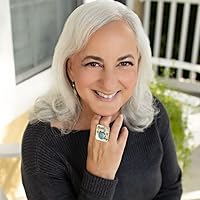
David Mura (born 1952) is a Japanese American author, poet, novelist, playwright, critic and performance artist. He has published two memoirs, Turning Japanese: Memoirs of a Sansei, which won the Josephine Miles Book Award from the Oakland PEN and was listed in the New York Times Notable Books of the Year, and Where the Body Meets Memory: An Odyssey of Race, Sexuality and Identity (1995). His most recent book of poetry is The Last Incantation (2014); his other poetry books include After We Lost Our Way, which won the National Poetry Contest, The Colors of Desire (winner of the Carl Sandburg Literary Award), and Angels for the Burning. His novel is Famous Suicides of the Japanese Empire (Coffee House Press, 2008). His writings explore the themes of race, identity and history. His blog is blog.davidmura.com.
David Mura was born in 1952 and grew up in Chicago, the oldest of four children. He is a third generation Japanese American son of parents interned during World War II. Mura earned his B.A. from Grinnell College and his M.F.A. in creative writing from Vermont College of Fine Arts. He has taught at the University of Minnesota, St. Olaf College, The Loft Literary Center, and the University of Oregon. He currently resides in Saint Paul, Minnesota, with his wife Susan Sencer and their three children; Samantha, Nikko and Tomo.
I really tried to like this book (mostly based on the positive notes on it from Junot Diaz). But the deeper I got into it, the more it read like a confessional based on denial and the self-justification of inaction with a plot spiraling mindlessly out of control.
What kept tying the story to any kind of relevance was the promise that the author and main character would be able to reconcile his father's past and suicide by searching his family history. Ultimately though, it just took too long to get to.
I felt like the whole point of the book was let me tell you about my family and while I'm at it, let me explain Mishima.
I have been fortunate to meet David Mura and see him act in Twin Cities theatre. I decided I was long overdue in reading one of his books. Ben is approaching middle age, is a high school history teacher, and feels (or at least believes others feel ) he has never lived up to his potential. He is struggling with great reluctance to finish his dissertation Famous Suicides of the Japanese Empire. Examples of these events are scattered throughout the book. I think that the reason Ben cannot complete his dissertation is because he does not believe he deserves a more elevated status in life. I believe the reason for his inertia and sadness is the suicide of his father. After the attack on Pearl Harbor approximately 120,000 people of Japanese descent were placed in concentration camps out of American xenophobia. Ben's father and uncle were two such internees. One way out of the camps was to enlist in the U. S. military. An estimated 33,000 Japanese Americans served in the U.S. military during World War II, of which 20,000 joined the Army. Approximately 800 were killed in action. The 100th/442nd Infantry Regiment became the most decorated unit in U.S. military history. As a boy Ben makes a hero out of his uncle who served in the military. He does not ask many questions of his own father, choosing to believe that he was also a hero. Ben is confused about whether his father was a no-no boy or a member of the Tule Lake protest group. A no-no boy answered two questions in the negative - Are you willing to serve in the U. S. military? Will you swear unqualified allegiances to the United States of America and faithfully defend the United States from any or all attack by foreign or domestic forces, and forswear any form of allegiance or obedience to the Japanese emperor, or other foreign government, power or organization? Ben seems to believe that to be a no-no boy is shameful. If is father was part of a protest movement against the treatment of internees, then he might still be a hero. Finding that his father was interned at the Heart Mountain camp eliminates the protest group, but he did not turn 18 until very late in the war, so could he have been a no-no boy? Ben's confusion about his respect for his father at one point causes him to believe his attitudes may have contributed to the suicide. I don't want to give away the ending by revealing whether or not Ben finds peace. I found the book to be very poignant. It demonstrates the profound effects that war and injustice can have on individuals who were not alive during WWII. It is a good lesson for a country, which seems once again to be overwhelmed with xenophobia, to remember. Kristi & Abby Tabby
Blew through Suicides, which was not nearly as offbeat as the description sounds, basically the story of a Japanese American boy growing up in a family, both of whose parents were interned during World War II, which affected their whole lives, obviously, and how they raised their children. It’s a pretty straightforward story about how the son ultimately comes to terms with their experience and how that affected him and his brother’s lives and their family dynamics. As someone who’s interested in history, I found it extremely compelling, read it basically in one sitting, would recommend.
Monday, generally the first day of a forty-hour work week. But for me, this is the beginning of the fourth week of being unemployed. Almost ten years of work that suited me, gone. Already, I can hardly remember the excitement of working for a program that honored writers, and the teaching of writing. Good memories, as well as bad, disappear if we don’t savor them, don’t call them up every once-in-awhile. If we don’t turn them into story.
I believe in stories, in writing stories, in writers who write stories. I believe stories can move history forward-that silence will be broken and thorns disappear. That questions will be less difficult to ask, less painful to answer; less painful to ask, less difficult to answer.
Three weeks have gone by quickly, too quickly. I haven’t resorted to panic, but to mild dysfunction. I spent money I didn’t have to go places and to buy things. I was seduced by slot machines and thrift stores. I smoked cigarettes. And….
I bought books online.
I am happy.
Today I am reading my third book, a book-a-week. I have books I’ve been wanting to read lined up, ready. Reading, like movies, can move me in directions I’ve tried to steer away from. Is absence from the truth freedom? How has my knowledge of history angered me? How has my anger derived me of happiness? How can I learn to act and not react? Is there a difference?
I am reading Famous Suicides of the Japanese Empire, by David Mura. It’s not what I expected. What did I expect? Perhaps a lot of tedious facts? It’s fiction, but it’s not. I have to keep putting the book down, though only for a minute or two. Why does it bother me? It’s not my story. But it strikes a distant, yet familiar, ring. Tears well up. I feel I know what is to happen next and I don’t want to know. But I do. The book jacket says Ben will “forge a path toward redemption”-does he? Can he? I’m afraid to read further. Is “forgiveness” really what Ben and I are looking for? Or is forgiveness what we accept because truth, no matter how much we write towards hoping to discover it, we never will?
David Mura has written poetry, essays, memoir, and fiction. He’s also a spoken word artist. Mura has delved deep into his heart and his history to know himself, and to express himself in writing and performance that has given other writers of color, writers such as myself, a mixed race/Chinese Black woman author, permission to write towards who we are as we explore the often painful reasons why it is difficult not to know ourselves-reasons why our parents were silent, stories buried with them that we will never know and can only imagine. But imagination infused with fact, I believe, is close to truth, at least as close to truth as some of us will get.
I am wiser now, closer to truth, having been involved for over thirty years with a dynamic, spirited, soulful, soul-searching, and, yes, fun colorful writing community here in the Twin Cities. Although I have yet to tell my stories the way I want to tell them-I will forever hold writers who have and who will-in high esteem, especially the writers that have to pause from their writing-a few minutes or a few years- walk away from the pain, the grief, the mourning-even the celebration. Sometimes to research. Sometimes to cry. Perhaps just to live a little. Perhaps, like me, to gamble, shop, or smoke until I am struck in the heart by some picture, some story, some incident, a phone call, an e-mail message, a book that I am reading that urges me to, again, head to the computer and continue writing what my heart won’t let me run from.
Famous Suicides of the Japanese Empire is the first fiction novel by Minnesota artist, poet, and memoirist David Mura. Famous Suicides is actually the title of an unfinished novel by Ben Ohara, a third generation (sansei) Japanese American growing up in Chicago. Thru Ben Ohara's eyes and flashback we learn how he discovers his family secrets from how his parents met in an internment camp during WWII (What is a No-No Boy?)to his relationship to his younger brother Tommy and neighborhood friends. Along the way we watch as Ben strives to understand why there was so much sorrow and heartache in his family.
I enjoyed this novel as it was well written with interesting characters and the flashbacks kept me wanting to know more about Ben and the Ohara family.
When I read "Turning Japanese" by David Mura more than ten years ago, he referred to the silence of his parents on their internment experience. I got some understanding then of what he was trying to describe, but in this novel Mura fleshes out more fully what it is like to be the child of internment survivors (or the dead). Ben Ohara's life is haunted by the ghosts of a brilliant brother who seems simply to have disappeared into the desert, of a father whose past as a No-No Boy isolates him from both the JA community in Chicago and his own relatives, and a practical-minded and critical mother who, after his father's suicide marries a gentle, but dull, non-Japanese American. How he follows these ghosts into the past and lives to tell about it is what this thoughtful novel is about.
The parts that are actually about famous suicides are suppa. howev, this book is more about cultural identity and being Japanese American, differing perceptions of suicide, internment camps, Engrish, being smart but liking drugs. I am down with those things but the ending was pretty meh. It is no Oscar Wao.
Mura has all sorts of disclaimers in this book as to the fact that it's fiction. I can see why. It's so well wrought, it's hard for the reader to imagine it's not autobiographical. It's lyrical, wise, touching, and I feel I learned something important about history and writing while reading this book. Highly recommended.