The Night of the Wolf. On the Avenue in the bleak area where New York City blends into suburbia, the Orphans, their fast Fords and their Chevys 'coated by ice and leather and white dust', prepare to engage in deadly, intricately structured games of combat. It is a world of grotesque, horrifying violence, fear, bravado and drugs, redeemed in the minds of its inhabitants by codes of honour, by chivalrous intentions and by the purity of their struggle for power, dominance, territory. This is the setting of Alice Hoffman's unsparing and unsentimental novel. Her heroine, 17 years old, quick witted yet vulnerable, falls helplessly in love with McKay, the Orphan's 22 year old president and their doomed love story is told in desperate counterpoint to the punk lyrical flippancies of throbbing car radios and jukes.
Alice Hoffman is the author of more than thirty works of fiction, including The World That We Knew; The Marriage of Opposites; The Red Garden; The Museum of Extraordinary Things; The Dovekeepers; Here on Earth, an Oprah’s Book Club selection; and the Practical Magic series, including Practical Magic; Magic Lessons; The Rules of Magic, a selection of Reese’s Book Club; and The Book of Magic. She lives near Boston.
Reminiscent of The Outsiders in the beginning, I thought I was reading a tale of greaser gang society in the late 60s early 70s, New York. The hazy thought drifted around for a bit and then dissipated into thin air. This novel is so much more than I thought. It is poetry. Hoffman’s word usage and her writing style lead you into the tale, takes you for a journey and leaves you at the subway station aching, not knowing how you got there and not knowing how to leave. It is a tale of need. Love, acceptance, lust and heroine. Wanting, desire, pain, torture. Soulblinding misery and heartclenching sobriety. It is more than a tale of a girl who is smitten with gang life. It is more than a leaders need for honor and control. It is a tale of what we go through, both mentally and physically when we are faced with hard choices and no compromises. What it is to be alive. To want. To believe when the world laughs at our misfortunes and turns a blind eye to our existance. Maybe that is a better word to describe what this novel stands for. It stands for our own existance and what happens when we are left to our own devices with no outside help. The struggles, the battles and the small victories that mean nothing to anyone but ourselves. And that's all that counts in the end... Right? Not how we got there, but that we are there. Standing lonely on the subway car, alone, but alive.
Not long ago I read Alice Hoffman’s The Museum of Extraordinary Things and loved it. For whatever reason, I had not picked up another. Then I ran across Property Of in a second-hand shop and thought I’d see where she began. I quickly perused Goodreads reviews and decided to read it. I am not a completist. I dabble and dip, get a taste, sometimes a full serving and then move on to something else.
So now I’ve read two books, one of mature writing and one of what I’ll call premature. First, let me say that I agree with reviewers in that there were flashes of what was to come. She can tell a story and keep the readers attention. But compared to some of the first novels written by young writers today Property Of pales in comparison. Eventually I started skipping “I said” and “he said”. (Is this how some readers get through so quickly?) How about the number of times the narrator “smiles”. She just smiles. She doesn’t smirk or grin or grimace. She doesn’t smile slyly or sweetly or in any adjectively way. She just smiles, again and again and again. I can understand a tough and young street girl smiling during gritty situations. But, such lack of description didn’t allow me to picture the scene. And that is what great writers do so well and thankfully, Hoffman learned how to do by the time she wrote Museum of Extraordinary Things. It was one of the things I loved about that book. My senses were heightened and I could vividly picture Coney Island and its then wild environs. I even went on Google maps and turned on the satellite feature to see if any of those wilds were left. (Unsurprisingly, they’re not.)
One reviewer wished more background would have been given to the characters’ childhoods. (I think she/he was actually looking for a remedy to a lack of character development.) I agree that to do so would have been one avenue Hoffman could have explored. However, these are Orphans, and it didn’t matter. Either they had no families or social support or they were orphaned from it. They scraped together a place to live and hang out. They likely had no reason or desire to remember the past. They survived or they didn’t. They belonged when and where they could. They were either submissive or dominant. Never both. But they were all dependent. Upon one another, upon drugs or sex or alcohol. No matter their claims otherwise.
It was interesting to see where Hoffman started, but next time I pick her up I’ll go for some of her more recent books. When rating books, I’m a stickler for the writing itself and this failed too many of my criteria. 2.5 stars. Can’t recommend it unless you want to be a Hoffman completist.
Alice Hoffman is one of my favorite authors and I have read several of her books and given them high ratings but this was her first novel, I believe, and was a darkly disappointing and depressing read about an outsider, her heroin addiction and physical abuse. Written for and about teens but I would not want any teen I know to read it.
I wanted to read Ms.Hoffman’s debut outing after reading ‘Turtle Moon’ and I wasn’t disappointed.
‘Property of’ follows nearly a year in an unnamed protagonists life. She lives somewhere in New York City with her heroin addict boy friend and contemplates her sense of belonging to him and his street gang.
There’s nothing pleasant or wholesome about it, but once you’re hooked to the narrative style you’ll stay till the bloody end.
This novel is akin to a mash up of S.E .Hinton’s The Outsiders’ and the films Saturday Night Fever + At Close Range.
It’s a like it or hate it sort of a story , and personally I liked it very much. I look forward to more of Ms.Hoffman’s work.
When this book debuted, I'd bet the writing was very innovative and extremely grim. In today's market, the story is still well-told and a bit dark, but its bite has been softened by time and its descretion gives it more of a dark, contemporary YA tone. Overall, a good book with a point teens and adults of every era very much need to remember: Life isn't always in your total control--no matter how much you think it is.
"Oh, yes, yes, I know: cities have been pillaged, countries ruined. Yes, I know the position of Property is always on its back. But still, it is not so very despicable to belong. I admit belonging, being owned is always sad. You think that is a peculiar word to apply to tragedy? You think “sad” is an inadequate word for a historical force? But I do not speak of the property of capitalism, the historical sort that is discussed at the cocktail parties of the world. The Property I speak of is the self. The self that does not belong, is not owned by itself but by others. By another. This Property is the self which is sold because its position is on its back, because it is starving, dying of thirst, it is suffering the torments of plague, civil war, and sadness. And when the self is dying of thirst, it is not unusual for a canteen to be accepted in trade. Particularly when what is sold has never belonged to itself."
"It’s said that a woman’s life is merely preparation for the primal nine-month wait. Whatever the reason, they do it well. Sometimes they drink or bite their fingernails down to the wrist. They count stars and initials and wait: for something to happen, for something to pass, to change, to begin, to end. In wide cotton blouses beside empty cradles there is the wait for a child; in black and veils there is the wait for death. In bathrobes and with painted eyes, with the counting of stars and the turning of glossy magazine pages, there is the wait for him, for the man. There is always the wait for him."
I recently spent some time at an amusement park with my grandchildren, and I noticed an interesting phenomenon which appeared almost prevalent with the youth that wandered through the establishment. Many of the young women were dressed in black, covered in tattoos, and exhibited various forms of metal piercing their bodies. In many cases, those young ladies were being more or less dragged around by a young man who was similarly attired, and I couldn't help wonder if those young ladies chose to defile their own bodies or was it a choice placed upon them.
Property Of was Alice Hoffman's first novel published in 1977, and it generally addresses the same concern fifty years earlier, but instead of using outward body modification which appears to be popular today, her novel relates more to gang associations and substance abuse. In many ways, however, it all boils down to the same thing, and that is "Do many women end up in a circumstance where they do things for the wrong reasons because they are being controlled, sometimes abusively, by men?" I believe it happens more than we think.
I believe for a first novel, author Hoffman wrote a very inciteful story, on a subject which took some courage to address. There are many people who will read this novel, and not understand the core message, or, if they do, will be so offended that they will hate the novel. For me, however, it made me realize that there are some very sad situations in this world and there are way too many people that experience a living nightmare everyday in trying to please or simply trying to survive.
Primarily the story is about a young girl (I don't believe she is ever named) who tells her story about her life on the streets in New York City as part of a gang called The Orphans and her turbulent relationship with its leader McKay. Although there are a number of other characters, the story always comes back to those two, and how the protagonist centers her life around her domineering and, sometimes, abusive boy friend causing the reader to wonder, "How far will she go for love?"
A penetrating and intelligent novel, particularly considering that it was her first.
this book was actually scary. it went from 0 to 100 so fast. one second this 17 year old girl was crushing on the leader of this gang and then they’re enabling each others addictions and being literally trauma bonded. omg. it was very beautifully written, at times it made no sense but then again the narrator was high asf the whole time so that tracks. so so so glad it ended with her leaving him cause after 30 pages of their relationship i figured she had to get out. matter of fact im surprised she waited for him when he was caught. but honestly yikes. makes me want to reread the outsiders. will i read it again? no. am i glad i read it? yeah.
This entire review has been hidden because of spoilers.
This book was Alice Hoffman's first and, as her second one did, read like an early work. This is not a bad thing.
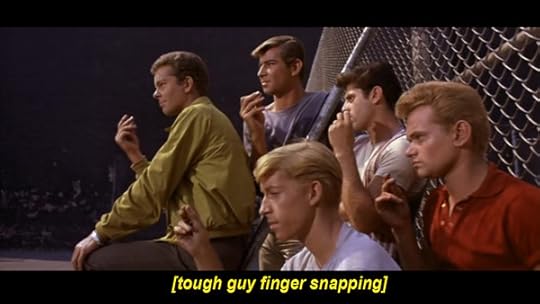
Upon beginning "Property Of" I felt like I was reading a darker version of "West Side Story." As the book progressed, elements of more disturbing stories emerged, like "Go Ask Alice," "Candy," and "Requiem for a Dream" (note: Hoffman wrote this book before at least two of the named items).
The Avenue is ran by the Orphans, a gang of teenagers at war with another gang, the Pack. In a dark clubhouse, the Orphans meet and plan, headed by their president, McKay. In the clubhouse, outside of the action, is the Property, girls who are owned by the Orphans as girlfriends, lovers, and friends. The driving force behind McKay lies in the honor he has fought to uphold for both himself and for the name of his gang.
The narrator, a young girl who's name Hoffman never reveals, is drawn in not by the power of the gang but by McKay himself. His lure finds her in the guise of love and she becomes his, maintaining that while she's his woman, she will never be Property of the Orphans. But even from the beginning, the lure is dangerous and puts the girl in a world of violence and drugs, murder and betrayal. Through it all, the narrator stays with McKay, allows herself to be his, to do what he tells her, yet struggles to fight against his will and maintain her own identity.
Many of the elements of Hoffman's later works are missing from this book, but a few emerged early and continued in her career. While she has yet to find her voice where description is concerned, she's already a master of depicting characters that never become completely good or evil. It's rare for Hoffman to have a character that I truly and completely like, and the characters in "Property Of" are no different. By turns, I found myself cheering for the narrator and her loyalty to the man she believes she loves and being completely annoyed at her for allowing herself to be manipulated. Even the most disliked characters are given small bouts of a good nature, making it hard to form an opinion.
Another aspect of this novel is that it's raw, much rawer than her other works. Nothing is hidden in allegory or flowerly metaphor, and even when it is, it only serves to draw a more disturbing picture for the reader. Hoffman focuses on hard core drug use, mental and emotional manipulation, and even rape and abortion. While not as gritty as novels by authors who make these topics the general theme of all their writing, Hoffman portrays them well as part of the story.
"Property Of" was not my favorite Hoffman book, but it wasn't my least favorite either. After a slow start, I was able to immerse myself in the story and stay with it to the end. I definitely recommend it as part of her repertoire and as a novel considered a classic in the literary world.
What They Say....On the Night of the Wolf, the Orphans drive south on the Avenue, hunting their rival gang, the Pack. In the lead is McKay, their brooding, courageous President. Left waiting at the clubhouse is the Property of the Orphans, tough girls in mascara and leather who have declared their allegiance to the crew. Tonight, a new girl has joined their ranks. She waits only for McKay.
Drag races, dope, knife fights in the street. To the seventeen-year-old heroine of Alice Hoffman’s stunning first novel, the gritty world of the Avenue is beautiful and enthralling. But her love for McKay is an addiction—one that is never satisfied and is impossible to kick. Deeper and deeper she falls, until the winter’s day when she decides to break the spell once and for all.
A strikingly original story about the razor-thin line between love and loss, Property Of showcases the vivid imagery, lyricism, and emotional complexity that are the hallmarks of Alice Hoffman’s extraordinary career.
What I Say.... This is one of the few Alice Hoffman books that I had not read. She is hands down one of my favorite authors. I don't think anyone can write magical realism, addiction or life derailing love/obsession like Hoffman does. So when I saw an Alice Hoffman book on NetGalley as an ARC for review - I jumped!
This book was first published in 1977, and the book is definitely dated, but the story is timeless. A young girl hungering for a bad boy, a bad boy who looks to drugs to escape his life, all while chasing his belief of what honor means, way past a time where he has any honor left.
Hoffman's books are often uncomfortable to read, they cause a visceral tightening in your stomach as you watch people make the wrong choices, take the wrong path, fall into ruin. But the hallmark of
her writing is making you passionately care, even when it causes you discomfort.
This book only had a bit of magic written into it, in the form of a locket, but it was still there. Her focus on magical realism became more apparent in her later work, but this book was no less powerful without it.
You could hand me a book with no cover and within a few pages, I would know it was an Alice Hoffman book. Her voice is that strong, and her style is that sure. Love her.
I blushingly admit that I came late to the work of Alice Hoffman. She’d been on my list for a good thirty years, but my penchant for thrillers resulted in her work always falling just a wee bit further down the list. I finally remedied that last year, reading in quick succession, The Rules of Magic and Practical Magic. I didn’t review them here, so as an aside – I’d give both a 4.8. Pretty impressive, for a fan of psychological suspense. I was so impressed that I decided to do some back-tracking, and to turn my attention to her earliest work. And thus, I just finished reading Property Of, written in 1972.
So – recognize that I came to this book in a rather scholarly frame of mind, and was indeed gratified to find that the compelling emotion and peripheral magic I found in Hoffman’s later work, was indeed present and polished in Property Of. But what a difference in terms of impact. Property Of is extraordinarily dark. Hoffman shares (or from my perspective, more appropriately inflicts) the irrationality and destructiveness of the heavy drug culture in a virtuoso display of depressing prose. The story is told in the first person by an un-named teen-aged girl compelled by obsessive “love” of gang-leader McKay to first circumnavigate and eventually succumb to the heroin-laced world he inhabits.
Though Hoffman provides breath-taking insights into what Un-Named Girl feels, readers are left in the lurch about WHO this girl is, what her background was, and how she evolved this intense emotiveness that boils madly in a complete absence of rational thought. The conversations Hoffman presents so convincingly, will be intensely familiar and frustrating to anyone who has spent (as I have) some time in the logic-less world of the desperate, obsessive, and addicted denizens of the drug subculture.
So – a well-written journey into darkness. If you approach this, as I did, as a study in Hoffman’s evolution, an interesting intellectual exercise. But if you’re looking for a good read, I would skip it. Despite how creative and well-written it is, Property Of is just too damned depressing. Three stars, grudgingly awarded because of the technical merit of the writing. But that can’t compensate for the absence of insight or commitment to the minimal gratification most readers want and need.
This story so badly wanted to be profound and sometimes it came very close, but even the more figurative passages seemed to repeat the same themes and crap over and over till the insight was dull. Also, every single character was unlikable and mildly developed, if at all. The narrative character in particular was the special kind of stupid where she knew and admitted to her own ignorance and stupidity but still moved forward with her illogical behavior anyway. How can you not hate a character like that? It's one thing to admit your vulnerabilities and weaknesses, but to religiously explain your every mistake as being inevitable is blaming responsibility on fate and that makes you an annoying tool. It also spoiled the ending, which was aiming to be triumphant but fell flat as by then you could care less what happens to anyone.
What bumped this to two stars was that the author effectively captured the mood and the setting of the Avenue so vividly that it was hard not to be transported and invested in the scene alone.
Also, there is an interesting exploration underneath the superficial drama of how the things we strive to possess end up possessing us. It's called "Property Of" because like every Orphan gang member, like the main chick, like all the drug addicts and lost souls in this book, whatever you obsess over, especially unnatural things, ends up imprisoning and slowly destroying you. The more you aim to capture a high, the high starts to take pieces of your health, your morals, your money, your strength. The more you try to capture a person, they chip away at your identity, your wellbeing, your sensitvity, and eventually your love. It's a thoughtful message and the way it was applied to the characters was interesting.
There's also a big fuck-you throughout the story to false honor and makeshift morals that shield the ego from the blows of destructive, violent, wrong actions. And I completely agree with that middle finger to the kind of back patting morality that runs gangs, mafias, politicians, etc. The consequences of your actions typically define if your actions and motives are right, not your opinions or ceremony of manners.
This is a story about love, or maybe of a lesson learned about love. It is a story of how lonely and hopeless love can be, how it can be overpowering and dangerous. I find that the dark side of love is a common theme in many of Alice Hoffman's novels.
The setting is New York City in the 1950's or '60's (this is just a guess as it never specifically stated the year - the book was originally published in 1977). The story is written in 1st person point of view and is narrated by the main character - a 17 year old girl whose name I don't know because it is never mentioned throughout the entire novel. I only mention this because I don't think I've ever read a story where I didn't know that main character's name. She falls in love with McKay, the President of the Orphans (the Orphans are a greaser street gang ... they wear black leather jackets with the name of their gang sewn on the back and they stand around streets slicking their back ... the whole kit and kaboodle).
I found this book to be a slow starter and didn't feel hooked into the story until about halfway through (luckily the book was less than 200 pages). It was Ms. Hoffman's poetic writing style that kept me reading and her insight into how disappointing love can be that I found so engaging. The tone of this novel was very bleak which suited the story very well. This is one of Alice Hoffman's greatest talents, her ability to control the mood of the story without flat out telling the reader what they should be feeling. I found myself having to set the book aside at times because it was downright depressing yet the story was so engaging that I really wanted to finish it.
I did enjoy this novel though I wouldn't recommend it as an introduction to Alice Hoffman.
Gritty, visceral, old school, romance, gangs, heroin, drugstores...and Alice Hoffman does it her way with magic and spells. No, it doesn't "make sense," but neither does life or love or lust. The reasons we leave and the reasons we stay often don't make much sense, either. I LOVED IT. This was her first novel and has been here-to-fore unpublished. Another benefit of digital books, shelves, and libraries.
If you've never read Hoffman, pick this up for $0.99 and if nothing else read the Introduction. It will remind you of the days when it wasn't about the sell; it was about the write.
The only reason I didn't give it 5-stars? Those little "let me tell you what's going on" moments...stripped of those passages...it would have been an unequivocal 5-star.
Disclaimer: This ARC was given to me for free in exchange for an honest review from Netgalley.
This book was not like any of her novels that came after. So your mileage may vary.
I mean it was a trashy-in-a-good-way pulpy vintage novel that I found entertaining and amusing. It was a good mental vacation with the various things that have been going on in real life. It read like a more grown-up version of the outsiders. This is a good thing.
Property of - Alice Hoffman Not my favorite, but still a strong book from a writer who will go on to greater strengths. This is early in her career. Some times it doesn't pay to be a completist.Library copy
“Sweet and cyanide and cold as electric wire.” I love Alice Hoffman’s popular/ more recent books, so I’ve been looking at her back catalogue and decided to read her first one. I must admit I didn’t love it. The poetic verse, lead female character, and search for magic, were there. I can see the beginnings of the author whose work I love, but I think I’m too old for this book. The relationship made me angry, which is the point, but it feels like a book I would have needed to read in my teens, at which point it would have felt dark and edgy. In the broad light of adulthood, it feels exploitive and frustrating. It feels influenced by books like The Outsiders. Obviously, Hoffman has a track record of great work and it was interesting to see her starting point, but I was sad that I found it so unrelatable.
If it raises emotion it is good writing, my friend Sharon says. This is a good book and was very emotional. I was so disappointed in the characters at every turn. This is a story about gangs love and drugs.
I really loved this book but you will either love it or hate it. As many have stated, it sort of emulates The Outsiders (& I loved The Outsiders)! I’m an Alice Hoffman fan and this was her debut, I can see in it how she became so amazing with words! 4.5 stars
Alice Hoffman is perhaps best known for her novel Practical Magic, which was turned into an highly entertaining movie. This year also saw her publishing The Museum of Extraordinary Things which I myself immensely enjoyed. However, Hoffman has been writing for years and it is her first novel that is up for discussion now. And what a way to make an entrance into the literary world!
This would be one hell of an introduction to Hoffman. Having seen or read Practical Magic, you might think you know what she is all about, but Property Of is unlike any book I have read and I have to be quite honest and say that I am slightly in love with it the way out protagonist is in love with McKay. It wasn't enough and yet it was just right. 'Mesmerizing', 'original' and 'vivid' are all words that fit this novel to the tee. When I read the synopsis I was intrigued and then worried. Was I going to be reading another 'I can fix him with my love'-story? Would it be as cliche as I know a lot of novels to be? And yet from the very first page Hoffman cast all of my doubts aside and had me following her trail. In Property Of she manages to show things that would otherwise have enraged me. Women aren't property and shouldn't ever be thought of as such, and yet Hoffman nails it when she describes the feeling of longing to belong, may it be to a group or to one other person. Humans are pack-animals and we crave to be close to others. We also crave excitement, danger, honour and other things that aren't good for us. Hoffman describes many of these things without judgement, without a morality-lesson and thereby allows her reader an insight into a life most of us won't know. It makes excellent food for thought, something every book should strive to be.
I don't hand out 5 Universes quickly because I keep them for books that really resonate with me or touch something that other books don't. Property Of is that kind of book. Hoffman creates a story that is addictive, that you don't want to let go. The thought of picking up another book straight after this one was out of the question. I recommend this not only to Hoffman fans but also to readers looking for a book that will suck you in and not let go.
If you are an Alice Hoffman fan, and you decide to read her first published novel, "Property Of," do yourself a favor and first forget everything you know and love about Alice Hoffman's lyrical Magic Realism so typical of her later works before you enter into this world. "Property Of" takes place on the streets of NYC in the early 1970s--a dark, gritty world of drug addiction, gang warfare, murder, and the kind of desperate love that can only grow from despair. What bothered me about the novel was its lack of character development. I would have felt more sympathy for this cast of characters if there had been more of an attempt to show how they arrived on "the Avenue," what their lives looked like before they joined the gang called The Orphans. Instead, they seemed simply dropped here *en medias res* out of nowhere and with no back story. Likewise, this lack of character development made other aspects of the novel--relationships, motivations, some of the drug use scenes--seem false and contrived as well. That said, I will admit that I read the book in one weekend and was not bored, which is why I am giving it three stars. Alice Hoffman seems to have learned so much to improve her craft as a novelist since 1977 when "Property Of" was first published, and for that I am grateful, since I am a huge fan of almost every novel she has written.
I tried so hard to like this book. Had it not been written by Hoffman, I would've stopped reading after the first 50 pages. I kept reading...hoping it would get better...but it didn't. I read way too much of it before finally realizing that I was giving it too many pages & hours to get better. I feel like the characters kept repeating the same phrases..."honor","what do you want from me?"...the avenue"..."you/she know(s) too much"..."property of"...blah blah blah. None of the characters interested me. I didn't like any, I didn't hate any...they were just boring. I wish I would've spent the time reading a different Hoffman novel.
If this had been my first Alice Hoffman novel, I might not have become as obsessed with her books as I am. It felt as though she was writing this book to try to understand a culture she doesn't. Not that I do... but I wasn't convinced. I kept hoping it would get better, but it didn't.
One of my favorite books ever! Top four of my favorite Hoffman books. It does have an Outsiders feel to it. I got lost in the atmosphere Hoffman described. It really takes you to a time and place. I could smell the dingy despair.
I could not even finish this book. Maybe I couldn't identify with the characters, or maybe the book just sucked, who knows. I've moved on to At Risk (same author) and I'm already flipping through it just dying to see what happens. Life's too short to waste it on books I don't like.
I didn't think I was going to like this book and I even almost quit, but then it really started delivering. I'm impressed with this author and am looking forward to reading what else she has written.
Read this years ago. Well written book but I hated the whole lack of identity the main girl had - she didnt even have a name as I recall. Very sad book.