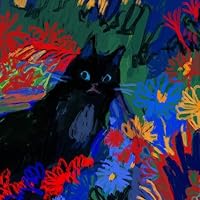
THE SPACEMAN HAD TO USE SCIENCE AGAINST STAR MAGIC! From the pen of Nebula nominee writer Emil Petaja comes The Star Mill, the second volume in his stunning series of science fantasies based on the Finnish national epic, Kalevala. In each volume, one of the great heroes of the Kalevala is reborn in one of his genetic descendents in the far future to prevent the return of evil alien forces, the Pahaliset, who once tried to conquer Earth in the dim ages of Finland's past. But, now they are returning, stronger and more dangerous than ever. Author-editor-publisher Donald A. Wollheim wrote that "from the Kalevala's mind-stunning material, Petaja has created a cycle of novels-- science fiction fantasy adventure of the highest order-- retelling in the eyes of modern scientific conjecture the great worlds-shaking events that may be concealed by the folklore of an ancient and mysterious people." In ages past, the wondersmith Ilmarinen had used his awesome psychic powers to fashion a Sampo, a device powered by the energy of stars and capable of creating anything asked of it. But, the Star-Witch, Louhi, one of the Pahaliset, had gained the Star Mill and turned its atom-transforming power from creation to a terrible destruction that would not end until all matter, animate and inanimate, has been shattered. Then a castaway is found on an interstellar asteroid not far from a dangerous storm of cosmic disintegration that has been growing in the region of Ursa Major for millinea. His survival is impossible, and he can not explain it, for he has no memory of who he is or how he reached the asteroid. But as he attempts to solve the riddle, he comes to realize that he may be the living embodiment of an ancient legend. A man who has a date with destiny that will pit him against an ancient evil force in a battle beyond the frontiers of known science. The Star Mill is truly an unusual novel of science, adventure, and fantasy, brimming with heroes, heroines, witches, beings from beyond the stars, of strange powers that once shaped humanity and return to do it again in humankind's distant future.
Emil Petaja (1915 - 2000) was an American science fiction and fantasy writer whose career spanned seven decades. He was the author of 13 published novels, nearly 150 short stories, numerous poems, and a handful of books and articles on various subjects. Though he wrote science fiction, fantasy, horror, detective fiction, and poetry, Petaja considered his work part of an older tradition of "weird fiction." Petaja was also a small press publisher. In 1995, he was named the first ever Author Emeritus by the Science Fiction Writers of America.
Of Finnish descent, Petaja's best known works are comprised of a series of science fiction novels based on the Kalevala, the Finnish verse epic. Petaja's series brought him readers from around the world,[1] while his mythological approach to science fiction was discussed in scholarly publications.[2]
In a statement published in Contemporary Authors (Gale Research, 1984), Petaja commented, "My writing endeavors have mainly been to entertain, except for the factual material concerning Hannes Bok and fantasy art in general, which serves to indicate my enthusiasm for these subjects. My novels about the Finnish legendary epic Kalevala: The Land of Heroes spring from a lifelong interest in this fine poetic work. I own six translations of the Kalevala, as well as the work in the original. Both of my parents were Finnish."[3]
I really wanted to like this book because Emil Petaja seems like a way cool dude -- a friend of luminaries like Ray Bradbury and Clark Ashton Smith, a writer of imaginative fiction from the pulp era, then an event and school photographer from the San Francisco area and a writer again in the '60s and '70s and a historian of his friend the brilliant and idiosyncratic pulp cover artist Hannes Bok.
As if that weren't cool enough, The Star Mill, like several of Petaja's works, is a short science fiction novel based on the Finnish epic the Kalevala (Petaja was an enthusiastic Finnish-American). It's a wonderful idea, and the writing is infused with stylistic enthusiasm and fun, but it just didn't come together for me. I felt bored by a lot of it, bewildered by other parts. It's the first space opera I've read in a while, so I was very hopeful for it, and this Petaja character is one of the more colorful figures of science fiction so I wanted to love, love, love his work. I'm disappointed that I didn't.
Much like the first book of 'The Cosmic Kalevala'.. the story starts out with a somewhat generic sci-fi, which a strange man found where no man should be... near the great Black Storm that is eating the universe.
It then breaks into the Kalevala part of the story, which (I assume, since I'm not familar with the sort) the fable part, where the great smith has to go and destroy the Star Mill that the evil one has corrupted.
It's actually alot like the first book story wise. That's not terrible, as most of these sort of stories of old gods do tend to tell the same morals, but doesn't make for a super engaging read. Still fun to learn about Finnish gods though :).
review of Emil Petaja's The Star Mill by tENTATIVELY, a cONVENIENCE - June 19, 2018
'Suddenly', Finland is on my mind. Not long after I read this bk I read another SF bk from Hannu Rajaniemi, a Finnish writer who lives in Edin-borough, just like I live in Pitts-borough. 2 Finnish writers in a mnth gets my attn — given that I'm not sure I've ever read anything by a Finnish writer before. The author's introductory note says:
"Like SAGA OF LOST EARTHS this science-fantasy was inspired by the little-known Finnish Epic, the KALEVALA."
Right there, I'm interested, I know nothing about Finnish epics & that strikes me as an interesting combination. SO, I lokk 'er up & choose a Wikipedia entry called "Kalevala (synopses)":
"The Kalevala is considered the national epic of Finland. It was compiled and edited by Elias Lönnrot while he was a district health officer in eastern Finland, at that time under the governance of Russia. The poem consists of 50 runos or cantos and 22,795 lines of poetry. The poem tells the story of a people, from the very beginning of the world to the introduction of Christianity." - https://en.wikipedia.org/wiki/Kaleval...
Apparently, this really is an epic b/c even the synopses are rather long so I'm not going to quote from it enuf to give you any idea of the story after all. I will at least try to provide some Finnish-to-English translation:
""Autta!"
"The plea bubbled out of cold-locked jaws.
"Death visions tortured him again. He saw a wide black lake and a black swan swimming majestically through blue mists, singing. He saw a girl with auburn hair and green eyes that wept uncontrollably—for him. Shafts of silver light seemed to stab his retreating mind. A clap of cosmic thunder shattered the galaxy.
""Ukko!"
"Again the overwhelming vibration like thunder.
"I AM HERE.
"A crack opened in his locked mind. He glimpsed a wide snow-blanketed valley, a clutch of brown log huts, and, beyond the dark green forest path, a lake. Thunder rolled benevolently down from the high crags that completely surrounded the woodsmoke misted valley.
"I AM HERE, SON OF ILMARINEN." - p 10
An astronaut regains consciousness on an asteroid. He will die soon. He has no idea how he got there or who he is. ""Autta!"": he's screaming for help. ""Ukko!"": the god of the sky, weather, harvest and thunder in Finnish mythology. (It thundered outside as I wrote this. Really.) "Ilmarinen":
"Ilmarinen, the Eternal Hammerer, blacksmith and inventor in the Kalevala, is a god and an archetypal artificer from Finnish mythology. He is immortal and capable of creating practically anything, but is portrayed as being unlucky in love. He is described as working the known metals of the time, including brass, copper, iron, gold and silver. The great works of Ilmarinen include the crafting of the dome of the sky and the forging of the Sampo. His usual epithet in the Kalevala is seppo, a poetic word for "smith" and the source of the given name Seppo." - https://en.wikipedia.org/wiki/Ilmarinen
The astronaut doesn't know who he is. He's picked up by a passing spacecraft. They try to figure out who he is & what his connection is, if any, to a destructive force that's engulfing the universe. "["]We know that to touch even the fringe area of the Black Storm means instantaneous disintegration.["]" 9p 17) "["]I found a scrap of nameplate in the neckpiece. It was pitted and chewed up, but there was half a name you could read. Ilmar."" (p 22) Ilmar seems to be carrying the destruction like a plague: ""Joe f-fell apart. In my hands. His body came to pieces, while part of it was still alive!"" (p 23) Ilmar tries to remember who he is but can only produce recurring fragments of no meaning for him:
"that name rang out across eternity like a great resounding chord of trained thunder.
"Ukko.
"Ukko.
"It connoted thunder-power, too. Power to help him and all who knew what it meant and how to employ it. Still, mocked a second voice—a hag's cackle—this was all part and parcel of his inexhaustible agony. The torture of hope." - p 27
As it becomes obvious that he's somehow connected to the Black Storm he's quarantined in the spacecraft.
"The walls! While he had been lying there in the dark a stealthy paced horror had been at work. The metal walls were eaten away in great ragged holes; in other places were angry pits like metallic acne scars, a touch and the bleached steel would crumble away in fine powder. While he had lain there all that time, helplessly reproaching his existence, this had happened. The horror in him was relentlessly taking over the ship, as it had taken human flesh." - p 28
The captain of the spacecraft is familiar w/ Finnish legends (fancy that!) & recognizes his mysterious visitor as a manifestation of one of them:
"["]Did you ever hear of Finns, Jonah? The Finns were an ancient north country race. Supposed to be wizards. They controlled the natural elements. They had the power to change things. Terran sailors wouldn't let a Finn on board because he could sing up a storm and kill them all.["]" - p 29
That's kindof like my thing for not dating married women, divorcees, addicts, or Yuppies.
"Ilmar stared hard. Now it did seem as if the wisps of morning fog were being disturbed by unseen wings.
""Ilmar! Kuula hyvä! Alkoon oltako kuolletu! Ole tarpeellinen!""
[The translation I got online for the above is: "Ball good! Alone you were dead! Be Necessary!" wch I then make a stab at retranslating as "For the good! Help is here to save you from death! You are needed!"]
""Parempt kuelle," he said."
[Perhaps this can be translated roughly as: "It's better to let me die"]
""Ilmar, rakas! No!""
[Love!]
""Who are you?" he demanded harshly.
""Aino! Don't you know me? You've got to, Ilmar. We are here to save you!"
""We?"
""Nyyrikki and me!"
""Nyyrikki?"" - pp 38-39
This Finnish mythology might come in handy some day.
"["]our Vanhat witchcraft scrambles their fixes as fast as they make them, just as it makes our ships invisible."
[..]
""Witchcraft?"
""The Vanhat have always been experts at creating tangible illusion. This is part of our genetic heritage from Otava. That is why we have survived, aloof and hidden from the Ussi, all these centuries."
""Ussi?"
""The New Breed. All of Terra besides the Vanhat."
"Ilmar frowned in thought. "This witchcraft makes us superior to the Ussi?"
""Not superior. Different. In a way vulnerable and responsible."" - pp 42-43
Interestingly, I don't find the word "Vanhat" in an online article about Finnish mythology that begins:
"Finnish mythology is a commonly applied description of the folklore of Finnish paganism, of which a modern revival is practiced by a small percentage of the Finnish people. It has many features shared with fellow Finnic Estonian mythology and other Uralic mythologies, but also shares some similarities with neighbouring Baltic, Slavic and to a minority, Norse mythologies.
"Finnish mythology survived within an oral tradition of mythical poem-singing and folklore well into the 19th century." - https://en.wikipedia.org/wiki/Finnish...
Google Translate has it translating as "The Old" — similar, perhaps, to "Roma" meaning "The People".
I have mixed feelings about mythology that are probably too complex to get into here. When I read that "Finnish mythology survived within an oral tradition of mythical poem-singing and folklore well into the 19th century." it saddens me to think that the Industrial 'Revolution' was probably at least somewhat resposible for deteriorating an ancient sense of self-identity. Still, I, too, am a 'product' of this Age of Technology & tend to place value on the "Vanhat witchcraft" as a living force capable of counteracting the destructive tendency of technology to take ascendency by its oversimplifying goal-oriented anti-biomorphism. On Twitter, where I contribute next-to-nothing, I use the name "Psychic Weed" wch I explain as "Kindof like kudzu biomorphically breaking the autocratic veneer of the technocracy - intuitively speaking." That's my version of "Vanhat witchcraft" but I don't think anyone gets that.
"The Vanhat at the feast allowed themselves no such qualms. Young Vaino played on his kantele" ["a traditional Finnish and Karelian plucked string instrument (chordophone) belonging to the south east Baltic box zither family known as the Baltic psaltery along with Estonian kannel, Latvian kokles, Lithuanian kanklės and Russian gusli." - https://en.wikipedia.org/wiki/Kantele ] "and sang with lively passion. The laurel-hung rafters of the Greathall rang with songs, so that the bessalintut" [not found] "from Tapio's green forest came to the open-flung sills of the hall to listen in envy." - p 51
Note that I didn't find "bessalintut". I guess the internet isn't such a perfect all-knowing source after all. What about the title of the book?
"The Sampo! The Star Mill that will grind out anything one may ask of it. The wonder-machine that will snatch god-power from beyond the stars and create things out of the smallest particles of air and sea and rock. What manner of things? Anything! Anything that exists anywhere in the stars!"" - p 56
"["]To our youth who left us, we seemed primitive. Simple. Naïve. But among 'primitives' is ESP and the other 'supernormal phenomenon' always highest.["]" - p 70
That fits my theories. My favorite kind of fictional gate:
"Ilmar replaced the oval of heavy wire carefully on the pickets after creaking it shut behind him. He stared back where had come from, but it wasn't as it had been. Now it was deep green forest. He turned." - p 94
I enjoyed this, it made me interested in Finnish mythology & I'll read the KALEVALA in the unlikely event that I find a cheap copy in English. Otherwise, this is only going to get a 3 star rating because it wasn't spectacular genius or nuthin'. Just sayin'.
A fascinating fantasy based upon the Kalevala, the Finnish epic. Recounts the attempts, ultimately successful, of an avatar of the Wondersmith Hero Ilmarinen to destroy a malignancy threatening the earth. Fun read.
A science fiction novel based on the Finnish national epic, Kalevala. Pretty strange mixture - something which is essentially fantasy is retold as science fiction. It does not quite work, and the result is a book that starts as relatively straightforward science fiction and ends as pretty pure fantasy. The writing is really, really bad. It reminds me of Spindard's “Iron Dream”, but I somehow suspect that this time, overblown pomposity was not intentional. The book contains a lot of Finnish words, but most of them are misspelled more or less. I honestly do not see any reason why they would have modified intentionally. Probably, Petaja just thought that he could spell Finnish and was too lazy to check the correct spelling. The plot revolves around the Sampo, a mythical machine that can make everything. It was destroyed in Kalevala, but now it has been repaired. Unfortunately, it works in reverse and is spilling destruction everywhere. It is up to our hero to prevent the destruction of the whole universe.
This series (of which is it the second book) was apparently published in the mid-1960's, but reads like something from three decades earlier, a classic, in a way, yarn from the Golden Age of weird fiction. A fantasy disguised as a space opera, entertaining but rather silly and dated today. However, it is lifted above the average run-of-the-mill blasters-and-weirdness crowd by the constant presence of Kalevala in its plot and characterization, and multiple cultural references to Finland. Its inspirational sources could not have been better! And just for that, it is worth some attention at least--and I will continue with the rest.
A lot of cool concepts in here, but it was just a blur. Not much made sense and the plot was pretty weird. Whole universe seemed to be built just for the main character. Strange.