

What do you think?

Principles of Human Knowledge and Three Dialogues
Berkeley's idealism started a revolution in philosophy. As one of the great empiricist thinkers he not only influenced British philosophers from Hume to Russell and the logical positivists in the twentieth-century, he also set the scene for the continental idealism of Hegel and even the philosophy of Marx. This edition of Berkeley's two key works has an introduction which examines and in part defends his arguments for idealism, as well as offering a detailed analytical contents list, extensive philosophical notes, and an index.
236 pages, Paperback
First published January 1, 1710
About the author
George Berkeley
665 books242 followersGeorge Berkeley (/ˈbɑːrklɪ/;[1][2] 12 March 1685 – 14 January 1753) — known as Bishop Berkeley (Bishop of Cloyne) — was an Anglo-Irish philosopher whose primary achievement was the advancement of a theory he called "immaterialism" (later referred to as "subjective idealism" by others). This theory denies the existence of material substance and instead contends that familiar objects like tables and chairs are only ideas in the minds of perceivers, and as a result cannot exist without being perceived. Berkeley is also known for his critique of abstraction, an important premise in his argument for immaterialism.
Librarian note: There is more than one author in the Goodreads database with this name.
George^Berkeley
Librarian note: There is more than one author in the Goodreads database with this name.
George^Berkeley
Ratings & Reviews
Friends & Following
Create a free account to discover what your friends think of this book!
Community Reviews
Displaying 1 - 30 of 57 reviews

March 29, 2016
سه گفت و شنود
گفت و شنود اول:
خروج جوهر مادّی
تا قبل از باركلى تصور مى شد كه اشياء دو دسته صفات دارند:
کیفیات اولیه: صفاتى كه در حقيقت در خود اشیاء خارجی موجودند، مثل اندازه و شكل.
کیفیات ثانویه: صفاتى كه فقط محصول رابطه ى ذهن و عين هستند و در حقيقت در اشياء خارجى موجود نيستند، مثل صوت و رنگ. اشیاء خارجی در حقیقت رنگ و صوت ندارند و تنها تأثیر خاصی که بر چشم و گوش ما می گذارند باعث می شود تصور رنگ و صدا در ذهن ما ایجاد شود.
باركلى در گفت و شنود اول نشان می دهد که ميان كيفيات اوليه و ثانويه تفاوتى نيست و امکان ندارد هیچ کدام از این صفاتی که ما ادراک می کنیم، در اشياء خارجى موجود باشند. در نتیجه، اشیاء خارجی نه رنگ و صوت دارند، و نه شکل و اندازه.
و وقتی اشیاء خارجی هیچ صفتی نداشته باشند، وجودشان یا غیرممکن یا بیهوده است.
گفت و شنود دوم:
ورود خداوند
با نفی اشیاء مادّی، این تصور به وجود می آید که پس آیا این جهان سراسر خواب و خیال است؟
بارکلی در گفت و شنود دوم به شدت جواب منفی می دهد. می گوید:
خواب تصوّرات مبهم و بی نظم است، اما ادراکات ما در زمان بیداری، هم واضح و هم دارای نظمی فیزیکی و ریاضی هستند.
خیال های ما وابسته به اراده ی خودمان هستند و هر گونه بخواهیم در آن ها تصرّف می کنیم و تغییرشان می دهیم، اما ادراکات ما وابسته به اراده ی ما نیستند و ما نمی توانیم هر گاه بخواهیم روز را شب کنیم، یا پادشاه را گدا کنیم.
پس ادراکات ما، هر چند وجود خارجی ندارند، اما علّت خارجی دارند که به آن ها نظم می دهد، و آن علّت، خداوند است. خداوند است که این ادراکات را مستقیم به ذهن ما منتقل می کند، و ذهن ما تنها پذیرندۀ این ادراکات است.
گفت و شنود سوم:
دفع اشکالات مختلف
بعد از شنیدن این دو گفت و شنود، اشکالات بسیار زیادی به ذهن خواننده می رسد. در گفت و شنود سوم، بارکلی با حوصله ی فراوان تک تک اشکالات مختلفی که ممکن است به نظریه اش وارد شود را پاسخ می دهد، و برای خواننده چاره ای نمی گذارد جز آن که بپذیرد این نظریه خدشه ناپذیر است.
میراث بارکلی
بارکلی آغازگر راهی است که بعدها توسط "هيوم" گسترش داده شد، و سپس توسط "كانت" به صورت نظام معرفت شناختى منسجمى درآمد. تا مدت ها فلسفه ى غرب بر نظام معرفت شناختى كانت مبتنى بود.
"شكّاكيت، اگر به درستی دنبال شود، به يقين منتهى خواهد شد."
گفت و شنود اول:
خروج جوهر مادّی
تا قبل از باركلى تصور مى شد كه اشياء دو دسته صفات دارند:
کیفیات اولیه: صفاتى كه در حقيقت در خود اشیاء خارجی موجودند، مثل اندازه و شكل.
کیفیات ثانویه: صفاتى كه فقط محصول رابطه ى ذهن و عين هستند و در حقيقت در اشياء خارجى موجود نيستند، مثل صوت و رنگ. اشیاء خارجی در حقیقت رنگ و صوت ندارند و تنها تأثیر خاصی که بر چشم و گوش ما می گذارند باعث می شود تصور رنگ و صدا در ذهن ما ایجاد شود.
باركلى در گفت و شنود اول نشان می دهد که ميان كيفيات اوليه و ثانويه تفاوتى نيست و امکان ندارد هیچ کدام از این صفاتی که ما ادراک می کنیم، در اشياء خارجى موجود باشند. در نتیجه، اشیاء خارجی نه رنگ و صوت دارند، و نه شکل و اندازه.
و وقتی اشیاء خارجی هیچ صفتی نداشته باشند، وجودشان یا غیرممکن یا بیهوده است.
گفت و شنود دوم:
ورود خداوند
با نفی اشیاء مادّی، این تصور به وجود می آید که پس آیا این جهان سراسر خواب و خیال است؟
بارکلی در گفت و شنود دوم به شدت جواب منفی می دهد. می گوید:
خواب تصوّرات مبهم و بی نظم است، اما ادراکات ما در زمان بیداری، هم واضح و هم دارای نظمی فیزیکی و ریاضی هستند.
خیال های ما وابسته به اراده ی خودمان هستند و هر گونه بخواهیم در آن ها تصرّف می کنیم و تغییرشان می دهیم، اما ادراکات ما وابسته به اراده ی ما نیستند و ما نمی توانیم هر گاه بخواهیم روز را شب کنیم، یا پادشاه را گدا کنیم.
پس ادراکات ما، هر چند وجود خارجی ندارند، اما علّت خارجی دارند که به آن ها نظم می دهد، و آن علّت، خداوند است. خداوند است که این ادراکات را مستقیم به ذهن ما منتقل می کند، و ذهن ما تنها پذیرندۀ این ادراکات است.
گفت و شنود سوم:
دفع اشکالات مختلف
بعد از شنیدن این دو گفت و شنود، اشکالات بسیار زیادی به ذهن خواننده می رسد. در گفت و شنود سوم، بارکلی با حوصله ی فراوان تک تک اشکالات مختلفی که ممکن است به نظریه اش وارد شود را پاسخ می دهد، و برای خواننده چاره ای نمی گذارد جز آن که بپذیرد این نظریه خدشه ناپذیر است.
میراث بارکلی
بارکلی آغازگر راهی است که بعدها توسط "هيوم" گسترش داده شد، و سپس توسط "كانت" به صورت نظام معرفت شناختى منسجمى درآمد. تا مدت ها فلسفه ى غرب بر نظام معرفت شناختى كانت مبتنى بود.

September 3, 2017
دوستانِ گرانقدر، بارها گفته ام که یکی از بزرگترین خیانت ها و آسیب ها به فلاسفه و اندیشمندانِ تاریخ، این بوده است که برخی از نظریه پردازهایِ موهوم پرستِ مذهبی همچون نویسندهٔ این کتاب <بارکلی یا برکلی> و امثالِ او که کشیش و ملّا و درکل مبلّغِ مذهبی و دینی هستند و در اسلام نیز از آنها فراوان دیده شده است، را فیلسوف قلمداد کرده اند و به مرورِ زمان در ذهنِ مردم اینگونه جا انداخته اند... در صورتی که دین هیچ ارتباطی با دانش و فلسفهٔ انسانی و خردمندانه ندارد... دین دقیقاً نقطهٔ مقابل و ضدِ خرد و دانش و فلسفه و منطقِ انسانی میباشد
برکلی کشیش و اسقفِ ایرلندی بود که در قرنِ هفدهم میزیست و اینگونه فکر میکرد که فلسفه و دانش خطری برایِ راه و رسم و زندگیِ مسیحی و درکل خطری برایِ دین و مذهب است.. بعد جالب است که میگویند او فیلسوف بوده است... وی خردگرایی و ماده گرایی را تهدیدی برای خداپرستان قلمداد کرده و از همین روی اصرار بر این دارد که بگوید چیزی به نامِ ماده و جسم، وجود ندارد... یعنی پاک کردنِ پاسخِ آشکار و پیدا، برای گریز از حقیقت
برکلی بطورِ جدی به موضوعِ موهومی چون "روح" اعتقاد دارد و در این باره مینویسد: تصوراتِ ما، همه علتی در ورایِ خودآگاهیِ ما دارند و این علت، مادی نیست، بلکه معنوی است!!!! او اینچنین به موهوماتش ادامه میدهد که: روحِ من، میتواند علتِ تصوراتِ من باشد، امّا علتِ تصوراتی که جهانِ مادی را ساخته است، اراده و روحِ دیگری میباشد... برکلی خزعبلاتش را بهم بافته و بافته تا برسد به موضوعِ اصلی.. موضوعِ اصلی نیز "خدا" میباشد
او اینگونه مینویسد که: میتوانیم ادعا کنیم که درکِ حسیِ ما از وجودِ خدا بسیار روشنتر است، زیرا خداوند از نزدیک در ذهنِ ما حضور دارد و انبوهِ تصورات را که پی در پی به مغزِ ما میتازد را به وجود می آورد و تمامیِ جهانِ پیرامونِ ما و تمامیِ طبیعت و حیاتِ ما، در وجودِ خداوند است.. خداوند تنها علتِ وجودِ هر چیز است. ما فقط در نفسِ خداوند وجود داریم، لذا بودن یا نبودن، تمامِ مسئله نیست.. مسئله این میباشد که ما چه کسی و یا چه چیزی میباشیم.. آیا جهان از چیزهایِ واقعی ساخته شده است؟؟ یا همه چیز ساخته و پرداختهٔ ذهنِ ما انسانها میباشد
بله عزیزانم.. این کشیشِ موهوم پرست همینطور این موهومات را ادامه میدهد تا به جایی میرسد که ما و تمام طبیعت و حیوانات و گیاهان و اجسام و مواد و چه و چه و چه را موهوم و خیالی قلمداد کرده و خدایِ خود را که به هیچ روشِ منطقی و از راهِ دانش و تجربه و درکل با کمکِ هیچ راه و روشِ خردمندانه ای، نمیتوان وجودش را اثبات کرد را حقیقی و راستین میشمارد و اینگونه چرت و پرتهایش را ادامه داده و مینویسد: ادراکِ حسیِ ما، از زمان و مکان، میتواند توهمِ ذهنِ ما باشد.. مدت زمانِ ما با مدت زمانِ خداوند متفاوت است!!!!.. یک یا دو هفتهٔ ما ضرورتاً با یک یا دو هفتهٔ خدا یکی نمیباشد.. ما نمیتوانیم که بدانیم هستیِ خارجیِ ما از امواجِ صدا و صوت ساخته شده است یا از کاغذ و نوشتار!!!!!!!!!! تنها چیزی که ما میتوانیم بدانیم، این است که ما "روح" هستیم
بله عزیزان و نورِ چشمانم.. به همین سادگی این مردِ ایرلندی، ثابت کرد که ما وجودِ خارجی نداریم و اصلاً وجود حقیقی نداریم و روح هستیم و خدایِ قادر و توانا فقط حقیقت دارد و وجود دارد و ما تصوراتِ خدا هستیم... یعنی همچون یک نوار کاست یا فیلم و سی دی هستیم که از قبل مشخص است که قرار است چه کنیم.. یعنی من که این جملات را برایِ شما خردگرایانِ گرامی مینویسم، در اصل خودم نمینویسم، این خداوند است که همهٔ اینها را تصویر سازی کرده است
ببینید این موجوداتِ پست و موهوم پرست، برایِ اثباتِ موهومات و خرافات هایِ خویش، تا به کجا میروند.. تا آنجایی پیش میروند که حتی وجودِ ما و وجودِ حقیقت را کتمان میکنند و توهمات و خزعبلات و باورهایِ اشتباه و منسوخِ دینی و مذهبیِ خود را درست و راستین میدانند
-------------------------------------------
امیدوارم این ریویو برایِ فرزندانِ خردگرایِ سرزمینم، مفید بوده باشه
<پیروز باشید و ایرانی>
برکلی کشیش و اسقفِ ایرلندی بود که در قرنِ هفدهم میزیست و اینگونه فکر میکرد که فلسفه و دانش خطری برایِ راه و رسم و زندگیِ مسیحی و درکل خطری برایِ دین و مذهب است.. بعد جالب است که میگویند او فیلسوف بوده است... وی خردگرایی و ماده گرایی را تهدیدی برای خداپرستان قلمداد کرده و از همین روی اصرار بر این دارد که بگوید چیزی به نامِ ماده و جسم، وجود ندارد... یعنی پاک کردنِ پاسخِ آشکار و پیدا، برای گریز از حقیقت
برکلی بطورِ جدی به موضوعِ موهومی چون "روح" اعتقاد دارد و در این باره مینویسد: تصوراتِ ما، همه علتی در ورایِ خودآگاهیِ ما دارند و این علت، مادی نیست، بلکه معنوی است!!!! او اینچنین به موهوماتش ادامه میدهد که: روحِ من، میتواند علتِ تصوراتِ من باشد، امّا علتِ تصوراتی که جهانِ مادی را ساخته است، اراده و روحِ دیگری میباشد... برکلی خزعبلاتش را بهم بافته و بافته تا برسد به موضوعِ اصلی.. موضوعِ اصلی نیز "خدا" میباشد
او اینگونه مینویسد که: میتوانیم ادعا کنیم که درکِ حسیِ ما از وجودِ خدا بسیار روشنتر است، زیرا خداوند از نزدیک در ذهنِ ما حضور دارد و انبوهِ تصورات را که پی در پی به مغزِ ما میتازد را به وجود می آورد و تمامیِ جهانِ پیرامونِ ما و تمامیِ طبیعت و حیاتِ ما، در وجودِ خداوند است.. خداوند تنها علتِ وجودِ هر چیز است. ما فقط در نفسِ خداوند وجود داریم، لذا بودن یا نبودن، تمامِ مسئله نیست.. مسئله این میباشد که ما چه کسی و یا چه چیزی میباشیم.. آیا جهان از چیزهایِ واقعی ساخته شده است؟؟ یا همه چیز ساخته و پرداختهٔ ذهنِ ما انسانها میباشد
بله عزیزانم.. این کشیشِ موهوم پرست همینطور این موهومات را ادامه میدهد تا به جایی میرسد که ما و تمام طبیعت و حیوانات و گیاهان و اجسام و مواد و چه و چه و چه را موهوم و خیالی قلمداد کرده و خدایِ خود را که به هیچ روشِ منطقی و از راهِ دانش و تجربه و درکل با کمکِ هیچ راه و روشِ خردمندانه ای، نمیتوان وجودش را اثبات کرد را حقیقی و راستین میشمارد و اینگونه چرت و پرتهایش را ادامه داده و مینویسد: ادراکِ حسیِ ما، از زمان و مکان، میتواند توهمِ ذهنِ ما باشد.. مدت زمانِ ما با مدت زمانِ خداوند متفاوت است!!!!.. یک یا دو هفتهٔ ما ضرورتاً با یک یا دو هفتهٔ خدا یکی نمیباشد.. ما نمیتوانیم که بدانیم هستیِ خارجیِ ما از امواجِ صدا و صوت ساخته شده است یا از کاغذ و نوشتار!!!!!!!!!! تنها چیزی که ما میتوانیم بدانیم، این است که ما "روح" هستیم
بله عزیزان و نورِ چشمانم.. به همین سادگی این مردِ ایرلندی، ثابت کرد که ما وجودِ خارجی نداریم و اصلاً وجود حقیقی نداریم و روح هستیم و خدایِ قادر و توانا فقط حقیقت دارد و وجود دارد و ما تصوراتِ خدا هستیم... یعنی همچون یک نوار کاست یا فیلم و سی دی هستیم که از قبل مشخص است که قرار است چه کنیم.. یعنی من که این جملات را برایِ شما خردگرایانِ گرامی مینویسم، در اصل خودم نمینویسم، این خداوند است که همهٔ اینها را تصویر سازی کرده است
ببینید این موجوداتِ پست و موهوم پرست، برایِ اثباتِ موهومات و خرافات هایِ خویش، تا به کجا میروند.. تا آنجایی پیش میروند که حتی وجودِ ما و وجودِ حقیقت را کتمان میکنند و توهمات و خزعبلات و باورهایِ اشتباه و منسوخِ دینی و مذهبیِ خود را درست و راستین میدانند
-------------------------------------------
امیدوارم این ریویو برایِ فرزندانِ خردگرایِ سرزمینم، مفید بوده باشه
<پیروز باشید و ایرانی>

October 23, 2012
On paper, this book should be a zero star for someone like me. As people know, I'm a militant atheist, materialist, Marxist, and I wear my politics and philosophy on my sleeve - sometimes even on other peoples' sleeves. And Berkeley is basically the stark opposite of me: a Christian, immaterialists, who undoubtedly held conservative views. Nonetheless, Berkeley was unequivocally a philosophical gangster in the streets, and a freak in the bed.
Seriously though, Berkeley gives every materialist, in his time, hitherto, a run for their money. As the introduction essays remarks, Lenin, and Engels, recognized Berkeley's philosophy was not easy to transcend. And anyone who has read Engels's attempt to transcend it (I have not read Lenin's), knows he failed. According to my friend, Lenin failed too. For Berkeley only two things exist, minds/spirits, and ideas. Well God too, but his argument in favor of God's existence ultimately boils down to: atheist are repugnant, hallelujah.
Despite the extreme advances made in the cognitive sciences, and philosophy overall, returning to the empiricist tradition is always a treat. The writing is clear, the philosophy is simple, and their epistemological system is completely summarizable. Berkeley is no exception. He sets out to rid the world of abstractions, and abstract ideas, especially Platonic forms. Moreover, he wants to make necessary advancements upon Locke's philosophy of primary qualities (i.e., substance, extension, etc), and secondary qualities.
Locke believed when we perceived an object, we perceived secondary qualities, that is qualities that only exist for our mind, such as colors, sounds, tasted, etc.; and primary qualities, which existed independent of observation (e.g., extension, substance). Thus, a table tastes oaky to the human, but delicious to the termite. But to both creatures, the table is extended, and contains substance (the metaphysical glue holding the table together), or matter for the materialist. Berkeley points out that for an empiricist this is a complete contradiction. The empiricist never observes primary qualities, and it is impossible for these qualities to exist outside perception, because how could someone perceive of something existing outside perception? This is a complete contradiction.
If things only exist when they’re being perceived, we are left flummoxed. Why is it that things always seems to be where we left them, and that there is consistency and order in the universe? Berkeley believes that there are natural laws, laws that unlike our perception have a will or volition of their own. Moreover, these objects remain consistent because there is one all eternal perceiver: GOD. In the first essay there is no serious argument for why God exist; only that atheist are repugnant beings, worthy of contempt. But isn’t Berkeley’s philosophy all the more fun when a God doesn’t exist? I mean really, the fact that things don’t exist when I don’t perceive them, and I bring things into existence by viewing them, is substantially more interesting. Moreover, despite the fact that Berkeley says we perceive God in his work, he is essentially using God as the primary quality he rejects.
Overall, great book.
Seriously though, Berkeley gives every materialist, in his time, hitherto, a run for their money. As the introduction essays remarks, Lenin, and Engels, recognized Berkeley's philosophy was not easy to transcend. And anyone who has read Engels's attempt to transcend it (I have not read Lenin's), knows he failed. According to my friend, Lenin failed too. For Berkeley only two things exist, minds/spirits, and ideas. Well God too, but his argument in favor of God's existence ultimately boils down to: atheist are repugnant, hallelujah.
Despite the extreme advances made in the cognitive sciences, and philosophy overall, returning to the empiricist tradition is always a treat. The writing is clear, the philosophy is simple, and their epistemological system is completely summarizable. Berkeley is no exception. He sets out to rid the world of abstractions, and abstract ideas, especially Platonic forms. Moreover, he wants to make necessary advancements upon Locke's philosophy of primary qualities (i.e., substance, extension, etc), and secondary qualities.
Locke believed when we perceived an object, we perceived secondary qualities, that is qualities that only exist for our mind, such as colors, sounds, tasted, etc.; and primary qualities, which existed independent of observation (e.g., extension, substance). Thus, a table tastes oaky to the human, but delicious to the termite. But to both creatures, the table is extended, and contains substance (the metaphysical glue holding the table together), or matter for the materialist. Berkeley points out that for an empiricist this is a complete contradiction. The empiricist never observes primary qualities, and it is impossible for these qualities to exist outside perception, because how could someone perceive of something existing outside perception? This is a complete contradiction.
If things only exist when they’re being perceived, we are left flummoxed. Why is it that things always seems to be where we left them, and that there is consistency and order in the universe? Berkeley believes that there are natural laws, laws that unlike our perception have a will or volition of their own. Moreover, these objects remain consistent because there is one all eternal perceiver: GOD. In the first essay there is no serious argument for why God exist; only that atheist are repugnant beings, worthy of contempt. But isn’t Berkeley’s philosophy all the more fun when a God doesn’t exist? I mean really, the fact that things don’t exist when I don’t perceive them, and I bring things into existence by viewing them, is substantially more interesting. Moreover, despite the fact that Berkeley says we perceive God in his work, he is essentially using God as the primary quality he rejects.
Overall, great book.
January 19, 2020
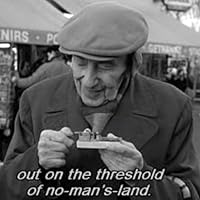
Not all that much have I travell'd in the realms of Gold
Nor many goodly kingdoms imagined into being
But that on Noman's Island I once was told
Lived there a divine who would claim that all was in seeing,
There Descartes had been Locke'd up in a pique of rage
And Hume's doubts would soon rule a once-proud demesne…
Then did I hear Berkeley speak out loud, and bold—
And his new planet swam into my jaundiced ken:
That watcher of the skies, he and I then did each the other see!
So imagine the consolation I felt just then,
As, silent as Mt Darien on his printed page,
He told me that once perceived, we both at last may...be.
* * *
Principles of Human Knowledge 2*
Three Dialogues 5*
So 3.5* rounded up to 4
Admittedly, I read this because
(i) I am on a kind of packaged holiday jaunt through the 18C put together by the good folks at Oxford-World-Classics All-Inclusive-Resorts, and needed to double back from 1726 and hit some of the sites and sights I missed from the first two decades (including this one, which at 1710 is only just barely on the itinerary)
(ii) included on this tour at some point in the nearish future is a David Hume Scottish Enlightenment and Highland Games banquet, and as a pre-requisite I needed to have my passport stamped in BeserkelyLand to get the promised free fermented beverage and fun ride discount
(iii) GR-friend ATJG goaded me into reading Boswell's Life of Johnson with him, and then I got the idea of filling in some 18C gaps, and then my OCD kicked in, cos it's all gaps, you see….
And so consequently I (who, at my absolute best, am the very worst kind of philosophical tourist [that loud, garish American who turns out, of course, to be just a colour-blind Canadian]) found that my aversion to anything really hard, Epistemology above all (OK, you may also include Philosophy of Mind in that), though completely vindicated and absolutely borne out by the turgid, repetitive and at times near-impenetrable Principles in the first half of this book, was at last truly vanquished by just how approachable and well, fun (really!) the second half was, viz.:
See, I'm always a sucker for a good Socratic dialogue (and highly recommend Iris Murdoch's Acastos in this vein—why aren't there more of such things, I ask you?), and found that, once you get half-way in, to the Three Dialogues Between Hylas and Philonous, Berkeley ultimately does not disappoint at all, because Hylas (the interlocutor of B's mouthpiece Philo) gives as good as he gets for the most part, unlike many Platonic dialogues of course, and we are treated to a spirited debate about the existence of external matter and the nature of perception which is just about as entertaining as it is thought-provoking....
If you read this, get the Oxford Classics version for the explanatory notes, not for the introduction (which unless you are already a grad student in philosophy or something, will be much too much like being shoved into the deep end of the resort's adults-only pool), but do try to have a gander at the intro to the Penguin edition as well, as it really does a good job at preparing you to read the difficult first half of the book, and its author also has an eye for the amusing detail or three, such as the two I have already mentioned in my status updates to this book, and the one I'll close this review with as well (& even though I despise limericks!):
It concerns the problem of the continued existence of real things when they are not being perceived. It [merely] seems to follow from Berkeley's view that ‘bodies are annihilated and created every moment, or exist not at all during the intervals between our perception of them’ (P48). The problem is nicely captured in a limerick by Monsignor Ronald Knox (1888–1957):
A second limerick gives one account of what Berkeley means by this:
Nor many goodly kingdoms imagined into being
But that on Noman's Island I once was told
Lived there a divine who would claim that all was in seeing,
There Descartes had been Locke'd up in a pique of rage
And Hume's doubts would soon rule a once-proud demesne…
Then did I hear Berkeley speak out loud, and bold—
And his new planet swam into my jaundiced ken:
That watcher of the skies, he and I then did each the other see!
So imagine the consolation I felt just then,
As, silent as Mt Darien on his printed page,
He told me that once perceived, we both at last may...be.
* * *
Principles of Human Knowledge 2*
Three Dialogues 5*
So 3.5* rounded up to 4
Admittedly, I read this because
(i) I am on a kind of packaged holiday jaunt through the 18C put together by the good folks at Oxford-World-Classics All-Inclusive-Resorts, and needed to double back from 1726 and hit some of the sites and sights I missed from the first two decades (including this one, which at 1710 is only just barely on the itinerary)
(ii) included on this tour at some point in the nearish future is a David Hume Scottish Enlightenment and Highland Games banquet, and as a pre-requisite I needed to have my passport stamped in BeserkelyLand to get the promised free fermented beverage and fun ride discount
(iii) GR-friend ATJG goaded me into reading Boswell's Life of Johnson with him, and then I got the idea of filling in some 18C gaps, and then my OCD kicked in, cos it's all gaps, you see….
And so consequently I (who, at my absolute best, am the very worst kind of philosophical tourist [that loud, garish American who turns out, of course, to be just a colour-blind Canadian]) found that my aversion to anything really hard, Epistemology above all (OK, you may also include Philosophy of Mind in that), though completely vindicated and absolutely borne out by the turgid, repetitive and at times near-impenetrable Principles in the first half of this book, was at last truly vanquished by just how approachable and well, fun (really!) the second half was, viz.:
See, I'm always a sucker for a good Socratic dialogue (and highly recommend Iris Murdoch's Acastos in this vein—why aren't there more of such things, I ask you?), and found that, once you get half-way in, to the Three Dialogues Between Hylas and Philonous, Berkeley ultimately does not disappoint at all, because Hylas (the interlocutor of B's mouthpiece Philo) gives as good as he gets for the most part, unlike many Platonic dialogues of course, and we are treated to a spirited debate about the existence of external matter and the nature of perception which is just about as entertaining as it is thought-provoking....
If you read this, get the Oxford Classics version for the explanatory notes, not for the introduction (which unless you are already a grad student in philosophy or something, will be much too much like being shoved into the deep end of the resort's adults-only pool), but do try to have a gander at the intro to the Penguin edition as well, as it really does a good job at preparing you to read the difficult first half of the book, and its author also has an eye for the amusing detail or three, such as the two I have already mentioned in my status updates to this book, and the one I'll close this review with as well (& even though I despise limericks!):
It concerns the problem of the continued existence of real things when they are not being perceived. It [merely] seems to follow from Berkeley's view that ‘bodies are annihilated and created every moment, or exist not at all during the intervals between our perception of them’ (P48). The problem is nicely captured in a limerick by Monsignor Ronald Knox (1888–1957):
There once was a man who said, ‘GodBerkeley's solution lies in God. Unless ‘sensible objects’ do, after all, have no existence when unperceived by us, their continued existence must depend on their ‘subsist[ing] in the mind of some eternal spirit’ (P6).
Must find it exceedingly odd
If he finds that this tree Continues to be
When there's no one about in the Quad.’
A second limerick gives one account of what Berkeley means by this:
Dear Sir, Your astonishment's odd;
I am always about in the Quad.
And that's why the tree Will continue to be,
Since observed by yours faithfully, God.

April 13, 2019
Principles of Human Knowledge
By George Berkeley (1685-1753)
George Berkeley- known as Bishop Berkeley - was an Anglo-Irish philosopher whose primary achievement was the advancement of a theory he called
Immaterialism:
The main text of this edition called ‘Principals’ develops arguments over 100 pages in various forms that “no object, like houses, trees, mountains rivers and so on, has an existence natural or real, distinct from its being perceived by the understanding”.
He questions the theory of Universal Attraction:
” The great mechanical principle now in vogue is attraction. That a stone falls to the earth, or the sea swells to the moon, may to some appear sufficiently explained thereby.
But how are we enlightened by being told this is done by attraction?
“Nothing is determined of the matter or action, and it may truly be (for aught we know) be determined by impulse or protrusion as attraction.”
…” If therefore we consider the difference there is betwixt natural philosophers and other men, we shall find it consists not of an exacter knowledge of the different causes that produce them, for that can be no other than the will of a spirit, “
…” in some instances, the quite contrary principle seems to shew itself: as in the perpendicular growth of plants, and the elasticity of air. There is nothing necessary or essential in this case, but it depends entirely on the will of the governing spirit, who causes certain bodies to clieve together or tend towards each other, according to various laws, whilst he keeps others at a fixed distance; and to some he gives a quite contrary tendency to fly asunder, just as he sees convenient.”
“Hitherto of natural philosophy: we come to inquire about that other great branch of speculative knowledge, to wit, Mathematics.”
“That principles laid down by mathematicians are true and their way of deduction from these principals clear and incontestable, we do not deny. But we hold, there may be certain erroneous maxims of greater extent than the object of mathematics, and for that reason not expressly mentioned, though tacitly supposed throughout the whole progress of that science:
and that the ill effects of those secretly unexamined errors are diffused throughout all the branches thereof. To be plain, we suspect the mathematicians are, as well as other men, concerned in the errors arising from the doctrine of abstract general ideas, and the existence of objects without the mind.”
On Arithmetic:
“…Another speculative branch of knowledge. It hath set a price on the most trifling numerical speculations which in practice are of no use, but serve only as amusement and hath therefore so infected the minds of some, that they have dreamt of some mighty mysteries involved in numbers, and tend the explication of natural things by them.”
“However since there may be some, who, deluded by the specious shew of discovering abstracted verities, waste their time in arithmetical theorems and problems which have not any use.” And more of the same.
On Geometry:
“From numbers, we proceed to speak of extension, which considered as relative, is the object of geometry. The infinite divisibility of finite extension, though it is not laid down as an axiom or theorem in the elements of that science, yet is throughout the same everywhere.
And as this notion is the source from whence do spring all those amusing geometrical paradoxes, which have such a direct repugnancy to the plain common sense of mankind, …”some may be persuaded, that extension in the abstract is infinitely divisible, and will in virtue thereof be brought to admit, that a line but an inch long may contain innumerable parts really existing, though too small to be observed.
These errors are grafted as well as in the minds of geometricians, as of other men, and have like influence on their reasoning.”
“But men not retaining a distinction in their thoughts, slide into a belief that the small particular line described on a paper contains in itself parts innumerable.
There is no such thing as the ten-thousandth part of an inch; but there is of a mile or the diameter of the earth, which may be signified by that inch.”
Those great men who have raised that science to so astonishing a height, have been all the while been building a castle in the air.”
On Matter:
“ Though it be clear from what has been said, that there cannot be such a thing as an inert, senseless, extended solid figured moveable substance, existing without the mind, such as philosophers describe matter;”…it doth not appear that matter taken in this sense may possibly exist”.
“After all, what deserves the first place in our studies, is the consideration of God, and our duty.”…and having shewn the falseness or vanity of these barren speculations, which make the chief employment of learned men, the better dispose them to reverence and embrace the salutary truths of the Gospel, which to know and to practice is the highest perfection of human nature.”
Berkeley’s scientific arguments and counter-arguments are generally based on excerpts from the Holy Scriptures.
The book throughout is a denial of modern (at his time) scientific discoveries and progress.
Though now most noted as an epistemologist, he also wrote major works on the theory of politics, property, education and religion.
It must be from his other works that Berkeley would have risen to the level of The most famous intellectual and philosopher in the western world in the eighteenth century.
By George Berkeley (1685-1753)
George Berkeley- known as Bishop Berkeley - was an Anglo-Irish philosopher whose primary achievement was the advancement of a theory he called
Immaterialism:
The main text of this edition called ‘Principals’ develops arguments over 100 pages in various forms that “no object, like houses, trees, mountains rivers and so on, has an existence natural or real, distinct from its being perceived by the understanding”.
He questions the theory of Universal Attraction:
” The great mechanical principle now in vogue is attraction. That a stone falls to the earth, or the sea swells to the moon, may to some appear sufficiently explained thereby.
But how are we enlightened by being told this is done by attraction?
“Nothing is determined of the matter or action, and it may truly be (for aught we know) be determined by impulse or protrusion as attraction.”
…” If therefore we consider the difference there is betwixt natural philosophers and other men, we shall find it consists not of an exacter knowledge of the different causes that produce them, for that can be no other than the will of a spirit, “
…” in some instances, the quite contrary principle seems to shew itself: as in the perpendicular growth of plants, and the elasticity of air. There is nothing necessary or essential in this case, but it depends entirely on the will of the governing spirit, who causes certain bodies to clieve together or tend towards each other, according to various laws, whilst he keeps others at a fixed distance; and to some he gives a quite contrary tendency to fly asunder, just as he sees convenient.”
“Hitherto of natural philosophy: we come to inquire about that other great branch of speculative knowledge, to wit, Mathematics.”
“That principles laid down by mathematicians are true and their way of deduction from these principals clear and incontestable, we do not deny. But we hold, there may be certain erroneous maxims of greater extent than the object of mathematics, and for that reason not expressly mentioned, though tacitly supposed throughout the whole progress of that science:
and that the ill effects of those secretly unexamined errors are diffused throughout all the branches thereof. To be plain, we suspect the mathematicians are, as well as other men, concerned in the errors arising from the doctrine of abstract general ideas, and the existence of objects without the mind.”
On Arithmetic:
“…Another speculative branch of knowledge. It hath set a price on the most trifling numerical speculations which in practice are of no use, but serve only as amusement and hath therefore so infected the minds of some, that they have dreamt of some mighty mysteries involved in numbers, and tend the explication of natural things by them.”
“However since there may be some, who, deluded by the specious shew of discovering abstracted verities, waste their time in arithmetical theorems and problems which have not any use.” And more of the same.
On Geometry:
“From numbers, we proceed to speak of extension, which considered as relative, is the object of geometry. The infinite divisibility of finite extension, though it is not laid down as an axiom or theorem in the elements of that science, yet is throughout the same everywhere.
And as this notion is the source from whence do spring all those amusing geometrical paradoxes, which have such a direct repugnancy to the plain common sense of mankind, …”some may be persuaded, that extension in the abstract is infinitely divisible, and will in virtue thereof be brought to admit, that a line but an inch long may contain innumerable parts really existing, though too small to be observed.
These errors are grafted as well as in the minds of geometricians, as of other men, and have like influence on their reasoning.”
“But men not retaining a distinction in their thoughts, slide into a belief that the small particular line described on a paper contains in itself parts innumerable.
There is no such thing as the ten-thousandth part of an inch; but there is of a mile or the diameter of the earth, which may be signified by that inch.”
Those great men who have raised that science to so astonishing a height, have been all the while been building a castle in the air.”
On Matter:
“ Though it be clear from what has been said, that there cannot be such a thing as an inert, senseless, extended solid figured moveable substance, existing without the mind, such as philosophers describe matter;”…it doth not appear that matter taken in this sense may possibly exist”.
“After all, what deserves the first place in our studies, is the consideration of God, and our duty.”…and having shewn the falseness or vanity of these barren speculations, which make the chief employment of learned men, the better dispose them to reverence and embrace the salutary truths of the Gospel, which to know and to practice is the highest perfection of human nature.”
Berkeley’s scientific arguments and counter-arguments are generally based on excerpts from the Holy Scriptures.
The book throughout is a denial of modern (at his time) scientific discoveries and progress.
Though now most noted as an epistemologist, he also wrote major works on the theory of politics, property, education and religion.
It must be from his other works that Berkeley would have risen to the level of The most famous intellectual and philosopher in the western world in the eighteenth century.

October 1, 2017
In these two little works George Berkeley takes up his gloves and tries to resurrect our faith in the existence of reality. He does this, by offering us his own philosophy, as a remedy to the wrongdoings of Descartes, Malebranche, Locke and colleagues.
Berkeley argues that the 17th century 'new philosophy' inevitably leads to sceptical and atheistic beliefs. These philosophical systems and their metaphysical principles are, according to Berkeley, incoherent and inconsistent. As an Anglican christian and a philosopher, he thought it his duty to offer his contemporaries and alternative to the aforementioned ones.
To understand the radical proposition of Berkeley, it is necessary to view in the context of his time. Descartes tried to build a new system of certain knowledge on metaphysical principles, and thought (ultimately) that we can grasp reality by rationality. Locke didn't accept these innate principles but tried to develop a system based on empiricist principles: we perceive objects via our senses, these create ideas in us and via reflection on these ideas we combine and associate these ideas into complex, new ideas. But both the rationalist Descartes as the empiricist Locke agreed that there was an objective reality to grasp, in the first place.
The scepticism Berkeley hints at, lies in the fact that Locke has to admit that we will never be able to fully understand reality, while Descartes puts all his metaphysical faith in the hands of a good God (who wouldn't deceive us, therefore the world as we perceive is real - uhm, right...). In both systems of knowledge we may legitemately doubt every proposition and with this become sceptics ourselves. This leads to the inevitable question: does God even exist? This is what Berkeley, as a devout Anglican, sees as the threat of rationalism and empiricism - scepticism leading to atheism.
How does Berkeley work his way around these pitfalls? Well, to begin with, he does not accept that reality objectively exists. Doing this, he can safely circumnavigate the problems of Locke. According to Berkeley we perceive ideas and this is the only thing that is certain. There are finite immaterial minds (us) and an infinite mind (God), nothing more, nothing less. (This smells like Descartes' cogito ergo sum, without the Cartesian dualism of matter and soul). These minds have ideas about perceptions, but there's no object that 'creates' these perceptions, therefore Berkeley doesn't need to prove that a material world exists. This is his famous 'Immaterialism'.
As he himself explains: "I do not pretend to be a setter-up of new notions. My endeavors tend only to unite and place in a clearer light that truth, which was before shared between the vulgar and the philosophers: the former being of opinion, that those things they immediately perceive are the real things; and the latter, that the things immediately perceived, are ideas which exist only in the mind." (p. 207).
Combining these two notions, we get: the only things that exist in the mind are the real things. In other words: every subject (i.e. human intellect) creates its own reality by perceiving ideas. The mountain we see is real, because we perceive this mountain; not because this mountain is part of an objective reality, for us to be perceived.
It doesn't take a genius to see the problematic point in Berkeley's argument, and the most ironic illustration is the anecdote about Berkeley's own life. When visiting Jonathan Swift (a friend of Berkeley), Berkeley knocks on Swift's door. Swift leaves his door closed and tells Berkeley to perceive an open door so he can come in.
This is a funny example, because it illustrates most vividly the absurdity of Berkeley's position. By trying to destroy the 'sceptical and atheistic' systems of knowledge of his precursors, he erects a system that is at its core so absurd, that it collapses in such a simple way. Is the moon there when I'm not looking? Does a bomb, that explodes in the woods with no one around to notice, make noise?
Berkeley tries to counter this inevitable critique by positing that God, as an infinite immaterial mind, exists; that the same logic applies to God's mind (perceptions exist and are 'the reality'); and that because of the infinity of God's mind, anything exists at all times in - God's mind. Therefore, according to Berkeley, when we are not looking at the chair, the chair does exist in God's mind, so the chair exists. Period.
Well, that doesn't sound convincing right? This is the same as Descartes positing the infinite goodness of God as an argument for the existence of objective reality. You cannot build a system of certain knowledge on principles of faith, because that is the one thing that you're trying to avoid. I think Bishop Berkeley was a bit too overzealous in his effort to do away with Cartesian dualism and the empiricist materialism of Hobbes and Locke.
I think we should agree with David Hume that the causal chains of our perceiving objects and us forming ideas about these objects are so long and unintelligible to us, that we should just agree that we simply don't know if there's such a thing as objective reality. But like Hume, we should just continue with our lives and do as if there was such a thing as reality.
Besides the above mentioned content of both books (i.e. Berkeley's philosophy), I want to mention that I didn't like reading both (short) works. The Dialogues were the more rewarding part, but besides Plato (and maybe Galilei) I don't know of any writer who succesfully translated philosophical or scientific topics into readable dialogue. As for ,the Principles, they are just abstract and dry material, nothing attractive about that. You also need a lot of prior knowledge about the philosophical context of Berkeley's time. So I cannot really recommend this book.
-------------------------------------------
Edit: On my re-read I felt I understand Berkeley's points better. Especially his refutations of mathematical science and Lockean empiricism.
Two sources of most off the difficulties in philosophy: (1) assuming the external existence of material substances and (2) the doctrine of abstraction.
With these tools in hand, he is able to demolish Newtonian science (gravity is simply a word we use to signify a perceived effect; no absolute, real and mathematical space, time & motion) and mathematics - arithmetic (mistaking numbers for entities instead of signs of relations), geometry and infinitesimal calculus (mistaking abstract universal infinite objects for a concrete particular finite objects; projecting infinity and other properties on concrete objects). -"Castles in air"
In sum: Ideas exist - of these I am continuously aware - and there has to be a unifying principle, a source of them - but material substances are incomprehensible - hence there is an immaterial substance, a substratum for all these ideas - the Spirit/Soul. Idea and Spirit are the principles of Human Knowledge.
God as almighty, infinite perceiver - guarantor of the existence of all the ideas, i.e. the universe as Creation. Regularities are natural laws; they allow us predictions and expectations, etc. God is not only the source of reality, he is literally omnipresent in my as a Spirit - all my Ideas are signs in which he manifests himself.
So we end up with ideas as the only existentialia, the Immortal Soul as a finite immaterial substance, and an infinite Spirit (God) as foundation and source of it all. This supposedly counters atheism (Hobbesian materialism) and scepticism (Lockean empiricism) as well as all the empty speculative sciences (Newton/Leibniz). Replaced by common sense, practical apporach to reality.
The tone of voice is rather hostile - Berkeley cotinuously fulminates against infidels, atheists, sceptics and basically anyone who denies any step in his argument, since he set out to offer a rock solid foundation for morality and religion. (As he discloses in the final paragraphs). Seems rather hypocritical - he accuses others of things he does himself.
Anyway, I found the book slightly more interesting than my first read. Skipped the dialogues after working myself halfway through it - the content is exactly the same as the Treatise, but now in consufing dialogue form. Imitatio Plato?
Berkeley argues that the 17th century 'new philosophy' inevitably leads to sceptical and atheistic beliefs. These philosophical systems and their metaphysical principles are, according to Berkeley, incoherent and inconsistent. As an Anglican christian and a philosopher, he thought it his duty to offer his contemporaries and alternative to the aforementioned ones.
To understand the radical proposition of Berkeley, it is necessary to view in the context of his time. Descartes tried to build a new system of certain knowledge on metaphysical principles, and thought (ultimately) that we can grasp reality by rationality. Locke didn't accept these innate principles but tried to develop a system based on empiricist principles: we perceive objects via our senses, these create ideas in us and via reflection on these ideas we combine and associate these ideas into complex, new ideas. But both the rationalist Descartes as the empiricist Locke agreed that there was an objective reality to grasp, in the first place.
The scepticism Berkeley hints at, lies in the fact that Locke has to admit that we will never be able to fully understand reality, while Descartes puts all his metaphysical faith in the hands of a good God (who wouldn't deceive us, therefore the world as we perceive is real - uhm, right...). In both systems of knowledge we may legitemately doubt every proposition and with this become sceptics ourselves. This leads to the inevitable question: does God even exist? This is what Berkeley, as a devout Anglican, sees as the threat of rationalism and empiricism - scepticism leading to atheism.
How does Berkeley work his way around these pitfalls? Well, to begin with, he does not accept that reality objectively exists. Doing this, he can safely circumnavigate the problems of Locke. According to Berkeley we perceive ideas and this is the only thing that is certain. There are finite immaterial minds (us) and an infinite mind (God), nothing more, nothing less. (This smells like Descartes' cogito ergo sum, without the Cartesian dualism of matter and soul). These minds have ideas about perceptions, but there's no object that 'creates' these perceptions, therefore Berkeley doesn't need to prove that a material world exists. This is his famous 'Immaterialism'.
As he himself explains: "I do not pretend to be a setter-up of new notions. My endeavors tend only to unite and place in a clearer light that truth, which was before shared between the vulgar and the philosophers: the former being of opinion, that those things they immediately perceive are the real things; and the latter, that the things immediately perceived, are ideas which exist only in the mind." (p. 207).
Combining these two notions, we get: the only things that exist in the mind are the real things. In other words: every subject (i.e. human intellect) creates its own reality by perceiving ideas. The mountain we see is real, because we perceive this mountain; not because this mountain is part of an objective reality, for us to be perceived.
It doesn't take a genius to see the problematic point in Berkeley's argument, and the most ironic illustration is the anecdote about Berkeley's own life. When visiting Jonathan Swift (a friend of Berkeley), Berkeley knocks on Swift's door. Swift leaves his door closed and tells Berkeley to perceive an open door so he can come in.
This is a funny example, because it illustrates most vividly the absurdity of Berkeley's position. By trying to destroy the 'sceptical and atheistic' systems of knowledge of his precursors, he erects a system that is at its core so absurd, that it collapses in such a simple way. Is the moon there when I'm not looking? Does a bomb, that explodes in the woods with no one around to notice, make noise?
Berkeley tries to counter this inevitable critique by positing that God, as an infinite immaterial mind, exists; that the same logic applies to God's mind (perceptions exist and are 'the reality'); and that because of the infinity of God's mind, anything exists at all times in - God's mind. Therefore, according to Berkeley, when we are not looking at the chair, the chair does exist in God's mind, so the chair exists. Period.
Well, that doesn't sound convincing right? This is the same as Descartes positing the infinite goodness of God as an argument for the existence of objective reality. You cannot build a system of certain knowledge on principles of faith, because that is the one thing that you're trying to avoid. I think Bishop Berkeley was a bit too overzealous in his effort to do away with Cartesian dualism and the empiricist materialism of Hobbes and Locke.
I think we should agree with David Hume that the causal chains of our perceiving objects and us forming ideas about these objects are so long and unintelligible to us, that we should just agree that we simply don't know if there's such a thing as objective reality. But like Hume, we should just continue with our lives and do as if there was such a thing as reality.
Besides the above mentioned content of both books (i.e. Berkeley's philosophy), I want to mention that I didn't like reading both (short) works. The Dialogues were the more rewarding part, but besides Plato (and maybe Galilei) I don't know of any writer who succesfully translated philosophical or scientific topics into readable dialogue. As for ,the Principles, they are just abstract and dry material, nothing attractive about that. You also need a lot of prior knowledge about the philosophical context of Berkeley's time. So I cannot really recommend this book.
-------------------------------------------
Edit: On my re-read I felt I understand Berkeley's points better. Especially his refutations of mathematical science and Lockean empiricism.
Two sources of most off the difficulties in philosophy: (1) assuming the external existence of material substances and (2) the doctrine of abstraction.
With these tools in hand, he is able to demolish Newtonian science (gravity is simply a word we use to signify a perceived effect; no absolute, real and mathematical space, time & motion) and mathematics - arithmetic (mistaking numbers for entities instead of signs of relations), geometry and infinitesimal calculus (mistaking abstract universal infinite objects for a concrete particular finite objects; projecting infinity and other properties on concrete objects). -"Castles in air"
In sum: Ideas exist - of these I am continuously aware - and there has to be a unifying principle, a source of them - but material substances are incomprehensible - hence there is an immaterial substance, a substratum for all these ideas - the Spirit/Soul. Idea and Spirit are the principles of Human Knowledge.
God as almighty, infinite perceiver - guarantor of the existence of all the ideas, i.e. the universe as Creation. Regularities are natural laws; they allow us predictions and expectations, etc. God is not only the source of reality, he is literally omnipresent in my as a Spirit - all my Ideas are signs in which he manifests himself.
So we end up with ideas as the only existentialia, the Immortal Soul as a finite immaterial substance, and an infinite Spirit (God) as foundation and source of it all. This supposedly counters atheism (Hobbesian materialism) and scepticism (Lockean empiricism) as well as all the empty speculative sciences (Newton/Leibniz). Replaced by common sense, practical apporach to reality.
The tone of voice is rather hostile - Berkeley cotinuously fulminates against infidels, atheists, sceptics and basically anyone who denies any step in his argument, since he set out to offer a rock solid foundation for morality and religion. (As he discloses in the final paragraphs). Seems rather hypocritical - he accuses others of things he does himself.
Anyway, I found the book slightly more interesting than my first read. Skipped the dialogues after working myself halfway through it - the content is exactly the same as the Treatise, but now in consufing dialogue form. Imitatio Plato?

March 18, 2019
Berkeley's phrase "esse est percipi" (to be is to be perceived) inspired my reading of this book.
I came away only partially satisfied with my understanding of Berkeley's arguments for his particular brand of idealism. A vast simplification of his theory (as I see it) is that the inanimate objects surrounding us exist so long as they are perceived by us, the spirits, in the form of ideas. The spirits, on the other hand, exist not as beings that perceive each other, but as beings living within God's Grace. The standard objection to idealism (that is, to a world contained entirely in one's head) is based on the problem of equalising perception: I see the apple is red, but who says you don't see it as being green? Berkeley's solution is that God distributes to all spirits a mutually compatible perception of reality. Furthermore, Berkeley does not doubt the nature or motives of God; God arranges things in the best possible fashion.
Alongside many interesting smaller considerations littered throughout the book itself (on time, music, physics), a curious point about the nature of our spacial experience is brought up in the Introduction by Howard Robinson. He makes an argument for an intuitive element that is otherwise captured neither by the relativism of comparison (this pencil is half the length of that one), nor by the abstraction and absolutism of measurements (this pencil is ten centimetres). Indeed, relative and absolute measures can be agreed upon by both mites and men (deliberate pun, but drawn from Berkeley's text, as is this whole idea), but the qualitative experience of a pencil will differ greatly for a mite and for a man. An additional point to ponder.
I came away only partially satisfied with my understanding of Berkeley's arguments for his particular brand of idealism. A vast simplification of his theory (as I see it) is that the inanimate objects surrounding us exist so long as they are perceived by us, the spirits, in the form of ideas. The spirits, on the other hand, exist not as beings that perceive each other, but as beings living within God's Grace. The standard objection to idealism (that is, to a world contained entirely in one's head) is based on the problem of equalising perception: I see the apple is red, but who says you don't see it as being green? Berkeley's solution is that God distributes to all spirits a mutually compatible perception of reality. Furthermore, Berkeley does not doubt the nature or motives of God; God arranges things in the best possible fashion.
Alongside many interesting smaller considerations littered throughout the book itself (on time, music, physics), a curious point about the nature of our spacial experience is brought up in the Introduction by Howard Robinson. He makes an argument for an intuitive element that is otherwise captured neither by the relativism of comparison (this pencil is half the length of that one), nor by the abstraction and absolutism of measurements (this pencil is ten centimetres). Indeed, relative and absolute measures can be agreed upon by both mites and men (deliberate pun, but drawn from Berkeley's text, as is this whole idea), but the qualitative experience of a pencil will differ greatly for a mite and for a man. An additional point to ponder.

August 24, 2016
از مردم فقط عده قلیلی تفکر میکنند،ولی همه می خواهند عقیده ای داشته باشند،و به همین جهت عقاید آنها سطحی و مغشوش است.غرابتی نداردکه عقایدی که با یکدیگر اختلاف بسیار دارد،از طرف کسانی که درباره ی آنها تآمل کافی روا نداشته اند،مورد خلط و اشتباه قرار گیرد.
جورج بارکلی در رساله در اصول علم انسانی تلاش میکند تا طرز تفکر و نظریه ی خویش در باب انکار جواهر اولیه و ثانویه را بیان کند و در سه گفت و شنود تلاش میکند تا با گفتگویی میان دونفر به نام های هیلاس و فیلونوس درک این مسئله را برای خوانندگان راحت تر کند و به نوعی خواندن این کتاب را به عموم مردم جامعه توصیه میکند تا انسانِ از خود مطمئن را به شک انداخته و او را با این پرسش روبرو سازد که آیا دنیای خارج واقعیت دارد؟آیا تمام آن در ذهن من ساخته و پرداخته شده است؟
جورج بارکلی در رساله در اصول علم انسانی تلاش میکند تا طرز تفکر و نظریه ی خویش در باب انکار جواهر اولیه و ثانویه را بیان کند و در سه گفت و شنود تلاش میکند تا با گفتگویی میان دونفر به نام های هیلاس و فیلونوس درک این مسئله را برای خوانندگان راحت تر کند و به نوعی خواندن این کتاب را به عموم مردم جامعه توصیه میکند تا انسانِ از خود مطمئن را به شک انداخته و او را با این پرسش روبرو سازد که آیا دنیای خارج واقعیت دارد؟آیا تمام آن در ذهن من ساخته و پرداخته شده است؟

Read
December 5, 2022One book that has particularly influenced me as a reader is C.S. Lewis' An Experiment in Criticism. His encouragement to get oneself "out of the way" in order to truly appreciate a book and what an author is trying to say melded with my amateur love of philosophy to provide many lenses through which to view the world. I have to say that Berkeley's Principles of Human Knowledge is one of the most fascinating lenses I have put on.
Berkeley was extremely concerned with moral decline and atheism. For him, these issues arose from the belief in materialism, whether it's more extreme forms (i.e. Hobbes) or it's "softer", and far more common, forms (i.e. Locke). In order to address this issue, Berkeley collapsed the bridge between objects and perception by "not..changing things into ideas, but rather ideas into things" which produced a most interesting kind of immaterialism.
After having opened myself up to this way of viewing the world, as per Lewis' method, and evaluating it, I did not find it convincing, as will not most people, I suspect, despite all of Berkeley's protestations that it is the common-sensical view. However, one of the most stimulating aspects of this particular reading experience was the fact that it was incredibly difficult to argue with some of the objections and points he raised.
On one point in particular, it was easy to agree with him-too many of us take our belief in the existence of a (fully or partial) material universe for granted. Providing evidence for why we believe this was much more difficult than one would think. However, if considered thoughtfully, although perhaps not agreed with in the end, reading Berkeley's ideas is ultimately enriching. And it will most definitely prove once again the humor of God if one day he is proven to be correct.
Berkeley was extremely concerned with moral decline and atheism. For him, these issues arose from the belief in materialism, whether it's more extreme forms (i.e. Hobbes) or it's "softer", and far more common, forms (i.e. Locke). In order to address this issue, Berkeley collapsed the bridge between objects and perception by "not..changing things into ideas, but rather ideas into things" which produced a most interesting kind of immaterialism.
After having opened myself up to this way of viewing the world, as per Lewis' method, and evaluating it, I did not find it convincing, as will not most people, I suspect, despite all of Berkeley's protestations that it is the common-sensical view. However, one of the most stimulating aspects of this particular reading experience was the fact that it was incredibly difficult to argue with some of the objections and points he raised.
On one point in particular, it was easy to agree with him-too many of us take our belief in the existence of a (fully or partial) material universe for granted. Providing evidence for why we believe this was much more difficult than one would think. However, if considered thoughtfully, although perhaps not agreed with in the end, reading Berkeley's ideas is ultimately enriching. And it will most definitely prove once again the humor of God if one day he is proven to be correct.

September 17, 2009
When Bishop Berkeley first published his theory of Immaterialism (also known as Idealism, not to be confused with idealising) he was mocked by many of the prominent thinkers of the day, including Samuel Johnson (of dictionary fame) who, when asked of his opinion kicked a rock and roared "I refute Berkeley thus!" Centuries later, and with the advent of quantum physics (particularly the Copenhagen interpretation), it would appear that Berkeley may well have been ahead of his time.
In essence, his theory states that matter as we understand it is an illusion: it cannot be proven to exist and therefore, by arch-scepticism, it must be assumed not to exist at all. What we are left with is perception: the rock does not exist in and of itself, only my perception of the rock. As such, nothing exists unless it is perceived. Thus the ontological burden is placed upon the agent of perception (i.e. you and me) rather than on the object of perception itself.
There are, of course, elements of Berkeley's theory that we moderns may feel inclined to reject (such as his notion that God perceives everything, hence the world doesn't just collapse when nobody's looking). However, his central tenet that the act of perception is integral to reality remains a powerful idea, and one which we are only now beginning to fully comprehend.
In essence, his theory states that matter as we understand it is an illusion: it cannot be proven to exist and therefore, by arch-scepticism, it must be assumed not to exist at all. What we are left with is perception: the rock does not exist in and of itself, only my perception of the rock. As such, nothing exists unless it is perceived. Thus the ontological burden is placed upon the agent of perception (i.e. you and me) rather than on the object of perception itself.
There are, of course, elements of Berkeley's theory that we moderns may feel inclined to reject (such as his notion that God perceives everything, hence the world doesn't just collapse when nobody's looking). However, his central tenet that the act of perception is integral to reality remains a powerful idea, and one which we are only now beginning to fully comprehend.
February 2, 2017
This is probably one of the most eccentric theories in all of philosophy. Initially it seems completely implausible, but Berkeley's genius is such that an idea with apparently little to recommend it becomes a live option by the end of the book. The genius of the argument is in its simplicity; it could be expressed in probably a page or two of prose at the most. Thus, much of the book is dealing with rebuttal of potential criticism. This can become somewhat repetitive, as many of the criticisms can be answered in the same way, and some of it deals with issues which at the time were at the forefront of scientific thought but which are no longer entirely relevant, but despite this there are many interesting asides along the way.
It would be fascinating to read a companion volume updating Berkeley's arguments for the post-quantum picture of the world; I am sure there is such a thing available somewhere.
It would be fascinating to read a companion volume updating Berkeley's arguments for the post-quantum picture of the world; I am sure there is such a thing available somewhere.

March 19, 2022
Only dude who could ever make me an immaterialist... Even though I'm not...
Went in with low expectations and skepticism but Berkeley proves to be so much more compelling than the surface argument. Perhaps I just like the way he writes or his rhetoric, but it just works better than any of his contemporaries that I've all been reading recently too. Probably because I don't like Locke too, but he destroys Lockean empiricism in my opinion and dismantles Locke's conception of primary and secondary qualities. I really enjoyed his refutation of matter where he ends by saying that people who believe they can prove the existence of material objects are absurdly supposing “that God has created countless things that are entirely useless and serve no purpose." Savage. His discussion on causality is also good, which leads to refuting reality counter-augments (this gets a little fuzzy). Just most enjoyable read so far in my history of modern philosphy class.
Went in with low expectations and skepticism but Berkeley proves to be so much more compelling than the surface argument. Perhaps I just like the way he writes or his rhetoric, but it just works better than any of his contemporaries that I've all been reading recently too. Probably because I don't like Locke too, but he destroys Lockean empiricism in my opinion and dismantles Locke's conception of primary and secondary qualities. I really enjoyed his refutation of matter where he ends by saying that people who believe they can prove the existence of material objects are absurdly supposing “that God has created countless things that are entirely useless and serve no purpose." Savage. His discussion on causality is also good, which leads to refuting reality counter-augments (this gets a little fuzzy). Just most enjoyable read so far in my history of modern philosphy class.

November 17, 2022
Berkeley, akin to Advaita Vedanta and Yogacara, disavowed the world's reality, focusing on his persuasive prowess rather than doctrine innovation. He held that sight yields light and color ideas, touch elicits hardness, heat, motion, and more, scent imparts odors, taste begets flavors, and hearing conveys sounds. These interconnected ideas unite under single terms, like "APPLE." Existence hinges on perception; my table exists because I see and feel it. Its being is its perception, confined to the minds that grasp it. Sensations dwell solely within minds. In their absence, God perceives. God orchestrates our experiences. Hume, acknowledging Berkeley's unassailable arguments, found them irrefutable and compelling.

March 3, 2020
Now the glasses are removed and a new light breaks in upon my understanding. I am clearly convinced that I see things in their native forms, and am no longer in pain about their UNKNOWN NATURES OR ABSOLUTE EXISTENCE.
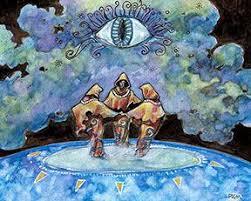
Scepticism - Destroyed
Materialism - Outed as mystical sophistry
Noumenal/phenomenal divide - Put to rest forever
Common Sense - Restored
Scepticism - Destroyed
Materialism - Outed as mystical sophistry
Noumenal/phenomenal divide - Put to rest forever
Common Sense - Restored

February 8, 2023
Berkeley's style of the dialogues is very turgid and british, he is certainly no Plato. The arguments themselves are good fun, the anti abstract concepts argument is actually very close to Wittgenstein's argument that there is no particular part of experience that is meaning a word. As for the arguments against external things, they have some force to them, although naturally the positive solution of swapping out unknowable matter for unknowable all powerful god is always disappointing. Loses a star for the shitty dialogues, also for some reason Philonous just comes across as a massive dick, which like, thats Berkeley's guy so I sort of got the vibe that he must have been a dick IRL.
May 22, 2020
Very readable, even now, for 18th-century philosophy. Berkeley's probably the most interesting of the early modern philosophers in terms of his ideas not really being at all close to how we look at the world today. Would really recommend if you're trying to get into philosophy without getting bogged down in jargon and overly academic language.

January 6, 2026
The dialogues were very good.

Read
February 12, 2026PROMISE DAY 🤞
"Principles of Human Knowledge: The Foundations of Immaterialism" by George Berkeley invites readers to question something most people never doubt: the existence of a solid, material world independent of the mind. Berkeley opens a radical philosophical path by asking us to examine our everyday experiences more closely. When you look at, touch, or taste an object, what exactly are you encountering? Is it a self-sustaining thing made of matter, or is it something inseparable from your act of perceiving it? Written in the early eighteenth century, Berkeley’s work challenges the dominant assumptions of his time and continues to unsettle modern readers by suggesting that reality itself is fundamentally mental rather than material.
Berkeley begins by identifying what he believes to be the root cause of philosophical confusion: the belief in abstract ideas. Many philosophers before him argued that the mind could form general ideas stripped of all particular features, such as color without any specific hue or shape without any determinate form. Berkeley argues that this ability is an illusion. Whenever we try to imagine something, we always imagine it as something specific. A triangle must have particular sides and angles; a color must be red, blue, or some other shade. According to Berkeley, abstract ideas are not genuine mental entities but convenient names we use to group similar experiences. Treating these linguistic shortcuts as real things leads philosophers into unnecessary skepticism and contradiction.
By rejecting abstract ideas, Berkeley aims to bring philosophy back to lived experience. Human knowledge, he argues, must be grounded in what can actually be perceived or imagined. Once philosophers assume they can think about existence apart from perception, they begin to believe in objects that exist independently of any mind. This move, Berkeley claims, is what gives rise to endless doubts about whether the world we experience corresponds to some hidden reality behind it. Clearing away these assumptions allows him to advance his central claim: that the objects of the world are nothing more than collections of ideas perceived by minds.
This insight is famously summarized in Berkeley’s phrase 'to be is to be perceived.' When we examine any ordinary object, such as an apple, we find only sensory qualities: color, taste, texture, smell, and shape. Each of these qualities exists only insofar as it is perceived. A color cannot exist without being seen, a sound cannot exist without being heard, and a pain cannot exist without being felt. Since objects are nothing over and above these qualities, Berkeley concludes that objects themselves cannot exist independently of perception. This does not mean that the world is unreal, but that its reality consists in being perceived.
Berkeley divides everything that exists into two basic categories. The first consists of ideas, which are passive and include all sensory experiences, thoughts, and images. Ideas do not cause anything; they are simply experienced. The second category consists of spirits, or minds, which are active and capable of perceiving, thinking, and willing. Human beings are spirits, as is God. What Berkeley rejects is the idea of a third category called matter, which is supposed to exist outside the mind and support the qualities we perceive. He argues that matter is an unnecessary and incoherent invention, since it can never be directly experienced or known.
One of Berkeley’s most effective arguments against material substance targets the distinction between primary and secondary qualities. Many philosophers accepted that qualities like color, taste, and smell might exist only in the mind, while insisting that qualities such as size, shape, and motion existed objectively in matter. Berkeley challenges this by pointing out that primary qualities are never perceived on their own. Shape is always seen with color or felt through touch, and size is always relative to the perceiver. A snowflake that appears tiny to a human may be enormous to a microscopic organism. If primary qualities vary with perception just as much as secondary ones, then they cannot belong to a mind-independent material object.
By collapsing the distinction between primary and secondary qualities, Berkeley brings the entire physical world within the realm of perception. Everything we call physical is, in fact, mental in nature. This raises an obvious concern: if objects exist only when perceived, do they vanish when no human is observing them? Berkeley answers this by appealing to God. Human minds perceive only intermittently, but God is an infinite spirit who perceives all things at all times. The continued existence and stability of the world are guaranteed by God’s constant perception of it.
In this view, the laws of nature are not mechanical forces acting on matter but consistent patterns in the ideas God presents to human minds. When we observe regular sequences, such as lightning followed by thunder, we are witnessing the orderly way in which God communicates experiences to us. Science, therefore, does not uncover hidden material causes but describes the predictable structure of divine communication. Far from undermining religion, Berkeley believes his philosophy makes God’s presence immediate and unavoidable, since the world itself becomes a direct expression of divine activity.
Berkeley also argues that his philosophy defeats skepticism rather than encouraging it. Skeptics claim that we can never know the real world, only our mental representations of it. Berkeley removes this gap by denying that there is any hidden material reality behind appearances. The apple you see and touch is the real apple; there is nothing more to it than the ideas you experience. Because there is no unknown material substrate, there is no reason to doubt the existence of the world you perceive. In this way, Berkeley believes he restores certainty to human knowledge and aligns philosophy more closely with common sense.
Despite the radical nature of his ideas, Berkeley insists that they make no difference to everyday life. Walls remain hard, fire remains hot, and careless actions still have consequences. His philosophy does not deny practical reality but reframes its underlying nature. What changes is how we understand our place in the world. Instead of seeing ourselves as small, conscious accidents in a vast material machine, we come to see consciousness itself as fundamental. The world becomes something that exists within and for minds, not something that exists independently of them.
In the end, "Principles of Human Knowledge: The Foundations of Immaterialism" presents a vision of reality that is both unsettling and deeply intimate. By rejecting matter and grounding existence in perception, Berkeley offers a world that is coherent, meaningful, and infused with divine presence. His philosophy challenges readers to trust their experiences, recognize the central role of the mind, and reconsider what it truly means for something to exist. Whether or not one ultimately accepts his conclusions, Berkeley’s work remains a powerful invitation to look more closely at the act of perceiving and to question the assumptions that quietly shape our understanding of reality.
"Principles of Human Knowledge: The Foundations of Immaterialism" by George Berkeley invites readers to question something most people never doubt: the existence of a solid, material world independent of the mind. Berkeley opens a radical philosophical path by asking us to examine our everyday experiences more closely. When you look at, touch, or taste an object, what exactly are you encountering? Is it a self-sustaining thing made of matter, or is it something inseparable from your act of perceiving it? Written in the early eighteenth century, Berkeley’s work challenges the dominant assumptions of his time and continues to unsettle modern readers by suggesting that reality itself is fundamentally mental rather than material.
Berkeley begins by identifying what he believes to be the root cause of philosophical confusion: the belief in abstract ideas. Many philosophers before him argued that the mind could form general ideas stripped of all particular features, such as color without any specific hue or shape without any determinate form. Berkeley argues that this ability is an illusion. Whenever we try to imagine something, we always imagine it as something specific. A triangle must have particular sides and angles; a color must be red, blue, or some other shade. According to Berkeley, abstract ideas are not genuine mental entities but convenient names we use to group similar experiences. Treating these linguistic shortcuts as real things leads philosophers into unnecessary skepticism and contradiction.
By rejecting abstract ideas, Berkeley aims to bring philosophy back to lived experience. Human knowledge, he argues, must be grounded in what can actually be perceived or imagined. Once philosophers assume they can think about existence apart from perception, they begin to believe in objects that exist independently of any mind. This move, Berkeley claims, is what gives rise to endless doubts about whether the world we experience corresponds to some hidden reality behind it. Clearing away these assumptions allows him to advance his central claim: that the objects of the world are nothing more than collections of ideas perceived by minds.
This insight is famously summarized in Berkeley’s phrase 'to be is to be perceived.' When we examine any ordinary object, such as an apple, we find only sensory qualities: color, taste, texture, smell, and shape. Each of these qualities exists only insofar as it is perceived. A color cannot exist without being seen, a sound cannot exist without being heard, and a pain cannot exist without being felt. Since objects are nothing over and above these qualities, Berkeley concludes that objects themselves cannot exist independently of perception. This does not mean that the world is unreal, but that its reality consists in being perceived.
Berkeley divides everything that exists into two basic categories. The first consists of ideas, which are passive and include all sensory experiences, thoughts, and images. Ideas do not cause anything; they are simply experienced. The second category consists of spirits, or minds, which are active and capable of perceiving, thinking, and willing. Human beings are spirits, as is God. What Berkeley rejects is the idea of a third category called matter, which is supposed to exist outside the mind and support the qualities we perceive. He argues that matter is an unnecessary and incoherent invention, since it can never be directly experienced or known.
One of Berkeley’s most effective arguments against material substance targets the distinction between primary and secondary qualities. Many philosophers accepted that qualities like color, taste, and smell might exist only in the mind, while insisting that qualities such as size, shape, and motion existed objectively in matter. Berkeley challenges this by pointing out that primary qualities are never perceived on their own. Shape is always seen with color or felt through touch, and size is always relative to the perceiver. A snowflake that appears tiny to a human may be enormous to a microscopic organism. If primary qualities vary with perception just as much as secondary ones, then they cannot belong to a mind-independent material object.
By collapsing the distinction between primary and secondary qualities, Berkeley brings the entire physical world within the realm of perception. Everything we call physical is, in fact, mental in nature. This raises an obvious concern: if objects exist only when perceived, do they vanish when no human is observing them? Berkeley answers this by appealing to God. Human minds perceive only intermittently, but God is an infinite spirit who perceives all things at all times. The continued existence and stability of the world are guaranteed by God’s constant perception of it.
In this view, the laws of nature are not mechanical forces acting on matter but consistent patterns in the ideas God presents to human minds. When we observe regular sequences, such as lightning followed by thunder, we are witnessing the orderly way in which God communicates experiences to us. Science, therefore, does not uncover hidden material causes but describes the predictable structure of divine communication. Far from undermining religion, Berkeley believes his philosophy makes God’s presence immediate and unavoidable, since the world itself becomes a direct expression of divine activity.
Berkeley also argues that his philosophy defeats skepticism rather than encouraging it. Skeptics claim that we can never know the real world, only our mental representations of it. Berkeley removes this gap by denying that there is any hidden material reality behind appearances. The apple you see and touch is the real apple; there is nothing more to it than the ideas you experience. Because there is no unknown material substrate, there is no reason to doubt the existence of the world you perceive. In this way, Berkeley believes he restores certainty to human knowledge and aligns philosophy more closely with common sense.
Despite the radical nature of his ideas, Berkeley insists that they make no difference to everyday life. Walls remain hard, fire remains hot, and careless actions still have consequences. His philosophy does not deny practical reality but reframes its underlying nature. What changes is how we understand our place in the world. Instead of seeing ourselves as small, conscious accidents in a vast material machine, we come to see consciousness itself as fundamental. The world becomes something that exists within and for minds, not something that exists independently of them.
In the end, "Principles of Human Knowledge: The Foundations of Immaterialism" presents a vision of reality that is both unsettling and deeply intimate. By rejecting matter and grounding existence in perception, Berkeley offers a world that is coherent, meaningful, and infused with divine presence. His philosophy challenges readers to trust their experiences, recognize the central role of the mind, and reconsider what it truly means for something to exist. Whether or not one ultimately accepts his conclusions, Berkeley’s work remains a powerful invitation to look more closely at the act of perceiving and to question the assumptions that quietly shape our understanding of reality.

August 17, 2008
Rarely have I read a text that made me want to read a previous book again, just to make sure I got it right. This one did. Throughout Berkeley attempts to refute Locke for his _An Essay Concerning Human Understanding_. However, from my reading of Locke it sounded like Berkeley argued for the same things as Locke. Perhaps he disagreed with Locke's writing style? Found it so grating that he had to write a treatise in his own voice? Maybe soon I'll have the time again to reread both.

November 28, 2013
It is important to understand that Berkeley does not actually reject the possibility of external world/ physical objects. What he does is mentioning the matter of importance. I mean, existence is an important matter of our knowledge and existence is firstly what my mind perceives. Since we cannot be sure of the material existence of things and since our mind perceives whole things without necessity of externality, this externality is totally unimportant.
February 6, 2016
Tanta coisa para não se chegar a lado nenhum. Lamento Berkeley, se te atribuisse um rating fora de contexto, seria certamente o de 5 em 5, mas como não existe isso de «fora de contexto». Digamos que tal coisa «implicaria contradição».

January 8, 2025
George Berkeley’s Principles of Human Knowledge (1710) advances a form of idealism often labeled subjective idealism, though pluralist idealism better captures its recognition of multiple beings—human, divine, and potentially others (e.g., angels, animals). Berkeley’s core claim is that reality consists of minds (or spirits) and their ideas, rejecting material substance as an unperceived, independent entity. My renewed interest in cosmology, particularly simulated universe hypotheses and alternative interpretations of quantum mechanics suggests updated mechanisms for Berkeley’s idealism. These frameworks align with his view that reality is mind-dependent, not just the collapse interpretation of quantum mechanics (e.g., Copenhagen) but compatible with relative-state interpretations like consistent histories, which can incorporate teleological/anthropic principles. However, Berkeley’s immaterialism—the denial of physical objects’ existence—can support a broader monist ontology, such as dual-aspect or neutral monism, where mind is an intrinsic property of substance, resonating with panpsychism or hylozoism.
Structure and Key Arguments
The Principles is structured as follows: an introduction critiquing abstract ideas, a rejection of the primary-secondary quality distinction and material substance, an account of ideas from sensation and reflection, a nominalist view of language and mathematics, responses to thirteen objections, applications to science and mathematics, and a concluding theodicy defending divine order.
Berkeley begins by rejecting abstract ideas—general concepts existing only in the mind, instantiated across particulars—as mere linguistic constructs (nominalism), aligning with Thomas Hobbes over John Locke’s conceptualism. He argues that properties belong to specific things, and universals are just names for shared characteristics. Abstract ideas result from the intellect combining or separating simple ideas into complex ones, but abstraction adds nothing to the idea itself, besides a relation of between ideas.
Berkeley’s epistemology builds on Locke’s empiricism, where knowledge derives from ideas of sensation (external perception) and reflection (internal awareness). Ideas are either simple or complexes of simples, processed by the mind into what is now called qualia—irreducible subjective experiences. Berkeley posits one substance: spirit (active, perceiving) or mind (passive, receiving ideas) which exist in God, angels, and humans in a pre-Darwinian order. He famously argues that “to be is to be perceived” (esse est percipi), denying unperceived material substance. Unlike Locke, who distinguished primary qualities (e.g., extension, solidity) as inherent to matter and secondary qualities (e.g., color, taste) as mind-dependent, Berkeley insists all qualities are particular or composited ideas, inseparable from perception.
Cosmological and Computational Mechanisms
Berkeley’s idealism finds modern resonance in speculative cosmology and computational physics. His description of mind—active (processing) and passive (storing)—parallels a Turing computer, with spirit akin to a CPU (read/write functions) and mind as RAM (storage). The Church-Turing thesis, which posits that any computable function can be simulated by a Turing machine, suggests a simulated universe where minds process reality as computational entities, although only God would be capable of infinite calculations. This aligns with simulated universe hypotheses, where reality is a computational construct, supporting Berkeley’s claim that existence depends on perception.
In quantum mechanics, Berkeley’s idealism strongly aligns with but does not require the Copenhagen interpretation’s observer-dependent collapse. The consistent histories approach, also called path integral or decoherent histories, takes all possible paths of a particle as contributing to a final observed outcome while their interference cancel out alternative histories, preserving Berkeley’s pluralism without collapsing wavefunctions. A much stronger view, aligning with reformed theology of fellow idealist Jonathan Edwards, called superdeterminism makes the entire history of a system dependent on initial conditions so only a divine mind with complete information can predict all outcomes, which appear probabilistic to us. These views can integrate teleological frameworks like omega point cosmology, where the universe evolves toward maximal complexity or divine convergence, aligning with Berkeley’s theistic realism. Such mechanisms suggest Berkeley’s idealism is not mere metaphysics but a framework compatible with modern science.
Science, Mathematics, and Theodicy
Berkeley’s computational view of mathematics—numbers as singular symbols, arithmetic as operations, algebra as relations, and geometry as spatial logic, again like Hobbes-prefigures modern computationalism. His idealism thus frames minds as computers simulating reality, with qualia as the perceptual output. In science, Berkeley’s rejection of materialism does not negate empirical inquiry but reinterprets phenomena as divine ideas, consistent with a computational universe.
Berkeley addresses thirteen objections, defending his idealism against charges of atheism, skepticism, and impracticality. He argues that his system preserves the immortality of the soul, as spirit is simple and undivided, inferred from its ideas. His theodicy, akin to Pope and Leibniz’s, defends a divinely ordered world balancing good and evil for human freedom and maximal goodness. Berkeley’s theistic realism, where God sustains reality’s order, supports his pluralism and counters atheism, skepticism, and materialism, which he discards as unnecessary. However, his reliance on God to sustain reality’s order creates an epistemological gap for strict rationalists, as other minds are indirectly inferred, subjecting him to phenomenalist critiques.
Critique and Monist Alternative Reinterpretation
Berkeley’s rejection of material substance stems from a critique of Locke’s epistemology: substance is inferred, not perceived-much like the division of primary and secondary qualities-and thus is a creature of the intellect, if not the intellect itself. Of Locke’s two substances mind is by definition capable of producing all the qualities we experience, and Berkeley’s critiques of Newtonian physics develop elsewhere remove the need for absolute space and atoms. However, his leap to immaterialism—denying physical objects entirely—is a consequence of his strict definition of matter as unthinking unperceived stuff. Critics, from Thomas Reid to Bertrand Russell, argue that epistemology (what we know) does not dictate ontology (what exists). Something may exist unperceived, even if known only through perception. Berkeley’s naive realism, where ideas reflect a divinely ordered nature, counters solipsism but struggles with the inference of other minds, as his empiricism limits direct knowledge to one’s own mind.
An immanent critique from later idealists (e.g., Hegel, Kant) labels Berkeley’s idealism “undialectical,” lacking reflection on how mind relates to its own experience. Berkeley’s reliance on the Cartesian cogito posits mind as a static substance, not a dynamic process, limiting its dialectical depth. David Hume’s phenomenalism and Ernst Mach’s positivism radicalized Berkeley’s ideas by rejecting substance altogether, while Kant’s transcendental idealism reframed mind as structuring experience.
More than immaterialism, Berkeley’s arguments can also support other non materialist kinds of monism, where matter and mind are aspects or modes of one substance. Dual-aspect monism, neutral monism, or panpsychism—where consciousness, or its proto element information, is intrinsic to all being—align with his view that matter is not independent of mind. Leibniz’s monadology, with monads as qualitative, perceiving units, offers a complementary model, where mind is the entelechy of a dominant monad, information processing qualia. This monist reading retains Berkeley’s pluralism and theism while grounding his idealism in contemporary frameworks.
Conclusion
Berkeley’s Principles remains a provocative defense of idealism, rejecting material substance for a mind-dependent reality. While his immaterialism is provocative, his arguments support a broadly monist ontology compatible with dual-aspect or neutral monism, panpsychism, or hylozoism which give consciousness an essential role. Modern cosmology—simulated universes, observer dependent quantum mechanics, and omega point teleology—provides credible mechanisms for his pluralism, framing minds as computational entities processing qualia in a divinely ordered reality. Berkeley’s computational and theistic insights make his idealism not only philosophically compelling but also scientifically relevant.
Structure and Key Arguments
The Principles is structured as follows: an introduction critiquing abstract ideas, a rejection of the primary-secondary quality distinction and material substance, an account of ideas from sensation and reflection, a nominalist view of language and mathematics, responses to thirteen objections, applications to science and mathematics, and a concluding theodicy defending divine order.
Berkeley begins by rejecting abstract ideas—general concepts existing only in the mind, instantiated across particulars—as mere linguistic constructs (nominalism), aligning with Thomas Hobbes over John Locke’s conceptualism. He argues that properties belong to specific things, and universals are just names for shared characteristics. Abstract ideas result from the intellect combining or separating simple ideas into complex ones, but abstraction adds nothing to the idea itself, besides a relation of between ideas.
Berkeley’s epistemology builds on Locke’s empiricism, where knowledge derives from ideas of sensation (external perception) and reflection (internal awareness). Ideas are either simple or complexes of simples, processed by the mind into what is now called qualia—irreducible subjective experiences. Berkeley posits one substance: spirit (active, perceiving) or mind (passive, receiving ideas) which exist in God, angels, and humans in a pre-Darwinian order. He famously argues that “to be is to be perceived” (esse est percipi), denying unperceived material substance. Unlike Locke, who distinguished primary qualities (e.g., extension, solidity) as inherent to matter and secondary qualities (e.g., color, taste) as mind-dependent, Berkeley insists all qualities are particular or composited ideas, inseparable from perception.
Cosmological and Computational Mechanisms
Berkeley’s idealism finds modern resonance in speculative cosmology and computational physics. His description of mind—active (processing) and passive (storing)—parallels a Turing computer, with spirit akin to a CPU (read/write functions) and mind as RAM (storage). The Church-Turing thesis, which posits that any computable function can be simulated by a Turing machine, suggests a simulated universe where minds process reality as computational entities, although only God would be capable of infinite calculations. This aligns with simulated universe hypotheses, where reality is a computational construct, supporting Berkeley’s claim that existence depends on perception.
In quantum mechanics, Berkeley’s idealism strongly aligns with but does not require the Copenhagen interpretation’s observer-dependent collapse. The consistent histories approach, also called path integral or decoherent histories, takes all possible paths of a particle as contributing to a final observed outcome while their interference cancel out alternative histories, preserving Berkeley’s pluralism without collapsing wavefunctions. A much stronger view, aligning with reformed theology of fellow idealist Jonathan Edwards, called superdeterminism makes the entire history of a system dependent on initial conditions so only a divine mind with complete information can predict all outcomes, which appear probabilistic to us. These views can integrate teleological frameworks like omega point cosmology, where the universe evolves toward maximal complexity or divine convergence, aligning with Berkeley’s theistic realism. Such mechanisms suggest Berkeley’s idealism is not mere metaphysics but a framework compatible with modern science.
Science, Mathematics, and Theodicy
Berkeley’s computational view of mathematics—numbers as singular symbols, arithmetic as operations, algebra as relations, and geometry as spatial logic, again like Hobbes-prefigures modern computationalism. His idealism thus frames minds as computers simulating reality, with qualia as the perceptual output. In science, Berkeley’s rejection of materialism does not negate empirical inquiry but reinterprets phenomena as divine ideas, consistent with a computational universe.
Berkeley addresses thirteen objections, defending his idealism against charges of atheism, skepticism, and impracticality. He argues that his system preserves the immortality of the soul, as spirit is simple and undivided, inferred from its ideas. His theodicy, akin to Pope and Leibniz’s, defends a divinely ordered world balancing good and evil for human freedom and maximal goodness. Berkeley’s theistic realism, where God sustains reality’s order, supports his pluralism and counters atheism, skepticism, and materialism, which he discards as unnecessary. However, his reliance on God to sustain reality’s order creates an epistemological gap for strict rationalists, as other minds are indirectly inferred, subjecting him to phenomenalist critiques.
Critique and Monist Alternative Reinterpretation
Berkeley’s rejection of material substance stems from a critique of Locke’s epistemology: substance is inferred, not perceived-much like the division of primary and secondary qualities-and thus is a creature of the intellect, if not the intellect itself. Of Locke’s two substances mind is by definition capable of producing all the qualities we experience, and Berkeley’s critiques of Newtonian physics develop elsewhere remove the need for absolute space and atoms. However, his leap to immaterialism—denying physical objects entirely—is a consequence of his strict definition of matter as unthinking unperceived stuff. Critics, from Thomas Reid to Bertrand Russell, argue that epistemology (what we know) does not dictate ontology (what exists). Something may exist unperceived, even if known only through perception. Berkeley’s naive realism, where ideas reflect a divinely ordered nature, counters solipsism but struggles with the inference of other minds, as his empiricism limits direct knowledge to one’s own mind.
An immanent critique from later idealists (e.g., Hegel, Kant) labels Berkeley’s idealism “undialectical,” lacking reflection on how mind relates to its own experience. Berkeley’s reliance on the Cartesian cogito posits mind as a static substance, not a dynamic process, limiting its dialectical depth. David Hume’s phenomenalism and Ernst Mach’s positivism radicalized Berkeley’s ideas by rejecting substance altogether, while Kant’s transcendental idealism reframed mind as structuring experience.
More than immaterialism, Berkeley’s arguments can also support other non materialist kinds of monism, where matter and mind are aspects or modes of one substance. Dual-aspect monism, neutral monism, or panpsychism—where consciousness, or its proto element information, is intrinsic to all being—align with his view that matter is not independent of mind. Leibniz’s monadology, with monads as qualitative, perceiving units, offers a complementary model, where mind is the entelechy of a dominant monad, information processing qualia. This monist reading retains Berkeley’s pluralism and theism while grounding his idealism in contemporary frameworks.
Conclusion
Berkeley’s Principles remains a provocative defense of idealism, rejecting material substance for a mind-dependent reality. While his immaterialism is provocative, his arguments support a broadly monist ontology compatible with dual-aspect or neutral monism, panpsychism, or hylozoism which give consciousness an essential role. Modern cosmology—simulated universes, observer dependent quantum mechanics, and omega point teleology—provides credible mechanisms for his pluralism, framing minds as computational entities processing qualia in a divinely ordered reality. Berkeley’s computational and theistic insights make his idealism not only philosophically compelling but also scientifically relevant.

March 11, 2017
Horribly wrong, shot through with logical impossibilities, based on flimsy premises and all around silly.
This dude tries, first off, to refute the concept of an abstract idea, which he thinks he does by saying that when we suppose we think of an abstract idea we really do think of a concrete idea, one which we then supposedly connect every single instance pertaining to the "abstract" (all sorts of triangles, for example, thus relate to a concrete image of some single mode of triangularity — this is called nominalism) but in doing this he merely shifts the abstract set of triangles (containing every triangle and none) from the name "triangles" to having some other name, be it "equilateral triangle" or what have you. Obviously this just renames the set of triangles itself while conserving the core abstract idea of a set underneath. In the words of the Donald Trump: Sad!
Then he tries to convince us that in fact there is no material reality underlying the sensations and ideas thereof, but rather that there is an almighty God that through his eternal and all-encompassing perception maintains the existence of everything. The only substance is the soul, or that which impressions are pressed upon, and this substance can only have affects by way of impressions which are effectively ideas. Of course, this fucking stupid thesis rests entirely on his premise of there being an almighty Christian benevolent God ready to uphold the universe of ideas through his gaze, if we collapse the God-function the whole system implodes in on itself. Now, let us suppose that we yield to his premise of God being the ultimate perceiver, then what? The logical conclusion is that there is literally no real reason to stay alive, since everything I experience are ideas impressed upon me by God, my wife, my posessions, the universe in its entirety, and I am the only real substance extant. — this means that I am already 100% in God, and there is no reason for me not to introduce the idea of my temple to an idea of a handgun and pulling the ideal trigger. But then again, this is impossible, since there is no material reality and thus I'm unable to die! I'm now stuck in some eternal limbo of undeath, forced to potentially relive every single idea of Gods making until the impossible end of ideal space-time.
I'm still unsure about some things: how can matter be non-existent if it is an idea impressed upon us by almighty God? Does that mean that the idea does not and can not exist? What does that mean for the existence of the almighty deity? What is an almighty deity that cannot create matter, that cannot even conceive of matter?
No, this volume is a bad joke. I strongly advise against reading this complete horseshit. It honestly kind of angers me that this is so celebrated on here and in academia. Fuck you, Berkeley, you bastard
This dude tries, first off, to refute the concept of an abstract idea, which he thinks he does by saying that when we suppose we think of an abstract idea we really do think of a concrete idea, one which we then supposedly connect every single instance pertaining to the "abstract" (all sorts of triangles, for example, thus relate to a concrete image of some single mode of triangularity — this is called nominalism) but in doing this he merely shifts the abstract set of triangles (containing every triangle and none) from the name "triangles" to having some other name, be it "equilateral triangle" or what have you. Obviously this just renames the set of triangles itself while conserving the core abstract idea of a set underneath. In the words of the Donald Trump: Sad!
Then he tries to convince us that in fact there is no material reality underlying the sensations and ideas thereof, but rather that there is an almighty God that through his eternal and all-encompassing perception maintains the existence of everything. The only substance is the soul, or that which impressions are pressed upon, and this substance can only have affects by way of impressions which are effectively ideas. Of course, this fucking stupid thesis rests entirely on his premise of there being an almighty Christian benevolent God ready to uphold the universe of ideas through his gaze, if we collapse the God-function the whole system implodes in on itself. Now, let us suppose that we yield to his premise of God being the ultimate perceiver, then what? The logical conclusion is that there is literally no real reason to stay alive, since everything I experience are ideas impressed upon me by God, my wife, my posessions, the universe in its entirety, and I am the only real substance extant. — this means that I am already 100% in God, and there is no reason for me not to introduce the idea of my temple to an idea of a handgun and pulling the ideal trigger. But then again, this is impossible, since there is no material reality and thus I'm unable to die! I'm now stuck in some eternal limbo of undeath, forced to potentially relive every single idea of Gods making until the impossible end of ideal space-time.
I'm still unsure about some things: how can matter be non-existent if it is an idea impressed upon us by almighty God? Does that mean that the idea does not and can not exist? What does that mean for the existence of the almighty deity? What is an almighty deity that cannot create matter, that cannot even conceive of matter?
No, this volume is a bad joke. I strongly advise against reading this complete horseshit. It honestly kind of angers me that this is so celebrated on here and in academia. Fuck you, Berkeley, you bastard

September 5, 2025
جرج بارکلی (۱۶۸۵-۱۷۵۳) معمولاً با فلسفۀ هیجانانگیز و قابل توجهاش، یعنی انکار و نفی مادّه، شناخته میشود. این فیلسوف و کشیش ایرلندی ضمن نفی همۀ موجودات مادّی مانند کوهها، رودها و انسانها، معتقد است آنچه را که فیلسوفان و مردم مادّه مینامند، ظاهر و نمودی خارج از ذهن و تصوّر انسان نیست. لذا تنها چیزی را که میتوانیم موجود بنامیم همین ادراک است (بارکلی، ۱۳۷۵: ۲۵-۶۸).
جرج بارکلی بااینکه به مانند وحدتِ وجودیان، وجودِ مادّی را نفی میکند، اما با افرادی مانند اسپینوزا در زاویه است؛ چراکه بارکلی خود را انسانی معتقد به خدا و پیرو دین مسیح میداند و اسپینوزا را فردی ملحد و شایستۀ تکفیر میشمرد (همان: ۱۱۲).
بارکلی نهتنها فلسفۀ خود را خلاف عقل نمیپندارد، بلکه معتقد است که عقیدهاش کاملاً عقلانی است و شایع بودن پذیرش موجودات مادّی، در میان فیلسوفان و مردم، در مخالفت با عقل سلیم است. او برای اثبات نظریۀ خویش به نوشتن دو کتاب «اصول علم انسانی» و «سه گفتوشنود» پرداخت و بااینکه در اثبات مدّعایش اقدام به توضیحات مختلفی کرد، اما درنهایت طی یک جمله علّت عدمِوجود اجرام آسمانی و اجسام زمینی را بداهت این امر برشمرد.
هیلاس: چه میگویی؟ آیا هیچچیز از این غریبتر و برخلاف عقل هست که بگوییم مادّه وجود ندارد؟
فیلونوس: هیلاس، آهستهتر، چه میگویی اگر ثابت شود که مخالفت تو با عقل سلیم شدیدتر است و بیشتر از من دچار تناقض و خلافگویی هستی (همان: ۱۲۵)؟ بعضی از حقایق چنان بدیهی است و قریب به ذهن که برای دریافت آنها فقط باید دیدگان را گشود. این حقیقت مهم نیز به نظر من ازجملۀ آنهاست که همۀ اجرام سماوی و جمیع اجسام زمینی و بالجمله تمام آنچه دستگاه عظیم عالَم از آنها ترکیب یافته است بیآنکه ذهنی وجود داشته باشد موجود نتوانند بود و وجود آنها عبارت از معلوم و مدرک شدن آنهاست (همان: ۲۵).
منبع:
_ بارکلی، جرج، ۱۳۷۵، رساله در اصول علم انسانی و سه گفتوشنود، ترجمه منوچهر بزرگمهر، تهران، مرکز نشر دانشگاهی.
December 26, 2018
For philosophy, this is fairly easy reading, with the dialogue being far more enjoyable than the Principles. My relative dislike of the book comes from its almost total preoccupation with metaphysical questions, which is obviously the point, but I have come to realize is not my favorite branch of philosophy. But within that purview it serves as a powerful critique of previous metaphysical systems, and managed to get me thinking about metaphysical questions more than pretty much any other metaphysical philosophy I've read thus far. His whole argument about "ideas only being about ideas" and the consequences that stem from it is interesting to follow and mull over. I don't find his overall philosophy compelling and uplifting the way I did with Spinoza because it seems so forced into a tightly Biblical worldview, but I like the concept of "subjective idealism." I need to read more about exactly how he misinterprets Locke and in what ways his philosophy is relevant today (this seemed less useful in a reading-backwards context than Locke). Some of the footnotes raised some interesting metaphysical ideas that I don't think I fully grasped that are probably worth studying more. Also enjoyed his preoccupation with definitions, further emphasizing their importance to me (though I think at times he is guilty of some of the semantic arbitrariness he confuses others of).

July 23, 2021
George Berkeley was a great writer and is worth reading for anyone interested in epistemology or early modern philosophy. It seems like there were fallacies in at least half of his arguments, but they are generally insightful and worth thinking through. He mainly used the hard problem of consciousness and challenges to the idea that primary and secondary qualities represent the things we think we perceive to argue for idealism.
His most central argument runs as follows:
What is inconceivable is impossible. We cannot conceive of an idea that we do not at the same time perceive. Therefore, no ideas can exist unperceived.
Or, to make the logic more clear:
All A is B. All B is C. Therefore all A is C.
All unperceived ideas are inconceivable. Anything inconceivable is impossible. Therefore all unperceived ideas are impossible.
Aside from equivocating on the word idea, the main problem I see here is that conceivability is not coextensive with possibility. Anything logically impossible (contradictory, like a square circle) is inconceivable. However, things can be inconceivable for other reasons as well, like not being understood, or in this case, because we can’t think of something without thinking of it.
His most central argument runs as follows:
What is inconceivable is impossible. We cannot conceive of an idea that we do not at the same time perceive. Therefore, no ideas can exist unperceived.
Or, to make the logic more clear:
All A is B. All B is C. Therefore all A is C.
All unperceived ideas are inconceivable. Anything inconceivable is impossible. Therefore all unperceived ideas are impossible.
Aside from equivocating on the word idea, the main problem I see here is that conceivability is not coextensive with possibility. Anything logically impossible (contradictory, like a square circle) is inconceivable. However, things can be inconceivable for other reasons as well, like not being understood, or in this case, because we can’t think of something without thinking of it.

November 19, 2023
Berkeley, while obviously honest and genuine (and very skilled in the writing of dialogues), commits several serious errors in his immaterialism. First, he defines sensible things as "what we perceive." This definition is extensional rather than intensional--in other words, it defines sensible things not according to what they are in themselves but by an accidental property. This sets his entire system off on the wrong foot, and helps him assume much about how the qualities of things depend on our perception, rather than really existing in the object. Second, his epistemology of persons is riddled with contradictions. While the Dialogues help address this, it is clear that we have no idea of spirit; or we have a notion (can't we have this with matter?), but that if our ideas have to resemble the things (he contradicts himself on this point) we cannot have an idea of spirit, but we must have some knowledge of it. This opens him to solipsism and lots of epistemological contradictions. Finally, he is an indirect realist. He thinks the only things we directly perceive are our ideas, and rightly observes that this means we don't know things, but only ideas. Instead of rejecting the coal pit of indirect realism, Berkeley jumps right in and asserts wild idealism.
August 13, 2025
Such. A. Good. Book. Berkeley is one of the earliest that I've read who systematically attacks how many apparently consistent philosophical difficulties (including problems regarding epistemological scepticism), are in actuality grounded in misuses of language; from which he enumerates, with remarkable brevity (the Principles itself including the introduction is less than 100 pages long) attacks on the notion of a mind-independent world, attacks on the notion of an abstract and independent material substance, really interesting criticisms of Isaac Newton's conception of space and time which seem to have anticipated some of Einstein's ideas concerning Relativity (did I mention this is done in less than 100 pages?) and more. Regardless of whether you agree with Berkeley's overall argument (his introduction of the universal perceiving being in God feels highly contentious even within the system he himself works out, and seems largely done to try to escape A. a lurking solipsism and B. to retain a necessity for God in the world) it's difficult to deny that his criticism of materialism is challenging to overcome to say the least. With respect to its brevity, its richness of argument, and its re-readability, I think this is up there with Plato's best.

May 23, 2026
“The brain therefore you speak of, being a sensible thing, exists only in the mind.”
Immaterialism is, at first blush, a wild speculative conceit. Borges in his short fiction dines on the absurd extenuations of world wholly conceived of sensible objects and ideas manifest through perception of mind and spirit.
The book in & of itself is well above what I’m comfortable discussing, tho I can understand Berkeley as a rationalist attempting to grapple w the natural sciences & concepts such as an infinitesimal calculus as well as attacking skepticism & atheism. I can understand Berkeley in conversation w the new philosophers such Descartes & esp. Locke, as well as a Newtonian scope of the world. Berkeley quaffs at the existence of matter & appeals to common sense, as in empiricism. I hope to read deeper & wider in my recovery, so hopefully I’ll familiarize w some of the overarching philosophical schools of thought as time goes on. Berkeley seems like a piece of work & yes I did read all about the medicinal benefits of drinking tar water, something which I can see being championed on the Joe Rogan experience.
A reading of these texts was greatly enriched by listening to both the precog & book discussion on the podcast the Partially Examined Life.
Immaterialism is, at first blush, a wild speculative conceit. Borges in his short fiction dines on the absurd extenuations of world wholly conceived of sensible objects and ideas manifest through perception of mind and spirit.
The book in & of itself is well above what I’m comfortable discussing, tho I can understand Berkeley as a rationalist attempting to grapple w the natural sciences & concepts such as an infinitesimal calculus as well as attacking skepticism & atheism. I can understand Berkeley in conversation w the new philosophers such Descartes & esp. Locke, as well as a Newtonian scope of the world. Berkeley quaffs at the existence of matter & appeals to common sense, as in empiricism. I hope to read deeper & wider in my recovery, so hopefully I’ll familiarize w some of the overarching philosophical schools of thought as time goes on. Berkeley seems like a piece of work & yes I did read all about the medicinal benefits of drinking tar water, something which I can see being championed on the Joe Rogan experience.
A reading of these texts was greatly enriched by listening to both the precog & book discussion on the podcast the Partially Examined Life.

March 18, 2025
3.5 stars.
Berkeley's whole system relies on God and minds being separate to ideas.
In fact, God is the foundation stone upon which minds produce ideas of reality, according to Berkeley.
I do not believe in an anthropomorphic male God. There is no credible evidence for such a God.
Therefore, the foundation stone of Berkeley's thinking is without credible evidence.
Without it, what does his thinking actually boil down to?
Our reality is our ideas of it.
I'd simply say the word 'meaning' is our collective idea. The word 'reality' is our collective idea. So are the words 'material substance', etc. etc.
So, I would say our idea of reality is our idea of reality. It is not absolute reality. It is a human reality.
This dichotomy sounds an awful lot like Kant (Noumena vs Phenomena) and Schopenhauer (Will vs Idea).
I am more in this mode of Kant/Schopenhauer philosophical thinking than Berkelean, but the Bishop helps get you to these places.
Berkeley's whole system relies on God and minds being separate to ideas.
In fact, God is the foundation stone upon which minds produce ideas of reality, according to Berkeley.
I do not believe in an anthropomorphic male God. There is no credible evidence for such a God.
Therefore, the foundation stone of Berkeley's thinking is without credible evidence.
Without it, what does his thinking actually boil down to?
Our reality is our ideas of it.
I'd simply say the word 'meaning' is our collective idea. The word 'reality' is our collective idea. So are the words 'material substance', etc. etc.
So, I would say our idea of reality is our idea of reality. It is not absolute reality. It is a human reality.
This dichotomy sounds an awful lot like Kant (Noumena vs Phenomena) and Schopenhauer (Will vs Idea).
I am more in this mode of Kant/Schopenhauer philosophical thinking than Berkelean, but the Bishop helps get you to these places.
Displaying 1 - 30 of 57 reviews