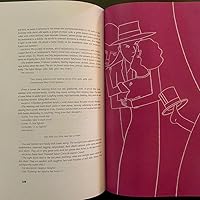
Mystification (+Biography and Bibliography) (5X8po Matte Cover Finish):Slid, if these be your "passados" and "montantes," I'll have none o' them.NED KNOWLES.The Baron Ritzner von Jung was a noble Hungarian family, every member of which (at least as far back into antiquity as any certain records extend) was more or less remarkable for talent of some description the majority for that species of grotesquerie in conception of which Tieck, a scion of the house, has given a vivid, although by no means the most vivid exemplifications. My acquaintance with Ritzner commenced at the magnificent Chateau Jung, into which a train of droll adventures, not to be made public, threw a place in his regard, and here, with somewhat more difficulty, a partial insight into his mental conformation. In later days this insight grew more clear, as the intimacy which had at first permitted it became more close; and when, after three years of the character of the Baron Ritzner von Jung.
The name Poe brings to mind images of murderers and madmen, premature burials, and mysterious women who return from the dead. His works have been in print since 1827 and include such literary classics as The Tell-Tale Heart, The Raven, and The Fall of the House of Usher. This versatile writer’s oeuvre includes short stories, poetry, a novel, a textbook, a book of scientific theory, and hundreds of essays and book reviews. He is widely acknowledged as the inventor of the modern detective story and an innovator in the science fiction genre, but he made his living as America’s first great literary critic and theoretician. Poe’s reputation today rests primarily on his tales of terror as well as on his haunting lyric poetry.
Just as the bizarre characters in Poe’s stories have captured the public imagination so too has Poe himself. He is seen as a morbid, mysterious figure lurking in the shadows of moonlit cemeteries or crumbling castles. This is the Poe of legend. But much of what we know about Poe is wrong, the product of a biography written by one of his enemies in an attempt to defame the author’s name.
The real Poe was born to traveling actors in Boston on January 19, 1809. Edgar was the second of three children. His other brother William Henry Leonard Poe would also become a poet before his early death, and Poe’s sister Rosalie Poe would grow up to teach penmanship at a Richmond girls’ school. Within three years of Poe’s birth both of his parents had died, and he was taken in by the wealthy tobacco merchant John Allan and his wife Frances Valentine Allan in Richmond, Virginia while Poe’s siblings went to live with other families. Mr. Allan would rear Poe to be a businessman and a Virginia gentleman, but Poe had dreams of being a writer in emulation of his childhood hero the British poet Lord Byron. Early poetic verses found written in a young Poe’s handwriting on the backs of Allan’s ledger sheets reveal how little interest Poe had in the tobacco business.
La historia se centra en el tema de los duelos que aun se llevaban a cabo en la época. En este caso, el barón Von Jung tiene una disputa personal con un tal Hermann que debería acabar en un duelo. El barón se las ingenia para engañar a su contrincante de una manera bastante ingeniosa.
-------------------------
The story focuses on the theme of the duels that still took place at the time. In this case, Baron Von Jung has a personal dispute with a certain Hermann that is supposed to end in a duel. The baron manages to trick his opponent in a rather ingenious way.
It’s so rare for me not to love a Poe story, but it does happen. “Mystification” is so focused on a satirical twist that the build can feel taxing to read. The story focuses on the Baron Von Jung and how amazing he is. All of the other university students are in awe of him. One night, the Baron and a group of friends, including the narrator, are discussing things when one of them starts to talk about duels. Poe did not approve of duels and wrote some satirical pieces about it and this is one of them. The story continues with the narrator as the go-between for the Baron and the friend who loves duels. The Baron then teaches the other man a lesson through a certain coded text. It’s not really the most entertaining piece and the twist isn’t so amazing to make a reader think long and hard about it.
In the past 3-4 years whatever I have read of Mr. Poe, he has always left me high in my literary spirits. He never failed to impress me in a unique way, I have enjoyed all of his ghastly, grimly stuff. His art of storytelling and that poetic nudge in his tales I have always appreciated.
Now here comes the exception. For the first time, I dislike something from his pen. This one. Yes. It was not impressive. Indeed I found it bad. He tried to strike a pose through some pompous language and use of pretentious words and I found it badly puffed up.
So My first bad experience with Poe! I am not sure if Poe was doing some experiment with his style or language in this tale!
3.5 Stars rounded up to 4 Stars. This is an antidotal tale also known as Von Jung ridiculing duels. This comic short story also depicts Poe's interest in a person's mirror image or doppelgänger. Mystification is however, the first work in which Poe displays an interest in secret writing(cryptography). The story tells of the Baron Ritzner Von Jung who teaches a pompous and sneering duelist a lesson by using his pseudo-learning (sham, pretentious or bogus learning) against him. "An old joke on the theme of a man’s reflection in a mirror may have suggested the action of Poe’s tale. It is quoted in a catalogue issued by the bookseller Guido Bruno from a jest book called Democritus, or the Laughing Philosopher, published in London, 1770: An Irishman, having resolved on suicide, caught sight of himself in a large mirror and discharged his pistol at the image. His landlady cried out, 'I am ruined and undone forever! And so am I,' says Paddy, 'for I have just now killed the handsomest man in the world.' " https://www.eapoe.org/works/mabbott/t...
I suppose this first-person narrative is called 'Mystification' because one of the main characters, the Baron Ritzner Von Jung, acted so mysteriously that it piqued everybody's curiosity as to what he was really like. Everyone at the narrator's university becomes excited when they find out that he will be visiting. After he has been staying there for a while, Von Jung gets into a heated argument at a party with a man named Johan Hermann about the 'duello,' which is the study of the rules and art of dueling. After the party, they continue the debate with a series of letters, using the narrator as a medium. It turns out that Hermann didn't know much about the topic at all and was really just kind of being a blow-hard, so it proves what lengths some people will go to to show that they are smarter than others.
If this doesn't sound interesting to you, it's because it isn't. This is one of the few books on here that has an average rating of less than three stars, so it's good to know that I wasn't the only one who disliked it. It didn't have the darkness and creepiness that I expect from an Edgar Allan Poe horror story. The only redeeming quality is that it had the same eloquent prose that I have come to admire in all of Poe's tales. He's a great author, and I've given him some good reviews, but it's definitely hit-or-miss.
A story about a couple of boring duds. During this quarantine, I wanted to brush up on my literature and read a couple different author’s complete works, but lately I’ve been regretting reading Poe’s entire works. His dark and ghastly short stories seem to be far and few between.
Lu dans le recueil "La Chute de la Maison Usher et autres histoires extraordinaires" des éditions RBA coleccionables.
Dix-huitième nouvelle du recueil. Parfois, il y a des nouvelles qui sont surprenantes. Dans celle-là, Poe donne son avis, dans un registre clairement ironique, sur les duels en racontant comment deux académiciens s'insultent... c'est trop bizarre. Ça semble être l'une des nouvelles les moins appréciées de l'auteur mais en ce qui me concerne, au moins elle est courte et parfois amusante.
No sé por qué tan mala crítica. A mí me encanta como todas las historias de Poe. Es ingeniosa, divertida y se puede reflexionar mucho sobre la naturaleza humana con ella.
I like this tale for the writing style. It isn't always what the story is about, sometimes Poe writes a silly tale. The grammar is what sticks out sometimes.
Listening to the audiobook at work while cleaning, read by Marcus Aurelius Green. First off Audiobooks, the Narrator is everything, and the whole time I felt like I was listening to a weird combination of Snidely Whiplash and Tim Curry's Wadworth from Clue. (That sounds awesome, but it really wasn't, especially since it was tuned to Snidely for most of it.)
The Baron invites all his students to his estate "chambers" for a get together where they talk about Dueling. One student (I already forgot his name) starts ranting about his love for duels, and the baron plays a trick on him so to speak.
Someone else mentioned the idea of Doppelgängers or false copies of themselves, the baron's joke implies that by shattering the mans reflection in the mirror that it's like letting the man see himself "lose the duel" so to speak.
The rest of the book is a series of what could only be equivalent to what we have today called "Tweet/Twitter wars", only it was all penned, and more polite. So instead of the short tweet "I hate you", it was: "Dear sir, you art very unkind and the likes of our company shall not permit you any sort of attendance ever. Sincerest apologies and condolences, Count Van Baron Somethingorother"
So another bad story from Edgar Allan Poem, so here again we are talking about a bad book from Edgar Allan Poe.
I suppose this first-person narrative is called ‘Mystification’ because one of the main characters but I sort of got a shady vibe from it which made the whole story to a bad story.
The writing style was again pretty decent but not the best. The writing style wasn’t good nor bad.
It wasn’t that interesting as everyone on internet claim it to be. Which is why I dont read most of the reviews online. Because they almost always disappoint me when I finally pick up the book.
In this short story by Poe we read about one Baron Ritzner Von Jung. The story takes place in Germany while the narrator was at university with Baron Jung. And these are some of the exploits that take place. I imagine that some of these might be unheard of in this period of time but measured by todays standard they are simply not comparable. However this might have not been the case had certain elements been added to the story but here again Poe brings the reader right to the very edge and abruptly stops. In my opinion this is simply a another example of a great idea for a story yet lacking in its over all execution.
Mystification (Von Jung, the Mystific) is one of the Edgar Allan Poe stories that did not work for me. Although there was the potential for intrigue on a larger scale, the way in which this story played out made it rather dull. In fact, it was one of those cases where things were a bit too heavy-handed, which made it a bit too obvious where things were heading in the end. If you’re interested in the satirical twist, there are elements that will engage. However, if you’re reading the story out of curiosity, the overall feels a bit too much.
Overall, in my quest to read Poe’s entire work, Mystification is a story that did not work for me.
El barón Ritzner von Jung, un caballero de veintiún años perteneciente a una noble familia húngara, hace su arribo a una prestigiosa universidad alemana donde resalta por su genio, su elocuencia y seguridad sobre sí mismo.
En una de las tantas juergas propias del ambiente universitario, un compañero se atreve a desacreditar públicamente el discurso del barón, quien se toma esta imprudencia como una afrenta personal, la cual resolverá desde su manejo audaz del lenguaje.
I will review this one with a quote from the story. ‘The language was ingeniously framed so as to present to the ear all outward signs of intelligibility, and even of profundity, while in fact not a shadow of meaning existed.’ I was unable to gather the least particle of meaning from this story. It was about some people taking about duels.
Cute little story about Poe's feelings on Dualism and pompous jerks. Poe's interest in cryptography is also evident in this story as well as many others. Even if the point or plot of this story doesn't interest you, Poe's writing style always gets me, and I enjoy it. Not my favorite of his short stories, but worth the read.
Mystification Another very short one by Edgar Allan Poe But do not let the title mislead you... It is not as good as his other works, a little bit of mystery maybe trying to be fun but not that great :/
I think some readers miss the point of "Mystification", in my opinion the author is merely trying to demonstrate that ppl. no matter how well educated will believe anything if it is spoken with eloquence. One can disguise nonsense and foolishness if it is delivered with great articulation.
I think I know a fair amount about satire and satire never revealed as satire maybe some of the most annoying stories that exist. And this may be the case with this story who a reviewer tells us shows Poe's opposition to dueling. OK... not really the best example of Poe IMO.
Poe's poetic language really is at its strongest in a rather hysterically conniving college kid "I'm better than you" dick swinging. It's kind of hilarious in an underhanded kind of way.