A century has passed since the outbreak of World War I, yet as military historian Hew Strachan argues in this brilliant and authoritative new book, the legacy of the "war to end all wars" is with us still. The First World War was a truly global conflict from the start, with many of the most decisive battles fought in or directly affecting the Balkans, Africa, and the Ottoman Empire. Even more than World War II, the First World War continues to shape the politics and international relations of our world. Strachan has done a masterful job of reexamining the causes, the major campaigns, and the consequences of the First World War, compressing a lifetime of knowledge into a single definitive volume tailored for the general reader. Written in crisp, compelling prose, The First World War re-creates this world-altering conflict both on and off the battlefield-the clash of ideologies between the colonial powers at the center of the war, the social and economic unrest that swept Europe both before and after, the military strategies employed with stunning success and tragic failure in the various theaters of war, the terms of peace and why it didn't last.
Hew Strachan was born and brought up in Edinburgh, and was elected a Fellow of the Royal Society of Edinburgh 2003 and awarded an Hon. D.Univ., (Paisley) 2005. He is also Life Fellow of Corpus Christi College, Cambridge, where he was successively Research Fellow, Admissions Tutor and Senior Tutor, 1975-92. From 1992 to 2001 he was Professor of Modern History at the University of Glasgow, and from 1996 to 2001 Director of the Scottish Centre for War Studies.
With the centennial of the onset of World War 1 upon us, I sought and found in this 2004 book a good choice for a one-volume history of the whole shebang. It is highly compressed into 340 pages, but is not wanting for covering the war in its world-wide aspect. With such a scope, we lose out on in-depth character assessment of major figures, but there are too many of them anyway. What we get instead is an effective framework of interpretation for hanging a lot of the facts and factions and sites of conflict. Each of ten chapters covers a theme, and in the process the reader is led to the perspective that for many of the participants the war was meaningful and worked to achieve the aims of big ideas.
I appreciated that his credentials are sound as an Oxford historian involved in work in a massive trilogy on the war, the first volume of which “To Arms” came out in 2001. This more accessible synthesis created as a companion to a TV documentary, which I was pleasantly surprised to be available on YouTube(Intro; Chapt. 1). I was also reassured with a favorable reaction to the book in a New Yorker piece by Adam Gopnik:
Strachan is no drudge; he has a point to make and a message to deliver. His desire is to take the cliché image of the war, particularly the English one—the war as Monty Python massacre, with idiot Graham Chapman generals sending gormless Michael Palin soldiers to a senseless death—and replace it with something more like the image that Americans have of our Civil War: a horrible, hard slog, certainly, but fought that way because no other was available, and fought for a cause in itself essentially good.
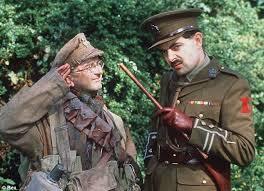
I was drawn in the first paragraph of Strachan’s preface: In Britain popular interest in the First World War runs at levels that surprise almost all other nations, with the possible exception of France. The concluding series of Blackadder, the enormously successful BBC satirization of the history of England, has its heroes in the trenches. Its humor assumed an audience familiar with chateau-bound generals, goofy staff officers and cynical but long-suffering infantrymen. The notion that British soldiers were ‘lions led by donkeys’ continues to provoke a debate that has not lost its passion, even if it is now devoid of originality. For a war that was global, it is a massively restricted vision: a conflict measured in years of mud along a narrow corridor of Flanders and northern France. It knows nothing of the Italian Alps or of the Masurian lakes; it bypasses the continents of Africa and Asia; it forgets the war’s other participants—diplomats and sailors, politicians and laborers, women and children.
I am glad to get a broader foundation, even if it tarnishes my impulse to judge that war is never worth its cost. I have long been under the sway of the image of the total waste and futility of the war as dominated by the story of the slaughter of the Somme, Verdun, and Passchendaele and led to hate the cold blindness of generals like Douglas Haig. This has been reinforced by accounts written in the 20’s such as Remarque’s “All Quiet on the Western Front” and Robert Grave’s memoir “Goodbye to All That”, as well Faulks’ recent novel “Birdsong”. The dreadful defensive stalemate at the trenches was unfortunately what the generals faced, and the decisions to risk so many lives on a breakout against machine guns were transformed to the war of attrition and industrial exhaustion. Though Strachan doesn’t spend much time second guessing the generals, he doesn’t go quite as far as Gopnik in excusing them: “If a steering committee of Grant, Montgomery, Napoleon, and Agamemnon had been convened to lead the allies, the result would have been about the same.”
With such losses, why weren’t there more voices to say “It’s not worth it; compromise in a negotiated peace”? Some seemed to think and believe that the massive loss of human life demanded total defeat of the enemy to make their loss worth something. Others would point to German and French intransigence over Alsace-Lorraine as the key barrier to Wilson’s 14 points for peace. Still others consider perpetuation of the war as bound to early visions of key leaders like Churchill on the spoils of empires that later got divided so richly in the Treaty of Versaille. I don’t get a clear answer on this question from Strachan, or else no dominant reason stands up as responsible for the tragic duration of four long years. He does make a point that only because the enough soldiers believed in the war and did not to mutiny was the war able to continue as long as it did.
Strachan does put a dent in my comfort in the notion of inevitability of this war through reading that stopped on Tuchman’s “Guns of August” (1962). She implanted in my brain a picture of bumbling but warmongering empires which were so trapped by their nest of unstable alliances that of the assassination of the Archduke in Sarajevo represented effectively a random spark to start the conflagration. Yes, a lot of leaders were already planning for war, but Strachan emphasizes how the war the Germans and Austrians wanted in 1914 was a restricted one to settle the fate of Serbia and that they were genuinely surprised over Russia’s mobilization in response. And the apparent roll-out of the invasion of France according to the 1905 Schlieffen Plan was not significant as an inflexible script for the Germans in Strachan’s view.
Strachan also dispels the notion that the onset of the war was driven in a meaningful way by imperial ambitions of Germany, Britain, and France. However, for many of the other participants brought in through the extended conflicts of the Austria-Hungary and Ottoman Empires, the territorial integrity as nations and motivations for expansion did serve as a prime motivator. I was able to learn a lot more about the fates in the war of Serbia, Poland, Ukraine, Bulgaria, Romania, Italy, and Greece and come to understand some of the causes and consequences of fighting taking place in Turkey, in Mesopotamia and Palestine in the Middle East, and at multiple sites in Africa. Obviously, just broad strokes, but vivid nonetheless.
No matter how foolish the concept that this as “the war to end all wars”, the prospects for significant consequences did indeed lead to meaningful consequences: This is of course the biggest paradox in our understanding of the war. On the one had it was an unnecessary war fought in a manner that defied common sense, but on the other it was the war that shaped the world in which we still live. … The First World War broke the empires of Germany, Russia, Austria-Hungry, and Turkey. It triggered the Russian Revolution and provided the bedrock for the Soviet Union; it forced a reluctant United States on to the world stage and revivified liberalism. On Europe’s edge, it provided a temporary but not a long-term solution to the ambitions of the Balkan nations. Outside Europe it laid the seeds for the conflict in the Middle East. In short it shaped not just Europe but the world in the twentieth century. It was emphatically not a war without meaning or purpose. … Within Europe, Poland, Czechoslovakia, Hungary, Yugoslavia, Finland, and Lithuania had all achieved independence and a measure of definition before Woodrow Wilson even landed at Brest. …In Central and Eastern Europe war had effected change, and for those who sought such changes it continued to do so. Indeed, the United States’ own decision to intervene was confirmation of the same point. War could work.
In a 2013 interview, Strachan warned planners of the centennial events that the commemoration was in danger of becoming sterile and boring. He calls for more than pity over a meaningless tragedy, and promotes discussion and education on a broader scope about the war.
Strachan gets his wish on more debate about the Great War when the first broadside of this centennial year was fired by British Education Secretary Michael Gove in the The Daily Mail in January 2014. Titles alone tell a lot: --Gove: Why does the Left insist on belittling true British heroes?” --Editor: Michael Gove blasts 'Blackadder myths' about the First World War spread by television sit-coms and left-wing academics • Education Secretary says war is represented as a 'misbegotten shambles' • But he claims that it was in fact a 'just war' to combat German aggression”
--Actor (in The Guardian): Sir Tony Robinson hits back at Michael Gove's first world war comments” • Actor who played Baldrick says Gove is irresponsible for saying Blackadder is leftwing and paints war as 'misbegotten shambles' --Blogger (in History Extra): Is Blackadder bad for First World War history? --Columnist (in Huffington Post): Michael Gove attacked For 'Blackadder' comments on 'Left-wing' whitewash of WW1 history
You can see for yourself the punch and affront and antidote to insanity in the parodies referred to: --Blackadder: Good Luck Everyone --Monty Python: Ypres 1914 skit
دوستانِ گرانقدر، در این ریویو میخواهم چکیده ای از چگونگیِ شکل گیریِ جنگِ جهانیِ اول را برایتان بنویسم.. شاید برایِ بسیاری از دوستان این پرسش پیش آمده باشد که به راستی دلیلِ این جنگ و این همه کشتار چه بوده است! و جنگ از کجا و چگونه آغاز گشته است ---------------------------------------------- جنگ جهانی اول، در سالِ 1914 آغاز شد و نزدیک به پنج سال به طول انجامید.. در جنگِ جهانیِ اول، 27 کشور در حالِ نبرد بودند و نزدیک به 16میلیون تن، در این نبردِ خونین جان باختند، که تلفاتِ روسیه، بیش از دیگر کشورها بود لازم است بدانید، پیشرفتِ دانش و پدید آمدنِ پلهایِ ارتباطی در پایانِ سدهٔ هجدهم و رفت و آمد دانشجویان و استادان به دیگر کشورها، سبب شده بود تا جوی از صلح و آرامش در سراسرِ اروپایِ غربی و آمریکا ایجاد شود و کمتر کسی تصور میکرد، این آرامشِ پیش از طوفان باشد پس از سالِ 1905، انگلستان، فرانسه و روسیه، از یکسو .. و آلمان و اتریشِ بزرگ و ایتالیا، از سویِ دیگر، با یکدیگر متحد شدند کشورهایِ بزرگ، نگران این بودند، که در این آرامش ممکن است هریک ساختِ سلاح و تجهیز کردنِ کشورِ خویش را آغاز کرده باشند، بنابراین به شکلی جنون آمیز به فکرِ ساختِ سلاح های مختلف و ایجاد اتحاد و تیمهایِ گوناگون افتادند فرانسه، به سببِ سیاستهایِ اشتباهِ بیسمارک در نبردِ با پروس، که به شکستِ فرانسه منجر شده بود، مدتِ بیست سال بود که تنها و وامانده از همه جا، از بازی سیاستِ بزرگانِ دنیا، دور مانده بود.. بنابراین اتحاد با انگلستان و روسیه، برایش نوید بخشِ بازگشت به قدرت بود اختلافِ زبانها و نژادها در اتریش و کشورهایِ بالکان، اغتشاشی بزرگ به وجود آورد.. یونان، صربستان، بلغارستان و رومانی، با یکدیگر جنگ و درگیری هایِ زیادی پیدا کردند.. در این شرایط بود که حزبی به اصطلاح ناسیونالیستی و عجیب، به نامِ "پان-اسلاویسم" در کشورهایِ بالکان که تابعِ اتریش بودند، به راه افتاد... در این میان، روسها نیز دست به دستِ اسلاوها داده و از آنها پشتیبانی کردند تا به اهدافِ شومِ استعمارگرانهٔ خویش دست یابند.. این حزبِ پان-اسلاویسم، در همه جا بر علیهِ نژادِ "توتُن" تبلیغ میکرد و در مردم، حسِ نژادپرستیِ ناآگاهانه ایجاد کرده بود و سیستمداران و اندیشمندانِ آلمانی نیز سعی بر این داشتند تا مردم را نسبت به خطرِ پان-اسلاویسم، آگاه کنند.. خلاصه اختلافاتِ بالکان یکی از دلایلِ اصلی برایِ آغازِ جنگ جهانی اول بود... در سالِ 1909 میلادی، بوسنی و هرزگوین، ضمیمهٔ کشورِ اتریش شد و این موضوع سببِ ایجادِ خشم در صربها گردید، چراکه آنها برایِ تشکیلِ صربستانی بزرگ، نیازِ به تمامیِ ایالتها همچون بوسنی و هرزگوین داشتند... در سالِ 1914 <آرشیدوک فرانسیس> ولیعهدِ اتریش و همسرش، در سارایوو، مرکزِ بوسنی، به دستِ یک صربستانیِ متعصب و بیخرد، به قتل رسیدند... و این جرقه ای بود برایِ شعله ور شدنِ آتشِ جنگی جهانی و سوزاننده اتریش، برایِ انتقام به صربستان اعلامِ جنگ کرد.. از سویِ دیگر، روسیه که نه سرِ پیاز بود و نه تهِ پیاز، برایِ حمایت از اسلاوها و از ترسِ آنکه مبادا اتریش بیش از این نیرومند شود، نیروهایش را به سویِ صربستان رهسپار کرد و تزار، بسیجِ عمومی اعلام کرد و روسها را برایِ جنگی بزرگ آماده ساخت.. این کار سبب شد تا آلمان نیز برایِ حمایت از متحدِ خویش، یعنی اتریش، واردِ عمل شود... آلمان برایِ مقابله با روسیه، تصمیم گرفت تا به فرانسه حمله کند ، تا با شکستِ فرانسه، راهش به سویِ روسیه بازگردد.. برایِ رسیدن به فرانسه، سپاه آلمان باید از بلژیک گذر میکرد و گذر از بلژیک، یعنی شکستِ توافق میانِ آلمان و انگلستان... بنابراین، بریتانیا نیز علیهِ آلمانها اعلام جنگ نمود و اینگونه عملاً جنگِ جهانی که بی سابقه بود، آغاز گشته بود و این تازه اولِ کار بود در جبههٔ غربی، آلمانها، فرانسویان را تار و مار کرده بودند و فرانسه در محاصره مانده بود، ولی آنقدر محاصره طولانی شد تا آلمان کمی عقب کشید.. جنگِ اصلی با توپخانه ها، تانکها و مسلسلهایِ درون سنگرها انجام میگرفت در جبههٔ شرقی، روسها تا لهستان و پروسِ شرقی پیش روی کردند، ولی در برابرِ سپاهِ منظمِ آلمانها، به سختی شکست خوردند ... در اتریش، روسها پیش رویِ زیادی داشتند، ولی پیش از پیروزی، به یکباره آلمان به یاری اتریش شتافت و بیش از یک میلیون سربازِ روسی توسطِ آلمانها و اتریشی ها تار و مار شدند.. اینگونه روسیه دیگر تهدیدِ جدی برایِ آنها به شمار نمی آمد در این میان، نبردِ میانِ اتریش و صربستان به درازا کشید و مقاومتِ صربها زیاد بود.. بنابراین آلمان با تورکانِ عثمانی وارد مذاکره شد و تورکها نیز واردِ جنگ شدند و برایِ کمک به اتریشی ها، به سویِ صربستان لشکرکشی کردند.. بلغارستان نیز با آلمان متحد شد و همگی به سویِ صربها یورش بردند و آنجا را تسخیر نمودند ایتالیا با آنکه در آغاز با کشورهایِ مرکزی یا همان متحدین بود، ولی برایِ وعده ای که بابتِ پیوستنِ "ایتالیا ایوردانتا" یا همان ایالتهایِ ایتالیایی زبان، به سرزمینش، از متفقین گرفت، با متفقین متحد شد و ورودش به جنگ را اعلام کرد.. ولی از آنجایی که ایتالیا سپاهِ نیرومندی نداشت، تأثیری بر جنگِ جهانی نگذاشت، جز آنکه سبب شد تا برخی از سپاهیانِ اتریشی به هوایِ آنها، مشغولِ مراقبت از مرزِ ایتالیا شده و اینگونه از جنگ خارج شدند ناوگانِ دریاییِ انگلستان بسیار نیرومند بود و توانست ناوگانِ آلمان را از کار بیاندازد.. ولی آلمانها بیکار ننشسته و زیردریایی هایِ پیشرفتهٔ خود را واردِ کارزار کردند و کشتی های بسیاری از متفقین را نابود ساختند و راهِ رسیدنِ کالا و موادِ غذایی به انگلستان را نیز مسدود ساختند دیگر همه چیز برایِ متفقین از دست رفته بود.. انگلستان با هزینه های تبلیغاتیِ بسیار در آمریکا، تلاش نمود تا ذهنِ مردم و دولتِ آمریکا را بر ضدِ آلمانی ها بشوراند.. و البته در اینکار و تحریفِ اخبار، پیروز شد و آمریکا نیز بر علیهِ آلمان اعلامِ جنگ نمود .. ورودِ آمریکا به جنگِ یعنی تزریقِ سلاح و سربازانِ تازه نفس به جنگِ جهانی در سالِ 1917 به اندازه ای جنگ بر روسها و اقتصادِ آنها فشار آورد که مردمِ تحملشان تمام شد و انقلاب کردند و دولتِ تزار، برکنار گردید... لنین و تروتسکی که از حزب بلشویکها بودند، رهبری روسیه را بر عهده گرفتند و با آلمانها صلح کرده و از جنگ کناره گیری نمودند... این فرصت سبب شد تا آلمان، تمامِ نیرویش را متمرکز بر جنگ با انگلستان و فرانسه و آمریکا نماید.. این حملات از سویِ آلمان سبب شد تا در مدتِ کوتاهی، یک میلیون سرباز از متفقین کشته شوند و البته خسارتهای مالی و جانی بسیاری متوجهِ آلمان و اتریش و مجارستان شد شکستِ تورکهایِ عثمانی و بی کفایت، سبب شد تا از هر سو راه برایِ یورش به آلمان و مجارستان و اتریش باز باشد.. البته آلمانی ها همچنان مقاومت میکردند.. جنگِ جهانی اول، جنگی فرسایشی بود که تنها کُشت و کشتارِ انسانها را در بر داشت و هیچیک از طرفین نتوانست خاکِ طرفِ دیگر را اشغال کند... فشارِ جنگ و گرانی و نبودِ کالا و موادِ غذایی، نارضایتیِ مردمِ دنیا را در بر داشت و در سالِ 1918 متفقین و کشورهایِ مرکزی، تصمیم گرفتند تا جنگ را به پایان برسانند... دوستانِ من، جنگِ جهانی اول، نه تنها نقشهٔ این کرهٔ خاکی و نامِ کشورها و مرزهای آنها را تغییر داد، بلکه تغییراتِ اجتماعی و سیاسیِ فراوانی به وجود آورد... پس از جنگ جهانی، بسیاری از کشورهایی که دارایِ نظامِ پادشاهی بودند، به یکباره سیستمِ حکومتیِ آنها از هم پاشید و بسیاری از این حکومتها تبدیل به جمهوری شد... روسیه، آلمان، اتریش، یوگوسلاوی، لهستان، مجارستان، چکوسلواکی، ترکیه و چندین کشور دیگر، نظام پادشاهی و امپراطوری خود را از دست دادند و دارای مجلس و سیستمِ جمهوری شدند پس از جلساتِ بسیار و نشستهای اتحادیه هایِ اروپایی و آمریکایی، متفقین تصمیم گرفتند تا غرامتهایِ سنگینِ چند بیلیون دلاری از آلمان بگیرند و صنعت و اقتصادِ آلمان را تکه تکه کردند و انگلیس و فرانسه و آمریکا، هریک همچون کفتار تکه ای از آلمان را جدا کردند.. با آنکه با توضیحاتی که دادم، در جنگِ جهانی اول، همهٔ کشورها نقش داشتند و نباید کاسه کوزه ها بر سرِ آلمان خراب میشد.. مردمِ یک سرزمین نباید تاوانِ تصمیمهایِ شخصی به نامِ قیصرِ آلمان را بدهند... مالیاتهای سنگین بر مردم گذاشته شد تا جریمهٔ جنگی را از جیبِ مردمِ آلمانی و بیچاره درآورند.. آن هم جریمه هایی که نامحدود بود... این آغازی بود برایِ ظهورِ هیتلر و نجاتِ آلمان از دستِ استعمارگران و البته سردمدارانِ مذهبیِ کاتولیک و یهود، که تصمیم گیرندهٔ آلمان شده بودند و این سبب شد تا آلمانی ها بارِ دیگر با هم متحد شوند تا کشورشان را از تجزیه شدن و نابودی نجات دهند عزیزانم، سعی میکنم در ریویوهایِ دیگر، در موردِ جنگِ جهانی دوم نیز برایتان بنویسم --------------------------------------------- امیدوارم این ریویو در جهتِ آشنایی شما عزیزان با فاجعهٔ جنگِ جهانی اول، مفید بوده باشه <پیروز باشید و ایرانی>
In this book, Hew Strachan provides a succinct overview of World War I. Although detail is lost, it makes the history of this conflict easily accessible to the average reader. It is primarily an aggregation of scholarly literature that was published in the century proceeding the signing of the Armistice. However, it does not directly tackle various scholarly debates about this war—e.g., was Germany totally to blame for its onset, or should Britain have ignored its guarantee for Belgian neutrality which was its reason for joining the war against the Central Powers.
Strachan dispels apparent myths about this conflict throughout the book. For example, he delineates that the nine million deaths attributed to the war are overstated because millions died from diseases that were present during peace time. Strachan also argues that female employment only rose marginally and did little to enhance their political rights as is often claimed. This assertion, however, ignores the economic liberty of war time employment, where women were able to work beyond the confines of the household. Women used this development to fight for their ongoing liberation post-war.
It is popularly maintained that the Treaty of Versailles was too harsh and directly contributed to the rise of Nazism. Strachan pushes back against this claim. A victorious Germany would likely have imposed a more austere treaty with the Allies as evinced by the Treaty of Brest-Litovsk with Russia. Germany desired European hegemony pre- and post-war. This notion was allowed to fester with unauthoritative enforcement of the peace by the Entente powers. Moreover, the Allies should have invaded Germany post-armistice and pre-treaty, thereby eliminating the myth that the latter was 'stabbed in the back'.
I had seen the TV series that this book was based on and had to admit to myself that that was all I had to offer in terms of knowledge on the subject. So the book was going to be hopefully a more than useful beginner’s guide and it has turned out to be so. Each chapter was full of subject matter that made me realise I need to dig deeper into the Great War. The book itself covers mostly the political events and the major battles with the cultural events hardly covered. Fair enough I suppose. 330 pages cannot be enough to cover such a momentous event, an event that has had consequences even now, one hundred years later.
As I beginner I found myself realising that from an English speaking perspective and living in Australia the vast majority of what little I did know was British and ANZAC. This book makes me want to expand to the eastern front and look further into the Russian Revolution. The French took a hideous smashing on the western front and that to needs further reading. I think that war weariness played a huge part in how they approached WW2.
With that, anyone with deep knowledge of the subject may find this a bit too beginner friendly so I would not recommend it to the well-read. I also found a couple of indexing errors that should not have occurred and there is no bibliography though the footnotes do cover that area fairly well. A solid though not spectacular read and glad to have read it. I now understand the lure of the Great War to those that have immersed themselves into its dense written history.
I wish I could rate this higher for what it does right, in particular Strachan's emphasis on events outside of the Western Front. However, his detached and judgmental style is grating. He likes to poke holes in "misconceptions" with such glee that he often fails to explain why the accepted view is wrong. This also makes it a rather poor introduction to the war, for it often assumes ample prior knowledge. The most intriguing assertion is that the rejection of the First World War's "true" meaning is what made World War II possible. I have issues with this, for he fails to acknowledge that the First World War was a tragedy due to the loss of life and political turmoil it wrought (20th century extremism was born in its wake). His weakest argument is that Germany did not have an agenda of conquest before 1914 despite a mountain of evidence to the contrary.
So even when you agree with him you'll wish someone else had said it. He could have written a classic, instead we get a half-baked book with bold but poorly argued assertions. The work is undermined by the very things that often limit British historians: a quietly arrogant prose style and an over commitment to turning "conventional" notions on their head. It is not an awful book, and I agree with most of his assertions. It just fails to be something more and it constantly seems to pester its reader with its general smugness.
This book does one thing worth praising: it expands the traditionally Eurocentric narrative about WWI, largely to discuss Africa and Asia, more thoroughly than any other I've read on the subject has tried to do. It does basically everything else poorly.
Strachan's stiff and ponderous academic writing limps along so lifelessly that-- no hyperbole-- I started criticizing the choppy, inept translation. (I checked Wikipedia because I couldn't believe that English is the original language.) This unimaginatively-titled "First World War" has all the dull density of John Keegan's book of the same name, but heaps more condescending authorial smugness. Worse, Strachan actively delights in alienating any possible audience, simultaneously requiring significant background knowledge (the basic chronology isn't easy to follow without it, much less his myriad historiographical beefs) and mocking Conventional Wisdom so snidely that anyone who is acquainted with the historiography starts to wonder whether she was a fool for believing what pleasanter histories have said.
Some of Strachan's challenges to said Conventional Wisdom are so strange and so lightly cited that I very seriously questioned his judgment. He struggles to describe a single event or topic without throwing out some bold hot take, typically without remotely enough substantiation. Some examples: No one really cared about the Schlieffen Plan (because they ultimately didn't make the right wing strong enough)! The Australians weren't really brave (because a random person from another country complained about their training)! Woodrow Wilson is naive and racist and little more than a British dupe, though it hardly matters because you could forget the U.S. existed for a hundred pages at a time! Germany was not to blame for the war (which was possibly the fault of phony British liberalism? not clear, but only "pacifists and radicals" blamed Germany)! The Treaty of Versailles had nothing to do with WWII (and don't let any multi-volume painstakingly researched book like this tell you differently), except that if the phony liberals had the guts to enforce it, then WWII wouldn't have happened!
Most of these struck me as petty or simply contrary, the claims of a man more interested in getting attention for himself than getting to anything like truth. One that stuck out in particular was when Strachan argued there was no Armenian genocide. Strachan admits that there were "massacres," and: "In terms of scale of loss such a word [i.e., 'genocide'] may be appropriate: estimates approaching a million deaths are probably not wide of the mark." But he criticizes "Armenians and others [who] use the word 'genocide'" (a word literally coined to describe this historical event), because Armenians as a group weren't "loyal" to the Ottoman Empire: "The best that could be said of the Armenians' loyalty to the Ottoman Empire was that it was conditional. The responses of their community leaders in 1914 were characterized by attentisme, and the possibility of a rising in the Turkish rear was one which the Russians were ready to exploit." And so "[t]he violence of war against the enemy without enabled, and was even seen to justify, extreme measures against the enemy within," he blandly observes. I won't quote the whole 2-3 page passage here, but a principled application of Strachan's reasoning presumably rules out calling just about anything a "genocide." He sure seems to suggest that if you marginalize an ethnic group, it's reasonable to expect that group may try to escape or undermine you, which in turn makes it reasonable for you to violently and preemptively put down their "insurrection." Again, as elsewhere, he seems more interested in blazing his own trail than in thinking about where that trail is or should go.
I enjoy reading military history, and there are plenty of ways to do it well. Barbara Tuchman highlights the personalities of the main players. Ian Kershaw focuses on surrounding social forces. Rick Atkinson leans heavily on wartime letters. Svetlana Alexievich has her incomparable "oral history." I find it hard to understand why, with the wealth of material that WWI presents, Strachan couldn't even hold my interest as well as Eamon Duffy could with an old church ledger. His superior tone and bald rejections of any idea attributable to someone else made him a fairly unpleasant companion, and I'd approach anything else he's written warily, to say the least.
An outstanding single-volume history and a remarkable feat of distillation and synthesis. When the 340 pages are finished, you're almost left feeling like it was too short.
Serious students of history will be a little annoyed at the light sourcing, particularly when it comes to Strachan's confident dismissals of the conventional wisdom. A few of the conclusions seem a little too trite and one or two observations even flatly ludicrous, as here: "given that the United States was itself a community made up predominantly of immigrants, Wilson's presumption against multi-ethnic empires was arrogant and naive" (333).
But the strengths -- not least among them the plentiful photographs and especially the remarkable color plates -- very much outweigh the weaknesses of this compact book. Strachan's narrative force and analytic confidence are the drivers of this book, not his careful scholarship, but the latter is easily found among his many other works. Highly recommended.
World War I is my favorite war: poison gas, flamethrowers, nun beating--everything I cherish in life came into use for the first time as a method of warfare and terror-inducing. The first mechanized war! The first clumsy, bomb-dropping airships! Moustaches! Trench mouth! And this is easily the best single volume history I've read of it Tackling as broad a subject as World War I and confining it into one, readable volume might seem nigh impossible, but I'd say Strachan managed to pull it off here. This book, a companion piece to the British historical series on the war that Strachan helped create, goes out of its way to present the War in a much different way. The war is explored as a global war, with bits on the naval war in the Indian Ocean and the Pacific, Japan's attack on Germany in China, the East African campaigns, with less focus on the Western Front. Russia's role is highlighted, as is, concomitant to that, the role of emerging leftist political ideologies. This is not a military history, not exclusively anyway, but as all-inclusive as you can be under 400 pages.
This was not the easiest to follow. It was hard to keep up with all the names of military leaders as well as the places where battles were happening. But I still learned plenty about WWI. Reading a paper copy might have made it easier to follow along than listening to the audio version.
Strachan spent years researching and writing this book labeled Volume I: To Arms. I gave up at page 382 of 1139. I felt like I was interrupting the author and reading his notes over his shoulder. It seemed like every discussion by every office-bound was detailed; every turn of every unit of the multitude of armies was mentioned by commander and cardinal direction. You cannot even tell which country the units represent when in the Russian-German front the commanders of two groups on the same side are named Francois and Mackensen. The information to understand these details are never given. I did not know, before starting, the sizes of all the subdivisions of armed forces in all the countries involved and the author does say they differ by country. What was I to make of statements like this: "Germany's success was defensive; the Russian army, despite the loss of 310,000 men in the opening six weeks, had not suffered a crippling blow." That is the total explanation given by the author. The introduction is the best part because there is some summarisation and analysis not just a core dump of details.
The overall impression left by the author is that everything was chaos and incompetence on the field and at home. "The soldiers who took part in it [battles around Marne] only knew its outcome from the direction in which they marched when they had ceased fighting." Briefly mentioned are the reasons field telegraphs were not effective, implementation of telephones still incomplete, radios not held by all groups in the field. Motor cars were occasionally used but the armies were much more dependent on railroads, horses and walking. I was and am really interested in the topic but in the end there were just too many pages of randomly named strangers leading groups of unknown size in different directions every day occasionally encountering other similarly detailed groups from the other side.
Buku ini merupakan sebuah buku sejarah satu jilid (volume) mengenai Perang Dunia Pertama (1914 - 1918). Perang ini turut dikenali sebagai The Great War,yang bermula pada 28 Julai 1914 sehingga 11 November 1918. Walaupun bermula di benua Eropah dan memainkan peranan utama,skala peperangan melangkaui benua tersebut. Malah,peperangan ini turut melibatkan benua-benua yang lain seperti di Asia dan Afrika.
Saya berpandangan bahawa buku ini merupakan sebuah buku ilmiah yang baik untuk dibaca. Terutamanya kepada mereka yang mahukan sebuah buku 'pengenalan' mengenai Perang Dunia Pertama yang mungkin semakin dilupakan,terutamanya oleh generasi kini. Pada tahun 2014 yang lalu,usia peperangan besar ini telah mencapai 100 tahun! Berani saya katakan,tiada pendedahan baharu yang didedahkan penulis. Seperti hanya sebuah ringkasan dari kajian-kajian terdahulu. Namun demikian,maklumat yang dipaparkan di dalam buku ini masih bermanfaat untuk dibaca terutamanya kepada mereka yang kurang arif.
Skop perbincangan juga tidak hanya terhad membincangkan punca,perjalanan dan penamat Perang Dunia Pertama semata-mata sahaja. Turut disentuh beberapa aspek yang berkaitan,tetapi,mungkin agak kurang diberikan perhatian sebelum ini. Sebagai contoh,penulis mendebatkan bahawa Perang Dunia Pertama memberikan cabaran yang sangat hebat kepada ideologi Liberalisme dan Sosialisme. Penulis juga menyimpulkan penulisannya bahawa Perang Dunia Pertama bukanlah suatu konflik yang sia-sia sahaja. Terdapat hikmahnya di sebalik peperangan tersebut.
"There is a faraway moan that grows to a scream, then a roar like a train, followed by a ground-shaking smash and a diabolical red light... Everybody simply shakes and crawls... A hunching of the shoulders and then another comes, and the thought - How long, how long? There is nothing to do. Whether you get through or not is just sheer chance and nothing more."
- Hervey Allen
Hew Strachan is sniffy. He's sniffy towards fellow academics. He's sniffy towards the conduct of certain WW1 operations. He's sniffy towards early 20th century liberalism. He's outright incandescent at those who believe the Great War was fought without purpose or meaning.
His book packs a huge amount of information for a <400 page book, and works well both as an overview for the first world war for either the enthusiast or the academic. Dry at parts due to vast quantities of information on everything possible to document and dissect, when ruminating on the overarching legacy of (and reasons for) the war his writing is painstakingly beautiful. In the interests of full disclosure, Professor Strachan is my tutor. Regardless of my link, this is a book that anyone with an interest in the subject needs to read.
Strachan's one-volume history of the war is simultaneously a complete view of the war, a relatively traditional telling of the chronology, and a very compelling argument for specific interpretations of the major continuing controversies. By choosing to give us a one-volume summary, Strachan, the widely-acknowledged top authority on the Great War, provides a digestible, scholarly-defensible, insight into the war for the general reader, and one that might provide surprises for many of them.
If Strachan has a theme, it is that this was never a 'meaningless, preventable catastrophe' -- not to the combatant countries or soldiers, not to the countries right after the war, not in it's impact on the history since the war -- despite the strong dominance in the the 1930s of "disillusionment" as a key element in describing the generation that fought in the war. Strachan makes his case well, but I'll admit that is an easy sell to someone like me who thinks that we live very much in the world and ideas established by the War of 1914-18.
The book treats all the things you'd expect a military historian to address: the July crisis, the battles of motion in the first few months, the trenches and the offensives that didn't work, the evolution of technology and tactics as breakthroughs were sought, and how 1918 came to be different on the Western front. He also gives, I think, a pretty good, well-chosen, discussion of how the war in other parts of the world played out, and what impact that had on both the conduct of the war in Europe and on the post-war world. And he devotes more time than most to assessing the role of the British maritime blockade, the evolution of the home front and munitions manufacture, and the reactions of national culture to the events of the war and the end of the war.
In a single-volume work, Strachan does take positions on what happened, often without telling the reader much about the volumes of ink that have been used on a subject like the role of Lt. Col. Richard Hentsch in the German order to retreat at the Marne. (Hentsch gets one sentence in this book.) Strachan just gives you his interpretation of the subject, and counts on you to either not care about historian's controversies, or to know the arguments and what evidence he has prioritized. This is a good approach for the general reader, and, as someone who knows these controversies well, it was a good approach for me. But I wonder if someone who had recently read The Pity of War: Explaining World War I wouldn't be wondering why Strachan's conclusions are so different from Niall Ferguson.
The book moves at a good pace. While there is the usual overemphasis, in terms of pages-per-day, on the opening of the war in Europe during July-September 1914, I never felt like he skipped anything of importance. Every major development, in my opinion, was adequately covered. In that sense it is a great introduction to further reading. But it is also one of the most definitive analyses of why and how the war was fought, and I think it will be widely referenced for a long time.
Offers a remarkably international view of the conflict, and in a compact single volume at that. This was meant as a companion piece to the (also quite good) television documentary series of the same name which he oversaw. Still, if you want more, look to his much larger The First World War - Vol. I: To Arms (2003) -- the first of a projected three volumes and absolutely staggering in its depth. This first volume alone runs to 1250 pages.
This is a fantastic telling of the events of WW1. It's very much an overview and gives a broad account of events, but it is thorough to an extent. The leading up and spark that provided the calls to war are explained. How it truly came to be a world war and the remnants are felt today. The decisions at Gallipoli and many other battles are given in overview: The Somme, Passchendaele, Ypres (there's actually a lot of material here), and Verdun are the major coverages.
The book flows well and is a great introduction to the subject.
Dit boek behandelt alle grote gebeurtenissen en hoofdlijnen van de Eerste Wereldoorlog. Vooral in de eerste helft van het boek haalt de auteur personen en gebeurtenissen aan zonder dat daar context bij wordt gegeven. Dat zorgt ervoor dat het geheel niet altijd goed te volgen is.
This is an excellent, but dense, book. While only 340 pages (far fewer than the average World War I history), it is so packed with information that I had to read slowly and often reread, just to get the gist of it. In fact, 130 or so pages in, I saw some handwritten notes I had made in the margins: I had read this book before, but hadn't realized it until that moment! Whether the cause is the density of the writing or my own faulty memory, who's to say?
But what I liked best about this book is that the author clearly has an understanding of the motives behind the decisions, the reasons for the actions, and the underlying reasons for the conditions. This is not a litany of facts, but a keen analysis of the causes, the developments and the results of the war.
Two sentences, selected at random, support this: "Kitchener, the British secretary of state for war, was inclined to agree: for him the purpose of the Salonika expedition was less to help the Serbs than to provoke the Greeks to do so." And, "The Bolsheviks published the secret agreements on war aims reached between the Entente powers: Britain, France and Italy stood convicted, it seemed, of annexationist ambitions comparable with those of the monster which they were pledged to extirpate, German militarism." Nearly every page contains this kind of commentary and insight.
It took me two months to read this book, and I actually started and read two shorter books in the meantime, but it was worth the effort. I bought a book about the sinking of the Lusitania at a used book sale that I'm going to start on next. And, who knows? I may read this one again sometime. Maybe I'll remember some of it before I get to my notes.
A serviceable overview of the war. If you know absolutely nothing about the topic, I'd recommend you start here. It really shines with its explanations of the causes of the conflict. Like many books on WWI, it understates the connection between the destruction of the German economy and the rise of specifically Communist movements in bringing the Germans to the negotiating table. I did find it interesting that the much vaunted Prussian bureaucracy was able to impose much discipline at all on German industry, whereas the British, in a nation with a shockingly sparse administrative state, was able to conjure up a fully coordinated war economy.
This is a good one-volume summary of the First World War. The photos are engaging and plentiful. For many, any mention of WWI immediately evokes the trenches in France. The emphasis Strachan gives to places like Africa (e.g., French Senegal), Turkey, Iraq, India, Vietnam, and Japan is different and thought-provoking. His book combines war history and geopolitical history. Strachan emphasizes that the Central Powers didn’t have the kind of common strategic approach that the Allies did and that German efforts were badly coordinated with those of Austria and Turkey in particular.
Catching up on some of my off and on reading. This book was available for Nook download not long ago at $5, so I opted to try.
I would say that along with John Keegan's The First World War, one of the better one volume histories of the war. The writing is clearly better than Keegan's. The narrative is more lively and in the moment.
Although I enjoyed the book, I still have not found a better book on World War 1 than Paul Fussell's The Great War and Modern Memory. For me, that book is the gold standard for understanding the war and its impact.
Still, for a person interested in the war from a military and strategic perspective, this book I can recommend.
Being written by a military historian, one might anticipate an emphasis on the tactical aspects of battle. However, Strachan's history offers a balanced look into the political, military, and social machinations in Europe and abroad during the First World War without becoming bogged down with tactics and statistics. Even if you already have a general knowledge of the war, you'll come away having learned something new from this book.
Certamente interessante, anche ben scritto, ma troppo orientato solo e soltanto sul fronte occidentale (senza dubbio il fronte più importante) o laddove hanno combattuto gli inglesi.
Scarsi (troppo, veramente troppo) i riferimenti al fronte italiano o a quello orientale.
This was a tough read for me because I know so little about WWI and because as I realized in reading the book, the world was changed by WWI more than any war in the 20th century.
A good overview of the First World War. At times the political intrigues of individuals seem to be explained in confusing ways (as the book is short) I understand that it is difficult to explain the intricacies of war politics.
Could have had more content about regions outside of Western Europe.
This review is for the Kindle Edition. The review is 2 1/2 pages of commentary and roughly 2 pages of bullet points - lessons learned.
the kindle edition has 414 pages, 10 chapters. It was published in 2003 has exemplary reviews from Kirkus Reviews, Publishers Weekly, Dennis Showalter and John Keegan; who is also a noted historian. My only complaint is that the pictures in the Kindle Edition are too dark and grayed out. Other than that, this is a great book - and now for the Review
According to Google Scholar, as of 4/13/26, there are over 5 million references to WW I – books, journal articles, and thesis. Yet the number grows. WW I was a global war, yet it is massively restricted in vision; a vision measured by yards gained and lost at the Somme, or Marne, or in Flanders Fields. Stories rarely include the Alps, Africa, participation of diplomats, civilians, children and others. And most contemporary history links WW I and WW II together with a 20-year interregnum.
Interestingly, more people died from the Flu in 1918-1919 than by the First Word War. The history and poems and literature all make one point – that the First World War was capable of many interpretations and meanings that still co-exist with each other more than 112 years after the fact. The convictions about the war still exist. The war had its own significance. The war was wasteful. The war was futile. War was necessary.
Still today, popular conceptions of war are shaped by the past than by any thought or prediction of what it means or could mean for the future. Like other wars past, there is and was an abundance of literature of warning and hope prevailed alongside realism and Realpolitik until the obligations on nation and citizen were irrefutable.
In the meantime, we have been hardened by the history of Marxism, revolution, a second world war, a police action, the era of counterinsurgency, the Bosnian conflict, two gulf wars, other interventions and the punitive expedition carried out on Iran. The costs of war and the threat of social upheaval quickly become apparent.
World War I was an unnecessary war fought in a manner that defied common sense and the train of events the led to war might have been broken at any time during the 5 weeks of crisis. The war consumed 3 Empires – Austria-Hungary, Russia, Germany. A fourth – the Ottoman would die a slow death and finally collapse in 1922. The collapse of Empires created nations and borders were redrawn; a new geopolitical landscape was created. Political structures had to be created out of the wreckage of those discredited by war and a new relationship emerged between Europeans and their colonies. The war vaulted two new powers to the Great Game – the United States and Japan.
When the Guns of August fell silent four years later, the political rancor and racial hatred was so intense that any explanation of WW II must also stand with reference to the roots of WW I. On the other hand it was the war that shaped the world in which we still live. The Soviet Union was an heir to WW I, the product of revolution. Its authoritarianism established a form of international order. For the revolutionaries war was not futile. In the Middle East, the war satisfied nobody and the Ottoman Empire would collapse with the Austro-Hungarian. The war may have solved some problems, but it also created others and today’s conflicts trace their origin to WW I.
We may wonder why the belligerents endured so much. But we question that from more than a century removed, and the values and principles of that time are not the values and principles of today. When studying WW I, or any history for that matter, it’s imperative to think in terms of then and not now.
By now it should be patently clear that the study of military history cannot be separated from economic, social or cultural history because war has wrought more change than any peace ever has.
At the point of assassination. The author dives into each of the countries’ political assumptions and assessment of policies, nature of alliances and responses by diplomats. Additionally, to complicate matters, it was July and all of Europe was on vacation. For example, on 5 July when councils of war gathered to assess and discuss actions, von Moltke, was at Baden-Baden taking the spa and would not return until the 25th. The Minister of War, Erich von Falkenhayn, wrote a letter to von Moltke and told him not to hurry back because it seemed that the Vienna government was not so much interested in war as it was in energetic political action. Falkenhayn promptly went on leave and would not return until the 27th.
The assessments of each country were all fed by the recent past –the formation of the Entente in 1905. the Triple Alliance in 1907, the Balkan Wars. Russia had not forgiven Astria-Hungary annexation of Bosnia and Herzegovina. There was also a previous history of partners not fully backing their friends in earlier confrontations. The threat of war had been used in the past, but pressures brought by a third party and concessions sorted things out. Diplomats and governments learned that Brinksmanship paid off. What everyone miscalculated was Vienna’s fresh resolve, miscalculated hidden rage of past wrongs and a growing nationalism – the clouds of war had been building for some time.
With each country assessing assumptions and measuring response, the stir in Europe began to die down by mid July 1914. In France, domestic news dominated with the trial of Madame Caillaux who shot the editor of Le Figaro for publishing her love letters to her husband. The jury acquitted her on the grounds it was a crime of passion. Britain was preoccupied with the potential threat of violence from Irish dissidents and expected rebellion in Ulster. And the former British ambassador to Russia told the Foreign Office he did not believe there was a likelihood of open conflict between Germany and Russia. There was a widespread perception that Austria-Hungary was in the right and Serbia was wrong.
Each of the countries overstated the strengths and weaknesses of their Entente or Alliance and many believed that the solidarity of the Alliance/Entente system helped create a balance of power which would prevent war. Brinkmanship had worked in the past. Mobilization is not the same as war. It had been used in the past to support diplomacy. In these earlier confrontations, developments had been spread over a period of months. In July 1914, key decisions were made in the space of one week. The tempo and space was such that there was no time to clarify any distinction between a warning and actual intent.
Austria delivered its ultimatum on July 23rd and expected a reply with in 48 hours. The Austro-Hungarian Ambassador had already packed his bags before it expired. Across Europe, the general feeling was that the Serbs were barbarians and deserved sound thrashing. • Leadership can dramatically shape how that power is used—or wasted. • What makes a state powerful is its ability to translate economic and technological strength into military capability. • Understanding international politics: the “great power paradigm” has shaped thinking since the nineteenth century. According to this framework, certain states possess such overwhelming power that they dominate the international system. Lesser powers are treated as secondary actors. • As a result, assumptions are developed to support decisions in development and discount the roles of regimes, leaders, and domestic politics. • They pay little attention to individuals or to the political structures that shape decision-making. • In reality, leadership and political systems play a massive role in determining how power is accumulated in peace and used in war. • The idea that wars will be “short, decisive and quickly • Leadership decisions can also determine when and why wars begin. • A useful way to understand this is by examining the relationship between Britain and Germany in the early twentieth century. The hostility between Britain and Germany was not inevitable. During the 1920s relations improved significantly, demonstrating that war between them was not predetermined.
• The rise of Adolf Hitler changed this dynamic completely. British responses were shaped heavily by the leadership of Neville Chamberlain, who initially believed it was preferable to negotiate with Hitler rather than confront him. • Ignoring the role of leadership in international politics therefore means ignoring one of the most powerful forces shaping global events. • Different political systems produce different kinds of strategic behaviour. • Another key test of national power is the kind of military a country builds. • During the First World War, the German army was constructed to win battles, and it did so repeatedly. However, it possessed structural weaknesses that prevented Germany from winning the war itself. • Another crucial test of power is a country’s ability to build and maintain alliances. • The strategic defeats of Napoleon, Kaiser Wilhelm II, Adolf Hitler, and later the Soviet Union all occurred when their states were overwhelmed by larger alliances. One of the greatest demonstrations of power is therefore the ability to assemble and lead a coalition of states. • The contrasting alliance positions of Britain and Germany in 1914 demonstrate the importance of diplomatic strategy. • One of the most common mistakes in analyzing war is focusing too heavily on battles. Battles are limited engagements that take place in specific locations and over relatively short periods of time. They rarely determine the final outcome of wars. Instead, they reveal how war is developing. • Carl von Clausewitz famously described war as the continuation of politics by other means. While this observation is often quoted, it can also give the misleading impression that wars follow rational logic and clear political objectives. In reality, the political goals that lead states to start wars rarely remain intact by the time those wars end • In 1914, British and Germany Navies were able to go onto alert without accelerating the plunge to war. • Mobilizing the Armies was not so politically neutral. • By the time of the July Crisis, America had overtaken Britain in manufacturing capacity and Germany only 2 percentage points Above Britain, but Britains invisible exports of insurance and shipping markets and the center of world banking, was still the dominant power. • Chief of Staff War Plans discussed in 1912 were expressed as “unavoidable” and that a war would be a national war not settled by decisive battle, but a long wearisome struggle which utterly exhaust their own people. • By 1914 it was clear that any war would be a coalition war and the creation of alliances reduced to zero any chance of a quick and decisive victory. • Leading “local” troops. 4 and 5 November 1914, the British Tanga amphibious expedition failed because of divided authority, lack of army-navy cooperation, and a confused irresolute command. • November 1914 Ludendorff managing the campaign in the east and Falkenhayn directing actions in the West. Ultimately a two front war pitted campaign strategy against political necessity and Falkenhayn’s priorities conflicted with Hindenburg and Ludendorff’s. The result. One would be left out in the cold. •
a low 4/5 but still a 4/5. efficient, gets the job done, and comprehensive, but no fireworks per se. competence marks Strachan's work rather than supremacy.