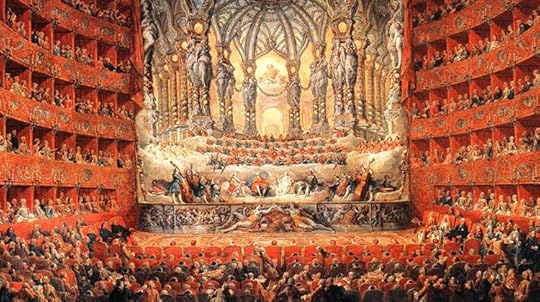
In a sweeping saga of music and vengeance, the acclaimed author of The Vampire Chronicles draws readers into eighteenth-century Italy, bringing to life the decadence beneath the shimmering surface of Venice, the wild frivolity of Naples, and the magnetic terror of its shadow, Vesuvius. This is the story of the castrati, the exquisite and otherworldly sopranos whose graceful bodies and glorious voices win the adulation of royal courts and grand opera houses throughout Europe. These men are revered as idols—and, at the same time, scorned for all they are not.
Praise for Anne Rice and Cry to Heaven
“Daring and imaginative . . . [Anne] Rice seems like nothing less than a magician: It is a pure and uncanny talent that can give a voice to monsters and angels both.” — The New York Times Book Review
“To read Anne Rice is to become giddy as if spinnning through the mind of time.” — San Francisco Chronicle
“If you surrender and go with her . . . you have surrendered to enchantment, as in a voluptuous dream.” — The Boston Globe
“Rice is eerily good at making the impossible seem self-evident.” — Time
Anne Rice (born Howard Allen Frances O'Brien) was a best-selling American author of gothic, supernatural, historical, erotica, and later religious themed books. Best known for The Vampire Chronicles, her prevailing thematic focus is on love, death, immortality, existentialism, and the human condition. She was married to poet Stan Rice for 41 years until his death in 2002. Her books have sold nearly 100 million copies, making her one of the most widely read authors in modern history.
Anne Rice passed on December 11, 2021 due to complications from a stroke. She was eighty years old at the time of her death.
She uses the pseudonym Anne Rampling for adult-themed fiction (i.e., erotica) and A.N. Roquelaure for fiction featuring sexually explicit sado-masochism.
Slowly, slowly he swelled it, slowly he let it pulse from his throat, this very limit of what the human voice could attain, yet so velvet smooth and soft it seemed the loveliest sigh of grief drawn out and out and until one could not endure it. Cry to Heaven ~~~ Anne Rice
Anne Rice has died. This makes me incredibly sad. I first read Anne Rice at 13 ~~ soon I devoured everything of hers that she had written. Rice shaped me not only as a reader, but as a person. She unlocked an entirely new world for me as I traveled with Lestat and Amadeo. Rice put into words how I secretly felt.
I read the Vampire Chronicles in order ~~ Lives of the Mayfair Witches too. Interspersed among these reads, I read Rice’s stand alone novels. The best of these was Cry to Heaven, now a lesser known work of Rice’s. In fact, it may be Rice’s best work.
Later, when she turned her back on horror and made her highly publicized return to Catholicism, I tried to read Rice’sThe Songs of the Seraphim series, but they were terrible. The magic was gone. The writing had become preachy. And just like that she abandoned Christianity and returned horror. I read Prince Lestat but sadly, Rice was simply repeating herself. Then, Rice began to harass her critics, encouraging her fans to publicly attack those who poorly reviewed her books. Her fans terrorized her detractors. Lastly, she began to focus more and more on promoting her son's work as she slowly withdrew from the world. I had outgrown Anne Rice. Despite all this, I feel like a part of my youth has been taken from me with her passing.
And now, back to Cry to Heaven
Initially introduced to Europe as a solution to the rules of Papal Rome, which forbade female actors on the stage, the castrati became the superstars of eighteenth-century Europe ~~ able to create just as much of a stir as Beyoncé does today. To be honest, few authors could handle all that is tied up in such a story quite as well as Rice. Passion, despair, darkness, sensuality, lust and transcendent beauty are her calling and, although this book frequently strays over the line between the dramatic and the melodramatic, it is a compelling read. Rice has brilliantly brought to life the world of these children mutilated to make a choir of seraphim, their voice a cry to heaven that heaven did not hear.
Marc Antonio Treschi is the last of his line: the son of an old Venetian family, born to a childlike, emotionally unstable mother and her much older husband. Trained in all the arts of the gentleman, he grows up captivated by the theatrical rituals of the Serenissima, knowing that he is destined to succeed his father as a Senator of the Republic and to take part in all these mysteries himself. But, when Tonio’s elderly father dies, all the certainties of his young life are overturned. His exiled older brother Carlo, of whom his father never spoke, returns from banishment in Istanbul and quietly assumes command in the house, seeking a way to regain the birthright that has been denied to him. In a world of growing bitterness, clouded with unmentionable secrets, Tonio’s only pleasure is to sing – escaping from the oppressive palazzo at night and wandering the canals with a group of street musicians.
Running alongside Tonio’s story is that of Guido Maffeo ~~ the son of a peasant family ~~ who was castrated as a child and brought to Naples to study at the conservatory, becoming one of its brightest stars. However, Guido’s dreams of success and security crumble when he loses his voice ~~ at the time it would have naturally broken ~~ shortly before his professional debut. Reduced to nurturing in others the talent that once burned so brightly in himself, he sets out to travel through Italy, in the hope of finding untrained voices that he can mold into brilliance. In Venice, he is finally transfixed by the beauty and clarity of Tonio’s voice, but it is a hopeless case. Guido is searching for voices to preserve through the act of castration, and no Venetian patrician would make that sacrifice. But ~~ hearing of the Neapolitan maestro who thinks his little brother has such potential, Carlo Treschi finally sees a way in which he can remove Tonio from his path once and for all. The scene is set for a story as rich and extravagant as one of the early operas, taking in betrayal, desire, vengeance, and all the scintillating splendor of Rococo excess.
Tonio’s fate is a double-edged sword. With one stroke, everything he planned has been snatched away from him ~~ marriage, children, security ~~ and yet his dazzling ability promises to offer him entry into a glittering world of fame and glory. It’s a bitter bargain to make, but for the handful of very talented castrati it was one that had its advantages One of the book’s strengths is in the careful exploration of the terms of this bargain. What did it actually mean to be a castrato? Tonio has to accept that the elasticity of his bones mean he will grow much taller than he would if he had gone through puberty and become a man; that his arms and legs will become abnormally long; that his rib-cage will swell to accommodate his powerful lungs. And on top of that, he must accept that he now forms part of a third sex, able to assimilate both male and female characteristics, and therefore an object of desire not only for the women in his audience but also the men.
In that regard, Rice brilliantly details the fluid sexuality of the period in very explicit sex scenes, so if you’re squeamish about homoeroticism, grow up and deal with it. She is particularly good at conjuring up the tantalizing femininity which some of the younger and more beautiful castrati could carry off. Tonio’s early scenes with Domenico detail Tonio’s confusion.
Cry to Heaven is reflective how vast Rice's talent was ~~ it contains her best and most fascinating work. I wonder what kind of writer she could have evolved into had she not abandoned titles such as Feast of All Saints and Cry to Heaven. I loved her horror novels, but something was lost as she focused more upon the vampires, witches and werewolves and less on her historical writing.
What is it that makes Cry to Heaven so compelling ~~ perhaps it is her captivating writing ~~ is it the setting and place of the novel ~~ perhaps it is the subject of castrati and their magical voices. Whatever the reason, Cry to Heaven is definitely an amazingly good read for those interested in a glimpse of the 18th century musical and theatrical world, or for those who simply want a great read.
This book was the first time I really understood what a brave writer Anne Rice is. I had read many of her books and appreciated her style, but this book took me to a dark place that I dreaded going and figured she couldn't possibly go...but she went there, just as she promised. When I met her, this is the book I had her sign (even though she was touring in support of a different book).
Cry to Heaven was the second Anne Rice novel I ever read. The subject matter is intense (sometimes graphic) from PAGE ONE; yet too fascinating to put down!
What I did NOT now until way after the fact, is Anne's work in this well written book is historically correct and highly researched.
Among other things, Cry to Heaven is a story of life-long revenge! It's steeped in rich historicity of 18th Century Opera, the Church, the history of the "Castrati" -- and some other sexuality explicit, yet apparently accurate, goings-on of the Church at that time.
"Italian Opera had conquered the world. But it was the Soprano singer the world worshiped." Bam!
I NEVER in a million years would've guessed such abominable practices went on at that time; alas, it's heartbreakingly true. Young boys were forcibly castrated to prevent the pre-puberty change in voice and keep their voices soprano alto high so they could sing in the choir...and the Operas of the day supported this venue.
It's a story about great contrasts in life: Love vs Revenge, internal struggles with Right & Wrong, sexual awakening & the desire to be loved and find peace in your skin where you stand, confusion vs ambition...there are so many threads in this book that for me, while deeply interesting, the read at times seemed too long.
Now that I've had several years & a few casual re-reads of the book, I think there can be a modern day correlation: The desire for fame & becoming an music "Idol" revered by the masses comes at a HIGH price many are not willing to pay.
It's a bitter-sweet story. *The Church states it never "officially" sanctioned the Castrati. However, it happened.
I never would have chosen this book on my own had it not been recommended by a dear friend. Once I got into it...it was like a train wreck (in a good way) & I couldn't put it down.
Again, Anne Rice amazes me with her rich descriptions of...anything! Anne Rice verbally paints vivid, realistic feeling prose so that you imagine you're there.
I could have done without some of the sexual content, but seriously, HOW can you relate to a cast of characters who are struggling with what they have become and HOW they find intimacy without "going there?"
It's was their life; in the story & apparently in real-life history, too. Describing sexuality in the face of castration, the Church, the Opera, Aristocracy, fame & fortune, AND tremendous heartache...seems the natural way to go to help you bond with and/or root for a character. It defines the people and further defines "their times."
*A Bio of almost any modern day rock star an be far more tawdry.
Since my first read of Cry to Heaven, I've seen some good & some horrible reviews. IF you are closed minded, prude, homophobic, or hate history & the Arts, this is not the historical tale for you.
Conversely, if you're new to Anne Rice, enjoy music history, descriptive details about life in the 1700s, are compassionate, and have the time to dedicate to a long, concentrated read -- I'd say it's a Good Read.
=== Note: A review is not an endorsement of any sort of lifestyle choice, religious affirmation, not a discrimination or exaltation of one view over another. It's simply an opinion and they all vary from person to person.
=== I enjoyed recalling the memories of a book I read at a very good time in my life, recommended by a dear friend. Just talking about it was cathartic.
My description is intentionally vague. I've noticed that some reviews are quite the spoiler, almost like Cliff Notes. I see no need to re-write a book someone else has not even read yet.
I don't even have words to begin to describe the sorrow and poignancy of "Cry to Heaven". The novel's protagonist is Tonio, who is unwillingly castrated in a series of events riddled with deceit and betrayal. Enraged and tormented, at first Tonio refuses his fate, but as the novel progresses he is slowly transformed into an ultimately triumphant figure. Lush, sensual prose and an ending that will hold you by the throat, this is a book that will stay with you long, long after it is read.
My husband is a big fan of Anne Rice's early works, but he won't read this one, for obvious reasons (just read the first sentence of the book and you'll understand). I thought the whole book was wonderful; I love stories of transformations, and the main character changes so much from the beginning to the end that he becomes a completely different person. Heck, it's almost as if he becomes a different species. Anne Rice spends a lot of time describing the gorgeous exotic world of the Venetian castrati in loving detail, and also manages to make the specifics of voice-training downright fascinating. Be warned; LOT'S of sex in this one (mostly with guys, but that's kind of a given with Anne Rice's books), and also one scene of violence that's not for the faint of heart. Given the subject matter, it won't give anything away to say it's every man's worst nightmare.
RIce ripped my heart from my chest and stomped on it a few times. This book was so beautifully written, quite emotional, everyone spoke from the heart. Also quite informative about the castrati of Italy. May be my favorite Rice novel ever
In my opinion, Cry to Heaven is definitely one of Anne Rice's finest books. Beautifully written in the lush, gorgeous prose for which Rice is famous, Cry to Heaven is rich in detail and presents a fascinating look at the lives of Italy's 18th century castrati. The protagonist, Tonio is extremely well-drawn and memorable. His struggles to come to terms with both his life as a whole and his sexuality in particular are nothing less than soul-wrenching. I found the erotic scenes, criticized by some reviewers, to be beautifully written and central to the book's premise. I did think, though, that the character of Christina, a central figure in Tonio's struggles, could have been more fully drawn and introduced earlier. It seemed to me as though Rice, herself, was not completely acquainted with Christina and I think the book suffers slightly because of this. Cry to Heaven, which contains no witches, vampires or other preternatural beings, is well-plotted and well-paced, something which cannot be said for all of Rice's books. She controls this story masterfully and resists the urge to people the novel with extraneous characters, ultimately ending the story on a haunting but richly rewarding note. With Cry to Heaven, I can pay Anne Rice the highest compliment--this is the novel I wish I had written and I can say that about no other book.
“Read sometimes for the story . . . Don't be like the book snobs who won't do that. Read sometimes for the words - the language. Don't be like the play-it-safers that won't do that. But when you find a book that has both a good story and good words, treasure that book.” ― Stephen King
I came across the above quote on another author's page. When I read it, it struck me immediately that it summed up my experience with latest book I'd read. It has been a long time since I've read a book that affected me as much as "Cry to Heaven" did. I can now say that this book is one of my definite favorites and has earned a spot on my "cherished books" shelf, right beside my signed and numbered "Imajica" and a tattered copy of "The Brothers Karamazov." I had read Anne Rice before. The usual : "Interview with a Vampire" and "The Vampire Lestat." I found them both enjoyable and then moved on to "The Vampire Armand" - which I found far more appealing and admittedly, became one of my favorite stories. But "Cry to Heaven"? Wow . . . where do I even begin? This novel was such an amazing, breathtaking read. A heartfelt book full of lush prose and emotional suffering shown in such exquisite detail that you cannot help but feel the anguish of the protagonist yourself. When an author is able to make you empathize with a character so deeply, you are undoubtedly going to be invested in their journey. I savored every word of this book and was so sad when it had finally come to an end. For the past few days, since I've finished the novel, my imagination has been reeling in the world that Anne Rice so lovingly constructed, hesitant to leave, wondering what can possibly top such an experience. I highly recommend it.
One of the most boring books I've ever read. It's a dreadful soap opera about sex and revenge, involving a bunch of dull, melodramatic assholes. Most of it is completely predictable, and while you're waiting for the obvious to happen, you have to trudge through chapter after chapter of angsty whining in infuriatingly purple prose. Anne Rice offers no twists, no surprises. There is plenty of sex, which might have been fun if Rice didn't describe it all in ridiculous euphemisms or equate rough sex with rape as if rape could be fun under the right circumstances.
There is actually some interesting content, like Rice's depiction of the world of the castrati and some ideas about their sexuality. Sadly, this wasn't nearly strong enough to drag me out of the pit of misery this novel threw me into. I finished it only because I'd committed to a group read and needed the novel for a reading challenge. I've actually read books where the content was less interesting and the writing even worse, and they still managed to be better reads than Cry to Heaven. One star, for a torturous reading experience that I thought was never going to end.
Unless the idea of men who have had their balls cut off having sex will sustain you for however many hundred pages this book was, you will find it deadly boring. And the writing was painful, too. It made me wish for a good castration to take my mind off the pain of her stilted dialog.
polite review: this is my 10th Anne Rice book and my favourite by a country mile. it’s literally all I’ve thought about for the last 15 days. it moved me to tears multiple times. Tonio has now ascended to that treasured host of characters I love more than members of my own family.
impolite review: if I see one more review calling Anne Rice’s writing ‘purple prose’ I am going to scream. yes, her writing style is ornate. yes, it’s flowery. just because it’s poetic and florid does not mean it’s purple. her writing does not impede understanding. every word has meaning on that fucking page. she is evoking a place and she is evoking an emotion. PLEASE stop showing your arse on goodreads. there are plenty of easy, boring books out there for you. cheers.
Alright, this book was a CHALLENGE to make it all the way through. I read it over the course of months, sometimes taking breaks more than a month long, because I found the story so uninteresting. Usually if I take a long break with a novel, when I pick it back up again, after a few pages I can see a reason to keep going... THIS novel, on the other hand, every time I picked it back up, I just kept wishing it was already over. Don´t get me wrong, the first 180 or so pages started out great, but this book is 530 pages long, which is like... 230 pages too long for the story. Everything is so melodramatic and I could not care less about any one of the characters. Everything was SO god damn repetitive, I could hardly take it. Rice spends entire pages describing taffeta, or wind, or the rise and fall of a song in someone´s throat... or whatever.
If there were 3 vases in a room one of the characters entered into, Rice would make sure you know exactly what each vase looked like and how old it was, where it came from, how it was made, to the point that you could read 10 pages describing 3 vases. USUALLY being descriptive is a good thing, but this gal just went OVERBOARD with it. Jesus. Christ. I would say Anne Rice could describe her way out of a sealed iron box, but the truth is that she couldn´t because she would spend so much time describing the inside of the box that she would no doubt expire before ever getting a chance to escape. We understand, you are a master of description, Anne Rice, but TAKE IT DOWN A NOTCH. Same goes for the softcore porn. That´s not why people pick up a novel that´s not categorized as erotica.
I would´ve given it one star, but there were SOME slightly enjoyable moments in the novel, and like I said earlier, it actually started off very nicely. This was the first novel I´ve read by Anne Rice, and I really was looking forward to reading her novel ¨The Witching Hour¨, but seeing as that one is double the length of this, I´m going to have to take a long break before I attempt any of her other works. I can see how someone would say she is a skilled writer, and I actually am going to give her the benefit of the doubt and try one of her other novels later on, but I would definitely never recommend this novel to anyone... unless I wanted them to bore themselves to death.
I read this novel years ago and enjoyed it immensely though I always find that Rice can overdo the purple prose at times. What I thought exceptionally fine was the amount of research that Rice did for the book, not just into the world of the successful Castrati but the far more numerous Castrati who never made it because one of the cruelest of natures jests is that though the boys were castrated to preserve their beautiful voices it more often then not didn't work.
Far too many novelists write as if castration guaranteed a beautiful singing voice but it didn't for a start an intensive education was needed (such a school is the setting for a big chunk of this fine novel) but the operation only delays, but does not prevent puberty - it takes place and in grotesque forms most notably the boys voice may not 'break' as in normal boy at puberty, but the singing voice can be lost.
Rice creates a compelling portrait of Venice in decline and the corruption of the 18th century Papal court in Rome and assembles a cast of believable characters and creates an exciting storyline. I still remember, after 20 or more years a great deal of the book, and I'd rather like to read it again. I have no hesitation in recommending it.
I wonder how many people realise that this novel was seized by UK customs and excise as an obscene publication in 1984? Probably non of you unless you've seen my other posts.
This book was one of many that was seized in 1984 from the first gay bookshop in London, or anywhere in the UK, Gay's The Word as part of a policy of intimidation against 'uppity' gays and I am posting information on this event against many of the books seized by the police.
This is a history that should not be forgotten.
Cry to Heaven and the 1984 attempt to destroy 'Gay's The Word' the UK's first gay bookshop:
This novel was one of many 'imported' gay books which were at the centre of an infamous attempt to push UK gays back into the closet by the conservative government of Margaret Thatcher in 1984. Amazingly this event, important not only for gays but civil liberties in the UK, does not have any kind of Wikipedia entry. Because of this lack I have assembled links to a number of sites which anyone interested in free speech should read. If we don't remember our history we will be condemned to repeat it.
The genesis of the prosecution of 'Gays The Word' was the anger of homophobes to books like 'The Milkman's On His Way' by David Rees which were written for young people and presented being gay as ordinary and nothing to get your-knickers-in-a-twist over. Unfortunately there was no way to ban the offending books because censorship of literature had been laughed out of court at the 'Lady Chatterley Trial' nearly twenty years earlier. But Customs and Excise did have the ability to seize and forbid the import of 'foreign' books, those not published in the UK. As most 'gay' books came from abroad, specifically the USA, this anomaly was the basis for the raid on Gays The Word and the seizure of large amounts of stock. The intention was that the legal costs, plus the disruption to the business, would sink this small independent bookshop long before it came to trial. That it didn't is testimony to the resilience of Gay's The Word, the gay community and all those who supported them.
The best, not perfect, but only, guide to the event is at:
Anne Rice es por mucho una de mis escritoras favoritas, y con este libro me dejó claro que eso no va a cambiar.
Un grito al cielo nos lleva al mundo de los Castrati, hombres que eran sometidos a la castración a corta edad para conservar sus voces intactas. La historia nos narra la vida de Tonio Treschi, un patricio veneciano poseedor de una voz magnífica; y de Guido, un maestro de música Castrato perturbado por su pasado y por lo que el azar le arrebató. El destino juega con ambos quitándoles lo que más amaban; sin embargo, esto solo será el comienzo de un viaje para descubrir lo que realmente valen.
Suelo ser muy exigente con autores que ya me han enamorado con historias anteriores, siempre llego a sus libros esperando más, y Rice no me decepcionó. Este es el primer libro de corte histórico que leo de ella, y pude reencontrarme con aquella narrativa suya que me hace flotar en sus páginas. Aunque tengo que admitir que hubo partes que pudo haber omitido en la obra, pero igual las disfruté.
Los personajes fueron toda la obra, puesto que no solo eran parte de la historia; sino, la historia misma. Las personalidades están tan bien definidas e irradian todo tipo de sensaciones, que casi he podido sentir el sufrimiento de Tonio como si fuese el propio, pues a veces a quién no le ha resultado difícil quitarse de la cabeza el ansia de la venganza. Aquella espina que solo parece adentrarse más en la carne. Tener todo a veces solo te hace sentir más necesitado.
En conclusión, a mí me ha encantado conocer un poco más sobre la vida de los castrati. Si les gustan las novelas cargadas de sentimientos y llenas de dilemas morales, este libro les puede interesar. (Advertencia: el libro contiene muchas escenas de sexo homosexual)
I found "Cry to Heaven" to be as rich, baroque and sensual as the previous works, I've read, by Anne Rice. [The Mayfair witch series]
A young boy was brutally castrated because of a struggle for power in a Venetian household of the 18th century. After a life-time of study and vocal training, he eventually becomes a star of the opera in Rome. The public is entranced by his remarkable voice and stunning good looks. He can play both male and female roles with authenticity, and is larger than life on stage.
The young man, Tonio, has amorous liaisons with both men and women, who find him irresistable. However, he cannot accept his physical impairment and refers to his elongated physique, that of the eunuch, as the body of a monster. His character is marked by sadness and a deep longing.
The end of the story is powerful and dramatic. Tonio does deal with the past and those who sought to destroy him.
A further note, I rated this book a 4-star because of its excessive length (566 pp.)
During the eighteenth century, about four thousand Italian boys were castrated before puberty. They were then trained until they could sing with the power and tonal richness of a baritone combined with the range of pitch of a soprano or alto. The most successful of these “castrati” became the stars of their age, performing in operas in all the great cities of Europe, showered with gold by royalty and nobility and often sought in bed by the great of both sexes. Through the story of one Tonio Treschi, a Venetian aristocrat with superlatively good looks and voice, castrated through treachery at fifteen, Anne Rice has brought to brilliant and convincing life the world of these “children mutilated to make a choir of seraphim, their voice a cry to heaven that heaven did not hear.”
I was bound eventually to read this due to what it has in common with my favourite novel, Mary Renault’s The Persian Boy. The latter was presumably the main inspiration for Rice choosing a boy eunuch as her main protagonist, since she has said it “profoundly influenced me as a writer” and Renault was “my writing teacher whom I never knew” (to which I say “me too”). Both women write beautifully and evocatively, Rice’s prose being lusher but less lucid. Both give meticulous attention to historical authenticity, which I think indispensable for historical novels. The only flaw I noticed in this respect was the marriage of Carlo Treschi to his step-mother: it is inconceivable he could have got a dispensation for it, and there is no suggestion that her marriage to his father had been annulled.
Evidently massive and painstaking research into eunuchs, eighteenth-century musical training and the great Italian cities of the time was done to achieve this resurrection of a long-forgotten type of human life, and equally considerable imagination has gone into recreating the castrati’s emotions. Much of Rice’s deeper learning could easily pass unnoticed by the uninformed reader, being woven into the story rather than explained. A critically important example is the much higher age at which puberty was then reached. Boys’ voices were not expected to break until they were eighteen. Tonio was still barely pubescent at fifteen, though this had not held him back from experiencing abundant “dry” joy in the beds of a tavern girl and a motherly cousin.
The choice of subject matter obviously sets the story up as especially promising ground for exploration of gender identity and sexuality, and by infusing the story with plenty of eros, Rice far from disappoints. “What in God’s name did they hack away from you that you have laid a siege to the beds of Rome as great as that of the barbarian hordes?” Tonio is asked by the disappointed orchestrator of the theft of his testicles. The answer is little if anything except the means to procreate, which should not surprise anyone except those labouring under the delusion that pre-pubescent boys are asexual. The castrati are presented as in one respect enjoying an enviable sexual freedom: they can sleep with females without danger of causing pregnancy, while their androgeneity opens possibilities with males. Tonio also enjoys complete freedom from the constraints and unnecessary sense of contradiction that dubious assumptions about fixed orientation impose on people today. With men, he adopts the passive role automatically and fully relishes its physical and emotional joys; with a more feminine boy and later a girl, he equally automatically and happily plays the man. I found all this thoroughly convincing.
The plot is fine and credible except that I found its central premise a bit implausible. The atrocity against Tonio was evidently very risky for its perpetrator, who was frightened with good reason that people would not believe the lies put about that it was Tonio’s choice. Tonio was given every opportunity for exacting immediate revenge through the law, but instead went out of his way to confirm the lies, and chose to wait four years during which he lived always under the dark cloud of unexacted revenge. The explanation given, that he wanted the man who had cruelly wrecked his life to have time to beget sons to continue their family line, feels simply inadequate for a boy in Tonio’s horrific predicament. I also found the story sometimes too drawn out.
Nevertheless, these are minor flaws in a deeply imaginative and haunting story. The three of Tonio’s liaisons that are love affairs are moving, especially the greatest and final one with the beautiful English girl-painter Christina. Above all though, it is the imagined sound of the beautiful, free-spirited boy troubador echoing in exquisite song along the canals and alleys of night-time Venice which continues to ring in my ears.
Edmund Marlowe, author of Alexander’s Choice, the tragedy of an Eton schoolboy also strongly influenced by The Persian Boy, https://www.amazon.com/dp/191457107X
I probably read this one at least three different times back in the 90s. There was just something about it. It had all the angst that Rice is known for, but she described the time and place so vividly, it was like being there. And I read this as young adult, so I had no idea that the castrati were a thing. It was an eye-opening, and no mistake. And probably the first book I ever read with gay sex in it, so it had that going for it too. But beyond all that, I just really liked the characters and seeing how they coped with their struggles and the crap life handed to them. And who doesn't love a good revenge plot?
I have no idea what I would make of it if I tried to read it today, so I'm not even going to try, but my old paperback copy remains on my bookshelf and always will.
I enjoyed this book though at many points it read too much like a romance novel for my taste. If you can't stand "his throbbing member" lines then the plot will be lost on you, particularly if you're turned off by her sometimes S&M overtones. Also the plot was a bit predictable and at over 500 pages this novel could have been a much more worthwhile read had it been considerably shorter. That said, Rice's 18th Century Italy is a vivid world and it is an engaging work. I'd recommend her "Feast of All Saints" over this.
DNF on page 170 - Hmmm i just have a hard time reading this, the premise sounds interesting but it's not catching up my attention enough to read it instead of read the other book or play videogames, and it being a paperback is making it 300% harder so... nope. Atm i need a book to really capture me.
Guido is a castrato: at the age of six, he is castrated, so that his voice won't break. He is one of many castrati in 18th century Italy -- they are celebrated for their huge vocal range, and sing church music as well as opera. Tonio, son of a Venetian noble-man, would in the normal way be safe from castration, despite his beautiful voice, but due to the machinations of his evil father, he is forcibly castrated at age 15. He is tutored by Guido, a talented teacher and composer, and gradually comes to make peace with what has happened to him. Like all Anne Rice novels, this is melodramatic, full of lush/purple prose, but it's also compelling, emotional, and full of historical detail. I enjoyed Rice's exploration of gender through the castrati: not seen as men or women, they are on the outside of society, cast into multiple roles and into no roles at all. Tonio is, in some ways, trapped at age 15, and bitterly resents the ways in which his body will not develop into that of a traditional man. But he also has a kind of sexual freedom that others of his time and class would not have. This is also a lovely book about passion for music, and the ways in which artistic endeavour can shape and change your life.
"It was the horror of this world that a thousand evils were visited on those who were blameless and no one was ever punished, and side by side with the greatest promise was nothing but misery and want. Children mutilated to make a choir of seraphim, their song a cry to heaven that heaven did not hear."
I will never get enough of Anne's prose and the way she's able to portray emotions in such an authentic and beautiful way. Just wow
“It was the horror of this world that a thousand evils were visited on those who were blameless and no one was ever punished, and side by side with the greatest promise was nothing but misery and want. Children mutilated to create a choir of seraphim, their song a cry to heaven that heaven did not hear.”
This book is awesome. This book is just awesome, every line is intentional and dramatic-- I literally could not put this down while finishing the final 2/3, stayed up until the wee hours of the morning and everything. I think it's interesting to see common themes in Anne Rice's earlier work of toxic family dynamics, toxic FOUND family dynamics, and complicated relationships with one's body and the self, self-hatred and self-consciousness, by the examination of some sort of 'othered' human identity, whether it be vampirism or castrati; but the commonality being that it ends at least slightly hopefully. There's an acceptance and a reluctant peace that's found here and also in IWTV. Anyway-- part of a larger discussion, but something I found interesting. TLDR: loved loved loved this ridiculous campy book so much. Anne Rice is my Stephen King
Tai pradėkime nuo erotikos ir pornografijos. Ne todėl, kad tai būtų esminė knygos ašis, o todėl, kad kažkoks ..... specialistas leidykloje nutarė šią knygą lengvai „apipjaustyti“ (pardon už šią tyčinę paralelę) ir puikiai jai tinkantį originalų pavadinimą „Cry to Heaven“ pakeisti tokiu tiesmuku „Kastratai“ ir dar užklijuoti ant viršelio kažkokį viauktelėjimą su paantrašte „Cosmopolitan“. Gal tikėjosi parduoti kaip lengvą vasaros romanėlį, bet paradoksas tame, kad mažiausiai tikėčiausi rasti šiai knygai skaitytojų tarp tokio žurnalo gerbėjų. Panašiai prasminga būtų kokiai mėsinei reklamuotis vegetarų restorane...
Bet grįžkime gi pagaliau prie to reklaminio masalo.
Vaizduojamuosiuose menuose riba tarp erotikos ir pornografijos gana paprastai pastebima: jei atvirai demonstruojami lytiniai organai – pornografija. Jei jie pridengiami, tada – erotika. Panašiai ir literatūroje: užuominos ir lengvi bučinukai, švelnios glamonės rožyne salei leidžiantis – erotika, o jei lūpos ir rankos ima čiuopti falus, penius, kotus, vaginas, makštis (vargšė, oi vargšė lietuvių kalba šioje srityje), tuomet jau garantuotai ženklas „S“.
Vis dėlto aš asmeniškai žiūriu kiek kitaip: jei po seksu, kad ir kaip jis būtų atvaizduotas, slypi kažkokia emocija, o ne primityviai žaidžiama „putniomis lūpomis“, „stangriu kūnu“, „godžia burna“, „besiveržiančia aimana“ ir visais kitais fiziniais dirgikliais, esu linkusi tai įvertinti. Ir šioje knygoje didžioji dalis erotinių scenų buvo daugiau priemonė, o ne tikslas. Tai buvo veikėjų vienatvės, desperacijos, pykčio, kartais ištikimybės ar kitų jausmų pasireiškimas ir dėl to, nepaisant savo pornografinio tiesmukumo, buvo išties erotiškos.
Bet gi išties, visa knyga yra tiesiog persisunkusi aistrų ir kūniškosios sudaro tik mažą jų dalį: emocijos sodrios ir gilios, stiprios ir paveikios. Kelis kartus turėjau pakelti galvą ir giliai įkvėpti, kad vėl galėčiau grįžti prie teksto – o taip nutinka tikrai ne dažnai. Prie paveikumo, žinoma, prisidėjo ir puikūs veikėjai, geri psichologiniai portretai, intymus ir sakyčiau introvertiškas santykis, kai skaitytojas yra uždarytas personažo galvoje ir verda jo jausmuose.
O kur dar istoriniai kontekstai, puikiai perteiktas laikmetis, tematika... Nepaisant to, kad knyga parašyta 1982 m., o joje vaizduojamas tolimas XVII a., būtent tematika pasirodė netikėtai aktuali: tai labai subtili žmogiškosios tapatybės studija, kartu leidžianti ir pačiam skaitytojui pasitikrinti savo tolerancijos ir identiteto suvokimo ribas: kas padaro žmogų žmogumi (šiuo atveju vyru), o kas jį paverčia pabaisa. Pastarasis motyvas labai gražiai rezonuoja su pirmuoju autorės romanu „Interviu su vampyru“ – nors jį skaičiau prieš daug metų, esu tikra, kad pagrindinė kovos su atskirtimi bei savęs priėmimo linijos sutampa abiejose knygose.
Nors knygos pradžia skaitėsi sunkiai, tačiau vėliau atradau labai gražų daugialypį, daugiaspalvį ir labai sodrų pasaulį. Būtent dėl to sodrumo romano neįmanoma skaityti greitai, tačiau pabaigus ilgam lieka ryškus įspūdis. O man liko ir keistas prieraišumas: nesinorėjo atiduoti knygos į biblioteką, lyg dar ne visą ją būčiau išragavus.
Ir vis dėlto tikiu, kad ji patiks tikrai ne kiekvienam – yra tikrai nemažai aštrių kampų, už kurių galima skaitant užstrigti, be to ji turi savitą emociją, kuri, jei skaitytojas jos nėra patyręs, gali atrodyti labai tolima ir nesuprantama ir ją man geriausiai atspindi ši knygos eilutė: „Pirmą kartą jautėsi stiprus, neapsakomai ramus, sąmoningas ir dabar ūmai suvokė, kad iš visų skaudžių gyvenimo emocijų tik liūdesys taip ypatingai švyti“
I absolutely adored this one. When Anne Rice is good, she is really good (of course when she's bad, she's pretty deplorable).
Cry to Heaven is first and foremost, an intensely romantic novel. And Anne Rice is really best at crafting deeply romantic, decadent, excessively beautiful, homosexuality-laden erotica, which is exactly what this is, along with pedophilic elements. Her prose is deliberate, ponderous and Gothic (as if taking after Mary Shelley's style), the plot is very dramatic and, well, juicy.
I'm sure late teenage girls or romance-minded dreamers will enjoy this one as much as I do :)
*EDIT I re-read this recently and it's obvious that my taste has changed since high school. Her writing is pretentious and insufferable (yes, I understand "scarce" is an adverb too, but do you really have to use "scarce" instead of "scarcely" just to make your sentences feel fancier?), and the plot was just...so...juvenile. It's like it's pulled right out of a 16-year-old girl's imagination. I hate you, I hate you, oh let's have sex, now I love you and kind of still hate you, and I'm going to keep having sex with random people and fall in love left and right and we can all be angsty together, yay!
I remember being quite taken by two specific characters in my first read-through - Domenico and Carlo. I don't understand how, the first time I read it, I managed to be self-deluded enough to believe Carlo was a good guy all the way to the end. That guy's a jerk, end of story, but for whatever reason I thought he was so complex and conflicted. No, he really isn't.
The ONLY part of this book that I still read with rapt attention was the parts involving Domenico. Hoo boy, I love, love, love that pretty little boy. Whatever of that 16-year-old girl's ability to fantasize about yaoi-ism still remaining in me just devoured Domenico and hungered for more. As soon as Domenico left the plot, I became immediately bored.
A sensual tale of revenge. I wanted to read a book set in Venice and I remembered I enjoyed this novel many years ago. This book recreates Italy (Venice ambience is done beautifully, but also Naples and Rome) in the 18th century really well, the historical aspects are spot on, the costumes, the music and visual arts, the places, the atmosphere all vividly described. There’s a lot more sex than I remembered, a lot of drama (fit for the Opera, hehe) but it should have been edited to a shorter version IMO. I guess my tastes have somewhat moved on, but it wasn’t the disappointment I feared, I’m glad I have re-read it. 3.5 stars rounded up because of the dramatic final scene in Venice (reminiscent of a Greek tragedy).
Eu não sei muito bem como falar desse livro, mas foi uma leitura que eu amei fazer, ela trata vários assuntos pesados, e isso pode acabar incomodando várias pessoas. A escrita da Anne Rice é algo que me encanta demais, pois ela sempre consegue me transportar pro ambiente da história, eu amo demais a forma que constrói as histórias dela. Achei o Tonio um personagem maravilhoso, e amei acompanhar essa jornada dele. O final é uma coisa espetacular. Uma das coisas que eu gostei também nesse livro é que ele é um grande drama, tem horas que parece uma novela mexicana, mas não no sentido negativo, acho que nessas situações o exagero estava na dose certa. Recomendo demais a leitura!!!
When I hear you sing, when I stand in the very presence of your voice, I'm not afraid of the devil in hell.
forbidden teacher/student castrati singers yaoi i never knew i needed. truly, masculinity is never sexier than when being deconstructed by a professional fujoshi - and anne rice was definitely one of the most historically important ones🧐
but, jokes aside, this was an absolute tour de force of a historical novel - lush, erotic, immediately transports you to the world of 18th century italian opera, masterfully explores the themes of gender and sacrifices one has to make for one's art and features convincing character work of the sort that, in my opinion, is missing from most of rice's more well-known books. and yes, somehow this story, published in the early 80s, depicts queerness, polyamory, the fluidity of gender etc in a way that resonates with me much more than whatever modern authors think they're doing for queer rep. the chapter where tonio is being fitted into a dress for a female role for the first time and it makes him feel both exhilarated and disgusted will live in my head rent free🥲