“THE MEN WHO SACRIFICED FOR THEIR COUNTRY ARE RIGHTFULLY HERALDED . . . This is an honest book–one well worth reading. . . . Stanton has laid his claim to the historian’s ranks by providing his reader with well-documented, interpretive assessments.” – Parameters
The Vietnam War remains deep in the nation’s consciousness. It is vital that we know exactly what happened there–and who made it happen. This book provides a complete account of American Army ground combat forces–who they were, how they got to the battlefield, and what they did there. Year by year, battlefield by battlefield, the narrative follows the war in extraordinary, gripping detail. Over the course of the decade, the changes in fighting and in the combat troops themselves are described and documented. The Rise and Fall of an American Army represents the first total battlefield history of Army ground forces in the Vietnam War, containing much previously unreleased archival material. It re-creates the feel of battle with dramatic precision.
“Stanton’s writing . . . gives the reader a terrifying graphic description of combat in the many mini-environments of Vietnam.” – The New York Times
“[A] MOVING, IMPORTANT BOOK.” – St. Louis Post-Dispatch
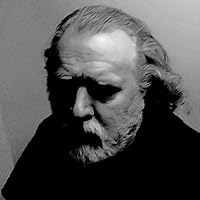
Capt. Shelby L. Stanton graduated as a Distinguished Military Graduate of the ROTC program at Louisiana State University, Shelby was commissioned as an infantry officer in the Regular Army. Shelby went to infantry officer school and was awarded the Parachute Badge, Ranger Tab, Special Forces Tab. He served for six years on active duty during the Vietnam War as a paratrooper, combat rifle platoon leader in the 1st Battalion, 508th Infantry (Airborne) of the 3d Brigade, 82d Airborne Division; with the U.S. Army Special Forces, Thailand, as a Ranger Advisor to the Royal Thai Special Warfare Center, at Lopburi. He commanded a Special Forces long-range reconnaissance team in Laos and southeast Asia.
Overseas, Shelby was wounded in action in hostile fire at Nam Yu, Laos. Shelby medically retired from the U.S. Army with the rank of captain and numerous military accolades. For his military service, he was awarded the Purple Heart, Army Commendation Medal, Joint Service Commendation Medal, Vietnam Service Medal, National Defense Service Medal, Vietnam Campaign Medal, Air Medal, Armed Forces Expeditionary Medal, Special Forces Combat Patch, Combat Infantryman Badge, Scuba Diver Badge, Thailand Parachute Badge, Thailand Fourragere,and Royal Laotian Parachute Badge.
After separating from the U.S. Army, he returned to Louisiana State University where he earned a Masters in Educational Administration and a Juris Doctor. He was admitted to the bar in the states of Louisiana and Texas.
Starting in the late Seventies he would have a brisk second career as a military historian of the 20th century U.S. Army.
This book attempts to become one of the most extensive accounts of the American army's performance in the Vietnam conflict. However, instead of an in-depth, objective analysis of the American military strategy in Vietnam, Shelby L. Stanton has written an ardent, and nevertheless unconvincing, defense of it.
Stanton believes that the Communist guerrillas in Vietnam had been highly romanticized and so had been unconventional warfare. He argues that counterinsurgency was unnecessary because the guerrilla resistance was not a whole new kind of warfare. He agrees with Army Chief of Staff General George H. Decker's words to President John F. Kennedy that "any good soldier can handle guerrillas" and asserts that on the front lines in Vietnam, the enemies that the American soldiers faced were not villagers dressed in black pajamas.
There is truth in this theory. Aside from guerrillas recruited from the villages of South Vietnam, the Communists had an army, which was well fed and relatively well equipped and trained. When these soldiers from the North were not running away from the Americans or regrouping and resupplying in Laos or in the North, they could give the American soldiers a difficult time. For instance, this is what happened during the battle of Ap Bac – the Communists held ground with fierce determination, and it cost the Americans a lot of people and much effort to capture the hill. Notably, though, they did not need that hill – they had wanted to destroy the enemy – so even this conventional battle was not particularly successful, considering the staggering number of casualties that they suffered. I do agree with the author's statement that the American soldiers in the jungles and rice paddies had to deal not only with guerrillas, but also with soldiers from the North.
However, as their experiences in Vietnam demonstrated time after time, it was not enough to be a good soldier to handle guerrillas – nothing to say of to prevail over them and win the war. The short list of the army's mistakes included poor intelligence, underestimating the enemy, lack of a positive political program, reluctance to get into the jungle, a defensive attitude, and excessive reliance on air support. One could not compensate for all of these drawbacks with total war, which the author advocates for. The difference between conventional warfare, which requires killing many enemies and capturing a lot of ground, and guerrilla warfare, which is mostly a battle for the support of the population, is that the conventional army loses if it does not win, while the guerrillas win if they do not lose. The Americans quickly lost sight of this important rule and unsuccessfully tried to chase and bomb the elusive enemy. The guerrillas, meanwhile, escaped, hid in the jungle, which they had made their home and which scared the Americans with its unfamiliarity, and focused on winning the people's hearts and minds – sometimes with propaganda, sometimes with terror.
Although the author thinks otherwise, counterinsurgency mattered. The Americans could "secure" as many villages and provinces as they wanted. It was to not avail if the guerrillas could return there unnoticed several days later because the population was on the side of the Communists. It was just that the Americans' idea of what counterinsurgency should be like was impractical and rendered their efforts ineffective. Stanton argues that the American army knew how to win the Vietnam conflict, but if so, why did they not realize that to counter the insurgents they needed not search-and-destroy operations, not high body counts, but a strong political program, a well-organized pacification effort, and most importantly, a vision of the future to show the people of Vietnam, in which their lives would be better, more secure, more prosperous, and more peaceful than if they supported the guerrillas and got to live under a brutal Communist regime?
The biggest mistake of the Americans was not to give the population for whose allegiance they were competing with their enemies any reason to like them. Instead they alienated it by looking down on it, by prioritizing their own career success over its security and lives, by cruelly and systematically torturing and murdering it. Do commanders who made no attempts to distinguish between civilians and guerrillas and just wiped out whole villages knew how to win the Vietnam conflict? I do not think so. Do advisers who relocated people forcefully and destroyed their houses with their belongings and their crops, which they had grown with their own labor, knew how to win the population over? No. Did the corrupt Saigon government, which the American officials supported, give the people any reasons to support it and not join those who promised to free them of it? Definitely no.
THE RISE AND FALL OF AN AMERICAN ARMY is an account of the American strategy in Vietnam that is overly sympathetic to the Americans. This book is not a serious analysis of what went wrong during the Vietnam conflict but an attempt to prove that the army thought and did right.
This could have been an interesting book if the author hadn't gotten so bogged down in minute details. It's about the American military in Vietnam, circa 65-73, and it's pretty comprehensive, at least through 1969. One of its faults, though, is that it spends an inordinate amount of time going over each year of the 1960s and then lumps all of the 1970s into one final chapter. It's like the author gave up, just like the military did. Another fault I found was that the author made the US military out to be virtually unbeatable and told countless stories of us giving the VC and NVA beatdowns in the jungle, which didn't actually happen all that often. He's really gung ho about the US military and it's just not authentic. He does go into detail on Tet '68 and the US did win the battles of Tet, but we lost the war then and there -- the war of public opinion -- and from that moment on, we tried everything possible to extract ourselves from Vietnam and turn the war over to the South Vietnamese, who were worthless as fighters. Granted, I didn't necessarily want to read an entire book of battlefield failures, but it should have been more balanced and it wasn't. Another -- major -- bone I have to pick with the author is that he went on and on about the specific US, VC, and NVA units engaged in battle, to the point where it was simply mind numbing. Witness:
"Kontum was also struck early on January 30 and the 24th NVA Regiment, the 304th VC Battalion and the 406th Sapper Battalion crashed into the MACV compound, post office, airfield, and 24th ARVN Special Tactical Zone headquarters.... The initial assault was met by two Montagnard scout companies, which were rapidly brushed aside, and the 2d Battalion of the 42d ARVN Regiment, which fell back.... At noon the Americans rustled up the ground crews of the aerial 7th Squadron, 17th Calvary, fused them with the 1st Battalion of the 22d Infantry, and gave them tanks from Company C of the 1st Battalion, 69th Armor...."
Oh my freakin' God!!! And on and on he drones. It's a real snoozer. If the author had just said some soldiers and Marines were fighting the enemy, he could have shortened the book and made it a lot more readable. Only mega-history geeks will like this because it's mind numbingly boring.
The author also kind of goes elitist on us. He attributes our loss to the draft, specifically to drafting poor men from racially diverse backgrounds, many of whom were allegedly on drugs. "By 1969 the US soldier in Vietnam usually represented the poorer and less educated segments of American society. He was often being led by middle-class officers and inexperienced sergeants, creating a wide gap between attitudes, abilities, and motivation." Poor, inexperienced men on one year rotations just wanted to get home alive and stopped fighting, per the author. I really think Stanton thinks we could have beaten the NVA if we had kept fighting an offensive war without one year rotations. I don't believe that, but I think he does.
I did enjoy reading about the various battles, but Stanton had this annoying habit of slimming them down to five sentence paragraphs, which obviously left a lot out, and then incredibly just jumping right into another conflict with no real transition visible. It's bizarre!
I am giving this book three stars because I'm interested in the subject matter, but it's a poorly written book that will bore the hell out of most people. As such, it really deserves a two star rating and I certainly can't recommend it at all.
This guy is in a class by himself, he's written about a dozen "non fiction" books and ALL ARE LIES.
He was never stationed in Vietnam, Laos, or Cambodia, nor did he perform covert operations.
All of the medals he claims were awarded him don't exist.
While working for the government he did STEAL THOUSANDS OF PAGES of government documents and photographs which he use to write his many books of lies. The FBI was able to get some of those documents back, but not all.
Army CID spent two years and tens of thousands of dollars preparing an investigative report and presented it to the US attorney's office, which assured investigating officers they would see action.
But federal attorneys ultimately declined to prosecute Stanton.
If I hadn't had to read this as part of a book review assignment, I probably would never have picked it up. It reads like a report of all battlefield tactics during the Vietnam War. If one is interested in such things, then this would probably be an excellent addition to their collection. It not only didn't mention anyone other than commanding officers by name, but there was no human point of view versus the mechanical and clinical observation of the author. Reading it was like reading a blow by blow report of a chess match. Granted, some people are fond of that sort of thing. I am not one of those people.
This book is long on tactics and strategy, very, very short of context. Generally, history's of wars tend to be written in such a way that the exact opposite is the case. This time, the author, himself a former Nam vet and officer, decided to err on the side of the military aspect of the conflict. As such it helps to know a little about the broader view of the Vietnam War going in. Shelby Stanton (who apparently has surrounded himself with a little bit of controversy concerning the details of his service...?) does make some excellent points in this narrative of US Army and Marine operations in Vietnam. First off the military made a tremendous amount of mistakes in the waging of the war. The Reserves and National Guard were not utilized to fill in the main line units, leaving the main line units, meant for front line combat, bereft of rear area units needed for maintenance, logistics and technical support. Areas that the Reserves and the Guard especially excel in. By not using the Reserves or the Guard, the military found it faced a severe shortage of trained NCO's, and an army is run by its NCO's as the Prussian proverb clarifies. These had to be found in special, too limited, Sergeants schools. Junior officer shortages were mitigated by OCS, with mostly limited results. The Pentagon and the higher ups in DC offered little in the way of a coherent, grand strategy for the conflict, even JFK himself dismissed the war in Vietnam as one against guerrilla's and even relieved the top US Army general when he argued against Kennedy's ignorant view. The war itself, bore this sacrificial lamb out as very correct, and Washington as very, very wrong. The VC (Viet Cong) were not civilian insurgents, but rather fully trained, and well equipped Communist soldiers. And after the Communists were defeated in the 1968 Tet offensive, where the VC was largely annihilated by US and ARVN forces, the NV Regular Army had to provide the VC cadres, meaning the US forces faced regular troops for most of the war, not civilians with shotguns. And indeed, the Tet Offensive of 1968 had the ability to be the decisive battle of the war, for the US and South Vietnamese. The Communist's were, basically, slaughtered in open pitched battles near Saigon, Khe Sahn, Da Nang, Hue and others. However, civilian morale in the States (plummeting to zero and with the horror of a racially based civil war in places like Detroit) forced the Army to keep needed forces at home, especially the 82nd Airborne which had to clear Detroit of insurgents in bloody street by street fighting which left much of the city in ruins and with many Detroiters as casualties. Also, Washington had hamstrung the military by refusing to engage in offensive operations against the NVA and VC. This meant that the Communists could withdraw to the sanctuaries of Cambodia and Laos and rebuild following battlefield disasters, without fear of American or ARVN retaliation. The Army and Marines also handicapped themselves by refusing to keep troops in country more than a year. This meant that, right about the time a soldier really learned his job and was a good veteran, he was shipped home and all of that experience was lost. This helped lead to a shattering of morale which ate away at the military from 1969 on wards when sacrifice seemed to be in vain. In truth, Stanton points out that the US did indeed lose this war, though it was a defeat we didn't have to suffer. All in all this is a good book, just largely devoid of larger, political context. Regardless it is a good read, and if one is already conversant with the politics of the time period, the narrative often reads like a military thriller. Recommended.
"This book provides a complete account of American Army ground combat forces–who they were, how they got to the battlefield, and what they did there. Year by year, battlefield by battlefield, the narrative follows the war in extraordinary, detail. Over the course of the decade, the changes in fighting and in the combat troops themselves are described and documented." Quoted from the review posted on Goodreads. This is an accurate account which I had to plod through. The author is quite extraordinary in describing a battle scene in about 3 - 5 sentences.
Given that this is the first book I've ever read on Vietnam, I liked it. My main criticisms are that there is very little coverage given to the political as well as home front aspects of the war and there are no casualty figures for either side after every battle or skirmish. On the other hand it seems to cover every moderately sized combat American forces were involved in during the course of the war.
This book was very extensive and detailed. It seemed like this book was a long day to day report from the Vietnam War and contained extreme details. However, the book was very informative due to the primary accounts given by veterans and quotes from reports and other sources of information. I would recommend this book to anyone who isn't familiar with the Vietnam War and want's to gain knowledge.
A very readable history of U.S. ground forces in Vietnam, occupying a decent middle ground between the quick-and-easy stuff you find on the Internet and the more impenetrable volumes of "official history". Stanton writes with an easy-going tone yet maintains an air of authority, walking the tightrope nicely.
This is the best non-fiction history of the Vietnam War that I have read. It is clear, it is readable, and it is painful indeed. An eighty-five watt book on a par with Rick Atkinson’s newest WWII history, Guns at Last Light. - See more at: http://jwlbooks.com/jack-london-revie...
The title is misleading. One would expect a dissection of what went wrong in the US Army. Instead it is mostly a (glowing) account of US ground forces in Vietnam.
I would avoid this author. Having served in the army himself, he comes at his writing like a cheerleader, a la Clancy.