Beverly Hills 2017 International Book Awards Winner and Readers' Favorite 2017 International Book Awards Winner.
What is the unique and most important feature that distinguishes man from all other living beings?
What is the unique and most important feature that distinguishes man from all other living beings?
Why is it that, contrary to the instinct of self-preservation, parents will throw themselves headlong into fire or water to save their child?
Why do people get married and why do they get divorced? Why do people have extra-marital affairs and why do two people in a couple become jealous of one another? What is Love?
When and why did the type of sex emerge among human beings that is free of any reproductive function?
Why are the social and behavioural distinctions between men and women being rapidly erased?
Why, despite everything, is the world becoming more tolerant than it was in previous centuries?
People are born with different intellectual, spiritual and physical capabilities. So why do we assert that all people are equal?
Can a world without violence exist? If not, under what circumstances and to what kind of violence does man have a right? Wherein lies the origin of this right?
Where is the root of our morality? Why do our moral values change with time? Do natural moral boundaries exist?
Why has Man, on the whole, never observed (or perhaps is incapable of observing) a set of various religious commandments? Should we observe them? Are they the decree of God?
By which "commandments" do we really live our lives and is it possible to formulate them in such a way that we could realistically observe them?
In which direction is humanity evolving and is it governed by some universal law?
Is there any meaning to life?
Is it possible to give a single, straightforward answer to all these questions?
It is in fact possible!
The Last Faith provides convincing answer to all the questions listed above. The answer which will cause the reader to reconsider established moral principles and notions about the world around us. The answer which will help the reader to understand the nature of human actions, dilemmas, dramas and passions, in their true light. The answer which will elucidate the current stage in the development of human civilisation and offer unexpected predictions for its future.
The Last Faith is aimed at a wide audience and does not require any specialised knowledge. The author's thoughts and reflections are presented here in the form of a conversation with God which unfolds over the course of just two hundred pages. The author (PhD in Physics and Mathematics) gives concise and clearly expressed explanations and evidence for his ideas. He cites abundant examples from the world around us which are drawn from his extensive travels through Russia, America, Europe, Africa and Central Asia.
All this makes for an accessible and enjoyable read.
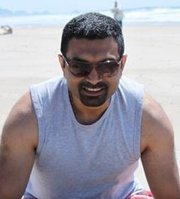
Karmak Bagisbayev graduated from Novosibirsk State University and currently holds PhD in Physics and Mathematics.
Throughout his life Karmak travelled and worked across Russia, United States, Europe, Africa and Central Asia. "The Last Faith" represents the result of his lifetime thoughts and observations on the nature of humankind.
Karmak Bagisbayev is not saying anything new but he puts an easy-to-understand system around known facts and provides convincing answers to a wide range of philosophical questions.
Many intriguing questions posed about the human condition and God's role. Ideas and concepts we take for granted and never question the purpose and source. Bathed in the twilight of Oslo's early spring evening, I was left with goose pimples and a big smile while finishing the epilogue to Bagisbayev's wonderful story of one man's quest for the truth The Last Faith: A book by an atheist believer. He was fortunate to have the undivided attention of the Creator for questions and answers sessions. No easy feat for sure considering God must also multitask and attend to the needs of the infinitely larger universe. Not since Fyodor Dostoyevsky's "Brothers Karamazov" has another story by a Russian author impressed me and moved me so deeply in the Ecclesiastical nature. Both Dostoyevsky's classic and Bagisbayev modern tale have similar themes. The meaning of life and the pursuit of true happiness for the human race. But Dostoyevsky and Bagisvayev delivered their messages very differently and both styles were brilliant. Contrasting to the narrative omniscient style of Dostoyevsky, Bagisvayev, in the first voice, had a series of heart to heart humorous dialogues with God, on the mysteries of life and the course of human race with Gods taking a non-intervention role by taking a backseat after He had established the unchanging laws of nature since the beginning of time. In addition, a gift of two specific laws God gave to mankind, the law of gene preservation and the law of freedom of choice. They would drive the human race since the beginning of human history, and would elegantly explain all that happened, past, present and future, including revolutions and rise and fall of empires. The dialogue between man and God, however got more serious towards the latter half of the story. A paramount third law that would save mankind and society was revealed. The law of compassion, introduced at a critical epoch in time 2000 years ago. Jesus did get disproportionately more time then other prophets mentioned in the story. Man used his precious privilege to clarify a key nomenclature of Jesus. Is he "the Son of God" or "Son of Man". That evoked thoughts of Jesus washing the feet of his disciples and even his enemy, Judas. Jesus in his humility repeatedly exhorted his disciples while he was alive that the lowliest will be the greatest when they serve all. Jesus would most surely want to be called "son of man" because he was the servant king. Finally, amusing yet sobering for me was Man's departing confession and gratitude to God in the epilogue that Man had loved many women in his life based on the law of gene preservation and freedom of choice. But Man admitted these two laws were selfish because while these laws guided him to happiness it was not reciprocated onto the women he loved. In contrast, the women (and men) in the tale of Brothers Karamazov had loved Alexei Karamazov so ecstatically and overwhelmingly even though Alexei did not practice the law of gene preservation. Instead Alexei practised the greater law, the law of compassion.
In this book, God and man talk about what drives behavior. Both agree that the "Law of Gene Preservation" does, which sounds a bit like Richard Dawkin's "Selfish Gene" but much less "natural selection" friendly, i.e. reversing the arrow between the words "cause" and "effect". According to the author's ideas, survival instinct exists because living beings wish somehow to pass on their genes.
The hypothesis is poorly argued with constant use of a fallacy known as "the Texas sharpshooter". It means cherry-picking data to suit an argument, or finding a pattern to fit a presumption. And some data is bent with gymnastic flexibility to fit the role. Example: see why "Jews were endowed with special abilities" (chapter 6, "Gene Preservation and the Jewish Phenomenon") and why men like "full-breasted women" (chapter 9, "Gene Preservation and Reproductive Beauty").
And then exceptions arose. That's when the author began on the “Law of Freedom of Choice” and I quit.
Summing up in the author's own words, "this is neither a scientific nor anti-scientific book".
Through author Karmak Bagisbayev’s eyes, the world is one big onion of unplumbed open-ended mysteries. His queries, however, go beyond the universal and oft-Googled reflections that teeter between scientific and philosophic: “Why is the sky blue?” “Why is it so hot?” “Why is the ocean salty?” to the absurd, “Why does Michael Myers kill?” Why ask why, readers may ask. Bagisbayev does, and unabashed – questions centering on why living beings do what they do. And who better to address these conundrums that have plagued mankind since the dawn of Adam and Eve than the maker himself. In his latest book, THE LAST FAITH: A BOOK BY AN ATHEIST BELIEVER Bagisbayev’s curiosity boundlessly soars throughout chapters consisting of candid conversations with God, in which he ponders the palpability of the existence of romantic love found in classic fiction, to why beauty is in the eye of the beholder, to – on the flipside – why married people cheat and why violence is still a thing and the true meaning of equality among living beings who all, in fact, differ on countless levels. Does man really need God?
All these answers are cut and dry, yet some yearn for a drawn-out analysis of the answers to questions that are at most times quite obvious. In his book, an in-depth inquiry into this circle of life, Bagisbayev challenges readers to do the same: to make readers aware of the world around them – people, animals, insects – and question almost everything under the sun, for one, their motivation, a parent’s upbringing style and the credibility of certain stereotypes (are Jews generally more successful?) Just what is the logic behind a person’s sexuality? (Yep, he goes there.) If the practice of mindful meditation involves focusing on everyday things as a therapeutic distraction, Bagisbayev does the same in his lovable account in which he demonstrates – with well-researched points – a cross-examination of sorts to the Lord like a good lawyer, but with a tone that’s more amicable than patronizing. And the author’s questions don’t end with God’s creation; he also challenges God’s own teachings in the Old Testament. Bagisbayev’s endless queries into nearly every ethical question and taboo under the sun aims to inspire the human race, in all its busy oblivion, to stop running and listen to the author boldly attempt to lift the veil of life’s shrouded existence.
The Last Faith is a conversation with God about morality, ethics, and human nature - by an atheist. The tone is amusingly irreverent, naturally, but the author makes several rational and intriguingly debatable points, that offer an excellent starting point for ethical discussion and thought. He postulates that human ethics is a debate between two sometimes-conflicting laws - the Law of Gene Preservation (essentially Darwin's theory of natural selection) and the Law of Freedom of Choice. In doing so, he avoids the problem of religious overprescriptiveness and dogmaticism, and points to morality and law as the method of dealing with the problem of one individual's free choice conflicting with another's. In that, the book makes sense. His science, particularly his anthropology, is a bit out of date. mind you - for example, he describes the earliest human societies with the old Man the Hunter and Woman the Stay-In-Cave-Mommy image, when in fact, they were likely hunter-gatherer bands, which are and likely were actually much more egalitarian than more hierarchical agricultural societies tend to be, with both men and women engaged in wide-ranging activity to acquire food and other needed supplies, a generally loose social structure with substantial freedom of movement, and more freedom of choice for individuals than many, maybe most other forms of social organization offer. Additionally, given experiments with and observation of animals as varied as parrots, dolphins, and nonhuman great apes, his assertion that humans are the only species that has freedom of choice is likewise questionable. The degree to which any animal's freedom of choice is limited by instincts and urges ingrained by natural selection is debatable - but then, that's certainly true of humans too. The book's format is something of a softball interview - mostly, it consists of the author telling his insights and understandings to God, who pats him on the back and says, "Hey, you've got it right! (or mostly right)." Easy enough, when the author is writing both parts...but a bit too pat.
The author of The Last Faith describes himself accurately in his subtitle; he is an atheist but he ends his book by showing himself to be a believer. At the end of his two-way dialogue with God, he gets his questions answered and shows his faith in both the science he loves and God. This book is translated from the original Russian and the author shows his deep knowledge of math and physics, but not in a way to make the reader feel dumb. This is not a vigorous debate; there's no yelling on the page. It's a discussion that is colored by the author's support of the Jewish faith, his upbringing in Soviet Russia, and his need, as a scientist, to boil the many down to the few. His Q&A with God takes the Ten Commandments down to two, or what he calls The Last Faith: The Law of Gene Preservation (which explains why we always want our lineage to persevere) and the Law of Freedom of Choice (which separates us from the animals). He adds a corollary: the Law of Humandynamics, which he defines as "the freedom of choice on Earth always increases over time." This last addition, he believes, will help bring about the end of all totalitarian regimes over time by burning them out. The book is all at once religious, philosophical, metaphysical, and existential, all done with a bit of humor. His conversations with God make the Creator sound a bit world-weary, impatient, and more about helping the author discover the answers over God just telling him what he wants to hear.
The Last Faith: A Book by an Atheist Believer is the culmination of Karmak Bagisbayev’s lifetime of thoughts and reflections on the nature of man and god. He draws from his childhood and early adulthood in Russia and his travels in the United States, Asia, Europe and Africa, as well as his education as a Doctor of Physics and Mathematics. The book is divided into three sections: I. The Law of Gene Preservation, II. The Law of Freedom of Choice and III. The Last Faith, with the premise being that there is a place in which science and faith can meet to answer the age-old question of man: What is the purpose of life? Bagisbayev writes the book as a personal conversation with God in which they discuss his theories concerning man. God more or less agrees with him during these conversations. It is written in an easy to follow style, but at time becomes repetitive and narratively tedious. However, there are some interesting thoughts put forth in the book, and Bagisbayev certainly is thoughtful in his analysis of the meaning of man’s existence. Many of these theories have been stated before, but this book seems to explain them on a level that would appeal to many different people. Certainly, not everyone will appreciate this book, but if you’re looking for something religious with a bit of Russian philosophical flavor, this one fills the bill.
Bagisbayev, hopes to answer a wide array of philosophical questions as they relate to life, society, marriage, homosexuality, gender, procreation and many others. The book takes us through an ongoing dialogue between a scientist and God as a way to discover truths about human behavior. This is an intriguing set-up as many of those questions are thought provoking and often universal, but the conversation seems one sided, since God is mostly agreeing with the protagonist, and not adding strong rebuttals, which would have strengthened the piece. Bagisbayev is searching for a comprehensive law that governs the evolution of mankind. He relies heavily on the law of gene preservation to explain many of our choices. Though this provides some explanation, it's still a limited scope of understanding, and not completely based on scientific research. As he tries to connect to God as the creator, this book becomes less and less an atheist perspective, as we see when he reveals his faith. Though there are secular and progressive ideas, some theories come off as stereotypical, specially as they relate to women and beauty.
I was attracted to this book because of the intro to it, and although I found flaws in the logic of the book (when it comes to my own belief system, of course) I was really glad to have read it. It's a lengthy but quick read. You don't have to believe in God or not believe in God to read it and understand what the author is putting forth.
I was intrigued with the way the book is written, as a conversation between the author and God. It's, of course, one person's opinion of what God may truly say or think if someone were to have such a conversation (if it were at all possible to really have).
I liked that there is a lot of interesting material within, like about how the animal kingdom works and how we differ from our four-legged and winged brethren. I didn't like that at times it made me feel like a freak for not having a need to reproduce, but I also like that it touched base on why I have these feelings.
I feel as though each person that reads this book will derive something different from the words within, which makes it an excellent read.
This book reads like a introductory text written in an effort to introduce philosophy to young adults. In a series of dialogues with God, the narrator discusses several questions, most of which center around the topics of gene preservation and human morality and how those two things shape one's faith. As a person with an advanced degree in philosophy, I may be reading too much into this or picking arguments that may seem obscure, but I found it interesting that the narrator is referred to as an atheist believer. A believer in what? His own "last faith"? How is he an atheist if he is actively speaking with God? Overall I found the book to be an interesting attempt at answering some deep philosophical questions, and while some things may be lost in the translation from Russian, I found some of the content a bit odd and the discussion of the Jewish people, while not negative per se, was somewhat random and awkward and could be seen by some as stereotypical if not borderline offensive. Otherwise a mildly interesting read, one that is sure to provoke discussion and thoughtfulness.
The Last Faith is an entertaining dialogue between narrator and God. It explores three areas: Law of Gene Preservation, Law of Freedom of Choice, and Law of Humandynamics.
The Last Faith was translated from original Russian. The wordplay and dry sense of humor survived the translation well. The tone is conversational, which allows the reader to follow a focused discussion. I admired the respectful comparing and contrasting of atheism versus belief.
Partake of the word play and dry humor to delve into philosophical questions. Thinkers will enjoy diving into The Last Faith.
I was provided an ebook by netgalley in exchange for an honest review.
A thought-provoking work by a knowledgeable scientist who cites interesting facts to help explain and/or question the different sides of several philosophical arguments. The short chapter structure is effective for keeping arguments on-track and presenting realistic "conversations" the author has with "God." The writing is a little dry, somewhat repetitive, and a little long-winded at times, but it's a book that makes you think and consider the substance of differing opinions on several matters. Of particular interest was his understanding of mistranslations of the Bible that have occurred over the years.
Although I don't agree with everything that Bagisbayev writes, I think this book is absolutely inspired.
The subject matter is dense and complex, and I initially doubted whether it would be explored sensitively or thoroughly enough to be worthwhile, but I was very pleasantly surprised. It is written in a very engaging, accessible style, and I think this will appeal to most readers. Whether you agree or disagree with the philosophical basis of the book, it will undoubtedly lead to great discussion. It is thought-provoking, sensitive, historically grounded, and highly recommended.
Bagisbayev's book can be hard going for the lightly philosophical. But for those wanting an offbeat, but empirical look at life's eternal questions will be rewarded with the author's clear style and patient pace. Bagisbayev never insults the reader by talking down to them, and instead assumes they are intelligent no matter what their faith.
Deceptively simple, but actually profound view on the Humanity, on its past, present and future. The most striking thing is that this brilliant author is coming from the middle of nowhere. "God" is truly present in every single one of us, regardless of race or geographical location.
I was looking forward to this book as I liked the premise. I was a bit worried as the scope of questions the author attempted to address was fairly wide. In the end I couldn’t make it past the second chapter. Hated the dialogue structure to the writing.
Finally, a book that strikes a balance between blind religious faith and raging atheism. A real "scientific" view on the world of which we know little, but trying to grasp the mechanisms behind it.
An atheist who puzzles out the meaning of life and God essentially, written as a transcript of a conversation between the writer and God, the author discusses his beliefs with God that man is a creature created to procreate and struggling with freedom of choice. The writer sees mankind as essentially three 'laws': the law of gene preservation, the law of freedom of choice, and the last faith. I found these suppositions to be interesting and the author found supportive passages from the bible that enhanced his beliefs, but I found myself disappointed in the 'conversation' aspect taken, as this tactic seemed mostly to be utilized as a way to portray God as 'agreeing' with the author's viewpoint. Rather than strengthen the work, I felt that it came off a bit like pandering and was self-serving and that Mr. Bagisbayev's thoughts had merit and were interesting on their own. On the other hand, it might be considered a unique perspective to take, depending on the reader. If you are open-minded about the merits of religion and the purpose of mankind, I think you will find this work a quick and compelling read.
A clever approach of philosophical matters through a mathematical and analytical way of thinking. You need to have an open mind regardless your beliefs. A believer or agnostist , should understand the atheist approach, while an atheist will need to get into the believer shoes. It is quite easy to read, because it is written in a dialog approach between the writer and God. I really enjoyed it
This is an intriguing book set out in the format of dialogue between God and the writer-atheist. Some of the writing was quite dry (esp re:genes) but overall I enjoyed this. A worthwhile read. My thanks to NetGalley for providing me with an eARC in exchange for my honest review.