Στους σχολιαστές της φιλοσοφίας αρέσει να επισημαίνουν τον πρωτεϊκό χαρακτήρα της σκέψεως του Σέλλινγκ (1775-1854). Όταν γράφει τις "Έρευνες για την ουσία της ανθρώπινης ελευθερίας", πάντως, το 1809, ο Σέλλινγκ έχει απελευθερωθή πλήρως από την επίδραση του Φίχτε, έχει ήδη γνωρίσει μια πρόωρη δόξα και έχει ήδη αρχίσει να εκτοπίζεται από τον Χέγκελ. Κυρίως όμως έχει πάρει τον δρόμο που θα οδηγήση στην τελευταία του σκέψη, στα πλαίσια της οποίας, διακρίνοντας θετική και αρνητική φιλοσοφία, θα κλείση τον κύκλο των συστηματικών φιλοσοφιών υποδεικνύοντας ένα νέο τρόπο να σκεφτόμαστε τον χρόνο και την ιστορία. [...] (Από την παρουσίαση στο οπισθόφυλλο του βιβλίου)
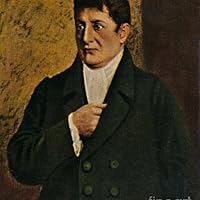
Friedrich Wilhelm Joseph Schelling, later von Schelling, was a German philosopher. Standard histories of philosophy make him the midpoint in the development of German Idealism, situating him between Fichte, his mentor prior to 1800, and Hegel, his former university roommate and erstwhile friend. Interpreting Schelling's philosophy is often difficult because of its ever-changing nature. Some scholars characterize him as a protean thinker who, although brilliant, jumped from one subject to another and lacked the synthesizing power needed to arrive at a complete philosophical system. Others challenge the notion that Schelling's thought is marked by profound breaks, instead arguing that his philosophy always focused on a few common themes, especially human freedom, the absolute, and the relationship between spirit and nature.
Schelling's thought has often been neglected, especially in the English-speaking world. This stems not only from the ascendancy of Hegel, whose mature works portray Schelling as a mere footnote in the development of Idealism, but also from his Naturphilosophie, which positivist scientists have often ridiculed for its "silly" analogizing and lack of empirical orientation. In recent years, Schelling scholars have forcefully attacked both of these sources of neglect.
This book is important for several reasons. I mention only a few here. Schelling, a great dialectical (in the modern 'German Idealist' sense) thinker/philosopher in these pages makes a crucial admission of the impossibility of overcoming (ancient) esotericism. (Hegel makes a similar admission in the great preface of the Phenomenology.) For the sake of this short note let us think of the esoteric as the unchanging. Schelling here admits that there is an unmediated 'basis' that accompanies us through all our dialectical adventures. This 'origin' is subsumed in God but it is not 'overcome' or surpassed. Indeed, this 'basis' rages through (at least!) all things capable (like humans) of spirit. Schelling goes so far as to say that "To separate from God they [all creatures] would have to carry on this becoming on a basis different from Him. But since there can be nothing outside God, this contradiction can only be solved by things having their basis in that within God which is not God Himself, i.e. in that which is the basis of His existence." It is this unmediated basis (within God but forever separate from him, unmastered even by Him!) that accompanies all things through their dialectical adventures. In fact, this unmediated 'pole' (if you will) threatens to drag us down (back! ...A genuine horror for all dialectical thought!) towards it. "All evil strives back towards chaos" Schelling says. [Digressing for a moment I would like to point out that this eerily prefigures Nietzsche's remark that "Everywhere, the way to the beginnings leads to barbarism."] By this Schelling indicates (or at least seems to) that every dialectical step 'forward' can never outrun the shadow of chaos, the negative, the unmediated, the unreasonable. ...Is this the dawn of the postmodern? I would also point out that Schelling, in his later [post 1809] speculations, found something that genuinely caused him unease in this way of thinking. After writing this essay (1809) he publishes next to nothing, though he lives to 1854. Did he foresee the dialectical being swallowed up by the unchanging basis? "Nothing at all in creation can remain ambiguous" - he bravely says. But the uncreated, unknowable, unmediated and unmastered Basis remains in God - and in us all!
This treatise is very much like a roving proto stellar mass in which flashes of brilliance occassionally flare up only to sink back into obscurity. Nonetheless there is a clear telos to the painful and protracted labor of Light differentiating itself from the Dark principle and vice versa which culminates in the emergence of Man--the one creature in which the two principles are in maximal tension and therefore maximal unity. Precisely for this reason man can in a perversity not applicable to mere animal existence, subordinate the maximum intensity of the universal will or light to the maxium baseness of the particular, creaturely will which has now become aware of itself as such. This is what Schelling calls man's temptation to step out of the centre which he is and to make a centre out of a point in the periphery. Evil is not identified with the ground of existence but with this ground's willing to posture itself as existence. But then again evil can never become actual (according to Schelling himself) so why should we be threatened? Sometimes Schelling comes dangerously to close to collapsing ethics into ontology...
Pasak Schellingo, laisvė yra žmogui suteikta galimybė rinktis tarp gėrio ir blogio. Sekdamas Kantu, Schellingas ieško laisvės pagrindo kažkur už erdvės ir laiko ribų, daiktų savaime sferoje. Laisvė prasiveržia iš anapusybės ir suteikia žmogui moralinio pasirinkimo galimybę, net kai žvelgiant mechaniškai atrodo, kad jo elgesį nulėmė tam tikri objektyvūs veiksniai.
Determinizmo ir laisvės priešprieša yra viena iš mane dominančių filosofijos temų, bet šioje esė svarstymai buvo gana migloti ir didelio įspūdžio nepaliko. Duodu tvirtas 3 šiai Fichtės ir Hėgelio amžininko knygai.
For all it's hangups and contortionism-as-justification, the argument was pretty powerful. There can be no freedom without the freedom to do evil, just as there is no good, without there being a principle of evil to turn itself away from the good. Evil exists as the pure potentiality of the turn away from the light in keeping with the yearning of the ground. The light is god himself and the ground is necessarily subordinated to god. The ground as such is not evil. It is pure pre-symbolic drive fueled by desire to manifest itself materially. God cannot rid himself of this ground as source of potential evil, however, because he would cancel himself out. Evil has to arise from that aspect of god in which he is not He Himself, as light principle ie dark principle of ground. In the act of turning away from the universal will of light and love, toward the ground, in striving for parituclarization of self, and to subordinate the universal to the particular, humans actualize evil. This turning is not itself a manifestation of freedom, because it gives into the desire and yearning of the ground in a somewhat Kantian way, but without this capacity to willfully and necessarily uphold universality, being in the good would not itself be indicative of freedom. Since god is a life, however, and has created himself in order to bring forth spirit, he is not in Being, but in becoming. Therefore, the necessity of god's creating himself is completely undermined. God's coming into being is absolutely arbitrary. As per Heidegger, freedom and system are absolutely incompatible. interesting... Best read with Zizek and Heidegger side by side.
This is the second book I've read by Schelling and the premise is a perennial favorite among philosophers. This book borrows quite a bit from Leibniz and Boehme, and to some degree, starts where they left off -not that it recapitulates every viewpoint of those writers; Schelling does have his own views and his approach is often unique. Whether he solved all of the problems regarding the notion of freewill is open to debate, but he does present some excellent points. One almost has to be acquainted with Boehme and Leibniz to be able to follow his train of thought though. Boehme's notion of the ungrund plays such a significant role, that from what I can tell, Schelling's work centers on it to a large degree. I've read both Leibniz and Boehme and thought their ideas were interesting, while also not always agreeing with them wholly. It is hard to deny the latter's profound influence on the Romantics and the Idealists. His influence is ubiquitous. This book is often held as being Schelling's best. The book is very good, but I actually liked his Philosophy of Mythology more. The ideas in it were a little more unique and thought-provoking in my opinion.
Sobre la libertad, el bien y el mal, Dios, el fundamento y el infundamento —indiferencia o sin-fundamento—. Lectura a veces fácil otras liosa. Genial introducción de Arturo Leyte.
«Querer es el ser originario y sólo con éste concuerdan todos los predicados del mismo: ausencia de fundamento, eternidad, independencia respecto al tiempo, autoafirmación. Toda filosofía aspira sólo a encontrar esta suprema expresión.» (p. 147)
«De esta ausencia de entendimiento es de la que nació propiamente el entendimiento. Sin esta oscuridad preliminar no hay realidad alguna para la criatura; las tinieblas son su necesario patrimonio. Sólo Dios —El mismo aquel que existe— habita en la luz pura, pues sólo Él es por sí mismo. (...) Con todo, no sabríamos de nada que pudiera estimular más al hombre a aspirar con todas sus fuerzas a luz, que la conciencia de la noche oscura de la que surgió elevándose desde ahí a la existencia.» (p. 169)
«La propia angustia de la vida empuja al hombre fuera del centro en el que fue creado, pues éste, como la más pura esencia de la voluntad, es para toda voluntad particular un fuego devorador; para poder vivir en él, el hombre tiene que morir a toda particularidad, por lo que es casi necesario que intente salir desde el centro a la periferia para buscar allí un reposo a su mismidad.» (p. 221)
«Por eso se puede decir con total corrección de modo dialéctico que bien y mal son lo mismo vistos simplemente desde distintos lados, o que el mal es en sí, esto es, en la raíz de su identidad, el bien, del mismo modo en que el bien, por su parte, contemplado en su escisión o su no-identidad, es el mal.» (p. 267)
«(...) la esencia del fundamento, así como el de la existencia, sólo puede ser aquello que precede por delante de todo fundamento, esto es, aquello considerado absoluto por antonomasia, el infundamento.» (p. 283)
«Sólo en la personalidad hay vida y toda personalidad reposa sobre un fundamento oscuro, que por lo tanto tiene que ser también del conocimiento.» (p. 297)
To me, extremely challenging. Maybe I am stupid. I’m hard pressed to say I even 50% understand what Schelling was trying to get across as a whole. It’s tough because as a whole, it was a bit of a slog. Translation is VERY dense. On the other hand , some passages are deeply moving , and what I do I “understand” is extremely rewarding. Some favorite quotes:
“How often does it not happen that a man shows a tendency to evil from childhood on, from a time when we can scarcely attribute freedom and deliberation to him, so that we can anticipate that neither punishment nor teaching will move him, and who subsequently really turns out to be the twisted limb which we anticipated in the bent twig.” 🔥
“To say that God restrains his omnipotence so that man can act, or that he permits freedom, explains nothing; for if God withdrew his power for an instant, man would cease to be. Since freedom is unthinkable in contradiction to omnipotence, is there any other escape from this argument than by placing man and his freedom in the divine being, by saying that man exists not outside God, but in God, and that’s man’s activity itself belongs to God’s life?” 🔥🔥🔥🔥🔥🔥🔥🔥🔥🔥🔥🔥🚨🚨🚨🚨🚨🚨🚨🚨🚨💯💯💯💯💯💯💯💯
But stuff like this is surrounded by (to me) essentially incomprehensible sentences that ramble on forever. Do I recommend? Not really.
Really good review- ndpr DOT nd DOT edu/reviews/philosophical-inquiries-into-the-essence-of-human-freedom/
Book sample : ‘...we are of the opinion that a clear, rational view must be possible precisely from the highest concepts in so far as only in this way can they really be our own, accepted in ourselves and eternally grounded. Indeed, we go even further and hold, with Lessing himself, that the development of revealed truths into truths of reason is simply necessary, if the human race is to be helped thereby. We are likewise convinced that reason is fully adequate to expose every possible error (in genuinely spiritual matters) and that the inquisitorial demeanor in the judgment of philosophical systems is entirely superfluous. To transfer an absolute dualism of good and evil to history whereby either the one or the other principle prevails in all manifestations and works of the human spirit, whereby there are only two systems and two religions, one absolutely good and another simply evil; further, the opinion that everything began in purity and simplicity and all subsequent developments (that were of course necessary in order to reveal the particular aspects contained in the first unity and thereby to reveal the unity fully itself) were only decay and falsification—while this whole view serves critique as a powerful sword of Alexander with which to chop the Gordian knot in two effortlessly everywhere, it introduces into history, however, a thoroughly illiberal and highly reductive point of view. There was a time that preceded this separation; and one worldview and religion which, although op- posed to the absolute one, sprang forth from its own ground and not from a falsification of the first one. Paganism is, taken historically, as original as Christianity and, although only a ground and basis of something higher, it is not derived from anything else.’
This has a rating of >4. Amazing. And there is only one review in German. And that has a rating of one star. So I have to assume that most of the other readers are true scholars and/or they have a translation that makes things clearer.
Since Wittgenstein all metaphysics is suspected of being nonsense. On the other hand, following Grice, I always assume that people writing metaphysics know what they are doing. And if it makes no or littles sense to me it probably is my fault.
But what am I supposed to do with: “Idealismus ist die Seele der Philosophie; Realismus ihr Leib; nur beide zusammen machen ein lebendiges Ganzes aus.”
It sounds like an aphorism. But does it mean anything? Why should philosophy even be some living whole?
“Da nichts vor und außer Gott ist, so muss er den Grund seiner Existenz in sich selbst haben.” Maybe but where did he get his premise?
Or this: “Die Schwerkraft geht vor dem Licht her als dessen ewig dunkler Grund...” Okay, you can give sense to everything. But in this case I would love to be enlightened.
Or this: “Gottes Wille ist, alles zu universalieren, zur Einheit mit dem Licht zu erheben, oder darin zu erhalten; der Wille des Grundes aber, alles zu partikulieren oder kreatürlich zu machen.”
Schelling is easier to understand if he is arguing against other philosophers like Spinoza or Leibniz.
Das Böse ist nicht Mangel. (Evil is not deficiency.) Because, he says, with a nice pun: Der Teufel ist nicht limitiert, sondern illiminiert.
What does he actually say about the freedom of will? To be able to decide in favour of A or non A without any compelling (bewegende) reasons would be a privilege to act quite unreasonably.
Yes. But what is free will positively said? “Die freie Handlung folgt unmittelbar aus dem Intelligibeln des Menschen” (Free action follows directly from human intelligence - I am sure there is a translation that gives this the illusion of saying something more substantial.)
“Frei ist, was nur den Gesetzen seines eigenen Wesens gemäß handelt.” (Free is that which acts only according to the laws of its own nature.)
But what is the internal necessity of a being? Except freedom? It is “an sich Freiheit, formell Notwendigkeit”.
Obviously in order to follow Schelling here we need to able of dialectical thinking.
Anyway. Judas did betray Jesus. He could not help it and yet he was not forced to do it. He did it in full freedom, says Schelling. Right. But is this not just the formulation of the problem of the free will?
Schelling believes that there is only one possible world. (This is something I understand, although it sounds strange to me.)
Does creation have a final purpose? And if so, why is there not perfection from the very beginning?
And here again we get an answer that does not mean much to me: “Weil Gott ein Leben ist und nicht bloß ein Sein.” (Because God is a life and not just a being - or Being?)
I did not get a lot of new insights out of this book. But I am pretty sure, with some good teachers and some years of training, I might think very differently about it.
This essay is, if you're not steeped in Schelling's philosophical background, near unintelligible in the first half of it, not just because he uses new terms or anything, but because Schelling is quite happy to make almost no arguments at all through the first half of the work.
The first 1/5th is a very interesting section arguing for Schelling's rejection of Spinoza's pantheism, but at the same time arguing for the absolute necessity for any philosophy to be pantheistic in a way that does not destroy difference and individuality. From there Schelling launches into the problem of evil, meanders for the next 30 pages on mostly theological considerations using Böhmean speculative terms, and continues on to speculate a cosmogony/logy that rests upon an understanding of his mysticism. Most of the theological concerns are not simply dense, they are nearly unintelligible without putting one's effort on gaining the background knowledge necessary. This one really requires a commentary for those sections.
That said, Schelling's thoughts on pantheism, freedom, and the nature of evil are quite interesting, especially when one moves away from his christian theosophical points towards their true philosophical speculative importance and forms.
reading this over a week was dialectically good and evil, light and dark. much flew over my head , with its rather low orientation, which was unsavory . but on the other hand, most delicious were the nuggets i did gather! if i could make a quite un-Schellingian move, here a few propositions takeaways: 1) God is being itself and ultimate freedom, giving Birth to himself out of his dark ground 2) thus God, the Absolute, is life itself and dynamic 3) nature emanates from God monistically, and so if you accept Schelling’s idea that nature is living activity, a sort of pantheism is acceptable in term 4) man is freely undetermined and has the call before him to actualize the potentiality of light, as differentiating himself from the darkness he grows out of. 5) God will be all in through the teleological turning of nature into Divinity.
Maybe i missed most things , and my 5 things should be much more clear and precise but they are my off the dome takeaways. I give this 5 stars bc it absolutely bangs. It’s hella dense, but it’s mythic-poetic register is a dazzling way to do philosophy and reading it is an experience I wish I could immediately partake of again.
"All birth is birth from darkness into light; the seed kernel must be sunk into the earth and die in darkness so that the more beautiful shape of light may lift and unfold itself in the radiance of the sun. Man is formed in the maternal body; and only from the obscurity of that which is without understanding (from feeling, yearning, the sovereign [herrlich] mother of knowledge) grow luminous thoughts."
In the beginning, the human will emerges as a seed born from an eternal yearning. Within the being lies the essence of God. To depict the inner struggle within the depths of existence, Schelling draws on a concept borrowed from Franz von Baader: the "centrum", a primal fire, and the "periphery," a primal moisture within that fire. When the ego or "centrum" shifts to the periphery, order dissolves, and evil prevails. For as the "centrum" dissipates into the moisture of the periphery, closure ensues, and darkness engulfs the soul.
If ever two roads were diverged in philosophy, before Deleuze, it was Hegel and Schelling. Sure, the drama between Schopenhauer and Hegel was something else. And since we’re quarreling with German Idealism I’ll just point out how Friedrich Schlegel’s name is making Friedrich Hegel sound redundant…You say tomAto TOMaTO. I say Hegel Schlegel. But when it comes to REAL philosophy. Like the way negation is founded, between Frederich Hegel and Frederich (yes “Frederich” AGAIN) Schelling, we have to do better than how a name identifies or represents itself conceptually. At least that’s the mission should we choose to accept it. The question of negation.
It’s already hard to tell which philosopher is more credible, especially when most of the Germans in the 1800s are named “Friedrich”. Before Deleuze reminded us of all these negative Nancies and framework Freds, the lineage was surely defined more by Hegel. But since Deleuze is the last respected philosopher, and he draws a lot on Spinoza and Leibniz, then why not take another look at Schelling?
For Schelling to say it’s about a locus or nodal “how”, primordially growing from the ground of being, is asking a lot from folks who came for the philosophy and now have to stay for the religious idealism. To use negation to oppose a Godly form of affirmation is “what” Schelling is getting at. But then to go on talking about the “what” of all this, for much of the book, proves to me that Schelling doesn’t exactly deserve to replace what Hegel did. If it’s really about this emerging “how” then that should be the robust discussion.
Hegel, to me, still wears the heavy weight negation belt. I find Schelling to be a point for discussion of free will, time, and negation. I just don’t see him adding much to the discussion after starting or ending it. Hegel elaborates an entire psychology based in a conceptual negation that can be applied directly to constructs. Schelling seems aloof compared with this.
Schelling, who like Deleuze, wants to err on the side of affirmation toward the less ungodly extents, is ending a discussion before it can begin. Like one of those scrappy politicians whose loyalty you’re never quite sure about. But if you’re sold on Schelling’s defeat of reductionism in one foul swoop, then great. Schelling is the winner should you choose to define it a certain way. But if you think it’s still useful to know just “how” this mental trap of negation works and want to reverse engineer one’s own circuitry, we’ll have to do better than “good” and “evil”. Defeating dualism is surely the task, but you can’t dismiss the rest out of hand. That’s as bad as the closed mindedness you get from big religious institutions back then.
Einstein famously said “simple as it can be, but not simpler.” And while I don’t agree with a lot of what Einstein has said as a philosopher, he had quite a business of predicting the future with math. So can we have both? Can we learn from Deleuze in that we don’t always have to battle out differential spatial states to discover a single champion?
Can both Schelling and Hegel be right? Why not!? As much as Deleuze thought of himself as the other side of Hegel, he at least knew well, everything of use, that Hegel brought to philosophy. And likewise, that’s why we need to include Schelling in the tradition of philosophy, regardless of where we put him. Since the politics is baked into the recipe. The representational identity of a concept, and its divergence in narrative, is always worth a little tracing back.
“It can already be anticipated that on the road on which everyone would rather be a precious spirit than a reasonable one, and would rather be called noble than just, we will arrive at a point at which ethics will be grounded on the general concept of ‘taste,’ and wickedness, accordingly, will only consist of poor or corrupt taste. If the divine principle of morality itself pulses through a serious disposition, then virtue appears as enthusiasm–as heroism (in the battle against evil), as the splendid, free courage of a man to act as the god bids him and not to be inferior in action to that which he has recognized in knowledge. It would appear as faith, not in the sense of an ostensibly commendable assuming of something to be true, or as something less than certainty–a meaning which has been attached to this word, by its being used for common things–but in its original meaning, as trust, confidence in what is divine, which excludes all choice. If, finally, a ray of divine love is cast into the inviolable seriousness of purpose which is always presupposed, then the highest transfiguration of the moral life occurs in loveliness and divine beauty."–F.W.J. Schelling (72-73)
2nd time through and Schelling does good on the promise of Idealism: to make thought life-like. There is no way to read this text except by allowing it to change you. The text allows you to encounter your own mind as a living being: you witness the way it changes, resists, assimilates, and things happen to you without it being possible to know what as they are happening.
Just consider the testimony from readers, eg the well known Christopher Satoor who when introduced to the text, had to leave the lecture theatre to vomit. A woman now studying her masters in divinity at Cambridge who dropped everything to change from finance to philosophy. This text is nuclear, read at your own risk.
Leste denne i en veldig fin oversettelse av Bjarne Hansen og Øystein Skar, med en god innledning av Jan-Erik Hebbestad Hansen (100 kr på Bislett Bok).
Det er flere viktige argumenter her, de fleste av teologisk art, men det viktigste er at frihet nødvendigvis er friheten til å være ond. Dette potensialet ligger i oss (og Gud) og kan ikke benektes uten å oppløse oss selv (og Gud). Man kan også antyde begynnelsen av en økologisk filosofi, hvor alle vesener er forent i sin delte u(r)grunn. Good stuff
La primera mitad es excelente. Su analísis lógico sobre la cópula, su discusión sobre el panteismo y el fatalismo son clarisimos y están entre las mejores páginas que he tenido la oportunidad de leer. ¿La otra mitad? Dificil decir, porque entendí de poco a nada. Da un giro inesperado y oscurísimo sobre la naturaleza de la libertad, el bien y el mal. Fascinante, eso seguro, pero complicadísimo de entender. De una rigurosidad lógica envidiable a las profundidas más ignotas del misticismo, y si eso no es dialéctica no sé qué lo es.
Wenn du sehr tiefgründig wirken und die Leute davon überzeugen möchtest, dich ernst zu nehmen, aber nichts wirklich Wertvolles zu sagen hast, gibt es eine erprobte Methode. Nimm zunächst eine äußerst offensichtliche Plattitüde oder Binsenweisheit. Stell sicher, dass es tatsächlich eine simple Erkenntnis enthält, obwohl es ziemlich vage sein kann. Etwa wie „Wenn du zu versöhnlich bist, wirst du manchmal ausgenutzt“ oder „Viele moralische Werte sind in allen menschlichen Gesellschaften ähnlich“. Versuche dann, die Plattitüden mit so vielen Wörtern wie möglich und so unverständlich wie möglich zu wiederholen, ohne sich spezifisch zu erläutern. Verwende eine hochtechnische Sprache, die aus vielen verschiedenen akademischen Disziplinen stammt, so dass niemand jemals eine angemessene Ausbildung haben wird, um die Arbeit vollständig zu bewerten. Erstelle ausgefeilte Theorien mit vielen Teilen. Verwende Kursivschrift großzügig, um anzuzeigen, dass du Wörter in einem sehr spezifischen und eigenwilligen Sinne verwendest. Sage niemals etwas zu Spezifisches, und wenn du es tust, qualifiziere es stark, damit du immer darauf bestehen kannst, dass du das Gegenteil gemeint hast. Dann evangelisiere: schreib so selbstbewusst wie möglich, als würdest du Gottes eigene Wahrheit teilen.
Folge dieser Methode, und man wird dich in Ehre halten und du wirst wie Schelling Erfolg haben. Ähnlich wie ein Großteil der heutigen "Intellektuellen", so hat auch schon Schelling diese Kunst beherrscht wie kaum ein anderer. Seite um Seite, ein Satz jagt den nächsten und fast nichts von Bedeutung. Ein Trauerspiel und eine Qual für den Kopf.
Everything in this books seemed very interesting based on what I read on the back cover, however - Schelling for me was not a very familiar name even though this work apparently was a very great one in the history of philosophy. With a great biographical introduction, my version of this book has, I kind of get the idea. Schelling was a philosopher in an unfavorable time in some sense, so his writing reflects the ideas of the time - a clash between idealism and realism with instances of theosophy and as a response to Spinoza's pantheism. That means that even though Schelling tries to navigate, he navigates in my opinion in a landscape of "bad" philosophy. Philosophy does not stand on itself but is mixed up with theology, mystic thinking and a lot of unknowables. In a way, it's a good thing to have someone think in the corners of good and evil in relation to God, man and how it affects freedom, but when the groundwork seems to be on the wrong basis it becomes very intricate very fast. It is very dense and complicated to follow. I also think that reading it in Norwegian makes me more confused because I usually read philosophy in English and use English terms. Anyway, I do find this book somewhat valuable - both as a critique of Spinoza but also as a work to look into when encountering the problems the book addresses. I'm sure that when one thinks deeply about these things this book is one that is going to make much more sense in order to find clarity even if it does not seem very clear from the get-go. I may well return one day in the future.
Sort of esoteric, it took me long enough even to read the footnotes in the back. I’m surprised that Schelling was never mentioned in my Religious Studies graduate journey, but I am coming to him now. This is one I’m going to have to read a second time ofIm to get anything out of it. Justifying evil inspire of a good Christian God is his subject. He does it by complicating the relationships and elements, some of which are metaphysical and in varying states of temporality is how he wants to do that I think.
Discussing the place of free will in a pantheistic philosophical system, Schelling introduces key concepts of pantheist philosophy like identity, individualization and evil.
En voi sanoa ymmärtäneeni kaikkea Schellingin älyllisesti loistavasta vapausesseestä. Se, mitä ymmärsin, oli kuitenkin nautinnollista luettavaa. Schellingin omintakeinen järjestelmä esittää oivaltavan ja vankan Platonista ja pietismistä kohoavan vastauksen moneen keskeiseen ongelmaan pahuuden olemuksesta elämän tarkoitukseen ja vapaan tahdon olemukseen. Jos en nyt vielä aivan schellingiläiseksi itseäni sanoisi, uskon löytäneeni tästä teoksesta enemmän vastaavuutta omiin filosofisiin ajatusleikkeihini kuin mistään muusta kirjasta.
Schelling avaa teoksen teesillä, josta ainoana merkittävänä tässä teoksessa voin sanoa olevani hänen kanssaan eri mieltä. Saksalaisen Romantiikan ehkä suurin filosofi aivan oikein kritisoi spinozalaista panteismia sellaisenaan kylmänrationaaliseksi ja elottomaksi opiksi, joka tekee väkivaltaa ihmisen tuntevalla puolelle. Kuintenkin Schelling itse päätyy edelleen sen näkemyksen kannalle, että kaikki on pohjimmiltaan yhtä; Jumala ei luo maailmaa erilleen itsessään, vaan maailma säilyy luomisessa osana Jumalaa. Vaikka Schelling hienosti samalla korostaakin yksittäisen olion itsenäistä luonnetta suhteessa toisaalta maailmaan, toisaalta Jumalaan, en voi nyanssoituakaan panteismia hyväksyä.
Schellingin kiinnostavin argumentti liittyy elävästi siihen suureen arvoitukseen, miksi Jumala alunperin loi maailman. Schellingin mukaan Jumalan on välttämättä ilmoitettava itsensä; siksi tämä luo maailman tai perustan, entrooppisen harmauden, jonka valonsa avulla kirkastaa täydelliseksi ja järjestyneeksi. Maailma on siis olemassa, jotta Jumala voisi sen satunnaisuudesta nostaa oman kirkkautensa todellisuuteen ja näin ilmoittaa itsensä itselleen.
Ihminen on tässä asetelmassa avainasemassa; luomakunnan kruununa, jolle yksin on annettu tietoisuuden kirkas valo. Ihmiselle on suotu vapaus valita hyvän ja pahan välillä; hyvyys selitetään suuntautumiseksi kohti yhtä Jumalaa, pahuus suuntautumiseksi kohti maailman satunnaisuuksia.
Pahuuden tarkempi määritelmä näyttää hyvin kiehtovasti olevan yhtäläinen Laestadiuksen näkemyksen kanssa; pohjimmiltaan kaikki pahuus, tai ainakin suurin sellainen, on omavanhurskautta. Schelling selittää ihmisen pahuuden olevan siinä, että tämä alkaa Jumalan luomana ja sikäli arvokkaana ja kauniina olentona pitää itseään suurimpana hyvyytenä ja kauneutena, kääntyen näin itseensä ja itsensä alapuolelle pois muusta Jumalan työstä: kuin Melkor, joka Silmarillionin alussa laulaa omaa sävelmäänsä riitasointuna täydellisempään soittoon.
Pahuuden Schelling tuomitsee, mutta pitää sitä samalla välttämättömänä osana hyvän Jumalan suunnitelmaa. Selityksenä on, että todellisen hyvyyden synnyttämiseksi olisi oltava olemassa vastaava pahuus; valo loistaa sitä kirkkaammin, mitä pimeämpään paikkaan se pääsee.
Vapaata tahtoa käsittelevä osuus lienee esseen ymmärrettävin. Schellingin tyyli ei muuallakaan ole epäselvää, mutta etenkin tässä hän vallan yleistajuisten esimerkkien kautta päätyy lopulta yllättäen täsmälleen samaan näkemykseen, jonka itse aikaisemmin Kantin ja Schopenhauerin kautta olen yhtenä vaihtoehtona muotoillut; lyhyesti sanottuna vapaan tahdon ydin on ihmisen muuttumattomassa olemuksessa, ei yksittäisissä valinnoissa. Siksi ihmisen tahto on muutettavissa parempaan ainoastaan Jumalan armosta, sola fide, jonka Schelling myös näyttää toteavan. Kauniisti hän vielä puhuu armahdetun rauhasta, kun tämän tahto on käännetty pois pahasta ja hän tuntee viimein kykenevänsä elämään hyvän periaatteen mukaan.
Friedrich Schelling onnistuu luomaan kiehtovan filosofisen järjestelmän, jonka lopputuloksissa on nähtävissä oikein tervettä kristillisyyttä. Toki siitä, onko itse järjestelmä kristillinen, voi varmaankin olla montaa mieltä; siksi lienee parempi, että sitä kaikessa nerokkuudessaan ei vielä ota varmana ja lopullisena totuutena ylitse Pyhän Sanan.
I've read this essay about 4 times in my life. This essay, while only being about 90 pages or so long, is not for the faint of heart. The three main themes of the works thus: what is God's relationship to the world, how does evil exist, and how does reason emerge from the world.
On the first theme, Schelling wishes to split fatalism from previous realist or monistic philosophies, like that of past materialists and Spinoza. He does this by showing that realist does not entail fatalism, this leaves allows for freedom not to be negated, as it would be under a Pantheism like that of Spinoza's. For Schelling, pantheism or monism can be free from the fatalism. Schelling concludes that fatalism is not a monistic idea, but a Spinozist formulation. This gives Schelling space to reform monism with a sense of freedom found in idealist philosophies of Kant. From that form, Schelling deals with and expresses an 'ideal-realist monism', or what would later be called Panentheism, the world within God.
On the second theme, Schelling develops the notion of radical evil from Kant. To treat evil as radical, something within the root of being, as opposed to treating evil a thing of the mind, as with found in Spinoza and Leibniz, Schelling has to account for how evil could be both in God and man. For Schelling, he wants to avoid the binary of either Evil is unreal or God is its cause, rather evil is possible by never actual in God, meaning God could do evil if they so wanted to but never will, where's with humans we can commit and actualize evil in the world. Using the work of Franz Xaver von Baader account of evil and Jakob Böhme's cosmology to account for how evil is both possible and how it gets actualized within humanity's free choice.
On the third theme, Schelling wants to give a non-reductive account for how being relates to thinking and vis versa. Schelling wants to avoid reducing being to thought (idealism) and thought to being (realism). This aspect of the essay is a little undeveloped and explored more so in future works, mainly in the Age of the Worlds. Basically, what Schelling wants to do is show how a dark and blind nature strives towards an enlightened existence in both God and in humanity. A permeate all of creation, unveiling a process of divine self-realization from will to reason. Like the later Schopenhauer and Nietzsche, Schelling emphasizes the will at the being of creation, but is the seed and reason is the flower. This is where Schelling unites the real and ideal, the ideal can never be actualized without the real and the real feels the need to push towards an ideal. The real is the seed while the ideal is the flower.
My summary is not extensive or conclusive, my aim was a quick exposition of what is a dense and difficult work to understand. Please go and read it for yourself if you can or are able to. For me, I find something new in this text every time I read it.
Jeg leste den danske oversettelsen «Om den menneskelige friheds væsen» oversatt av Henning Vangsgaard.
Schelling forsøker å tenke forholdet mellom menneskets frihet og et tenkningens system som søker å tenke helheten av alt som er. Ambisjonen er å tenke en tanke som kan omfatte alt, å tenke tanken om det som går fotutfor og muliggjør ethvert fenomen, med andre ord, tanken om den altomfattende helhet (Gud) som ligger til grund for alle forskjeller. Spørsmålet er; hvordan tenke tanken om helheten på en måte som bevarer muligheten for frihet?
Hvis vi tenker at alt er bestemt ut ifra Gud, om så Gud er tenkt som første årsak eller som en salgs opprinnelig substans som alt finner sitt bestemte opphav i, er det ikke rom for virkelig frihet. Hvis verdensordenen er god og fornuftig, hvordan kan vi da forklare eksistensen av ondskap? Spørsmålet om frihet leder for Schelling raskt til spørsmålet om ondskapens problem.
Ondskapens problem har tradisjonelt blitt løst ved å tenke ondskap som ren mangel på væren, at det kun er fraværet av Guds lys, og at det onde derfor ikke er skapt av Gud, fordi Gud kun har skapt det positive. For Schelling, som for Jung, er ikke dette en tilfredsstillende forklaring. Ondskap må sies å ha en eksistens som går utover et rent fravær av det gode, og med en gang dette innrømmes ser vi at den tradisjonelle løsningen ikke er tilstrekkelig.
Til tross for dette er ikke Schelling villig til å hevde eksistensen av en positivt eksisterende ikke-guddommelig kilde til ondskap, da det ville bety at verden grunnleggende sett var dualistisk. Kilden til ondskap må derfor forstås som å være i Gud, men ikke fra Gud. Slik oppstår det for Schelling en splittelse i Gud mellom Gud selv og det som er grunnen til Guds eksistens. Det oppstår dermed et avgrunnsdyp i Gud som er grunnen til Guds eksistens – et kaotisk og skapende mørke – som er i Gud, men ikke fra Gud.
Gjennom dette skillet forstås det skapte som å være i en vedvarende spenning mellom grunnens mørke kaos og eksistensens lysende former. Gud forstås slik som en begrensende og formgivende kraft som skaper verden ut ifra grunnens mørke kaos. Alt det skapte har dermed denne spenningen mellom det som er brakt opp i lyset og det som streber tilbake til mørke, til tyngden, til det ordløse, hvorfra det kommer. Denne grunnleggende spenningen mellom lyset og mørke er motoren i alt liv, uten denne spenningen ville ingenting vært levende, for hvis guds lys var alt som eksisterte ville alt vært fullkomment og fullført fra begynnelsen, og livet som frihetens bevegelse ville ikke vært mulig.