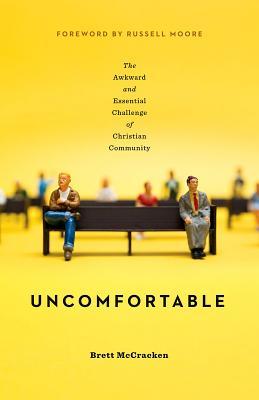
A must read for all Christians. McCracken doesn’t hold back a single punch in his assault on the consumeristic, conforming, compromising trend in Christendom, challenging all believers to hold to our uncomfortable faith and to commit to our uncomfortable church community.
The first part of this book (really good but not incredibly original - worth skipping if you’re only going to read some of the book) touches on the uncomfortable aspects of the Christian faith such as the cross, holiness, dogmas, love, the Spirit, and mission. The chapter on holiness was especially insightful, challenging the claim of “authenticity” as the supreme Christian virtue for the more biblical call to holiness and an abhorrence of sin.
He writes, "We've become too comfortable with our sin, to the point that it’s how we identify ourselves and relate to others. But shouldn’t we find connection over Christ, rather than over our depravity? By focusing on brokenness as proof of our “realness," have we made authenticity a higher calling that holiness?"
The second part is where this book really shines. McCracken takes the Tender-swiping, à la carte consumerism in Christian “church shopping” and lays the axe at the root. He challenges the Christian to remain in covenant relationship to the Church in the same way he would (or should) a marriage. There is no perfect church, and the church’s mission is not to conform to you, but rather to help conform you to Christ - and that’s usually uncomfortable.
Here’s just one of the many great quotes along these lines:
“One of the ways Western individualism informs how we think about church is that we conceive of "fit" in terms of how a church fits us. Does its worship style, architecture, preaching, values, and demographic makeup fit well with our personality and preferences? This approach puts the burden on the church to adapt or perform to our liking if it wants to keep us around. But what if we have it backwards? What if the biblical approach is actually that we should fit ourselves into the life and mission of the local church, adapting ourselves to the family and filling gaps where needed, even if that means we are the ones who have to change? We shouldn't look for a church that will change to fit us. We should look for one where we will be changed to better represent Christ.”
Great read. Everyone should read it.