The story of the last millennium is, in largest part, the story of the rise of the Christian West. This fascinating book, assembled by the editors of the journal First Things , explores the religious and social development of the West during the past one thousand years by looking at ten people who defined the millennium.
Written by a team of renowned scholars, the book treats the second millennium century by century, choosing one historical figure as the prism through which to view each period. While the individuals chosen are not necessarily "representative" figures--in some instances they are people who opposed the "spirit of the times"--the compelling personalities limned in these chapters help us to understand better where we have come so far.
Insightful, authoritative, and a pleasure to read, these narratives not only open intriguing windows on key dimensions of the Christian West but also provide a panoramic view from which to comprehend all of modern history--a view well worth pondering as we begin the third one thousand years.
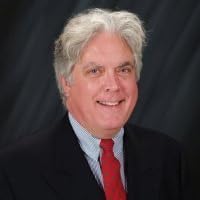
Richard John Neuhaus was a prominent Christian cleric (first as a Lutheran pastor and later as a Roman Catholic priest) and writer. Born in Canada, Neuhaus moved to the United States where he became a naturalized United States citizen. He was the founder and editor of the monthly journal First Things and the author of several books, including The Naked Public Square: Religion and Democracy in America (1984), The Catholic Moment: The Paradox of the Church in the Postmodern World (1987), and Catholic Matters: Confusion, Controversy, and the Splendor of Truth (2006). He was a staunch defender of the Roman Catholic Church's teachings on abortion and other life issues and an unofficial advisor of President George W. Bush on bioethical issues.
Worth it for Mary Ann Glendon's take down of Rousseau alone: "Morality, in Rousseau's view, was rooted in neither reason nor revelation but in the natural feeling of compassion. Indeed, he is in an important sense the father of the politics of compassion. As we now know, however, compassion is a shaky foundation on which to build a just society. Compassion, unlike charity, is not a virtue acquired by sekf-discipline and habitual practice. It is only a feeling ,and a fleeting one at that. It yields not only to self-preservation, but to self-interest." What a deeply unpopular, not to say countercultural, statement! To fully appreciate the entire book, not just Weigel's piece on Bl. John Paul II, and to understand why a Protestant publishing house printed this book to begin with, please read Fides et Ratio.
This is a compilation of articles from First Things Journal that explores a collection of lives who left a mark on human history. Each is written as a critique of the respective historical figure's contribution to western civilization.
I found all the articles to be illuminating and was especially drawn to the contributions on Gregory VII, Calvin, Pascal and Rousseau. Oakes' chapter on Pascal was my favorite.
The book is relatively compact but has a scholarly feel. I recommend it to anyone who enjoys the intellectual history, especially that pertaining to Western thought.
This short anthology of biographies with impact analysis is a way to sift through the important events and those who continue to affect us today as we try to navigate the turmoil we bring to ourselves. Selecting a single individual for each century across the last millennium, Neuhaus has compiled a cast of good writers including David Novak, Robert Royal, Edward T. Oaks and George Weigel to present not only these historically important personalities but why their impact has been so profound. The list is impressive and, perhaps, surprising to some. Aquinas, Calvin, Lincoln all could be expected, but there is Dante Alighieri, Pascal and Moses Malmonides also. Neuhaus finishes the 20th century with St. Pope John Paul II and the more I thought about it, the more appropriate that seemed. It is a quick read that doesn't leave one.
While one can always argue the list of the ten people who defined a millennium, Neuhaus as editor of this book, has made a valid case, that this list does come close the the top ten. This is well worth the read, to see the impact that ideas have in the sway of history.